
Reviewed · CRETE TOURS
Rethymno: Traditional Cooking Class in a Cretan Village
The best part of this Rethymno cooking class is that it takes place in a Cretan family home, not a polished restaurant kitchen. Chrysoula teaches old-fashioned recipes with produce from her family’s farm or nearby farmers, then cooks the food in a traditional wood oven. I like the setting and the way the meal unfolds as a shared family table, not just a lesson. I also like that the class includes a starter, main course, dessert, wine, and raki, so you get a full taste of local home cooking.
The main consideration is the length of the meal. Three and a half hours gives you time to cook, talk, and eat, but this is not a quick stop between sightseeing plans. Come hungry, and avoid booking a large dinner afterward. Raki may appear at the end, so pace yourself.
Key points at a glance
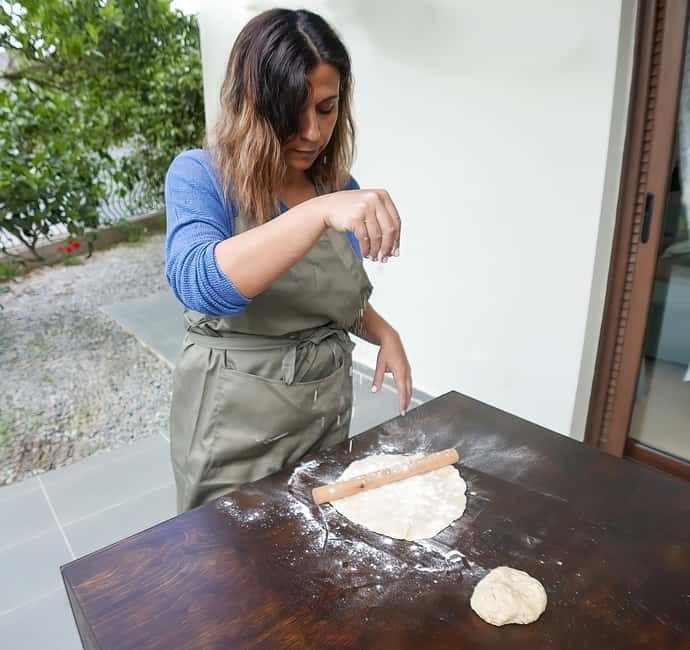
- Cook in Chrysoula’s home: Learn recipes in a real village setting with a local host and her family.
- Use a traditional wood oven: Prepare food with old cooking methods rather than modern kitchen equipment alone.
- Taste a full Cretan menu: Make starters, a main dish, and dessert, with local wine and raki included.
- Expect farm-fresh ingredients: Much of the produce comes from the family farm or local village suppliers.
- Vegetarian and allergy-friendly options: The menu can be adjusted when dietary needs are shared in advance.
- Plan for a generous half-day: The 3.5-hour session includes cooking, conversation, and a substantial meal.
A village kitchen with a view
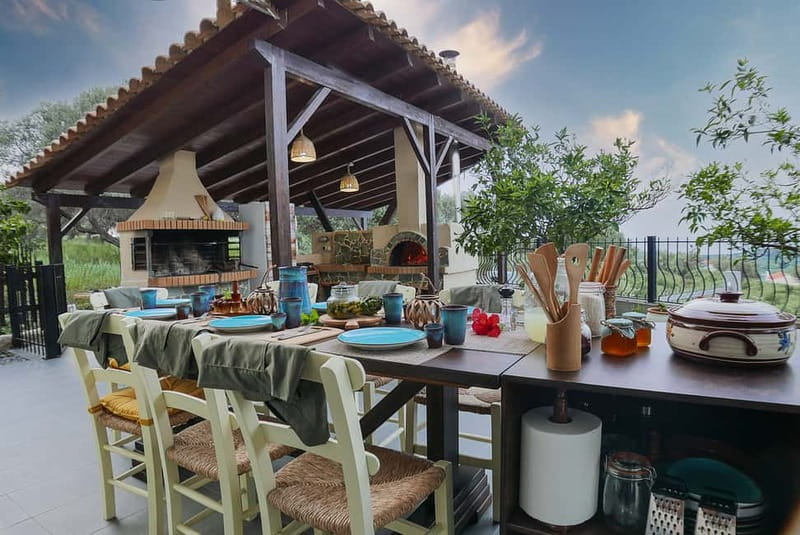
This experience begins with a welcome that feels more like arriving at someone’s home than checking into a cooking school. Chrysoula and her family receive you with Greek coffee or herbal tea, homemade lemonade, ladokouloura, olive-oil rolls, and loukoumakia. These small bites are not just filler while you wait. They introduce the Cretan habit of offering food first and asking questions afterward.
The cooking takes place in the home and garden, with views across the surrounding countryside. The setting matters. You are not simply following instructions in a commercial kitchen. You are learning where these dishes belong, surrounded by the kind of outdoor space where a long Cretan meal makes sense.
Chrysoula is the main personality of the class. She brings humor, warmth, and a clear pride in Cretan food and customs. Kostas may also be part of the welcome and meal. English is the working language, and the host or greeter is listed as English-speaking.
I especially like the relaxed rhythm. You can chat with the hosts, ask about the recipes, and learn how older cooking methods fit into everyday Cretan life. At times, the class may feel less like a formal lesson and more like being adopted into a family kitchen for an afternoon.
More Cooking Classes in Crete
- Chania: Authentic Cooking Class in the White Mountains
★ 4.9 · 529 reviews - The Real Cretan Cooking Experience
★ 5.0 · 528 reviews - Chania Cooking Class-The Authentic Enjoy traditional Cretan meal
★ 5.0 · 339 reviews
What you cook, from dakos to gemista
The exact menu can vary, but the class is built around familiar Cretan and Greek dishes. You may begin with starters such as dakos, tzatziki, or Greek salad.
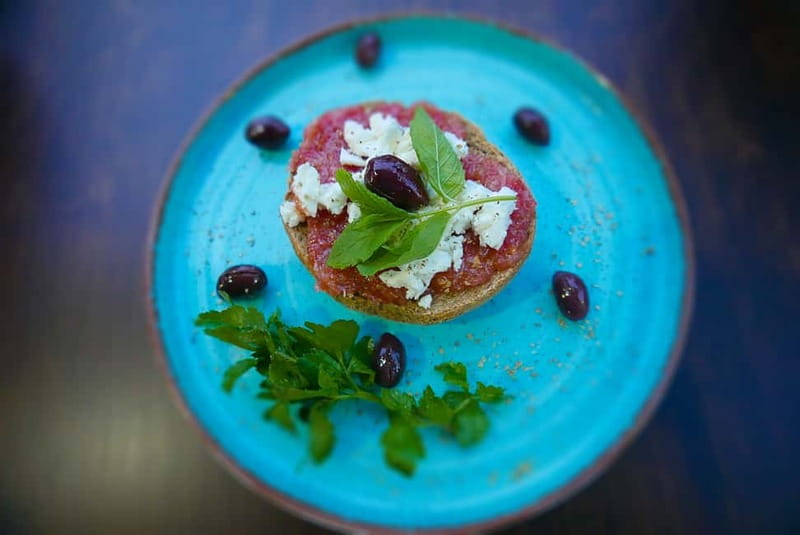
Dakos is a fine introduction to the island’s cooking. It combines a crisp barley rusk with tomato, cheese, olive oil, and herbs. The dish is simple, but the balance depends on good local produce and generous olive oil. You learn how a few strong ingredients can carry a plate without heavy sauces or complicated technique.
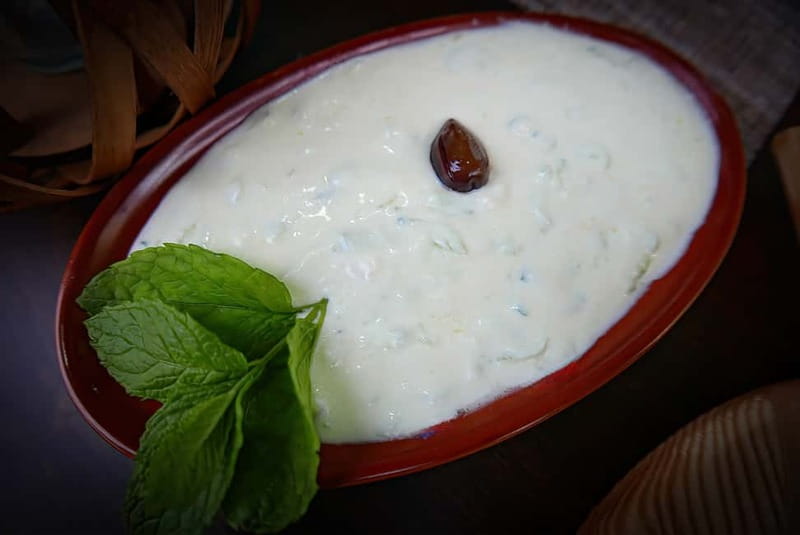
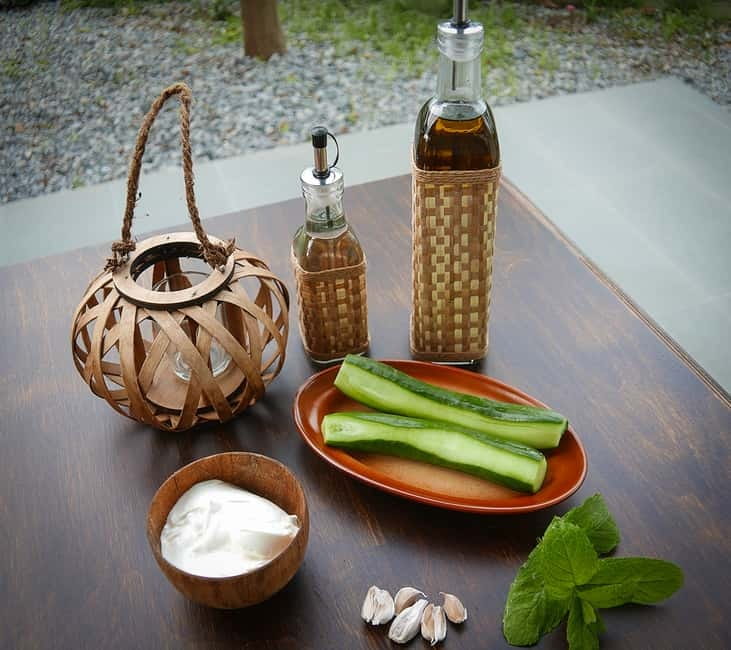
Tzatziki offers a different lesson. You work with yogurt, cucumber, garlic, and herbs to make the well-known dip. Greek salad is equally straightforward, yet useful because it shows how Cretan cooking depends on freshness, seasoning, and restraint.
The main course may include gemista or mousaka. Gemista means stuffed vegetables, and the class may use vine leaves, zucchini flowers, tomatoes, zucchini, or peppers. These are the dishes that make the wood oven especially important. Stuffed vegetables need time and steady heat, and the traditional oven gives them a character that is hard to copy with a quick stovetop preparation.
Mousaka is another classic, usually built from layers of vegetables and a savory filling. The class gives you a chance to see how a familiar restaurant dish fits into a home kitchen. You are not only eating the finished plate. You are helping prepare the parts and seeing how they come together.
For dessert, you may make tyropitakia, small traditional pies with homemade cheese, local honey, and cinnamon. Homemade ice cream and seasonal fruit may also appear. This is a particularly generous end to the meal, especially after a main course cooked with olive oil and pastry or vegetables.
The wood oven is part of the lesson
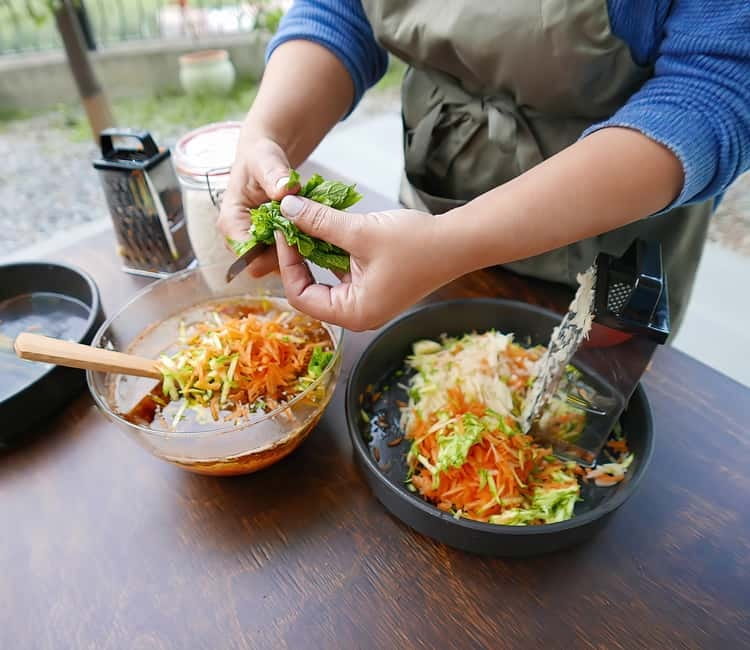
The wood oven is more than a photogenic feature. It is the practical heart of the class. You learn how Cretan food was, and in many homes still is, cooked with direct heat, patience, and simple equipment.
The oven also changes the pace. Food does not appear instantly, so the class naturally moves between preparation, conversation, and eating. You may work on one dish while another cooks, then sit down when everything is ready. That slower pattern is one of the most useful things you take away. Cretan cooking is not built around rushing from one course to the next.
The outdoor cooking area is attractive, but it is worth keeping expectations sensible. Weather can affect an open-air setup. The class has continued during bad weather, including a thunderstorm, but conditions may change how much time you spend outside. If you are booking during a period of uncertain weather, bring clothing that suits the day and keep your plans flexible.
The meal is the main event
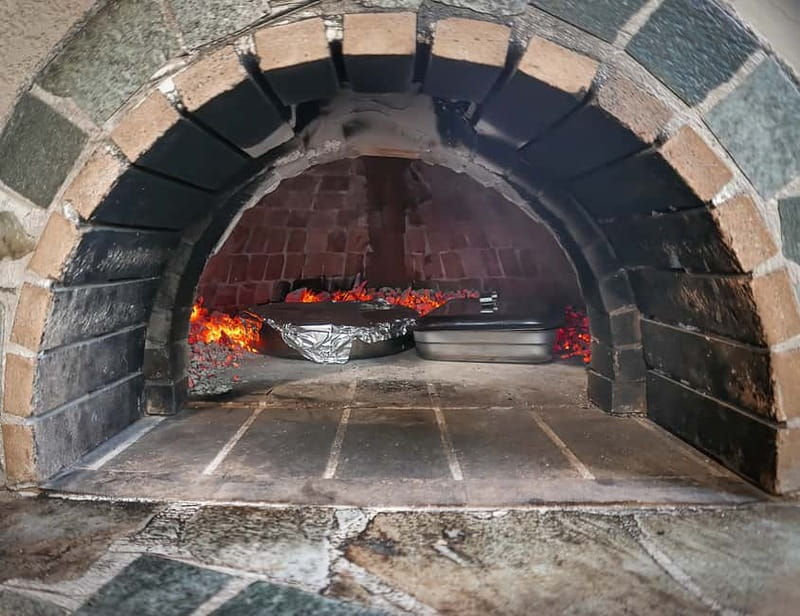
After the preparation comes a full meal with a starter, main dish, and dessert. Local wine and raki are included, so the price covers more than instruction and ingredients. You are paying for a long meal, a local setting, and time with a host who shares family methods and customs.
Portions appear to be generous. I would treat this as your main food event for the day, not a light snack before dinner. You may even have food left over, depending on the group and menu. That is good value for people who want a substantial cultural experience, though anyone with a small appetite may find the meal more than expected.
Wine is served alongside the meal, while raki often comes later. Raki is a strong Cretan spirit, traditionally associated with hospitality and friendship. You do not need to drink it quickly, and you can take it slowly. The sensible plan is to enjoy the toast without treating it as a contest.
The food also gives you a direct way to understand Cretan eating habits. Olive oil, vegetables, herbs, cheese, tomatoes, seasonal fruit, and homemade dough all play important roles. The meal is not designed as a fine-dining performance. Its appeal is the connection between ingredients, family practice, and place.
More cooking classes around Rethymno:
- Athens: Classic Cooking Class with Market Visit and Wine
★ 5.0 · 1,101 reviews - Athens: Food Market Visit and Cooking Class with Wine
★ 4.9 · 1,087 reviews - Greek Cuisine Cooking Class in Santorini with Recipes and Wine
★ 5.0 · 969 reviews - Naxos: Half-Day Cooking Class at Basiliko Family Tavern
★ 5.0 · 887 reviews
What makes the hospitality special
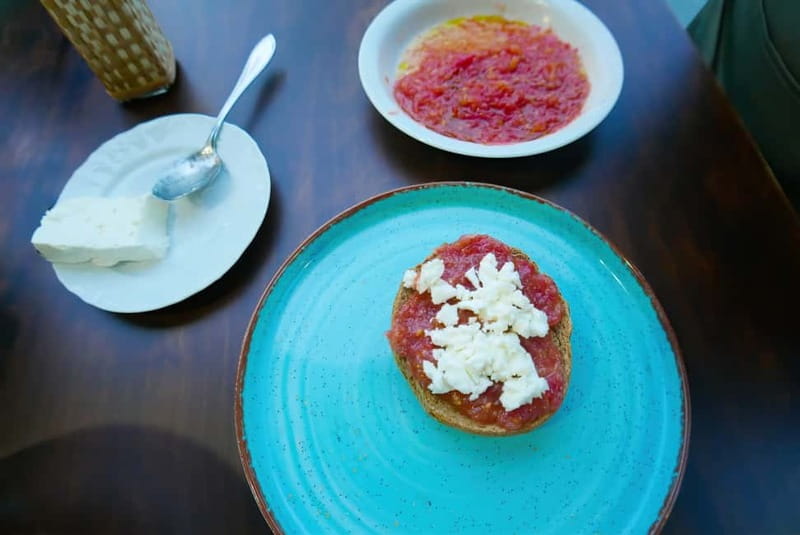
The strongest reason to book this class is the human contact. Chrysoula’s personality shapes the experience as much as the recipes do. She explains the food, keeps the mood light, and makes time for conversation.
The class can work well for families, too. One family with an eight-month-old found the setting accommodating, with toys provided for the baby and help offered during the cooking. That does not guarantee the same arrangement for every group, but it shows that the host is attentive to family needs.
The class has also worked well for mixed dietary groups. Vegetarian food can be arranged, and one vegan participant was given suitable dishes while friends ate the standard menu. Allergies can also be accommodated. Tell the provider about dietary needs when booking so the menu can be prepared properly.
The atmosphere may vary depending on the day’s booking. Some sessions can be private, while others may include people you have not met. A private class is not guaranteed, so book it for the home setting and host, not on the assumption that you will have the kitchen to yourself.
Is $110 a fair price?
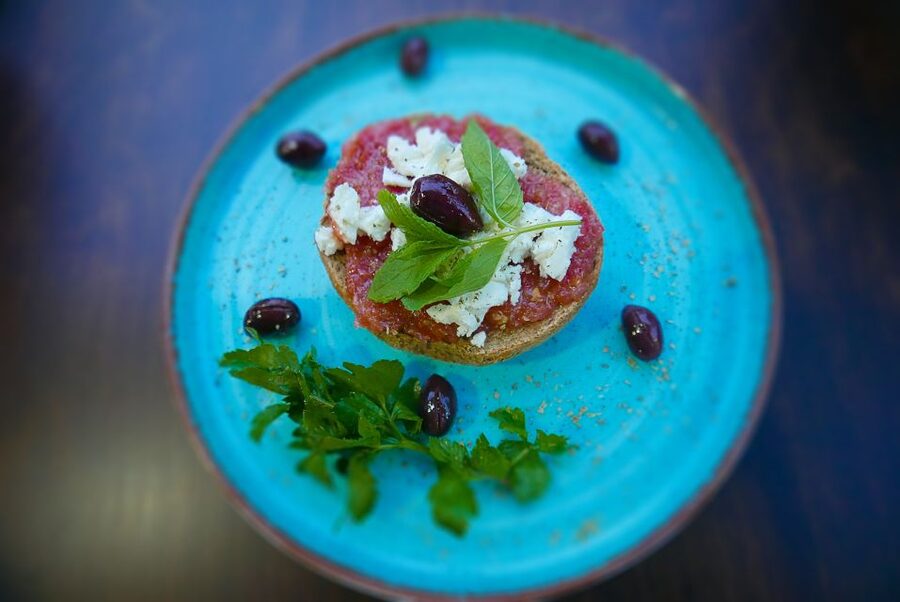
At $110 per person, this is not the cheapest meal or cooking demonstration in Crete. The value depends on what you want from the afternoon.
If you only want to eat Greek food, a village taverna will cost less. If you want to learn several recipes, use a wood oven, enjoy a full meal, drink local wine and raki, and spend time with a Cretan family, the price is easier to justify. You are buying several hours of personal attention and food, not just a printed recipe sheet.
The farm connection adds value, too. Much of the produce comes from Chrysoula’s family farm or local farmers, with rice noted as one of the few store-bought ingredients. That gives the class a stronger sense of place than a lesson based on ingredients brought in from a supermarket.
I would consider the price reasonable for a special occasion, a food-focused day, or a couple’s activity. Families should calculate the total carefully, since the per-person rate can add up. Still, the included meal means you can treat the class as lunch or dinner, which helps balance the cost.
Who should book this experience?
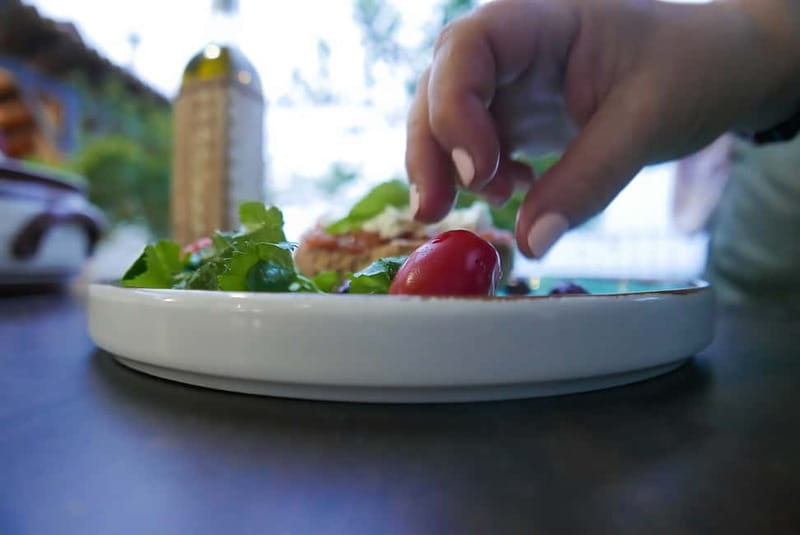
This class suits you if you like food, conversation, and a slower pace. It is especially good for people who want to meet local hosts rather than move through a set of sightseeing stops.
It is a strong choice for:
- Couples seeking a personal Cretan activity
- Families who want an interactive meal
- Vegetarians and some people with food allergies
- Visitors interested in home cooking and local customs
- Food lovers who want recipes they can try again
- Anyone who enjoys a long lunch or dinner with wine
It may be less suitable if you want a tightly timed lesson with professional equipment, precise cooking measurements, or a short demonstration. The class is social and hands-on. Some time goes toward conversation, eating, and hospitality. That is the point, but it may not fit every schedule.
The activity is listed as wheelchair accessible. Since the class takes place at a home and garden, ask for current access details if you have specific mobility requirements.
Timing, cancellation, and practical planning
The experience lasts 3.5 hours. Starting times vary, so check availability before you build the rest of your day around it. I would leave extra time on both sides, since the meal and conversation are central rather than rushed.
The experience is conducted in English. Cooking terms are usually easy to follow when you are watching the food being prepared, but you should ask questions as you go. Chrysoula’s teaching style is interactive, so you will get more from the class if you take part instead of simply waiting for the meal.
Cancellation is free up to 24 hours before the activity for a full refund. You can also reserve now and pay later, which helps if your route through Crete is still changing.
Bring an appetite and a relaxed attitude. Do not schedule your biggest restaurant dinner that night. If you plan to drink wine and raki, arrange your evening so you are not rushing off immediately afterward.
What you take home besides recipes
A good cooking class gives you more than a meal. Here, you gain a clearer sense of how Cretan families use vegetables, cheese, herbs, olive oil, honey, and seasonal fruit. You also see why the wood oven remains meaningful.
You may leave with ideas for dakos, tzatziki, stuffed vegetables, mousaka, and cheese pies. More importantly, you learn the general approach: use fresh ingredients, keep the preparation direct, allow food time to cook, and make enough to share.
The social side can be just as memorable. Cooking together creates natural conversation, and the meal gives everyone a reason to stay at the table. That warmth is what separates this experience from a standard cooking lesson in a rented studio.
Should you book Chrysoula’s Cretan cooking class?
Book it if you want an authentic home meal with real participation, generous portions, and a local host who clearly enjoys sharing Cretan culture. The farm produce, wood oven, village home, and personal welcome make this more distinctive than a basic Greek cooking workshop.
Skip it if your schedule is tight, you dislike long meals, or you want a technical chef-led class with strict timing. For everyone else, especially families, couples, and vegetarian food lovers, this is a strong use of half a day near Rethymno. Come hungry, keep the evening light, and let the meal take its time.
FAQ
Where does the cooking class take place?
The class takes place in a traditional Cretan family home and garden in a village near Rethymno, with cooking done in a traditional wood oven.
How long does the experience last?
The cooking class lasts 3.5 hours. Starting times vary, so check availability when booking.
What food will I cook?
Possible dishes include dakos, tzatziki, Greek salad, gemista, mousaka, and tyropitakia. Homemade ice cream and seasonal fruit may also be served.
Is a full meal included?
Yes. The experience includes a starter, a main dish, and dessert, along with local wine and raki.
Are drinks included?
Local wine and raki are included. The welcome may also include Greek coffee, herbal tea, and homemade lemonade.
Can the menu accommodate vegetarians?
Yes. The menu can be adapted for vegetarian participants and for people with allergies. Share your dietary needs when booking.
Is the activity conducted in English?
Yes. The host or greeter speaks English, and English is the listed language for the activity.
Is the cooking class wheelchair accessible?
Yes, the activity is listed as wheelchair accessible.
Can I cancel for a refund?
You can cancel up to 24 hours in advance for a full refund. The reserve-now, pay-later option is also available.
More Workshops in Rethymno
- Greek Cooking Class in Athens Including Rooftop Dinner with Acropolis View
★ 5.0 · 826 reviews - Greek Small-Group Athens Cooking Class & Dinner
★ 5.0 · 574 reviews - Naxos:Half-day cooking class at Basiliko
★ 5.0 · 457 reviews - Athens: Greek Cooking Class & Dinner on a Rooftop
★ 5.0 · 383 reviews
Fresh on the Rethymno list
- From Rethymno: Santorini Guided Tour and Cruise from Crete★ 4.4 · 46 reviews
- Crete Private Tour: The Secrets of Wine, Olives & Honey★ 4.5 · 59 reviews
- Elafonisi Island Day Tour by Bus From Rethymno★ 4.2 · 78 reviews
- From Rethymno: Preveli Palm Beach and Kourtaliotiko Day Trip★ 4.1 · 87 reviews
- Kourtaliotiko Gorge River Trek with Lunch! Pick-up Avaliable★ 4.8 · 90 reviews
- Agia Galini: South Crete Sailing Trip with Optional Lunch★ 4.6 · 92 reviews
- From Rethymno: Chania City Day Trip★ 4.7 · 98 reviews
- Rethymno Old Town: A Traditional Cretan Food Tour★ 4.9 · 103 reviews
Crete Tours, compared.

From Kissamos Port: Boat Cruise to Balos Lagoon & Gramvousa
Read our review →
Day Trip to Agios Nikolaos and Spinalonga Island
Read our review →
Full-Day Samaria Gorge Trek Excursion & Guide
Read our review →

Dia Island Sailboat Cruise with Swimming and Meal
Read our review →
Knossos Palace Entry Ticket with Optional Audio Guide
Read our review →
Browse the lists this tour appears in