
Reviewed · CRETE TOURS
Cretan Cooking Class and Olive Oil Tasting
The best part of this Cretan cooking class is that you do not simply watch someone prepare Greek food. You work beside Marianna and Mama Stella, gather some ingredients from the farm, and cook in an open-air kitchen among olive trees. The evening ends with a full meal, local wine, and the kind of family welcome that makes a cooking class feel personal.
I like the 100% hands-on format, with your own cooking tools and burners rather than a demonstration from a distance. I also like the olive oil lesson, which explains how to spot genuine extra virgin oil and recognize faults in cheaper bottles. The main consideration is the rural setting: private transportation is not included, so you need to arrange your own way to the meeting point.
Key points at a glance
- Cook beside Marianna and Mama Stella: Their mother-and-daughter teaching style keeps the class warm, relaxed, and easy to follow.
- Work outdoors among olive trees: The open cooking and dining area gives the meal a strong connection to the farm.
- Prepare several traditional dishes: Depending on the season, you might make dakos, stuffed grape leaves, zucchini flowers, lamb, vegetarian giaxni, stifado, or sweet cheese pastries.
- Learn to taste olive oil properly: You practice identifying aromas, flavor, bitterness, and defects in lower-quality oils.
- Eat what you prepare: Local wine accompanies the meal, and leftovers are packed for you to take away.
- Small-group setting: The class accepts a maximum of 12 people, making it easier to take part rather than stand at the back.
Cooking in the olive grove near Moires
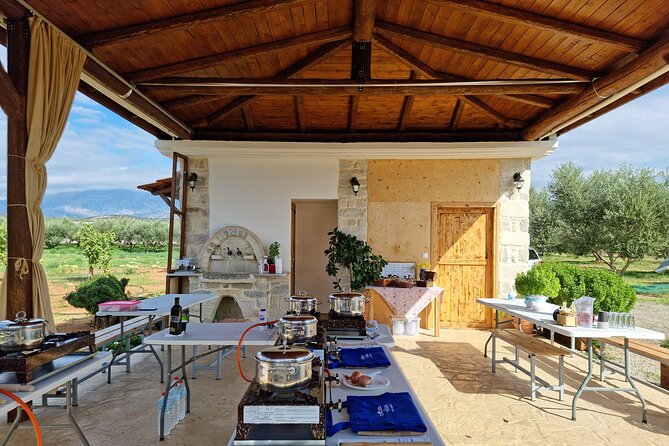
Cretan Vibes is at Ethniki Odos in Moires, in southern Crete. The setting is rural and agricultural, with olive trees, gardens, and an outdoor kitchen designed for shared cooking. You are not being ushered through a standard restaurant kitchen. You are spending several hours in the family’s own food world.
The cooking area is open, modern, and clean, while still fitting the farm around it. That mix matters. You get practical work surfaces and proper equipment, but you can also see the olive-growing setting that gives the class its sense of place.
The class is offered in English and lasts about four hours. One practical note: the experience can run closer to three and a half hours, depending on the group and the pace of the meal. I would leave a little room in your schedule rather than planning a tight connection afterward.
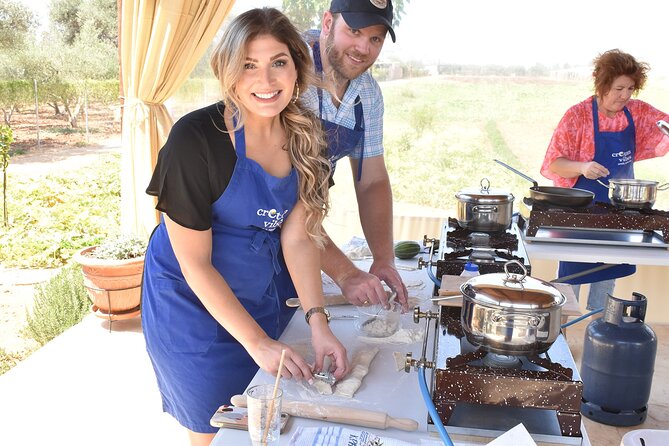
You receive an apron, ingredients, utensils, pots, and the equipment needed for the class. One especially useful detail is that participants have their own gas burners and cooking tools, so you are not waiting for one person to finish before you can try the next step.
More Cooking Classes in Crete
- Chania: Authentic Cooking Class in the White Mountains
★ 4.9 · 529 reviews - The Real Cretan Cooking Experience
★ 5.0 · 528 reviews - Chania Cooking Class-The Authentic Enjoy traditional Cretan meal
★ 5.0 · 339 reviews
Meeting Marianna, Stella, and the family
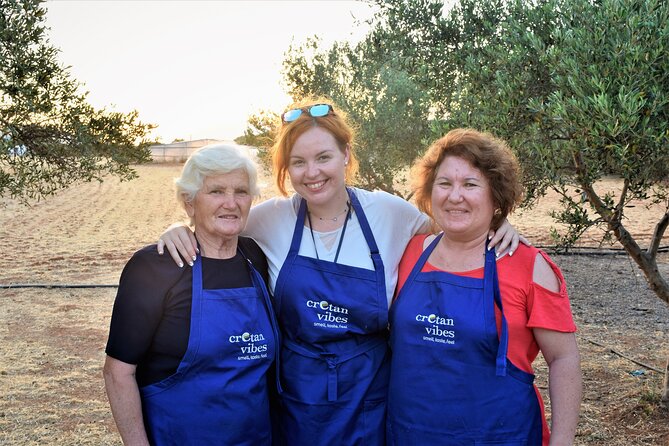
Marianna leads the class with her mother, Stella. Stella is the family cook and shares the techniques she has learned at home, while Marianna explains the process and keeps the group moving. The pair creates a good balance: one brings family tradition, the other helps make it clear to an international audience.
The atmosphere is sociable from the start. Homemade refreshments, water, and drinks such as Mama Stella’s lemonade are provided. Cinnamon refreshments are also part of the welcome, giving you an early taste of the family’s cooking before you begin chopping and stuffing.
The family connection goes beyond the two main hosts. You might meet other members of the family, including the grandmother who makes some of the fresh cheese used in the recipes. That detail gives the food a real chain of origin. The mizithra and other cheese used in the dishes are not anonymous ingredients picked from a supermarket shelf.
The group limit is 12 people. That is large enough to create a social evening, but small enough for the hosts to move around and help. Some sessions are much smaller, which can make the instruction especially personal. If you are shy about cooking, do not worry too much. The class is structured for beginners, and the teachers guide you step by step.
What you actually cook during the class
The menu changes with the season and available farm produce. You should expect to prepare several dishes rather than one single recipe. The experience describes this as a three-course meal, but the menu includes enough separate preparations to create a generous, multi-dish Cretan feast.
You may begin with dakos, one of Crete’s best-known simple dishes. A crisp rusk is topped with fresh tomato sauce, local mizithra cheese, oregano, and extra virgin olive oil. It looks humble, but it shows how Cretan cooking depends on good ingredients and careful balance rather than complicated technique.
Stuffed grape leaves, called dolmadakia, are another possible preparation. You learn to fill and roll the leaves, a task that takes patience but gives you a clear role in the meal. Stuffed zucchini flowers may also be on the table, using delicate blossoms and fresh ingredients from the farm.
The main dish can vary. Vegetarian or vegan giaxni may combine green beans, potatoes, zucchini, fresh tomato sauce, and ksinoxondros, a traditional Cretan product made by the family’s grandmother. If you prefer meat, possible dishes include lamb with artichokes, potatoes, fennel, and tomato sauce.
Other possible choices include avgolemono, made with free-range pork or chicken, leek or lettuce, fresh onions, potatoes, dill, eggs, and lemon juice. Cretan stifado may be made with chicken, rabbit, or snails, depending on the season and the group’s comfort level. Lamb with stamnagathi is another local option.
Dessert may be sarikopites or kalitsounia. These are pastries filled with fresh Cretan cheese and fried in the family’s own olive oil. The combination of salty or lightly sweet cheese, pastry, and frying makes a fitting end to a meal built around local produce.
The exact menu is not fixed, and that is both a strength and a limitation. You get food that reflects the season, but you cannot count on one specific dish every time. If you have your heart set on stuffed zucchini flowers or lamb, ask about the current menu before booking.
Why the hands-on approach works
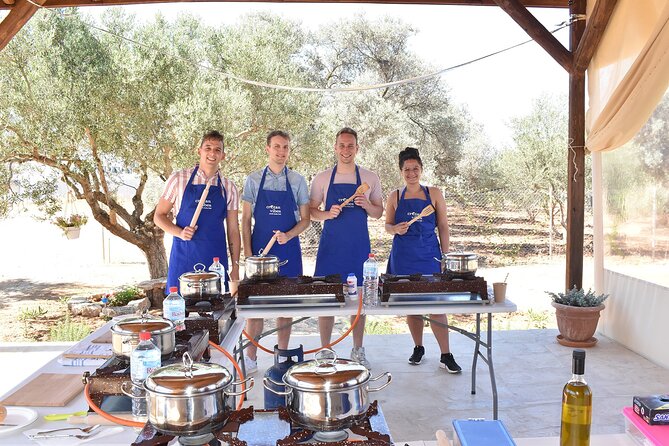
Many cooking classes give you a recipe, a quick demonstration, and a chance to stir one pot. This one asks you to participate in nearly every stage. You might prepare vegetables, fill grape leaves, work with pastry, learn how to cut potatoes, and cook at your own station.
That approach makes the meal more memorable because you understand the labor behind it. Stuffed leaves are not just something placed on a restaurant plate. You have seen how much care goes into shaping and cooking them.
The recipes are generally approachable. You do not need professional skills, and the hosts keep the pace relaxed rather than turning the evening into a test. At the same time, an experienced home cook will still find useful details in the family methods, especially when preparing seasonal vegetables and traditional sauces.
I particularly like that the food lesson is tied to Cretan culture. The hosts talk about crops, cheeses, local products, and the reasons certain ingredients belong together. You leave with more than instructions. You begin to understand why tomatoes, herbs, olive oil, vegetables, and cheese play such a central role in the island’s food.
More Olive Oil Tastings in Crete
- Knossos-Zeus Cave -Old Traditional Villages-Olive Oil Factory
★ 5.0 · 694 reviews - From Chania: Olive Oil, Wine, Cheese & Honey Tasting Tour
★ 4.6 · 490 reviews - Heraklion: Olive Farm Tour with Tasting of Local Delicacies
★ 4.9 · 411 reviews - Zeus Cave, Lassithi Plateau, Olive Oil Factory, Kritza, Pottery
★ 5.0 · 362 reviews
The olive oil tasting is more than a sample
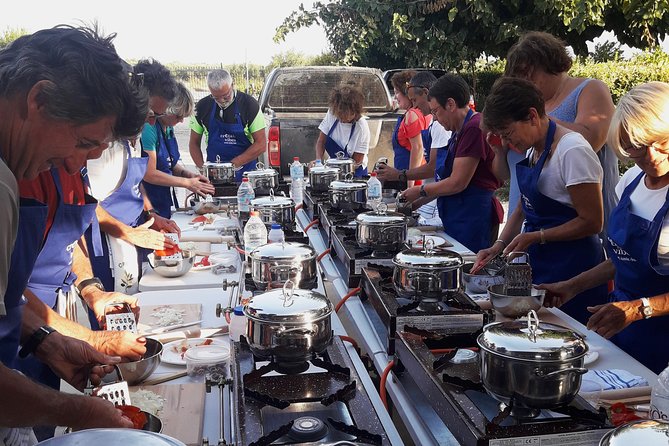
The olive oil portion adds value that many cooking classes skip. Cretan Vibes is an olive-growing family, so the tasting has a direct connection to the place where you are eating.
You learn how to recognize authentic extra virgin olive oil by examining its aromas, flavors, and bitterness. You are also taught how to notice defects in lower-quality oils and what to look for when buying olive oil in a shop.
This is useful beyond the evening itself. Greek shops and markets offer many bottles with attractive labels, but labels alone do not tell you how fresh or well-made the oil will be. Learning to taste for yourself gives you a practical tool for the rest of your trip and for choosing oil at home.
You also watch a video about the family’s olive harvest. It provides a behind-the-scenes look at the work that produces the oil on the table. This connects the tasting to the trees around you and turns a familiar Greek food staple into something you can judge with your own senses.
Sitting down to the meal
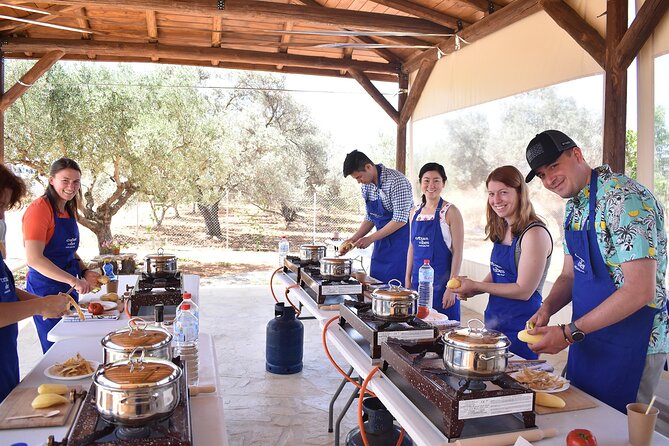
After the cooking is finished, you eat the food you prepared together. Local wine is included, along with water and nonalcoholic refreshments. Coffee or tea is also available.
The setting is part of the meal. Depending on the timing and season, you may eat as the sun sets over the farm. The outdoor dining area, olive trees, and gardens give the evening a calmer feel than a meal in town. You are still close to the cooking activity, so the meal feels like the natural second half of the class rather than a separate restaurant service.
The portions are generous. Leftovers are carefully packed for you to take away, which is a useful extra after several hours of cooking. You may even have enough to share later with someone staying in Crete.
The social side is important. You sit down with the other members of your group, share the dishes, and have time to talk with the hosts. If you are traveling with children, the class has worked well for families, including children aged 9, 11, and 13. A mixed-age group, from teenagers to older adults, can take part together.
Price, group size, and practical value
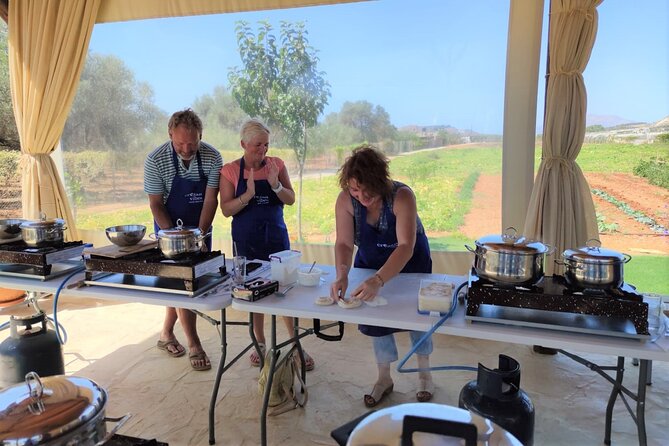
The price is $114.93 per person. That is not a bargain-basement cooking lesson, but it covers about four hours of activity, all ingredients and equipment, a full meal, local wine, homemade drinks, an olive oil tasting, recipes, a harvest video, and packed leftovers.
I consider the price fair if you want an evening that combines food, instruction, culture, and social time. A simple meal in Crete will cost less, but it will not teach you how to make the dishes or help you understand olive oil. A shorter demonstration may also cost less, but you would give up the main strength here, which is doing the work yourself.
The class accepts no more than 12 people. That limit is useful because the experience depends on personal instruction. A full group will feel livelier and less intimate than a class with two or four people, but each participant still has equipment and a defined role.
The activity is booked, on average, 41 days ahead. That suggests you should reserve early, especially if you have only a few days in Crete or need a particular date. Confirmation arrives at booking, and the ticket is mobile, so you do not need to print anything.
Private transportation is not included. The meeting point is Cretan Vibes, Ethniki Odos, Moires 704 00. If you are staying near Heraklion, allow time to reach the rural location and check your route before the day of the class. The setting is part of the appeal, but it is less convenient than a cooking school in central Heraklion.
Service animals are allowed, and the meeting area is near public transportation. Still, the supplied information does not provide a dedicated pickup service, so do not assume hotel transfers are part of the price.
Who should book this Cretan cooking class?
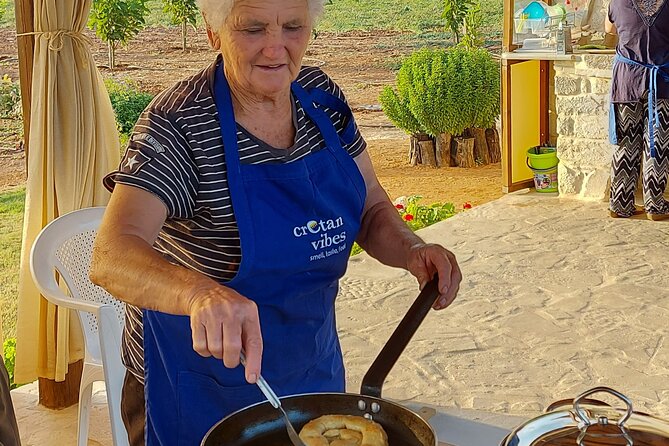
I would choose this experience if you want to meet local people rather than simply visit another attraction. It suits couples, families, solo visitors, and groups of friends who enjoy eating together and are happy to share a table with others.
It is also a strong choice for anyone who wants to bring part of Crete home. The recipes are sent by email afterward, and the olive oil guidance helps you make better choices long after the holiday ends.
You do not need cooking experience. The hosts make the class accessible for beginners, and the instruction is hands-on without being intimidating. If you are already comfortable in the kitchen, you will appreciate the traditional dishes, farm ingredients, and family techniques.
This may not be the right pick if you want a fast activity, a fixed menu, or a city-center location. It is also not ideal for someone who dislikes group meals, outdoor settings, or trying unfamiliar ingredients. Stifado can involve rabbit or snails, for example, although other menu options may be available.
Dietary needs should be raised before the class. A vegetarian or vegan main dish is part of the possible menu, and dietary restrictions have been accommodated with care, but you should not leave this conversation until arrival.
Cancellation and weather notes
You can cancel for a full refund up to 24 hours before the start time. Changes or cancellations made less than 24 hours ahead are not accepted for a refund.
The class depends on good weather because cooking and dining take place outdoors. If poor weather forces cancellation, you are offered another date or a full refund. The experience also requires a minimum number of participants, so a cancellation for that reason brings the same choice of a new date, another experience, or a refund.
Should you book Cretan Vibes?
Book it if you want a personal, food-centered evening with real participation. Marianna and Stella are the heart of the experience, and the combination of family recipes, farm ingredients, olive oil tasting, and a shared meal gives you a strong sense of everyday Cretan food culture.
I would especially recommend it for first-time visitors who want something beyond beaches and archaeological sites. Check the route to Moires, ask about the seasonal menu if you have dietary or ingredient concerns, and leave enough time for the meal to unfold.
Skip it only if you need a city-center activity or prefer to watch rather than cook. For everyone else, the four-hour format, generous food, practical recipes, and warm family setting make this a worthwhile use of an evening in Crete.
FAQ
Where does the Cretan cooking class take place?
The class takes place at Cretan Vibes, located at Ethniki Odos, Moires 704 00, Greece.
How long does the experience last?
The advertised duration is approximately four hours. The cooking and meal may take about three and a half to four hours.
What language is the class offered in?
The experience is offered in English.
How many people can join the class?
The activity has a maximum group size of 12 people.
Is transportation included?
Private transportation is not included. You need to make your own way to the meeting point in Moires.
What food might I prepare?
Possible dishes include dakos, stuffed grape leaves, stuffed zucchini flowers, vegetarian or vegan giaxni, lamb with artichokes, avgolemono, stifado, lamb with stamnagathi, sarikopites, and kalitsounia. The menu can vary by season.
Are meals and drinks included?
Yes. You receive a full meal after the class, local wine, water, homemade refreshments, and coffee or tea.
Do I receive recipes afterward?
Yes. The recipes are sent to you by email after the experience.
Can I take food home?
Yes. Leftovers are packed for you to take with you.
What happens if the weather is poor?
The experience requires good weather. If it is canceled because of poor weather, you are offered a different date or a full refund.
What is the cancellation policy?
You can cancel up to 24 hours before the experience start time for a full refund. Cancellations or changes made less than 24 hours before the start time are not accepted for a refund.
More Workshops in Crete
- Heraklion: Beginner Scuba Diving Lesson with PADI Instructor
★ 4.9 · 355 reviews - Full-Day Jeep Safari Tour with Cooking Lesson
★ 5.0 · 284 reviews - Moires: Cooking Class and Olive Oil Tasting at a Family Farm
★ 5.0 · 93 reviews - Crete: Sightseeing Day Trip with Cooking Lesson and Lunch
★ 4.8 · 77 reviews
Fresh on the Crete list
- Heraklion: Sunrise Balloon Flight & Sunset Catamaran Cruise★ 5.0 · 45 reviews
- Hersonissos: Alar Spectacular Dinner Show★ 4.7 · 45 reviews
- Kissamos: Balos & Gramvousa Sailing Cruise with Meal★ 4.6 · 45 reviews
- Chania: Elafonisi & Falasarna Private Tour w/olive oil tasting★ 5.0 · 46 reviews
- Samaria Gorge Trek: Full-Day Excursion from Rethymno with Guide★ 4.5 · 46 reviews
- From Rethymno: Santorini Guided Tour and Cruise from Crete★ 4.4 · 46 reviews
- Heraklion: Sunset Luxury Cruise with Sushi and Open Bar★ 5.0 · 46 reviews
- Crete: Coastline Snorkeling Cruise from Hersonissos Port★ 4.3 · 46 reviews
Crete Tours, compared.
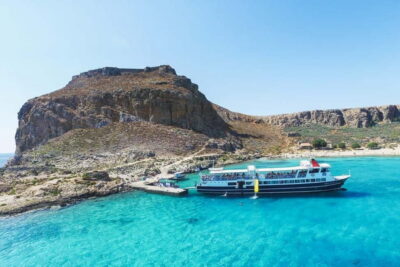
From Kissamos Port: Boat Cruise to Balos Lagoon & Gramvousa
Read our review →
Day Trip to Agios Nikolaos and Spinalonga Island
Read our review →
Full-Day Samaria Gorge Trek Excursion & Guide
Read our review →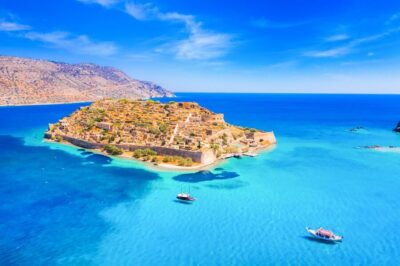

Dia Island Sailboat Cruise with Swimming and Meal
Read our review →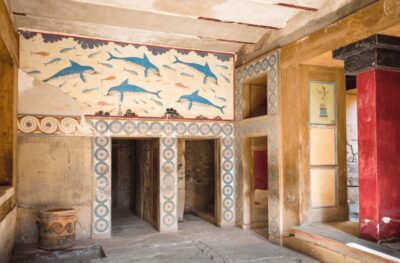
Knossos Palace Entry Ticket with Optional Audio Guide
Read our review →
Browse the lists this tour appears in