
Reviewed · CRETE TOURS
Chania: Authentic Cooking Class
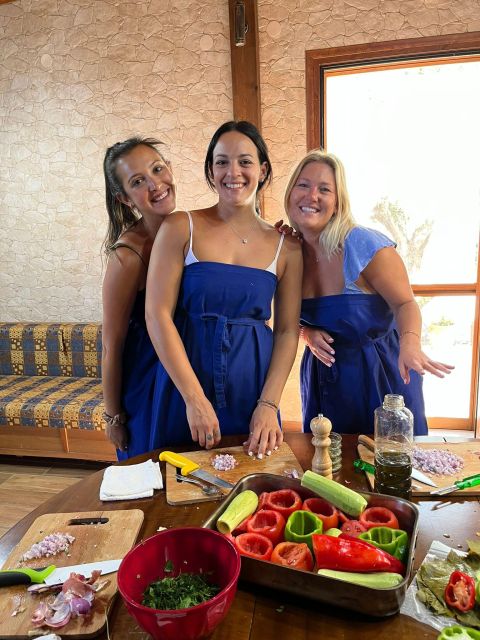
The most memorable part of this Chania cooking class is the setting: you prepare a five-dish Cretan meal at a family home in Nerokourou, beneath avocado and olive trees, with a wood-fired stone oven working in the background. The lesson begins with Veerna’s homemade welcome drink or Greek coffee, then moves from garden to kitchen to shared table.
I like the fresh garden ingredients and the way the food is tied to Cretan life, not just presented as a set of recipes. I also like the warm family welcome from Veerna, Kostas, Nikos, and the rest of the team. You are treated less like a customer and more like someone invited in for lunch.
The main thing to consider is transportation. The class is about 10 to 15 minutes from central Chania, but transport is not included in the $129 price. You can arrive by car or taxi, or arrange a semi-private transfer for an extra fee.
Key points to know

- The thieves dinner begins the class: Oven-roasted lamb cooks for more than two hours in a wood-fired stone oven while you learn the story behind its unusual name.
- Five essential Cretan dishes: You prepare stuffed vegetables, dolmades, kalitsounia, tzatziki, and dakos, with dessert served at the end.
- Veerna leads the kitchen: Her kalitsounia are a long-running local specialty, and she teaches practical techniques you can attempt at home.
- A real family setting: The class takes place at the family home and olive farm, where relatives and familiar faces may stop in to say hello.
- Wine and raki are included: Lunch or dinner comes with generous amounts of local wine and raki.
- Allow more than four hours: The advertised duration is four hours, though the meal, conversation, and final drinks can make the visit last longer.
A Cretan kitchen in the olive grove
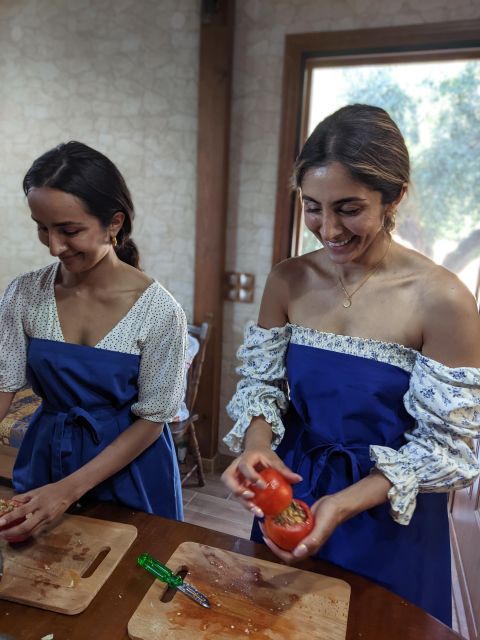
This is not a demonstration where you sit at a distance and watch someone else cook. You take part from the start, gathering ingredients, rolling dough, filling vegetables, and shaping grape leaves.
The setting helps explain why the food tastes the way it does. The cooking area sits beside the family’s olive farm, with a garden supplying herbs and vegetables. Ingredients come either directly from the property or from local farmers, so the lesson has a useful connection to the land around Chania.
You begin with a homemade refreshment or Greek coffee from Veerna. Cookies accompany the drink, giving everyone time to settle in and hear about the menu. This opening matters because the class is social as well as practical. You are likely to be cooking with people from several countries, and the relaxed start gives the group a chance to meet before the work begins.
Veerna is the central figure in the kitchen. Her teaching style is energetic and hands-on. Kostas, Nikos, and other family members may also help with explanations, jokes, serving, and timing. The family atmosphere is one of the strongest parts of the experience, though it also means this is not a quiet, formal culinary school.
More Cooking Classes in Crete
- Chania: Authentic Cooking Class in the White Mountains
★ 4.9 · 529 reviews - The Real Cretan Cooking Experience
★ 5.0 · 528 reviews - Chania Cooking Class-The Authentic Enjoy traditional Cretan meal
★ 5.0 · 339 reviews
The thieves dinner starts the four-hour schedule
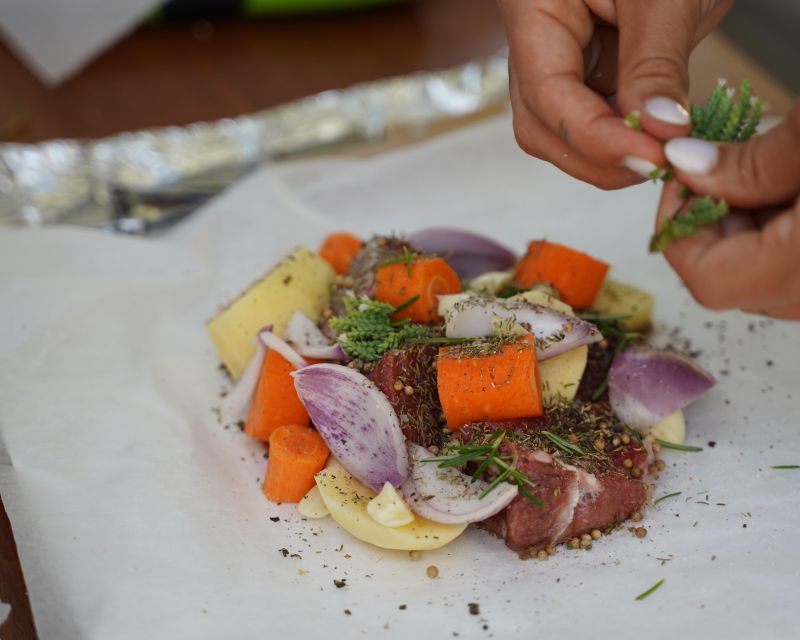
The first serious task is the oven-roasted lamb. It goes into the wood-fired stone oven early, since it needs more than two hours to cook.
You also learn why it is called the thieves dinner. The story connects the dish with times when Cretans cooked meat slowly and secretly in covered ovens to avoid detection. That bit of history gives the recipe a purpose beyond its ingredients. You are not simply preparing roasted lamb. You are learning how food reflects the hardships, customs, and resourcefulness of the island.
Starting with the lamb is also smart kitchen planning. Once it is cooking, the class can move on to dishes that need more direct attention. You are given explanations about preparation and cooking rather than being left to guess what to do next.
The lamb is a major part of the meal, so this class may be less suitable if you want a vegetarian-only experience. A vegetarian alternative has been provided for people who need one, but you should state your needs when booking rather than assume the menu will be changed automatically.
Garden vegetables and the careful art of dolmades
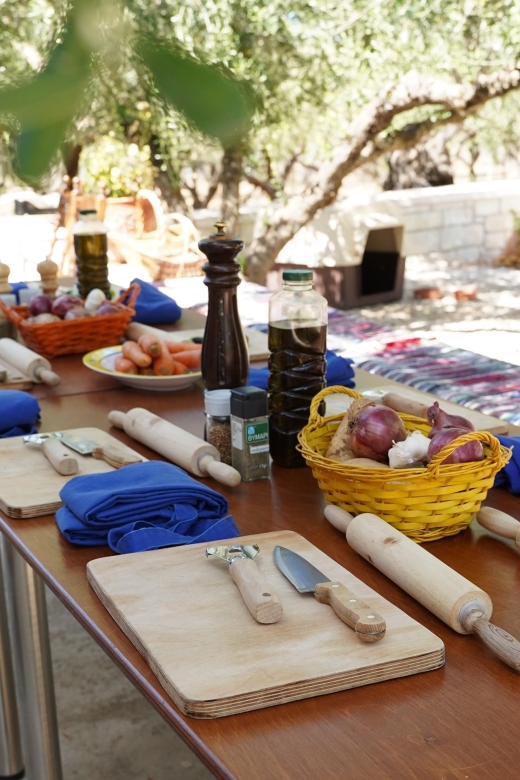
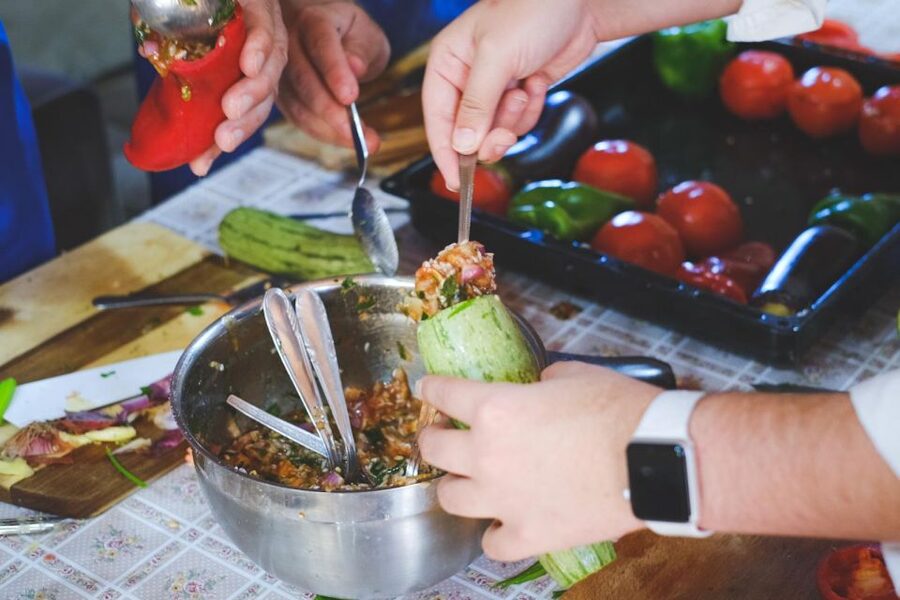
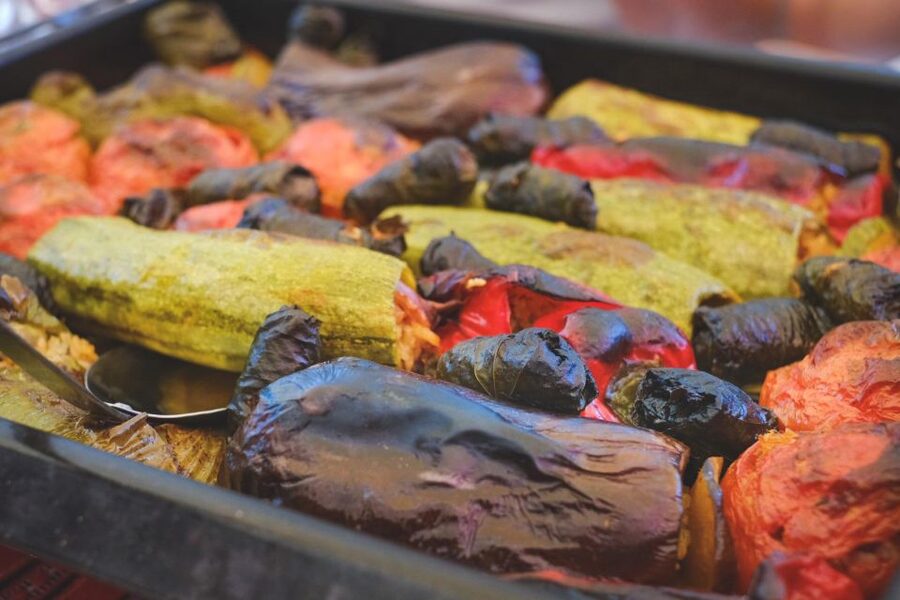
Next comes the hands-on preparation of stuffed vegetables and stuffed grape leaves, known as dolmades. You gather herbs and vegetables from the garden for the filling, which gives you a better feel for the ingredients than a pre-portioned cooking kit would.
Rolling grape leaves takes patience. The leaves must be filled without overloading them, then rolled tightly enough to hold their shape while cooking. Veerna demonstrates the technique, and you get your own chance to practice. This is one of the most useful skills in the class because it is simple to understand but easy to get wrong at first.
The stuffed vegetables and dolmades then go into the oven. As with the lamb, the cooking time creates natural pauses for conversation, garden visits, and more preparation. The schedule is active without requiring you to rush through every stage.
Families can do well here. An 11-year-old and a 14-year-old both took part successfully in one family booking, and the hosts made an effort to include them. The work is shared, so younger cooks can join in without carrying the full responsibility for an entire dish.
Rolling dough for Veerna’s kalitsounia
The kalitsounia are likely to be the class’s most distinctive pastry. These traditional Cretan pies are made with dough filled with cheese and wild greens.
You roll out the dough with a rolling pin, add the filling, and shape the pies before they go to the oven. The process is accessible enough for a first-time cook, but it still teaches a real technique. One participant was surprised by how manageable making phyllo-style dough could be, though the useful test comes later when you try it in your own kitchen.
Veerna’s kalitsounia have been sold for years, so this is more than a generic Greek pastry lesson. You are learning a local specialty from someone who has made it repeatedly and knows how the dough should feel. The wild greens also show how Cretan cooking makes good use of simple seasonal ingredients.
Do not expect a precision pastry workshop with individual workstations and exact professional measurements. The charm here is learning by watching, trying, and receiving help. If you like cooking with other people and asking questions as you work, that format should suit you well.
More cooking classes around Chania:
- Athens: Classic Cooking Class with Market Visit and Wine
★ 5.0 · 1,101 reviews - Athens: Food Market Visit and Cooking Class with Wine
★ 4.9 · 1,087 reviews - Greek Cuisine Cooking Class in Santorini with Recipes and Wine
★ 5.0 · 969 reviews - Naxos: Half-Day Cooking Class at Basiliko Family Tavern
★ 5.0 · 887 reviews
Tzatziki and dakos, the fast favorites
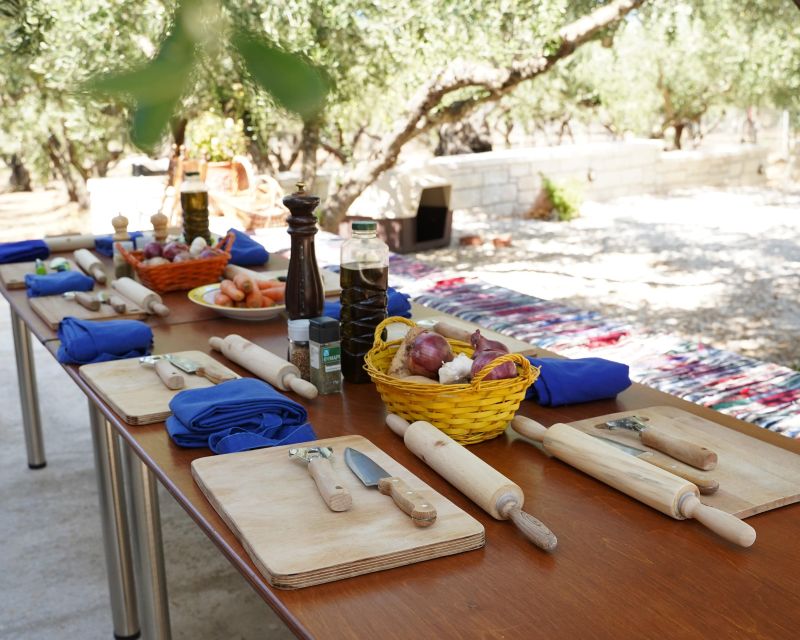
The appetizers come last in the preparation but are enjoyed first. You make tzatziki and dakos, two easy dishes that are particularly useful to recreate at home.
Tzatziki is familiar to anyone who has eaten Greek food, but preparing it here helps you understand how it fits into a larger Cretan meal. Dakos, made around crisp barley rusks and fresh toppings, gives you a simple way to use local produce without elaborate cooking.
These dishes provide a welcome change of pace after the more delicate work of rolling grape leaves and pastry dough. They are also the first things ready to eat, so you can snack while the main dishes finish cooking.
I like this part of the menu because it balances the class. You get a few dishes that require patience and technique, then two quick recipes that can become reliable additions to your meals at home. The food is not designed only to look impressive during the class. Much of it is practical home cooking.
Sitting down to a full Cretan meal
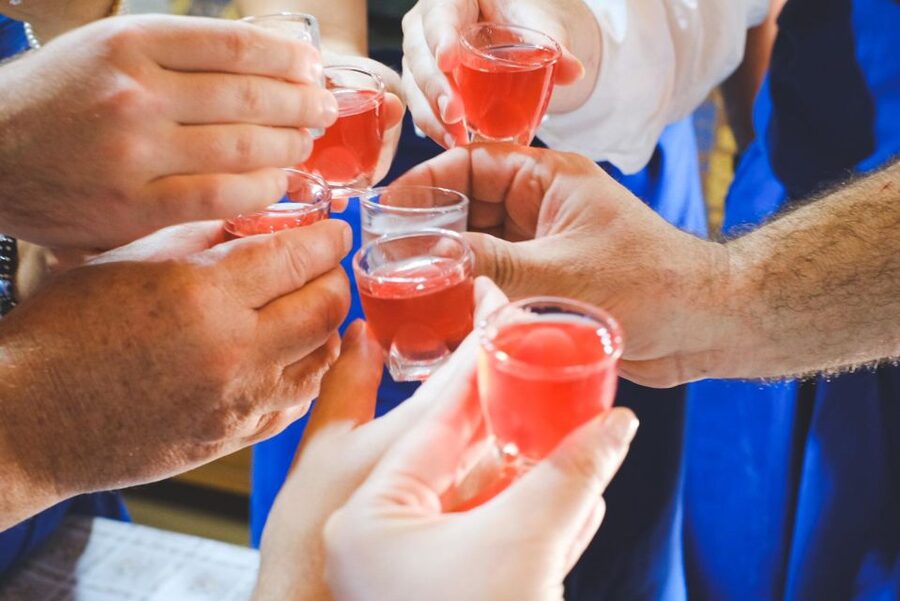
When the cooking is done, everyone sits down together to eat what the group has prepared. This is not a small tasting menu. The lamb, stuffed vegetables, dolmades, kalitsounia, tzatziki, and dakos create a substantial meal, followed by something sweet for dessert.
Local wine is included in generous amounts, and raki is served as well. The drinks help keep the meal social, but you should pace yourself. Four hours of cooking, food, wine, and raki can make this a long, leisurely afternoon or evening rather than a quick scheduled activity.
The meal is also when the family setting makes the biggest difference. You have time to talk with Veerna and her relatives, learn more about Cretan customs, and meet the other people in the class. The atmosphere can feel like a large family table, which is precisely what many people want from a food experience in Crete.
It is worth leaving room for dessert. Something sweet is offered at the end, and the meal may also include homemade flavored raki. Leftovers have been packed to take away on occasion, though you should not treat that as a guaranteed part of every booking.
What the setting adds to the experience
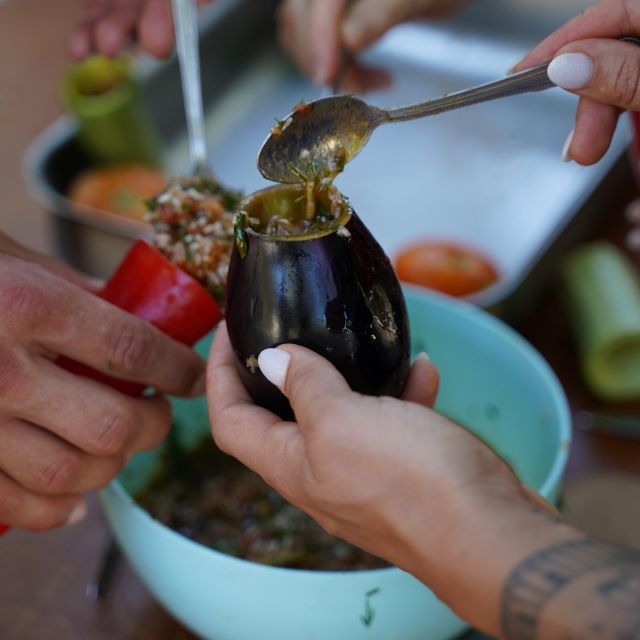
The olive grove and garden are not just a pretty backdrop. They give the cooking lesson a clear sense of place.
You can visit the herb garden and olive farm while dishes bake. There are also farm animals and puppies on the property, details that can make the setting especially appealing for families. The area overlooks the family’s olive orchard, providing a quiet break from central Chania.
Familiar faces may stop by to greet the people attending the class. That can make the visit feel personal and spontaneous. It also means the experience is less controlled than a commercial kitchen demonstration. If you prefer a tightly scripted lesson with no interruptions, this may feel informal. If you want contact with ordinary family life, the informality is a plus.
The hosts also make room for celebrations. A birthday cake was arranged for one participant during the class, showing that the family pays attention to special occasions when they are mentioned in advance.
Is $129 a fair price?
At $129 per person, this is not the cheapest way to eat in Chania. You can find a good meal in the city for much less, and a standard cooking demonstration may cost less as well.
The price makes more sense when you count what is included: about four hours of instruction, all ingredients, a full lunch or dinner, dessert, local wine, and raki. You are also paying for access to a family property, the garden, the olive farm, and the time spent preparing several dishes rather than simply watching one recipe.
I consider it good value if you want an activity that combines food, culture, social time, and a full meal. It is weaker value if you mainly want a quick recipe lesson or if you do not drink and have little interest in the meal afterward.
The recipes add value after the trip. Several people received recipes to try at home, and the dishes are accessible enough for ordinary cooks to attempt. The kalitsounia and dolmades require more patience, but tzatziki, dakos, and stuffed vegetables should be approachable starting points.
Getting to Nerokourou from Chania
The cooking class is in Nerokourou, roughly 10 to 15 minutes from central Chania by car. The exact location is provided through the booking information, and you can park along the fence.
Transportation to the class is not included in the advertised price. A taxi is the simplest option if you are staying in Chania without a car. One booking from the cruise port cost about 20 euros by taxi, though your fare will depend on your pickup point.
Transfers can be arranged for an extra fee. The service uses a nine-seat van and a five-seat electric vehicle, and the ride may be shared with other people attending the class. Ask for the transfer when booking and provide your location, since the added fee depends on where you are staying.
The property is wheelchair accessible. If you need transport or specific assistance, confirm the arrangements in advance, since accessibility of the venue does not mean accessible transportation is automatically included.
You can also drive yourself. Parking along the fence is available, but remember that generous wine and raki are part of the meal. A taxi or arranged transfer is the sensible choice if you plan to drink.
Who will enjoy this class most?
I would choose this for anyone who wants food to be the center of a Cretan visit, rather than a quick stop between sightseeing plans.
It suits couples, families, solo visitors, and people who enjoy meeting others around a shared table. Children and teenagers can take part, and the hosts are used to keeping the mood friendly and inclusive.
It is also a strong choice for cruise passengers with enough time in port. The drive from Chania is short, and the class fills several hours with a meal included. Build in extra time for the return journey and the possibility that the final conversation lasts longer than planned.
You may want to skip it if you need a tightly timed schedule, dislike group activities, or want advanced culinary training. The class is social, relaxed, and family-led. It focuses on confidence, local food, and enjoyment rather than professional certification.
Booking at least 24 hours ahead gives you the option of a full refund if plans change. You can also reserve now and pay later, which is helpful when you are still arranging your Chania schedule.
Should you book Veerna’s cooking class?
I would book this class if you have four hours to spare and want a personal connection to Cretan food. The best parts are the family home, the garden ingredients, the wood-fired lamb, and the shared meal with wine and raki.
Plan the transport before you confirm, especially if you are staying outside central Chania or arriving by cruise ship. Also mention dietary needs, mobility concerns, birthdays, and transfer requests in advance.
For a first cooking class in Greece, this offers a generous mix of instruction and hospitality. You leave with a full stomach, several practical recipes, and a better sense of how Cretan cooking fits into daily family life. That makes the $129 price easier to justify than a simple restaurant meal.
FAQ
Where is the Chania cooking class located?
The class is in Nerokourou, about 10 to 15 minutes from central Chania. The exact location is provided through the booking information.
Is transportation included?
Transportation is not included in the activity price. You can arrive by car or taxi, or request a transfer for an additional fee.
Can I park at the cooking class?
Yes. If you drive, you can park along the fence at the property.
How long does the cooking class last?
The advertised duration is four hours. The meal and conversation may make the visit last longer, so avoid scheduling another activity immediately afterward.
What dishes will I prepare?
You will prepare oven-roasted lamb, stuffed vegetables, stuffed grape leaves called dolmades, kalitsounia filled with cheese and wild greens, tzatziki, and dakos. Dessert is also served.
Are food and drinks included?
Yes. Ingredients, lunch or dinner, dessert, local wine, and raki are included.
Is the activity wheelchair accessible?
Yes, the cooking class is listed as wheelchair accessible. Transportation is separate, so confirm any transfer and assistance needs before booking.
Can I cancel or pay later?
You can cancel up to 24 hours before the activity for a full refund. Reserve now and pay later is also available.
More Workshops in Chania
- Greek Cooking Class in Athens Including Rooftop Dinner with Acropolis View
★ 5.0 · 826 reviews - Greek Small-Group Athens Cooking Class & Dinner
★ 5.0 · 574 reviews - Naxos:Half-day cooking class at Basiliko
★ 5.0 · 457 reviews - Athens: Greek Cooking Class & Dinner on a Rooftop
★ 5.0 · 383 reviews
Fresh on the Chania list
- Chania: Elafonisi & Falasarna Private Tour w/olive oil tasting★ 5.0 · 46 reviews
- Samaria Gorge Trek: Full-Day Excursion from Rethymno with Guide★ 4.5 · 46 reviews
- Chania Alternative Sunset Bike Tour★ 4.9 · 48 reviews
- Polaris Buggy 4-Hour Safari from Rethymno Town★ 4.5 · 48 reviews
- Crete White Mountains Safari Including Lunch★ 4.5 · 48 reviews
- From Chania Private half day Winery-Olive factory-Kournas lake★ 5.0 · 50 reviews
- Elafonissi: Private Beach Day Trip with SUP★ 4.8 · 51 reviews
- Samaria Gorge Trek: Full-Day Excursion from Chania with Guide★ 4.5 · 51 reviews
Crete Tours, compared.
From Kissamos Port: Boat Cruise to Balos Lagoon & Gramvousa
Read our review →
Day Trip to Agios Nikolaos and Spinalonga Island
Read our review →
Full-Day Samaria Gorge Trek Excursion & Guide
Read our review →

Dia Island Sailboat Cruise with Swimming and Meal
Read our review →
Knossos Palace Entry Ticket with Optional Audio Guide
Read our review →
Browse the lists this tour appears in