
Reviewed · CRETE TOURS
Chania: Old Town Highlights Guided Tour with Street Food
Chania’s best introduction may come with a plate in your hand. This four-hour walk links the city’s Venetian streets, Ottoman traces, harbor sights, food shops, bakeries, and small local businesses, so you learn about Chania while tasting your way through it. I especially like the generous food portions and the chance to see places you might miss on your own. The main catch is simple: this is a food-heavy walking tour, and it is not suitable for wheelchair users, people with mobility impairments, or people with gluten intolerance.
I also like that the tour works well on your first day. Guides such as Manos, Eleni, Aria, Adonis, and Goldy are praised for explaining local life in an easy, personal way and for offering restaurant and sightseeing suggestions afterward. Bring good walking shoes, skip breakfast, and leave your large bag at the hotel.
Key points at a glance
- A four-hour food walk: Expect much more than token samples, with tastings that can add up to a full meal.
- History with a local voice: Learn how Venetian, Renaissance, and Ottoman influences shaped Chania’s streets and buildings.
- Real food shopping stops: Browse shops selling olive oil, wine, honey, cheese, herbs, spices, olives, and other Cretan products.
- Small-group character: Private and small-group options make it easier to ask questions and adjust the pace.
- Several standout guides: Manos, Eleni, Aria, Adonis, Goldy, and others are known for warm, lively explanations.
- Best booked early in your stay: You can use the guide’s local suggestions for later meals and sightseeing.
Starting at Bougatsa Chania
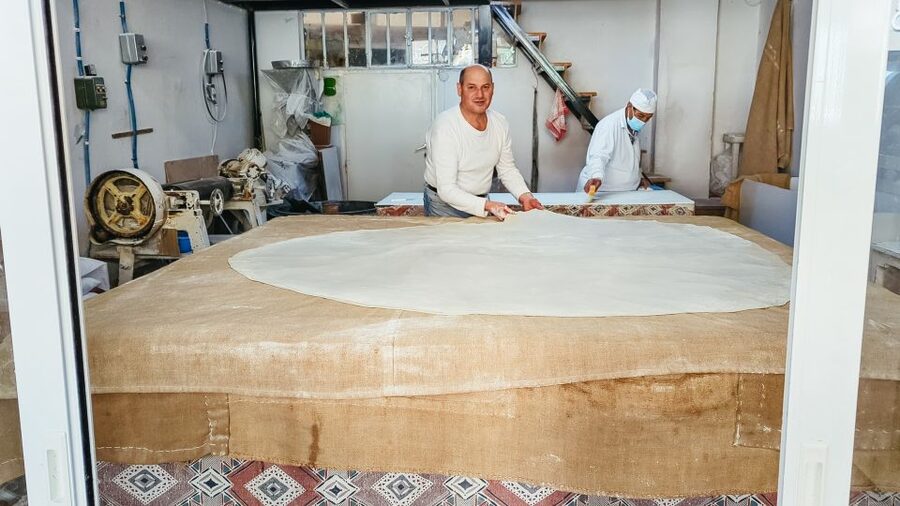
The meeting point is Bougatsa Chania, a sensible place to begin a food walk. Bougatsa is a local pastry made with thin pastry layers and a filling that may be sweet or savory. The tour information does not promise one exact tasting menu, but the experience commonly includes a pastry stop near where this specialty is made.
That opening matters because it puts Cretan food in context right away. You are not just handed a bite and sent onward. You may see the craft behind the pastry, then hear how local food fits into daily life. One account describes starting with a local pastry and then seeing the remarkable skill involved in making it.
Give yourself enough time to find the meeting point. One person found the Greek name on the building a little confusing, though the guide located them across the street. I would save the meeting details on your phone and arrive a few minutes early, especially if you are coming from the bus station or a cruise transfer.
There is no hotel pickup or drop-off. You make your own way to the starting point, and the walk remains centered on Chania. That is a minor inconvenience for some visitors, but it also means the tour begins right in the city rather than wasting time in a vehicle.
More Food Tours in Crete
- Walking “Food tasting tour” in the town of Chania
★ 5.0 · 297 reviews - Crete: Full-Day Cretan Wines, Olive Oil, Raki and Food Tour
★ 5.0 · 264 reviews - The Delicious Chania Street Food Tour
★ 5.0 · 138 reviews
From the market into Chania’s old streets
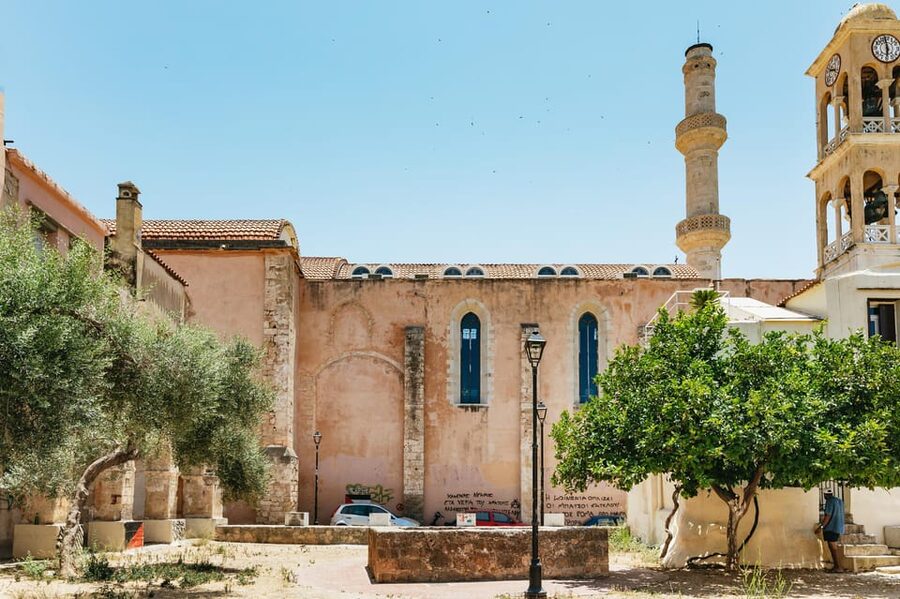
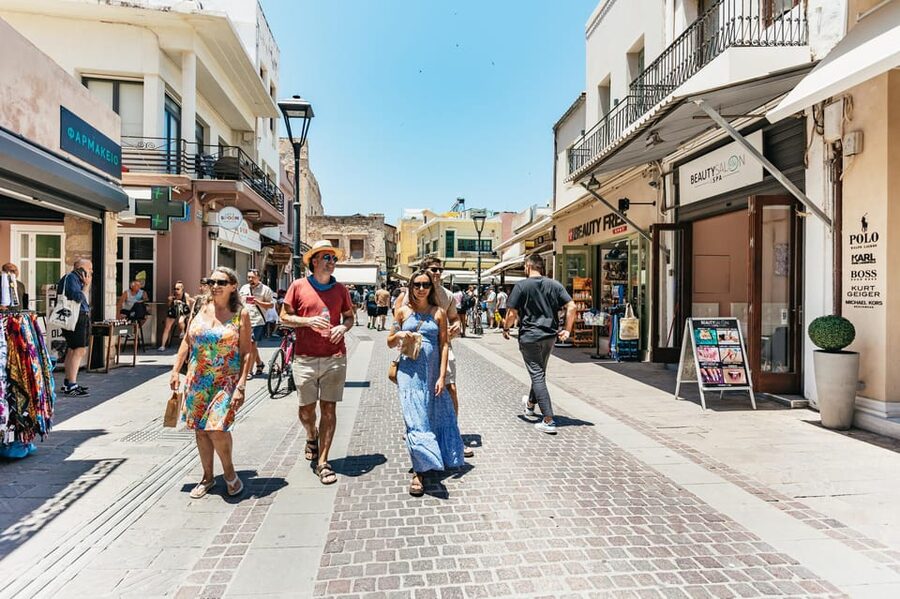
After meeting your guide, you head from the market area toward the Old Town. The shift is quick: modern shopping gives way to narrow cobbled lanes, old façades, workshops, taverns, and small stores. Chania is a city best understood on foot, because its character is in the turns and details rather than in one isolated monument.
Your guide explains the city’s Venetian past, Renaissance heritage, and Ottoman influences as you walk. The value here is the connection between architecture and history. A stone building, an arch, a doorway, or a street plan makes more sense when you know which rulers and trading cultures shaped it.
The walk is not presented as a formal museum visit with long lectures. It is a moving conversation. Guides answer questions, point out landmarks, and add stories about Greek customs and local life. Manos is repeatedly praised for his storytelling and humor, while Eleni and Aria are described as friendly, energetic, and easy to talk with. Those qualities matter in a four-hour walk. A dry history lesson can feel long, but a guide who reads the group well keeps the pace comfortable.
You will mingle with normal city life as you go. That does not mean every stop is hidden or exclusive. It means the route includes everyday food shops and working businesses, not only the postcard views along the harbor.
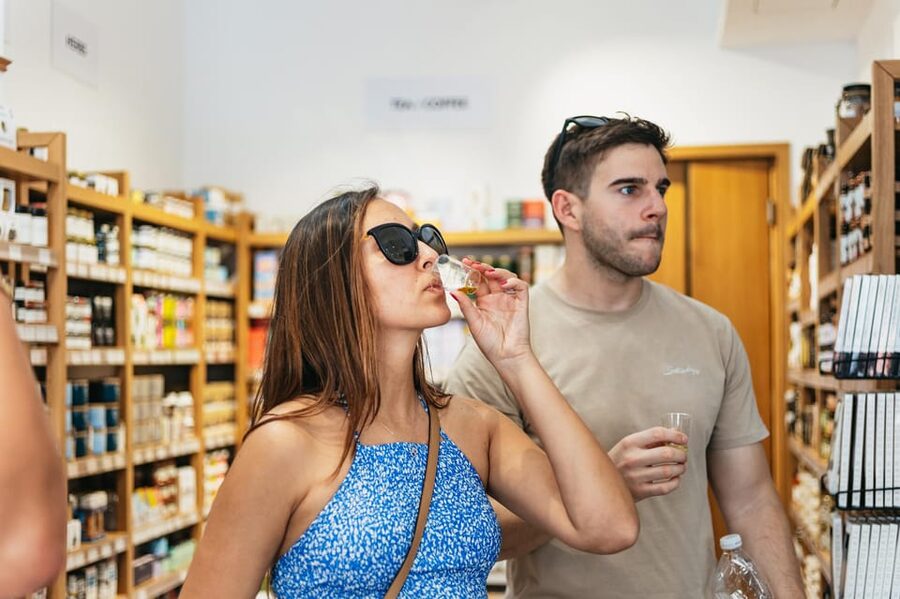
Tasting olive oil, honey, cheese, and local products
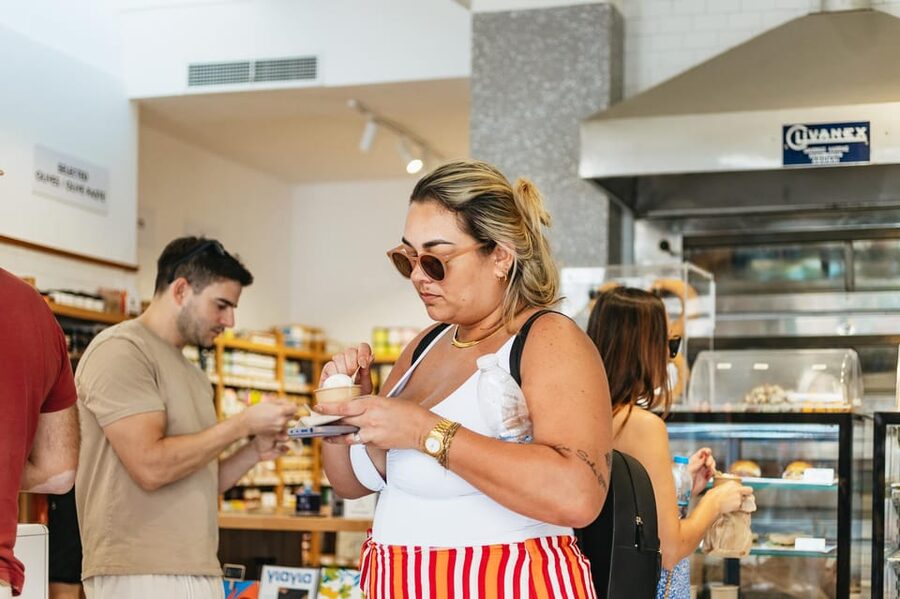
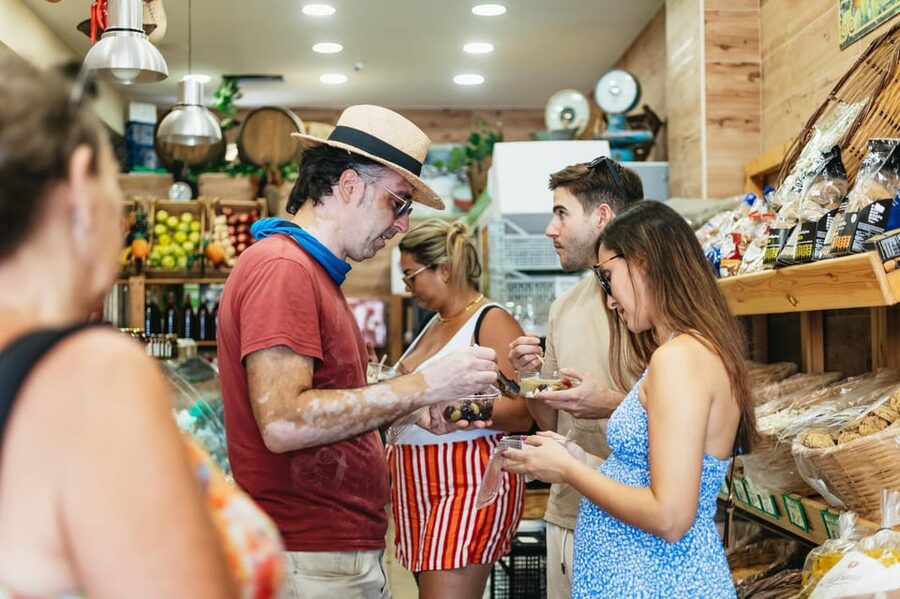
The food portion is the tour’s strongest feature. Stops can include specialty shops and local vendors offering olive oils, honey, cheeses, olives, bread, herbs, spices, wine, spreads, and other regional products. One particularly memorable tasting included several honeys, pistachio butter, balsamic glaze, and olive oils.
This kind of tasting is useful even if you are not planning to buy anything. Crete’s food culture can seem simple at first glance, but the differences between oils, honeys, cheeses, and herbs become clearer when someone explains what you are trying. Your guide can also help you understand what makes a product local and how it is used at home.
The route may include time in a specialized grocery shop. That is a good place to compare products and pick up gifts, though you should not feel obliged to shop. If you do buy something, remember that liquids and jars add weight quickly, especially if you are traveling with only carry-on luggage.
The portions are a real consideration. This is not the kind of food tour where each stop provides one tiny taste. Several stops can offer enough food to feel like small meals, and the final meal may leave you completely full. The most useful tip from the experience is also the simplest: do not eat breakfast before you go.
Food allergies deserve a careful word. Guides have been attentive to individual needs in some cases, but the activity is specifically listed as unsuitable for people with gluten intolerance. If gluten is a serious concern, this is not the right tour to gamble on. Other dietary restrictions should be raised before booking, but only the supplied information confirms gluten intolerance as a reason not to participate.
Bakeries, pastry makers, and Cretan street food
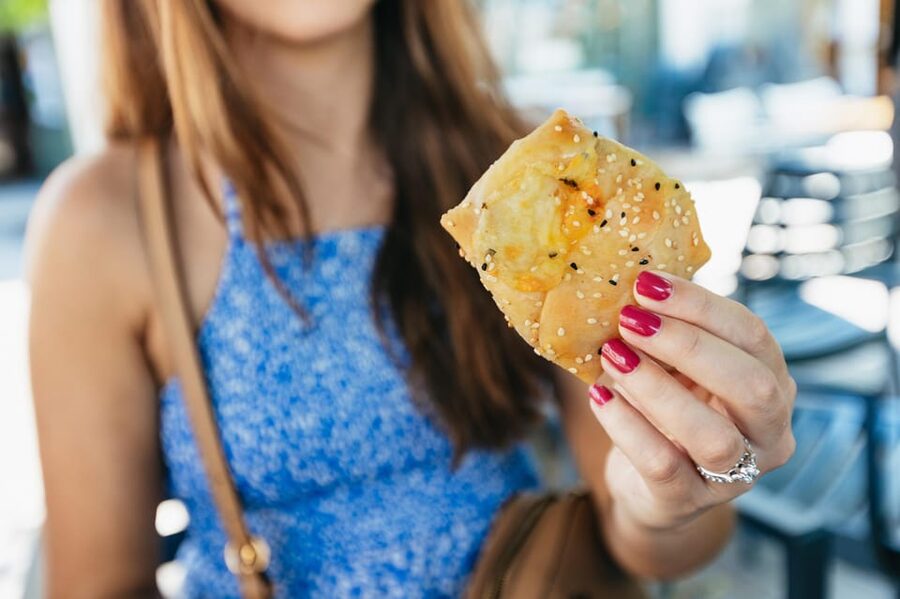
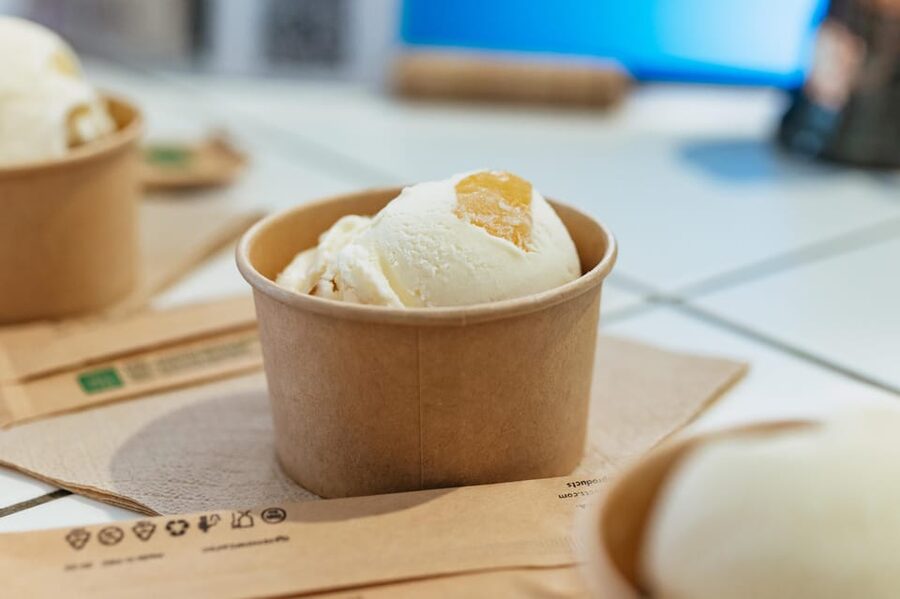
The food stops appear to mix prepared samples with visits to businesses where local products are made or sold. You might taste meat pies, breads, bougatsa, baklava, meatballs, dips, cheeses, olives, ice cream, and sweets. A food list can vary, so do not book expecting a fixed menu of exactly fourteen items, even though one person counted more than that.
That variety is one reason the $106 price can make sense. You are not paying only for a walk through the Old Town. The fee covers a local guide, the walking tour, savory Cretan tastings, and coffee or herbal tea. If the food portions are as generous as described, the experience can replace a substantial meal while also giving you a useful introduction to local eating.
Still, value depends on what you want. If your main goal is an in-depth visit to major historic sites, a dedicated history tour may suit you better. If you want a long, relaxed restaurant lunch, you may prefer to spend the same money at a good taverna. This tour earns its price by combining food, stories, neighborhood orientation, and personal recommendations in one half-day.
Some stops may also introduce you to local crafts. The route has included knife makers, rug makers, filo makers, and leather shops, including a leather business that had been operating for 84 years. These visits add texture to the walk. They show that Chania’s Old Town is not merely a backdrop for photographs, but a place where people still make and sell things.
More food tours around Crete:
- Rethymno Old Town: A Traditional Cretan Food Tour
★ 4.9 · 103 reviews - Sunset Craft Beer & Food Tour – Chania Old Port
★ 5.0 · 86 reviews - Chania Walking Food Tours Crete with a local!
★ 4.5 · 61 reviews - Chania Area: Food Tasting Tour with Winery Visit & Swim Stop
★ 4.5 · 58 reviews
The harbor and Chania’s Venetian character
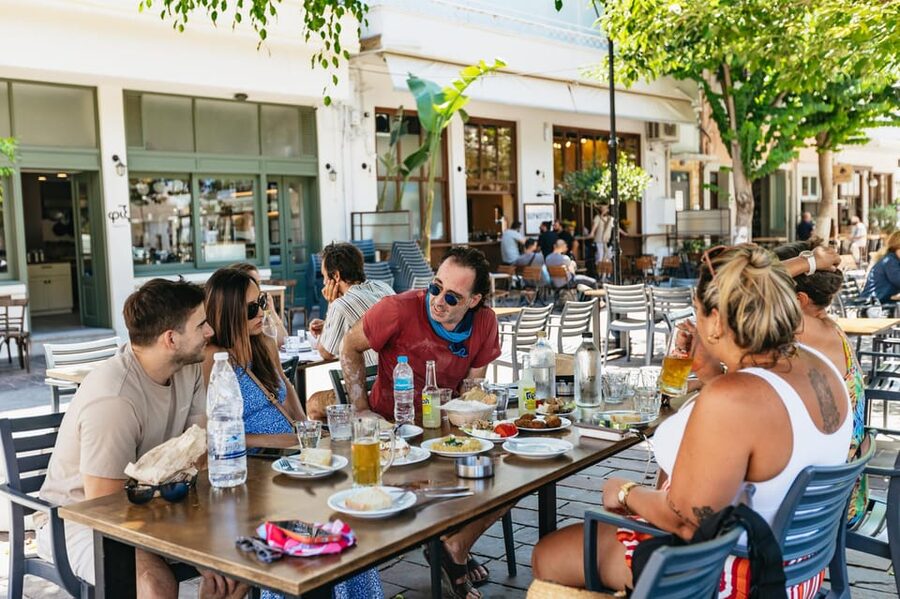
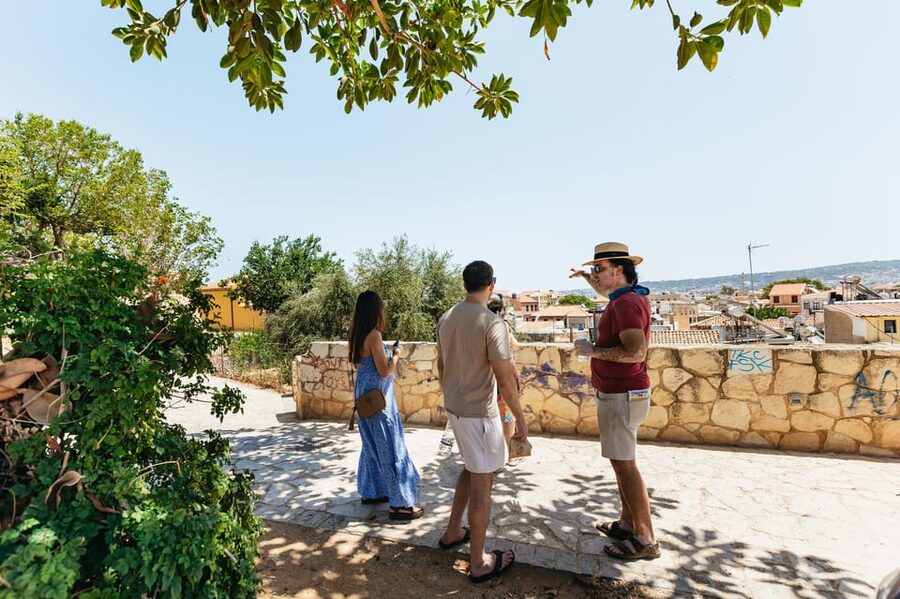
The route includes the harbor area, where Chania’s history becomes especially visible. The waterfront gives you a broader sense of the city after the close lanes of the market and Old Town. Your guide points out notable buildings and explains how the port shaped Chania’s connections with other cultures.
The Venetian layer is central to the experience, but it is only one part of the story. Ottoman influence and later local traditions also appear in the architecture and street life. That mixture is what gives Chania its particular look. The guide’s job is to help you read those layers without turning the walk into a list of dates.
The harbor can be busy, and the Old Town’s lanes can be uneven and crowded. Wear shoes with firm soles rather than sandals that offer little support. Sunglasses are also recommended, particularly if your tour includes open waterfront stretches.
The pace is generally relaxed, but four hours on foot is still four hours. The activity is not suitable for people with mobility impairments or wheelchair users. Large bags and luggage are not allowed, which is worth knowing if you are arriving directly from a cruise ship or changing hotels.
Finishing with coffee, sweets, or a Cretan meal
The final part may include coffee or herbal tea and a generous Cretan meal. The exact finish can vary, but the food may include several shared local dishes rather than one quick snack. One account describes ending beneath trees on a warm day with a delicious lunch, while another finished with Greek coffee and a traditional cake.
This ending gives the tour a satisfying rhythm. You begin with a pastry, move through shops and street tastings, walk the historic center and harbor, and finish at a more settled table. It also gives you a chance to ask your guide about the rest of your trip.
That last conversation is often where the tour becomes especially practical. Guides have offered suggestions for restaurants, places to explore, and other activities around Crete. If you book for your first day, keep a notes app open and write down names as you go. A good local recommendation can save you from choosing dinner based only on the nearest menu board.
The meal also explains why breakfast is a poor idea. Some food walks leave you searching for lunch afterward. This one may do the opposite. You should arrive hungry, but not so hungry that you rush through the early tastings.
Which guide and group style should you choose?
The booking offers private or small-group options, with guiding in English, Greek, or Spanish. A private tour gives you the best chance of shaping the pace and asking very specific questions. A small group usually adds a social side, and the experience can be fun when people from different countries share the table.
Guide assignments can vary. Manos is praised for humor, local insight, and thoughtful handling of food restrictions. Eleni is described as warm, lively, and generous with follow-up recommendations. Aria is especially associated with enthusiasm for Chania’s food and language. Adonis is noted for a relaxed, welcoming style, while Goldy is described as calm, attentive, and good at explaining local products.
You may not be able to select a particular guide, so do not book on the assumption that one named person is guaranteed. The more important point is the style of guiding. This experience works best when you want a conversation rather than a scripted speech.
Several people appreciated guides who adjusted to their needs and kept the pace comfortable. That is useful for couples, families, and first-time visitors who want an overview without racing from sight to sight. A parent traveling with a 10-year-old also found the mix of food, walking, and stories workable.
Is $106 a fair price?
At $106 per person, this is not a budget stroll. I would judge it as a food-and-orientation tour rather than a simple walking tour. The fee includes the guide, four hours of instruction and company, multiple savory tastings, and coffee or herbal tea. Depending on the quantity and menu that day, the food may cover much of what you would otherwise spend on breakfast, snacks, and lunch.
The strongest value comes from the local access and decision-making help. You learn where locals shop, which products to notice, how Cretan food connects to the island’s culture, and where you may want to eat later. You also get a useful map of Chania in your head after only one morning or afternoon.
The weaker value is for someone who eats very little, dislikes group activities, or wants to choose every dish independently. A private option may cost more, though no separate private-tour price is provided, so check the current booking details before deciding.
Free cancellation up to 24 hours before the start and a reserve-now, pay-later option reduce the risk of committing too early. Starting times depend on availability. Those policies are helpful, but they do not change the practical basics: reach Bougatsa Chania yourself, wear comfortable shoes, and do not bring luggage.
Who should book this Chania food walk?
I would book this for a first visit to Chania, especially if you want help getting your bearings. It suits people who enjoy tasting many foods, asking questions, and learning how a city fits together through its streets and shops.
It is also a good choice for cruise passengers with only one day in Chania. The four-hour format combines several priorities without requiring a separate transfer between the market, Old Town, harbor, and food stops. Leave enough time around the tour, since no hotel or port pickup is included.
Families can consider it if children are open to new foods and can manage a long walk. Couples, solo visitors, and small groups will likely get the most from the personal guiding and restaurant advice.
I would skip it if you need a wheelchair-accessible route, have gluten intolerance, want a fixed gourmet menu, or prefer a quiet sightseeing tour with little eating. The route involves cobbled paths, narrow lanes, and numerous tastings, so it rewards curiosity and a healthy appetite more than rigid expectations.
Final decision: book early in your Chania stay
I recommend this tour for most first-time visitors who want food and history in equal measure. Book it early, arrive hungry, and use the guide’s advice to plan the rest of your time in Chania.
The experience is at its best when you treat it as a generous introduction to the city, not just a checklist of monuments or a series of snacks. At $106, it is a meaningful spend, but the combination of substantial food, local products, Old Town orientation, and personable guides gives it a strong case. If you can handle the walking and gluten is not an issue, this is a practical way to get your first taste of Chania.
FAQ
How long does the Chania Old Town food tour last?
The tour lasts four hours.
Where does the tour meet?
You meet your guide at Bougatsa Chania.
Is hotel pickup included?
No. Hotel pickup and drop-off are not included, so you must reach the meeting point yourself.
What languages are available?
The live guide may conduct the tour in English, Greek, or Spanish.
Is this a private tour or a group tour?
Private and small-group options are available.
What food is included?
The tour includes savory Cretan street food tastings, plus coffee or herbal tea. Tastings may include items such as pastries, cheeses, olives, honey, olive oil, breads, pies, sweets, dips, and other local products.
Should I eat breakfast before the tour?
It is best to arrive hungry. The tastings can be generous, and some people find that the food adds up to a full meal.
Is the tour suitable for people with gluten intolerance?
No. The activity is listed as unsuitable for people with gluten intolerance.
Is the tour wheelchair accessible?
No. It is not suitable for wheelchair users or people with mobility impairments.
What should I bring?
Bring comfortable shoes and sunglasses. Large bags and luggage are not allowed.
Can I cancel the booking?
Yes. You can cancel up to 24 hours in advance for a full refund. A reserve-now, pay-later option is also available.
Fresh on the Crete list
- Heraklion: Sunrise Balloon Flight & Sunset Catamaran Cruise★ 5.0 · 45 reviews
- Hersonissos: Alar Spectacular Dinner Show★ 4.7 · 45 reviews
- Kissamos: Balos & Gramvousa Sailing Cruise with Meal★ 4.6 · 45 reviews
- Chania: Elafonisi & Falasarna Private Tour w/olive oil tasting★ 5.0 · 46 reviews
- Samaria Gorge Trek: Full-Day Excursion from Rethymno with Guide★ 4.5 · 46 reviews
- From Rethymno: Santorini Guided Tour and Cruise from Crete★ 4.4 · 46 reviews
- Heraklion: Sunset Luxury Cruise with Sushi and Open Bar★ 5.0 · 46 reviews
- Crete: Coastline Snorkeling Cruise from Hersonissos Port★ 4.3 · 46 reviews
Crete Tours, compared.
From Kissamos Port: Boat Cruise to Balos Lagoon & Gramvousa
Read our review →
Day Trip to Agios Nikolaos and Spinalonga Island
Read our review →
Full-Day Samaria Gorge Trek Excursion & Guide
Read our review →

Dia Island Sailboat Cruise with Swimming and Meal
Read our review →
Knossos Palace Entry Ticket with Optional Audio Guide
Read our review →
Browse the lists this tour appears in