
Reviewed · THESSALONIKI TOURS
Discover Vergina and Pella: Day Trip to Macedonian Kingdom
The most powerful moment here comes underground at Vergina’s Royal Tombs of Aigai, where Philip II’s golden funerary casket, oak wreath, armor, and burial treasures are displayed in the place where the tombs were found. Earlier, at Pella, you walk among ancient mosaics and the remains of Macedonia’s former capital. This is a full day of archaeology, not a quick photo stop.
I like the clear 8:00 a.m. departure from Aristotelous Square and the useful history talks on the drive. I also like the freedom at each museum: guides such as Eva, Eleni, Lazarus, Tina, and Stavros have explained the setting, then let visitors explore at their own pace. The trade-off is time. With several museums and sites packed into one day, you will need to keep moving, and lunch may come late.
Key points to know before booking
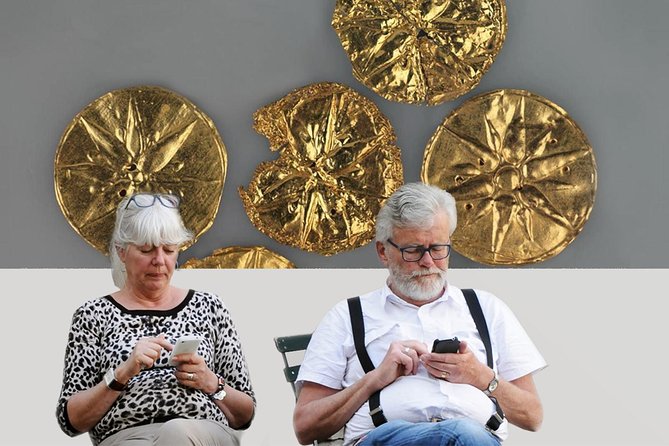
- Philip II’s tomb is the emotional high point: See the Golden Larnax, Macedonian armor, gold wreath, and other royal objects in a dramatic underground museum.
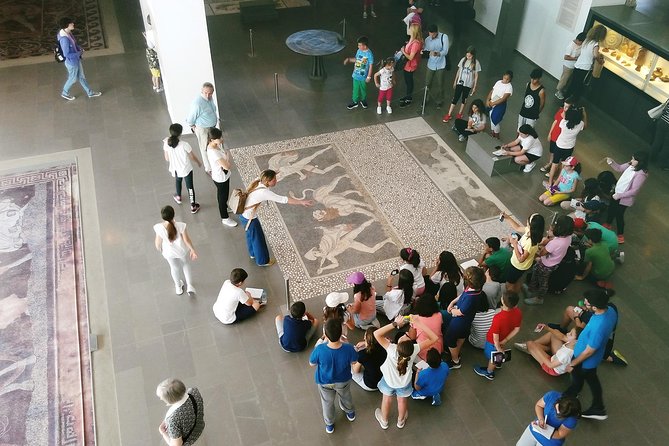
- Pella offers ancient mosaics in place: The Abduction of Helen and Amazonomachy panels help you picture daily life in Macedonia’s old capital.
- The tour mixes commentary with free exploration: Your attendant explains the history, then gives you a meeting time rather than leading every room.
- Three entrance fees are extra: Budget €8 for Pella, €10 for the Royal Tombs of Aigai, and €10 for the Polycentric Museum of Aigai.
- Bring breakfast or a snack: Lunch is not included and can be scheduled around the middle or later part of the day.
- The value is strong for a long-distance day trip: For $59.65, transport, an English-speaking attendant, and basic travel insurance are included.
From Thessaloniki to the Macedonian heartland
The tour begins at the Eleftherios Venizelos Statue, at Egnatia 78 beside Aristotelous Square, at 8:00 a.m. Arrive about 10 minutes early. The bus cannot wait at the pickup point, so this is not the morning to cut things close.
Pella is roughly 50 kilometers from Thessaloniki, with a drive of about 45 minutes. The countryside gives your attendant time to explain Macedonia, Philip II, Alexander the Great, the Argead dynasty, and the role of Pella and Aigai. Several guides have been praised for making this background easy to follow, and some have archaeological experience of their own.
That information matters because the museums are packed with objects and labels. A short explanation before you enter gives you a framework, so the gold, pottery, weapons, mosaics, and burial objects do not become one long parade of ancient things.
Transport is one of the best reasons to book this outing rather than arrange it yourself. You visit two important sites outside Thessaloniki in one day, without having to deal with regional buses, directions, or parking. The group can reach up to 50 people, although the vehicle may not be full.
A few other Thessaloniki mornings to price up
- From Thessaloniki: Pozar Thermal Baths and Edessa Day Trip
★ 4.7 · 1,243 reviews - From Thessaloniki: Day Trip to Dion and Mount Olympus Park
★ 4.7 · 1,046 reviews - Thessaloniki: Vergina and Pella Day Trip
★ 4.8 · 673 reviews
Pella’s mosaics and daily life
Your first major stop is the Archaeological Museum of Pella and the nearby archaeological site. Allow about two hours here. The €8 site admission is not included, so add it to your budget unless you qualify for one of the stated student or youth exemptions.
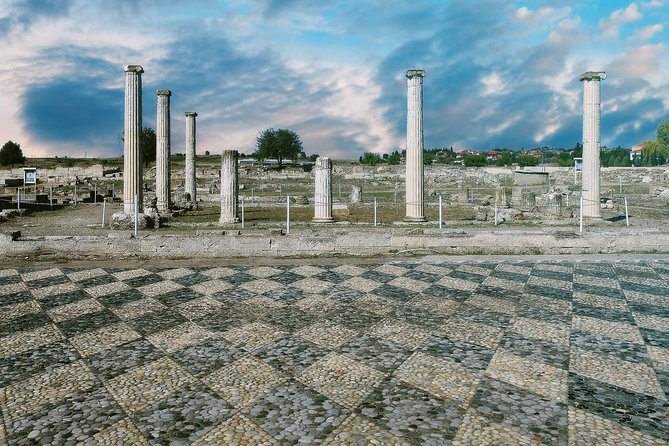
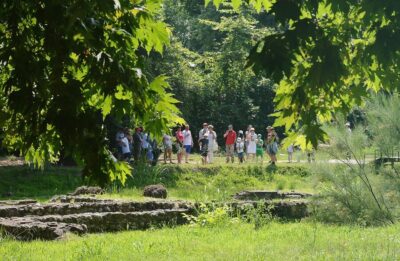
Pella is especially rewarding because it combines a museum with visible ruins. You are not only looking at objects behind glass. You can also see the setting of the ancient market and the mosaics associated with it.
The Abduction of Helen and Amazonomachy mosaics are the stars. Their detailed designs show how much skill and money went into private and public decoration in ancient Macedonia. Take time to look at the patterns, figures, and small details rather than treating them as a quick stop on the way to Vergina.
The museum also presents objects from ordinary life. These pieces help balance the royal story that comes later. You see evidence of how people lived, worked, stored goods, and used household objects, which gives the ancient kingdom a human scale.
The main weakness is the clock. Two hours sounds generous until you divide it between the museum, the ruins, and the mosaics. If you read every panel, you may need to make choices. I would first see the key mosaics and the central museum displays, then use the remaining time for the site.
The format is largely self-guided once your attendant has explained the essentials. That suits you if you prefer to pause, take photographs, or read at your own speed. It is less suitable if you want a continuous guided walk with someone beside you at every display.
Vergina’s Royal Tombs of Aigai
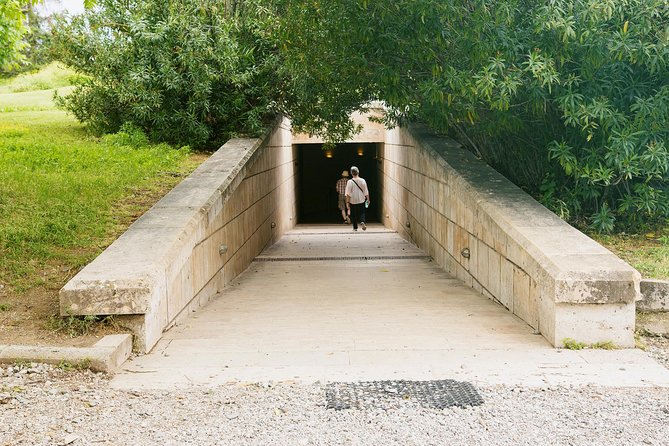
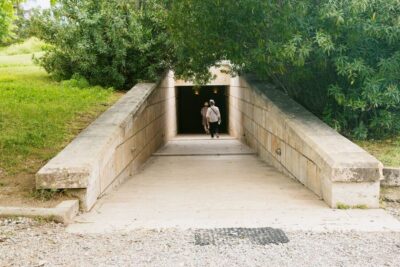
Vergina is the day’s most memorable stop. The Museum of the Royal Tombs of Aigai sits near the village and protects the royal burial complex found there. Admission costs €10 and is paid separately.
The museum’s centerpiece is the Golden Larnax, the funerary casket associated with the cremated remains of Philip II. It carries the 16-rayed Macedonian sun, also called the Star or Sun of Vergina, a symbol linked with the Argead dynasty of Philip II and Alexander the Great.
You will also see a golden oak wreath connected with Philip II’s funeral pyre, along with military armor and other royal burial objects. The display has real force because the treasures are shown in connection with the tomb itself, not as isolated pieces in an unrelated gallery.
The supplied information explains the sun symbol through the four classical elements and the twelve Olympian gods. That detail gives you another way to read the emblem, though the main point is its connection with Macedonian royal identity.
This is where I would spend my sharpest attention. If you arrive tired, resist the urge to rush through the tomb museum. The lighting, underground setting, and preserved objects create a very different experience from a standard archaeological gallery.
One practical point: you do not get a full tour of every ancient structure at Aigai. The royal tombs are included, but the palace and theater are not part of the described visit. If those ruins are your main reason for coming to Vergina, check the exact program before booking so you know what you will and will not see.
The New Museum of Aigai and its royal collection
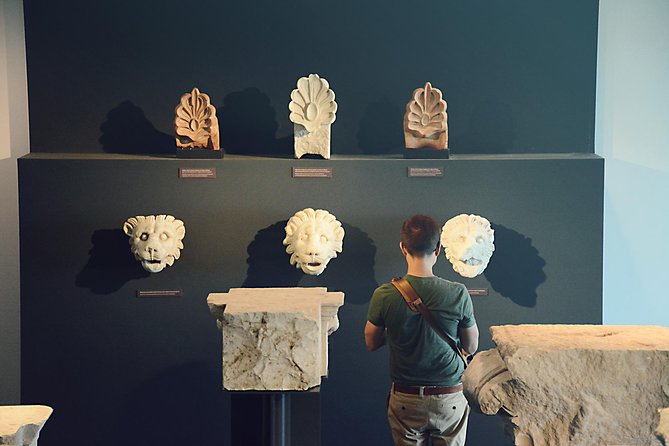
The final major cultural stop is the New Museum of Aigai, also called the Polycentric Museum of Aigai. It holds finds and objects recovered from the soil of the old Macedonian capital. Admission is another €10.
This museum broadens the picture. The Royal Tombs focus your attention on one extraordinary burial complex, while the newer museum places those discoveries within the wider story of Aigai. You may encounter a large amount of material and information, so allow yourself enough time to absorb the main displays rather than trying to read every label.
Several visitors have found the modern museums at Pella and Vergina impressive in different ways, with videos and carefully arranged exhibits. The newer Vergina museum can feel especially substantial after the tombs, so it helps to decide in advance whether you want a quick overview or a slow, detailed visit.
Again, you explore independently after the attendant’s introduction. I consider that a plus for museum lovers who dislike being hurried from case to case. It also means you must watch the time yourself. Your attendant will give you a return time, and the bus cannot simply wait for a late arrival.
Same island, an entirely different sort of day:
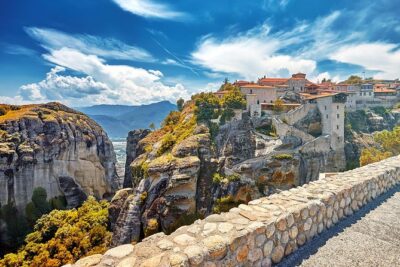
- Thessaloniki: Full-Day Bus Trip to Meteora
★ 4.8 · 3,471 reviews - Thessaloniki: OTE Tower Rotating Experience with Light Meal
★ 4.6 · 857 reviews - Full-Day Trip to Meteora from Thessaloniki
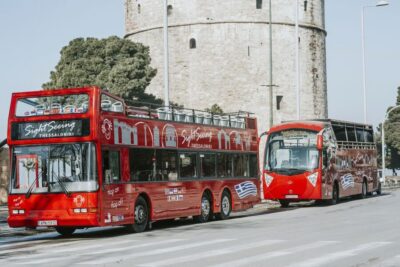
★ 4.5 · 542 reviews - Thessaloniki Hop-on Hop-off Sightseeing Bus Tour
★ 4.0 · 473 reviews
Lunch in Vergina, with timing to watch
Lunch is at your own expense at a restaurant serving traditional Greek dishes. The tour description presents it as a chance to eat homemade-style food, and the restaurant stop is part of the day’s rhythm rather than a formal tasting experience.
Timing deserves attention. The schedule can place lunch around the middle or later part of the day, and one stated experience puts it at about 3:00 p.m. Another practical account suggests around 1:00 p.m. Treat the exact hour as flexible, eat a solid breakfast, and carry a snack.
You should also budget separately for lunch. The $59.65 tour price covers transport, the English-speaking attendant, and basic travel insurance during transportation, but not food or museum entrance. Add €28 for all three listed admissions, bringing the basic day cost to $59.65 plus €28, lunch, and any tip.
That is still a fair price for a round trip from Thessaloniki lasting about eight and a half hours. A private taxi or self-drive arrangement would require more planning and could cost much more, while public transport would not offer the same simple connection between both sites. The value is strongest if you want both Pella and Vergina in one day.
What the guiding style is really like
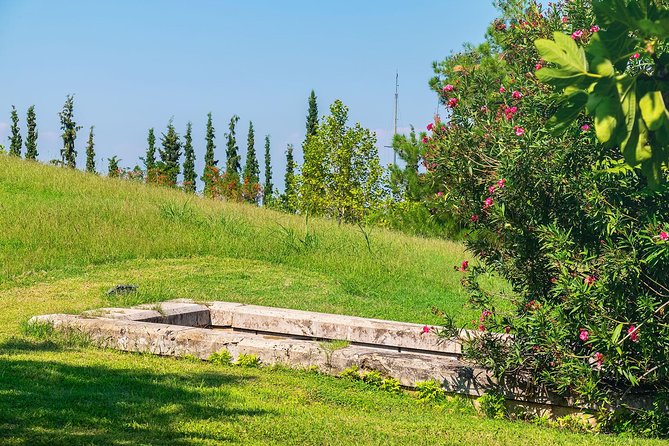
This is not a traditional escorted museum tour. Your trip attendant gives historical explanations, often on the bus and before each visit, then sends you inside to explore on your own. You receive a meeting time, not a lecture in every gallery.
That arrangement has worked especially well with attendants such as Eva, Eleni, Konstantina, Tina, Lazarus, and Stavros. The strongest experiences have come from guides who can answer questions, explain the dynasties, and connect objects with the larger story of Philip and Alexander.
Stavros, in particular, has archaeological experience and has spoken about work on sites and discoveries. That sort of first-hand background can make a difference, but guide assignments vary. You should book this for the overall structure and subject matter, not for a promised individual guide.
The English-speaking format is useful, but the trip is not a private lesson. With a maximum of 50 people, the experience can feel like a standard coach excursion, especially during boarding and departure. On the other hand, the bus size does not always mean a full group, and the free time keeps the day from feeling like one long procession.
Pace, comfort, and the small practical details
The tour lasts approximately 8 hours and 30 minutes, including the drive from Thessaloniki and the return. Expect a day with several walks, museum interiors, outdoor archaeological ground, and fixed departure times.
Wear shoes suited to walking and bring water. The information provided does not give a detailed accessibility description, so if you need specific mobility arrangements, ask the operator before booking.
The meeting point is central and easy to identify: look for the white Statue of Venizelos at Aristotelous Square and Egnatia Street. At the end, you return to the same meeting point, which simplifies evening plans.
Basic travel insurance applies during transportation. Tips are not included. Confirmation is issued at booking, and free cancellation is available until 24 hours before the start time. A minimum group size applies, so a cancellation by the operator can lead to another date, another experience, or a full refund.
One administrative warning is worth noting. A payment problem has caused at least one booking to be canceled and rebooked, apparently because the card required a second confirmation. Check your payment messages and reservation status rather than assuming the first booking is final.
Who should book the Pella and Vergina day trip
I recommend this trip to you if Macedonian history, archaeology, museums, and ancient art are high on your list. It is also a smart choice if you have only a few days in Thessaloniki and want to reach both major sites without arranging transport.
It suits independent museum visitors who like a clear plan but want to choose what deserves their attention. You can linger over the mosaics, move quickly through familiar material, or focus on royal burial objects without a guide pulling you along.
Families and students may also find the day useful, especially with the stated free-entry rules for qualifying EU students and young people. Young people up to age 18 can enter Pella free with identification, while young people up to age 19 can enter the Vergina museum free. EU university students can enter both museums free with a student ID, and some reduced Vergina rates apply to EU citizens over 65 and students from outside the EU.
I would think twice if you dislike early starts, long coach days, or strict return times. I would also hesitate if you need a slow, highly detailed guided visit. The program covers a lot, and even museum fans can feel pressed when trying to read every display.
Should you book it?
Yes, if you want the strongest single-day introduction to ancient Macedonia from Thessaloniki. Vergina’s royal tombs are the reason to go, while Pella supplies the wider setting through its mosaics, ruins, and household objects.
Book with three expectations: pay the entrance fees separately, eat breakfast because lunch may be late, and accept that you cannot see every corner in depth. In return, you get efficient transport, strong historical context, free exploration, and access to some of the most important archaeological displays in northern Greece for a reasonable base price.
FAQ
Where does the tour leave from?
It leaves from the Eleftherios Venizelos Statue at Egnatia 78, Thessaloniki 546 24, beside Aristotelous Square.
What time does the tour start?
Departure is at 8:00 a.m. You should arrive at the meeting point 10 minutes early.
Where does the tour end?
The tour returns to the original meeting point in Thessaloniki.
How long does the experience last?
The day trip lasts approximately 8 hours and 30 minutes.
Is transportation included?
Yes. Transportation to and from Pella and the Vergina museums is included.
Is an English-speaking guide included?
An English-speaking trip attendant is included. The attendant provides historical explanations, but guided tours inside the museums and archaeological sites are not included.
Are entrance tickets included?
No. Pella costs €8 per person, the Museum of the Royal Tombs of Aigai costs €10, and the Polycentric Museum of Aigai costs €10.
Is lunch included?
No. Lunch at the Greek restaurant is paid for separately.
How many people can join the tour?
The activity can have a maximum of 50 travelers.
Can I cancel for a refund?
You can cancel up to 24 hours before the experience starts for a full refund. Cancellations or changes made less than 24 hours before the start time are not accepted for a refund.
Fresh on the Thessaloniki list
- From Thessaloniki:Day Trip to Dion, Litochoro &Mount Olympus★ 4.4 · 45 reviews
- Meteora Experience: Private Day Trip from Thessaloniki★ 5.0 · 46 reviews
- Olympus the mountain of the 12 gods of Greek mythology Smallgroup★ 5.0 · 48 reviews
- Best of Thessaloniki: Tour by Local★ 5.0 · 50 reviews
- From Thessaloniki: Vergina & Veria Half-Day Tour★ 4.2 · 51 reviews
- Thessaloniki: Halkidiki Beach-Hopping with Swimming★ 4.9 · 52 reviews
- Thessaloniki: Aristotle’s Birthplace and Mt. Athos Cruise★ 4.4 · 52 reviews
- Olympus Canyoning Course – Entry to Intermediate★ 5.0 · 54 reviews
Thessaloniki Tours, compared.


Thessaloniki Hop-on Hop-off Sightseeing Bus Tour
Read our review →
Browse the lists this tour appears in