
Reviewed · CRETE TOURS
From Chania: Crete World War II History Tour
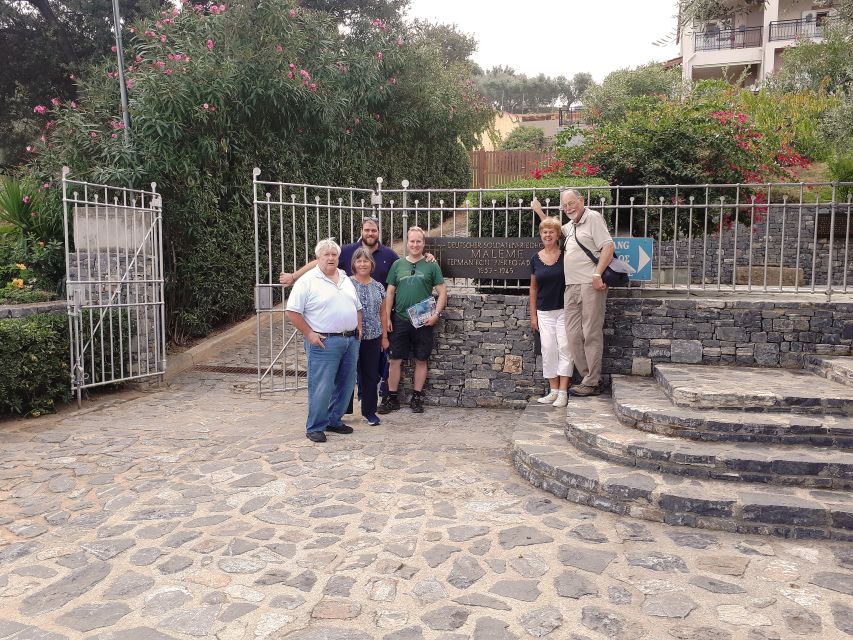
The most gripping part of this tour is how it connects the Battle of Crete to real places you can still see. From the airfield at Maleme and Tavronitis Bridge to Hill 107 and the cemeteries, you follow the invasion and resistance on the ground, not just on a museum timeline.
I like the use of old maps and photographs, which helps you understand troop movements. I also like the private collection of wartime relics, where you can see objects found locally and hear the stories behind them from the collector himself. Guides such as Yannis and Babis bring strong local knowledge and a clear sense of the human cost.
The main drawback is the pacing around comfort stops. Six hours is a long time in a minivan, and only one scheduled break may not suit everyone. A snack is provided, but you should not expect a full restaurant lunch unless the group makes an extra stop.
Key points to know before you book
- Maleme from above: Look across the airfield where German paratroopers first landed and see why this area mattered so much.
- Battlefield geography: Tavronitis Bridge, Galatas, and Hill 107 make the military story easier to follow.
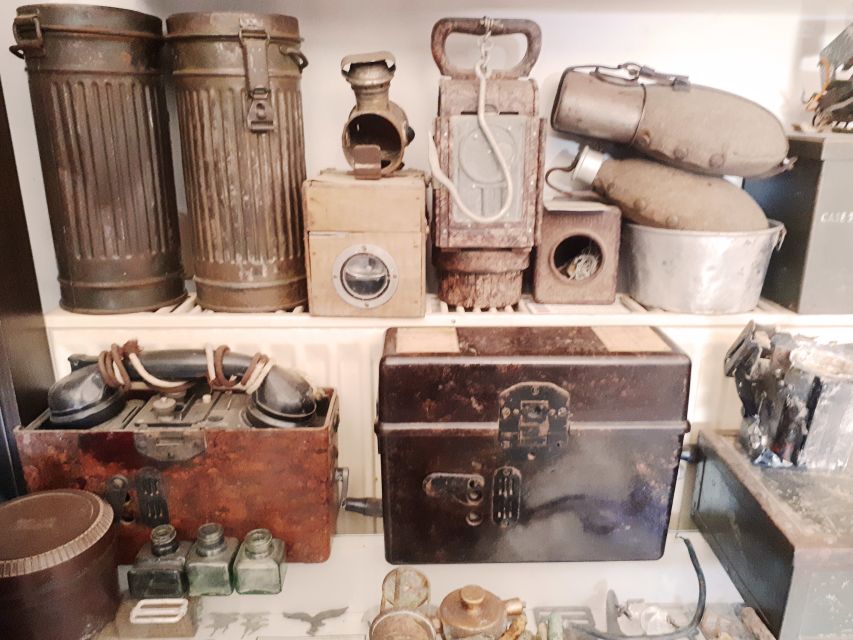
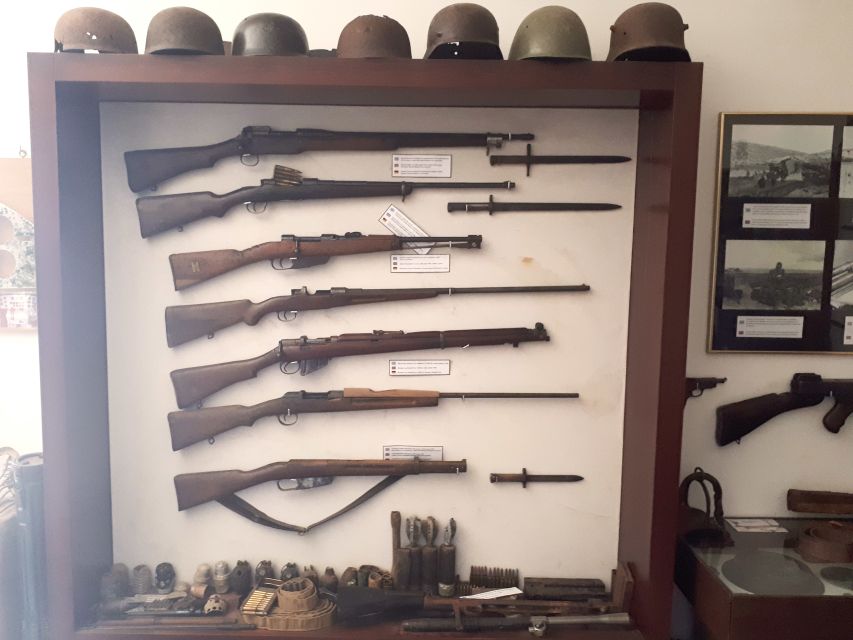
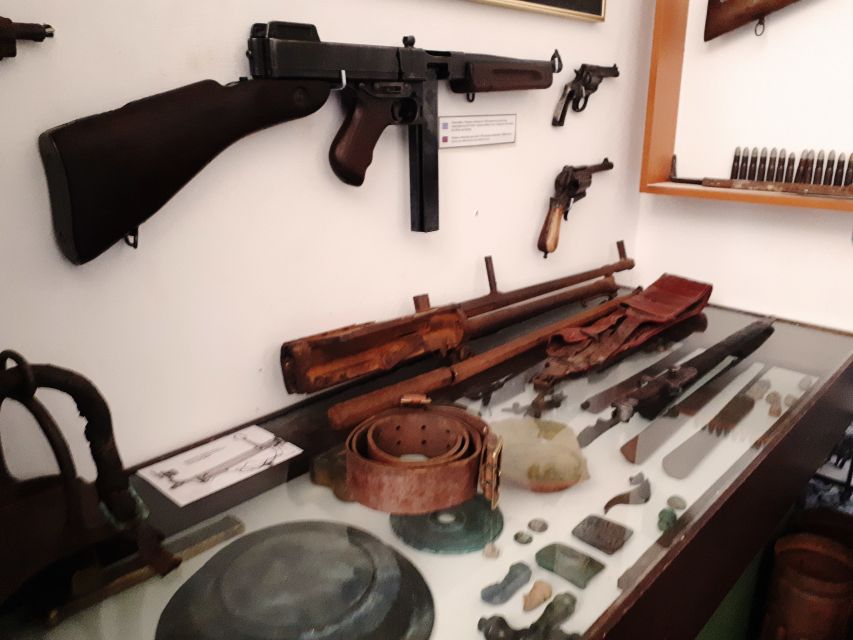
- Private wartime collection: A local collector displays relics found around Crete and explains the background of individual items.
- Two sides of the loss: Visit cemeteries for German and Allied forces, including the carefully maintained Commonwealth cemetery at Souda Bay.
- Small-group setting: Travel by air-conditioned minivan with an English-speaking driver-guide and local guide.
- Practical weakness: Wear comfortable shoes and plan for limited scheduled restroom time.
Why Crete’s World War II story is worth a day
Crete’s wartime story is not simply a list of battles. It begins with the Greek-Italian War of 1940, then moves toward the circumstances that led to Hitler’s Operation Mercury and the invasion of the island.
This tour places those events in a wider setting. You learn how the Battle of Crete affected Greece and southeast Europe, and how the island’s resistance helped restore Allied morale far beyond Crete. The guide also explains the part played by local partisans and by British, Australian, and New Zealand forces.
I find this broader frame important. If you already know the basic outline of the war, it shows how Crete fits into the larger conflict. If you know little about the battle, it gives you a useful starting point without asking you to arrive as a military expert.
The subject is serious, but the tour is not presented as a dry lecture. Guides use maps, old photographs, documents, and the physical shape of the sites to explain what happened. That mix lets you picture the movement of troops and understand why particular villages, bridges, and high points mattered.
More historic sites around Chania:
- Historical Delphi One Day Tour with Arachova Stop & Expert Guide
★ 4.5 · 1,247 reviews - Historic Athens: Small Group Electric Bike Tour
★ 4.9 · 740 reviews - Naxos Half Day History and Culture Guided Tour
★ 5.0 · 491 reviews
Maleme and the airfield from above
Maleme is one of the key stops because German paratroopers first landed here. Seeing the airfield from above gives you a practical sense of the area and helps explain why control of this location was so important.
This is not just a quick photo stop. The guide uses the view to establish the opening stage of the battle. You can begin to connect the airfield, nearby roads, villages, and defensive positions as parts of one military problem.
The village itself is also part of the experience. You get a feel for the local setting in which the invasion and occupation unfolded, rather than seeing the battle as something detached from daily life.
The strength of this stop is orientation. Maps can show arrows and names, but looking across the area gives those details meaning. If you enjoy military history, bring your own questions about movement, terrain, and timing. If you are new to the subject, listen for the guide’s explanation of how the locations fit together.
Tavronitis Bridge and the first battlefield clues
At Tavronitis Bridge, the tour shifts from broad views to physical traces of the fighting. The bridge is one of the places where the story becomes tangible, with wartime remnants and monuments helping you connect the site to the invasion.
The guide’s role matters here. Without context, a bridge or ruined structure can look ordinary. With maps and a clear explanation, you can see why a crossing point could influence movement and supply routes.
I like this part of the route because it gives you a pause from the usual Greek island itinerary. You are not simply moving between beaches and villages. You are reading the area as a battlefield while still seeing the modern life of Crete around it.
Some stops involve standing outdoors and moving between sites, so comfortable shoes are a must. The tour does not call for demanding hiking, but sandals or stiff holiday shoes would make the day less pleasant.
Galatas and Hill 107 put the battle into shape
The visit to Galatas adds another important piece to the story. Here, the guide explains the Battle of Galatas and shows how the position relates to nearby fronts.
Hill 107 is especially useful for understanding the battle. One of the guides uses the site to explain the fighting in a logical, chronological way, with maps and photographs to make the sequence easier to follow.
This is where the tour earns its place as more than a sightseeing drive. You can look at a map in a book, but standing at a significant point gives you a better sense of distance and direction. You begin to understand how the different battle sites were connected.
The guide also brings in the Cretan point of view. The story includes soldiers from several countries, but it also covers local civilians and partisans who helped British, Australian, and New Zealand forces. That balance gives the day more depth and keeps the focus from resting only on commanders and troop movements.
A few other Chania mornings to price up
- From Kissamos Port: Boat Cruise to Balos Lagoon & Gramvousa
★ 4.2 · 6,755 reviews - From Chania: Full-Day Samaria Gorge Trek Excursion & Guide
★ 4.6 · 3,191 reviews - Cretan Safari – 4×4 Adventure to Preveli Beach with Lunch
★ 5.0 · 780 reviews - Elafonissi Beach Day Trip from Chania -Stop in Elos Village
★ 4.5 · 744 reviews
Secret shelters, monuments, and local wartime traces
The tour includes small museums, secret shelters, and other monuments connected with the war. These places may be modest rather than grand, but that is part of their value.
A small shelter can tell you something that a large formal museum cannot. It gives you a direct link to how people survived, hid, or moved during the occupation. The guide fills in the missing details and shares stories that are easy to overlook when you visit on your own.
Some of the most memorable stops may be the least polished. You might find an unassuming site with little signage, then hear the local account that turns it into an important part of the day.
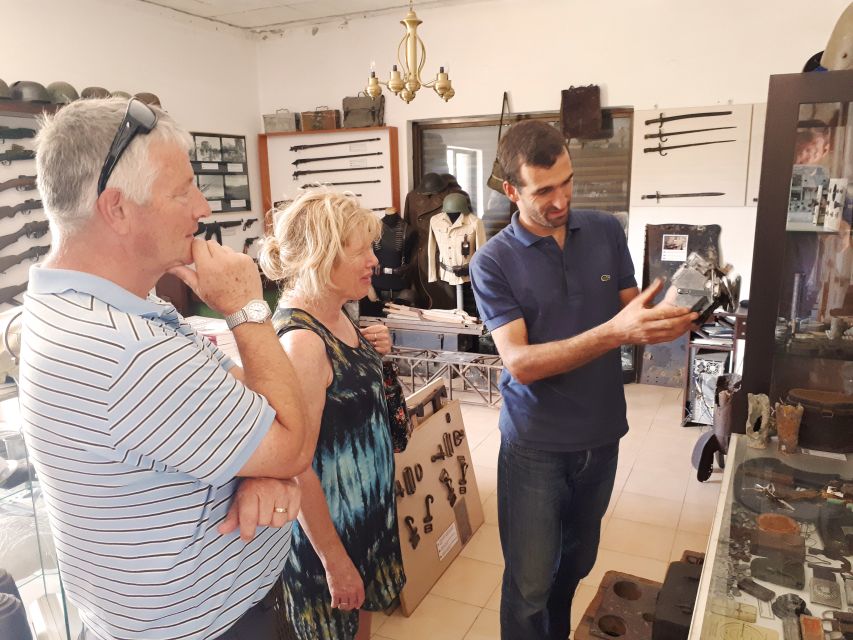
The experience also includes a visit to a private collector. The collection contains World War II items found in the local area, and the owner explains where individual objects were discovered and what they reveal. The chance to see artifacts up close gives the history a personal scale.
Allow time for this visit to run longer than a quick museum stop. The collector is passionate and may explain many individual pieces. That enthusiasm is a strength if you like detail, but it can feel slow if you prefer to keep moving.
The German and Allied war cemeteries
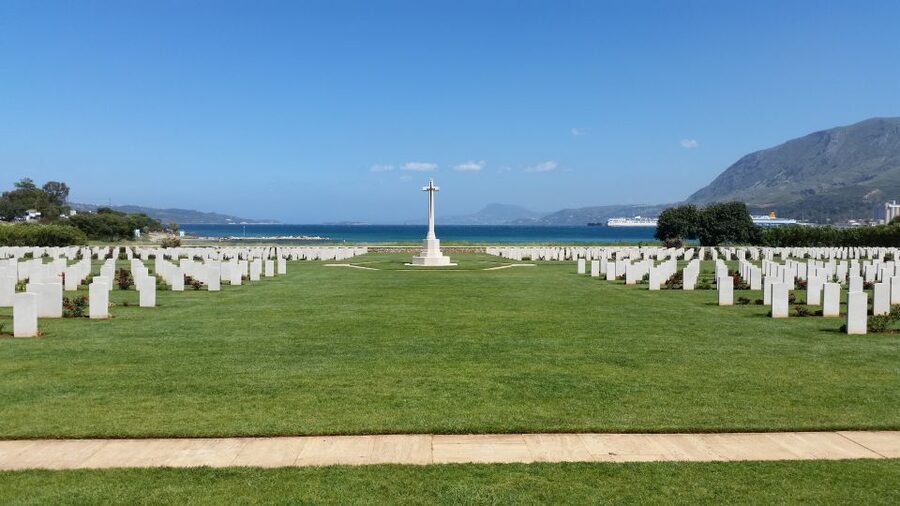
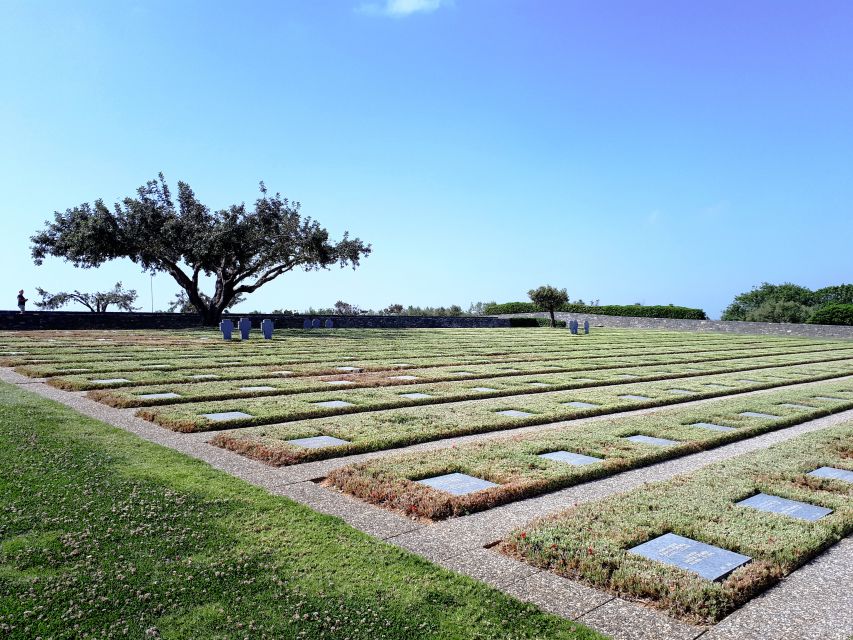
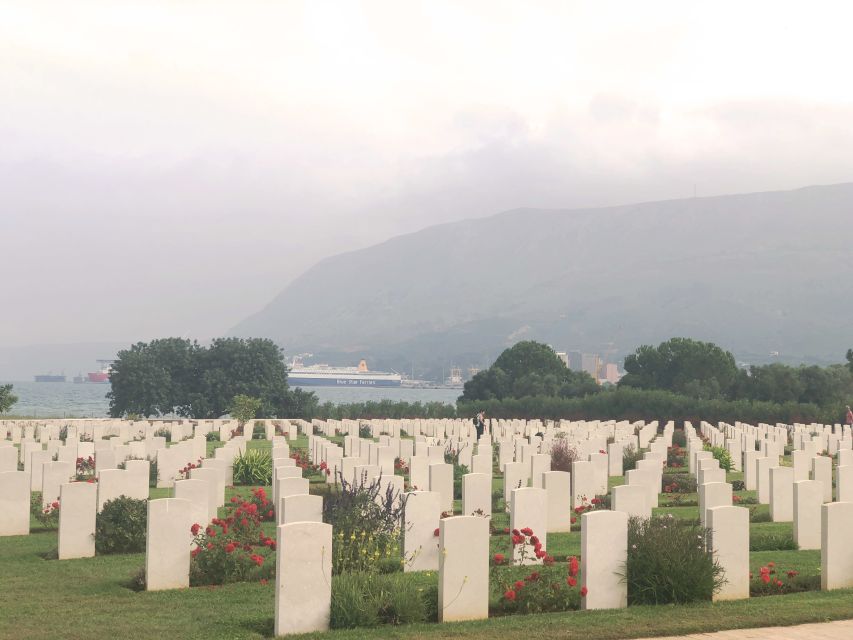
The cemeteries provide the quietest and most reflective part of the tour. You visit burial grounds for German and Allied forces and see how the dead from opposing sides are remembered.
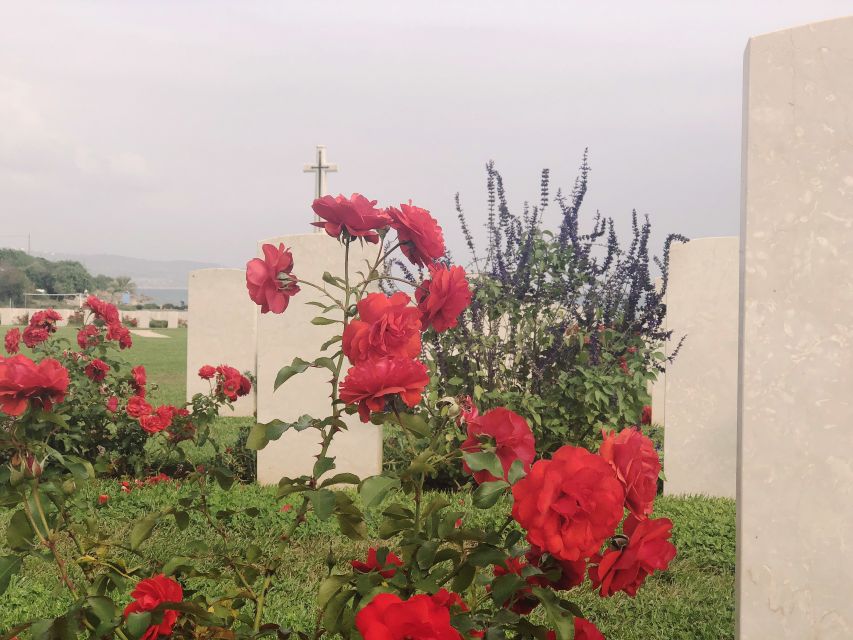
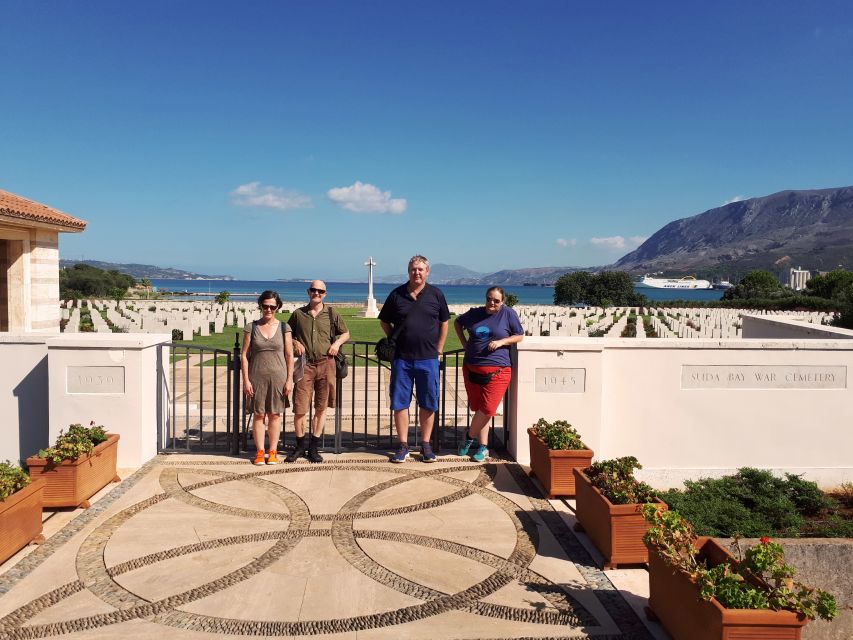
The Commonwealth cemetery at Souda Bay is carefully maintained and makes a strong final stop for many people. The rows of graves and the distance from the soldiers’ homes can make the scale of the battle feel personal.
You should be aware of the timing here. If paying respects at Souda Bay is the central purpose of your visit, make that clear to the guide at the start. One visitor felt there was not enough time at the cemetery, particularly after coming from New Zealand to honor soldiers from home.
The German cemetery is also handled with care. The wording and memorial setting are presented sensitively, without turning the visit into a simple story of heroes and villains. That balanced approach suits the subject and gives you space to reflect.
These are not casual sightseeing stops. Dress practically, behave respectfully, and expect the mood to become quieter. If you have a family connection to the Battle of Crete, this part of the day may carry particular weight.
Guides who make the military story understandable
The guide can make or break a history tour, and this experience has a strong record in that area. Names that come up repeatedly in the guiding team include Yannis, Yanis, Yiannis, Yonis, Gyannis, and Babis. Spellings vary, but the consistent point is that the guides explain the subject with confidence and warmth.
Yannis is praised for combining battlefield information with details about Cretan life. Babis is noted for being friendly, careful, and attentive to mobility needs. One guide is described as having an ex-military background, which may help explain the focus on troop movements and practical battlefield detail.
You should expect more than memorized dates. The guides use maps and old photographs, answer questions, and explain the battle in chronological order. That is useful because the Battle of Crete can become confusing when several locations and forces are discussed at once.
The driver-guide also matters on a full day. The minivan is air-conditioned, and the driving has been described as comfortable and reassuring, including during very hot weather. The small-group format allows you to ask for clarification and, when possible, request a short extra stop.
Transport, food, and the six-hour rhythm
Pickup and drop-off are available from specific locations in the Chania region. This tour only departs from that region, so it is not a practical choice if you are staying elsewhere on Crete without arranging your own connection.
You travel in an air-conditioned minivan, and the small group keeps the day more personal than a large coach excursion. That matters on a history route because you spend a fair amount of time listening while moving between locations.
The advertised duration is six hours, though some days have run closer to six and a half hours. The exact pace can vary with the group, the guide, and the time spent at the collection or cemetery.
A snack and bottle of water are included. The snack has been described as a lunch item from a local bakery, and dietary needs can be accommodated. Still, this is not a food tour, and one scheduled comfort break may be too little for some people.
I would eat a proper breakfast and carry extra water. Ask early about a second restroom stop if you need one. Comfortable shoes are the only listed item to bring, but sun protection would also be sensible for outdoor sites, especially in summer. Pets are not allowed.
Is $111 a fair price?
At $111 per person, the tour is not the cheapest way to see western Crete. The price includes transport, pickup and drop-off within the Chania region, an English-speaking driver-guide, a local guide, entrance fees, taxes, a snack, and water.
The real value comes from the interpretation. On your own, you could potentially reach several battlefield sites, but you would need to research the Greek-Italian War, Operation Mercury, the Battle of Galatas, Maleme, Tavronitis, the resistance, and the cemeteries before the pieces made sense.
You also gain access to a private collection that may not be part of a standard sightseeing day. That personal stop, along with the maps and photographs, adds something you are unlikely to reproduce with a simple rental-car route.
The price makes most sense for you if history is a main reason for visiting Crete, or if you have a family connection to the Allied forces. It is less suitable if you want a relaxed day with long meals, swimming, or general village sightseeing.
Who will enjoy this tour most?
I would choose this tour if you want the Battle of Crete explained clearly and in place. It suits military history fans, families tracing wartime relatives, and anyone who prefers local stories over a standard beach excursion.
It also works well for people who know little about the subject. The guides build the story step by step, so you do not need to arrive with a detailed understanding of the battle.
The small-group format is helpful if you have questions or mobility concerns. One guide took particular care with a visitor who had mobility issues, though you should still explain your needs when booking and before the day begins.
I would think twice if you dislike extended talks, private collections, or cemetery visits. The day is focused and serious. It is not designed as a loose tour with plenty of free time.
My practical verdict
I like the way this experience joins maps, battle sites, local artifacts, and cemeteries into one readable story. The private collector’s house is an unusual addition, and the Cretan perspective gives the tour more feeling than a narrow military account.
The biggest improvement would be a clearer meal and restroom plan. Bring water, eat before pickup, and tell the guide if you need another comfort stop. If Souda Bay matters most to you, ask how long you will have there.
At $111, I consider it good value for a focused six-hour history day from Chania, especially because transport and admissions are included. Book it if you want to understand what happened on Crete and why the battle mattered beyond the island. Skip it if your ideal holiday day needs a long lunch and no fixed schedule.
FAQ
Where does this World War II tour depart from?
The tour departs only from the Chania region. Pickup and drop-off are included from specific locations within that region.
How long does the tour last?
The stated duration is six hours. Some experiences have lasted about six and a half hours, depending on the day and the time spent at stops.
What language is the tour conducted in?
The live tour guide languages are English and Greek. An English-speaking driver-guide is included.
Which World War II sites are visited?
The route includes Maleme and its airfield, Tavronitis Bridge, Galatas, Hill 107, other battle sites and monuments, secret shelters, small museums, and German and Allied war cemeteries.
Is the private collection of war artifacts included?
Yes. The experience includes a visit to a private collection of World War II items found in the local area. The collector explains the objects and their backgrounds.
Is food included?
A snack and one bottle of water are included per person. The snack may be supplied by a local bakery, and dietary requirements can be accommodated.
What should I bring?
Bring comfortable shoes. Extra water may also be useful, particularly in hot weather.
Can I cancel or pay later?
You can cancel up to 24 hours in advance for a full refund. You can also reserve now and pay later.
Fresh on the Chania list
- Chania: Elafonisi & Falasarna Private Tour w/olive oil tasting★ 5.0 · 46 reviews
- Samaria Gorge Trek: Full-Day Excursion from Rethymno with Guide★ 4.5 · 46 reviews
- Chania Alternative Sunset Bike Tour★ 4.9 · 48 reviews
- Polaris Buggy 4-Hour Safari from Rethymno Town★ 4.5 · 48 reviews
- Crete White Mountains Safari Including Lunch★ 4.5 · 48 reviews
- From Chania Private half day Winery-Olive factory-Kournas lake★ 5.0 · 50 reviews
- Elafonissi: Private Beach Day Trip with SUP★ 4.8 · 51 reviews
- Samaria Gorge Trek: Full-Day Excursion from Chania with Guide★ 4.5 · 51 reviews
Crete Tours, compared.
From Kissamos Port: Boat Cruise to Balos Lagoon & Gramvousa
Read our review →
Day Trip to Agios Nikolaos and Spinalonga Island
Read our review →
Full-Day Samaria Gorge Trek Excursion & Guide
Read our review →

Dia Island Sailboat Cruise with Swimming and Meal
Read our review →
Knossos Palace Entry Ticket with Optional Audio Guide
Read our review →
Browse the lists this tour appears in