
Reviewed · CRETE TOURS
Lychnostatis Open Air Museum: Entry Ticket with Add-Ons
Lychnostatis Open Air Museum lets you see Cretan life through real buildings, tools, and working spaces, not behind glass cases. You step into a village house, inspect an old olive press, and see where raki was made. It is a useful stop if you want more than beaches and ancient ruins.
I especially like the way the museum links daily work with the natural world, from herb gardens and fruit trees to bees, wax, stone, and traditional plant dyes. I also like the modest $10 entry price, which gives you a full day of access and the freedom to explore at your own pace. The main drawback is that the standard ticket does not include transportation, food, drinks, or a guide unless you choose an add-on.
Key points to know
- Traditional Cretan buildings: Enter village homes, a chapel, a distillery, a workshop, and other spaces built around everyday life.
- A broad look at folk culture: The collection covers farming, weaving, pottery, carpentry, shoemaking, beekeeping, herbs, minerals, and food production.
- Several ways to visit: Choose free exploration, add an audiovisual film, or book a private guided group tour.
- A good value at $10: The ticket includes entry and free time for the full day, with no transportation included.
- A quiet café stop: Finish with a typical Cretan drink or sweet, then browse the souvenir shop.
- Useful for families and culture-minded visitors: The open-air setting makes old tools and trades easier to understand than a room of labels.
Why Lychnostatis feels different from a standard museum
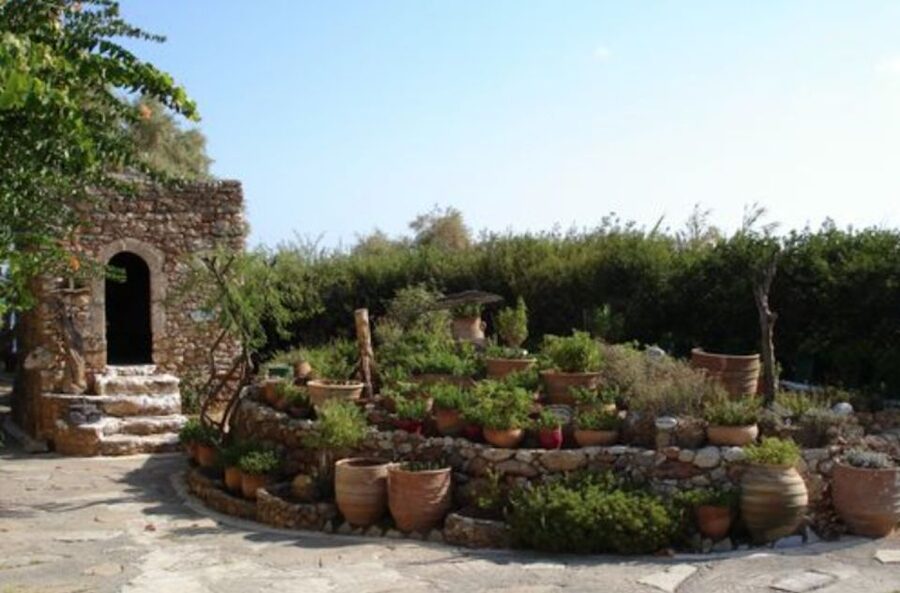
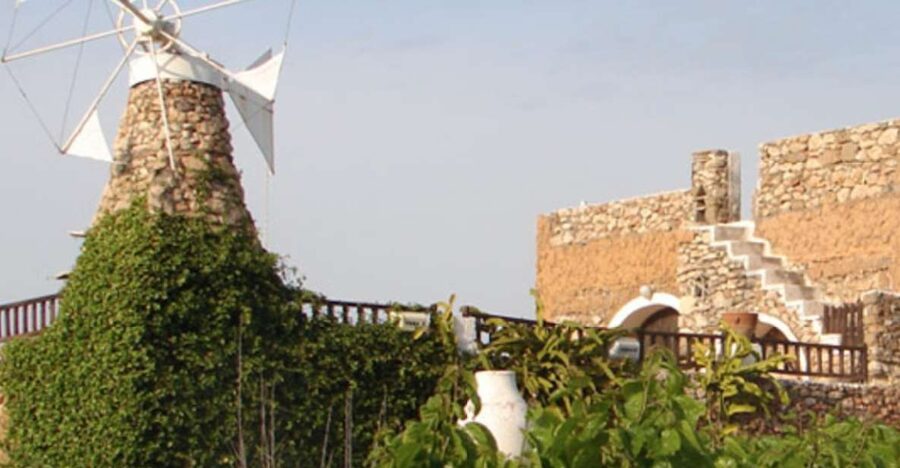
The first thing to understand is the format. Lychnostatis is an open-air museum built as a traditional Cretan village, so you move from house to house and workshop to workshop rather than following one long indoor gallery.
That matters because Cretan culture is practical. It grew from farming, animal care, food making, craftwork, and close use of local materials. A distillery makes more sense when you can see the tools around it. A weaving room becomes easier to picture when it sits beside a house, garden, and work areas.
The museum presents Cretan folk tradition and ethnology, along with nature and the local environment. The result is not simply a collection of old objects. You get a picture of how people worked, stored food, built homes, made clothing, and used plants and stone.
The setting also gives you room to pause. You are not pushed through a timed route, and the ticket includes free time to explore. That makes the visit easy to fit around a beach day or another stop near Hersonissos.
More Museums in Crete
- Crete: Knossos Palace and Museum E-Tickets with Audio Guides
★ 4.0 · 828 reviews - Heraklion Archaeological Museum Ticket & Audio Guide
★ 4.3 · 396 reviews - Minoans World 3D Museum & 9D Cinema
★ 4.5 · 315 reviews
Entering a Cretan house from two centuries ago
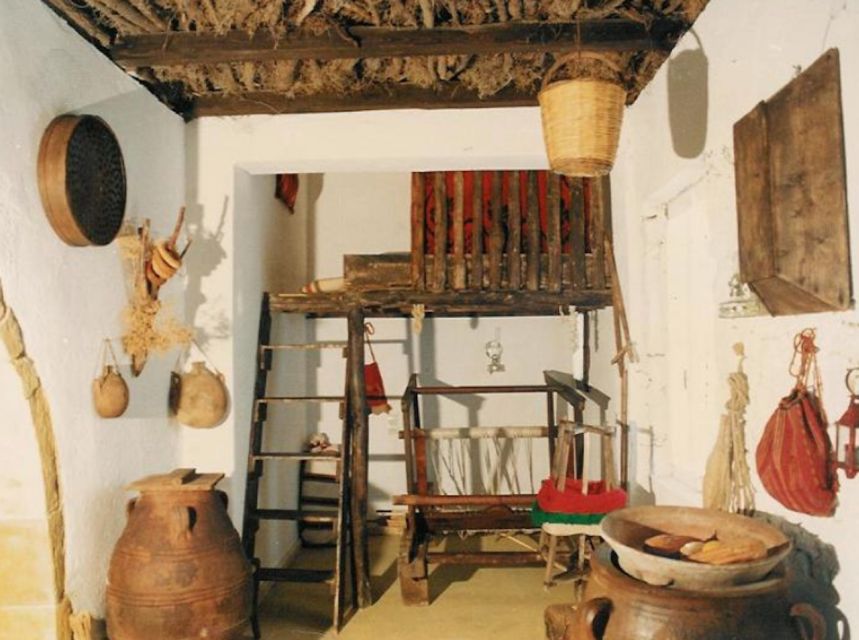
The traditional dwelling is one of the most useful parts of the visit. You can enter and see how a Cretan home was arranged, rather than trying to picture daily life from a few objects in a display cabinet.
The houses help connect domestic life with work. Tools, furniture, and household spaces show how much happened close to home. Food preparation, storage, craftwork, and family life were not separate activities in the modern sense.
The museum’s aim is to show Cretan life from roughly 200 years ago, while also connecting it to traditions that reach much farther back. That time frame gives you a clear reference point. You are not looking at a vague version of the past, but at a period when many routines depended on hand tools, local materials, and seasonal work.
Take your time inside the buildings. Look at the construction, the size of the rooms, and the objects that appear ordinary. The small tools often explain more than the grand display pieces because they show what people handled every day.
From olive oil to raki: food production made visible
The olive oil press and tsikoudia distillery give the museum some of its strongest practical detail. Olive oil is central to Cretan food and agriculture, while tsikoudia, often called raki, is one of the island’s familiar traditional drinks.
Seeing the press helps you understand the work behind a product that now arrives in a bottle at the supermarket. The distillery does the same for raki. Instead of hearing only that the drink is part of Cretan culture, you can see the kind of place and equipment connected with its production.
The museum also includes a threshing floor, another reminder that grain and harvest work once shaped the yearly calendar. These spaces work best when you let them tell a sequence: crops are grown, gathered, processed, stored, and turned into food or drink.
At the café, you can order a typical beverage or sweet. Food and drinks are not included in the ticket, but this is a pleasant way to end the visit and connect the displays with something you can taste.
Workshops that explain how a village worked
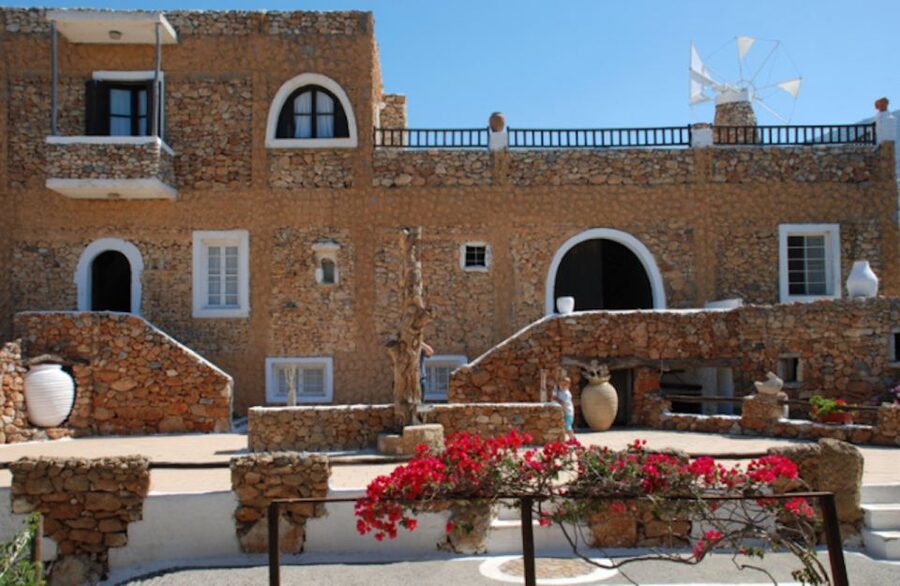
Lychnostatis covers a wide range of trades. You can see areas devoted to pottery, weaving, plant dyeing, bees and wax, shoemaking, and carpentry.
This variety is one of the museum’s biggest strengths. Cretan folk culture was not one craft or one costume. It was a network of skills that supported a household and a village.
The weaving and plant-dying workshop shows how clothing and textiles could depend on patient handwork and natural materials. The shoe-making area gives you another view of everyday needs. Carpentry explains how furniture, tools, and parts of a house could be made locally.
You may find some displays more compelling than others. If you have a special interest in traditional crafts, plan extra time for these rooms and workshops. If you prefer architecture or food culture, move more quickly through the craft areas and spend longer at the houses, press, and distillery.
The ceramic shop and souvenir shop add a modern commercial note. That is useful if you want a small reminder of the visit, but you do not need to buy anything to get value from the museum.
More museums around Crete:
- Crete: Knossos Palace and Museum E-Tickets with Audio Guides
★ 4.0 · 126 reviews - Knossos Palace, Museum & Rethymno city Private Tour from Chania
★ 5.0 · 69 reviews - Heraklion Highlights: Knossos, Museum & Historic City Drive
★ 5.0 · 64 reviews - Knossos Palace, Museum & Heraklion City Tour From Chania
★ 4.2 · 61 reviews
Gardens, bees, herbs, and Cretan nature
The museum does not treat culture as something separate from nature. Its Cretan fruit garden, herb garden, herbarium, and bees and wax workshop show how local life depended on plants, animals, and seasonal resources.
The gardens add variety after the indoor rooms. They also make the museum easier to enjoy at a slower pace. You can look at plant-based traditions, then move on to the stone and mineral exhibition for a different view of the island’s natural materials.
The herbarium and herb garden are especially helpful if you want to understand why herbs appear so often in Cretan cooking and folk practice. The museum’s presentation links plants with work, health, food, and household use.
The mineral and stone collection broadens the visit again. It may not be the main reason you come, but it supports the larger idea that Cretan life was shaped by what the island provided. Buildings, tools, food, medicine, and trade all depended on local resources.
The chapel, theater, library, and gallery
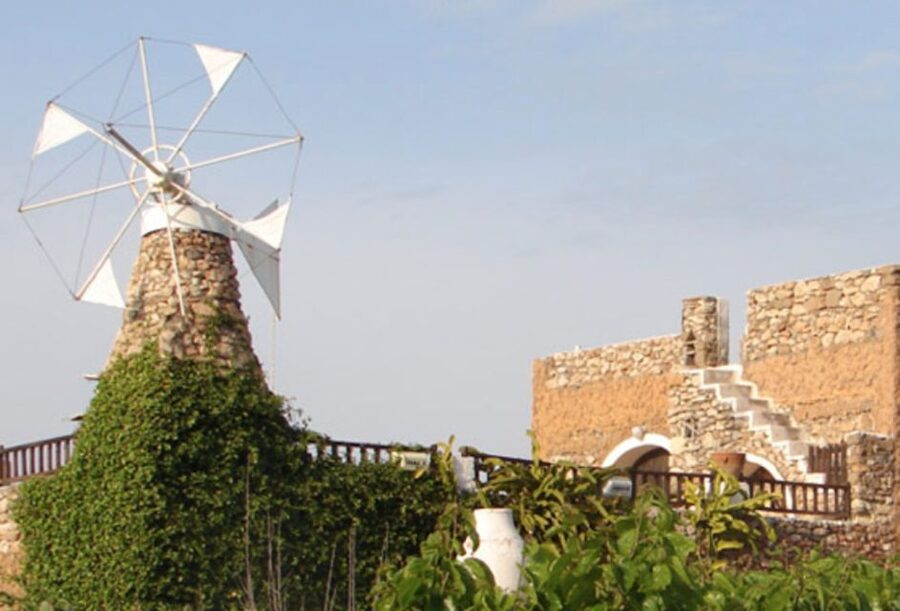
The small chapel adds a religious element to the village setting. It helps show that community life involved worship and shared customs as well as work.
You can also visit the library, which holds Cretan books and periodicals. This is a good stop for anyone who wants a more focused look at the island’s culture. It is less visual than the open-air collection, so you may choose to spend only a short time there unless you enjoy reading and research.
The museum has an auditorium with 100 seats for audiovisual shows, seminars, and other programs. An open-air theater with 250 seats is used for cultural and artistic events. These spaces show that Lychnostatis is not only a static display of old objects. It also supports performances, talks, and temporary programs.
There is a temporary exhibitions hall as well. Because these displays can change, I would treat them as an extra rather than the core reason to book. The permanent village collection is what gives the visit its structure.
Choosing the audiovisual film or private tour
The basic ticket gives you free time to explore. That is the right choice if you prefer to read, wander, and set your own pace.
You can add an audiovisual film if you want more background without committing to a private tour. The film is shown in the auditorium, and it can help you place the buildings and objects in a wider Cretan context.
The private guided group tour is the better add-on if you want explanations as you walk. The listed live tour language is Greek, so check that this suits your group before paying extra. No guide’s name is provided, and the available information does not promise a particular language beyond Greek.
A guide can be especially useful at the distillery, olive press, workshops, and traditional homes. These places contain details that are easy to miss if you are unfamiliar with old tools or local customs.
The choice comes down to your preferred pace. I would choose the standard entry for a relaxed family visit or a self-guided stop. I would consider the film if you want context but also want independence. Choose the private tour when understanding how the pieces fit together matters more than wandering alone.
How much time should you allow?
The ticket is valid for one day, but the experience is not a one-hour photo stop. You can see the main buildings fairly quickly, yet the full collection includes enough houses, gardens, workshops, exhibitions, and shared spaces to justify several hours.
The best pace is unhurried. Start with the main traditional dwellings, then visit the chapel, olive press, distillery, and threshing floor. Continue through the craft workshops before taking a break at the café.
If you are traveling with children, break the visit into sections. The open-air layout gives you more variety than a conventional museum, but a long string of old tools can still test young attention spans.
A shorter visit can still work. Focus on the house, distillery, olive press, gardens, and one or two workshops. If you have a full day available, add the library, temporary exhibitions hall, mineral display, gallery, and audiovisual program.
Price, access, and practical planning
At $10 per person, the entry ticket is reasonably priced for a full-day cultural visit. You are paying for access to a large collection rather than a short guided walk, so the value improves if you allow enough time to see more than the first few buildings.
Transportation is not included. You need to reach the museum by car or taxi and begin at the museum itself. This makes it easiest to combine with other plans in the Hersonissos area if you already have a car or are comfortable arranging a taxi.
The ticket allows you to skip the ticket line, which is a small but useful benefit during a busy holiday day. Booking offers free cancellation up to 24 hours before the visit and a reserve-now, pay-later option, so you can keep your plans flexible.
The museum is wheelchair accessible. Since the experience is open-air and spread across several areas, you should still consider how comfortable your party is with moving between buildings, but the stated access provision is an important plus.
The available live tour language is Greek. If you need another language, the standard self-guided visit or audiovisual option may be more practical, but the supplied information does not confirm the film’s language options.
What the strongest feedback tells you
The museum receives a 4.8 rating from 49 reviews, with repeated praise for its historical value, traditional setting, and clear guided explanations. The most enthusiastic comments describe it as both beautiful and informative, with particular appreciation for the way it explains the life of the Cretan people.
The café also earns attention for its traditional drinks. Plan to stop there rather than treating it as a backup option. A sweet or local beverage gives the visit a simple closing ritual.
There is one useful practical warning about the printed information sheets. Some may be worn or damp, which can make them harder to read. If you rely on written material, bring patience and use the buildings themselves as your main source of understanding.
The broad lesson is that the museum works best when you approach it as a place to observe, not rush. The setting, tools, and work areas carry much of the meaning.
Who should book Lychnostatis?
I would recommend this experience to anyone who wants a clear introduction to Cretan folk culture without committing to a full-day archaeological excursion. It suits families, couples, older visitors interested in traditional life, and anyone curious about food production, crafts, gardens, and village buildings.
It is also a good choice if you want a break from resort activities. You will not just see a pretty collection of old objects. You will get a practical picture of how a household and village could function.
You may want to skip it if your only interest is Minoan archaeology, major ruins, or a short sightseeing stop with no time for displays. Lychnostatis focuses on folk tradition, daily work, nature, and more recent Cretan life rather than a single ancient site.
Should you book it?
Book Lychnostatis if you want an affordable, flexible visit with plenty of cultural detail. The $10 ticket is strongest value when you can spend several hours moving through the homes, distillery, olive press, workshops, gardens, and exhibitions.
Choose the audiovisual film or private Greek-language tour if you want added context. Otherwise, the basic ticket gives you enough freedom to create your own route. Just arrange your own transport, bring time for a slow visit, and finish with a traditional drink or sweet at the café.
FAQ
Where is Lychnostatis Open Air Museum?
The museum is in Crete, Greece. You begin the experience at the Lychnostatis Open Air Museum and can reach it by car or taxi.
How much does entry cost?
The listed price is $10 per person. The entry ticket includes access to the museum and free time to explore.
How long is the ticket valid?
The ticket is valid for one day. You can use that time to visit the buildings, workshops, gardens, exhibitions, library, café, and other museum areas.
Is transportation included?
No. Transportation is not included, so you need to reach the museum by car or taxi.
Can I add a film or guided tour?
Yes. You can choose an audiovisual film or a private guided group tour as an add-on. The listed live tour language is Greek.
Is the museum wheelchair accessible?
Yes. The activity is listed as wheelchair accessible.
Fresh on the Crete list
- Heraklion: Sunrise Balloon Flight & Sunset Catamaran Cruise★ 5.0 · 45 reviews
- Hersonissos: Alar Spectacular Dinner Show★ 4.7 · 45 reviews
- Kissamos: Balos & Gramvousa Sailing Cruise with Meal★ 4.6 · 45 reviews
- Chania: Elafonisi & Falasarna Private Tour w/olive oil tasting★ 5.0 · 46 reviews
- Samaria Gorge Trek: Full-Day Excursion from Rethymno with Guide★ 4.5 · 46 reviews
- From Rethymno: Santorini Guided Tour and Cruise from Crete★ 4.4 · 46 reviews
- Heraklion: Sunset Luxury Cruise with Sushi and Open Bar★ 5.0 · 46 reviews
- Crete: Coastline Snorkeling Cruise from Hersonissos Port★ 4.3 · 46 reviews
Crete Tours, compared.
From Kissamos Port: Boat Cruise to Balos Lagoon & Gramvousa
Read our review →
Day Trip to Agios Nikolaos and Spinalonga Island
Read our review →
Full-Day Samaria Gorge Trek Excursion & Guide
Read our review →

Dia Island Sailboat Cruise with Swimming and Meal
Read our review →
Knossos Palace Entry Ticket with Optional Audio Guide
Read our review →
Browse the lists this tour appears in