

Reviewed · NAXOS TOURS
Naxos Highlights Bus Tour with Free Time for Lunch at Apeiranthos
The best thing about this Naxos day tour is its range. In one long day, you move from a 6th-century temple and a working pottery studio to marble lanes, mountain roads, a fishing village, and an unfinished statue that has rested beside the sea for more than 2,500 years. I love the pottery and olive press visits, which give the day a human scale, and I like the generous free time in Apeiranthos for lunch.
The main drawback is the road. Much of the route twists through the mountains, with tight bends and switchbacks. If winding roads bother you, take motion sickness medicine before departure and choose a seat that helps you feel steady. The day is also tightly timed, so this is a good overview of Naxos, not a slow village stay.
Key points to know before booking
- A full island day for $42.33: The price covers transport and an English-speaking escort, making it a strong value if you do not want to rent a car.
- Six varied stops: You see an ancient sanctuary, two inland villages, a beach, a fishing port, and the Apollonas Kouros.
- Real craft traditions: Damalas includes a personal pottery demonstration and a restored olive press museum.
- Lunch is your own choice: Apeiranthos gives you about 90 minutes to eat local dishes such as rosto and kalogiros.
- Mountain driving is part of the experience: The bus is air-conditioned, but the roads are narrow and winding.
- Hotel pickup is limited to central areas: Pickup is offered around Plaka, Agia Anna, Agios Prokopios, Stelida, and Naxos Town.
Why this tour works for a first full day on Naxos
At about eight hours, this is a serious outing rather than a quick half-day sampler. You leave the coast behind and travel into the island’s interior, where old villages, marble, terraces, workshops, and mountain roads tell a different story from the beach resorts.
I would choose this tour early in a Naxos stay. It helps you understand the island’s shape and gives you a useful first look at places that can be awkward to reach without a car. Several narrow roads make self-driving less appealing, especially if you are not comfortable with steep routes and hairpin turns.
The bus holds up to 49 people, so the group may be fairly large. That is the trade-off for the low price and broad route. The air-conditioning matters during a long Greek summer day, and the driver’s skill matters even more. Names vary by departure, but guides including Alex, Thanos, and Angeliki have led this route, while drivers such as Vasilis and Spiros have been praised for handling the mountain roads carefully.
Your escort speaks English and talks during the drive, often adding local history, mythology, and island stories. The strongest guides make the bus rides part of the day rather than dead time. You should still stay close to the group at each stop, since the schedule moves along and the guide may begin explanations before everyone has gathered.
A few other Naxos mornings to price up
- Naxos: Naxos Catamaran Sailing Cruise with Lunch and Drinks
★ 4.8 · 133 reviews - From Naxos: Koufonisia Boat Cruise and Rina’s Cave w/ Lunch
★ 4.3 · 101 reviews - Koufonissia & Rina Cave with BBQ lunch
★ 4.5 · 73 reviews
Temple of Demeter: an ancient start with a small extra fee

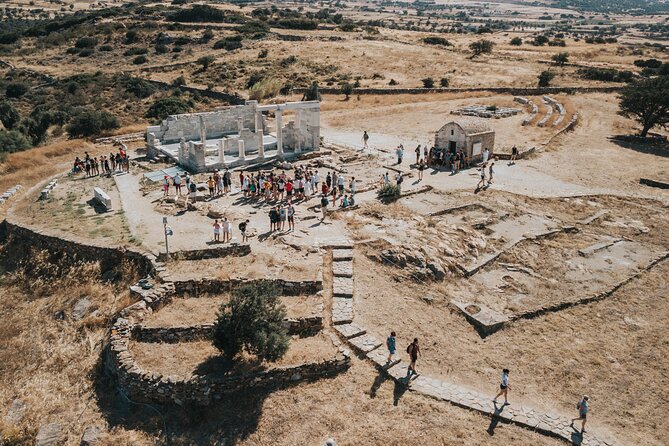
The first stop is the Temple of Demeter, one of Naxos’s most important ancient monuments. The sanctuary dates to the 6th century BC, and reaching it means walking uphill through a garden before you arrive at the temple.
Allow about 40 minutes here. You pay a €5 admission fee in cash at the entrance, and that cost is not included in the tour price. You have time to see the on-site museum as well as the monument itself.
There is an important limit to the guiding. The escort is not licensed to guide inside the temple grounds, so you receive the historical explanation before entering the gate. Once inside, you look around on your own. That arrangement is worth knowing in advance, since you should not expect a detailed guided walk among the stones.
The temple closes on Tuesdays and on May 1. On those dates, the tour gives you extra time in Chalki and Apeiranthos instead. That keeps the day moving, but if Demeter is your main reason for booking, avoid those dates.
Damalas: pottery, olive oil, and everyday island life
Damalas is a small village, but it provides one of the most personal stops of the day. At a traditional pottery workshop, Manolis welcomes the group and demonstrates local craft methods. He also explains older techniques and the practical side of pottery making.
You spend around 30 minutes here, followed by a visit to a restored olive press museum. The press explains how olive oil was once produced, turning an abstract part of Greek food culture into something you can see and understand.
This stop works because it is not only about looking at an old building. You meet a local maker and see how a familiar island product was made before modern equipment. I would allow room in your bag for a small purchase, since the pottery workshop can tempt you into shopping.
Damalas also breaks up the ancient sites and village walks. After the uphill temple visit, you get a more relaxed stop with a clear focus. It is one of the best parts of the route if you want contact with local traditions rather than a day made up only of viewpoints and photo stops.
Chalki: Venetian buildings and a free 45 minutes

The bus continues to Chalki, an old commercial center with Venetian architecture. The village gives you about 45 minutes to explore independently, which is enough for a short walk, a drink, or a look inside the shops and galleries.
The Vallindras distillery is one of the main sights here. It is described as the island’s oldest distillery and offers an optional kitron visit for €3 per person. Kitron is a Naxos liqueur made from the leaves of the citron tree, so this is a useful stop if you want to connect the island’s agricultural past with something you can taste.
The distillery fee is extra, and you may prefer to use your free time for the village itself. Chalki also has ceramic art galleries, small shops, souvenirs, and local products. The time passes quickly, so decide before you arrive if you want the distillery, shopping, or simply a walk through the old streets.
This is a good example of the tour’s style. You receive a short introduction, then some freedom. If you prefer a guide beside you at every moment, the arrangement may feel loose. If you like setting your own pace for a while, it gives the day welcome breathing room.
Same island, an entirely different sort of day:
- Naxos: Half-Day Cooking Class at Basiliko Family Tavern
★ 5.0 · 887 reviews - Semi-private Antiparos & Caves Blue Lagoon OR Rina Cave & Small Cyclades
★ 4.5 · 500 reviews - Naxos Half Day History and Culture Guided Tour
★ 5.0 · 491 reviews - Naxos:Half-day cooking class at Basiliko
★ 5.0 · 457 reviews
Apeiranthos: marble lanes and your main lunch break

Apeiranthos is the longest village stop, with about 90 minutes for lunch and exploring. The village sits below Fanari mountain and is known for marble alleys, Venetian towers, traditional shops, verandas, and mountain views.
The marble is not just decoration. It shapes the feel of the village underfoot and gives the narrow lanes a pale, polished look. You can wander, browse local products, or settle into a taverna. The stop is long enough for a proper meal, though you are responsible for the cost of food and drinks.
Two local dishes worth looking for are rosto and kalogiros. Rosto is a traditional meat dish, while kalogiros is another local recipe associated with Naxos. The tour does not include lunch, so check the menu and prices before ordering if you are watching your budget.
Apeiranthos is also where the tight schedule becomes most useful. You have enough time to eat without rushing through the village, yet the group does not lose half a day in one place. I would keep part of the stop for walking after lunch. The lanes and old buildings are the main reason to visit, and a meal alone would miss much of the character.
The road to Apeiranthos is winding and mountainous. The views are a major part of the journey, but anyone prone to motion sickness should prepare before the bus leaves. A careful driver makes a difference, but no driver can remove the turns from the route.
Apollonas Beach: a short swim at the island’s northern end
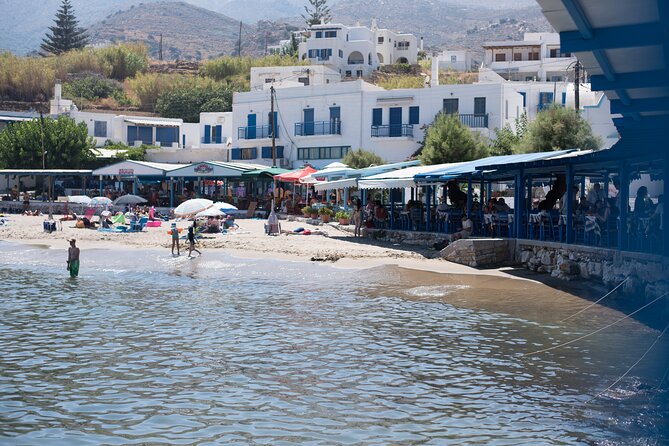
After passing Koronos and the old emery mining area, the bus reaches Apollonas. The route itself gives you a look at Naxos’s mining past, then the scene changes to a small fishing village by the water.
You have about 45 minutes at Apollonas Beach. That is enough for a quick dip, coffee, or dessert beside the sea. Bring your swimsuit under your clothes if you want to swim without wasting time changing.
Do not treat this as a full beach afternoon. The stop is short, and you still need to walk back to the bus on time. The value is in the change of pace after the inland villages. You get fresh air, water, and a chance to sit down before the final ancient site.
A beach stop can seem odd on a history-focused route, but it makes the day more varied. You are not asked to spend eight hours moving from one ruin to the next. Just remember that the beach time is a quick refresh, not a long, lazy stay.
The Apollonas Kouros: an unfinished statue in the open air

The final stop is the Apollonas Kouros, an unfinished marble statue about 11 meters long. It has remained in the same place for more than 2,500 years.
You get around 15 minutes here, so the visit is brief. The statue lies where it was abandoned, which makes it different from a finished work displayed in a museum. You can see the scale of the marble and the marks left by the ancient carving process.
Fifteen minutes is enough for a close look and photographs, but not for a long lecture or extended wandering. Stay aware of the departure time. The Kouros is a fitting last stop because it brings together several themes from the day: Naxos marble, ancient workmanship, and the island’s connection to the wider Greek world.
What the $42.33 price really includes

At $42.33 per person, the tour offers good value for a full day. You receive an air-conditioned vehicle, an English-speaking local escort, and transport across a route that would be difficult to cover by public bus in one day.
You pay separately for:
- The €5 Demeter’s Temple entrance, in cash
- The optional €3 kitron distillery visit
- Lunch, drinks, coffee, dessert, and personal purchases
Even after adding the temple ticket and a meal, the cost remains reasonable for anyone who does not want to rent a car. A private upgrade is also available if you want a tour designed just for your group, though the supplied details do not give its price.
The value is highest when you want a broad introduction. You see far more than you would by staying in Naxos Town, but you give up the freedom to linger. I would not choose this format if your ideal day means spending hours in one village or setting your own departure times.
Pickup times and practical planning
Pickup is offered from central points in Plaka, Maragkas Beach, Agia Anna, Agios Prokopios, Stelida, and Naxos Town. Times begin at 8:35 in Plaka and continue through the coastal areas before reaching the Naxos Bus Transfer office outside the port at 9:05.
You need to wait at your pickup point five minutes early. If your accommodation does not fall near one of the listed central points, you can provide its details and ask which pickup location is most convenient. You can also meet the group at the Naxos Bus Transfer office.
The tour ends back at the starting meeting point. Wear shoes suitable for uphill walking and uneven village lanes, carry water, and pack sun protection. A small tote bag is useful if you expect to buy pottery, food, or souvenirs.
The tour operates in rain or shine, with small itinerary changes possible in rough weather. Tuesdays and May 1 have the planned Demeter change. Since the route includes mountain roads, medication for motion sickness is sensible even if you are not usually affected.
Who will enjoy this Naxos bus tour most
I recommend this outing to you if you do not drive, do not want to rent a car, or have only a short stay on Naxos. It is also a strong first-day choice for anyone who wants island context before deciding which villages or beaches deserve a longer return visit.
You will likely enjoy it if you value:
- A mix of archaeology, food, craft, villages, and scenery
- Clear transport across difficult mountain roads
- Free time at several stops rather than a guide beside you all day
- English commentary about Naxos, Greek mythology, and local customs
- A low price for a full day away from the main resort areas
It may not suit you if you dislike winding roads, large groups, strict departure times, or short visits. The guide quality can also vary by departure. Alex, Thanos, and Angeliki are noted for clear explanations and a friendly manner, but one guide may offer more detail at each stop than another. Keep with the group and ask questions when you have the chance.
Should you book the Naxos Highlights Bus Tour?
Book it if you want to see the island’s inland character without driving. The pottery workshop in Damalas, the marble village of Apeiranthos, the sea break at Apollonas, and the ancient sites give you a useful picture of Naxos in one day.
I would especially book it near the start of your stay, then return later to the places that catch your interest. Choose another plan if you want a slow, private day or if mountain roads cause serious discomfort.
Free cancellation is available when you cancel at least 24 hours before the start time. For the price, the route is hard to beat, provided you arrive prepared for a long, winding, tightly scheduled day.
FAQ
How long does the Naxos Highlights Bus Tour last?
The tour lasts approximately eight hours and ends back at the starting meeting point.
What places does the tour visit?
The route includes the Temple of Demeter, Damalas, Chalki, Apeiranthos, Apollonas Beach, and the Apollonas Kouros.
Is hotel pickup available?
Pickup is available from central locations in Plaka, Maragkas Beach, Agia Anna, Agios Prokopios, Stelida, and Naxos Town. You can also meet the group at the Naxos Bus Transfer office outside Naxos Port.
Is lunch included in the tour price?
No. Apeiranthos provides about 90 minutes of free time for lunch, but meals, drinks, coffee, and personal expenses are not included.
What extra entrance fees should I expect?
The Temple of Demeter costs €5 per person, payable in cash at the site. The optional kitron distillery visit in Chalki costs €3 per person.
Is the Temple of Demeter open every day?
The temple is closed on Tuesdays and on May 1. On those dates, the tour provides extra time in Chalki and Apeiranthos instead.
Is the tour suitable if I get motion sickness?
A large part of the route follows winding, mountainous roads. If you are prone to motion sickness, the tour advises carrying travel sickness pills.
Fresh on the Naxos list
- Rent an Aurelia e-assist bike and explore Naxos!★ 5.0 · 45 reviews
- From Naxos: Cruise to Iraklia and Ano Koufonisi Island★ 4.4 · 53 reviews
- Naxos: Hike to the Top of Mount Zas with a Guide★ 5.0 · 56 reviews
- Naxos Villages Food Tour★ 5.0 · 59 reviews
- Naxos: Hike to the Top of the Cyclades – Mount Zas★ 5.0 · 69 reviews
- Koufonissia & Rina Cave with BBQ lunch★ 4.5 · 73 reviews
- Citron Tasting and Distillery 1-Hour Guided Tour in Naxos★ 5.0 · 75 reviews
- Experience Marble Carving★ 5.0 · 81 reviews
Naxos Tours, compared.

Half-Day Cooking Class at Basiliko Family Tavern
Read our review →
Semi-private Antiparos & Caves Blue Lagoon OR Rina Cave & Small Cyclades
Read our review →



Naxos Perivoli Farm Experience & Wood-fire Cooking Class
Read our review →
Shared Catamaran All inclusive-Day Cruise to Naxos or Paros
Read our review →
Naxos/ Paros: Sailing Cruise with Food and Drinks
Read our review →Browse the lists this tour appears in