
Reviewed · SANTORINI TOURS
Santorini: Akrotiri Entry Ticket and Audio Guide
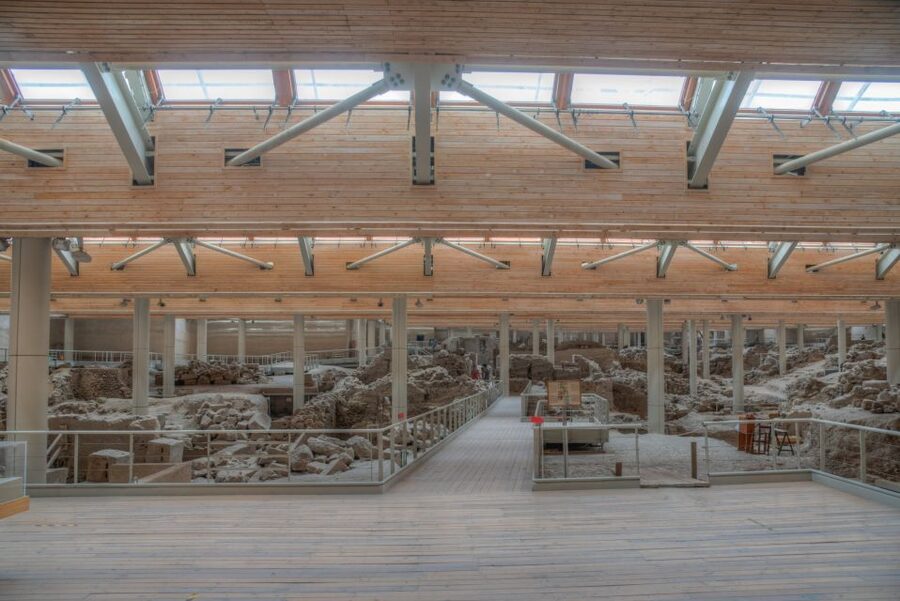
Akrotiri is Santorini’s best place to picture daily life before the island became a postcard. Beneath a huge shelter, you walk above streets, homes, stairways, and workshops from a Bronze Age town buried by volcanic ash. The Square of the Double Horns and House of the Ladies give the ruins memorable landmarks, even if some sections can be hard to match with the audio.
I like the freedom to stop, rewind, and revisit the tour, and I like that the downloaded maps, text, and narration work offline. The main drawback is the lack of a live guide: audio directions are not always clear, especially where the route has changed or areas are closed.
Key points to know before you book
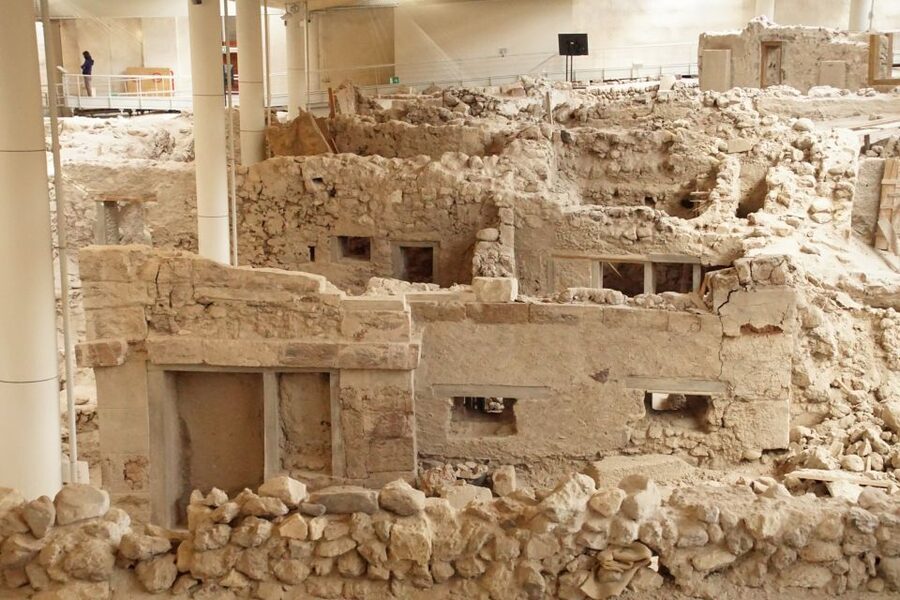
- Akrotiri is far older than Pompeii: The settlement offers a remarkable glimpse of Bronze Age urban life before the volcanic eruption.
- The shelter keeps you comfortable: The entire site is protected under a large structure, with shade available throughout the visit.
- The audio adds useful context: It explains the Xeste residences, daily routines, buildings, and the eruption’s story beyond the short signs.
- Navigation takes patience: The narration does not always line up neatly with the current path, displays, or viewing points.
- Bring your own setup: You need a charged Android or iOS phone, headphones, and about 100 to 150 MB of storage.
- The ticket is flexible in one important way: Your selected time slot applies to the museum entrance, while the archaeological site can be entered anytime on the chosen date.
Why Akrotiri matters in Santorini
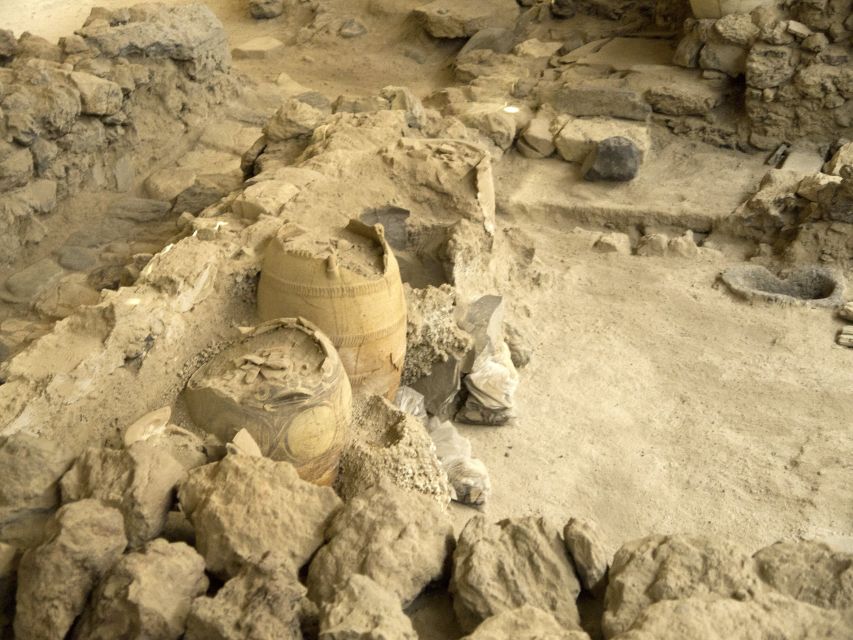
Akrotiri was a settled Bronze Age town on the southern side of Santorini. It was buried beneath volcanic ash after residents appear to have left as the volcano became dangerous. The ash covered buildings and objects, preserving a remarkable snapshot of life before the disaster.
That comparison with Pompeii is useful, but do not expect a larger or more dramatic version of Pompeii. Akrotiri is smaller, and much of what you see is architectural space rather than a city filled with exposed household objects.
What makes it special is its age and design. The settlement is roughly 1,000 years older than Pompeii, and the remains show a surprisingly advanced community. You see multi-level buildings, carefully arranged streets, and affluent homes known as Xeste.
The site is sometimes called the Pompeii of the Aegean, but the mood is different. Pompeii feels like a Roman city interrupted in full public view. Akrotiri feels quieter and more mysterious, with unanswered questions about where the inhabitants went and how much of the town still lies under the ash.
The audio tour helps turn bare walls into human spaces. Instead of seeing only masonry, you get information about how rooms may have been used and what daily life may have looked like. That extra layer is especially useful if you do not already know Bronze Age archaeology.
A few other Santorini mornings to price up
- Santorini: The Greek Wedding Show Entry Tickets
★ 4.8 · 894 reviews - Megalochori: Lost Atlantis 9D Experience Museum Entry Ticket
★ 4.6 · 440 reviews - Skip the Line Lost Atlantis Experience Ticket
★ 4.5 · 124 reviews
Entering the covered excavation
Your visit begins inside the Akrotiri site. There is no live guide or formal meeting point, so you need to follow the booking instructions and use the activation link sent by email.
Download the ticket and audio content before arriving. The area can have poor phone signal, and the offline material is designed to prevent roaming charges. Check your spam folder if the instructions do not appear quickly.
Once inside, you follow the marked route above the excavation. The large climate-controlled shelter is one of the practical strengths of the visit. It provides shade at all times, which makes Akrotiri a sensible choice during a hot Santorini afternoon.
You should still bring sunscreen, especially if you spend time outside before or after the visit. Comfortable shoes are sensible, but there is no need for especially sturdy hiking footwear. The path is designed for an archaeological site rather than a mountain trail.
The site is wheelchair accessible. Since some viewing areas or sections can be closed temporarily, access and sightlines may vary on the day.
Using the smartphone audio guide
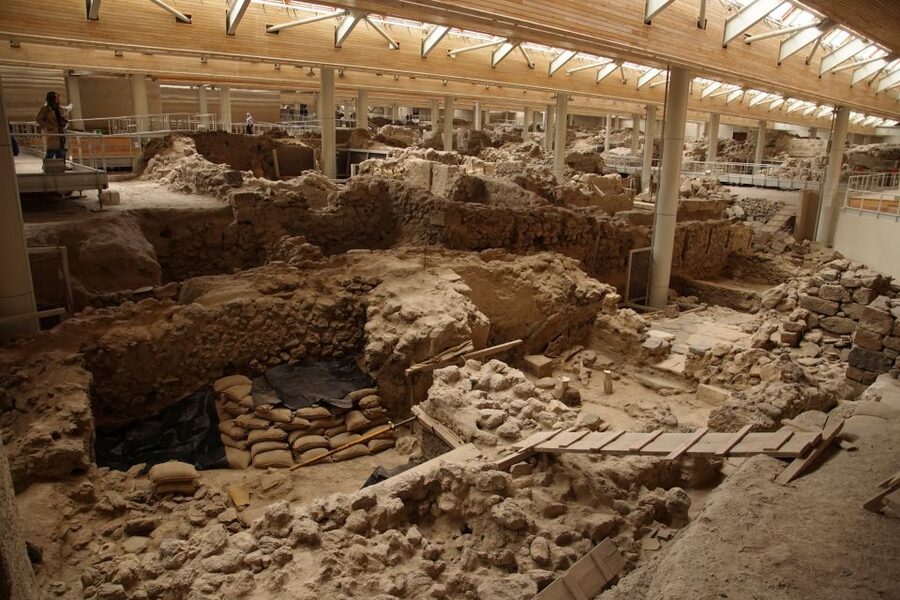
The audio guide is a self-guided tour rather than a live commentary. You use your own phone and headphones, select the relevant track in the app, and move through the ruins at your own pace.
I like this format for Akrotiri because the site rewards lingering. You might want to stop at a wall painting, look across a street, or reread a sign without holding up a group. You can pause and rewind when a detail goes by too quickly.
The content covers the town’s layout, the Xeste houses, the eruption, and stories connected with the people who lived here. The narration is available in English, French, Italian, and German.
The strongest reason to use it is that the signs alone can be brief. The audio gives you more background and helps explain why the buildings matter. It can also help you imagine spaces that are now reduced to foundations, walls, and partial rooms.
The weak point is orientation. Audio titles and physical displays do not always match perfectly, and some narration refers to objects or views that have been moved to museums in Fira or Athens. If a track discusses a fresco and you cannot find it in front of you, it may no longer be on display at Akrotiri.
The route has also changed in places. Sections may be roped off, and the original sequence can become difficult to follow. The audio may tell you to look toward an area that is not open, or you may enter from a different direction than the recording expects.
My practical approach would be simple: use the map and signs to get your bearings first, then start the audio. Do not force yourself to follow every track in exact order. If the route seems confusing, pause the recording, study the sign, and continue when the physical site makes sense.
The Square of the Double Horns
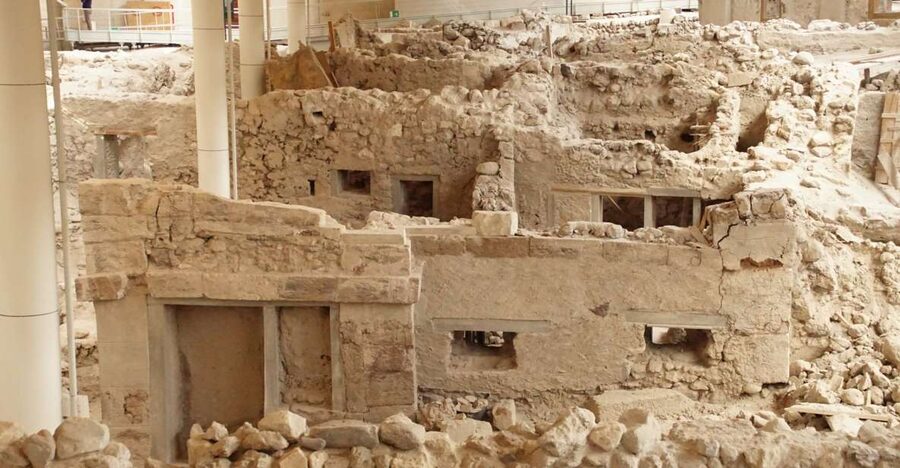
The Square of the Double Horns is one of the named points included in the tour. It helps you understand that Akrotiri was not just a collection of isolated houses. The settlement had streets and shared spaces that linked its buildings together.
Look at the relationship between the open area and the surrounding structures. The town’s layout gives you a better sense of movement, trade, and neighborhood life than a single room would.
This is also a place where audio guidance can be valuable. The remains are not always immediately self-explanatory, especially for a first-time visitor. A short explanation of the architecture can make a low wall or narrow passage feel like part of a functioning town rather than an archaeological outline.
Keep an eye on the route markings. If part of the central path is closed, you may not be able to stand exactly where the recording suggests. You can still understand the general point, but you may need to view the area from the permitted walkway.
Same island, an entirely different sort of day:
- Santorini Classic Catamaran Cruise with BBQ, Drinks and Transfers
★ 5.0 · 3,933 reviews - Half-Day Exclusive Catamaran Cruise in Santorini with Meal and Open Bar
★ 5.0 · 2,975 reviews - Santorini Gold Catamaran Cruise with Snorkel, BBQ & Open Bar
★ 4.8 · 2,822 reviews - Private Santorini Tailor Made – Choice of the Guest!
★ 5.0 · 1,972 reviews
The House of the Ladies and the Xeste homes
The House of the Ladies is another important stop. Along with the Xeste residences, it shows the more refined side of Akrotiri’s architecture.
The name Xeste refers to affluent residences, and the audio explains what made these homes different. You get a sense of social differences within the settlement, as well as the skills needed to build and decorate such structures.
The site’s artwork is part of its fame, but do not assume every painting mentioned in the audio is still in the excavation. Some important works are held in museums, including collections in Fira or Athens. The recording can therefore be useful for context, but the experience may feel incomplete if you expect to see every object in place.
This is one reason I would not judge the tour only by how many complete rooms or paintings you encounter. Akrotiri’s value is partly in the preserved plan of the town. The buildings show how people organized domestic space, even when the original contents have been removed for protection or exhibition elsewhere.
What the ruins reveal about Bronze Age life
The audio works best when it connects architecture with ordinary routines. It discusses the people who lived in the houses, not only the eruption that buried them.
You can use the streets and rooms to imagine the town as a working community. The walls suggest different levels of wealth and different uses of space. The preserved arrangement gives you clues about how people moved through their homes and neighborhood.
Akrotiri’s preservation is striking because the volcanic ash covered the settlement before later occupation could erase much of it. That does not mean every building is intact, and the excavation has only exposed part of the ancient town. Still, the surviving sections offer an unusually clear look at a prehistoric residential area.
The evacuation story adds suspense, but it is best treated with some care. The town was abandoned before the final destruction, and the full fate of its inhabitants remains uncertain. The site gives you evidence, not a neat ending.
That uncertainty is part of the appeal. You are not simply looking at ruins after a known battle or political event. You are trying to understand a society that faced a growing natural threat and left before the volcano reached its most violent stage.
How the visit compares with Pompeii
If Pompeii is already on your itinerary, Akrotiri may feel smaller. You will not spend hours walking through a vast Roman city with the same scale of streets, public buildings, and exposed neighborhoods.
I would not skip Akrotiri because of that comparison. Its age is the headline. The town predates Pompeii by about 1,000 years, and its architecture challenges the idea that complex urban planning began with the classical Greeks or Romans.
The covered building also changes the experience. Pompeii is largely open to the weather, while Akrotiri is protected under a large shelter. That makes Akrotiri easier during strong sun, though the shelter can also make the visit feel more enclosed.
If you have limited time, choose Akrotiri for Bronze Age archaeology and prehistoric domestic life. Choose Pompeii for scale, Roman history, and a much larger urban setting. Seeing both can be rewarding, but they answer different questions.
Is the $41 price good value?
The listed price is $41 per person for the entry ticket and audio guide, valid for one day. I consider that reasonable if you value explanation and want the convenience of a ready-to-use visit, but it is not the cheapest way to enter an archaeological site.
The ticket includes adult admission, the smartphone audio tour, an activation link, and offline text, narration, and maps. It does not include transportation, food, a live guide, a phone, or headphones.
The price makes the most sense for you if you want more than the short signs provide and prefer to explore privately. It is also useful if you do not want to arrange a live guide or join a fixed group.
The value is weaker if you are comfortable reading the displays and forming your own route. Some people find the audio too technical or hard to match with the exhibits. A live guide would cost more, but would let you ask questions and adapt the explanation to what is open.
Pay close attention to the instruction to book per device rather than per participant. The headline price is shown per person, yet the practical guidance says the audio is booked by device. Check the final booking terms carefully if two people plan to share one phone or one audio access.
Phone preparation and arrival tips
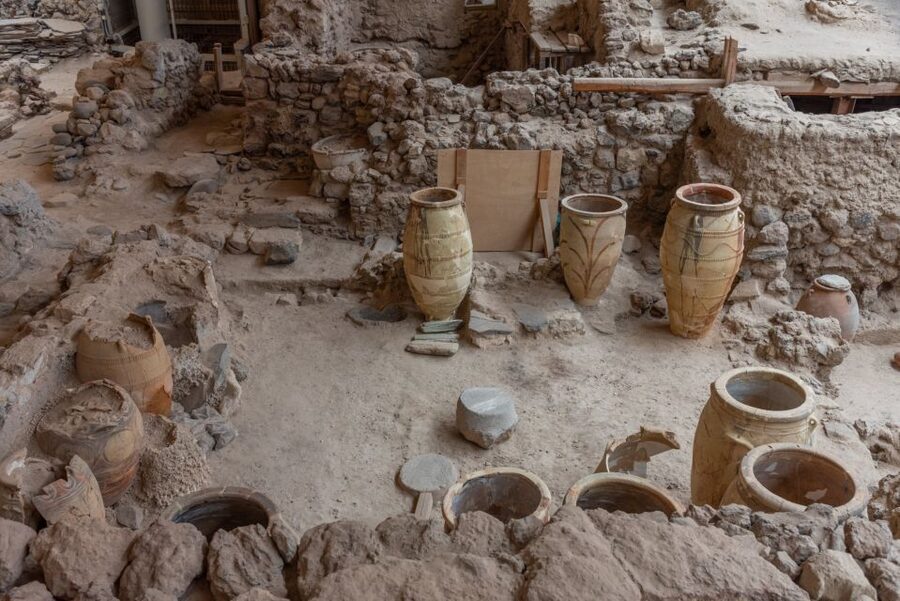
Do the technical work before you leave your hotel. Install the app, open the activation link, download the audio, and confirm that the maps and text are available offline.
You need an Android phone running version 5.0 or later, or a compatible iPhone. The audio does not work with Windows phones, iPhone 5, iPhone 5C, older iPod Touch models, iPad 4 or older, iPad Mini 1, or earlier devices listed in the instructions.
Allow about 100 to 150 MB of free storage. Charge your phone fully, and bring headphones. The experience does not provide either item.
The selected time slot applies to entrance to the museum only. You can enter the archaeological site at any time on the selected date, so read the timing instructions carefully rather than treating the whole visit as a fixed guided departure.
Free and reduced admission tickets are available only on site. If you qualify for one, this paid package may not be the best choice.
There is no hotel pickup or drop-off. You need to arrange your own transport to Akrotiri, and this ticket is only for the site experience.
Who should choose this Akrotiri experience?
I would recommend it to independent visitors who like to pause, read, and set their own pace. It suits history lovers, archaeology fans, and anyone who wants a break from Santorini’s famous cliffside views.
It is also a good choice for a hot day because the excavation is sheltered. Families may appreciate the freedom to move at different speeds, though younger children may find the technical explanations less engaging.
You should think twice if you need precise directions, want to ask frequent questions, or dislike managing an app while sightseeing. The audio can be informative, but it is not a substitute for a live guide.
If you book it, treat the recording as a helpful companion rather than an exact marching order. Use the physical route, signs, and open viewing areas first. You will get more from the audio once you accept that some references may not correspond perfectly to what is in front of you.
Should you book the Akrotiri ticket and audio guide?
Book this experience if you want an easy, self-guided introduction to one of Santorini’s most important archaeological sites. The ruins are impressive, the shelter keeps you cool and shaded, and the audio adds useful background about the town, its buildings, and its uncertain final days.
Skip it if you are looking for a live historian, a fully interactive tour, or flawless point-by-point navigation. You can still enjoy Akrotiri with the signs alone, but the audio is worthwhile for many visitors who want the larger story.
My advice is to prepare the app before arrival, bring headphones, and allow yourself time to ignore the suggested order when the route does not line up. With that small adjustment, the $41 package offers a practical way to see a prehistoric city that is much older than Pompeii and unlike anything else on Santorini.
FAQ
Is a live guide included?
No. This is a self-guided audio tour on your smartphone. There is no live guide or formal meeting point.
What languages are available?
The audio guide is available in English, French, Italian, and German.
Can I use the audio guide offline?
Yes. The included offline content contains the text, audio narration, and maps. Download everything before your visit because phone signal in the area may be poor.
What do I need to bring?
Bring a charged Android or iOS smartphone, headphones, and comfortable shoes. Sunscreen is also recommended, even though the excavation itself is covered.
Is Akrotiri wheelchair accessible?
Yes. The site is listed as wheelchair accessible.
Does my selected time slot apply to the whole site?
No. The selected time slot is binding for entrance to the museum. You may enter the archaeological site anytime on the selected date.
Can I get a free or reduced admission ticket with this booking?
Free and reduced admission tickets can only be obtained on site. They are not provided through this paid ticket package.
More Audio Tours in Santorini
- Athens: Acropolis Museum Ticket with optional Audio Guide
★ 4.4 · 2,652 reviews - Athens: Acropolis Ticket & Optional Self-Guided Audio Tours
★ 4.1 · 2,542 reviews - Parthenon & Acropolis Museum with Audio or Live Tour Option
★ 4.1 · 2,446 reviews - Crete: Knossos Palace Entry Ticket with Optional Audio Guide
★ 3.9 · 2,251 reviews
More Self-Guided Tours in Santorini
- Athens: Acropolis Ticket with Optional Audio or Live Guide
★ 4.2 · 11,055 reviews - Athens: Cape Sounio & Poseidon Temple Trip with Audio Guide
★ 4.4 · 4,521 reviews - Athens: Acropolis Ticket with Audio Guide
★ 4.0 · 3,575 reviews - From Athens: Delphi Full Day V.R. Audio Guided Tour
★ 4.6 · 3,028 reviews
Fresh on the Santorini list
- Private Tour: Customize Your Perfect Day in Santorini★ 5.0 · 45 reviews
- Imerovigli: Premium Wine Tasting with Caldera and Sea Views★ 4.9 · 45 reviews
- Santorini_All time Classic in Santorini★ 5.0 · 45 reviews
- Santorini 4-Hour Private Tour including Wine Tasting, Shore Excursion★ 5.0 · 45 reviews
- Santorini: Caldera Private Power Catamaran Cruise★ 4.9 · 45 reviews
- Santorini: 6hr Small Group Shore Excursion Villages & Wine★ 5.0 · 45 reviews
- Photoshoot in Flying Dresses in Santorini★ 4.5 · 46 reviews
- Smooth and Fun Taste of Santorini Private Tour★ 5.0 · 47 reviews
Santorini Tours, compared.

Santorini Classic Catamaran Cruise with BBQ, Drinks and Transfers
Read our review →
Half-Day Exclusive Catamaran Cruise in Santorini with Meal and Open Bar
Read our review →
Santorini Gold Catamaran Cruise with Snorkel, BBQ & Open Bar
Read our review →
Private Santorini Tailor Made – Choice of the Guest!
Read our review →
Santorini Wine Adventure with 12 Wine Tastings, Tapas and Sunset
Read our review →
Santorini Catamaran Cruise with Greek Meal, Open-Bar and Sunset
Read our review →
From Heraklion/Crete: Santorini Island Guided Day Trip
Read our review →
Santorini Caldera Cruise Tour (Volcano, Hot Springs, Thirassia)
Read our review →Browse the lists this tour appears in