Reviewed · CRETE TOURS
WWII – The Battle of Crete Day Tour
The most powerful part of this six-hour tour is the chance to connect the Battle of Crete with real ground: Maleme, Tavronitis, and the cemeteries at German and Allied Souda Bay. Guides such as Yannis, Babis, Giannis, and Ioannis bring the 1941 invasion into focus with maps, stories, and local knowledge.
I like the small group setting, which leaves room for questions and can make a family connection feel personal. I also like the practical comfort: an air-conditioned minivan, bottled water, snacks, hotel pickup in the Chania region, and entrance fees are all covered.
The main drawback is time. Six hours allows for several important places, but not every battlefield or every part of the battle can be explained at length. If you want a minute-by-minute military study, read beforehand and bring realistic expectations.
Key points to know before booking
- Walk through the opening battlefield at Maleme: This was a key point in the German airborne attack and gives the tour its military focus.
- See Tavronitis Bridge and wartime ground: The bridge is a specific historical site that can be easy to miss without local transport.
- Compare two very different cemeteries: The German Military Cemetery and Souda Bay War Cemetery offer a sobering view of the losses on opposing sides.
- Expect guides who teach, not just drive: Yannis, Babis, Giannis, Ioannis, and other local guides are praised for clear English, strong subject knowledge, and an easy manner.
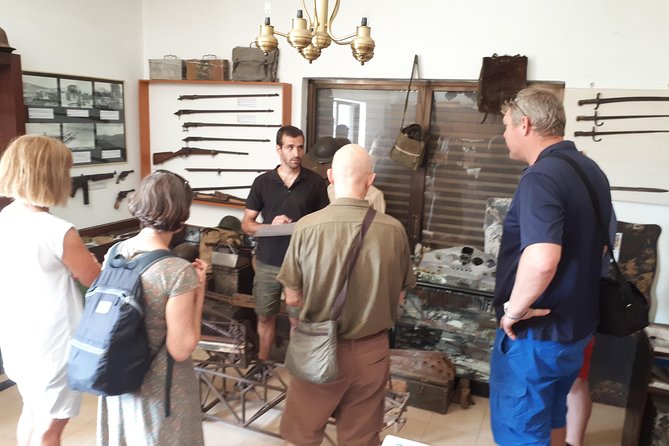
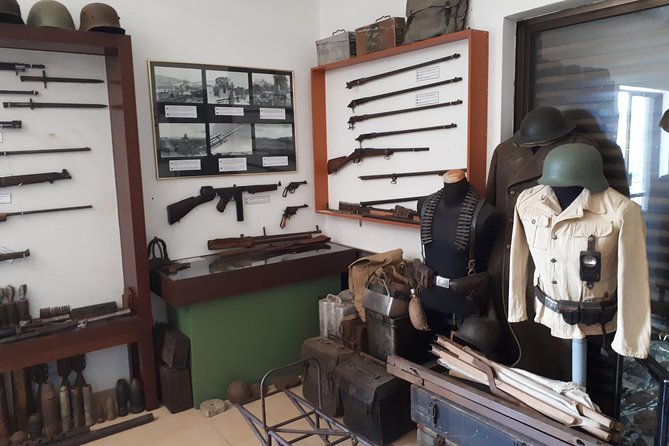
- Look for the private military collection visit: Several accounts describe this as a highlight, with memorabilia and personal stories connected to the battle.
- Enjoy a comfortable half-day outing: Pickup, drop-off, minivan transport, refreshments, taxes, and entrance fees are included for $114.89 per person.
Why the Battle of Crete is worth a day of your holiday
The Battle of Crete was not simply another WWII stop on a map. In May 1941, German airborne forces attacked the island, meeting Allied troops, Greek forces, and Cretan civilians who resisted the invasion. The fighting shaped Crete’s wartime story for years afterward.
You do not need to arrive as a military historian. A good guide sets up the larger story first, then helps you read the ground. That matters here because many battle sites do not come with large displays or obvious markers. From a road, hill, cemetery, or bridge, you may see little until someone explains what happened there.
I especially value the local angle. The tour does not treat the battle as a contest between German and British forces alone. It also addresses Greek and Cretan involvement, local resistance, the suffering of civilians, and the experiences of Allied troops from across the Commonwealth.
That wider view gives the day more purpose. You are not just checking off military sites. You are learning how the invasion affected an island and its people.
A few other Crete mornings to price up
- From Kissamos Port: Boat Cruise to Balos Lagoon & Gramvousa
★ 4.2 · 6,755 reviews - Crete: Day Trip to Agios Nikolaos and Spinalonga Island
★ 4.6 · 4,416 reviews - From Chania: Full-Day Samaria Gorge Trek Excursion & Guide
★ 4.6 · 3,191 reviews
Maleme gives the tour its military focus
Maleme is where the tour begins, and it is a sensible starting point. The area was central to the German airborne assault, so your guide can use it to explain why control of the airfield and surrounding ground mattered so much.
The first stop lasts about 50 minutes. That is enough time for an introduction to the battle and for questions, but the amount of walking and exact viewing points can vary with the group and the guide’s approach. You should expect more explanation than formal museum presentation.
This is where a little preparation pays off. If you have read a book about the battle, Maleme helps turn names and arrows on a map into actual places. If you have not, the guide’s opening explanation should give you the basic sequence before the day moves on.
Several guides are praised for making the story easy to follow. Yannis is repeatedly singled out for his storytelling and passion, while Babis is described as clear, engaging, and well informed about the 1941 events. The guide may be the difference between seeing a field and understanding why that field mattered.
Tavronitis Bridge brings the battle down to one place
The visit to Tavronitis Bridge lasts about 40 minutes and includes admission. This is one of the tour’s most useful stops because a bridge gives you a concrete object around which to organize the story.
Military history can become abstract when it is presented only through dates and troop movements. At the bridge, you can focus on a defined crossing point and listen to how the surrounding area fitted into the fighting.
The stop also helps break up the day. You move from the broader opening discussion at Maleme to a more focused site, then later to the quieter cemetery visits. That rhythm works well for a half-day tour.
Keep in mind that this is a history outing, not a beach or scenery excursion. The emphasis is on what happened at each location. You will spend time listening, looking at the ground, and asking questions rather than rushing from one photo stop to another.
The German Military Cemetery asks for a different kind of attention
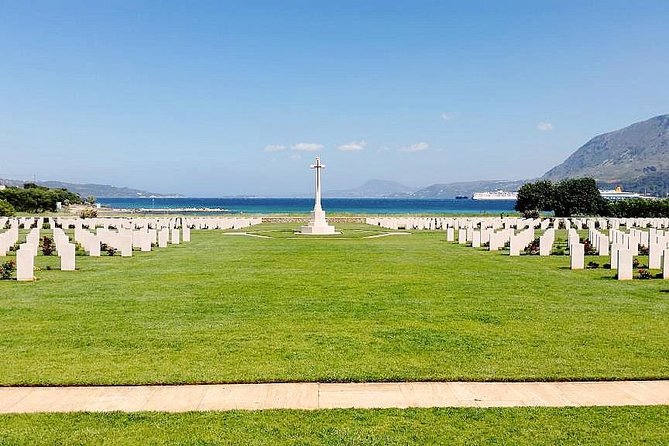
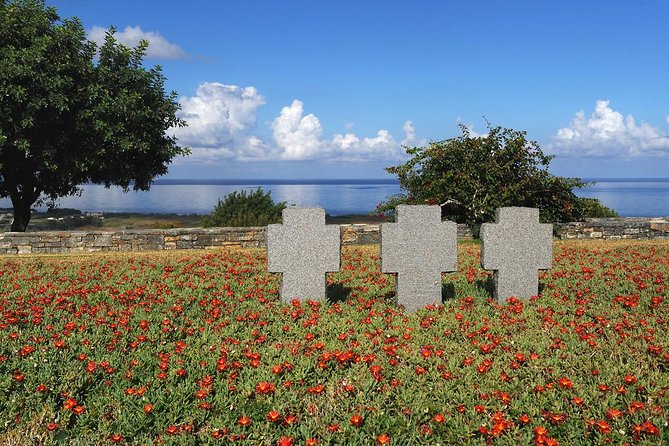
The German Military Cemetery is visited for about 30 minutes. It is a quiet and serious stop, and your guide can place the German losses within the larger story of the invasion.
A cemetery changes the tone of the tour. At Maleme and Tavronitis, the focus is movement, strategy, and combat. Here, names and dates make the cost of that campaign more direct.
I appreciate the inclusion of a German cemetery because it supports a more complete account. The tour is not limited to one national memory of the battle. Seeing German and Commonwealth burial grounds on the same day helps you understand that Crete’s wartime past cannot be reduced to a simple heroic narrative.
You should allow yourself time to be quiet here. The guide may continue explaining the site, but you can also take in the setting at your own pace. The cemetery visit is not a quick photo opportunity, and respectful behavior is essential.
Same island, an entirely different sort of day:
- Agios Nikolaos: Boat Trip to Spinalonga with Swim Stop
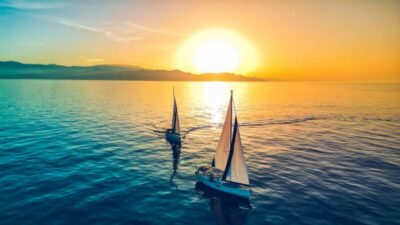
★ 4.4 · 3,031 reviews - Heraklion: Dia Island Sailboat Cruise with Swimming and Meal
★ 4.8 · 2,579 reviews - Crete: Knossos Palace Entry Ticket with Optional Audio Guide
★ 3.9 · 2,251 reviews - Heraklion Area: CRETAquarium Admission Ticket
★ 4.4 · 2,055 reviews
Souda Bay War Cemetery closes the day on a solemn note
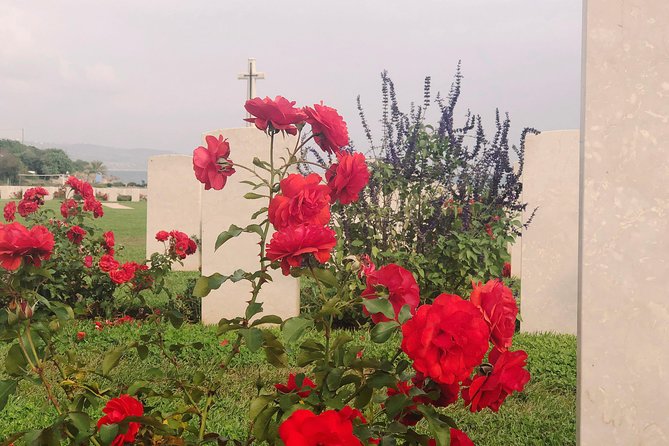
The final listed cemetery stop is Souda Bay War Cemetery, where you spend about 30 minutes. This is the British Commonwealth cemetery, and it brings the Allied side of the story into view.
The cemetery is especially meaningful if you have a family connection to the campaign. One account describes visiting the area where New Zealand forces were sent toward evacuation ships, while another involved tracing an Allied prisoner’s movements through Crete. The tour can take on real personal weight when a relative served here.
Even without family ties, Souda Bay helps explain the human scale of the battle. You see the names and nationalities linked to a campaign that involved British, Greek, Australian, New Zealand, and other Allied personnel.
Some participants have also found the stop especially memorable because of unexpected moments, including a Greek Air Force flypast. That is not something you should book the tour expecting, since it is not a guaranteed feature, but it shows how the day can intersect with the living present.
The private military collection may be the day’s most unusual stop
The supplied schedule names four main stops, but the experience can include more, and several accounts point to a visit with a local collector as a major highlight. This private collection adds something public monuments and cemeteries cannot.
You may see wartime objects and hear personal explanations connected to the Battle of Crete. Some descriptions refer to handling Lee Enfield rifles with bayonets and Tommy guns. Treat this as an unusual possibility within the tour, not as a guaranteed museum program, because the exact visit is not fully detailed in the formal schedule.
The value lies in the personal connection. A collection can show how battlefield objects survive outside official institutions and how local people preserve memories of the fighting. It also gives you a chance to ask questions in a more informal setting.
For many people, this is where the history becomes most tangible. The visit is not just about equipment. It links artifacts, local memory, and the stories your guide has been telling throughout the day.
Guides are the heart of the experience
The repeated strength of this tour is its guiding. Names vary by departure, but Yannis, Giannis, Ioannis, Babis, Stelios, and Nikos are all described as friendly, capable, and deeply interested in the subject.
Yannis is praised for making history come alive and for answering questions about both the battle and Crete in general. Babis is noted for his humor, clear delivery, and ability to explain the roles of German, Italian, British, Greek, and Commonwealth forces. Giannis is described as empathetic when discussing the invasion and local resistance.
That matters because this is not a standard sightseeing route. The sites need interpretation. A guide who can explain military decisions, local experience, and the wider story of the island gives the tour its value.
English is the offered language, and the guides are described as speaking it well. The small group limit of 15 helps, although some departures may be much smaller. Several accounts describe groups of only two or three people, which can make the day feel almost private and allow plenty of questions.
What the six-hour schedule feels like
The tour starts at 9:00 a.m. and lasts about six hours. Pickup and drop-off are available from specific places in the Chania region, so you should confirm that your hotel or accommodation falls within the service area before booking.
Travel is by air-conditioned minivan or minibus. That is a real advantage during Crete’s hot months, especially when you are moving between open sites and cemeteries. Bottled water and snacks are included, and some descriptions also refer to lunch, although the formal inclusions specifically promise snacks and water.
The pace is active but not punishing. The listed visits total about two and a half hours, leaving the rest of the time for driving, explanations, possible additional stops, and the collection visit. You should wear practical shoes and bring sun protection, since the day involves historic outdoor locations.
Most people can participate, and the experience is near public transportation. It requires good weather, and the operator may cancel if the minimum number of participants is not reached. In either case, you are offered another date, another experience, or a full refund.
Is $114.89 a fair price?
At $114.89 per person, this is not the cheapest way to spend six hours in the Chania area. The price makes more sense when you count what is bundled into it: transport, hotel pickup and drop-off in the Chania region, an English-speaking local driver or escort, entrance fees, snacks, bottled water, taxes, and handling charges.
You are also paying for access to places that can be awkward to connect independently. Maleme, Tavronitis, the German cemetery, and Souda Bay are spread across the region. A rental car would give you freedom, but you would still need to research the sites and find the right story to connect them.
For someone already familiar with the battle, the value depends on the quality of the guide and the private collection visit. For a first-time visitor, the guiding is the main reason to pay for the organized outing. It saves planning time and turns separate sites into one coherent lesson.
The small-group format improves the calculation. With fewer people, you can ask about a relative, a regiment, a book, or a particular battle movement. The maximum of 15 is manageable, but do not assume every departure will be tiny.
Who should book this tour?
I would choose this tour if you have a serious interest in WWII, family ties to Crete, or a desire to understand the island beyond its beaches and ancient sites. It also suits curious visitors who know little about the battle but enjoy learning through place.
You will get the most from it if you read a short account beforehand. One participant found that prior reading helped put the stops in order, while another felt the battle’s flow was difficult to grasp from the ground and maps alone. That is a useful warning: six hours can explain a lot, but it cannot replace a full book.
The tour also works for mixed groups. A military enthusiast can ask detailed questions, while a history novice can follow the broader story. Guides are praised for answering both types of questions and for connecting the war to Cretan life and later events.
I would hesitate only if you want extensive time physically walking through every battlefield. One account felt that some action was hard to follow because the group viewed areas from higher ground rather than spending long periods on the combat fields. The operator explains that the locations visited are genuine battle areas, but the experience remains a guided overview rather than a specialist field study.
Should you book the Battle of Crete day tour?
Book it if you want a well-organized, human account of Crete in WWII, with local guides who can explain both military events and civilian experience. The cemeteries, battlefield sites, and possible private collection visit give the day emotional range, while the minivan and included refreshments keep it comfortable.
Prepare by reading enough to understand the main sequence of the battle, then use the tour to connect that story to the ground. If you do that, $114.89 is a reasonable price for transport, access, and six hours of expert explanation.
Skip it if your main goal is a long, detailed walk across battle positions or a museum-heavy program. For everyone else, especially visitors with family connections or a genuine interest in the war, this is one of the more meaningful history outings available from Chania.
FAQ
How long is the WWII Battle of Crete tour?
The experience lasts approximately six hours. It begins at 9:00 a.m. and returns to the meeting point at the end of the tour.
Where does the tour start?
The tour starts in the Chania region, with pickup and drop-off available from specific places in that region. The Maleme area is the first listed stop.
Which historic sites are included?
The listed stops are Maleme, Tavronitis Bridge, the German Military Cemetery, and Souda Bay War Cemetery. Additional locations may be included during the day.
Is transport included?
Yes. Transport is provided by an air-conditioned minivan or minibus, with pickup and drop-off from specified places in the Chania region.
Are entrance fees and refreshments included?
Yes. Entrance fees, bottled water, snacks, taxes, and handling charges are included.
What language is the tour offered in?
The tour is offered in English and includes an English-speaking local driver or escort.
How many people can join the tour?
The maximum group size is 15 participants. The experience requires a minimum number of participants to operate.
Can I cancel for a full refund?
You can cancel up to 24 hours before the experience start time for a full refund. Cancellations or changes made less than 24 hours in advance are not accepted for a refund.
Fresh on the Crete list
- Heraklion: Sunrise Balloon Flight & Sunset Catamaran Cruise★ 5.0 · 45 reviews
- Hersonissos: Alar Spectacular Dinner Show★ 4.7 · 45 reviews
- Kissamos: Balos & Gramvousa Sailing Cruise with Meal★ 4.6 · 45 reviews
- Chania: Elafonisi & Falasarna Private Tour w/olive oil tasting★ 5.0 · 46 reviews
- Samaria Gorge Trek: Full-Day Excursion from Rethymno with Guide★ 4.5 · 46 reviews
- From Rethymno: Santorini Guided Tour and Cruise from Crete★ 4.4 · 46 reviews
- Heraklion: Sunset Luxury Cruise with Sushi and Open Bar★ 5.0 · 46 reviews
- Crete: Coastline Snorkeling Cruise from Hersonissos Port★ 4.3 · 46 reviews
Crete Tours, compared.
From Kissamos Port: Boat Cruise to Balos Lagoon & Gramvousa
Read our review →
Day Trip to Agios Nikolaos and Spinalonga Island
Read our review →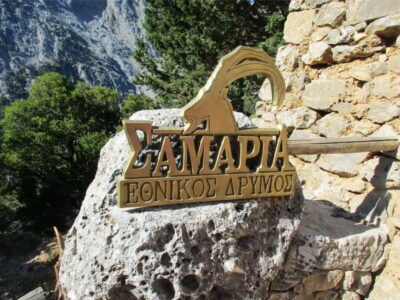
Full-Day Samaria Gorge Trek Excursion & Guide
Read our review →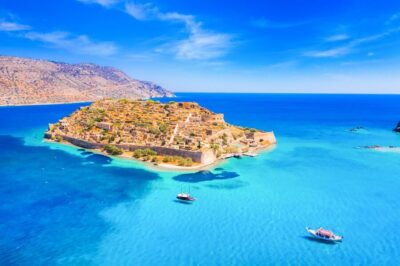
Dia Island Sailboat Cruise with Swimming and Meal
Read our review →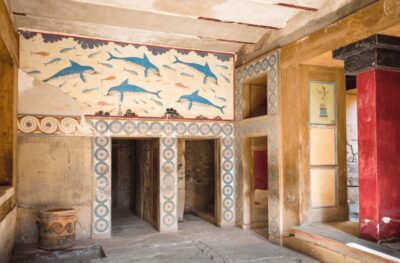
Knossos Palace Entry Ticket with Optional Audio Guide
Read our review →