

Reviewed · KALAMATA TOURS
Kalamata: The Olive Oil Routes Tour
The best part of The Olive Oil Routes Tour is that it connects the food on your table with the trees, families, and village that produce it. You walk among old olive groves near Androusa, visit a working mill run by a fifth-generation olive-growing family, then learn how to taste oil properly with local food.
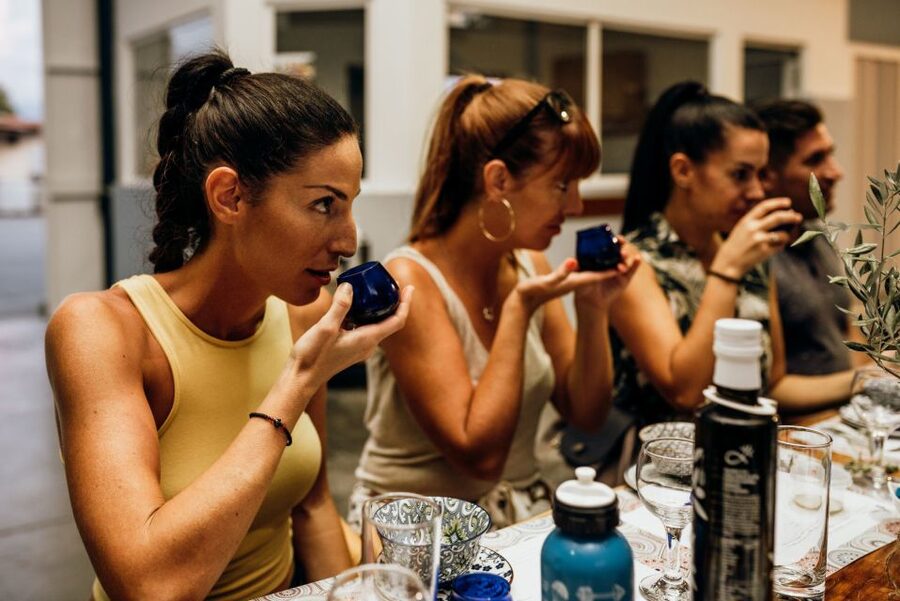
I like the personal family link, especially when Dimitra leads the tour and explains her own family’s farm and mill. I also like the tasting format: you do not simply swallow a shot of oil and nod politely. You compare varieties, look for aromas and flavors, and pair them with olives, cheeses, lalaggia, smoked ham, and other Messinian foods.
The main thing to consider is transportation. The tour does not pick you up in Kalamata, so you need a car or taxi for the roughly 20-minute drive to Androusa Castle. Also, the food may feel closer to a full meal than a light tasting, so plan your day around it.
Key points at a glance
- Begin at a 13th-century castle: Androusa Castle provides the meeting point and a strong sense of place before the olive walk begins.
- Walk among old olive trees: Learn how local varieties, family farming, and Greek customs are tied to the groves.
- Visit a 120-year-old olive mill: A fifth-generation owner explains extraction, storage, and bottling of extra virgin olive oil.
- Taste oils like a professional: A certified taster introduces Koroneiki, Manaki, Xalkidikis, and Mavroelia.
- Pair oil with real food: Try local olives, olive paste, lalaggia, sfela cheese, smoked ham, fruit, tzatziki, and small dishes.
- Expect a warm, interactive guide: Dimitra and the other hosts use questions, stories, and simple games to keep the group involved.
Why this tour gives Kalamata more meaning
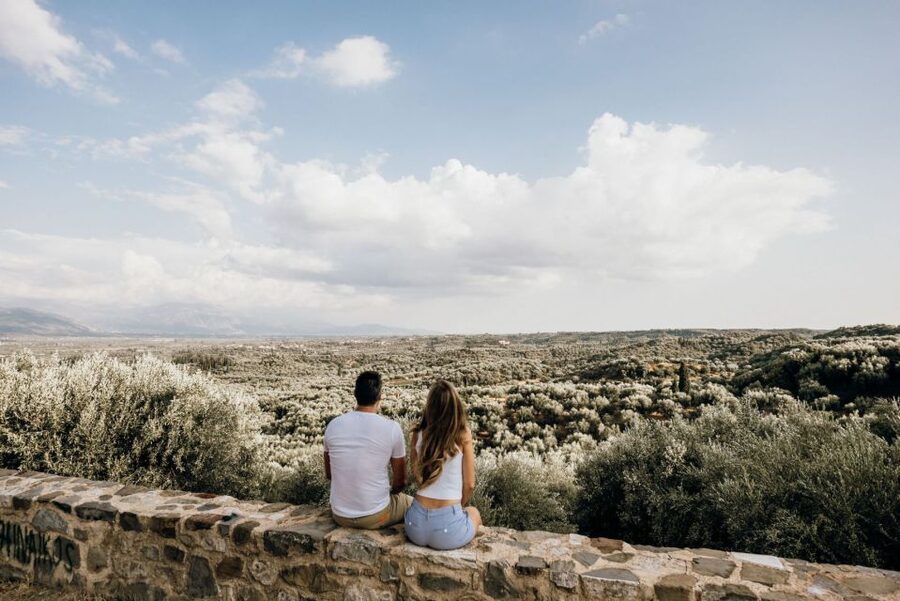
Kalamata is famous for its olives, but you understand that fame better outside the city. In the countryside around Androusa, olive trees are not a decorative backdrop. They are part of family property, village work, local cooking, and the rhythm of the year.
This three-and-a-half-hour experience puts those connections in order. You start with the trees, move to the machinery, and finish at the table. That sequence matters. It helps you see why extra virgin olive oil is treated as a main ingredient in Messinia rather than just a bottle placed beside the bread.
The tour is also more personal than a standard factory visit. The mill has been operating in the village for more than 120 years, and its current owner represents the fifth generation of the family. That does not mean the experience is a private visit to a quiet farm at every moment. The group can grow at the mill or food portion, but the family connection gives the visit a human center.
At $106 per person, this is not a cheap sightseeing stop. It is a half-day food and culture experience that includes entrance fees, oil and food tastings, two tour leaders, a certified olive oil taster, taxes, and photographs. The value improves if you want both an educational activity and a substantial local meal. It is less attractive if you only want to buy a bottle of oil or take a quick look at an olive press.
More olive oil tastings around Greece:
- Knossos-Zeus Cave -Old Traditional Villages-Olive Oil Factory
★ 5.0 · 694 reviews - The Governor’s Olive Mill Tour with Olive Oil Tasting
★ 5.0 · 502 reviews - From Chania: Olive Oil, Wine, Cheese & Honey Tasting Tour
★ 4.6 · 490 reviews
Starting at Androusa Castle
The meeting point is outside the 13th-century castle of Androusa, on the main road. It is about 20 minutes by car from Kalamata and about 10 minutes from Ancient Messene, so the tour fits well into a day that includes either destination.
Pay attention to the exact meeting instructions. One account of the experience noted that the castle is the correct place to meet even when a booking app showed something else. The safest approach is to follow the stated meeting point outside the castle rather than assuming the mill is the starting location.
The castle gives the opening minutes some character. Instead of beginning in a parking area or a modern shop, you begin beside a medieval site tied to the area’s older stories. The guide uses the castle and its olive trees to talk about local customs, legends, and the role of olives in Greek life.
You do not need to be a serious history enthusiast to enjoy this part. The castle is mainly a setting for the first explanations and walk, not a long archaeological tour. If your priority is detailed castle architecture, this is not the right experience. If you want a short historical frame before the food stops, it works well.
Walking through Messinia’s olive groves
From the castle, you take an olive walk through the surrounding countryside. The pace is designed for looking and listening rather than covering a great distance. You see perennial olive trees and learn to notice the differences between varieties grown in the area.
The guide explains how the trees, their trunks, and the land around them reflect years of cultivation. You also hear about the traditions and stories connected to the groves. This is where the tour changes olive oil from an abstract product into something tied to a particular place.
I like this portion because it gives you a better eye for the trees. A bottle labeled Kalamata can seem simple in a shop. After walking among the groves, you have a clearer sense of the work behind it and the importance of olive farming to local families.
Bring comfortable shoes, a sun hat, and sunscreen. The activity takes place outdoors, and the provided information does not promise shade or a fully level route. The walking section should suit most people who are comfortable with a gentle countryside stroll, but anyone with mobility concerns should ask the operator about the current route before booking.
November can be an especially interesting time for the groves because it may coincide with harvest work. During one autumn visit, participants were able to watch harvesting crews and help a little. Harvest activity depends on the date, so treat this as a possible bonus, not a guaranteed part of the tour.
Inside Androusa’s 120-year-old olive mill
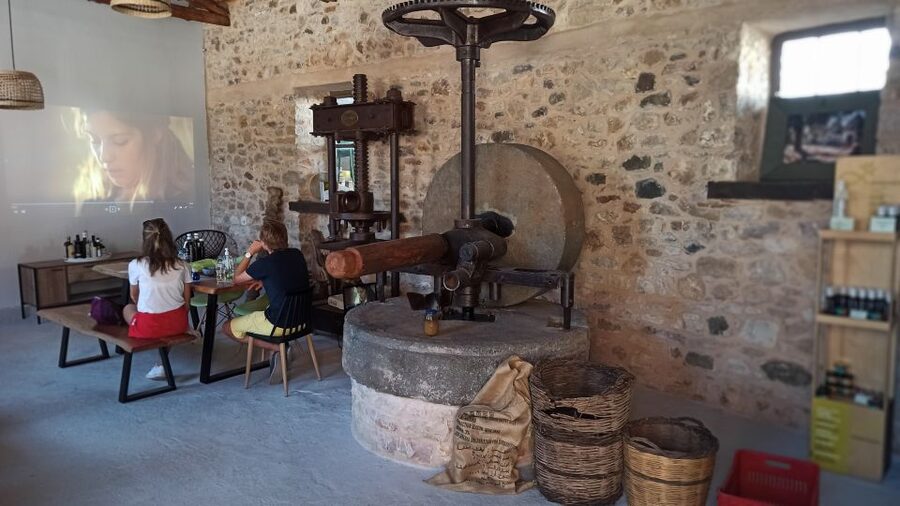
The next stop is in the center of Androusa Village, at a distinctive olive press and mill that has been there for more than 120 years. The fifth-generation owner explains how olives become extra virgin olive oil, then covers storage and standardization.
This is the practical heart of the tour. You learn that good oil is not simply a matter of pressing olives and pouring the liquid into a bottle. The guide explains the production process and the steps needed to protect quality after extraction.
The family ownership adds useful context. You are not hearing only a general lecture about the Greek olive industry. You are seeing a business connected to a local family and its land. That link helps explain why olive production carries such emotional weight in Greek villages.
The mill visit is also the most industrial part of the experience. You should expect an educational look at production rather than a long hands-on workshop. The machinery and process are the point. If you are mainly interested in scenery and food, the explanations may feel technical for a few minutes, but they make the tasting that follows much easier to understand.
You may also learn about table olives and the differences among olive varieties. That is useful in Kalamata, where visitors often treat all dark olives as the same. The tour shows how different varieties can produce different eating qualities and oils.
A few other Greece mornings to price up
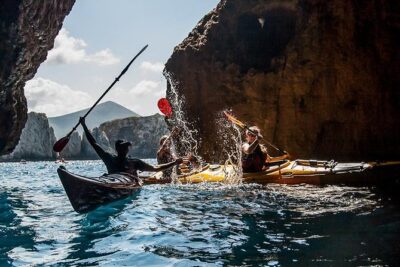
- Sea Kayak in Kardamili
★ 5.0 · 438 reviews - Sea Kayaking in Navarino Bay
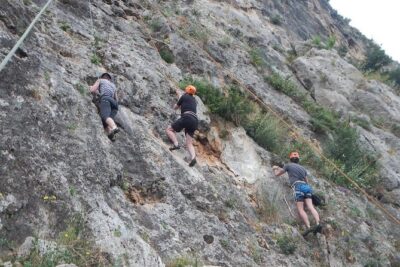
★ 5.0 · 210 reviews - Rock Climbing at Kardamili- West Mani
★ 5.0 · 192 reviews - Organic Olive Grove tour & Olive oil tasting & lunch in Kalamata!
★ 5.0 · 61 reviews
Learning to taste olive oil properly
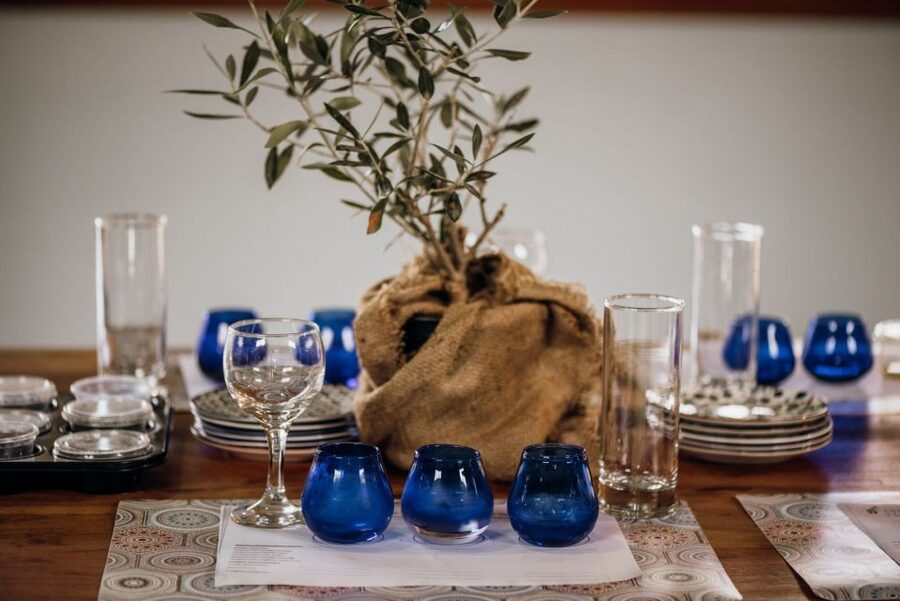
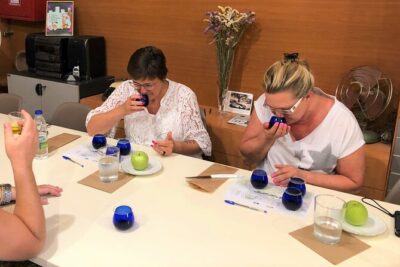
The tasting takes place at a table set with small blue olive oil tasting glasses. A certified taster leads the session, beginning with oil made from the Koroneiki variety and then comparing it with Manaki, Xalkidikis, and Mavroelia.
The blue glasses are not just a decorative touch. Their color keeps you from judging an oil by appearance alone. You focus on smell, taste, texture, bitterness, and the peppery sensation that can appear at the back of the throat.
You learn the basic features that separate extra virgin olive oil from lower grades. The session is aimed at ordinary food lovers, not only specialists, so you do not need a trained palate. Dimitra’s approach, in particular, is interactive. She asks questions, uses people’s names, and sometimes introduces games to get the group comparing impressions.
That style may not suit everyone. If you prefer a quiet tasting with no group participation, the questions and activities could feel a little lively. For families and mixed-age groups, though, the approach helps children and first-time tasters stay involved. A four-year-old has enjoyed the tour, and teenagers have also responded well to the interactive format.
The most useful lesson is that different oils can work better with different foods. You taste the oils on their own, then try them with small dishes. This gives you a practical way to remember the differences after you return home.
From Kalamata olives to sfela and smoked ham
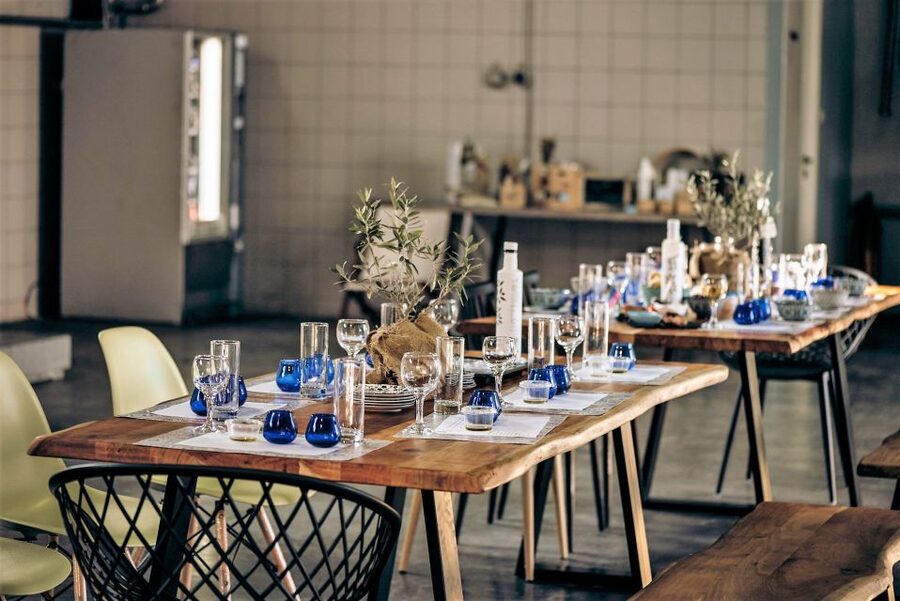
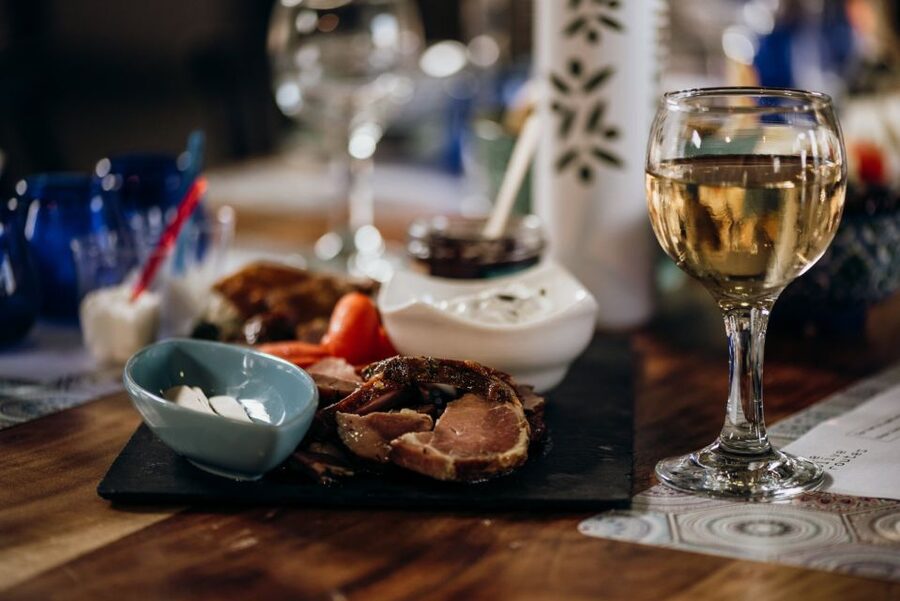
The food pairing is a major reason to book this experience. The tasting includes Kalamata olives, olive paste, lalaggia, sfela cheese, pasto smoked ham, local cheeses, fruit, tzatziki, and other small dishes based on regional recipes.
Lalaggia is a traditional fried dough, and sfela is a local cheese with a firm, salty character. Together with olives and smoked ham, they give you a better picture of Messinian food than a single spoonful of oil ever could.
The published format describes small plates and food tastings, but the meal can be generous. Some versions finish with a full local lunch and wine at a nearby tavern, rather than a few token bites. You should arrive ready to eat, not directly after a large breakfast. The exact meal setting and menu may vary, but the food is clearly meant to be part of the experience rather than an afterthought.
I especially like the pairing method. You are asked to combine oils with at least four different plates and create your own taste combinations. That turns the final section into a useful lesson in cooking. You can test which oil works with cheese, breadlike foods, fruit, yogurt-based dishes, or smoked meat instead of accepting a generic claim that one oil is simply the best.
Dietary needs may be manageable with advance notice. Gluten-free food was accommodated for one participant, though a pumpkin dessert was not suitable. If you have allergies or strict dietary requirements, contact the provider before the tour and do not rely on last-minute adjustments.
The guides make the difference
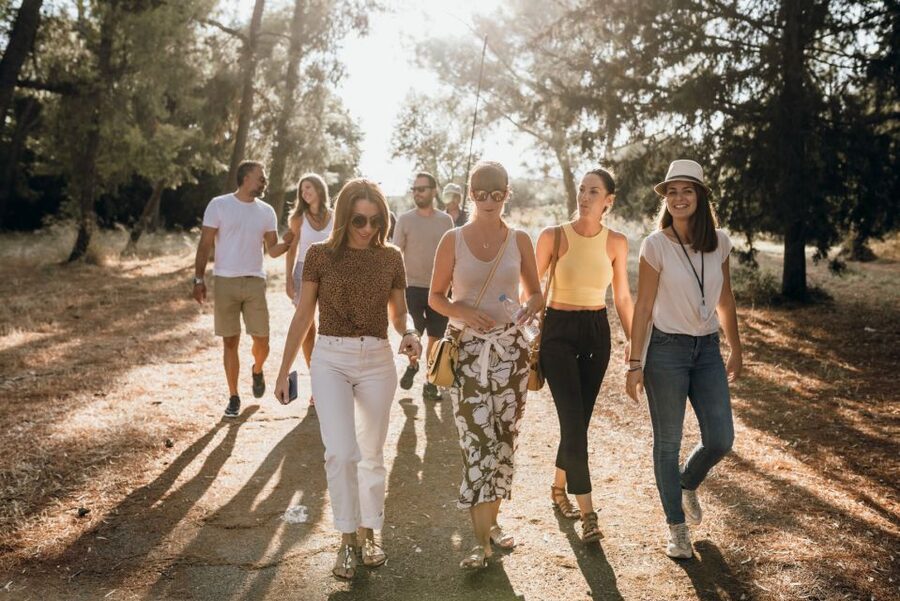
The strongest human element comes from the guides. Dimitra is an expert olive oil taster with a family connection to the farm and mill. Athanasia and other local hosts may also take part, depending on the day.
The guiding style is warm and involved. You are encouraged to ask questions, take part in comparisons, and connect the oil to Greek customs. The hosts explain family and land with real feeling, but the experience is not presented as a dry school lesson.
One useful point of balance: an interactive style can initially feel a little too child-friendly for some adults. The games may remind you of a classroom activity. Give it a few minutes. The method is meant to break the ice in a small group and make technical tasting terms easier to remember.
The guides also seem attentive to individual needs. Families with children have been welcomed, and special requests have received care. Still, the tour is conducted in Greek and English, so you should be comfortable following spoken explanations in one of those languages.
Timing, transport, and who should book
The tour lasts three and a half hours, which is enough time for several stops without taking up an entire day. You need to arrange your own transport to Androusa Castle. A car gives you the most freedom, while a taxi is another stated option from Kalamata.
The location makes this a natural add-on to Ancient Messene. Since the castle is about 10 minutes from the archaeological site, you can build the two into the same day if your schedule and transport allow. Do not assume the tour includes transfers between Kalamata, the castle, and the mill. Hotel pickup and drop-off are not included.
I would recommend it most strongly to:
- People who enjoy food with a sense of place
- Visitors staying in Kalamata or near Costa Navarino
- Families looking for an activity that works for children and grandparents
- Anyone who wants to learn how to judge olive oil
- Visitors already planning to see Ancient Messene
It is less suited to someone who wants a brief tasting in town, a purely historical tour, or a quiet private outing with no group activities. The tour combines walking, explanations, tasting, and social conversation. That mix is its strength, but it is not designed around solitude.
At $106, the price is fair when you count the guide, certified taster, mill visit, multiple oils, food, entrance fees, taxes, and photographs. It is particularly good value if the food portion includes the generous lunch served on some tour days. The price is harder to justify for a person who does not eat olives, dislikes tasting several oils, or has no interest in local farming.
You can cancel up to 24 hours ahead for a full refund, and reserve now while paying later. Those terms help if your Peloponnese plans are still moving around.
Should you book The Olive Oil Routes Tour?

Yes, if you want to understand why olive oil matters in Messinia rather than simply purchase a souvenir bottle. The tour gives you old trees, a working family mill, a certified tasting, local foods, and a direct link to Greek customs.
Book it especially if Dimitra is listed as your guide, since her family connection and tasting experience add a personal layer. Just arrange your ride to Androusa Castle, wear proper walking shoes, protect yourself from the sun, and expect a lively, food-centered half-day.
If your ideal outing is a calm museum visit or a short city tasting, choose something else. If you want a useful lesson that ends with a very good meal, this is one of the strongest food experiences around Kalamata.
FAQ
Where does The Olive Oil Routes Tour begin?
The meeting point is outside the 13th-century castle of Androusa on the main road. It is about a 20-minute drive from Kalamata and about 10 minutes from Ancient Messene.
How long does the tour last?
The experience lasts three and a half hours.
Is transportation from Kalamata included?
No. Hotel pickup and drop-off are not included. The meeting point can be reached by car or taxi.
What languages are available?
The live tour is offered in Greek and English.
What olive oils will I taste?
The tasting includes extra virgin olive oils made from Koroneiki, Manaki, Xalkidikis, and Mavroelia varieties.
Who leads the olive oil tasting?
A certified olive oil taster leads the tasting session. Dimitra is identified as one of the expert guides for the experience.
What foods are included?
Food tastings can include Kalamata olives, olive paste, lalaggia, sfela cheese, smoked ham called pasto, local cheeses, fruit, tzatziki, and other small dishes.
What should I bring?
Wear comfortable shoes and bring a sun hat and sunscreen.
Can I cancel or pay later?
You can cancel up to 24 hours before the tour for a full refund. The reserve-now, pay-later option allows you to book without paying immediately.
Fresh on the Greece list
- Private Tour: Customize Your Perfect Day in Santorini★ 5.0 · 45 reviews
- From Thessaloniki:Day Trip to Dion, Litochoro &Mount Olympus★ 4.4 · 45 reviews
- Imerovigli: Premium Wine Tasting with Caldera and Sea Views★ 4.9 · 45 reviews
- Heraklion: Sunrise Balloon Flight & Sunset Catamaran Cruise★ 5.0 · 45 reviews
- Athens Airport Arrival Transfer to Hotels or Addresses in Athens★ 3.5 · 45 reviews
- Santorini_All time Classic in Santorini★ 5.0 · 45 reviews
- Hersonissos: Alar Spectacular Dinner Show★ 4.7 · 45 reviews
- Private Luxury Tour: Unveiling the Sacred Mysteries of Eleusis★ 5.0 · 45 reviews
Kalamata Tours, compared.
Organic Olive Grove tour & Olive oil tasting & lunch in Kalamata!
Read our review →Browse the lists this tour appears in