
Reviewed · ACROPOLIS & ACROPOLIS MUSEUM TOURS
Athens: Acropolis, Parthenon & Acropolis Museum Guided Tour
The best part of this Athens tour is the way it connects the stones on the hill with the objects preserved below at the Acropolis Museum. You see the Theater of Dionysus, Parthenon, and Erechtheion in place, then examine the Caryatids and Parthenon sculptures in a cool, bright museum.
I like the licensed English-speaking guides, who bring structure to a site that can otherwise feel like a jumble of marble. I also like the sensible route through major monuments, with time for photos and short pauses. The main drawback is the walking: steep, uneven ground makes this a poor choice for wheelchair users and anyone with serious mobility or heart concerns.
- Two major Athens sights in one tour: Visit the Acropolis hill and the new Acropolis Museum with one guide.
- Ancient drama begins here: See the Theater of Dionysus, where famous Greek tragedies were first performed.
- Skip the museum ticket-office line: Selected options include a separate museum entrance, while the Acropolis itself has no special skip-the-line entrance.
- Guides who make history manageable: Jason, Sotos, Chrysa, Giota, Ioannis, and Julia have earned praise for clear explanations and lively storytelling.
- A 3 to 4 hour outing: The pace and weather can change the timing, so leave room in your Athens schedule.
- Private or shared choices: Pay about $40 per person for the listed option, or select a more intimate private group.
Why this Acropolis tour works
Athens can make ancient history feel wonderfully close, but the Acropolis is not self-explanatory. A broken column may be beautiful, yet without context you can miss why it mattered, what stood there before it, or how the buildings fit into the city’s political and religious life.
This tour gives you a guide for that work. The route covers the principal monuments on the hill, then continues to the Acropolis Museum, where surviving sculpture and archaeological finds fill in the gaps. I find that pairing far more useful than seeing the Parthenon alone and trying to reconstruct the rest from a guidebook.
The price is about $40 per person, depending on the option you choose. That is reasonable if you want a live guide, organized entry, and both major sites. It is less attractive if you already know the Acropolis well or prefer to set your own pace. The private option costs more than a shared group, but it can suit families or couples who want a quieter conversation.
The advertised duration ranges from two to four hours, while the practical visit usually lasts three to four hours. Weather, crowds, and group speed affect the timing. I would not schedule a tightly timed lunch, ferry, or flight immediately afterward.
Starting at the Theater of Dionysus
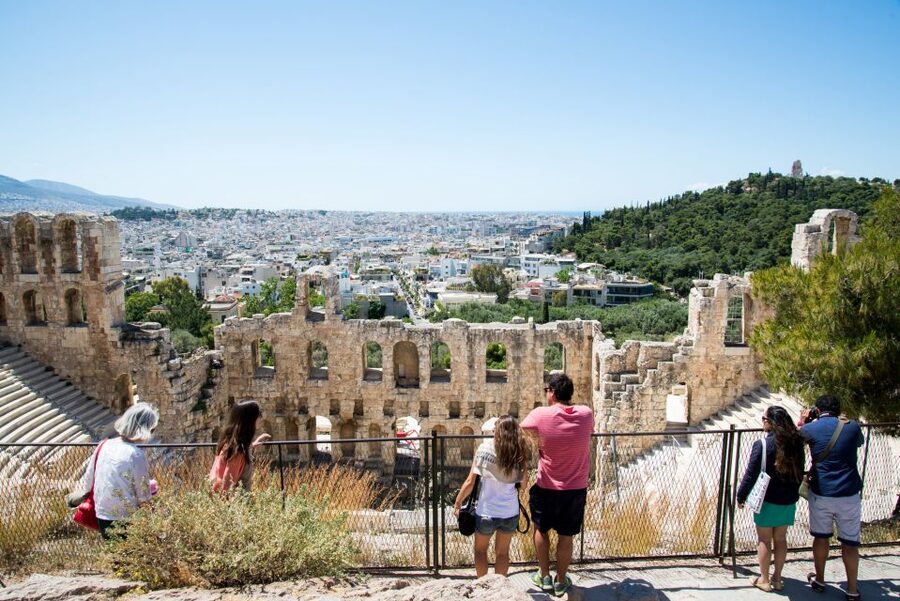
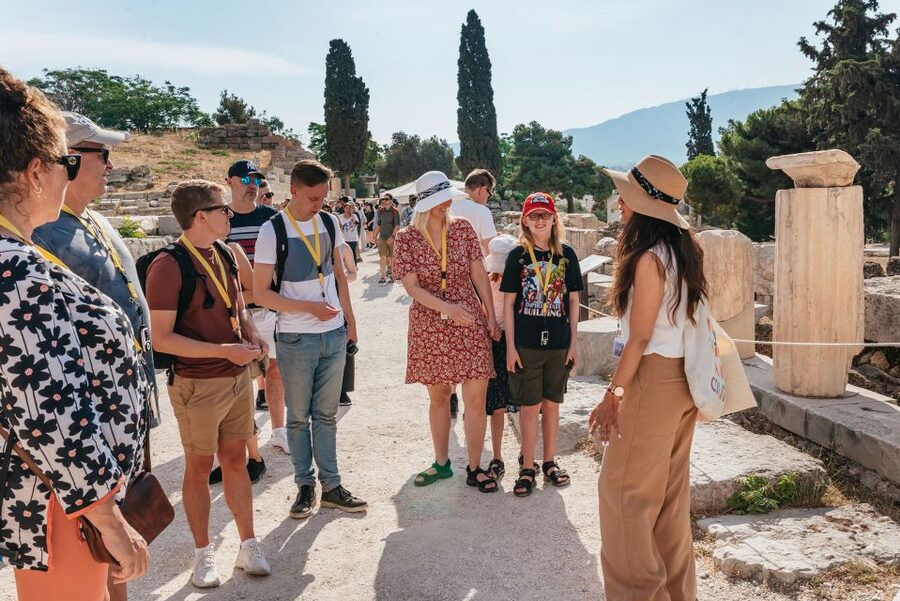
The tour begins with the lower slopes of the Acropolis, including the Theater of Dionysus. This is one of the most meaningful stops because it links the monument to ordinary public life in ancient Athens. Here, drama was not merely entertainment. Major tragedies and comedies formed part of civic and religious culture.
A guide can help you picture the theater as a working venue rather than a pile of ancient seats. You will hear about the performances and the role of Dionysus, the god associated with theater and wine. The remains themselves are open to the sky, so this is also a good place to understand the hill’s layout before climbing higher.
The walking surface gets more demanding as you continue. Bring firm, comfortable shoes, not smooth sandals. A hat and water are sensible, especially in warm weather, since much of the hill is exposed.
More Museums in Athens
- Athens: Mythology of Delphi, Museum and Arachova Guided Tour
★ 4.6 · 4,008 reviews - Athens: Acropolis, Parthenon & Acropolis Museum Guided Tour
★ 4.8 · 3,579 reviews - Acropolis monuments & Parthenon Walking Tour with Optional Acropolis Museum
★ 5.0 · 2,678 reviews
The Odeon and the sanctuary of Asclepius
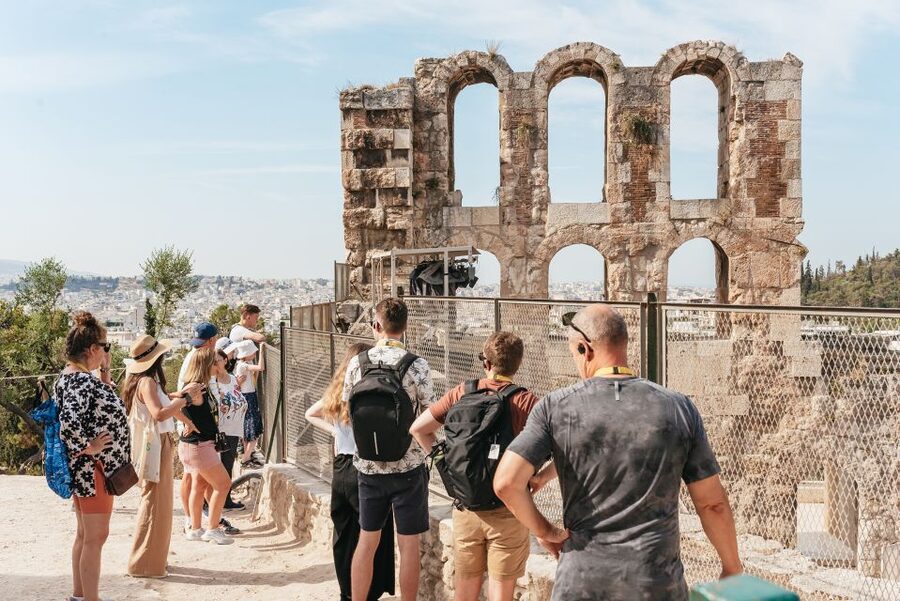
Next comes the Odeon of Herodes Atticus, the impressive theater tucked against the Acropolis rock. Its curved stone structure is one of the first sights that makes the hill feel like a complete cultural center, not just the location of one famous temple.
The tour also passes the sanctuary of Asclepius, the healing god. This stop adds a useful human layer to the visit. Ancient Athenians came to sacred places not only for public ceremony and political identity, but also in hope of relief from illness.
Your guide may adjust the order of these stops to avoid discomfort from heat, weather, or crowding. That flexibility is practical, though it means your exact sequence may differ from another departure. The important point is that the major areas are covered.
Reaching the Propylaea and Temple of Nike
The approach to the summit leads through the Propylaea, the monumental gateway to the Acropolis. It was designed to make arrival feel important, and even in partial ruin it gives you a sense of ceremony. This is one place where a guide’s explanation adds real value, since the remaining columns do not fully reveal the original plan.
The small Temple of Athena Nike sits near the entrance. Its size can surprise you after the grand scale of the Parthenon, but its position and purpose mattered. The temple honored Athena as a bringer of victory, placing protection and military success at the threshold of the sacred hill.
The Acropolis has no separate skip-the-line entrance, so you should not expect to bypass every queue at the site. The included ticket can still save you the trouble of buying at the ticket office, but the entry process may involve waiting with other visitors. This is an important distinction when comparing tour descriptions.
The Parthenon and the meaning behind the marble
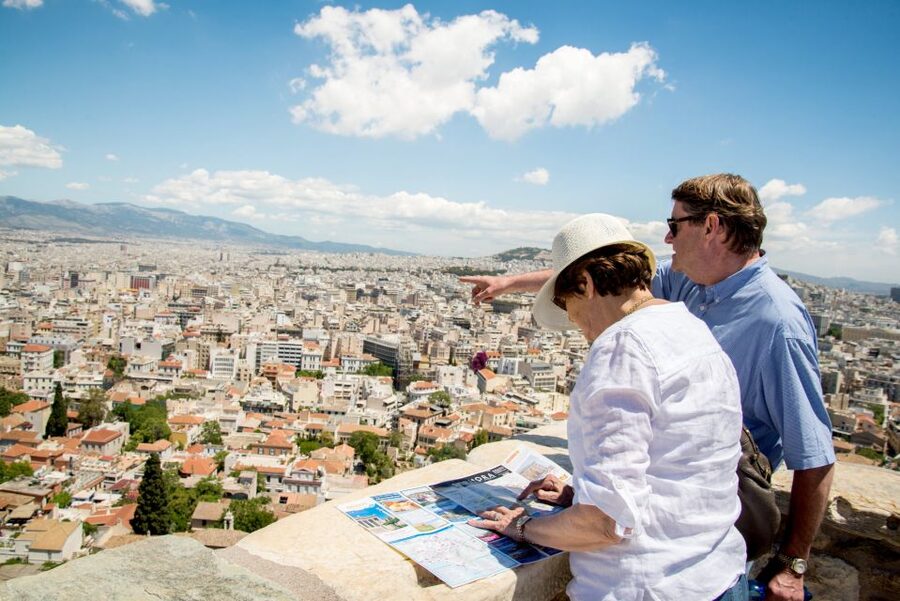
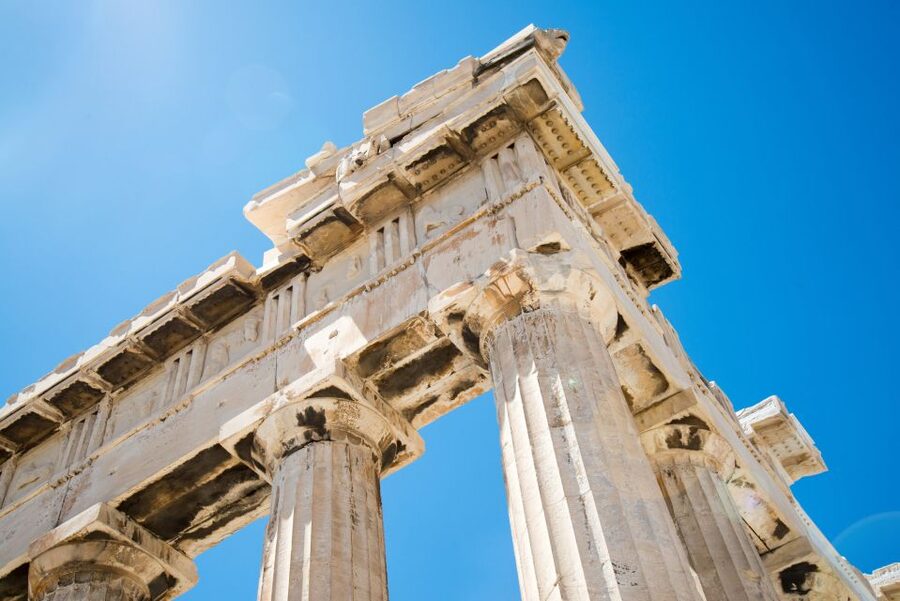
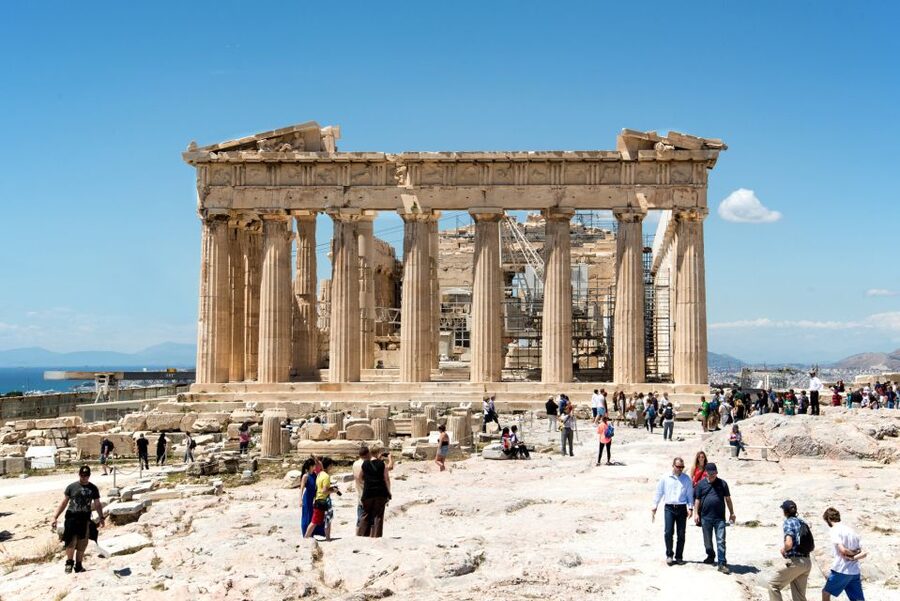
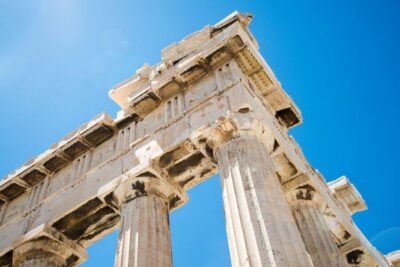
At the top, the Parthenon takes over the view. Even surrounded by scaffolding or restoration work at times, it remains the defining sight of Athens. Built in the fifth century BCE during the age of Pericles, it was dedicated to Athena and became a lasting symbol of Athenian power, democracy, and Western civilization.
I like having a guide here because the building is easy to reduce to a photo stop. The tour puts the Parthenon into the wider story of the Golden Age of Athens, when architecture, drama, philosophy, art, and politics developed side by side.
Do not expect to walk inside the Parthenon. The visit is about seeing the exterior, the surviving architectural elements, and the hill around it. Your guide should also point out how the temple was designed to look balanced despite its subtle curves and refinements.
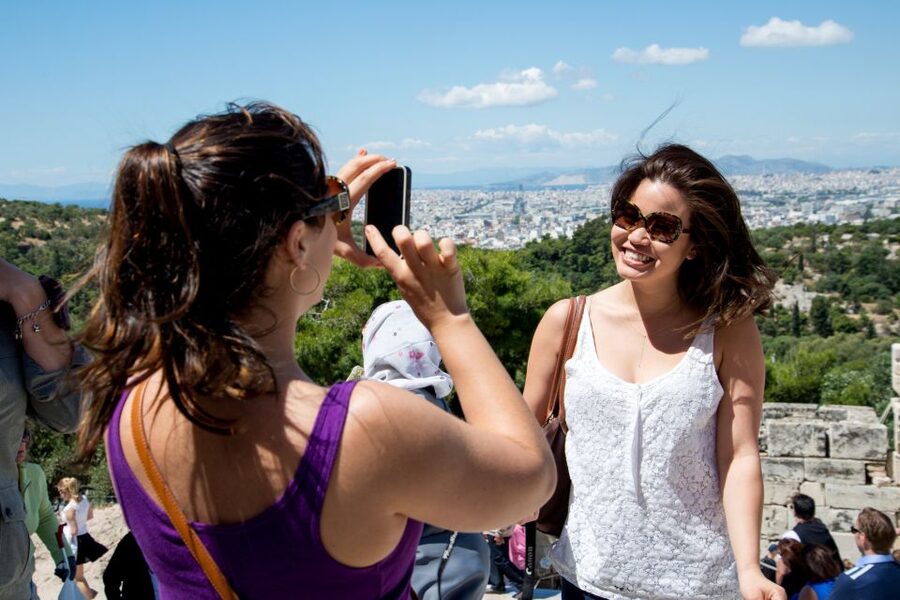
The crowds can be thick around the summit. Disposable earphones are provided for groups of more than eight, but sound quality may suffer when nearby groups are using similar equipment. Stay close enough to hear, especially during the guide’s main explanations, then use the pauses for your own pictures.
A few other Athens mornings to price up
- Athens: Acropolis & up to 5 Archaeological Sites Combo Pass
★ 4.4 · 12,619 reviews - Athens: Acropolis Ticket with Optional Audio or Live Guide
★ 4.2 · 11,055 reviews - Athens: Acropolis and Parthenon Guided Walking Tour
★ 4.6 · 5,882 reviews - Athens: Acropolis Ticket with Audio Guide
★ 4.0 · 3,575 reviews
The Erechtheion and its famous Caryatids
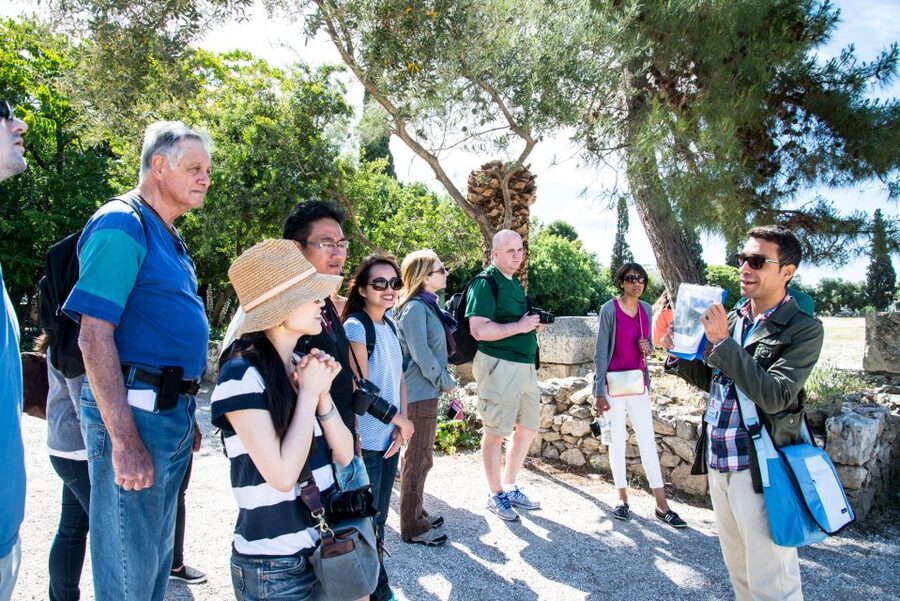
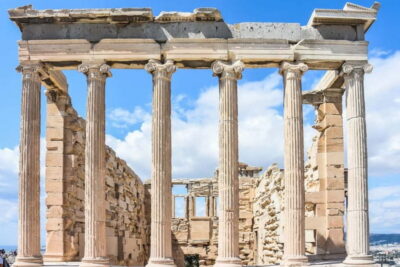
The Erechtheion offers a different kind of beauty. Its irregular plan reflects the complicated sacred traditions of the Acropolis, and its south porch is supported by the famous Caryatids, carved female figures used in place of ordinary columns.
The originals are especially well presented later at the museum, where natural light makes their details easier to study. At the hill, you see the building in its proper setting, with the Athenian sky and the rest of the Acropolis around it. At the museum, you can examine the sculptural work at close range.
One of the six Caryatids is in the British Museum, while five are displayed at the Acropolis Museum. That detail is worth remembering because the museum does not merely repeat what you have already seen outside. It gives you the chance to compare the architecture, sculpture, and preservation of the site.
Taking a short break before the museum
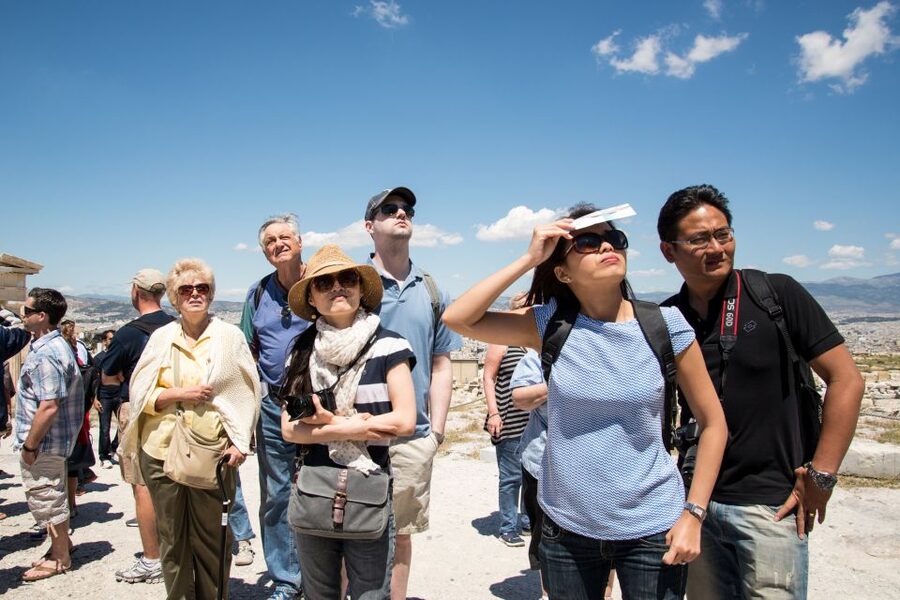
After the hill, the group takes a short break before walking a few minutes to the museum. This pause matters. The Acropolis visit requires uphill walking, concentration, and time in the sun, so a bathroom stop and a chance to buy a coffee can keep the second half from becoming a blur.
The break is not a full meal stop, and food and drinks are not included. Bring water with you, and plan to buy anything else during the pause. You will enjoy the museum more if you do not arrive tired, thirsty, and trying to absorb another long lecture.
Seeing Athens below the glass floors
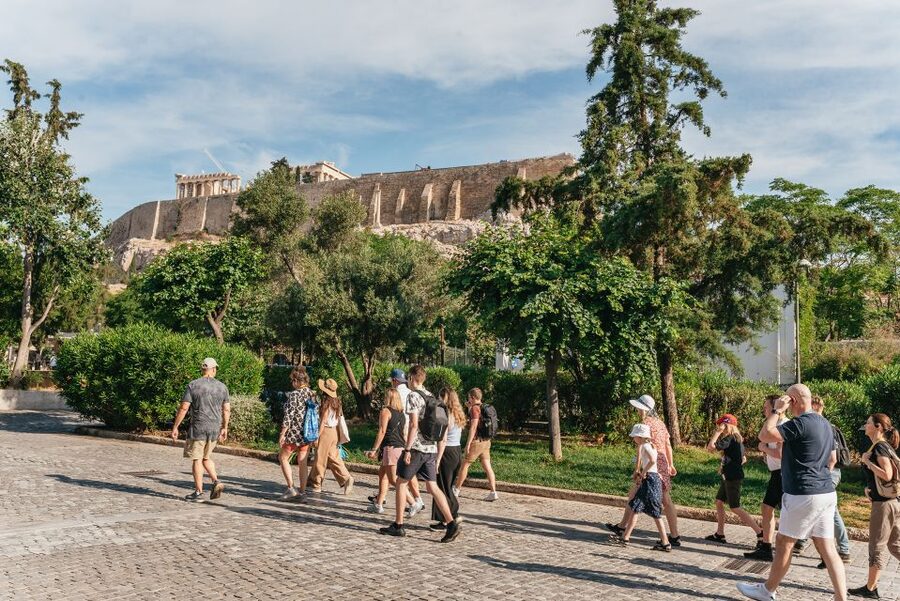
The new Acropolis Museum is a contemporary building created by architects Fotiadis and Tschumi. Its glass floors and walkways reveal excavations beneath the museum, giving you a direct look at layers of ancient Athens under the modern city.
The ground floor introduces everyday life and archaeological finds from the area. This portion helps balance the grand monuments above. Instead of seeing only temples and public buildings, you get evidence of the people and routines that supported the city.
The first floor includes the original Caryatids, with five displayed in Athens and the sixth in the British Museum. Their placement makes this one of the clearest moments in the tour. You have just seen the Erechtheion, and now you can study the sculptures without the same distance and crowd pressure.
The museum provides a separate entrance for the included museum ticket option, which can save time at the ticket office. This does not mean every part of the museum will be quiet. The building can still be busy, but organized entry is useful on a packed Athens day.
The Parthenon gallery and natural light
The top floor holds the museum’s most important display for many visitors: the Parthenon frieze and a recreation of the Parthenon. The gallery’s layout lets you connect the sculptural program with the temple seen from the hill.
Natural light is a major part of the design. It helps you read the marble surfaces and gives the upper gallery an open feel. The view toward the Acropolis also keeps the museum from becoming a sealed box of artifacts. You can look from the original building to the museum’s presentation of its surviving decoration.
I would not rush this floor. The hill explains the scale and setting of the Parthenon. The gallery explains the artistic details and the pieces that have survived. You need both to appreciate what was lost, what remains, and why the monument still carries such weight.
The guides and the value of good storytelling
The strongest part of this tour is the guiding. Jason has been praised for an engaging style that keeps the history moving. Sotos is noted for strong English and broad command of Greek history. Chrysa is described as friendly, well organized, and especially good at making explanations fun.
Giota’s timeline can help you place the many periods of Athens in order, while Ioannis brings energy and clear explanations to the city’s story. Julia has also kept the tour enjoyable in difficult weather. These details matter because the Acropolis can quickly become a flood of dates and names.
The best guide does not try to tell you everything. Instead, you get enough information to understand the buildings without losing the pleasure of looking. One useful sign of a well-paced tour is the chance to stop for photographs and have some independent time at both the hill and museum.
Shared group or private experience?
The shared tour is the better value for most people. At about $40 per person, you receive a guide and a planned route through the two essential sites. It is a good fit if you want background, clear direction, and company without paying for a fully private visit.
A private group makes more sense if you want to ask many questions, need a slower rhythm, or are traveling with family and friends. The supplied information does not specify a maximum group size or private-tour surcharge, so check the exact option before booking.
Large groups can create two practical issues: it may be harder to hear, and the pace is set by the slowest or fastest members. Earphones help groups of more than eight, but nearby tour equipment can still interfere with sound. If conversation with the guide is your priority, a private option is worth considering.
Who should book, and who should think twice?
I would recommend this for first-time visitors to Athens, history fans, and anyone who wants the Acropolis to mean more than a famous photograph. It also suits people with only one good sightseeing window, since the hill and museum are covered together.
It is less suitable for children under six, wheelchair users, and people with mobility impairments or heart problems. The hill involves uneven surfaces and considerable walking, and the activity does not include use of the Acropolis elevator.
Families should also carry identification for reduced or free child tickets. A passport or ID may be checked when a reduced-price or free ticket is used. Children old enough for the tour should be prepared for a long outing with hills, open spaces, and sustained listening.
Wear comfortable clothes, a hat, and supportive shoes. Large bags, luggage, pets, and baby strollers are not allowed. The meeting point changes with the option booked, so read that information carefully before setting out.
Is the Acropolis and Museum tour worth $40?
For most visitors, yes. The value comes from combining two sites that explain different parts of the same story, with a licensed guide to connect them. You avoid buying tickets at the main offices when the selected ticket option includes them, and you get a planned route through the hill’s key monuments.
The main limitation is the compressed format. Three to four hours is enough for a strong overview, but it is a lot to take in. If you have several days in Athens, you may prefer to visit the Acropolis and museum on separate occasions. That gives you more time to look closely and take breaks without watching the clock.
The tour has earned a 4.8 rating from more than 9,000 bookings, and the praise centers on clear English, entertaining explanations, good organization, and guides who care about Athens. I would book it if you want a focused introduction and do not mind walking. I would choose a private version for a small group seeking a slower pace, or separate visits if you have plenty of time.
FAQ
How long does the Acropolis and Museum tour last?
The activity is listed as lasting two to four hours, but the usual tour length is three to four hours. Group pace and weather can affect the timing.
What language is the tour conducted in?
The live tour guide speaks English.
Does the tour include both the Acropolis and Acropolis Museum?
Yes. The route includes the Acropolis hill and a visit to the new Acropolis Museum.
Is skip-the-line entry available at the Acropolis?
There is no separate skip-the-line entrance to the Acropolis itself. The ticket option can save you from buying the Acropolis ticket at the ticket office, but you may still encounter an entry queue.
Is skip-the-line entry available at the Acropolis Museum?
Selected ticket options include skip-the-line museum entry through a separate entrance.
What monuments can I see on the Acropolis?
The route includes the Theater of Dionysus, Odeon of Herodes Atticus, sanctuary of Asclepius, Propylaea, Temple of Athena Nike, Erechtheion, and Parthenon.
Are tickets included in the $40 price?
Ticket inclusion depends on the option selected. If you choose an option without tickets, you should purchase Acropolis and museum tickets at least one day before the tour and confirm the correct time slots.
Can I bring luggage or a stroller?
No. Luggage, large bags, baby strollers, and pets are not allowed.
Is the tour suitable for wheelchair users?
No. The activity is not suitable for wheelchair users or people with mobility impairments. The use of the Acropolis elevator is not included.
What should I bring?
Bring comfortable shoes, a hat, water, and comfortable clothes. A passport or ID is required when using reduced or free tickets.
Fresh on the Athens list
- Athens Airport Arrival Transfer to Hotels or Addresses in Athens★ 3.5 · 45 reviews
- Private Luxury Tour: Unveiling the Sacred Mysteries of Eleusis★ 5.0 · 45 reviews
- Luxury Catamaran Sunset Semi-Private & Greek Gastronomy in Athens★ 5.0 · 45 reviews
- From Athens: Aegina Island guided tour in a day★ 5.0 · 45 reviews
- Delphi, Thermopylae full day private tour from Athens★ 4.9 · 46 reviews
- From Athens: City & Corinth Guided Day Tour★ 4.8 · 46 reviews
- Acropolis Private Wine Tasting @ Finewine store★ 5.0 · 46 reviews
- Ancient Corinth Half-Day Private Tour from Athens★ 5.0 · 46 reviews
Acropolis & Acropolis Museum Tours, compared.
Acropolis & up to 5 Archaeological Sites Combo Pass
Read our review →
Acropolis, Parthenon & Acropolis Museum Guided Tour
Read our review →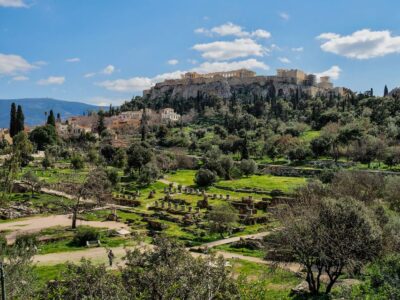

Acropolis monuments & Parthenon Walking Tour with Optional Acropolis Museum
Read our review →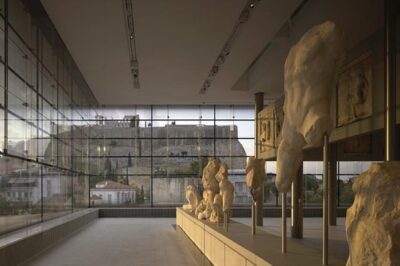
Athens All Included: Acropolis and Museum Guided Tour with Ticket
Read our review →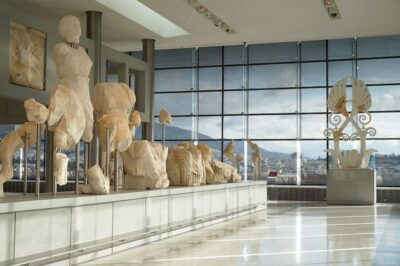
Acropolis Museum Ticket with optional Audio Guide
Read our review →Browse the lists this tour appears in