
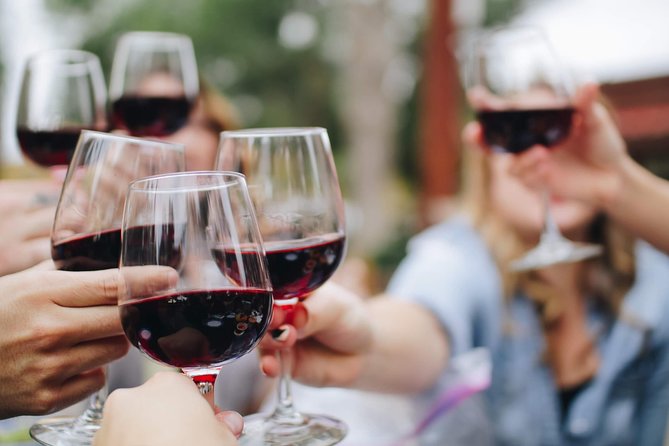
Reviewed · OLIVE OIL TASTINGS
Kalamata- Olive oil & Wine Tour with traditional lunch
Kalamata’s best food lesson may begin with a view from a 13th-century castle and end at a table covered in olive oil, local cheese, smoked pork, pies, and dessert. This half-day outing in Androusa brings you close to the products that define Messinia, rather than keeping you in a tasting room.
I like the hands-on olive oil workshop with a certified sommelier, and I like the generous lunch of family-style dishes. The main drawback is transport: you must reach Androusa yourself, and the group may be larger than the 12-person size suggested in the highlights, with the stated maximum listed as 16.
Key points to know before booking
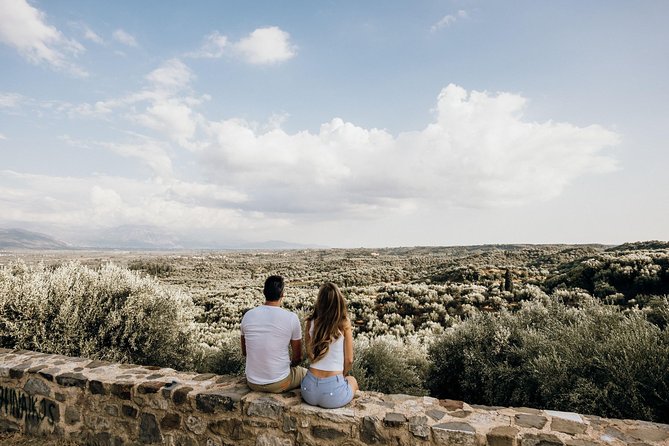
- Start with castle views: Meet at Androusa Castle at 10:00 am for sweeping views across the olive groves of Messinia.
- Compare three olive oils and wines: The tastings focus on aromas, flavors, quality, and food pairing, not just quick samples.
- See both old and new production: Visit a modern olive oil mill, then a traditional mill dating from 1904.
- Expect a serious lunch: Fresh vegetables, cheeses, Kalamata olives, kagianas, smoked meat, sausage, pie, dessert, and local wine are served.
- Guides add personality: Athanasia and Dimitra are praised for lively explanations, while Georgia is associated with the homemade lunch.
- Plan your own transport: Hotel pickup is not included, and the tour returns to the meeting point.
Why Androusa is the right setting for this tour
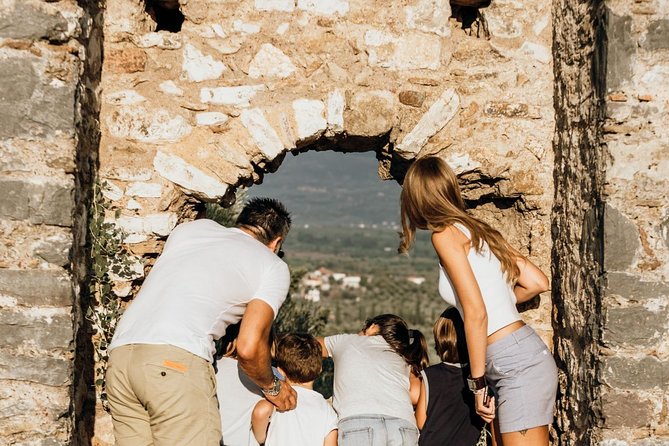
Androusa sits between Kalamata and Messene, in an area where olive growing is part of daily life. The meeting point at the old castle gives you a useful sense of place before the food begins. From the walls, you look over broad stretches of olive groves and get a quick lesson in why this part of the Peloponnese is so closely linked with olive oil.
The castle also adds a layer of local stories. You are not simply being brought from one commercial stop to another. The introduction includes the area’s traditions, history, and mythical tales, all tied to the crops and villages around you.
I like this opening because it gives the tastings context. Kalamata olives and Greek olive oil are not abstract products on a supermarket shelf here. They are connected to farms, harvest seasons, family work, and the villages you can see from the meeting point.
The tour starts at 10:00 am and lasts about four hours, although the food portion and transitions may make the actual experience feel a little shorter or longer. You return to the same meeting point, which keeps the day simple if you have your own car.
More wine tastings around Greece:
- Santorini Wine Adventure with 12 Wine Tastings, Tapas and Sunset
★ 5.0 · 1,715 reviews - Tour and Wine Tasting in Mykonian Land
★ 5.0 · 1,357 reviews - Santorini Highlights Small-Group Tour with Wine Tasting option
★ 5.0 · 699 reviews
Walking among Messinia’s olive groves
The olive grove visit is one of the most appealing parts for anyone who wants to understand Kalamata beyond its famous name. You learn how the olives are grown, harvested, and turned into oil, with the guide explaining the work and traditions behind the product.
The setting matters. A tasting alone can tell you about pepperiness, fruitiness, or bitterness, but seeing the trees helps connect those flavors to a real agricultural area. You also get a clearer idea of how much of the region’s identity is tied to olive farming.
The tour is designed for beginners as well as food enthusiasts. You do not need previous experience with oil tasting. The explanations focus on practical points, including what makes extra virgin olive oil different and what quality signs to notice.
One useful detail is the attention given to different olive varieties and harvest timing. Early harvest oil can have a forceful peppery character, and that style may surprise you if your usual olive oil is mild. The tasting lets you compare several oils rather than assuming every bottle from Greece tastes the same.
If you hope to buy products during or after the tour, bring cash. Bottles of wine may be available to purchase, and this is the sort of outing where you may suddenly want to take home the oil or wine you liked best. The supplied information does not promise a shop or specific purchase arrangements, so treat buying as a possibility rather than a guaranteed part of the tour.
The modern olive oil mill and the 1904 press
Androusa gives you two different views of olive oil production. At the modern mill, you see how olives are processed, extracted, and stored today. The guide explains the stages and points out the quality factors that protect the oil.
This part is especially useful because storage is easy to overlook. People often focus on the harvest and extraction, but light, air, heat, and handling also affect quality. The tour’s emphasis on storage helps you understand why a good oil can lose some of its character if it is treated poorly after production.
The second stop is a traditional olive oil mill established in 1904. It offers a historical counterpoint to the modern facility and shows how long olive growing has been part of Androusa’s economy and culture.
You should not expect a museum visit with a long list of exhibits. The appeal is more direct: you move from present-day production to an older mill and see the link between local tradition and current practice. For anyone interested in food history, this contrast is one of the strongest reasons to choose the tour.
The pace also helps. Rather than spending four hours on one extended lecture, you change setting several times. That keeps the information practical and gives you different ways to understand the same ingredient.
Learning to taste olive oil properly
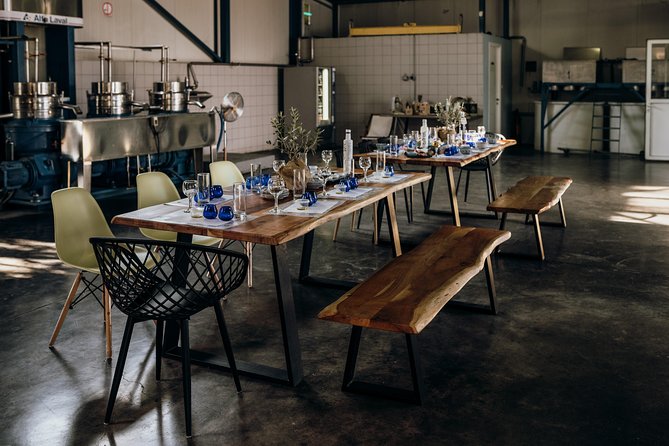
The olive oil session is more structured than simply dipping bread into a bowl. A certified olive oil sommelier leads a tasting and food-pairing workshop, using three different olive oils and olive varieties.
You learn to identify the qualities of extra virgin olive oil and compare its aromas and flavors. The tasting also explains how the oil works with food, which is more useful than memorizing tasting vocabulary you may never use again.
Expect olive oil with character. A peppery sensation can be a positive sign rather than a flaw, particularly in an early harvest oil. The point is not to choose one universal winner. It is to see how oils differ and decide what you enjoy with salads, bread, cheese, or cooked dishes.
This is where the lunch becomes part of the lesson. The food pairing connects the tasting notes to dishes you can actually eat. The workshop is easier to remember when you can immediately try the oil with Greek meze rather than sample it in isolation.
I particularly like this format for couples and small groups with different levels of food interest. The person who already loves olive oil gets a more detailed comparison, while a first-time taster gets a clear introduction without needing specialist knowledge.
More olive oil tastings around Greece:
- Knossos-Zeus Cave -Old Traditional Villages-Olive Oil Factory
★ 5.0 · 694 reviews - The Governor’s Olive Mill Tour with Olive Oil Tasting
★ 5.0 · 502 reviews - From Chania: Olive Oil, Wine, Cheese & Honey Tasting Tour
★ 4.6 · 490 reviews - Heraklion: Olive Farm Tour with Tasting of Local Delicacies
★ 4.9 · 411 reviews
Wine tasting at Psaroulis Winery
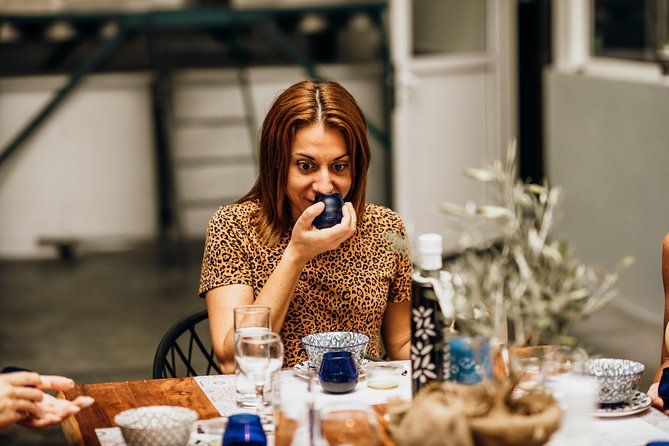
The wine visit takes you to a local winery, identified in the experience details and feedback as Psaroulis Winery. You observe how Greek wines are produced and taste at least three varieties with guidance on their aromas and flavors.
The word Greek wine covers many styles, so tasting several wines is important. You can compare them side by side and hear how the guide describes their individual character. The goal is not a rushed pour followed by a quick photograph. It is a guided introduction to local wine production.
Wine is served again with lunch, which gives you another chance to judge how it works with food. That is useful because a wine can taste very different beside cheese, meat, tomatoes, or a savory pie than it does by itself.
The winery is one of the more relaxed sections of the morning, but it still has practical value. If you are planning to buy a bottle in Greece, a guided tasting helps you make a choice based on what you actually like. Bring cash if you think you may want to purchase wine, since this tip is specifically useful for the winery stop.
The tour description does not give exact grape varieties or a detailed wine list. Do not book expecting a specialist regional wine seminar with a fixed lineup. Book it for a friendly, guided introduction to local wines paired with food.
A homemade Messinian lunch with many small dishes
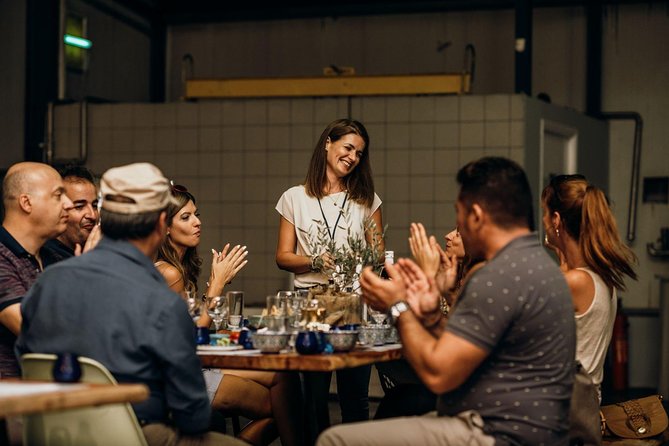
The meal is not an afterthought. It is the main reason I would choose this tour over a basic olive oil and wine tasting.
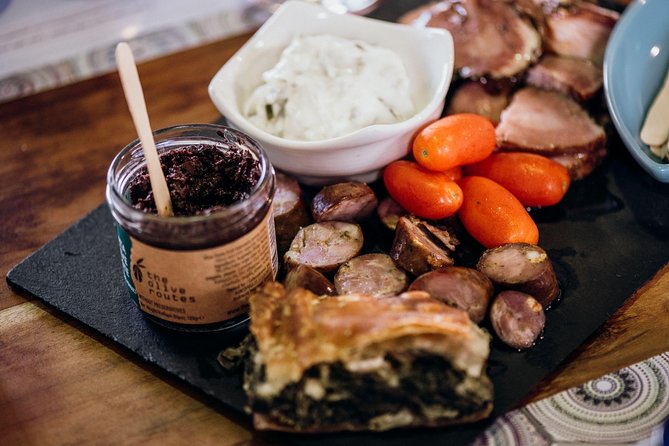
You begin with fresh salads and vegetables from the garden, then move through tzatziki, feta, Greek Gruyère cheese, Kalamata olives, and olive tapenade. Lalagia, fried bread sticks served with olive marmelade, add a local snack that you may not encounter on a standard restaurant menu.
The main dishes include kagianas, a traditional preparation of eggs and tomatoes, along with smoked pork and sausage. A local pie made with fresh phyllo dough adds another filling course. Dessert is either halvas or yogurt with fruit, depending on what is served that day.
The meal is generous and home-style rather than minimal tasting portions. Several dishes are described as homemade, including family recipes associated with Georgia, who is connected with the lunch portion. You should arrive ready for a full meal, not just a few bites between winery stops.
The menu also gives you a broad introduction to Messinian cooking. Fresh vegetables, olive oil, cheese, eggs, tomato, pork, sausage, olives, and pastry all show different sides of the local table. The meal helps explain why olive oil tasting works best alongside food. You learn through eating, not just listening.
If you have dietary restrictions, the provided information does not specify accommodations. Ask the operator before booking rather than assuming every menu item can be changed.
Guides, group size, and the feel of the morning
The guide can make or break a food tour, and the names connected with this experience include Athanasia and Dimitra, also written as Dimitria in one account. Athanasia is praised for her energy and clear explanations, while Dimitra is described as interactive, warm, and fun.
Georgia is associated with the lunch and the homemade dishes. That division of roles gives the experience a personal quality. You are not only hearing about local food from a distant presenter. You are also being served food connected with the people running the experience.
The group-size information needs a little care. The highlights describe a group of no more than 12, while the additional details give a maximum of 16 travelers. That difference may reflect different departure sizes or an updated operating limit. If a small group is essential to you, confirm the expected size before paying.
Even with up to 16 people, the tasting format can remain manageable if the guide moves everyone through the same sequence. Still, a larger group means less time for individual questions and a busier table at lunch. The experience is best for people who enjoy social meals and do not need a private tour.
Most people can participate, and service animals are allowed. The tour is weather-dependent, so poor conditions can lead to a different date or a full refund.
What the $108.84 price includes
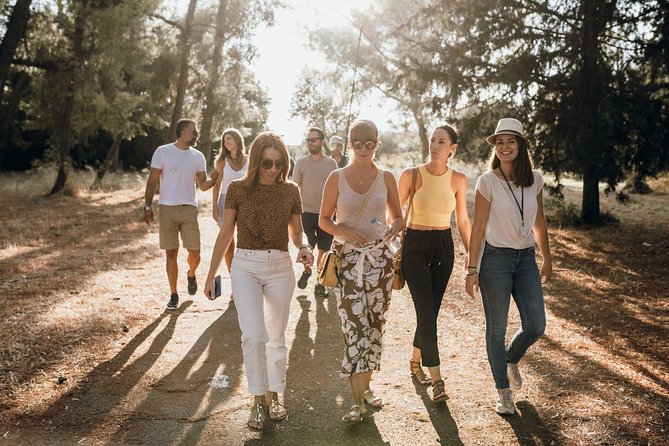
At $108.84 per person, this is not the cheapest way to sample Greek wine or olive oil. The value comes from the number of parts bundled into the half-day: castle views, olive groves, two types of mill, a winery, guided tastings, food pairing, a full lunch, local wine, and dessert.
If you paid separately for transport, a winery tasting, an olive oil workshop, and a substantial traditional meal, the cost could rise quickly. Here, the guide and educational element tie everything together. You are paying for access and explanation as much as for the food itself.
The price makes the most sense if you have a strong interest in regional cooking, wine, or olive oil. It also works well as a special half-day outing during a longer Peloponnese trip. You get a focused activity without losing an entire day to a long excursion.
The value is weaker if you only want a quick tasting or if you are staying far from Androusa and must arrange an expensive taxi. Transport from your hotel is not included, so calculate the cost and time of reaching Epar.Od. Ellinoklissias-Androusa 26 before booking.
Getting there and planning your morning
The meeting point is Epar.Od. Ellinoklissias-Androusa 26, Androusa 240 13, Greece. The activity begins at 10:00 am and ends back at that same meeting point.
You need to organize your own transport. The experience does not include pickup or drop-off at your hotel, and no transportation method is specified. If you are driving, allow enough time to arrive before the castle meeting point and keep the return location in mind when planning the rest of your day.
Wear practical shoes suitable for walking around groves, mills, and village areas. The available details do not promise a long hike, but this is not a sit-down tasting from start to finish.
The activity is offered in English and uses a mobile ticket. Confirmation arrives when you book. Free cancellation is available until 24 hours before the start time, while cancellations or changes inside that window are not refunded or accepted. Bad weather can lead to a new date or a full refund.
Who should book this Kalamata food tour?
I would choose this tour if you want food to explain a place. The olive oil and wine are not treated as isolated luxury products. They are tied to farms, older production methods, family cooking, local stories, and the village around you.
It suits couples, friends, and solo visitors who enjoy tasting several things at once. It also works for different age groups because the morning mixes scenery, short visits, food, and conversation rather than requiring constant walking.
You may want another activity if you dislike group meals, do not drink wine, or have a very limited schedule around Kalamata. The tour includes wine as a central feature, even though the olive oil and food are equally important. You also need to handle your own transport to Androusa.
Should you book it?
Book this tour if you want a friendly, food-centered look at Messinia and have a way to reach Androusa. The strongest elements are the two mill visits, the guided comparison of three olive oils and wines, and the large homemade lunch with dishes such as kagianas, smoked pork, local pie, and Kalamata tapenade.
Before booking, confirm the group size and ask about any dietary needs. Bring cash if you may buy wine, and leave room in your schedule for a full meal rather than a quick snack.
If those details suit you, the price is fair for a four-hour experience that combines education, scenery, tastings, and lunch in one well-focused morning.
FAQ
Where does the Kalamata olive oil and wine tour start?
It starts at Epar.Od. Ellinoklissias-Androusa 26, Androusa 240 13, Greece, at the 13th-century Castle of Androusa. The tour begins at 10:00 am.
How long does the tour last?
The tour lasts approximately four hours and ends back at the meeting point in Androusa.
Is transportation from my hotel included?
No. Transport from and to your hotel is not included. You must arrange your own way to the meeting point.
How many olive oils and wines will I taste?
The workshop includes three different olive oil varieties and three different wine varieties, with guidance on aromas, flavors, quality, and food pairing.
What food is served at lunch?
The meal can include garden vegetables and salads, tzatziki, feta, Greek Gruyère, Kalamata olives, olive tapenade, kagianas, smoked pork, sausage, local pie, lalagia with olive marmelade, dessert, and local wine.
Can I cancel for a full refund?
Yes. You can cancel at least 24 hours before the local start time for a full refund. Cancellations or changes made less than 24 hours before the start time are not refunded or accepted.
More Lunch Experiences in Greece
- All Day Cruise -3 Islands to Agistri,Moni, Aegina with lunch and drinks included
★ 5.0 · 4,958 reviews - From Athens: Hydra, Poros, and Aegina Day Cruise with Lunch
★ 4.1 · 4,305 reviews - Athens: Meteora Monasteries Day Trip with Caves and Lunch
★ 4.7 · 2,964 reviews - From Kos: 3-Island Pirate Cruise with Lunch and Waterslide
★ 4.5 · 2,564 reviews
Fresh on the Greece list
- Private Tour: Customize Your Perfect Day in Santorini★ 5.0 · 45 reviews
- From Thessaloniki:Day Trip to Dion, Litochoro &Mount Olympus★ 4.4 · 45 reviews
- Imerovigli: Premium Wine Tasting with Caldera and Sea Views★ 4.9 · 45 reviews
- Heraklion: Sunrise Balloon Flight & Sunset Catamaran Cruise★ 5.0 · 45 reviews
- Athens Airport Arrival Transfer to Hotels or Addresses in Athens★ 3.5 · 45 reviews
- Santorini_All time Classic in Santorini★ 5.0 · 45 reviews
- Hersonissos: Alar Spectacular Dinner Show★ 4.7 · 45 reviews
- Private Luxury Tour: Unveiling the Sacred Mysteries of Eleusis★ 5.0 · 45 reviews
Olive Oil Tastings, compared.
Knossos-Zeus Cave -Old Traditional Villages-Olive Oil Factory
Read our review →
The Governor’s Olive Mill Tour with Olive Oil Tasting
Read our review →
Olive Farm Tour with Tasting of Local Delicacies
Read our review →
Zeus Cave, Lassithi Plateau, Olive Oil Factory, Kritza, Pottery
Read our review →
Knossos, Lasithi, Lasinthos and Olive Farm Combo Tour
Read our review →
Browse the lists this tour appears in