
Reviewed · MILOS TOURS
Kostantakis Winery – Milos Island Tour & Wine Tasting Experience
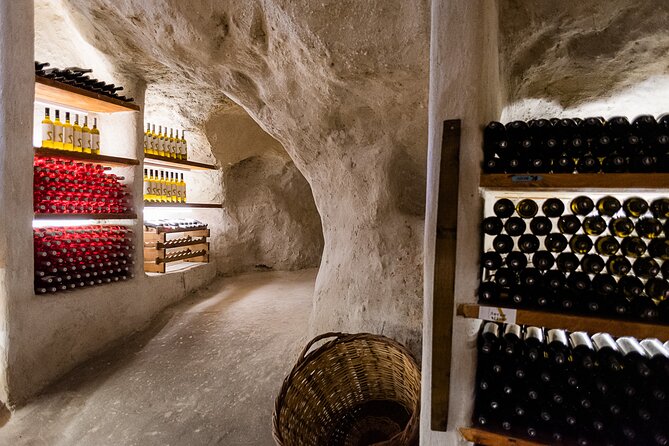
The most unusual part of this Milos wine tour is the natural cave cellar, where the Kostantakis family stores wine beneath the volcanic island. You also walk among vines grown in Milos’ demanding island climate, using local grape varieties and methods shaped by more than 50 years of family winemaking.
I like the personal scale: you meet the winemaker’s family, not a large tour company guide, and you can ask direct questions about grapes, production, and the family business. I also like the generous tasting, with eight wines, local cheese, olives, other island products, and water included.
The main thing to plan for is transport. You meet at Kostantakis Suites in Pollonia, but transportation is not included, and the venue may require a separate trip depending on your exact starting point. The visit is scheduled for about two hours, though you should allow closer to two and a half if you linger over the tasting.
Key points to know before you book
- The cave cellar is the star feature: See where the winery stores its wines in a natural cave.
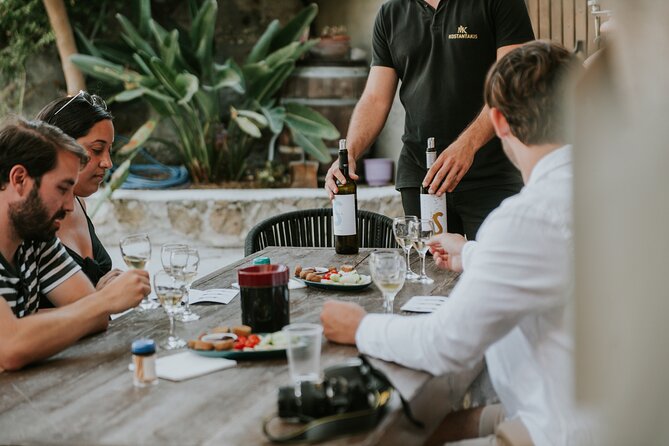
- You taste eight island wines: Expect white, rosé, and a distinctive orange wine among the pours.
- The family leads the visit: George, Petros, Sophia, or another member of the team may guide you through the property.
- Local snacks are included: Wine comes with cheese, olives, and other products from Milos.
- Groups stay small: The maximum is eight people, which makes questions and conversation easier.
- Plan your own transport: The meeting point is in Pollonia, and no transfer is included.
A family winery shaped by Milos
Kostantakis Winery gives you a side of Milos that beaches and fishing villages cannot. The island is famous for its white rock, volcanic formations, and bright coastal scenery, but wine shows you how people work with the land over time.
The Kostantakis family has made its own wine for more than 50 years. That does not mean you are walking into a polished, industrial wine estate. The appeal is the small family operation, where the story of the winery is tied to the people who run it.
You begin by meeting a member of the family, often George, Petros, or Sophia. The guide explains how the winery began, what makes growing grapes on Milos difficult, and how the family has kept the business going. The tone is personal and informal, with time for questions rather than a rushed speech.
That family connection gives the visit its strongest sense of place. You are not simply sampling bottles made somewhere else. You are learning how one island family grows, processes, stores, and serves its wine.
More wine tastings around Milos:
- Milos Island: Kostantakis Winery Wine Tasting Experience
★ 4.8 · 236 reviews - Santorini Wine Adventure with 12 Wine Tastings, Tapas and Sunset
★ 5.0 · 1,715 reviews - Tour and Wine Tasting in Mykonian Land
★ 5.0 · 1,357 reviews
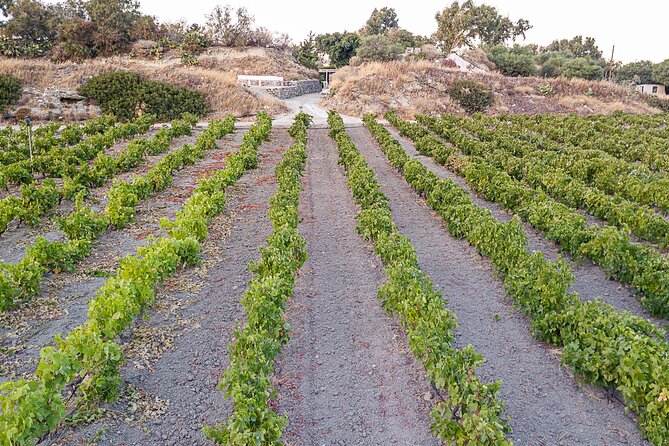
Walking through the Milos vineyard
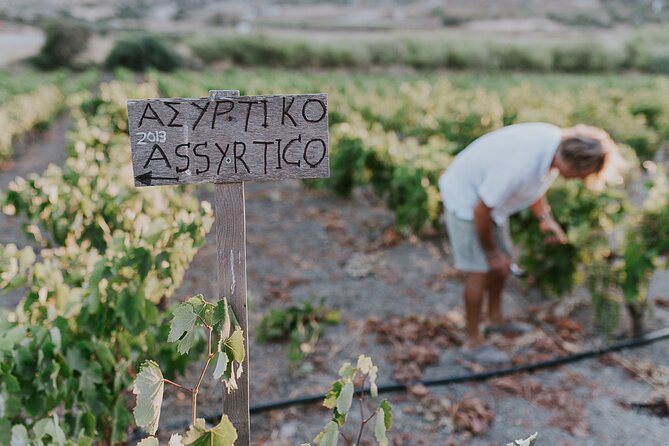
The first part of the tour takes you across the vineyard. This is useful context for the tasting because you see the vines before you taste what they produce.
Milos has a particular climate, and the family works only with indigenous grape varieties. The guide explains how local conditions affect the vines and why island wine can taste different from bottles produced on the Greek mainland or in better-known wine regions.
You should not expect a huge estate or a long vineyard hike. This is a small winery visit, so the walk is more about understanding the setting than covering ground. You will see the vines, hear about cultivation, and connect the grapes to the bottles waiting later in the tour.
I like this order. If you went straight to the tasting, the wines might seem like a set of unrelated pours. After the vineyard walk, you have a clearer idea of why the winery focuses on local varieties and why production on an island requires its own approach.
The outdoor portion also gives the visit a relaxed pace. It is not all machinery, explanations, and glasses. You move from the vines to the working areas, then into the cooler cave before settling in with food and wine.
Traditional equipment and small-scale production
Next, the guide shows you the machines and facilities used in the winemaking process. This part helps you see the practical side of the operation.
The winery still uses traditional equipment, and the family explains how grapes move through the production process. You can ask about pressing, fermentation, storage, and the choices that shape the final wine. The information is aimed at curious visitors, not just professional wine students, so you do not need prior tasting experience.
This is also where a small winery can be more interesting than a large commercial operation. You get a sense of the hands-on work behind each bottle. The equipment is not simply displayed as decoration. It is part of a living family business.
The staff’s willingness to answer questions is a real strength. If you want to ask about the orange wine, the island grape varieties, or the family’s grape distillation, this is the moment to do it. The small group limit, no more than eight people, should make it easier to get a direct answer.
Inside the natural cave cellar
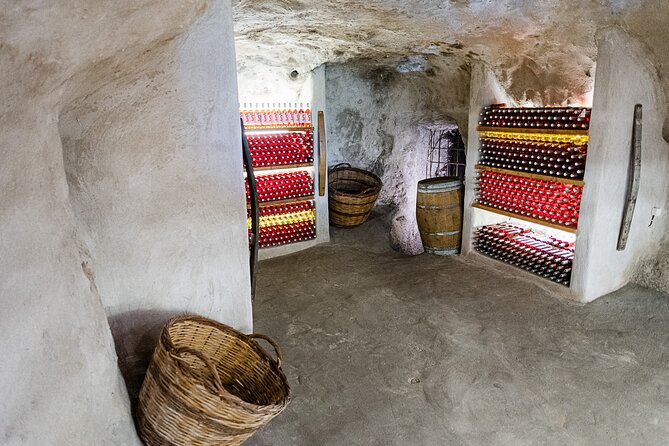
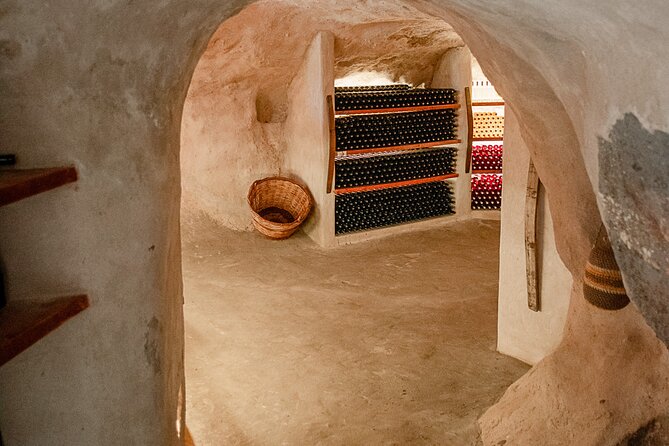
The tour then moves to the natural cave where the wines are stored. This is the part that gives Kostantakis Winery a memorable setting.
A cave provides a very different atmosphere from a modern tasting room. The space connects the wine to Milos’ volcanic character, and the guide explains how the cave fits into the winery’s history and storage process. You are seeing a working part of the property rather than a staged photo stop.
The cave is also a welcome change if you visit during a warm afternoon. After walking among the vines, the cooler underground space gives you a pause before the tasting begins.
Allow a little extra time here if the guide is telling the family story in detail. The scheduled visit lasts about two hours, but the cave, questions, and tasting can stretch the outing to around two and a half hours. That is not a problem if you have planned a free afternoon. It could matter if you have a tight dinner reservation or another booked activity.
A few other Milos mornings to price up
- Greek Food Walking Tour in Athens
★ 5.0 · 4,740 reviews - Athens: Street Food Tasting Tour
★ 4.9 · 2,557 reviews - Small Group Greek Traditional Food Tour in Athens 20+ Tastings
★ 5.0 · 1,759 reviews - Santorini Wine Stories: Sunset Tour with Tasting & Dinner
★ 5.0 · 1,285 reviews
Eight wines, local cheese, and island snacks
After the tour, you sit down for the tasting. The stated tasting includes eight wines, though the actual number of pours can vary slightly, with some tastings reaching about nine samples.
You can expect a strong focus on white and rosé wines, along with an orange wine that gives the tasting a point of difference. The orange wine is made in a style that leaves the wine with more color and texture than a standard white, so it is worth paying attention to how it compares with the other pours.
The family also makes a grape distillation. It is part of the wider story of what the winery produces, though the main event is the wine tasting.
Food is included, which makes the $72.41 price easier to assess. Your pours come with local cheese, olives, other island products, snacks, and water. This is not a tiny sip-and-leave tasting. The pours are described as generous, so pace yourself and eat as you go.
I like the chance to decide which style suits you best. You may prefer the lighter whites, the rosés, or the more unusual orange wine. The goal is not to prove that one bottle is superior. It is to notice how different local grapes and winemaking choices affect your glass.
If you already enjoy wine, eight pours give you enough range to make the visit worthwhile. If you are new to wine tasting, the family setting makes the activity approachable. You can simply focus on what you like rather than trying to use formal tasting language.
The relaxed patio atmosphere
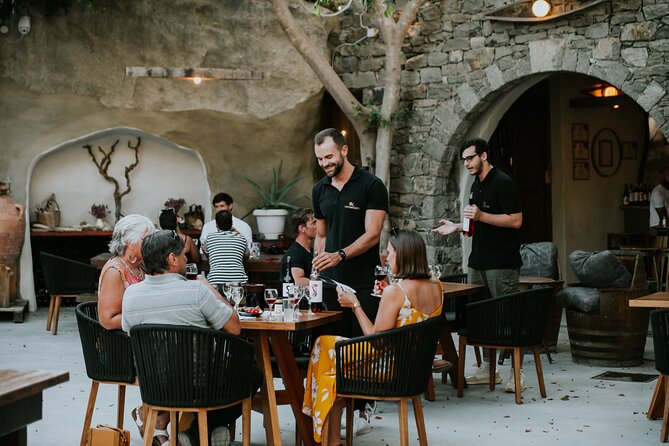
The tasting area has a calm, informal feel, with a patio where you can sit with your food and wine. The setting is part of the reason this visit works well as an early evening activity in Pollonia.
The pace is not built around rushing from one sample to the next. You can ask more questions, talk with the staff, and take in the surroundings. The sound of crickets adds to the quiet country setting, and friendly cats may be around the property.
You are also welcome to stay longer and enjoy another glass of wine. That flexibility is useful if you want to turn the tour into a gentle afternoon or pre-dinner stop. Just remember that extra time may affect your later plans, especially if you need to arrange a taxi or public bus.
The recent updates to the tasting area have made it a more comfortable place to linger. Still, this is best understood as a welcoming family winery, not a formal luxury tasting salon. Choose it for its personal contact and island character, not for polished ceremony.
What the $72.41 price really covers
At $72.41 per person, this is not the cheapest way to spend two hours in Milos. You are paying for more than a few samples, however.
The price includes the vineyard walk, the explanation of the equipment and production, the natural cave visit, a tasting of eight wines, local cheese and snacks, and water. You also get direct contact with the family and a small group capped at eight people.
For someone who would otherwise buy several glasses of wine and a plate of local food, the cost can make sense. It is especially fair if you value the production story and want to understand Milos through a local business rather than simply drink at a bar.
The value is weaker if you do not drink alcohol or have little interest in vineyards. You must be at least 18 to take part in the wine tasting, and all participants should be comfortable spending much of the visit around wine.
Transport is the main extra to budget for. No transfer is included. The meeting information identifies Kostantakis Suites in Pollonia, while one practical note places the winery roughly 20 miles from the venue area, so check the exact route and meeting instructions before you commit. A public bus can take you near the winery, followed by a short walk, but you should confirm the current route and timing locally.
Timing, group size, and who will enjoy it
The official duration is approximately two hours. In practice, plan for two to two and a half hours, particularly if the guide is answering questions and you stay for another glass.
The maximum group size is eight. That matters here because the best part of the visit is the conversation. A large group would make it harder to ask about the family’s history, the island grapes, or the production methods.
The tour is offered in English. Confirmation arrives when you book, and service animals are allowed. The activity is near public transportation, and most people can participate, though the tour includes walking through the vineyard and moving around the winery.
I would suggest this visit to:
- Couples looking for a relaxed early evening activity
- Wine drinkers who want local varieties rather than familiar international labels
- First-time tasters who prefer a friendly, informal introduction
- Visitors interested in family businesses and island food
- Anyone with a free afternoon in or near Pollonia
I would be more cautious if you have no way to reach the meeting point, dislike group tastings, or have a tightly packed Milos schedule. The visit is unhurried by design, and that is either its strength or its drawback depending on your plans.
How to fit the winery into a Milos day
The winery works best when you treat it as a stand-alone half-day plan rather than squeezing it between distant beaches and dinner.
An early evening booking gives you time to walk through the vineyard, enjoy the cave, and sit with the tasting without watching the clock. It also pairs naturally with dinner afterward, though you should leave enough time for the journey back to Pollonia or your next stop.
If you plan to use public transportation, do not rely on a last-minute connection. The winery is near public transportation, but the final walk and return schedule still matter. If you are driving, decide in advance who will remain sober, since the tasting includes generous pours and as many as eight or nine wines.
Because the experience is often booked well ahead, reserving around seven weeks before your visit is sensible if your dates are fixed. Free cancellation is available until 24 hours before the start time. After that point, the payment is not refunded, and changes made within 24 hours are not accepted.
My call: book it if you want Milos beyond the beach
I would book Kostantakis Winery if you want a personal, food-and-wine activity with a strong sense of place. The cave cellar, indigenous grapes, family story, and generous tasting give it more substance than a quick sampling stop.
The biggest points to settle first are transport and timing. Check the exact meeting directions, allow at least two and a half hours, and do not plan to drive after the tasting.
If those details work for you, this is a smart addition to a Milos trip. You get to meet the people behind the bottles, taste a useful range of island wines, and spend an easy afternoon in a setting that feels closely tied to the island.
FAQ
Where does the Kostantakis Winery tour begin?
The meeting point is Kostantakis Suites, Pollonia 848 00, Greece. The activity ends back at the meeting point.
How long does the winery tour last?
The scheduled duration is approximately two hours. You should allow up to two and a half hours if you take your time during the tasting or stay for an additional glass.
How many wines are included?
The tasting includes eight different wines. The number of pours can sometimes reach about nine, depending on the tasting.
Are food and water included?
Yes. Wine, water, local cheese, olives, and other products from Milos are included.
Is transportation included?
No. You must arrange your own transportation to the winery. The venue is near public transportation, and a public bus can take you close to the winery with a short walk afterward.
Is the tour offered in English?
Yes. The experience is offered in English.
What is the maximum group size?
The tour allows a maximum of eight people.
Do I need to be at least 18?
Yes. Only people aged 18 and above can take part in the alcohol and wine tasting.
Can I stay longer after the tour?
Yes. You are welcome to remain longer and enjoy a glass of wine after the main two-hour visit.
Can I cancel for a full refund?
Yes, if you cancel at least 24 hours before the experience start time. Cancellations or changes made less than 24 hours in advance are not accepted for a refund.
Fresh on the Milos list
- Three Greek Islands Full-Day Private Luxury Boat Tour★ 5.0 · 48 reviews
- Morning Group Sea Experience to Polyaigos★ 5.0 · 55 reviews
- Milos: Guided Kayaking Trip with Snorkelling & Lunch★ 5.0 · 64 reviews
- Milos Half-day Tour to Kleftiko★ 4.5 · 73 reviews
- Half-Day Private Romantic Sailing Getaway to Kleftiko★ 5.0 · 81 reviews
- Catamaran Full Day Cruise: Poliegos – Kleftiko★ 5.0 · 90 reviews
- Full day sailing cruise on the West side of Milos island★ 5.0 · 136 reviews
- Kleftiko Full Day Sailing Cruise with Snorkeling & Lunch★ 5.0 · 157 reviews
Milos Tours, compared.
Milos Small-Group Full-Day Cruise with Snorkelling and Lunch
Read our review →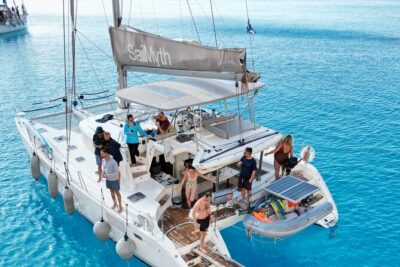
Best of Milos and Poliegos Catamaran snorkelling Cruise with BBQ
Read our review →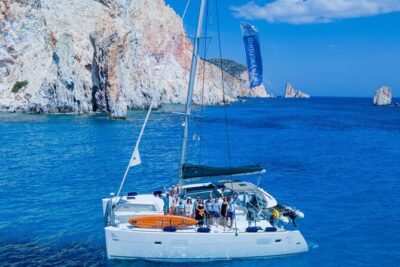
Full-Day Small-Group Cruise in Milos & Poliegos with Lunch
Read our review →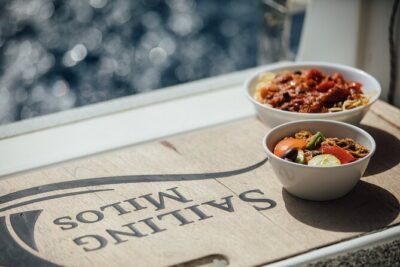
Milos and Polyaigos Full Day Cruise with Meals and Snorkelling
Read our review →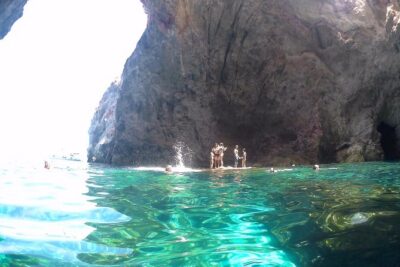
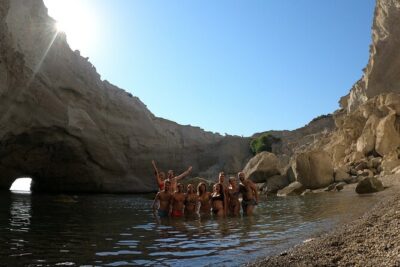
Round of Milos and Poliegos Sailing boat snorkelling cruise
Read our review →
Catamaran Full-Day of Milos and Poliegos With Lunch & BBQ
Read our review →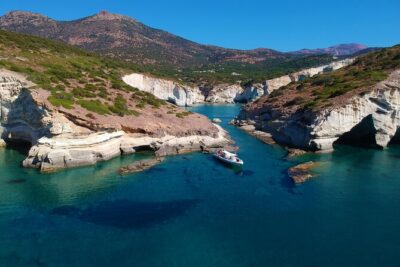
Half-Day Speedboat Cruise to Kleftiko with snorkeling tour
Read our review →Browse the lists this tour appears in