
Reviewed · ACROPOLIS & ACROPOLIS MUSEUM TOURS
Athens: Acropolis and Mythology Highlights Small Group Tour
Athens makes more sense when its stones come with stories. This small-group walk links the Parthenon, Acropolis, and Ancient Agora to the myths of Athena, Zeus, and the gods, while showing how those tales fit real Athenian politics and daily life. Guides such as Antonia, Alex, Danae, and Stellios bring different personalities, but the aim is the same: help you see more than old marble.
I like the small groups, which make it easier to ask questions and hear the guide in crowded spots. I also like the myth-and-fact approach, especially when a guide uses drawings or family trees to make the gods easier to follow. The main catch is practical: Athens can be hot, steep, and noisy, and backpacks, large bags, and strollers are not allowed at the Acropolis.
Key points to know before booking
- Meet under Hadrian’s Arch: The guide waits with an Alternative Athens sign on Leof. Vasilisis Amalias 50, about a five-minute walk from Acropolis metro station.
- Two major ancient sites in one walk: The route covers the Acropolis and Ancient Agora, with the Temple of Hephaestus included in the Agora visit.
- Mythology has a purpose: Stories about Athena, Zeus, and other gods are tied to architecture, civic life, and the growth of Athens.
- A genuinely small group: A group of seven has been reported, and very small departures can feel close to private guiding.
- Plan for sun and uneven ground: Comfortable shoes, water, and light clothing matter, especially in summer.
- Check the ticket option: Entry may be included, or tickets may be pre-purchased for you, but the base price and selected option should be checked carefully.
Starting beneath Hadrian’s Arch
The meeting point is easy to find once you know what to look for. Go to Hadrian’s Arch at Leof. Vasilisis Amalias 50, beside the Acropolis area, and look for the guide holding an Alternative Athens sign. From Acropolis metro station, allow about five minutes on foot.
This is a useful place to begin because the arch gives you an immediate lesson in Athens as a city of layers. The Roman monument sits near the ancient Greek center, and your guide uses the setting to explain how Athens grew from a mythic city into a major political and cultural power.
The opening portion sets up the story of the city, from its birth and the contest for its patron deity to the Golden Age and later defeat by Sparta. That background matters. Without it, the Acropolis can feel like a collection of famous ruins. With it, the buildings begin to reflect arguments about power, religion, money, and civic pride.
The guide speaks in English or French. Several guides, including Antonia, Alex, Danae, Vicky, and Athina, have been praised for mixing humor with clear explanations. The exact guide depends on the departure, so book this for the subject and format rather than for one particular person.
A few other Athens mornings to price up
- Athens: Acropolis & up to 5 Archaeological Sites Combo Pass
★ 4.4 · 12,619 reviews - Athens: Acropolis Ticket with Optional Audio or Live Guide
★ 4.2 · 11,055 reviews - Athens: Acropolis, Parthenon & Acropolis Museum Guided Tour
★ 4.8 · 9,316 reviews
The Temple of Olympian Zeus from the outside
The first formal stop is the Temple of Olympian Zeus, viewed from outside for about 15 minutes. You do not enter this monument on the described route, but the exterior view is enough to introduce the scale of Roman-era Athens and the long history of construction around the temple.
This stop also gives the mythology theme a strong opening. Zeus was the chief god of the Greek pantheon, and the temple’s size reflects the ambition attached to his worship. Your guide connects the monument to the wider story of Athens, including the city’s changing rulers and its place in the Greek and Roman worlds.
Do not expect a long exploration here. It is an orientation stop, not a full visit. That is a fair trade if your priority is the Acropolis, but you should plan a separate visit if you want time inside the Temple of Olympian Zeus site.
Climbing into the Acropolis
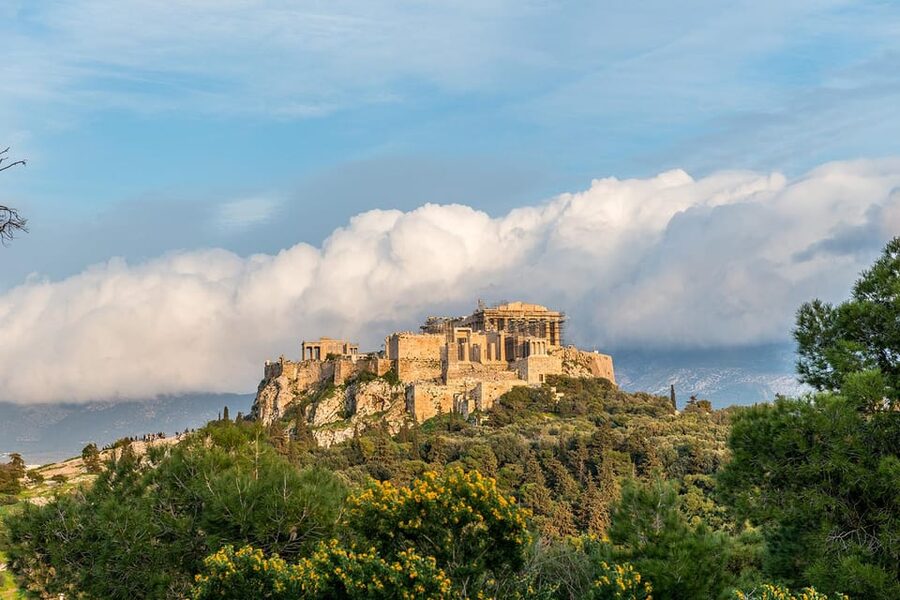
The walk toward the Acropolis takes about 15 minutes before the main guided portion begins. Wear shoes with a firm sole. The route includes uphill walking and ancient surfaces that can be uneven or slippery, especially when crowded.
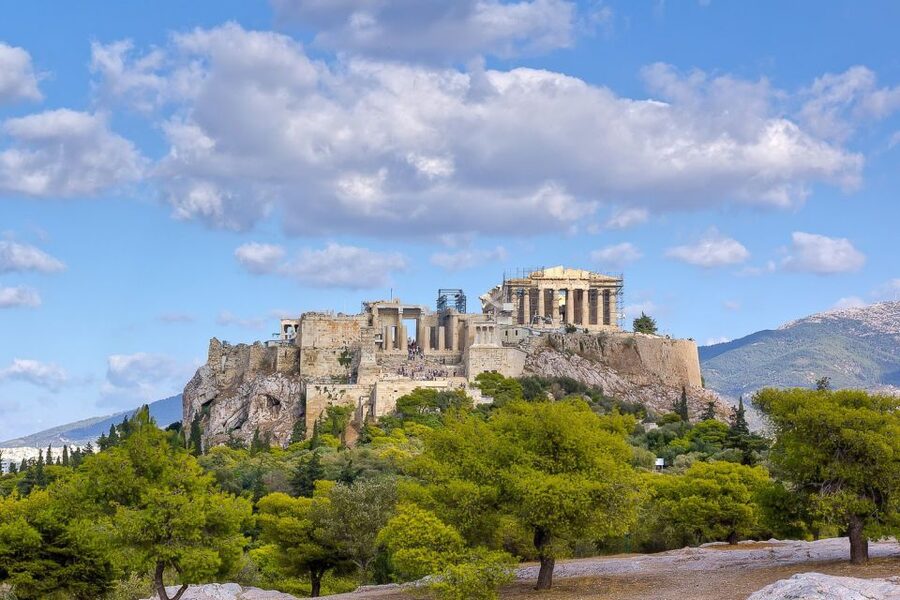
The Acropolis section lasts about 90 minutes, with separate attention given to the Temple of Athena Nike, the Erechtheion, and the Parthenon. Your guide explains what each building meant, then links it to the beliefs and civic ideals of ancient Athens.
The group size matters most here. The Acropolis is one of the busiest sights in Greece, and a large tour can leave you straining to hear while trying not to lose the guide. Small groups of around seven have been used, and some departures are even smaller. In crowded conditions, that makes the walk calmer and gives you more room to ask a question.
Some departures use headsets, which can help when other groups are nearby. Still, one useful caution is to stay close and tell the guide if you cannot hear. One person found the commentary difficult to catch at times, while others appreciated having audio equipment. Conditions can change from one departure to the next.
Athena Nike and the edge of the Acropolis

The Temple of Athena Nike is a compact monument with a prime position near the entrance. Its location makes sense once you understand the role of Athena Nike, Athena in her aspect as a bringer of victory.
This is a good place for the guide to explain how the Athenians blended religion with public life. Victory was not just a private hope. It was tied to war, civic identity, and the city’s claim to leadership among the Greek states.
The stop is scheduled for about 15 minutes. You will get an explanation and time to look, but not a long quiet pause. If photography is important to you, take your pictures when the guide gives the group a moment rather than assuming you can linger at every monument.
Same island, an entirely different sort of day:
- Athens: Cape Sounion & Poseidon Temple Sunset Half-Day Trip
★ 4.8 · 8,241 reviews - Athens: Acropolis and Parthenon Guided Walking Tour
★ 4.6 · 5,882 reviews - All Day Cruise -3 Islands to Agistri,Moni, Aegina with lunch and drinks included
★ 5.0 · 4,958 reviews - Athens, Piraeus, and Coastline: Blue Hop-On Hop-Off Bus
★ 3.9 · 4,849 reviews
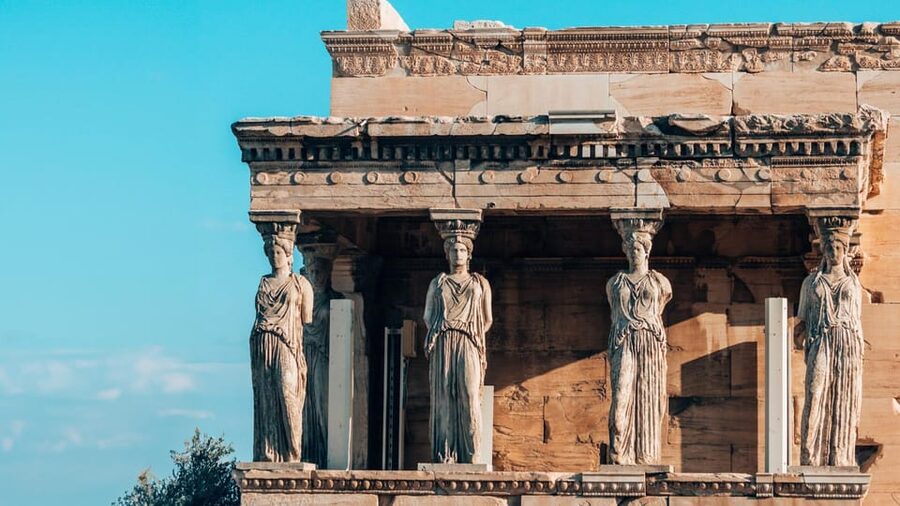
The Erechtheion and the city’s sacred stories
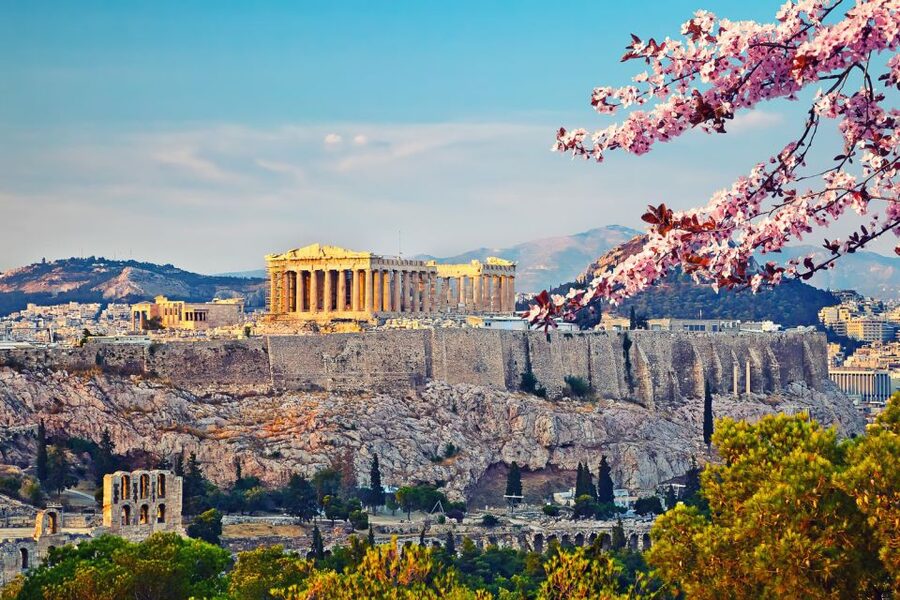
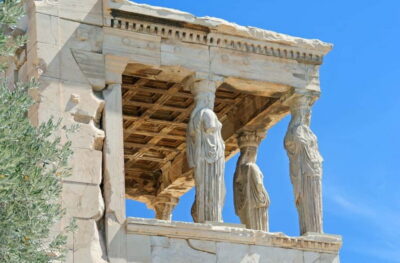
The Erechtheion is one of the most intriguing buildings on the Acropolis because its unusual design reflects several sacred traditions in one place. The tour highlights the ruins of the Temple of Athena Polias and the Erechtheion, with about 15 minutes of guiding here.
This is where the mythology theme can become more than a list of gods. The sacred stories tied to Athens involve contests, heroes, kings, and the city’s claim to an ancient identity. A good guide helps you see that myths were not simply bedtime tales. They explained why places mattered and how Athenians understood their connection to the land.
Danae Kousouri has used visual aids showing how the buildings once looked and how the gods relate to one another. That can be especially useful for families, since children who already know Percy Jackson or Greek myths may recognize names but not understand the link between the stories and the monuments.
The Erechtheion is also a reminder that the Acropolis is not only about the Parthenon. If your guide moves quickly, do not let this smaller temple disappear behind the headline attraction.
The Parthenon, Athens’ great symbol

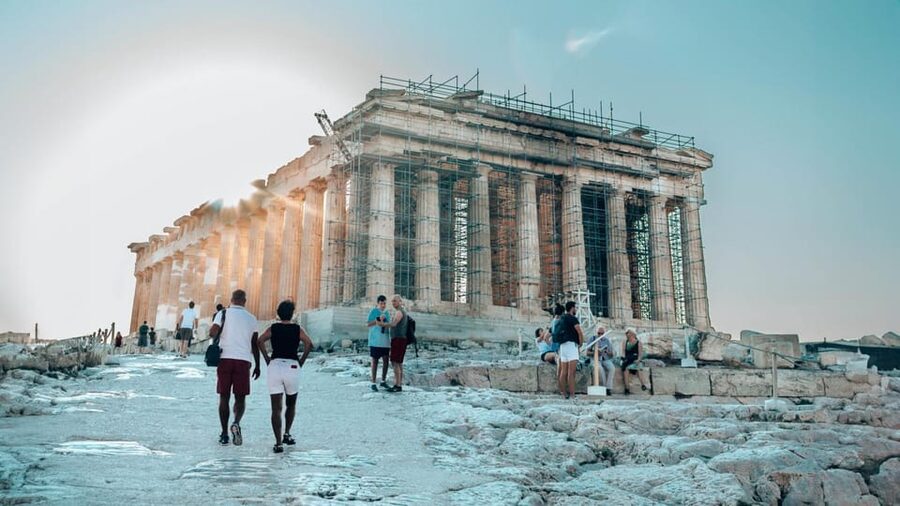
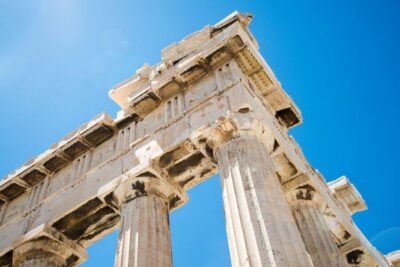
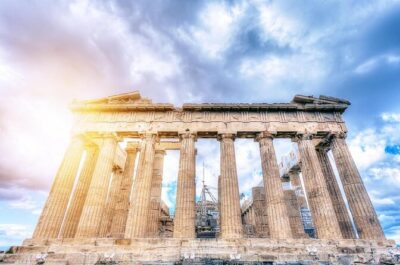
The Parthenon receives the longest single explanation, about 30 minutes. This is the point when the earlier discussion of Athens, Athena, civic pride, and power comes together.
You will hear about the building’s religious purpose, its design, and its place in the city’s Golden Age. The guide also helps separate the modern image of the Parthenon from its ancient appearance and function. The value here is not just learning dates. It is understanding why the building was placed on this hill and why it became such a powerful statement about Athens.
The setting is spectacular, but it can also be the hardest part of the tour for hearing and moving around. Large groups gather near the same viewpoints, and summer heat can be intense. Guides such as Alex, Antonia, Sophia, and Evan have been praised for using shade, water breaks, and a steady pace when conditions are difficult.
You will have chances for photographs and moments to take in the view. This is still a guided walk, not a free-roaming visit, so you should expect the guide to keep the group moving. If you want to study every column or sit quietly for a long time, return later on your own if your ticket allows.
The Theater of Dionysus and Asclepius
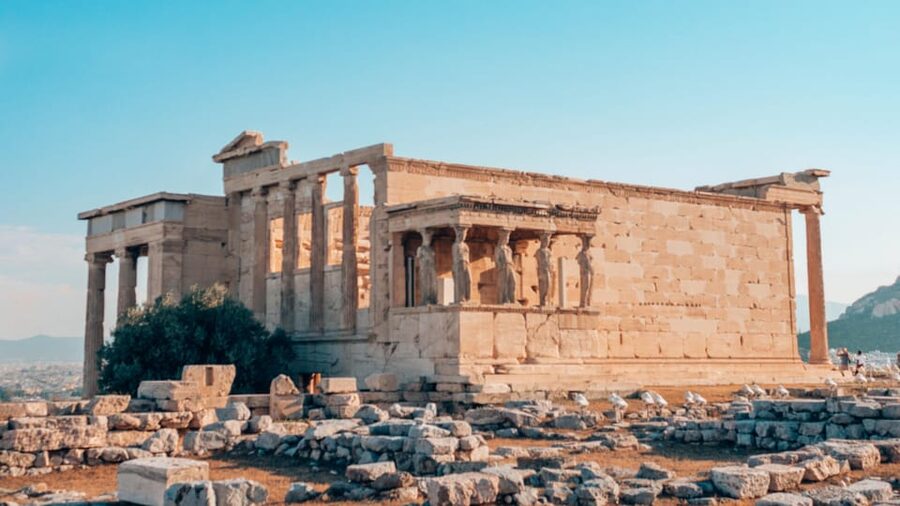
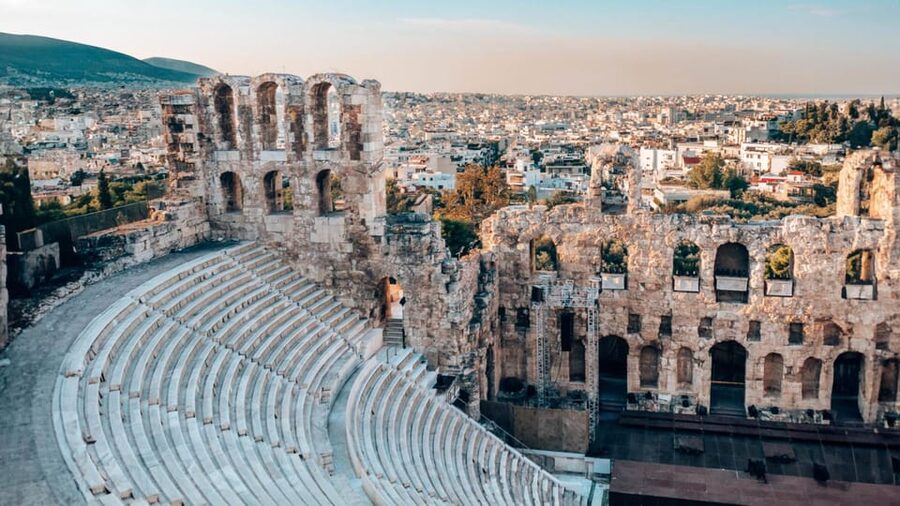
The route also includes the Theater of Dionysus Eleuthereus and the Sanctuary of Asclepius. These are important because they widen the picture of ancient Athens beyond temples and military power.
The Theater of Dionysus connects the Acropolis to drama, one of the city’s most lasting contributions. The sanctuary of Asclepius points toward ancient approaches to healing and health. Together, they show how the Acropolis slopes served religious, cultural, and social purposes.
These less famous stops are part of what makes the tour useful for a first visit. You still see the monuments everyone came to Athens to see, but you also get help reading the surrounding spaces. That keeps the experience from becoming only a march to the Parthenon.
The route names the Temple of Athena Polias and the Sanctuary of Asclepius, but the amount of time at each smaller area can vary with crowds and the pace of the group. Think of them as carefully explained parts of the Acropolis circuit, not separate long visits.
Walking down to the Ancient Agora
After the Acropolis, the group walks for about 30 minutes toward the Ancient Agora. This transition is valuable because it shifts the story from the hilltop sanctuary to the center of public life.
The Agora was where Athenian civic life unfolded. Here, the guide can explain how society worked, why Athens became so influential, and how ideas about citizenship, debate, law, trade, and religion shaped the city.
This section may feel less dramatic at first than the Parthenon. Give it time. The Agora is where you start to picture people using the city rather than simply worshipping in it. The mythology also becomes grounded in daily life, since gods and heroes were part of the same public world as politics and commerce.
The described timing includes about 30 minutes of walking, so comfortable footwear remains important. The full experience is advertised at two to four hours, and the final length can depend on the selected route, entry option, crowd levels, and questions from the group.
The Temple of Hephaestus in the Agora
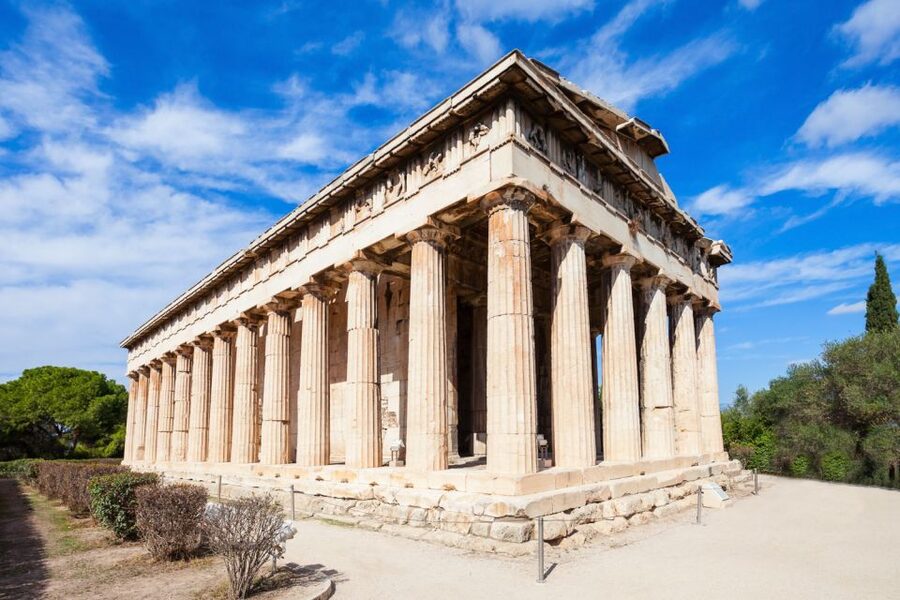
The Temple of Hephaestus receives about 30 minutes of guided attention. It is dedicated to Hephaestus, the god associated with fire and metalworking, which gives the guide another way to show how mythology connected to work and ordinary human needs.
This temple is a strong closing point because it lets you compare it with the Parthenon. You can look at two major religious buildings while thinking about different gods, different functions, and the wider network of sacred places in Athens.
The Ancient Agora is generally a more relaxed part of the walk than the Acropolis. You may have more space to listen and look around, though you should not assume the entire site is left for independent exploration. The guide leads the visit and explains the Temple of Hephaestus as part of the route.
If your selected booking includes Ancient Agora entry, this is a worthwhile addition. It gives you a fuller picture of Athens than an Acropolis-only walk. If entry to the Agora is not included, confirm the ticket arrangement before paying, since archaeological entry fees can be separate and are non-refundable once purchased.
How the mythology teaching works
The best feature of this tour is the way it uses mythology as a tool rather than decoration. You do not simply hear that Athena was a goddess or that Zeus ruled the gods. You learn how those figures shaped the meaning of buildings, place names, political claims, and public rituals.
The guides also explain the difference between a traditional story and the historic evidence around it. That balance is useful if you know very little about Greek myths, and it still works if your children can name half the Olympians already.
Several guides have brought visual material, including reconstructions of ancient buildings and diagrams of relationships among the gods. These aids can make a complicated subject easier to remember. A simple timeline of Athens and its myths would be a helpful addition, but the live explanations do most of the work.
The tone is usually warm and lightly humorous. That matters on a long walk through ruins. You get dates and architectural details, but you also get stories that make the information stick.
Price, tickets, and what you really receive
At about $53 per person, this is not the cheapest way to see the Acropolis, especially if you already know Greek history and prefer to read plaques at your own pace. The value improves if you want the Acropolis and Ancient Agora interpreted together by a licensed guide.
The price information can vary by option. Acropolis tickets or Acropolis and Ancient Agora tickets are included if you select the relevant option, while entrance fees may otherwise be separate. The provider can pre-purchase tickets if you request it, so check exactly what your booking includes before you arrive.
You also receive a walking tour and an Ancient Athens city map. Food and drinks are not included. Bring water yourself, particularly from late spring through early autumn.
The booking terms are traveler-friendly: you can cancel up to 24 hours before the start for a full refund, and reserve now while paying later. Entry fees are not refundable or exchangeable, so ticket choices deserve extra care.
Who should book this Athens walk
I would choose this tour for a first visit to Athens, especially if you want an organized introduction rather than a self-guided trip through a huge archaeological area. It suits families well, since the mythology gives children a clear thread to follow, while the history and architecture give adults plenty to think about.
It also works for anyone who knows the myths but wants to understand their connection to actual places. The format is useful for couples, solo visitors, and small groups who want the chance to ask questions without joining a large crowd.
You should think twice if you dislike walking, have trouble with steep or uneven ground, or want a slow photography session at every stop. Strollers, backpacks, and large bags are not allowed at the Acropolis, and pets are not allowed except assistance dogs. Bring a passport or ID if you may qualify for free entry: European Union citizens under 25 and non-EU citizens under 18 can enter the Acropolis and Ancient Agora free with valid identification.
Should you book the Acropolis and Mythology Highlights tour?
Book it if you want the Acropolis to feel like a lived-in city rather than a pile of famous ruins. The combination of the Parthenon, smaller Acropolis sanctuaries, the Theater of Dionysus, Ancient Agora, and Temple of Hephaestus gives you a useful map of ancient Athens.
The strongest reason to choose it is the guide-led storytelling. Names such as Antonia, Alex, Danae, Athina, and Stellios have been associated with clear, warm presentations that combine myth, architecture, and history. Just prepare for sun, crowds, hills, and a brisk walking pace, then verify the ticket option before booking. For about $53, it is a sound choice for an informed first look at Athens.
FAQ
Where does the tour meet?
Meet under Hadrian’s Arch, also called Hadrian’s Gate, at Leof. Vasilisis Amalias 50. The closest metro station is Acropolis, about a five-minute walk away. Your guide will hold an Alternative Athens sign.
How long does the tour last?
The activity is listed as lasting two to four hours. The route includes walking between the Acropolis and Ancient Agora, guided visits, crowd conditions, and time for questions, so the exact length can vary.
What languages are available?
The live tour guide is available in English or French.
Are Acropolis and Ancient Agora tickets included?
Tickets are included when you select the Acropolis or Acropolis and Ancient Agora entry option. Entrance fees may otherwise be separate, and the provider can pre-purchase tickets if you request it.
What should I bring?
Bring a passport or ID card, comfortable shoes, and comfortable clothing. Water is also sensible, especially in warm weather, though food and drinks are not included.
Can I bring a stroller, backpack, or pet?
Baby strollers, backpacks, and large bags are not allowed at the Acropolis and should not be taken on the tour. Pets are not allowed, but assistance dogs are permitted.
Fresh on the Athens list
- Athens Airport Arrival Transfer to Hotels or Addresses in Athens★ 3.5 · 45 reviews
- Private Luxury Tour: Unveiling the Sacred Mysteries of Eleusis★ 5.0 · 45 reviews
- Luxury Catamaran Sunset Semi-Private & Greek Gastronomy in Athens★ 5.0 · 45 reviews
- From Athens: Aegina Island guided tour in a day★ 5.0 · 45 reviews
- Delphi, Thermopylae full day private tour from Athens★ 4.9 · 46 reviews
- From Athens: City & Corinth Guided Day Tour★ 4.8 · 46 reviews
- Acropolis Private Wine Tasting @ Finewine store★ 5.0 · 46 reviews
- Ancient Corinth Half-Day Private Tour from Athens★ 5.0 · 46 reviews
Acropolis & Acropolis Museum Tours, compared.
Acropolis & up to 5 Archaeological Sites Combo Pass
Read our review →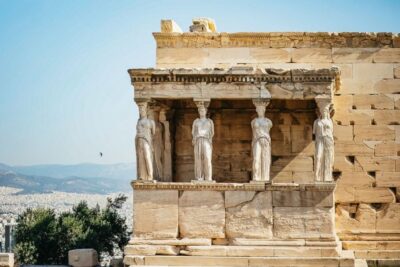
Acropolis, Parthenon & Acropolis Museum Guided Tour
Read our review →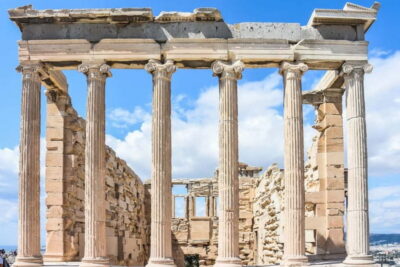
Acropolis, Parthenon & Acropolis Museum Guided Tour
Read our review →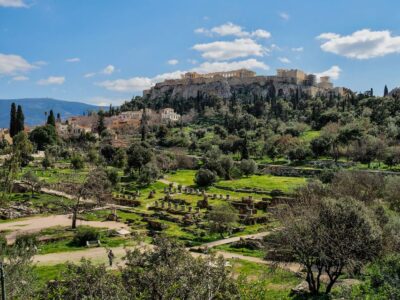
Acropolis monuments & Parthenon Walking Tour with Optional Acropolis Museum
Read our review →
Athens All Included: Acropolis and Museum Guided Tour with Ticket
Read our review →Browse the lists this tour appears in