
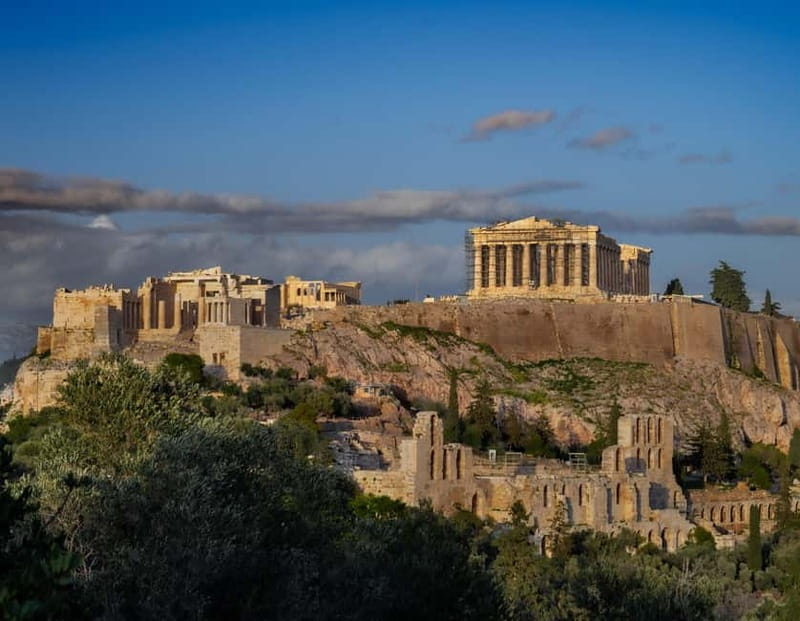
Reviewed · ACROPOLIS & ACROPOLIS MUSEUM TOURS
Athens: Acropolis Guided Tour in Spanish-Option Tickets
The best part of this two-hour Acropolis tour is its clear route through the hilltop complex. You begin at the Theater of Dionysius, pass ancient medical and performance sites, and finish at the Parthenon and Erechtheion. A Spanish-speaking licensed guide explains what you are seeing instead of leaving you to sort out the ruins alone.
I like the focus on two things: Spanish-language interpretation and a complete walk across the Acropolis rather than a quick stop at the Parthenon. The guides are praised for being passionate, well informed, and willing to add personal views that make the ancient subjects easier to discuss. The main drawback is practical: the site has steep, uneven surfaces and this tour is not suitable for people with mobility impairments.
Key points to know before booking

- The route covers the Acropolis highlights: Theater of Dionysius, Asclepieion, Odeon of Herodes Atticus, Propylaea, Athena Nike, Parthenon, Erechtheion, and Caryatids.
- Spanish is the only listed tour language: You receive live explanations from a licensed Spanish-speaking guide.
- The Parthenon comes near the end: Save your energy for the highest and most crowded section of the hill.
- Ticket choice matters: Admission is included only if you select the entrance-ticket option when booking.
- Headphones are included: They help you follow the guide around busy archaeological areas.
- Plan for sun and stone: Wear comfortable shoes and bring a sun hat. Food and drinks are not allowed inside.
Why this Acropolis route works well
The Acropolis can feel confusing on a first visit. Temples, theaters, gateways, and later repairs occupy the same hill, and it is easy to see the famous Parthenon without understanding how the rest fits around it.
This tour gives you a sensible order. You start with the Theater of Dionysius below the main summit, then move through several important sites before reaching the Propylaea and the temples at the top. That sequence lets you see the Acropolis as a whole religious and civic center, not just as one famous building.
The tour lasts about two hours. That is long enough for useful explanation without turning the visit into an all-day archaeology class. You still need to walk uphill, pause for photographs, and deal with sun and crowds, so two hours here is active time rather than a slow museum visit.
The Spanish-speaking format is the main reason to choose this experience over a general group tour. If you understand Spanish best, you can follow details about ancient medicine, theater, worship, and architecture with less effort. The guides are also praised for passion and for adding personal opinions that open up discussion about how the Acropolis was built and why it still matters to Athens.
A few other Athens mornings to price up
- Athens: Acropolis & up to 5 Archaeological Sites Combo Pass
★ 4.4 · 12,619 reviews - Athens: Acropolis Ticket with Optional Audio or Live Guide
★ 4.2 · 11,055 reviews - Athens: Acropolis, Parthenon & Acropolis Museum Guided Tour
★ 4.8 · 9,316 reviews
Starting at the Theater of Dionysius
The Theater of Dionysius is the first substantial stop, with about 10 minutes of guided explanation. It is a smart place to begin because it introduces the Acropolis as more than a temple site.
This theater is tied to the origins of Greek drama and gives you a physical sense of how public performance worked in ancient Athens. You can look across the seating area and imagine the relationship between performers, audience, and the sacred hill rising behind them.
Ten minutes is not enough for a full lesson in Greek theater, but it is enough to learn why this place matters and to get your bearings. If you enjoy theater, literature, or ancient civic life, this may be one of the most satisfying early stops.
The drawback is that the first stop may feel less instantly impressive than the Parthenon. Keep listening. The guide’s explanation helps turn weathered stone into a place with a clear purpose.
The Asclepieion and ancient medicine
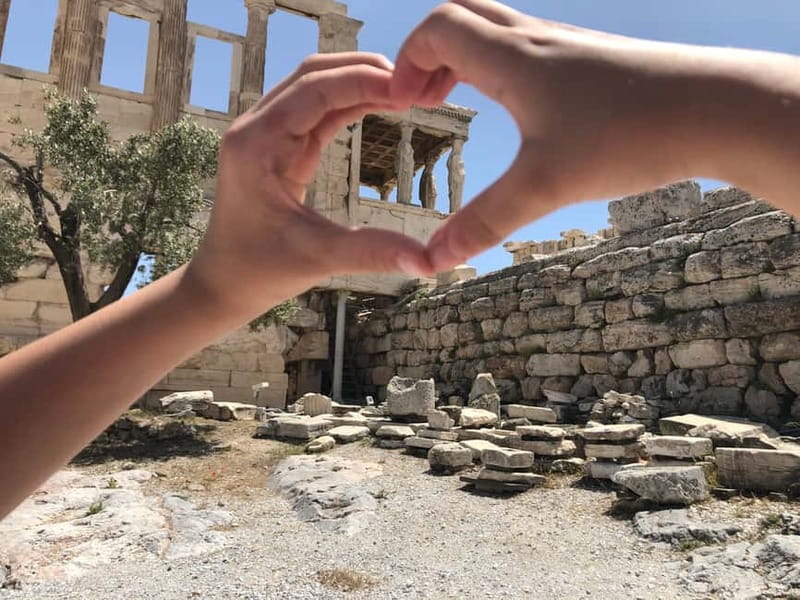
The next stop is the Asklepieion of Athens, also called the temple area of Asclepius. The guided visit lasts about 10 minutes.
Asclepius was associated with medicine, so this section adds a different subject to the tour. You are not looking only at temples dedicated to Athena. You are also seeing how healing and religious practice were connected in the ancient world.
I like this stop because it breaks up the usual Acropolis story. A guide can point out why the sanctuary was important and help you understand what kind of activity took place here. Without that context, the remaining foundations can be easy to overlook.
The site is made up of ruins rather than a complete building. Your experience depends heavily on the guide’s explanation, which is one reason the live Spanish commentary matters.
The Odeon of Herodes Atticus
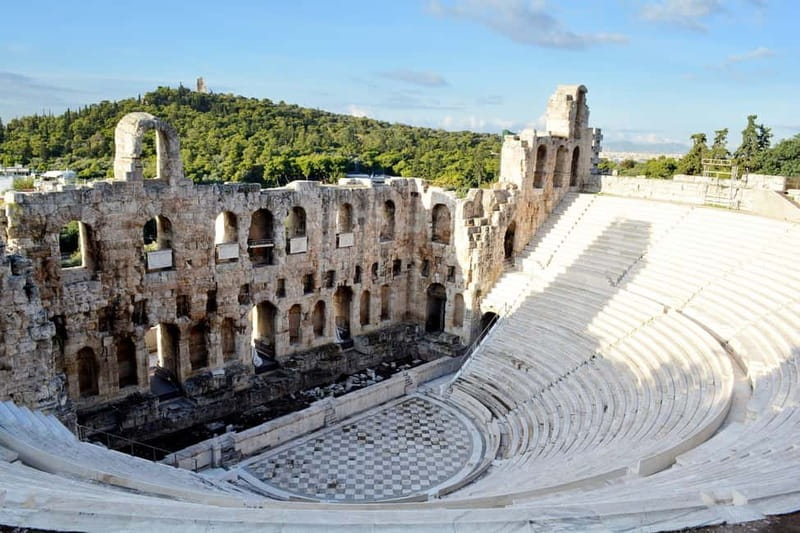
The route continues to the Odeon of Herodes Atticus, with another 10-minute explanation. This ancient conservatory remains one of the most recognizable performance spaces on the Acropolis.
Its curved stone structure is still used for major concerts and performances in Athens. That continuing role gives the stop a direct link between ancient public entertainment and modern city life.
You can appreciate the scale of the building and its setting beneath the Acropolis. The guide also helps explain why this venue was built and how it differs from the Theater of Dionysius.
You will not attend a performance during this daytime visit, and the tour does not include food, drinks, or any concert admission. Think of this as a short architectural and cultural stop on the way uphill.
Same island, an entirely different sort of day:
- Athens: Cape Sounion & Poseidon Temple Sunset Half-Day Trip
★ 4.8 · 8,241 reviews - Athens: Acropolis and Parthenon Guided Walking Tour
★ 4.6 · 5,882 reviews - All Day Cruise -3 Islands to Agistri,Moni, Aegina with lunch and drinks included
★ 5.0 · 4,958 reviews - Athens, Piraeus, and Coastline: Blue Hop-On Hop-Off Bus
★ 3.9 · 4,849 reviews
Passing through the Propylaea
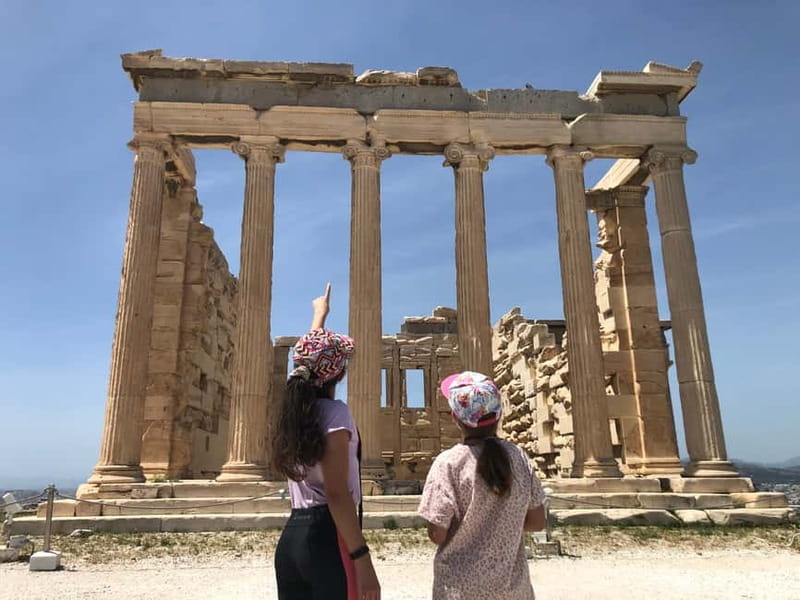
The Propylaea is the formal gateway to the upper Acropolis. The tour allows about 10 minutes here.
This is where the visit begins to feel more monumental. The approach narrows your view, then opens toward the buildings on the summit. The gateway was not simply an entrance for practical traffic. It helped frame the arrival at a sacred place.
The guide’s timing is useful here. A quick photograph does not explain why the gateway was arranged as it was, or why entering through it shaped the visitor’s first impression. Listen before rushing toward the next temple.
The stone paving and uphill route can be hard underfoot. Wear shoes with a firm sole, and move carefully. Strollers are not allowed, and the activity is specifically not suitable for people with mobility impairments.
The Temple of Athena Nike
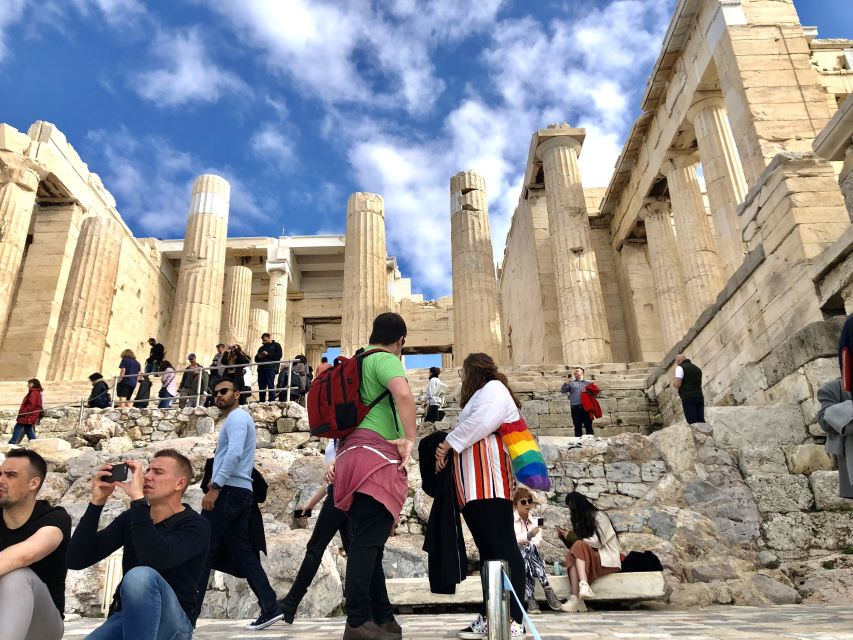
The Temple of Athena Nike receives about five minutes of guided attention. It is a small stop compared with the Parthenon, but it has an important position beside the entrance.
Athena Nike was connected with victory, and the temple’s placement made it a fitting symbol for those approaching the summit. Its size can surprise you. After the broad gateway and the larger temples, this compact building shows how much meaning the Athenians could assign to a relatively small structure.
Five minutes is brief, so this is a case where you should stay close and listen. The guide can give you the essentials while the group keeps moving through a busy area.
Reaching the Parthenon
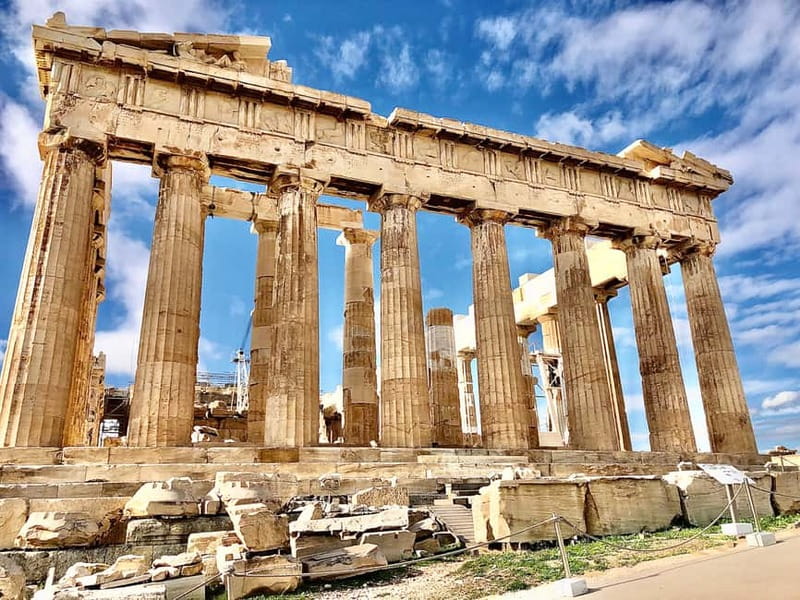
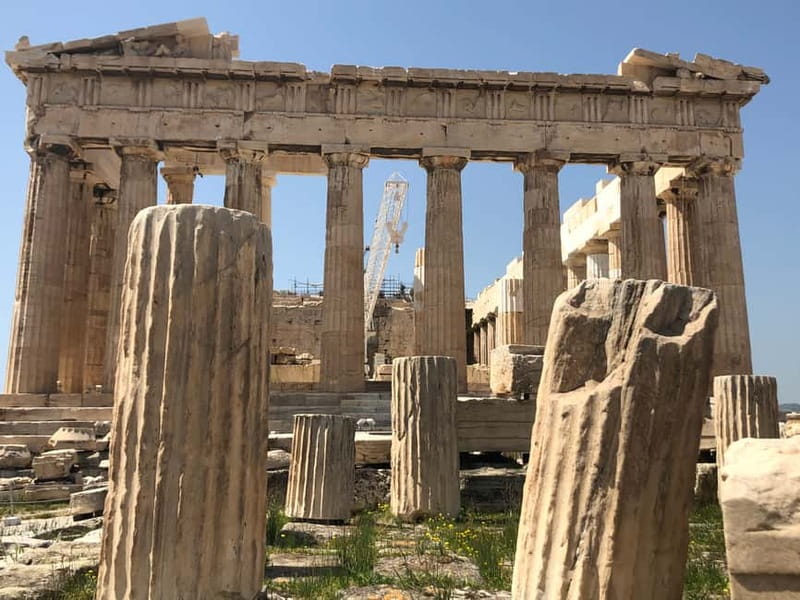
The Parthenon is the central event of the tour, with roughly 20 minutes of explanation. It is the longest single stop, and that makes sense. This is where you get the famous views, the strongest architectural impact, and the clearest link to Athens’ identity.
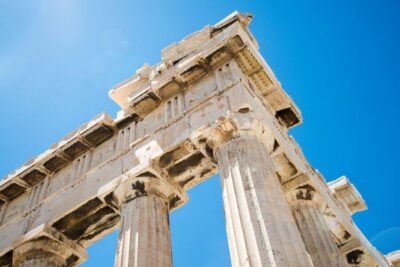
Take time to look beyond the front columns. Notice the scale, the repeated lines, and the way the building dominates the summit. Your guide can explain when and why it was built, as well as the changes that affected it over time.
The supplied experience information does not promise entry inside the Parthenon itself. You should expect to walk around the monument and view it from the permitted visitor areas. That is still a powerful encounter, but do not book this expecting a quiet interior visit.
The view over Athens is a major reward. Bring a hat because the upper hill can be exposed to strong sun, and avoid saving every photograph for the last minute. Crowds and group movement can make it harder to pause exactly where you want.
The Erechtheion and the Caryatids
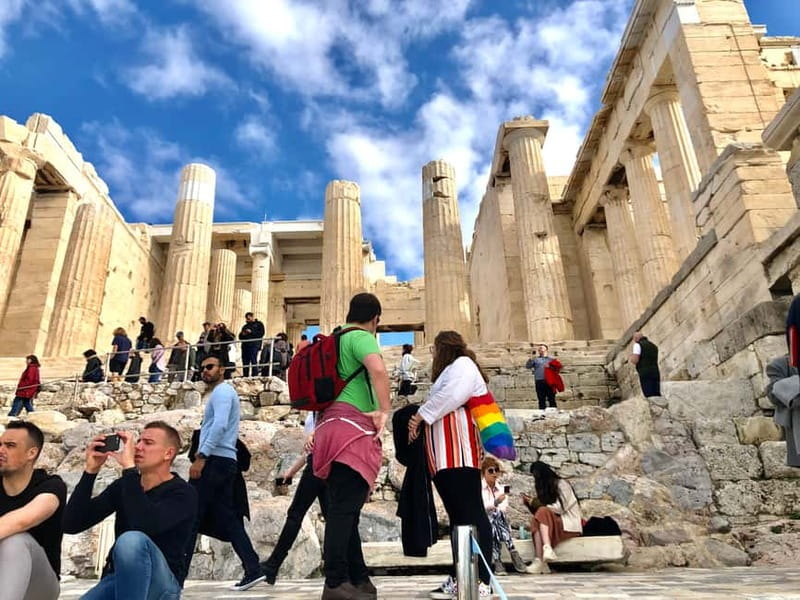
After the Parthenon, the tour turns to the Erechtheion, with about 10 minutes of guided time. This temple has a more complex appearance than the Parthenon, with several levels and distinct sections.
Its design reflects the layered traditions of the Acropolis. Instead of one simple rectangular block, you see a building shaped around different sacred associations and uneven ground. A guide is especially useful here because the structure can look irregular without an explanation of its purpose.
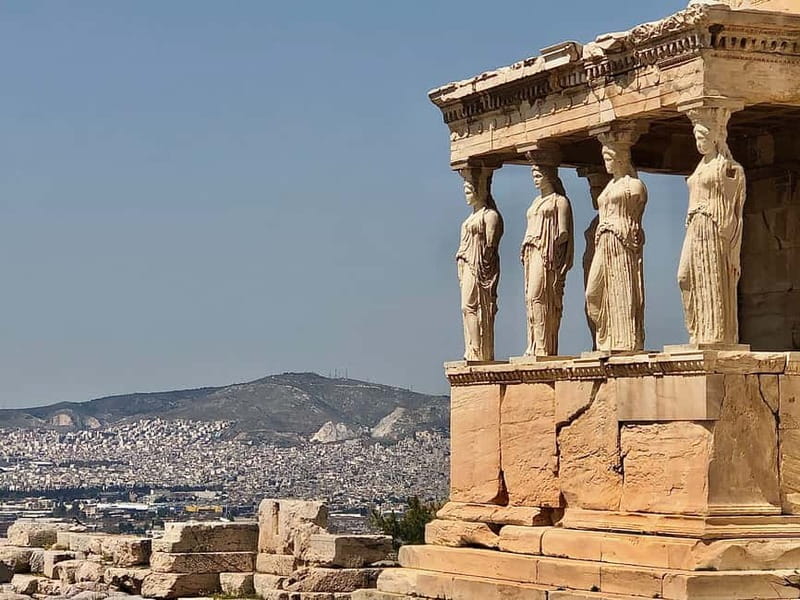
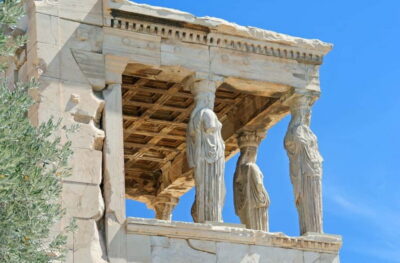
The final listed stop is the Porch of the Caryatids, also given about 10 minutes. The female figures supporting the porch are among the most familiar details on the Acropolis. You can study their posture and arrangement, but remember that what you see is part of a protected historic monument. The tour is a viewing experience, not a chance to touch or examine the statues up close.
Ending with the Erechtheion and Caryatids gives the visit a good balance. The Parthenon delivers the grand sight, while these later stops reward closer attention to design and detail.
What the Spanish-speaking guide adds
The guide is not just a person who leads you uphill. The value is in the explanation between the stops.
You learn about the Acropolis as a connected place: theater below, healing sanctuary nearby, gateway at the approach, temples above, and views across Athens. That framework helps you remember the site after you leave.
The guides are described as passionate about history and its effect on the present. One particularly useful feature is the willingness to share personal views on certain subjects, which can make the visit more engaging rather than purely memorized. You may find that this leads to discussion, especially around how and why the Acropolis was built.
Headphones are included. That matters because the hill can be noisy, and you may be standing several steps away from the guide while looking at a monument. Stay within listening range and keep the equipment secure as you walk.
Price, tickets, and practical value
The listed price is $36.14 per person. For a two-hour guided visit with a licensed Spanish-speaking guide and headphones, that can be good value if you want context at the site rather than a self-guided walk.
The price needs one careful check. Entrance admission is included only with the option that specifically includes the entrance ticket. Some booking choices may be for the guide service without admission, so read the selected option before paying. If you arrive without the required ticket, the advantage of a tightly timed tour can disappear.
The tour does not include hotel pickup, hotel drop-off, food, or drinks. You meet at the assigned starting point, which may vary by booking option, and the activity ends back there. One listed meeting point is the Tourist Information Center Athens at Dionysiou Areopagitou 18, but confirm your exact location after choosing your option.
Free cancellation is available up to 24 hours before the start for a full refund. You can also reserve now and pay later, which helps if your Athens schedule is still shifting.
Who should book this tour
I would choose this tour if you want:
- A Spanish-language explanation from a licensed guide
- A focused introduction to the full Acropolis route
- Help understanding smaller sites such as Asclepius and Athena Nike
- A two-hour visit that leaves room for other Athens plans
- A guide who brings energy and personal interpretation to the subject
It suits first-time Acropolis visitors especially well. You see the headline monuments, but you also learn why the theater, medical sanctuary, gateway, and smaller temples belong in the same story.
It may be less suitable if you want to explore at your own pace. The schedule gives about five to 20 minutes at each stop, and the group must keep moving. It also is not a good choice for anyone with mobility limitations, since the route includes uphill walking and uneven ancient surfaces.
How to prepare for the hilltop visit
Wear comfortable shoes. This is not a place for thin soles or footwear that makes you worry about every stone.
Bring a sun hat and plan for exposure. Food and drinks are not allowed inside, so do not carry them into the archaeological area. The supplied information does not list a water arrangement, so handle your hydration plans before entering while following the site rules.
Arrive at the correct meeting point and check the starting time before you set out. The meeting location can vary with the option booked, and the experience ends at the meeting point rather than at your hotel.
Keep your expectations realistic. This is a guided outdoor archaeological visit, not an air-conditioned museum tour. Its greatest rewards are the monuments, the views, and the guide’s ability to explain what you are seeing.
Should you book the Acropolis Spanish tour?
Book it if Spanish is your preferred language and you want the Acropolis to make sense as a complete place, not just a photo stop at the Parthenon. The strongest features are the passionate guiding, the broad route, and the attention given to sites that many independent visitors pass without understanding.
Before confirming, check two things: that your chosen price includes the entrance ticket, and that you can manage the uphill, uneven walk. If both points work for you, $36.14 is a reasonable price for a focused two-hour introduction to Athens’ most important ancient site.
FAQ
How long does the Acropolis guided tour last?
The tour lasts two hours. Starting times depend on availability when you book.
What language is the tour conducted in?
The live tour guide speaks Spanish. Spanish is the only language listed for this activity.
Is an entrance ticket included?
An entrance ticket is included only if you choose the booking option that includes it. Check the selected option carefully before booking.
Where does the tour start?
The meeting point can vary depending on the option you book. One listed starting point is the Tourist Information Center Athens at Dionysiou Areopagitou 18.
Where does the activity end?
The activity ends back at the meeting point.
Is a licensed guide included?
Yes. A licensed Spanish-speaking guide is included.
Are headphones provided?
Yes. Headphones are included as part of the activity.
Does the tour include hotel pickup?
No. Hotel pickup and drop-off are not included.
Can I bring food and drinks?
No. Food and drinks are not allowed during the activity.
Is the tour suitable for people with mobility impairments?
No. The activity is listed as not suitable for people with mobility impairments. Comfortable shoes are recommended, and a sun hat is useful.
Fresh on the Athens list
- Athens Airport Arrival Transfer to Hotels or Addresses in Athens★ 3.5 · 45 reviews
- Private Luxury Tour: Unveiling the Sacred Mysteries of Eleusis★ 5.0 · 45 reviews
- Luxury Catamaran Sunset Semi-Private & Greek Gastronomy in Athens★ 5.0 · 45 reviews
- From Athens: Aegina Island guided tour in a day★ 5.0 · 45 reviews
- Delphi, Thermopylae full day private tour from Athens★ 4.9 · 46 reviews
- From Athens: City & Corinth Guided Day Tour★ 4.8 · 46 reviews
- Acropolis Private Wine Tasting @ Finewine store★ 5.0 · 46 reviews
- Ancient Corinth Half-Day Private Tour from Athens★ 5.0 · 46 reviews
Acropolis & Acropolis Museum Tours, compared.
Acropolis & up to 5 Archaeological Sites Combo Pass
Read our review →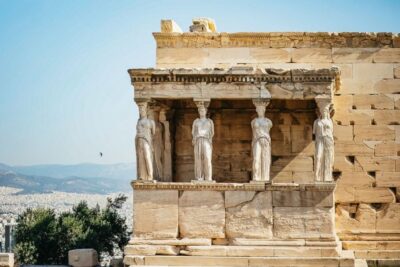
Acropolis, Parthenon & Acropolis Museum Guided Tour
Read our review →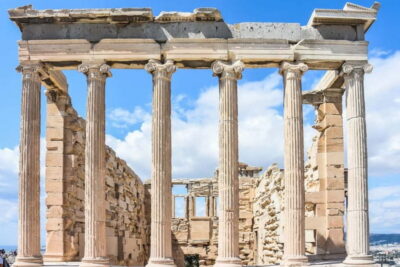
Acropolis, Parthenon & Acropolis Museum Guided Tour
Read our review →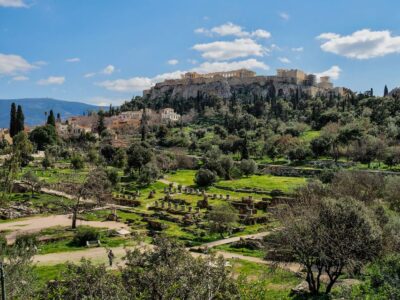

Acropolis monuments & Parthenon Walking Tour with Optional Acropolis Museum
Read our review →
Athens All Included: Acropolis and Museum Guided Tour with Ticket
Read our review →Browse the lists this tour appears in