
Reviewed · ACROPOLIS & ACROPOLIS MUSEUM TOURS
Athens: Private Acropolis Tour with focus on Kids & Families
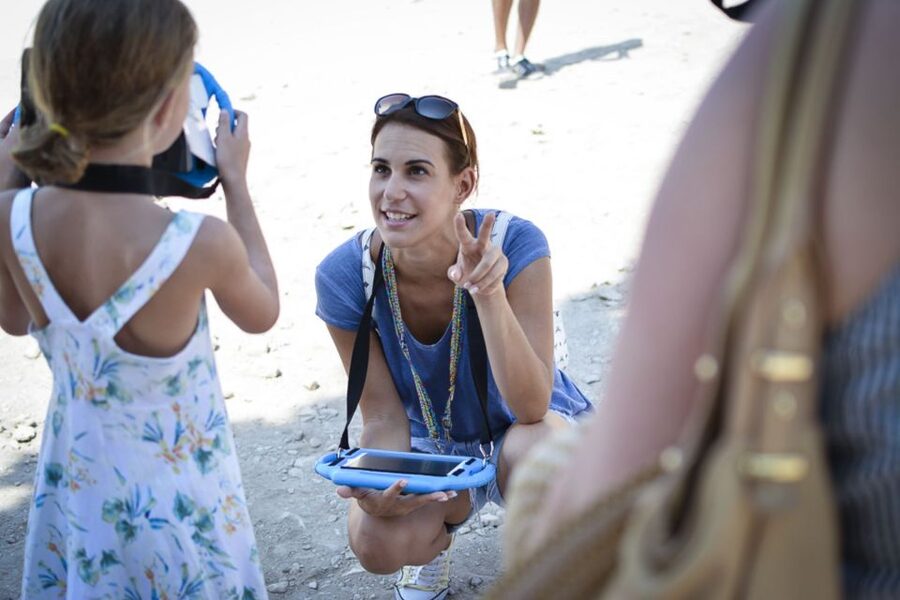
The best thing about this private Acropolis tour is its family focus. Instead of treating children like small adults in a long lecture, the guide uses Greek myths, questions, pictures, and simple comparisons to make the ancient stones matter. Even the building methods can become a lesson in Lego-style engineering.
I like the two-hour length, which is long enough to see the main monuments without turning the morning into a test of endurance. I also like the private format: guides such as Tina, Anastasia, Ioanna, Niko, and Antigone have adapted their pace and storytelling to children from preschool age through the teenage years. The main consideration is cost, since $406 covers up to four people and Acropolis admission is extra.
Key points
- Myth-led storytelling: Children learn through tales of Athena, ancient gods, heroes, and sacred places.
- A true private group: Your guide can adjust the pace, questions, and explanations to your family.
- Major Acropolis monuments: See the Propylaea, Temple of Athena Nike, Asclepion, Erechtheion, and Caryatids.
- Best in the cooler hours: Families who began at 8:00 found the early timing much easier in summer.
- Useful for mixed ages: The guide can entertain young children while offering solid facts to older children and adults.
- Tickets cost extra: You need Acropolis admission separately, though advance purchase is available.
Why This Acropolis Tour Works for Families
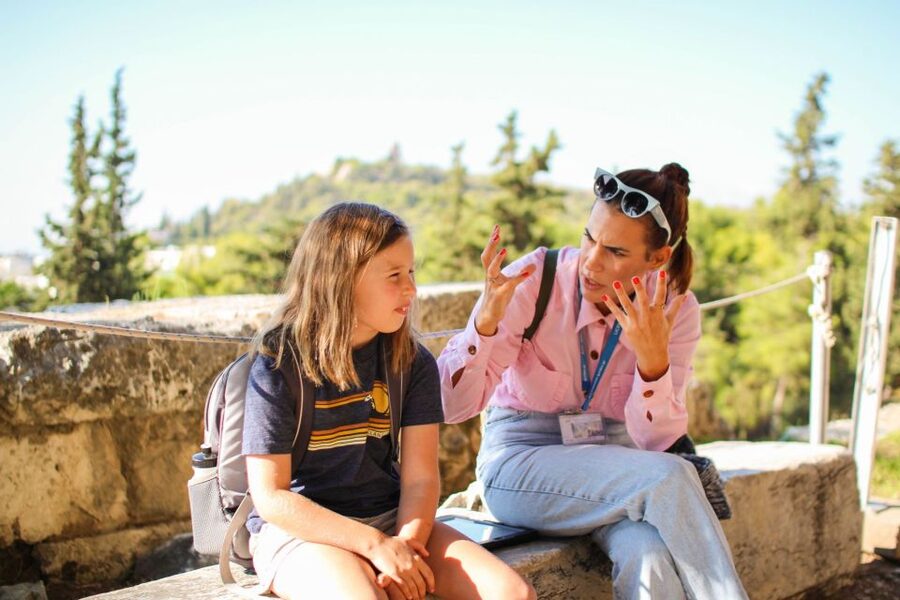
The Acropolis is one of those places that can leave adults speechless and children asking how much longer. The setting is extraordinary, but a bare list of dates and temple names will not hold every seven-year-old’s attention.
This tour solves that problem with a guide trained to talk with families. Tina, who appears often in the tour’s feedback, is praised for her humor, patience, and storytelling. Other guides, including Anastasia, Ioanna, Georgina, Antigone, Anna, Vera, Niko, and Cristina, have also been singled out for adjusting explanations to different ages.
That flexibility matters. A family with a four-year-old and a nine-year-old needs a different conversation from a family with children aged 11 and 14. The guide can ask younger children questions, show pictures, explain myths, and offer more detail to older children and adults.
You still visit a major archaeological site, not a children’s theme park. The stones are ancient, the paths can be uneven, and the sun can be strong. The family approach simply gives your children a better reason to look closely.
A few other Athens mornings to price up
- Athens: Acropolis & up to 5 Archaeological Sites Combo Pass
★ 4.4 · 12,619 reviews - Athens: Acropolis Ticket with Optional Audio or Live Guide
★ 4.2 · 11,055 reviews - Athens: Acropolis, Parthenon & Acropolis Museum Guided Tour
★ 4.8 · 9,316 reviews
Meeting at Acropoli Metro Station
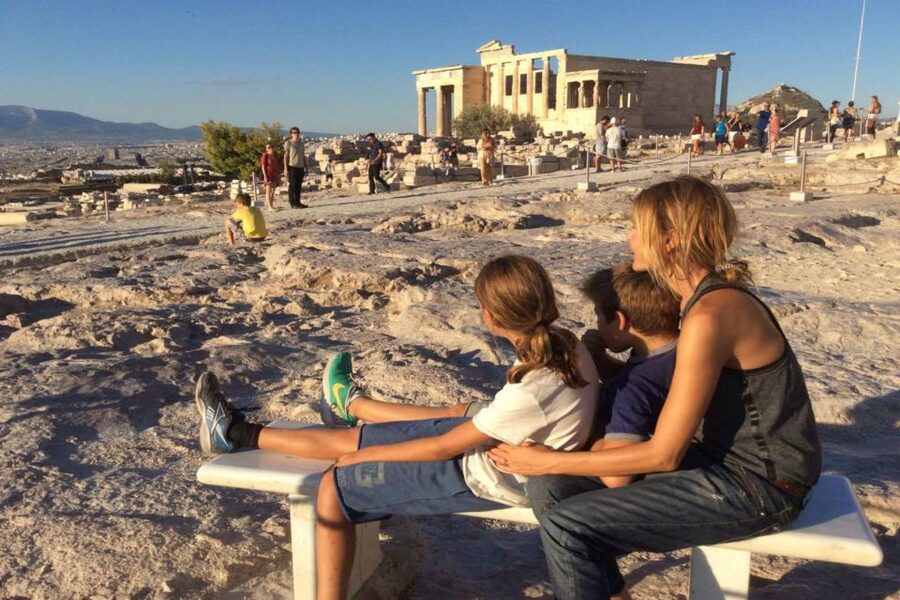
The meeting point is the entrance to Acropolis Metro Station on Makrygianni Street. This is a useful place to meet because it is close to the archaeological site and easy to identify in central Athens.
You return to the Acropoli area after the two-hour visit. Hotel pickup is not included, so plan your own way to the meeting point. If you are staying in central Athens, the metro station is a practical choice.
Allow a little extra time to find your guide and settle the children before entering. Have your tickets ready if you bought them in advance. The tour price does not include Acropolis admission, so this is an important detail to handle before the morning begins.
The Two-Hour Route Across the Sacred Rock
The tour follows the main archaeological sights of the Acropolis. Your guide introduces the buildings in a way that links architecture, mythology, religion, and daily life.
The route is not simply a march from one monument to the next. The guide uses the site as a large outdoor classroom. Children can ask questions, compare construction methods, and hear the stories connected with the gods and heroes of ancient Greece.
Two hours is a sensible time for a family visit. You get a focused look at the key places, but you are not expected to inspect every stone or read every sign. If you want a slower archaeological study, a longer visit on your own may suit you better.
The Propylaea: Entering Through Marble
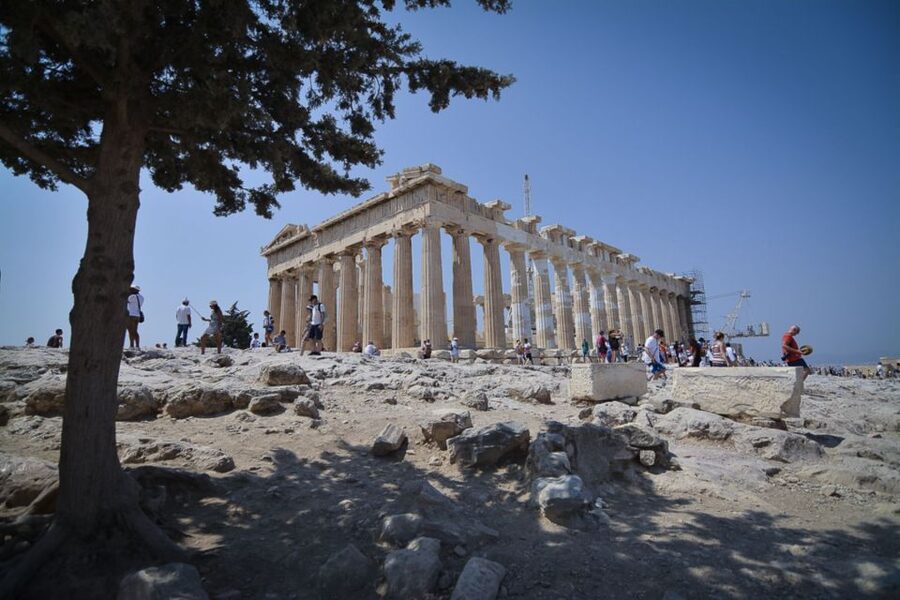
The Propylaea is the grand marble gateway to the Acropolis. It gives you an immediate sense that this was not an ordinary hilltop sanctuary.
For children, the entrance offers a natural first lesson in scale and engineering. The guide can explain how the ancient builders handled enormous pieces of stone and created a formal entrance on difficult ground. A comparison to building with Lego has worked especially well with children who need a concrete way to understand ancient construction.
This is also where the tour starts to turn the Acropolis from a picture in a textbook into a real place. You pass through the same general gateway used by people approaching the sacred area long ago, then begin to see how the buildings were arranged.
Same island, an entirely different sort of day:
- Athens: Cape Sounion & Poseidon Temple Sunset Half-Day Trip
★ 4.8 · 8,241 reviews - Athens: Acropolis and Parthenon Guided Walking Tour
★ 4.6 · 5,882 reviews - All Day Cruise -3 Islands to Agistri,Moni, Aegina with lunch and drinks included
★ 5.0 · 4,958 reviews - Athens, Piraeus, and Coastline: Blue Hop-On Hop-Off Bus
★ 3.9 · 4,849 reviews
The Temple of Athena Nike
The Temple of Athena Nike is small compared with the Parthenon, but its position near the entrance makes it easy to notice. It was dedicated to Athena in her role as a goddess of victory.
The guide uses the temple to connect architecture with belief. Instead of seeing a small marble building as just another ruin, your children can consider why a community would place a shrine at this point and what victory meant to ancient Athenians.
This is a good stop for questions because the temple is compact and visually distinct. A family guide can keep the explanation brief for younger children, then add more detail if older children or adults want it.
The Asclepion: Ancient Healing
The Asclepion was a healing sanctuary connected with Asclepius, the ancient god of medicine. It gives the tour a welcome change from temples devoted to power, victory, or city identity.
Here, the guide can show children that ancient Greek religion was tied to practical hopes. People came to ask for help with illness, just as people in later periods visited healing shrines and medical centers.
The Asclepion also helps break up the tour. Young children often respond well when the subject changes from warriors and gods to doctors, cures, and the way people tried to understand the body.
The Erechtheion and the Famous Caryatids
The Erechtheion is one of the most memorable buildings on the Acropolis. Its unusual form and the Caryatids make it especially effective for children.
The Caryatids are sculpted Greek maidens that support the porch. They look like figures, but they also serve an architectural purpose. This makes them a useful starting point for explaining how decoration and engineering can work together.
Your guide may use pictures or other visual material to help children see the details. That approach has been especially useful for younger visitors who cannot easily follow a long verbal explanation.
The Caryatids also invite questions. Are they statues or columns? How can a person support a roof? Why are the figures dressed in a certain way? A family guide can use those questions to keep the whole group involved without losing the adults.
Greek Myths That Give the Stones Meaning
Mythology is the strongest thread running through this experience. The stories are not added as decoration. They give children a way to remember the places they see.
Athena and the sacred rock naturally provide a central story, while tales connected with the gods and ancient Greek culture help explain why the Acropolis mattered. Guides such as Tina have been praised for bringing these stories to life, especially for children already interested in Greek mythology.
The best part is the conversation. Children are encouraged to share what they already know, ask questions, and test their ideas. One guide’s approach kept four boys under ten engaged for the full two hours. Another worked successfully with a 10-year-old who had trouble staying focused by using pictures and playful comparisons.
That does not mean every child will listen perfectly for two hours. Heat, crowds, tired legs, and the excitement of Athens can still win. But the private setting gives the guide a much better chance to adjust than a large group tour would.
Handling Different Ages in One Family
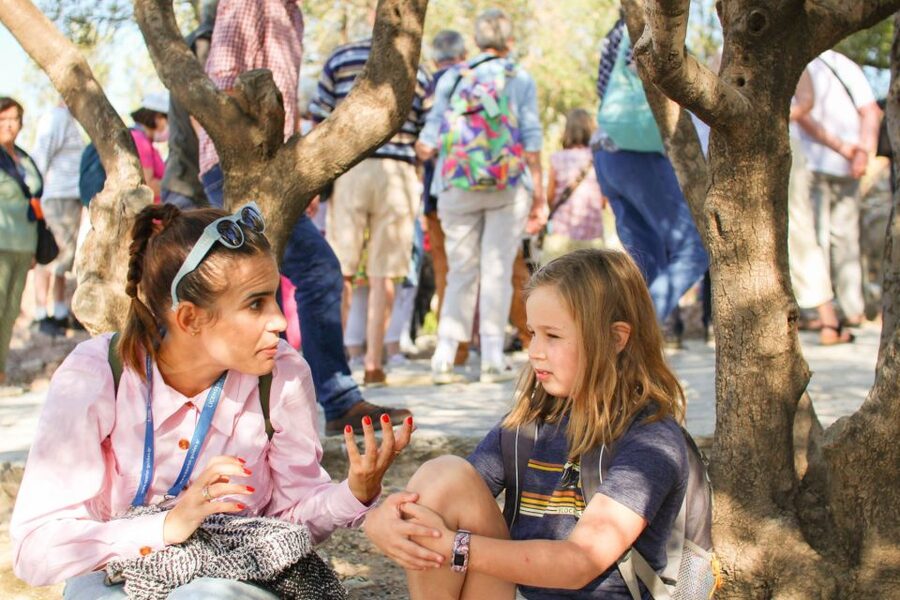
This is not only for families with small children. It can work well for a group that includes teenagers, grandparents, and younger children.
A 15-year-old may want dates, architectural facts, and a clearer sense of how the site developed. A six-year-old may need a short myth and a question to answer. A 74-year-old grandparent may appreciate a measured pace and explanations that do not overload the group.
The guide can move between these needs. Ioanna, for example, has been praised for holding the attention of a family ranging from a 15-year-old to a 74-year-old. Anastasia adjusted her pace for a family with children aged nine and four, using visuals and questions to involve everyone.
This is the main advantage of paying for a private experience. You are not locked into the rhythm of strangers. If your child needs a pause, the guide can respond. If your teenager wants more detail, the conversation can continue.
Heat, Crowds, and the Case for an Early Start
Athens can be hot, and the Acropolis offers limited shade. The site can also become crowded, especially during the warmer months.
An 8:00 start is strongly worth considering. Families who began when the Parthenon first opened found the morning heat easier to manage, with fewer distractions from crowds. Earlier conditions also make it easier for children to hear the guide and see the monuments.
You should bring comfortable shoes and water. Those are not minor suggestions. The visit takes place outdoors on an archaeological site, and tired feet can change the mood of the whole family.
The early start may not suit every holiday schedule, especially if your family has just arrived after a late flight. Still, if you can manage it, the cooler temperature and calmer first hour are valuable.
What the $406 Group Price Buys You
The price is $406 per group of up to four people. For a family of four, that works out to roughly $101.50 per person before admission tickets. For two people, the per-person cost is much higher.
That is not a budget sightseeing option. You are paying for a private guide, a family-centered approach, and a tour built around your group rather than a standard public schedule.
The value depends on your children. If your family can happily explore ruins with a guidebook, the price may feel high. If your children are likely to lose interest during a standard historical talk, the private format can prevent a famous site from becoming a difficult morning.
Acropolis tickets are not included. You can purchase them separately, and advance purchase is available to help you avoid waiting in line. Add that cost when comparing this tour with other options.
The tour also includes specially designed educational material sent by email after the visit. This gives children something to revisit later and can help them remember the myths and monuments once you have left Athens.
What This Tour Does Not Include
Hotel transfer is not provided. You meet at Acropolis Metro Station and make your own way there.
The tour is in English, with a live guide. If your family needs another language, this particular experience is not presented as an option for that.
Admission is separate, so do not assume the $406 covers entry to the archaeological site. Check ticket availability and starting times before booking, especially during a busy season.
The cancellation policy is flexible: you can cancel up to 24 hours in advance for a full refund. You can also reserve now and pay later, which is useful if your Athens schedule is still changing.
Who Should Book This Family Acropolis Visit?
I would choose this tour for families with children roughly in the elementary-school years, particularly if Greek mythology already interests them. It also suits families with mixed ages, since the guide can shift between simple stories and more serious historical detail.
It is a good match if you want to see the Acropolis but do not want to spend the morning policing attention spans. The guides have repeatedly been praised for patience, humor, questions, and the ability to keep children involved.
I would think twice if your group is larger than four and you want the listed group rate, since the price covers up to four people. I would also consider another format if you want a very slow, specialist archaeological examination rather than a lively family introduction.
The two-hour limit is both a strength and a boundary. You get a focused visit to the main highlights, but not an exhaustive study of every feature on the hill.
My Verdict on the Acropolis Family Tour
You should book this tour if you want your children to remember the Acropolis as a place of stories, questions, and striking buildings, not just a hot hill covered in old stones.
The strongest feature is the guide. Names such as Tina, Anastasia, Ioanna, and Niko appear repeatedly in family experiences because they make room for children to speak, adjust the pace, and explain difficult ideas in plain language. The myths, Caryatids, and engineering lessons give the visit several ways into ancient Athens.
The drawbacks are clear: the price is substantial, admission costs extra, and the site can be hot and crowded. Book an early time, bring water and good shoes, and prepare your children for an outdoor archaeological visit.
For a family of four that values a private guide and wants a well-shaped introduction to the Acropolis, the cost can be justified. For independent older teens or adults who prefer to read and wander, it may be more than you need.
FAQ
How long does the Acropolis family tour last?
The guided visit lasts two hours.
Where do you meet the guide?
You meet at the entrance of Acropolis Metro Station on Makrygianni Street.
Is the tour private?
Yes. It is offered as a private group experience.
What language is the tour in?
The live tour guide speaks English.
Are Acropolis entrance tickets included?
No. Admission fees are extra. Advance purchase is available as an additional service.
Is hotel transfer included?
No. You are responsible for reaching the meeting point and returning from the Acropoli area.
What should you bring?
Bring comfortable shoes and water.
Can you cancel for a refund?
Yes. You can cancel up to 24 hours before the tour for a full refund. You can also reserve now and pay later.
Fresh on the Athens list
- Athens Airport Arrival Transfer to Hotels or Addresses in Athens★ 3.5 · 45 reviews
- Private Luxury Tour: Unveiling the Sacred Mysteries of Eleusis★ 5.0 · 45 reviews
- Luxury Catamaran Sunset Semi-Private & Greek Gastronomy in Athens★ 5.0 · 45 reviews
- From Athens: Aegina Island guided tour in a day★ 5.0 · 45 reviews
- Delphi, Thermopylae full day private tour from Athens★ 4.9 · 46 reviews
- From Athens: City & Corinth Guided Day Tour★ 4.8 · 46 reviews
- Acropolis Private Wine Tasting @ Finewine store★ 5.0 · 46 reviews
- Ancient Corinth Half-Day Private Tour from Athens★ 5.0 · 46 reviews
Acropolis & Acropolis Museum Tours, compared.

Acropolis & up to 5 Archaeological Sites Combo Pass
Read our review →

Acropolis, Parthenon & Acropolis Museum Guided Tour
Read our review →
Acropolis, Parthenon & Acropolis Museum Guided Tour
Read our review →

Acropolis monuments & Parthenon Walking Tour with Optional Acropolis Museum
Read our review →
Athens All Included: Acropolis and Museum Guided Tour with Ticket
Read our review →Browse the lists this tour appears in