
Reviewed · ACROPOLIS & ACROPOLIS MUSEUM TOURS
Athens: Acropolis, Parthenon and Acropolis Museum Guided Tour
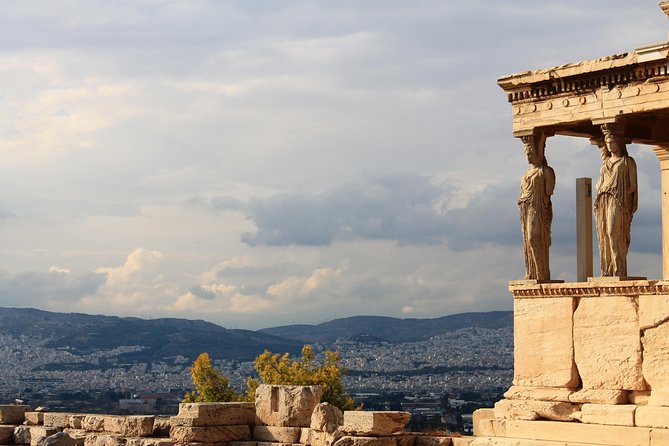
The best part of this Athens tour is the connection between the hilltop monuments and the original works inside the Acropolis Museum. A guide such as Angel, Maria, Natasha, or Bernie can turn a pile of marble into a story about power, religion, art, and daily life. I especially like the museum’s original Caryatids and Parthenon frieze, followed by the real monuments above.
I like the central meeting point near the Acropolis Metro and the planned pauses at the Theater of Dionysus, Herodes Atticus theater, and other sites. The main drawback is time: a 3-to-4-hour group tour gives you a strong introduction, but the museum may feel rushed if you want to study every gallery on your own.
Key points to know before booking
- Original treasures in the Acropolis Museum: See archaic statues, Caryatids, and sections of the Parthenon frieze close up.
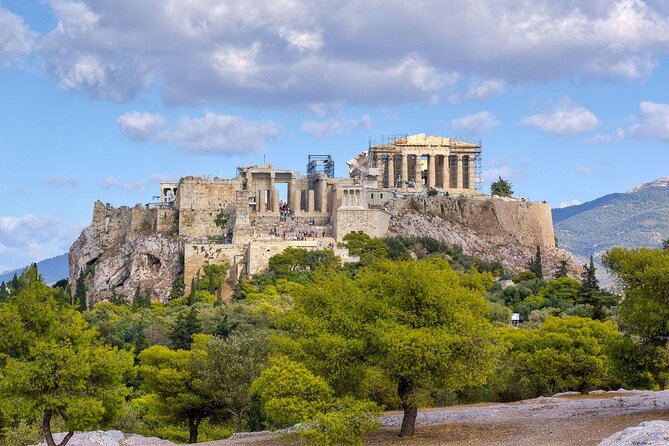
- A full Acropolis climb: The route includes the Theater of Dionysus, Odeon of Herodes Atticus, Propylaea, Temple of Athena Nike, Erechtheion, and Parthenon.
- Guide-led context: The strongest guides, including Angel, Maria, Natasha, Simon, and Bernie, are praised for combining facts, mythology, humor, and time for questions.
- Ticket choice matters: The advertised price is about $41.12 per person, but admission costs extra unless you select the ticket-included option.
- Strict timing: Arrive at Mitseon 2 at least 15 minutes early. Acropolis entry times are fixed, and late arrivals cannot be accommodated.
- A demanding walk: Expect a steep hill, uneven surfaces, possible slippery stone, and no café on the Acropolis grounds.
Why the Acropolis makes more sense with a guide
The Acropolis is famous enough to recognize in photographs, but much harder to understand once you are standing among the ruins. The Parthenon shares the hill with several other monuments, each with its own purpose, date, and visual language. Without help, it is easy to focus only on the big temple and miss the rest.
I like the way this tour builds the setting as you climb. You begin at the Theater of Dionysus, where ancient dramas and tragedies were first performed, then continue toward the Odeon of Herodes Atticus and the sanctuary of Asclepius. These stops give you a sense of how the Acropolis functioned as a religious and cultural center, not simply as a viewpoint with a famous temple.
The guides are the main reason to choose this experience instead of walking through alone. Angel is praised for mixing useful facts with humor. Natasha brings mythology and religion into the conversation, while Maria is noted for keeping the group moving without losing the thread of the story. Bernie’s approach connects archaeology with human personalities and political choices.
That style suits you if you enjoy asking questions. Several guides are praised for handling questions clearly and adding stories rather than giving one-word answers. The information also covers more than the fifth century BC. You hear how the Acropolis changed across later periods, which helps explain why the site looks less complete and more layered than the idealized images in guidebooks.
More Museums in Athens
- Athens: Acropolis, Parthenon & Acropolis Museum Guided Tour
★ 4.8 · 9,316 reviews - Athens: Mythology of Delphi, Museum and Arachova Guided Tour
★ 4.6 · 4,008 reviews - Athens: Acropolis, Parthenon & Acropolis Museum Guided Tour
★ 4.8 · 3,579 reviews
Meeting at Mitseon 2 near the Acropolis Metro
The tour begins at the Athenian Tours office at Mitseon 2, Athens 117 42. The office is a short walk from the Acropolis Metro station, making this a practical starting point if you are already in central Athens.
Plan to arrive at least 15 minutes before the stated start time. This is not a tour where arriving at the last moment is wise. Acropolis admission is tied to a specific entry time, and latecomers cannot be accommodated or refunded.
If you are coming from the Port of Piraeus, allow 30 to 40 minutes by taxi, and more during morning traffic. Hotel pickup is not included, so you need to reach the office under your own arrangements.
The group can include up to 24 people. That is not a tiny private walk, but it is still manageable for a major attraction. Audio quality can sometimes suffer when other groups nearby are using their own equipment, so stay close to the guide when possible.
The Theater of Dionysus starts the story
The first notable stop is the Theater of Dionysus, located on the lower slope of the Acropolis. This is where famous ancient comedies and tragedies were first performed, so it gives the tour a useful opening idea: Athens was shaped by public performance, debate, religion, and civic life.
Your guide may pause here to explain the theater’s role before leading the group uphill. The stop also breaks up the climb, which matters more than it sounds. The Acropolis hill is steep, and the stone paths can be slippery when wet.
Next comes the Odeon of Herodes Atticus, the Roman-era theater built in memory of the wife of Herodes Atticus. You may not spend a long time inside the structure, but the view from the approach shows how later Roman Athens added its own buildings to the older sacred hill.
The route also includes the sanctuary of Asclepius, associated with the healing god. This is a good place to ask about ancient religious practice, since the Acropolis was not only a monument to civic pride. It was also a place where people prayed, made offerings, and sought help.
Crossing the Propylaea into the Acropolis
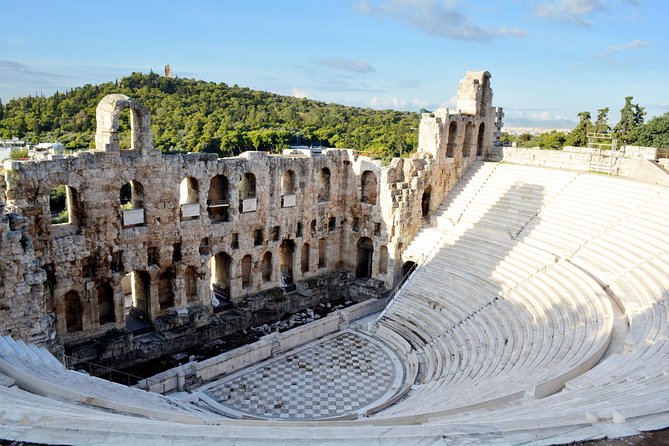
The Propylaea is the grand gateway to the upper Acropolis. Reaching it means climbing further, but the gateway itself helps you understand how visitors entered the sacred precinct in antiquity.
The tour also points out the Temple of Athena Nike, a smaller temple near the entrance. Its position is easy to miss if you hurry toward the Parthenon, but it is one of the site’s elegant details. Your guide can explain how the temple related to Athena and the city’s hopes for victory.
The hilltop route is exposed. Bring water, a hat, sunglasses, and an umbrella if rain is expected. There are no cafés on the site, though a water fountain is available. Several people have found that comfortable shoes make a major difference, and I would treat that as essential rather than optional.
Group tours cannot use the elevator at the Acropolis. This experience is not suitable for people with mobility impairments or children under six, and the steep climb may be tiring for anyone unused to uneven stone paths.
A few other Athens mornings to price up
- Athens: Acropolis & up to 5 Archaeological Sites Combo Pass
★ 4.4 · 12,619 reviews - Athens: Acropolis Ticket with Optional Audio or Live Guide
★ 4.2 · 11,055 reviews - Athens: Acropolis and Parthenon Guided Walking Tour
★ 4.6 · 5,882 reviews - Athens: Acropolis Ticket with Audio Guide
★ 4.0 · 3,575 reviews
The Parthenon and the meaning behind the marble
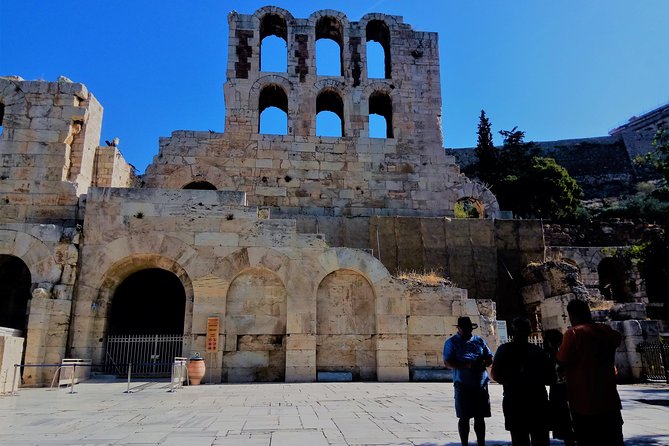
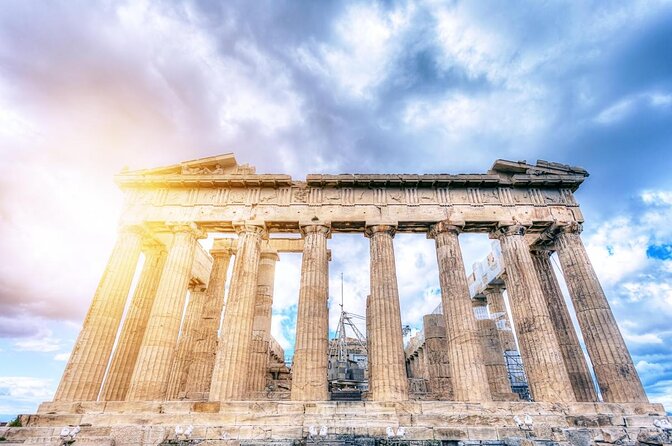
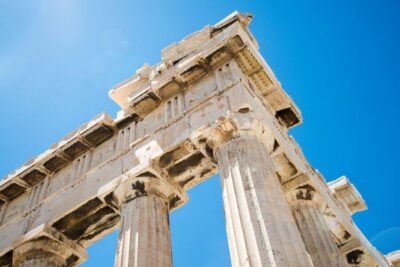
The Parthenon was dedicated to Athena, the patron goddess of Athens. It represents the fifth-century BC height of Doric architecture and is tied to the city’s Golden Age under Pericles.
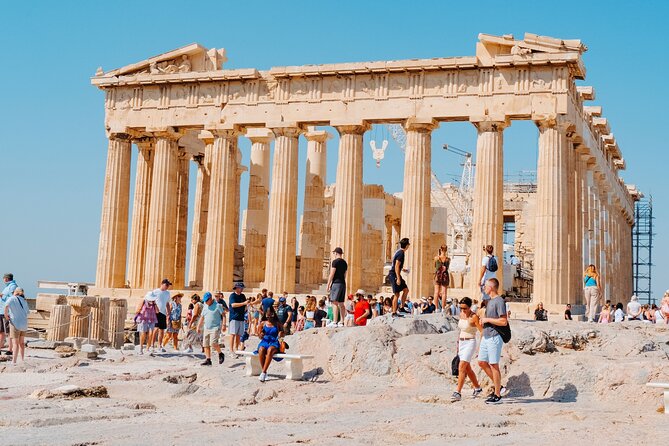
You will have time to look at the building from different angles, although crowd levels can affect how freely you move. The Parthenon is often the busiest point of the visit, so listen closely while the guide explains the design and purpose. Once you know what to look for, the columns and sculpted elements become more than a grand backdrop.
The tour allocates about 30 minutes to the Parthenon area, with additional time spent at nearby monuments. That is enough for a first visit and photographs, but not enough for an unhurried architectural study.
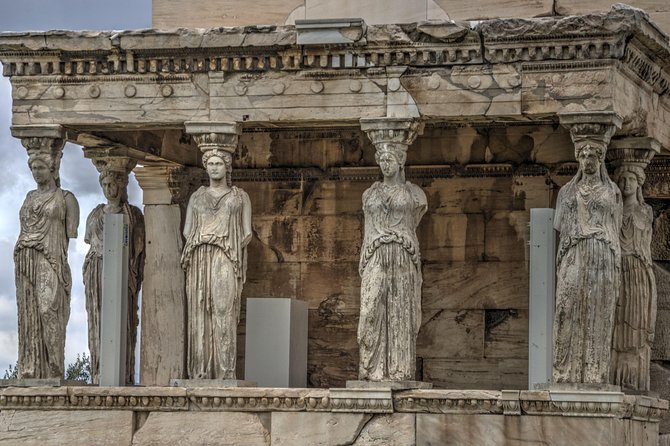
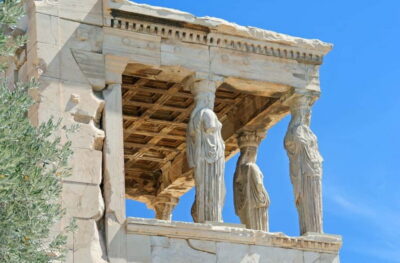
The Erechtheion receives its own stop. This unusual temple is best known for its asymmetrical design and the six sculpted female figures called Caryatids. Seeing the originals in the museum later makes this stop especially useful, since you can compare the hilltop structure with the preserved sculptures inside.
Guides may change the order of the sites to make the route more comfortable. That flexibility can help with crowd levels and movement, but the exact sequence may not match the printed schedule.
The Acropolis Museum puts the ruins in context
The museum is only a short walk from the Acropolis, and it is the part of the experience that gives the monuments greater meaning. The galleries contain original objects connected to the hill, rather than only reproductions or general Greek art.
On the ground floor, the displays cover parts of Athenian daily life. You may see objects linked with weddings, children’s toys, healing methods, and religious practice. These details bring the ancient city down to a human scale. Instead of thinking only about temples and rulers, you get a glimpse of how people lived and worshipped.
The first floor contains archaic statues from the sixth century BC. Their rigid poses and distinctive smiles look different from the later classical style associated with the Parthenon. Standing close to these works helps you see that Greek sculpture did not appear fully formed. It changed over time through experimentation with posture, expression, and the human body.
The Caryatids are another major highlight. At the Acropolis, you see the Erechtheion and its sculpted supports in place. In the museum, you can examine the original figures at close range. The museum also displays substantial pieces connected with the entrance to the Acropolis.
The top floor offers views toward the Parthenon and presents the original Parthenon frieze. This arrangement makes the museum visit feel connected to the hilltop walk rather than like a separate museum stop. You see the building above, then examine the art and architectural fragments below.
The museum portion lasts about two hours, but that does not mean you have two leisurely hours to explore every room. The guide leads you through selected works and explains their place in Athenian history. One guide may keep the group moving at a comfortable pace, while another may spend longer on questions. A four-star experience noted that the museum felt rushed, so choose this tour for guided highlights, not complete independent museum study.
After the guided portion, you may be able to remain in the museum and continue looking around. Confirm the exact arrangement with your guide, but this option can help if you want a few extra minutes with the collection.
Is the ticket option worth the extra cost?
The listed base price is about $41.12 per person. That price does not automatically include admission. The Acropolis ticket is listed at €30 per person and the museum ticket at €20 per person unless you select the option with tickets included.
This makes the ticket choice important when comparing prices. A ticket-included booking costs more upfront, but it simplifies the morning and lets the guide hand you the tickets at the meeting point. If you choose without tickets, you must arrange admission online at least 24 hours ahead using the correct time slot, or notify the operator in advance so tickets can be reserved for you.
You can also bring cash to the check-in point if you have arranged this beforehand. Do not assume you can simply arrive and buy any available ticket at the last minute. The Acropolis uses timed entry, and availability matters.
I see value in paying for the guided experience even before considering admission. You receive a licensed English-speaking guide, a coordinated route through two major sites, and explanations that would take substantial preparation to assemble yourself. The value is strongest for a first visit, especially if you want ancient religion, mythology, art, and architecture explained as one story.
The value is weaker if you already know the Acropolis well or want to spend most of the day alone in the museum. In that case, a separate museum visit could give you more freedom.
Timing, weather, and comfort on the hill

The experience lasts about three to four hours. That makes it a useful half-day activity, particularly if you are fitting the Acropolis between meals, an Ancient Agora visit, or other central Athens sights.
The pace includes pauses at several monuments. These breaks give you time to hear the guide, take photographs, and catch your breath. Still, this is an active walking tour, not an easy sightseeing ride.
Athens can feel hot and exposed, but winter conditions can change just as quickly. January can bring lighter crowds, though the top of the Acropolis may be cold and windy. Check the forecast and bring layers in winter. On wet days, the polished stone deserves extra care.
The tour is offered in English. A private option is available if you need a more flexible starting time, but the standard experience is a shared group tour with up to 24 people. If the audio becomes hard to hear, move near the guide instead of relying on the edge of the group.
Free-entry days are handled by adjusting the tour price so you are not charged for complimentary admission. That detail helps avoid paying for tickets that the sites provide free of charge.
Who should book this Athens tour?
I would choose this tour for a first visit to Athens, especially if you want someone to explain what you are seeing rather than read signs as you go. It suits adults, older children over six who can manage the climb, and anyone interested in mythology, archaeology, classical architecture, or the way the Acropolis changed through time.
It is also a good fit if you are visiting Athens for only a short stay. The central meeting point, compact half-day format, and finish at the Acropolis Museum make it easy to build the rest of your day around the experience.
I would think twice if you have mobility limits, dislike group pacing, or want a quiet, detailed museum visit. The hill is steep, the elevator is not available on group tours, and the museum section may not leave enough time for every gallery.
Free cancellation is available up to 24 hours before the start time. Changes or cancellations inside that window are not accepted for a refund.
Should you book it?
Book this tour if you want the Acropolis to make sense, not just look impressive. The strongest part is the guide-led link between the Theater of Dionysus, the Parthenon, the Erechtheion, and the museum’s original works.
Choose the ticket-included option for simpler planning, arrive early, wear sturdy shoes, and bring water. If you want more time with museum displays, treat the guided visit as an introduction and ask if you can remain afterward. For a first Athens visit, this is a well-shaped half-day that gives you the essential monuments and enough context to keep exploring on your own.
FAQ
How long does the Acropolis and museum tour last?
The experience lasts approximately three to four hours.
Where does the tour begin?
It begins at the Athenian Tours office at Mitseon 2, Athens 117 42, a short walk from the Acropolis Metro station.
Where does the tour finish?
The tour ends at the Acropolis Museum at Dionysiou Areopagitou 15, Athens 117 42.
Are admission tickets included?
Tickets are included only if you select the ticket-included option. Otherwise, the Acropolis ticket is €30 per person and the Acropolis Museum ticket is €20 per person.
Can I buy tickets at the meeting point?
If you book the option without tickets, you may purchase tickets from the operator with advance notice of at least 24 hours. You can also arrange to buy them at check-in with cash, but you must follow the operator’s instructions about the correct entry time.
How early should I arrive?
Arrive at least 15 minutes before the tour begins. Acropolis entry times are strict, and late arrivals cannot be accommodated.
Is the Acropolis elevator available?
Elevator use is not permitted on group tours.
Is the tour suitable for people with mobility impairments?
No. The Acropolis is on a steep hill, and the tour is not suitable for people with mobility impairments.
What should I bring?
Bring water, a hat, sunglasses, comfortable shoes, and an umbrella if rain is expected. There are no cafés on the Acropolis grounds, though a water fountain is available.
Fresh on the Athens list
- Athens Airport Arrival Transfer to Hotels or Addresses in Athens★ 3.5 · 45 reviews
- Private Luxury Tour: Unveiling the Sacred Mysteries of Eleusis★ 5.0 · 45 reviews
- Luxury Catamaran Sunset Semi-Private & Greek Gastronomy in Athens★ 5.0 · 45 reviews
- From Athens: Aegina Island guided tour in a day★ 5.0 · 45 reviews
- Delphi, Thermopylae full day private tour from Athens★ 4.9 · 46 reviews
- From Athens: City & Corinth Guided Day Tour★ 4.8 · 46 reviews
- Acropolis Private Wine Tasting @ Finewine store★ 5.0 · 46 reviews
- Ancient Corinth Half-Day Private Tour from Athens★ 5.0 · 46 reviews
Acropolis & Acropolis Museum Tours, compared.
Acropolis & up to 5 Archaeological Sites Combo Pass
Read our review →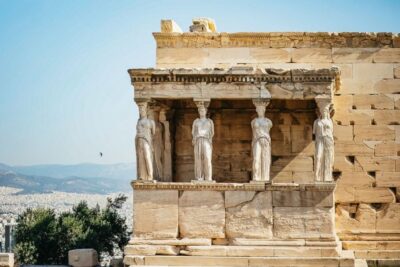
Acropolis, Parthenon & Acropolis Museum Guided Tour
Read our review →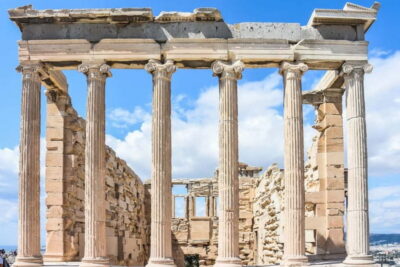
Acropolis, Parthenon & Acropolis Museum Guided Tour
Read our review →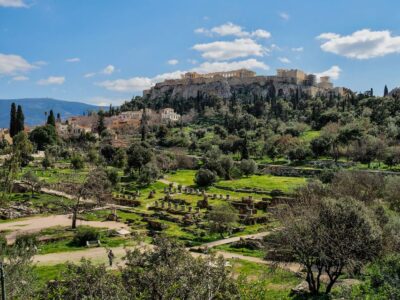

Acropolis monuments & Parthenon Walking Tour with Optional Acropolis Museum
Read our review →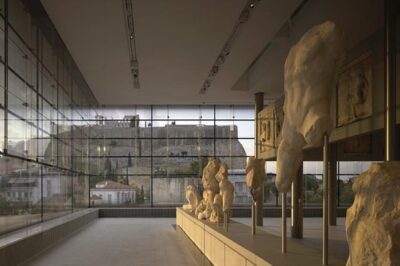
Athens All Included: Acropolis and Museum Guided Tour with Ticket
Read our review →Browse the lists this tour appears in