
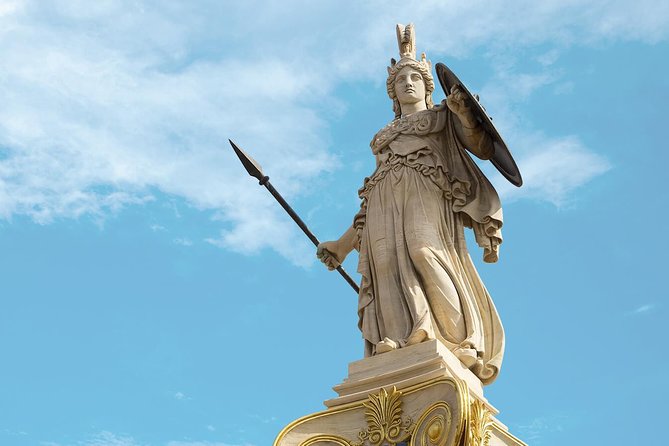
Reviewed · ACROPOLIS & ACROPOLIS MUSEUM TOURS
Athens & Acropolis Highlights: Greek Mythology Small-Group Tour
The clever idea behind this four-hour Athens tour is simple: ancient stones make more sense when you know the gods, rivalries, and legends attached to them. You begin at the Temple of Olympian Zeus, climb through the Acropolis monuments, then finish at the Ancient Agora and Temple of Hephaestus, with mythology used as a thread through the whole morning.
I like the way the tour connects famous ruins to stories you can remember, rather than treating the Acropolis as a list of names. I also like the small-group format, with a maximum of 15 people, and the guides’ use of printed images and visual aids. The main drawback is that entry tickets cost extra, and the route includes a steep climb, stairs, uneven ground, and plenty of sun.
Key points to know before booking
- Mythology gives the ruins a human story: Learn how Athena, Zeus, Dionysus, Nike, and Hephaestus relate to the places you see.
- The route covers Athens’ essential ancient sites: You visit the Acropolis, Theatre of Dionysus, Ancient Agora, and Temple of Hephaestus.
- The price is $54.42 before admission: Add the stated Acropolis and Agora fees if you need both tickets.
- The group is limited to 15 people: A smaller party makes it easier to ask questions and hear the guide.
- The morning timing can be a smart choice: One guide noted that crowds had grown sharply by the time the group left the Acropolis.
- Good footwear matters: Expect a hill, stairs, rough paving, and downhill walking as well as level paths.
Why the mythology theme works so well in Athens
Athens can overwhelm you at first. The Acropolis is famous, but the names come quickly: Propylaea, Athena Nike, Erechtheion, Parthenon. A guide who explains the gods and their roles gives you a set of mental hooks, so the monuments become easier to place.
The tour does not treat mythology as a separate subject. Instead, it links the stories to architecture, civic life, worship, warfare, theater, and trade. That balance is important. You hear about Athena as the city’s patron, but you also learn how the Acropolis functioned as a sanctuary and political symbol.
The strongest guiding style here appears to be conversational and visual. Guides such as Irene, Michael, Dani, Maria, Christina, Chrysanthi, and Alexandros are praised for combining stories with architecture and ancient daily life. Several guides used questions to keep the group involved, and some brought printed pictures showing how buildings may have looked in the past.
That approach suits you if Greek mythology is familiar from school but fuzzy around the edges. It also works if you know very little. Guides can explain the basic family tree of the gods, then add details about Athena’s protection of Athens, Nike’s victory symbolism, and Dionysus’s link to theater and wine.
A few other Athens mornings to price up
- Athens: Acropolis & up to 5 Archaeological Sites Combo Pass
★ 4.4 · 12,619 reviews - Athens: Acropolis Ticket with Optional Audio or Live Guide
★ 4.2 · 11,055 reviews - Athens: Acropolis, Parthenon & Acropolis Museum Guided Tour
★ 4.8 · 9,316 reviews
Starting at Hadrian’s Arch and the Temple of Olympian Zeus
The meeting point is the Arch of Hadrian, at Leoforos Vasilisis Amalias 50, near the Temple of Olympian Zeus. This is a practical central location, close to public transportation and easy to pair with other sightseeing in central Athens.
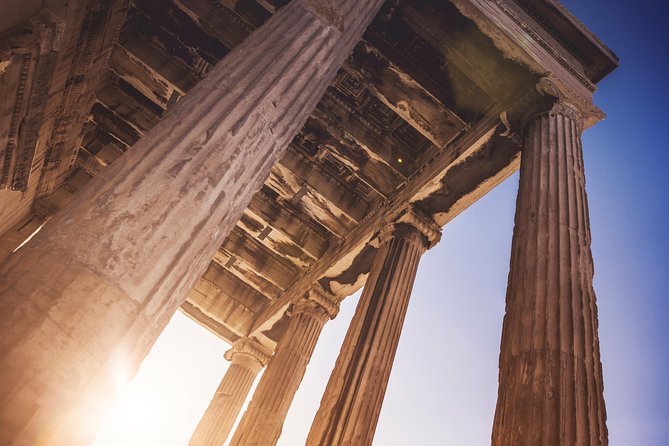
The first stop is the colossal Temple of Olympian Zeus, also called the Olympeion. The tour discusses the temple from outside, so do not expect an included entry visit here. You get about 15 minutes to look at the remaining columns and hear how this enormous sanctuary was connected with Zeus.
The scale is the point. Even in ruins, the columns show the ambition behind the project. The temple occupied a major position between the Acropolis and the Ilissos River, and its long construction story helps explain why ancient Athens was not built in a single burst.
I like beginning here because it eases you into the subject before the serious climb. You start with Zeus, the senior god, then move toward Athena’s hilltop sanctuary. It gives the morning a clear story rather than dropping you immediately into the crowds at the Acropolis entrance.
Climbing through the Theatre of Dionysus
The Acropolis portion lasts about an hour and a half, with several named stops along the way. The climb is not extreme for most people who can manage stairs, but it is steep in places and the stone can be uneven. Wear firm walking shoes, carry water, and bring a hat on hot days.
The Theatre of Dionysus is one of the most memorable stops because it connects mythology to performance. Dionysus was linked with wine and the grape harvest, and the theater became the first major theater founded in Athens. The works of Aeschylus, Sophocles, Euripides, and Aristophanes were first performed here.
You get about 15 minutes at the theater. That is enough for an explanation and a look at the seating area, though not enough for an extended archaeological study. The value comes from understanding that theater was not simply entertainment. It was part of religious and civic life.
Several guides are praised for pacing the climb in short sections. Michael, in particular, is described as stopping often to explain points of interest, while Chrysanthi made room for shade and water breaks. Those small choices matter when the heat rises or when someone in the group needs a moment.
Athena Nike, the Erechtheion, and the Parthenon
The Temple of Athena Nike receives about 10 minutes. It is a small temple compared with the Parthenon, but its position near the entrance makes it easy to miss without a guide’s help.
Athena Nike combined Athena with Nike, the goddess of victory. The story that the statue had no wings so victory would never leave Athens is the kind of detail that makes the compact temple memorable. It also shows how closely religion and military hopes were tied together in ancient Athens.
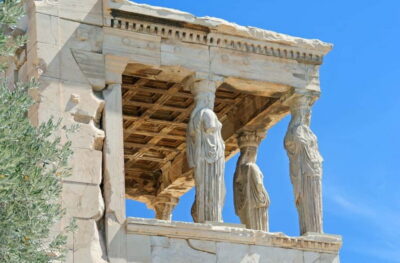
Next comes the Erechtheion, another 10-minute stop. This temple had an unusual shape and was built to house the ancient wooden cult statue of Athena. It also helped honor the city at the height of its power.
The Erechtheion is often more rewarding when you hear why it was built differently from the Parthenon. The site held several sacred associations, and the building had to accommodate more than one religious purpose. Your guide can help you look beyond the famous Caryatid figures and notice the building’s odd angles and layered meaning.
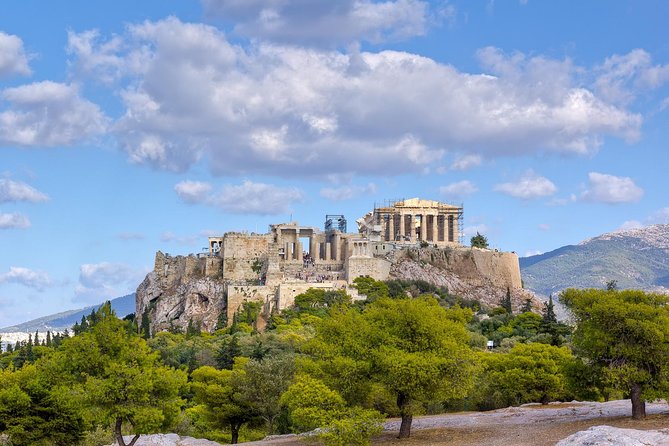
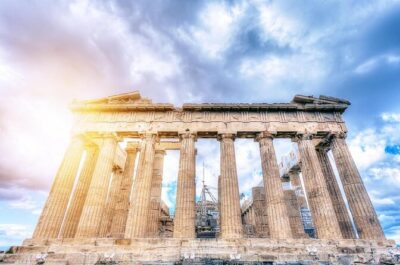
The Parthenon gets about 20 minutes. You will not have the place to yourself, and a four-hour tour cannot cover every architectural detail. Still, this is enough time for the main explanation, photos, questions, and a close look at the monument’s scale.
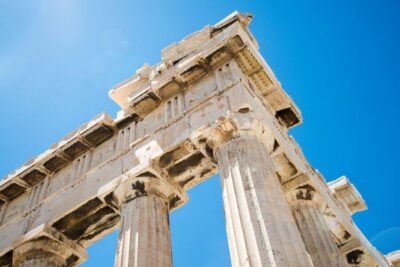
The Parthenon was built in the mid-fifth century BCE for Athena Parthenos, Athena in her role as the virgin goddess. Its design is associated with the Doric order, the simplest of the three Classical Greek architectural orders. A good guide can explain why a building that looks so straight and solid includes subtle design choices intended to make it appear balanced from a distance.
This is also where the visual aids help. Seeing a reconstruction image beside the surviving structure can make the missing roof sculpture, painted details, and former interior easier to picture. The tour is not a replacement for a full architectural lecture, but it gives you a useful framework for exploring on your own afterward.
Same island, an entirely different sort of day:
- Athens: Cape Sounion & Poseidon Temple Sunset Half-Day Trip
★ 4.8 · 8,241 reviews - Athens: Acropolis and Parthenon Guided Walking Tour
★ 4.6 · 5,882 reviews - All Day Cruise -3 Islands to Agistri,Moni, Aegina with lunch and drinks included
★ 5.0 · 4,958 reviews - Athens, Piraeus, and Coastline: Blue Hop-On Hop-Off Bus
★ 3.9 · 4,849 reviews
What to expect inside the Acropolis grounds
Acropolis admission is not included in the $54.42 tour price. The stated admission fee for the Acropolis is €30 per person for the two-hour and four-hour options, and the company can pre-purchase tickets if you request it.
Keep your entry plans clear. The tour meets outside, but the actual visit involves security, timed access rules, crowds, and moving as a group through a busy archaeological site. Big bags, backpacks, and strollers are not allowed at the Acropolis and should not be brought along.
The group limit is 15 people, which is a reasonable size for a site where guides must avoid blocking paths. Still, a full group can spread out on stairs or around viewpoints. One isolated account described difficulty keeping everyone together, so I would pay attention to the guide’s meeting instructions and stay close when the group moves.
A microphone is not listed among the included features. One person found it hard to hear at times. If you have hearing difficulty, position yourself near the guide and speak up early if the group becomes scattered.
Walking downhill to the Ancient Agora
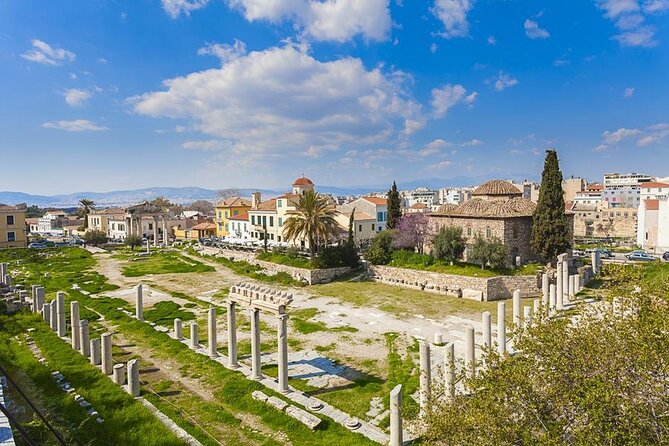
After the Acropolis, the route continues to the Ancient Agora. The contrast is useful. The Acropolis represents the sacred and symbolic side of Athens, while the Agora was the city’s working center.
The Agora served political, commercial, administrative, social, religious, cultural, and legal roles. It was where public life happened, not simply a market filled with stalls. Your guide can show you how the site connected ordinary business with law, debate, worship, and civic decision-making.
The visit lasts about an hour. That gives you time to walk among the ruins without rushing every few minutes. You should still expect uneven surfaces, and the group may pause at points where the guide can explain how the area functioned.
This stop is especially valuable if you want more than a photo of the Parthenon. Ancient Athens was not just temples and heroic myths. It was also a city of merchants, craftsmen, officials, judges, and citizens. The Agora helps put those people back into the picture.
The Ancient Agora admission fee is listed as €20 per person for the four-hour tour. It is also not included in the base price. If you need both tickets, the tour and stated admissions come to $54.42 plus €50 per person, before any exchange-rate difference or other booking costs.
Ending at the Temple of Hephaestus
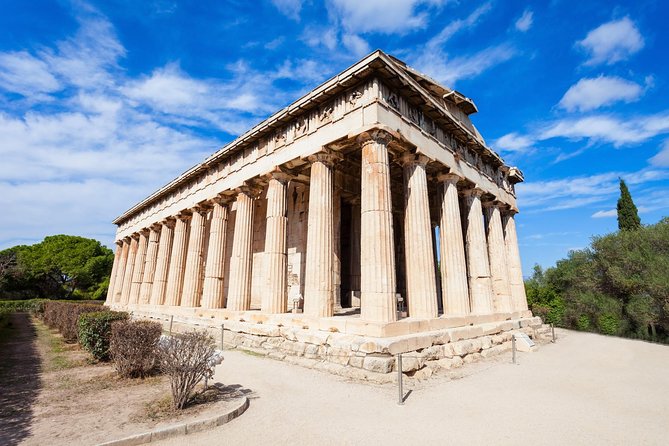
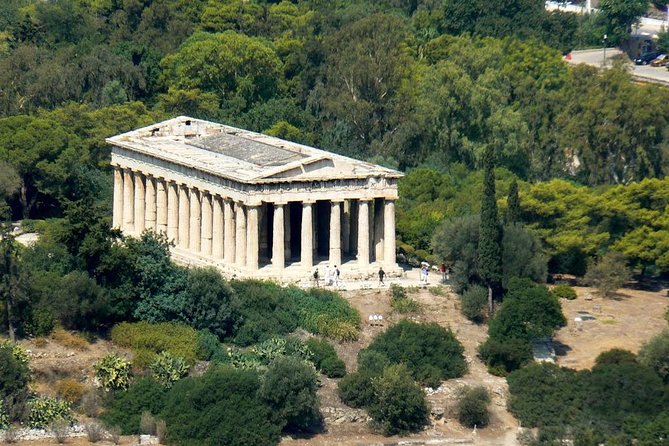
The final stop is the Temple of Hephaestus, described in the schedule as the Temple of Aries, but the detailed description clearly identifies Hephaestus. It is one of the best-preserved ancient temples in the world and a strong place to finish.
Hephaestus was the protector of metalworkers. Athena Ergani was associated with potters and small craft industries. That pairing tells you something about the Agora’s commercial life and the people who worked around it.
You get about 20 minutes here. Unlike the damaged Parthenon, the temple gives you a clearer sense of what an ancient Greek temple might have looked like as a complete building. Its columns, roofline, and overall form are easier to read.
The tour ends at the Ancient Agora of Athens, at Athens 105 55. That is convenient if you want to continue exploring the Agora independently, walk through the Plaka area, or stop for food nearby. There is no transfer back to your hotel or to the starting point.
Guides, group size, and the pace of the morning
The guide is the main reason to book this rather than simply buying site tickets. The best guides on this route do three jobs at once: explain the monuments, tell the myths clearly, and keep a walking group moving without making it feel like a military exercise.
Dani is praised for adding extra details to familiar gods and keeping the group together. Michael is noted for fun stories and frequent stops. Irene is described as a clear teacher who asked questions and broke difficult subjects into simple parts. Other guides, including Angie, Theo, Marika, Sophia, Demi, Kristina, and Alexandros, are praised for warmth, patience, and a good mix of mythology and history.
The guide names may vary by departure, so you should not book based on a promise of one specific person unless the operator confirms it. What you can reasonably expect is an English-speaking certified guide and a small group, with the possibility of a particularly personal experience during quieter periods.
The tour is listed as roughly four hours, but the walking is active. It includes uphill and downhill sections, stairs, and rough surfaces. Most people who can manage that level of walking can take part, but this is not a gentle, vehicle-based tour.
Is the $54.42 price good value?
At $54.42 per person, the base cost is fair for a guided half-day covering the Acropolis and Agora. The value is strongest if you want context, mythology, and help making sense of monuments that can otherwise blur together.
The final cost is higher because admission is separate. For the four-hour version, the stated Acropolis fee is €30 and the Ancient Agora fee is €20. You should compare the full amount with other guided options, not just the advertised tour price.
I still think the guide adds real value. You receive stories, site interpretation, a small-group setting, and a fun ancient Athens map. You also save yourself the trouble of working out the meaning of every ruined wall while a crowd moves around you.
The cost is less compelling if you already have strong archaeological knowledge, want to move at your own pace, or plan to spend several hours at each monument. In that case, a self-guided visit with a detailed book or audio guide may give you more control.
Timing, weather, and practical preparation
Morning is a sensible time for this route. The Acropolis can become much more crowded later, and the hill offers limited shade. You should bring water, sun protection, and shoes with dependable grip.
The tour requires good weather. If poor conditions cause a cancellation, you are offered another date or a full refund. You can cancel for a full refund up to 24 hours before the start time, but cancellations or changes within 24 hours are not refunded or accepted.
Bring an ID card or passport if you are under 25 and might qualify for a discount. Entry fees are non-refundable and non-exchangeable, so make sure your ticket plans and date are correct before committing.
The tour is offered in English and uses a mobile ticket. Confirmation normally arrives at booking, though bookings made within one hour of departure are confirmed as soon as possible, subject to availability.
Who should book this Athens tour?
I would choose this tour for a first visit to Athens, especially if you want to see the headline monuments but also understand how religion, politics, theater, trade, and myth fit together.
It is a good match for families with older children, couples, solo visitors who enjoy asking questions, and anyone who finds ancient sites easier to remember through stories. The mythology theme gives younger visitors something to follow, while the architectural and civic details keep the tour useful for adults.
I would think twice if you dislike group pacing, struggle with steep paths, or need a completely quiet visit. You should also allow extra time and money for the ticket process, and avoid bringing a large bag.
Should you book it?
Book it if you want the Acropolis and Agora explained by a lively guide rather than viewed as silent ruins. The strongest part is the blend of myth, architecture, and ancient daily life, with guides who generally keep the pace friendly and stop when the hill demands it.
Skip it if you prefer long independent visits, already know the sites well, or want admission included in the headline price. For most first-time visitors, though, the guide, small group, and clear route make this a practical way to meet ancient Athens in one well-filled morning.
FAQ
How long does the tour last?
The tour lasts approximately four hours.
Where does the tour begin?
It begins at Hadrian’s Arch, Leoforos Vasilisis Amalias 50, Athens 105 58, Greece.
Where does the tour end?
It ends at the Ancient Agora of Athens, Athens 105 55, Greece.
Are Acropolis tickets included?
No. Acropolis admission is not included. The stated fee is €30 per person for the two-hour and four-hour tour options.
Is Ancient Agora admission included?
No. Ancient Agora admission is not included. The stated fee for the four-hour tour is €20 per person.
Can the operator buy the entry tickets?
Yes. The operator can pre-purchase tickets if you request this.
How large is the group?
The tour has a maximum of 15 people.
What should I bring?
Bring water, a hat, and good walking shoes. Do not bring a stroller, backpack, or large bag to the Acropolis.
What is the cancellation policy?
You can cancel up to 24 hours before the start time for a full refund. Cancellations and changes made within 24 hours are not refunded or accepted.
Fresh on the Athens list
- Athens Airport Arrival Transfer to Hotels or Addresses in Athens★ 3.5 · 45 reviews
- Private Luxury Tour: Unveiling the Sacred Mysteries of Eleusis★ 5.0 · 45 reviews
- Luxury Catamaran Sunset Semi-Private & Greek Gastronomy in Athens★ 5.0 · 45 reviews
- From Athens: Aegina Island guided tour in a day★ 5.0 · 45 reviews
- Delphi, Thermopylae full day private tour from Athens★ 4.9 · 46 reviews
- From Athens: City & Corinth Guided Day Tour★ 4.8 · 46 reviews
- Acropolis Private Wine Tasting @ Finewine store★ 5.0 · 46 reviews
- Ancient Corinth Half-Day Private Tour from Athens★ 5.0 · 46 reviews
Acropolis & Acropolis Museum Tours, compared.
Acropolis & up to 5 Archaeological Sites Combo Pass
Read our review →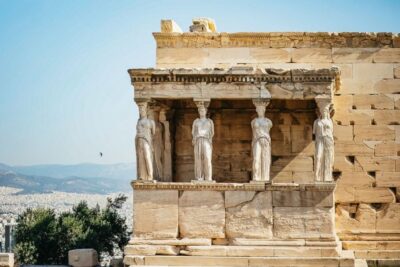
Acropolis, Parthenon & Acropolis Museum Guided Tour
Read our review →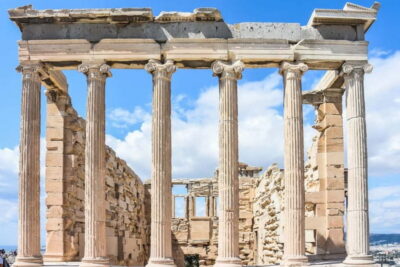
Acropolis, Parthenon & Acropolis Museum Guided Tour
Read our review →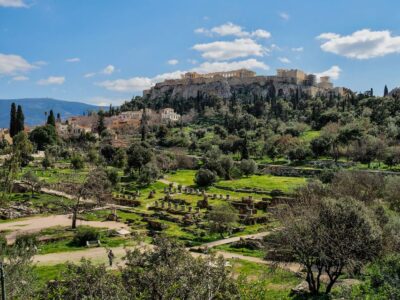
Acropolis monuments & Parthenon Walking Tour with Optional Acropolis Museum
Read our review →
Athens All Included: Acropolis and Museum Guided Tour with Ticket
Read our review →Browse the lists this tour appears in