
Reviewed · ACROPOLIS & ACROPOLIS MUSEUM TOURS
Ancient Athens tour: Acropolis, Parthenon and Acropolis Museum
The best part of this Athens tour is the link between the stone monuments above the city and the carved statues and friezes displayed below at the Acropolis Museum. You see the Parthenon in place, then examine related art in a cool, well-planned museum where small details are much easier to understand.
I like the early 9:00 a.m. start, which gives you a better chance of reaching the Acropolis before the worst heat and crowds. I also like the licensed guides, including archaeologists such as John and Efie, who add mythology, building details, and stories about ancient Athenian life. The main concern is the walk itself: slippery stone and strong sun can make the climb tiring, and entrance tickets may cost extra unless you choose the ticket-inclusive option.
Key points to know before you book
- The museum completes the Acropolis visit: The guided museum hour helps you connect the ruins with the original sculpture and decoration.
- The 9:00 a.m. start matters: Early timing can mean cooler conditions and fewer people than later in the day.
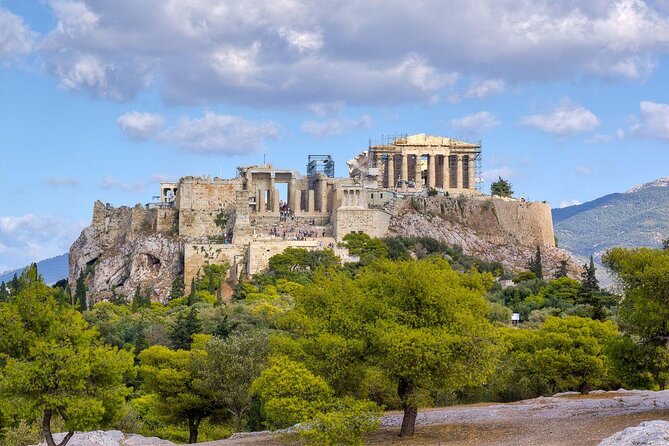
- You visit the major monuments in one morning: The route covers the Parthenon, Propylaea, Erechtheion, Theater of Dionysus, and Herod Atticus Odeon.
- The group is capped at 20 people: That is small enough for a guide to gather everyone and answer questions, though it is not a private tour.
- Bring water, sunscreen, and steady shoes: Bottled water is provided, but the uneven and sometimes slippery approach still demands care.
- Check the ticket option closely: The base price is $72.59 per person, but Acropolis and museum admission may be additional.
Why the Acropolis and museum belong in the same tour
Athens can make ancient history feel scattered. You see a column here, a broken statue there, and a hill covered with monuments that have been repaired, altered, and damaged over many centuries. Without context, the Acropolis can become a grand photo stop rather than a place you understand.
This tour gives you a useful before-and-after structure. Your guide explains the monuments on the hill, then leads you through the Acropolis Museum for about an hour. That second part matters because many of the original decorative elements are no longer on the Parthenon itself. In the museum, you can look closely at sculpture and architectural pieces that are difficult to study outdoors among crowds and bright light.
I especially value the museum visit for first-time visitors. The building focuses on objects found on the Acropolis and its surrounding slopes, covering periods from the Greek Bronze Age through Roman and Byzantine Athens. It also sits over archaeological remains from Roman and early Byzantine Athens, adding another layer to the visit.
The schedule gives you about two hours at the Acropolis and roughly one hour in the museum, with the remaining time used for moving between monuments and gathering the group. This is enough for a strong introduction, but not enough for an unhurried archaeological study. If you want long stretches alone with every gallery or extensive time for photographs, you may find the pace brisk.
More Museums in Athens
- Athens: Acropolis, Parthenon & Acropolis Museum Guided Tour
★ 4.8 · 9,316 reviews - Athens: Mythology of Delphi, Museum and Arachova Guided Tour
★ 4.6 · 4,008 reviews - Athens: Acropolis, Parthenon & Acropolis Museum Guided Tour
★ 4.8 · 3,579 reviews
Starting at Porinou 5 at 9:00 a.m.
The meeting point is Porinou 5 in Athens, near public transportation. The tour ends back at the same meeting point, which makes the morning easy to plan around. You can continue into the Plaka area afterward, and one guide specifically recommended Plaka restaurants and shops to the group.
The 9:00 a.m. departure is one of the practical strengths here. Athens can be very hot, and the Acropolis offers limited shade in key areas. Starting early does not guarantee quiet conditions, but it gives you a better chance of handling the climb before the sun becomes intense. Several guides also make water and shade breaks part of the morning when conditions require it.
This is a walking tour, not a sightseeing ride. You need a moderate level of physical fitness, and you should expect uneven stone underfoot. The approach can be slippery in places, particularly if you are focused on the views instead of your footing. Wear shoes with a dependable grip, apply sunscreen before you arrive, and carry water even though bottled drinking water is supplied.
The group size can reach 20 people. That is a reasonable compromise between the low cost of a group tour and the attention of a smaller outing. The supplied listening devices help you hear the guide in crowded areas, although one participant found that personal wired headphones worked better in some spots. If you have compatible wired headphones, bringing them may be useful.
Walking up the Acropolis
The Acropolis is the main event, and you spend about two hours exploring it with your guide. The route includes the major monuments, but the guide does more than point out names and dates. The strongest guides use the site to explain Greek mythology, political life, religious practice, construction, and the people who built these structures.
The hill is not a museum corridor. You move among uneven surfaces, open sky, crowds, and monuments that require you to look in several directions at once. A good guide makes a real difference here by choosing places to stop, gathering the group closely, and finding spots where you can hear without blocking other visitors.
The tour is designed to let you adjust the emphasis at each stop. You can hear about the major monuments and still have some time for photos, though the overall four-hour schedule limits how long you can linger. One guide was praised for not rushing the group, while another visitor felt the tour packed a great deal of information into a short period. Both reactions make sense: the tour covers a lot, and your experience will depend partly on the guide and the size of the crowd that morning.
The Parthenon and the Temple of Athena
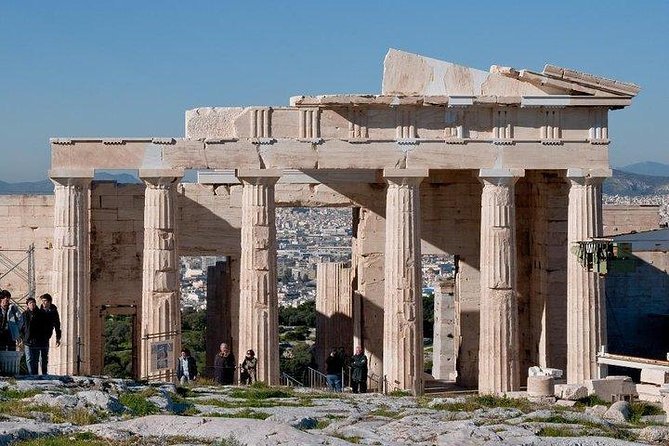
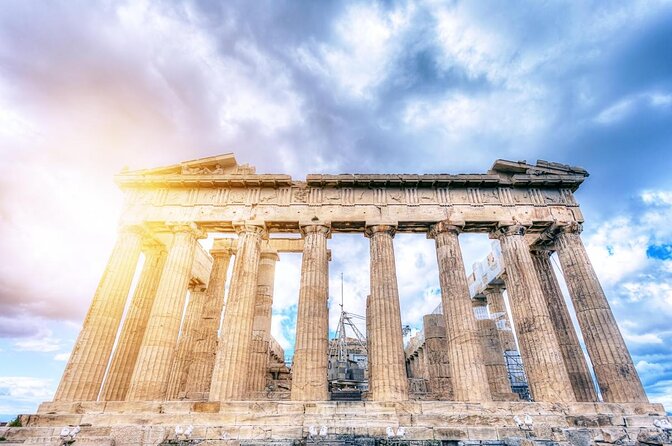
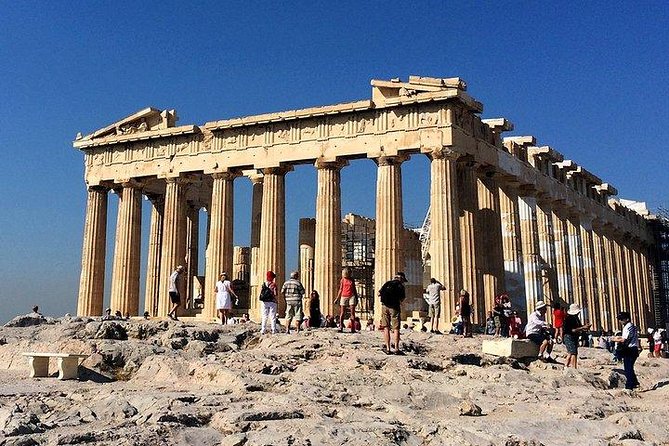
At the summit, the Parthenon needs little introduction. It was built as a temple to Athena, the city’s patron goddess, and remains the most recognizable monument in Athens. From close up, you can study its scale, damaged surfaces, columns, and the traces of a building that has passed through several religious and political uses.
The guide helps you see beyond the familiar postcard view. Details about the temple’s design, sculpture, mythology, and role in Athenian life give the ruins more meaning. Several guides were praised for explaining how the art and design connect to Greek stories and historical events.
You will also have views toward surrounding Athens and nearby ancient sites. Your guide may pause at useful photo points and explain what you are seeing, but do not expect empty foregrounds or unlimited time for pictures. The Acropolis is one of the city’s busiest sights, even outside the height of summer.
The Parthenon stop is listed as about 10 minutes within the wider Acropolis visit. That does not mean you simply arrive, take one photo, and leave. It reflects the way the tour divides attention among several monuments and gathering points. The guide gives the temple proper focus, then moves you onward so the rest of the hill is not overlooked.
A few other Athens mornings to price up
- Athens: Acropolis & up to 5 Archaeological Sites Combo Pass
★ 4.4 · 12,619 reviews - Athens: Acropolis Ticket with Optional Audio or Live Guide
★ 4.2 · 11,055 reviews - Athens: Acropolis and Parthenon Guided Walking Tour
★ 4.6 · 5,882 reviews - Athens: Acropolis Ticket with Audio Guide
★ 4.0 · 3,575 reviews
Theater of Dionysus and Herod Atticus Odeon
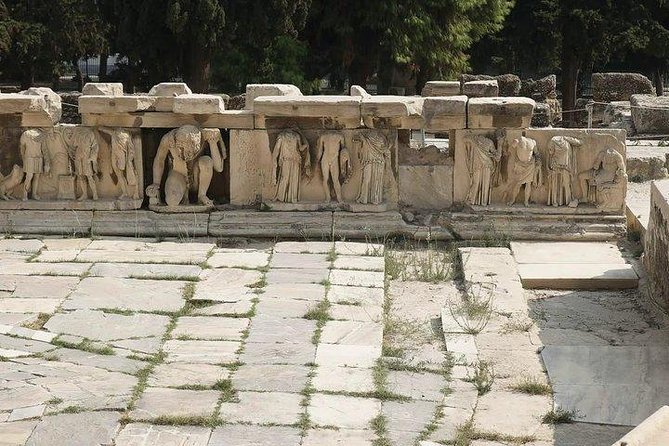
The Theater of Dionysus sits on the southern slope of the Acropolis and is tied to the origins of major Greek drama. This is where the tour shifts your attention from temples and religious art to public performance and civic life.
The stop is brief, about 10 minutes, but your guide can use that time to explain why the theater matters and how it fits into the broader ancient site. Because the theater is lower on the slope, the route also gives you a different angle on the Acropolis than the summit views.
Nearby, the Herod Atticus Odeon provides another look at ancient performance spaces. It is a Greek-Roman structure that is still used for performances. That continuing role helps connect the ancient stones to modern Athens without pretending the site is frozen in the past.
These stops are a good reason to choose a guided visit instead of walking straight to the Parthenon alone. The structures can look like piles of weathered stone if you do not know what they were for. The guide supplies the human purpose behind them: drama, public gatherings, music, ritual, and civic identity.
Propylaea and the Erechtheion
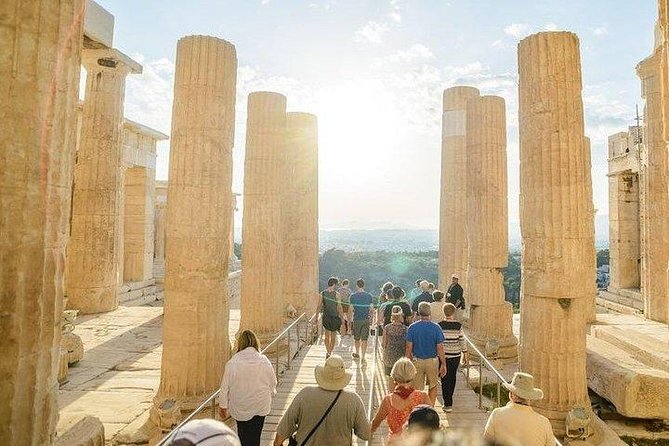
The Propylaea forms the grand entrance to the Acropolis. It was designed as an imposing gateway, and walking through it gives the hill a sense of ceremony before you reach the central monuments. Your guide can point out how the entrance shaped the experience of arriving at the sacred precinct.
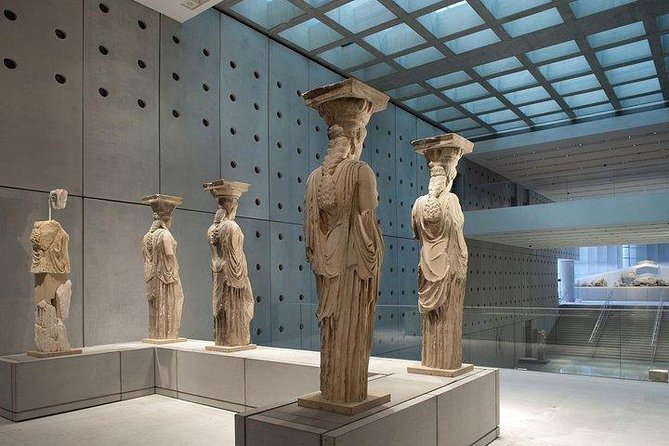
The Erechtheion is famous for its Caryatids, the sculpted female figures that serve as architectural supports. These statues are among the most memorable sights on the Acropolis, partly because they combine an elegant human form with a practical structural role.
The museum visit becomes especially useful here. Looking at sculpture and architectural details indoors helps you notice how carefully these works were made. The outdoor copies and remaining structures give you the setting, while the museum helps you study the art.
The guide-led format is valuable at both stops because space can be tight and crowds can gather quickly. Guides such as Lydia, Zeta, and Alexia were praised for moving groups efficiently while still finding places to explain details. That balance matters at a site where stopping in the wrong place can block other groups or leave your own group spread out.
One hour inside the Acropolis Museum
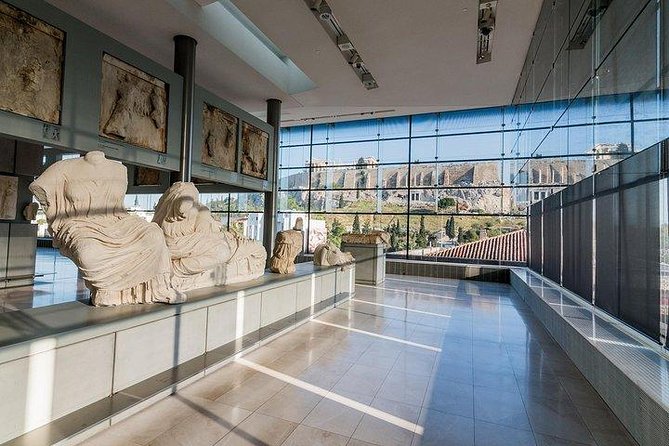
The Acropolis Museum is not a quick add-on. I would choose the museum option if your schedule allows it, because it gives the morning a clear purpose and helps you understand what the hill once looked like.
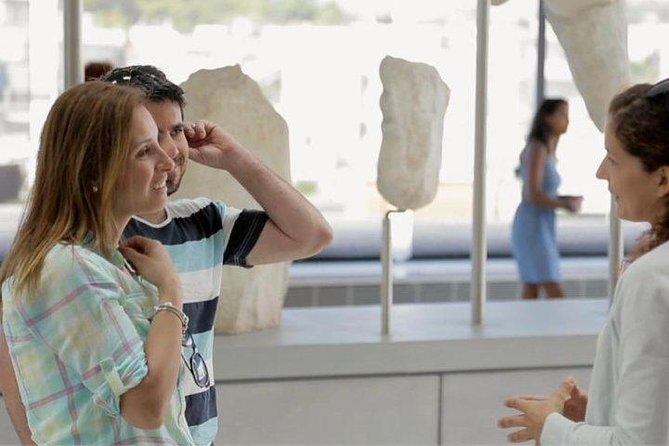
The museum displays objects discovered on the Acropolis and its slopes, with material ranging from the Bronze Age to Roman and Byzantine periods. You see sculpture, architectural decoration, and other archaeological finds in a setting where you can get close enough to study them properly.
Your guide leads you through the museum for about an hour. The best use of that time is not trying to see every display. Instead, listen for the links between the objects and the monuments you have just visited. The museum portion also provides welcome relief from the sun and hard stone underfoot.
After the guided hour, you may be encouraged to continue on your own. This is a useful arrangement. You receive an organized introduction, then have the chance to return to sections that interest you without keeping the entire group together.
The museum itself is built over Roman and early Byzantine remains. That setting adds another perspective on Athens, showing that the city’s story did not end with classical Greece. If you visit only the Acropolis, you miss much of the material that makes the hill easier to interpret.
What the guide adds to the experience
The guide is the tour’s greatest variable, but the overall standard appears strong. Guides named in the feedback include Giannas, Selena, Alexia Kolia, Lydia, Efie, Aphrodite, George, Demos, Zeta, Fey, Simon, Michael G, John, and Bernardos. Several are archaeologists or have formal experience teaching history.
The most praised qualities are clear English, humor, patience, strong pacing, and the ability to explain ancient life in a way that does not feel like a lecture. Bernardos was singled out for turning the monuments and artifacts into vivid stories. Alexia was praised for warmth and humor, while Lydia was careful about shade, hydration, and hearing comfort.
Those details matter more than a guide simply reciting dates. At the Acropolis, you need someone who can manage a moving group, find sensible stopping points, and adjust when crowds make the planned route harder. You also need someone who can explain why a damaged fragment or half-seen carving deserves your attention.
The listening devices are helpful, especially in crowded areas. Still, the experience is not completely private. A group of up to 20 people means you will sometimes wait for others to catch up or gather around the guide. If you want to set your own pace from start to finish, a self-guided visit may suit you better.
Price, tickets, and the real cost
The advertised cost is $72.59 per person. That price includes a licensed guide and the guided experience, but admission can be separate. The Acropolis entry fee is listed as €30 per person, and the museum fee as €20 per person, unless you select the option that includes tickets.
Read the booking choice carefully. If you arrive without tickets, you may buy them in cash from the guide at the meeting point, unless you have already purchased them. The ticket-inclusive option is likely worth considering if you prefer a simpler start and want the costs settled in advance.
At the full price, this is not the cheapest way to see the Acropolis. Its value comes from the guide, the structured route, the museum connection, and the help with crowds and timing. For a first visit, I think that is a fair trade, particularly if you want the historical meaning behind the monuments rather than only access to the hill.
The tour is also useful if you have limited time in Athens. In four hours, you cover the city’s essential ancient sights and return to the starting point. The tradeoff is flexibility. You will not have half a day to wander every corner of the Acropolis or museum at your own speed.
Who should book this four-hour morning tour?
I would recommend it most strongly to first-time visitors, cruise passengers with a limited day in Athens, and anyone who wants a clear introduction to classical Athens without spending hours planning the route.
It also suits people who enjoy history but do not want to manage every monument alone. The guides explain mythology, architecture, politics, and daily life, while the group format keeps the morning moving.
Families and older adults should think honestly about the walking conditions. The tour requires a moderate fitness level, and the stone can be slippery. The early start, water breaks, and shade stops help, but they do not remove the physical demands of the Acropolis.
Independent museum lovers may want more time than the schedule allows. You can continue inside after the guided portion, but the main tour gives you about an hour with the guide. If every gallery matters to you, plan another museum visit or return later.
People under 25 should bring a physical passport or ID to confirm eligibility for a reduced price. That small detail could affect your final cost, so do not rely only on a digital copy.
Should you book the Acropolis and museum tour?
Book it if you want the essential Athens monuments explained by a licensed English-speaking guide and you value seeing the Acropolis Museum in the same morning. The early start, moderate group size, water, listening devices, and carefully chosen route make the outing practical as well as informative.
I would choose the ticket-inclusive option if the extra cost is clear and convenient. I would also wear secure walking shoes, bring sunscreen, and arrive ready for heat and uneven stone.
Skip it if you want a completely private visit, long stretches of unstructured time, or a slow museum day. For most first-time visitors, though, the combination of the Parthenon, the lesser-known Acropolis monuments, and the museum gives you a far better understanding of Athens than a quick walk up the hill alone.
Free cancellation is available up to 24 hours before the start time, which gives you some flexibility when planning. With a 4.9 rating from 256 reviews and 98 percent of customers recommending it, the tour has earned a strong reputation, but the practical choice still comes down to your walking ability, ticket preference, and appetite for a guided morning.
FAQ
Where does the tour start?
The meeting point is Porinou 5, Athina 117 42, Greece, near public transportation.
What time does the tour begin?
The tour starts at 9:00 a.m.
How long does the experience last?
The tour lasts approximately four hours.
Does the tour end at the starting point?
Yes. The activity ends back at the meeting point.
Is the Acropolis entrance ticket included?
The Acropolis entrance ticket is not included unless you select the option that includes entrance tickets. The listed Acropolis fee is €30 per person.
Is the Acropolis Museum ticket included?
The museum ticket is included only if you select the appropriate ticket option. The listed museum fee is €20 per person.
What language is the tour offered in?
The tour is offered in English.
Is bottled water provided?
Yes. Bottled drinking water is provided during the experience.
How large is the tour group?
The tour has a maximum of 20 people.
What identification should people under 25 bring?
People under 25 should bring their physical passport or ID to confirm eligibility for a reduced price.
Can I cancel for a full refund?
Yes. You can cancel at least 24 hours before the local start time for a full refund. Cancellations or changes made less than 24 hours before the start time are not accepted for a refund.
Fresh on the Athens list
- Athens Airport Arrival Transfer to Hotels or Addresses in Athens★ 3.5 · 45 reviews
- Private Luxury Tour: Unveiling the Sacred Mysteries of Eleusis★ 5.0 · 45 reviews
- Luxury Catamaran Sunset Semi-Private & Greek Gastronomy in Athens★ 5.0 · 45 reviews
- From Athens: Aegina Island guided tour in a day★ 5.0 · 45 reviews
- Delphi, Thermopylae full day private tour from Athens★ 4.9 · 46 reviews
- From Athens: City & Corinth Guided Day Tour★ 4.8 · 46 reviews
- Acropolis Private Wine Tasting @ Finewine store★ 5.0 · 46 reviews
- Ancient Corinth Half-Day Private Tour from Athens★ 5.0 · 46 reviews
Acropolis & Acropolis Museum Tours, compared.

Acropolis & up to 5 Archaeological Sites Combo Pass
Read our review →

Acropolis, Parthenon & Acropolis Museum Guided Tour
Read our review →
Acropolis, Parthenon & Acropolis Museum Guided Tour
Read our review →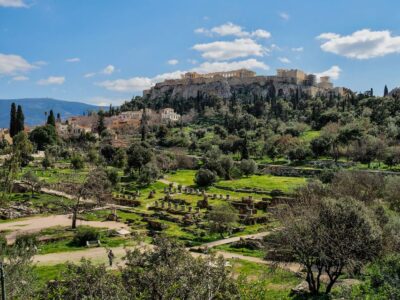

Acropolis monuments & Parthenon Walking Tour with Optional Acropolis Museum
Read our review →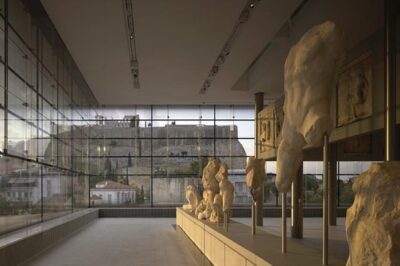
Athens All Included: Acropolis and Museum Guided Tour with Ticket
Read our review →Browse the lists this tour appears in