
Reviewed · ACROPOLIS & ACROPOLIS MUSEUM TOURS
Athens: Acropolis Beat the Crowds Afternoon Guided Tour
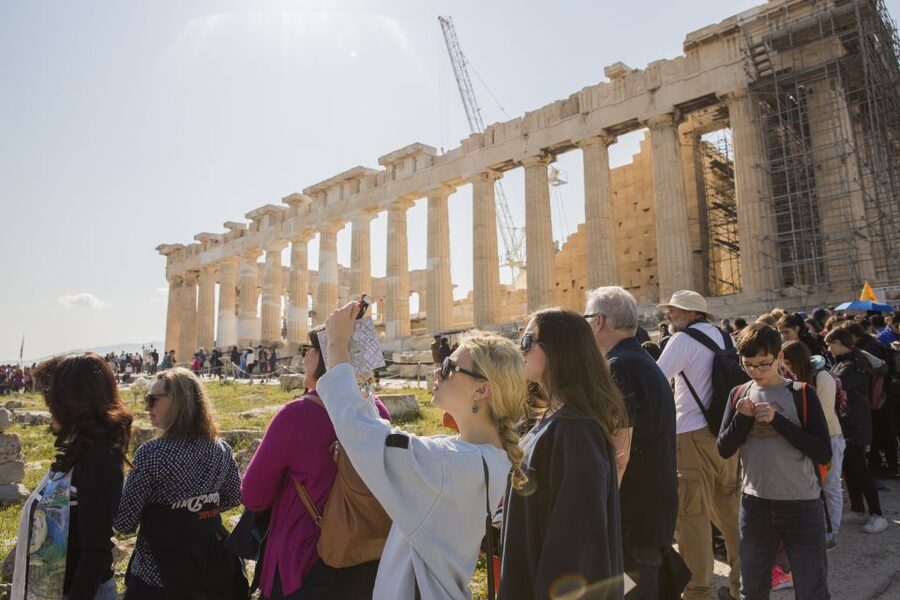
The best idea here is the timing. This afternoon Acropolis tour is built for the hours when the crowds begin to thin and the harshest summer heat may ease. You still get the major monuments, but the visit is designed to feel less rushed and less exposed than a hot morning push up the rock.
I like the small group limit of 15 people, which gives you a fair chance to hear the guide and ask questions. I also like the way the tour connects the stones to Greek myths, politics, language, and daily life, instead of treating the Acropolis as a set of photogenic ruins.
The main drawback is the physical effort. There are many steps, uneven surfaces, and little shade in some places, and the tour is not suitable for people with mobility impairments or children under four. Entry is also extra, though your guide can arrange tickets in advance.
Key points to know before you book
- Afternoon timing: A smart choice for reducing exposure to the midday heat and, at times, the heaviest crowds.
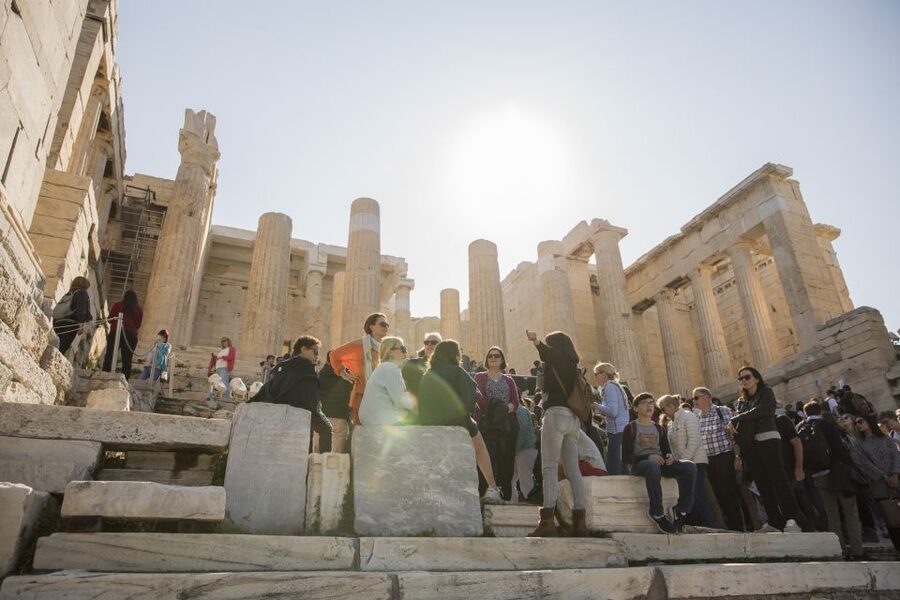
- Small group of up to 15: Easier to follow the guide and ask questions than on a large coach-style outing.
- Story-led guiding: Expect Greek mythology alongside Athens’ rise, democracy, politics, and the rebuilding of the Acropolis.
- Four major Acropolis stops: The Theatre of Dionysus, Temple of Athena Nike, Erechtheion, and Parthenon all receive guided attention.
- Two-hour format: Efficient and focused, but not designed for a slow, unhurried archaeological study.
- Bring only what you need: Backpacks, large bags, and baby strollers are not allowed at the Acropolis.
Why the afternoon can work so well
The Acropolis is Athens’ must-see sight, but it is not an easy place to visit casually. The rock catches the sun, the paths can be crowded, and the famous buildings are spread across a site that demands some uphill walking. Choosing a later tour gives you a better chance of dealing with those conditions comfortably.
The exact start time depends on availability, so check the schedule before you book. The important point is that this is not a dawn visit or a rushed stop between other morning activities. It is planned for the later part of the day, when the heat may be kinder and some early crowds have moved on.
I would still carry water and wear shoes with a solid grip. The afternoon does not guarantee an empty Acropolis, and Greek summer weather can remain hot well into the day. Still, timing is one of the few things you can control, and this tour makes good use of it.
The two-hour length is another practical strength. You can see the main monuments without giving the Acropolis an entire day, leaving time for the Acropolis Museum, Plaka, the Ancient Agora, or a long Greek dinner later. The tradeoff is that you will not have unlimited time to wander, sit, and examine every fallen column.
A few other Athens mornings to price up
- Athens: Acropolis & up to 5 Archaeological Sites Combo Pass
★ 4.4 · 12,619 reviews - Athens: Acropolis Ticket with Optional Audio or Live Guide
★ 4.2 · 11,055 reviews - Athens: Acropolis, Parthenon & Acropolis Museum Guided Tour
★ 4.8 · 9,316 reviews
Meeting under Hadrian’s Arch
The tour begins at the Arch of Hadrian, at Leoforos Vasilisis Amalias 50. Your guide waits beneath the arch with an Alternative Athens sign, making the meeting point relatively clear once you reach the gate.
This is a useful place to begin because Hadrian’s Arch gives you an immediate reminder that Athens was shaped by more than one great age. The arch marks the Roman emperor Hadrian’s connection with the city, while the Acropolis ahead belongs mainly to the much earlier world of classical Athens.
The walk to the Acropolis is listed as part of the activity, but no separate walking time is assigned. Plan to arrive early enough to find the arch and identify your guide without stress. The tour ends back at the same meeting point, so you do not need to arrange a separate pickup or work out a new endpoint.
English and French tours are available. The guide team has included Christina, Michael, and Alex, among others. The individual guide matters here because the tour depends heavily on storytelling, not just on pointing out buildings.
The Theatre of Dionysus and the birth of public performance
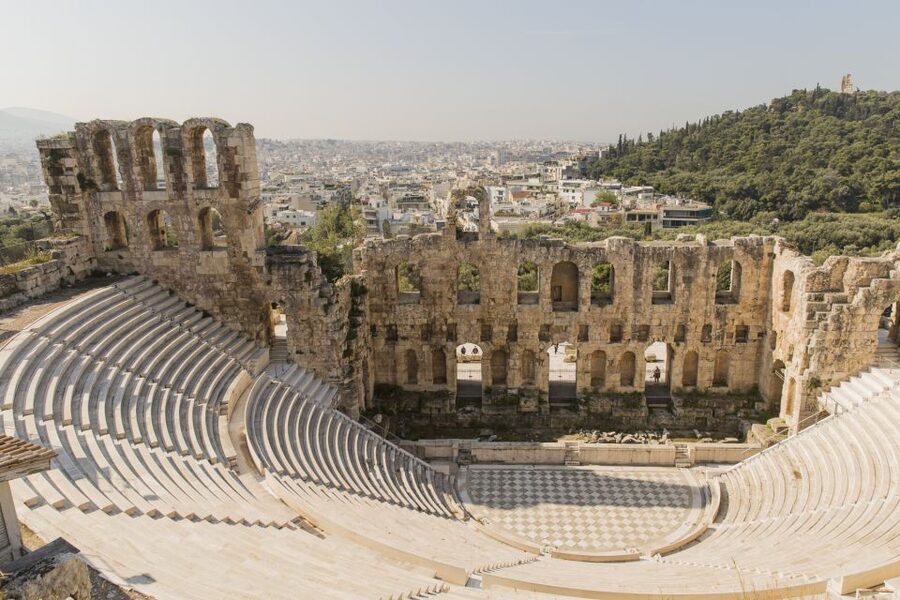
The first major stop is the Theatre of Dionysus, with about 15 minutes of guided explanation. This is where the tour begins to show that the Acropolis was not simply a religious hill. It was tied to drama, public gatherings, civic life, and the way Athenians thought about their society.
A short stop works well here as an introduction. You can begin to picture ancient Athens as a place where plays, religious festivals, political debate, and public identity were linked. The guide’s mythology stories also have a natural home at this point, since Greek drama often dealt with gods, heroes, pride, punishment, and difficult moral choices.
Do not expect a long theatrical history lesson. Fifteen minutes passes quickly, and the tour has several major sites still ahead. The benefit is that the theatre sets the stage for the larger story before you climb farther up the Acropolis.
Temple of Athena Nike, small size and big meaning
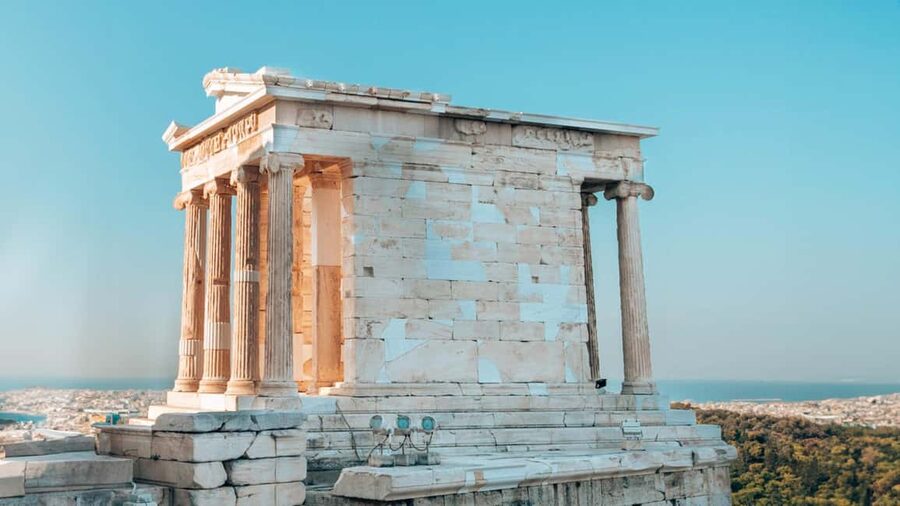
The Temple of Athena Nike receives another 15-minute guided stop. It is a smaller structure than the Parthenon, but its position near the entrance gives it special force. Athena Nike honors Athena in her role as a bringer of victory.
This is a good place to pay attention to the guide’s explanation rather than simply waiting for the famous Parthenon. The smaller temple helps you see how carefully the Acropolis was organized. Different buildings honored different aspects of the gods, and their placement carried meaning.
The approach to the upper site also gives the tour a natural sense of progress. You are moving from the theatre and lower slopes toward the formal entrance and temples above. Expect more stone underfoot and more climbing, so this is where comfortable footwear begins to matter.
Same island, an entirely different sort of day:
- Athens: Cape Sounion & Poseidon Temple Sunset Half-Day Trip
★ 4.8 · 8,241 reviews - Athens: Acropolis and Parthenon Guided Walking Tour
★ 4.6 · 5,882 reviews - All Day Cruise -3 Islands to Agistri,Moni, Aegina with lunch and drinks included
★ 5.0 · 4,958 reviews - Athens, Piraeus, and Coastline: Blue Hop-On Hop-Off Bus
★ 3.9 · 4,849 reviews
The Erechtheion and its unusual design
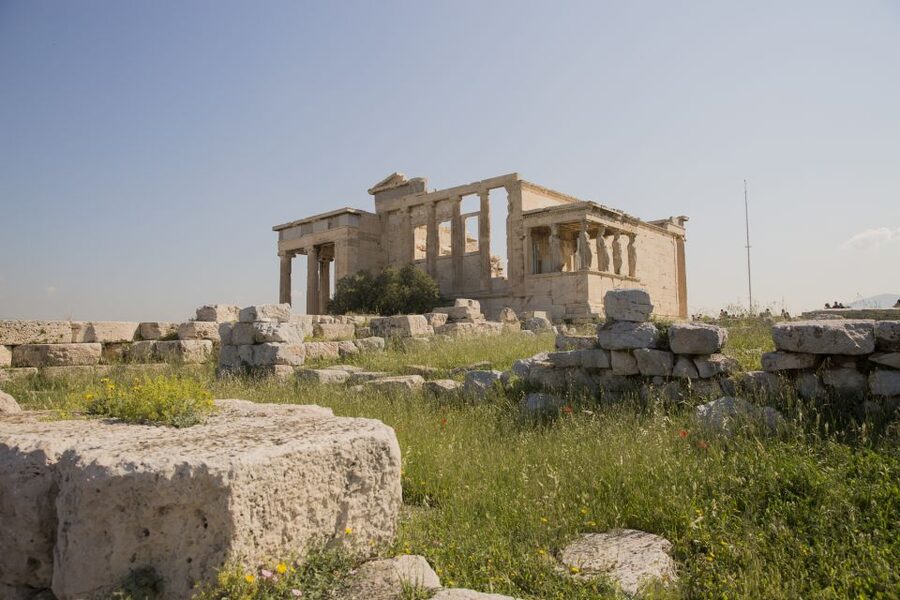
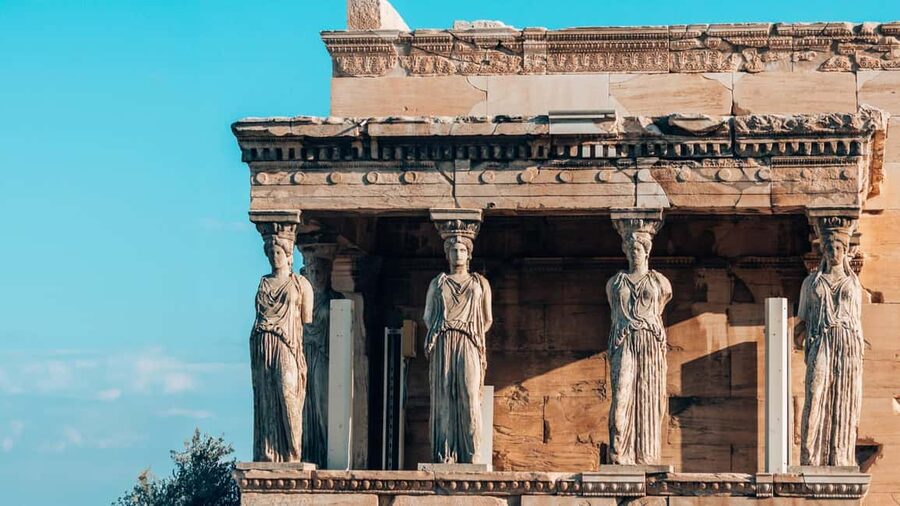
The Erechtheion gets about 15 minutes, enough for a focused look at one of the Acropolis’ most distinctive buildings. Its uneven plan and famous sculpted female figures make it immediately different from the cleaner, more symmetrical image many people carry of ancient Greek architecture.
The guide can use this stop to explain the mix of religious traditions connected with the Acropolis. Greek mythology is not decoration here. It helps explain why certain places mattered, why rival divine claims were remembered, and why the hill carried such weight for Athens.
The short timing means you may want to look carefully while the explanation is happening. If you are especially interested in architecture, sculpture, or restoration, you could later return to the subject at the Acropolis Museum. This tour gives you a clear introduction, not a specialist course.
Seventy-five minutes with the Parthenon

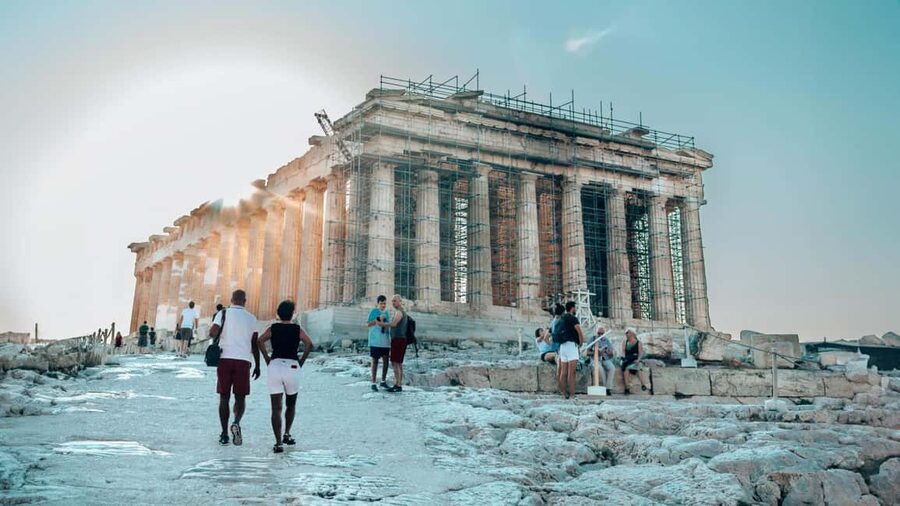
The Parthenon receives the longest stop, about 75 minutes, and that is the right balance. This is the building most people have come to see, but its importance goes beyond its familiar outline.
Your guide places the temple in the fifth century BC, when Athens was becoming one of the most important cities in the Greek world. You learn how the city’s political system developed, why democracy mattered, and how architecture could express civic confidence.
The Parthenon also carries a long story of construction, damage, rebuilding, and changing use. The site is not frozen in one perfect ancient moment. Its present condition reflects the passage of centuries, and the guide’s account of what was built and rebuilt helps you read the ruins with more care.
This is where the tour’s storytelling style matters most. A dry list of dates can make the Acropolis feel remote. A guide who links the buildings to mythology, language, politics, and the growth of Athens gives you a stronger sense of why these places still matter.
The long stop also gives you time to take in the views and examine details at your own pace, within the group’s schedule. You can listen, take photographs, and ask questions without the whole visit being consumed by a brief photo stop.
One practical warning: the Parthenon area is exposed, and there may be limited shade. Your guide may try to keep the group in shaded spots where possible, but you should still use sun protection and drink water before you arrive.
What the guide adds to the stones
A guided Acropolis visit is most useful when you want context. Without help, you can identify the Parthenon and perhaps the Erechtheion, but it is harder to understand the relationship among the monuments or the ideas behind them.
The guides on this tour use stories to connect the site. Christina has been praised for balancing historical detail with mythology, giving enough information without turning the visit into a flood of dates. Michael has been especially attentive to shade and group comfort, while Alex has connected the Acropolis to language, politics, and mythology.
Those details point to the kind of guiding you can expect: informed, personal, and story-led rather than purely scripted. Individual styles will vary, of course, but the small group gives the guide room to respond to questions and adjust the pace.
This is also a good tour for first-time visitors who want a clear framework. You leave with a better idea of how ancient Athens developed and why the fifth century BC is such an important period. If you already have a strong academic background in classical archaeology, the tour may feel introductory, but the setting still gives the material power.
Group size, pace, and physical demands

A maximum of 15 people is small enough to feel manageable without the cost of a private tour. You can usually stay close to the guide, hear the explanations, and avoid the stop-and-start confusion that comes with a much larger group.
The pace is active. The tour lasts two hours and includes uphill walking, steps, uneven ground, and time on the exposed Acropolis rock. The experience is not suitable for people with mobility impairments, and children under four are not accepted.
Baby strollers are not allowed. Backpacks and big bags are also prohibited at the Acropolis, so leave them behind rather than arriving with luggage you cannot take inside. Pack lightly, with only the essentials you need for two hours.
This format suits couples, solo visitors, families with older children, and anyone who wants structure at Athens’ most important sight. It is less suitable if you need frequent rests, want to move independently, or prefer to spend a whole morning studying every monument.
Is $51 a fair price?
At $51 per person, the tour sits in a reasonable range for a small-group guided visit, but you need to remember that entry fees are not included. Your guide can pre-purchase tickets if you ask, yet those fees are non-refundable and non-exchangeable.
The price pays for the certified guide, the small group, and a focused explanation of the Acropolis. It does not include food, drinks, transportation, or a private experience. You are paying for interpretation and organization, not a package that covers every expense.
I see the strongest value for first-time visitors. If you would otherwise walk around the Acropolis trying to identify each building and piece together the story later, the guide saves time and gives the site a clear shape.
The value is weaker for visitors who have already studied the Acropolis, plan to use another guide, or want to wander alone for several hours. In that case, the fixed two-hour schedule may feel restrictive, especially when entry costs are added.
Free cancellation is available up to 24 hours before the tour for a full refund, and you can reserve now and pay later. Those terms help if your Athens schedule is still changing.
What to bring and what to leave behind
You need sensible walking shoes, water, and protection from the sun. A hat and sunscreen are practical choices, especially because the later time of day may soften the heat but does not remove it.
Leave backpacks, large bags, and strollers at your accommodation. The Acropolis does not allow them, and bringing one can slow down your arrival.
Your guide provides a fun map of ancient Athens. It is a small inclusion, but a useful one. A map helps you place the Acropolis within the wider city and understand how the hill relates to ancient Athens beyond the famous temple.
Food and drinks are not included, so plan to eat before or after the tour. Since the activity ends back at Hadrian’s Arch, you can continue into central Athens without needing a transfer.
Who should book this Acropolis tour?
Book it if you want the major Acropolis buildings explained in plain language, prefer an afternoon schedule, and like the idea of mythology mixed with history and politics. The format is especially useful for a first visit, when the site can otherwise feel like a collection of impressive but disconnected ruins.
It also suits you if you want a group small enough for questions but not the expense of a private guide. The two-hour schedule leaves room for other Athens sights, and the return to the starting point keeps the logistics simple.
Think twice if you dislike walking on uneven ground, struggle with heat, or want complete freedom to linger. The Acropolis is demanding even with a guide, and this tour cannot remove the physical work of reaching the monuments.
FAQ
How long does the Acropolis tour last?
The tour lasts two hours. Starting times vary, so you need to check availability for the date you want.
What time of day does the tour take place?
It is an afternoon tour. The exact starting time depends on availability.
Where does the tour meet?
Meet under Hadrian’s Arch, also called Hadrian’s Gate, at Leoforos Vasilisis Amalias 50. Your guide will hold an Alternative Athens sign.
Where does the tour finish?
The activity ends back at the meeting point under Hadrian’s Arch.
Is the Acropolis entry fee included?
No. Entry fees are separate, though your guide can arrange or pre-purchase tickets if you request this.
What languages are available?
The live guided tour is available in English and French.
How large is the group?
The tour is limited to a maximum of 15 people.
Can I bring a stroller or backpack?
No. Baby strollers, backpacks, and big bags are not allowed at the Acropolis and should not be brought on the tour.
Can I cancel for a refund?
Yes. You can cancel up to 24 hours in advance for a full refund. Entry fees are non-refundable and non-exchangeable.
Should you book it?
I would book this tour if you want a well-paced introduction to the Acropolis without giving up an entire day. The afternoon timing, 15-person limit, and story-based guiding make it a practical choice, especially during hot months.
Just budget separately for admission, arrive ready to walk, and bring no large bag. If you can handle the steps and exposed paths, this tour gives you the essential monuments plus the larger story of how Athens shaped Greek culture and democracy.
Fresh on the Athens list
- Athens Airport Arrival Transfer to Hotels or Addresses in Athens★ 3.5 · 45 reviews
- Private Luxury Tour: Unveiling the Sacred Mysteries of Eleusis★ 5.0 · 45 reviews
- Luxury Catamaran Sunset Semi-Private & Greek Gastronomy in Athens★ 5.0 · 45 reviews
- From Athens: Aegina Island guided tour in a day★ 5.0 · 45 reviews
- Delphi, Thermopylae full day private tour from Athens★ 4.9 · 46 reviews
- From Athens: City & Corinth Guided Day Tour★ 4.8 · 46 reviews
- Acropolis Private Wine Tasting @ Finewine store★ 5.0 · 46 reviews
- Ancient Corinth Half-Day Private Tour from Athens★ 5.0 · 46 reviews
Acropolis & Acropolis Museum Tours, compared.

Acropolis & up to 5 Archaeological Sites Combo Pass
Read our review →

Acropolis, Parthenon & Acropolis Museum Guided Tour
Read our review →
Acropolis, Parthenon & Acropolis Museum Guided Tour
Read our review →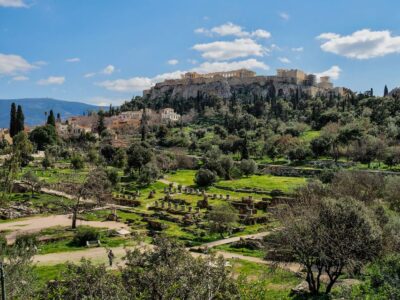

Acropolis monuments & Parthenon Walking Tour with Optional Acropolis Museum
Read our review →
Athens All Included: Acropolis and Museum Guided Tour with Ticket
Read our review →Browse the lists this tour appears in