
Reviewed · ACROPOLIS & ACROPOLIS MUSEUM TOURS
Acropolis & Acropolis Museum PRIVATE Expert led Guided Tour
The best reason to book this private Athens tour is simple: the Acropolis makes far more sense when someone explains what you are seeing. Instead of staring at weathered marble, you learn why Athena mattered, how the Parthenon worked as a temple, and how the museum’s statues and fragments connect to the hill above. The licensed archaeological guide is the main attraction.
I like the private format because you can ask questions without losing your guide in a crowd, and I like the way the tour links the outdoor monuments with the Acropolis Museum. Guides including Vicky, Lydia, Marina, Elina, and Kalliope have been praised for clear explanations, good pacing, family-friendly storytelling, and knowing where to pause for shade or photos. You get history with a human voice, not just labels.
The main drawback is cost. At $163 per person, before admission tickets, this is a serious splurge for two people. It makes better financial sense for a family or group that wants one guide to shape the visit, and less sense if you only want a quick look at the Parthenon.
Key points to know before you book
- See two major Athens sights together: The tour combines the Acropolis and Acropolis Museum in roughly three hours, depending on the option selected.
- Learn the story behind the stones: Your guide explains mythology, architecture, ancient life, and the meaning of the museum’s key objects.
- Ask questions freely: This is a private tour for your group, with a pace that can be adjusted to your interests.
- Expect a thoughtful route: The Acropolis includes the Theater of Dionysus, Propylaea, Temple of Athena Nike, Parthenon, Erechtheion, and Odeon of Herodes Atticus.
- Plan for extra ticket costs: Admission is not included, though skip-the-line tickets can be arranged after booking if requested.
- Arrive ready to walk uphill: The route includes uneven ground, stairs, exposed areas, and steep sections, so it is not suitable for wheelchair users.
Why a private guide changes the Acropolis
The Acropolis is one of those places that can leave you impressed but confused. You see the Parthenon, take the required photos, and move on. A good guide turns the hill into a connected story.
This tour is led by a state-accredited licensed archaeological guide. That qualification matters here because the site combines architecture, religion, politics, sculpture, mythology, and centuries of reuse. You are not just hearing dates. You are learning how the monuments fit together and why the hill mattered to ancient Athens.
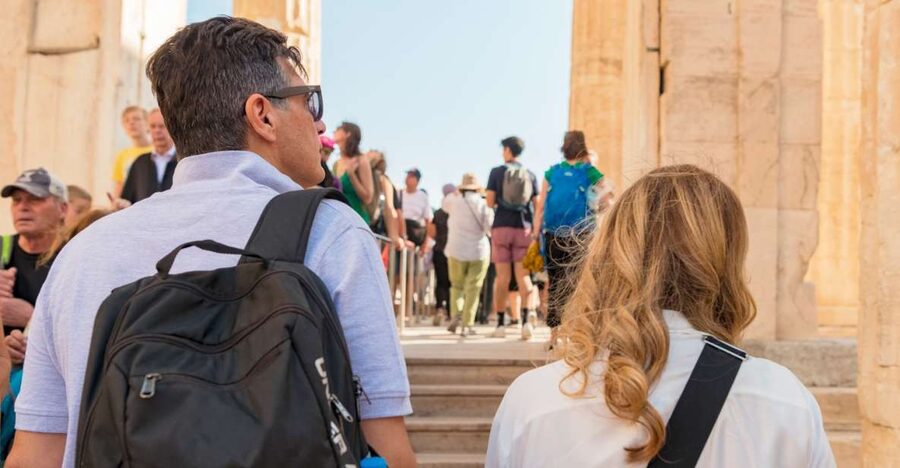
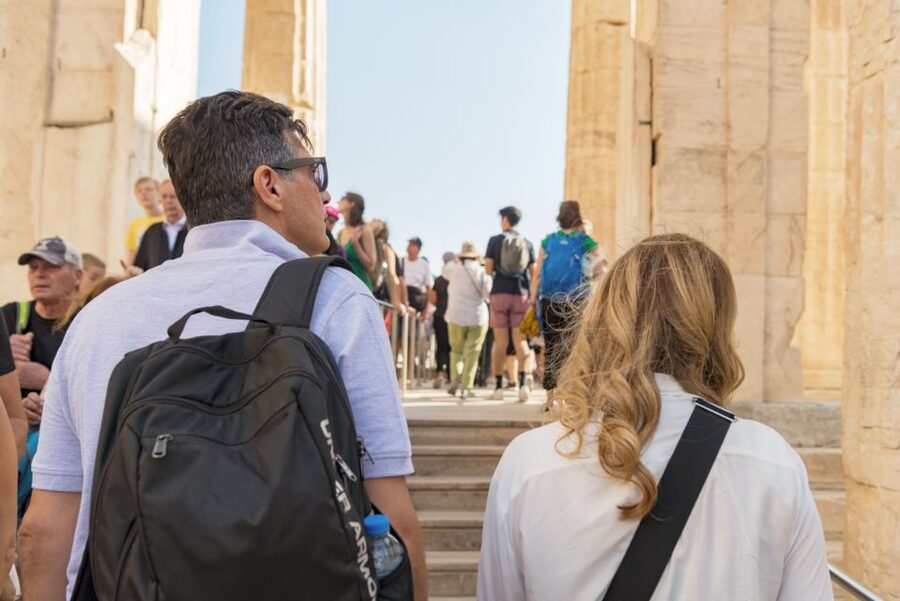
The private setting is especially useful at crowded viewpoints. You can stop to ask why the buildings were placed where they were, how much of the original decoration survives, or what later damage changed. Guides have also been praised for adjusting their pace, finding shade on hot routes, pointing out restrooms, helping with photos, and keeping groups of adults and children engaged.
The quality of any private tour depends on the individual guide, but the strongest experiences here seem to share the same traits: clear communication, warmth, strong command of Greek history and mythology, and an ability to explain without turning the walk into a dry lecture. Guides such as Marina, Vicky, Lydia, Lisa, Elina, Marisa, and Komissa have received especially warm praise for those qualities.
More Museums in Athens
- Athens: Acropolis, Parthenon & Acropolis Museum Guided Tour
★ 4.8 · 9,316 reviews - Athens: Mythology of Delphi, Museum and Arachova Guided Tour
★ 4.6 · 4,008 reviews - Athens: Acropolis, Parthenon & Acropolis Museum Guided Tour
★ 4.8 · 3,579 reviews
Meeting near the Acropolis Museum
The normal meeting point is at Makrigianni 7, near the Acropolis Museum. Your guide carries a sign with your name, which makes the first meeting fairly direct. If your hotel is within easy walking distance of the Acropolis, hotel meeting arrangements may also be possible, but hotel pickup and drop-off are not included as a standard service.
The location is sensible. You are already close to the pedestrian approaches to the Acropolis and the museum, so there is no need for a long transfer before the archaeology begins. I would still allow extra time to reach the meeting point, particularly if you are crossing central Athens on foot.
Your guide may begin on the Acropolis or in the museum. Starting in the museum can help you understand the statues and architectural pieces before seeing their original setting on the hill. Starting outdoors gives you the immediate thrill of the ancient monuments and saves the museum for a calmer second half. Ask about the order when you meet if you have a preference.
Walking through the Theater of Dionysus
The Theater of Dionysus is one of the first important stops. It is tied to the beginnings of Western theater and helps you picture ancient Athens as a place where drama was part of public and religious life.
Your guide spends about 15 minutes here, using the remains to explain how performances were connected to festivals honoring Dionysus. The most useful part is not simply hearing that the theater is ancient. It is understanding that plays associated with names such as Sophocles, Euripides, and Aristophanes were performed within this wider cultural setting.
This stop also gives you a helpful reminder: the Acropolis was not an isolated temple platform. It was part of a larger civic and religious center. If you are traveling with children, this is a good place for a guide to make the past feel active rather than remote, especially by talking about audiences, actors, competition, and public ceremony.
The Mycenaean walls and the Propylaea
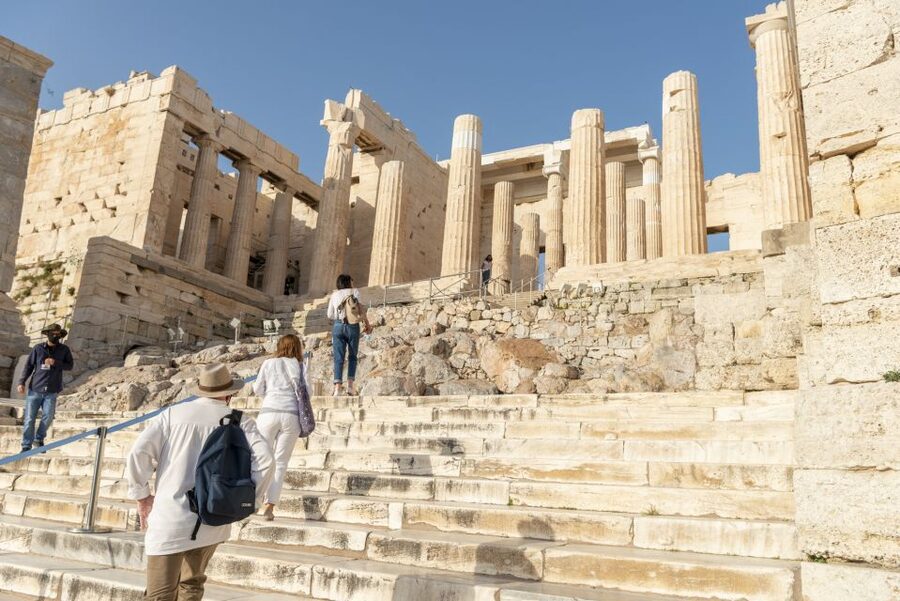
As you climb, your guide points out the massive defensive walls around the Acropolis. The five-meter-thick construction is important because it predates the classical buildings most people come to see. It connects the famous fifth-century BCE monuments with earlier Aegean cultures and shows that the hill had a long life before the age of Pericles.
The Propylaea is the grand entrance to the sacred precinct. It is easy to hurry through this gateway while looking toward the Parthenon, but the guide slows the moment down. You learn how the approach was designed to impress and how the Acropolis announced Athenian power to people arriving from across the ancient Mediterranean.
One memorable detail concerns the enormous statue of Athena that once stood on the hill. The bronze spear tip was said to catch the sunlight and could be seen from a great distance, including from the direction of Cape Sounion. This kind of detail is exactly what a guide adds: it gives scale and atmosphere to a monument that is now gone.
A few other Athens mornings to price up
- Athens: Acropolis & up to 5 Archaeological Sites Combo Pass
★ 4.4 · 12,619 reviews - Athens: Acropolis Ticket with Optional Audio or Live Guide
★ 4.2 · 11,055 reviews - Athens: Acropolis and Parthenon Guided Walking Tour
★ 4.6 · 5,882 reviews - Athens: Acropolis Ticket with Audio Guide
★ 4.0 · 3,575 reviews
The Temple of Athena Nike and the Parthenon
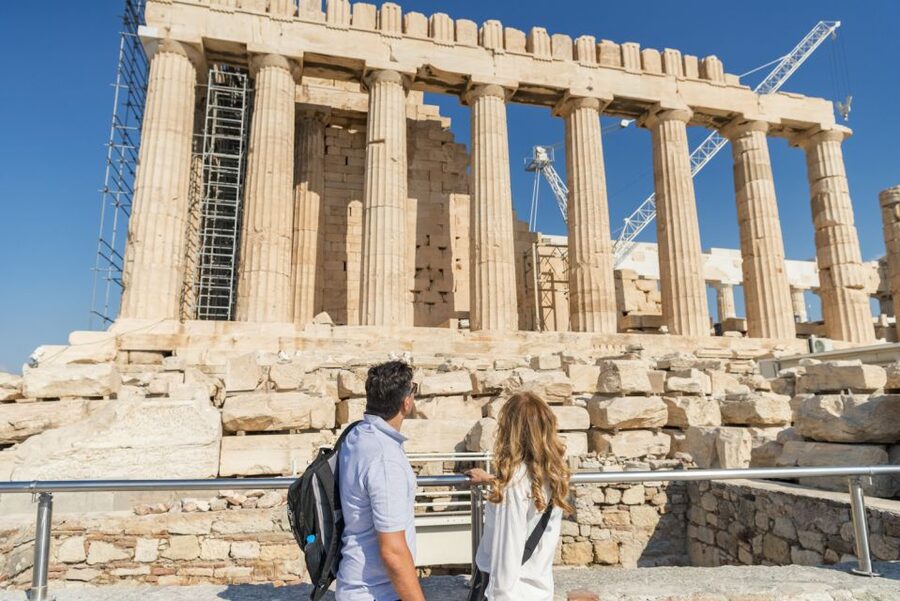
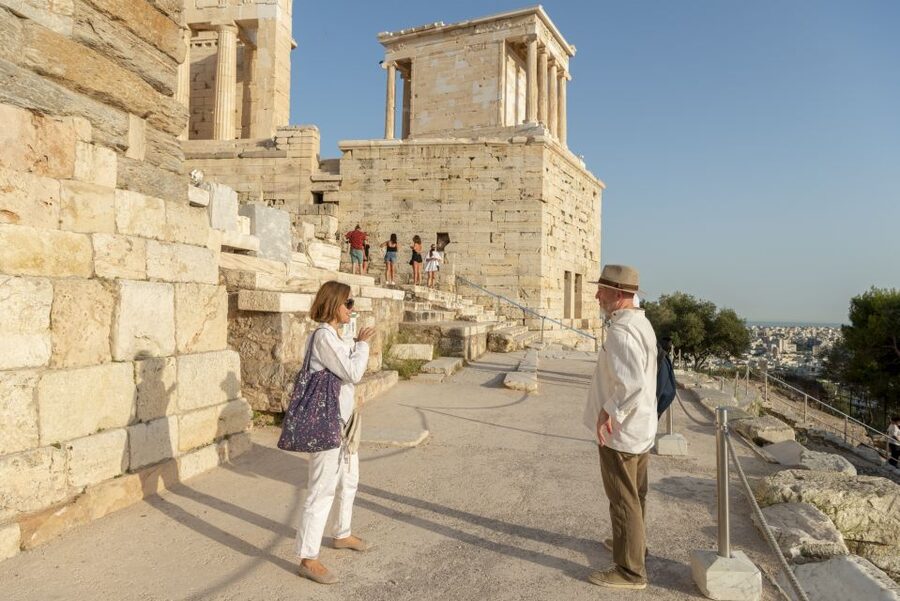
The small Temple of Athena Nike sits near the entrance, and its size can make it easy to overlook. Your guide explains its role and the meaning of Nike, the winged figure associated with victory. The stop is brief, but it helps you see that the Acropolis was filled with separate sacred buildings, each with its own purpose.
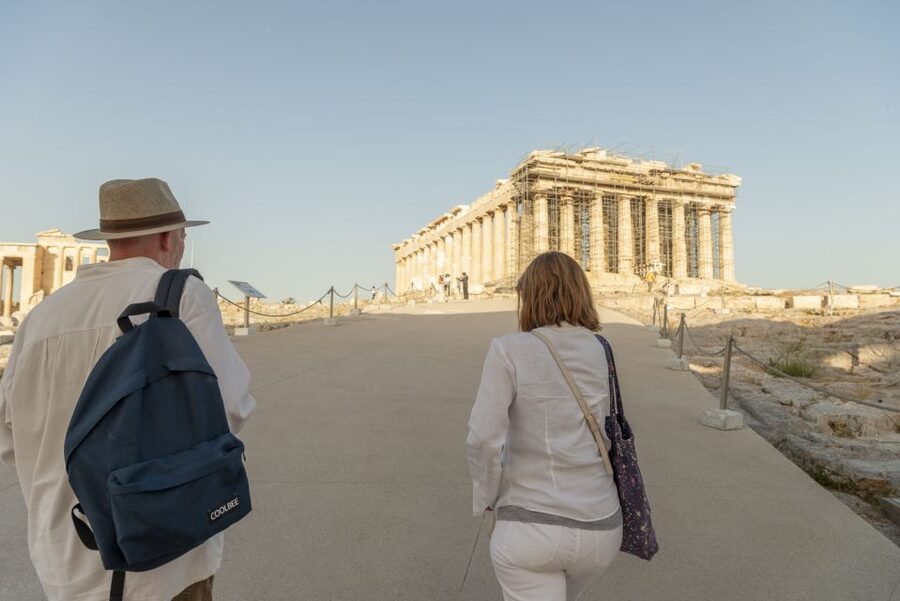
Then comes the Parthenon, the visual center of the visit. You will hear about its design, its dedication to Athena, and the artistic decisions that make the building appear balanced even though its lines are not as mechanically straight as they seem.
The guide can also explain what you are not seeing. The Parthenon has suffered from war, explosions, weather, pollution, looting, and the removal of sculptures. Much of its original decorative program is now scattered or preserved elsewhere, while the building itself remains an active conservation project.
The experience is strongest when you look beyond the postcard view. Ask your guide about the sculpted metopes, the frieze, the pediments, and the optical refinements in the architecture. You may find that the Parthenon becomes less like a single famous ruin and more like a carefully planned religious and political statement.
The views over Athens are another major reward. From the hill, your guide places the city and surrounding sites in context. You get a sense of the Acropolis as a working center of ancient Athens, not merely an isolated object for modern sightseeing.
The Erechtheion and the contest for Athens
The Erechtheion is one of the most distinctive buildings on the Acropolis, with its unusual shape and famous Caryatids. It is associated with several cults and myths, including the contest between Athena and Poseidon for control of Athens.
This is where a private guide can make a real difference. The mythology is not just a colorful story added after the architecture. It helps explain why different sacred traditions were preserved in one complex and why the building looks less orderly than the Parthenon.
Your guide may point out the Caryatids and explain the difference between a column and a sculpted female support. The museum visit later adds another layer, since original pieces and related works are protected indoors while replicas or conservation treatments may be visible on the hill.
The Erechtheion is also a good place to ask about ancient religious practice. The site held objects and traditions that mattered to Athenians for reasons beyond visual beauty. A short explanation can turn an unusual building into one of the most memorable stops of the day.
Descending past the Odeon of Herodes Atticus
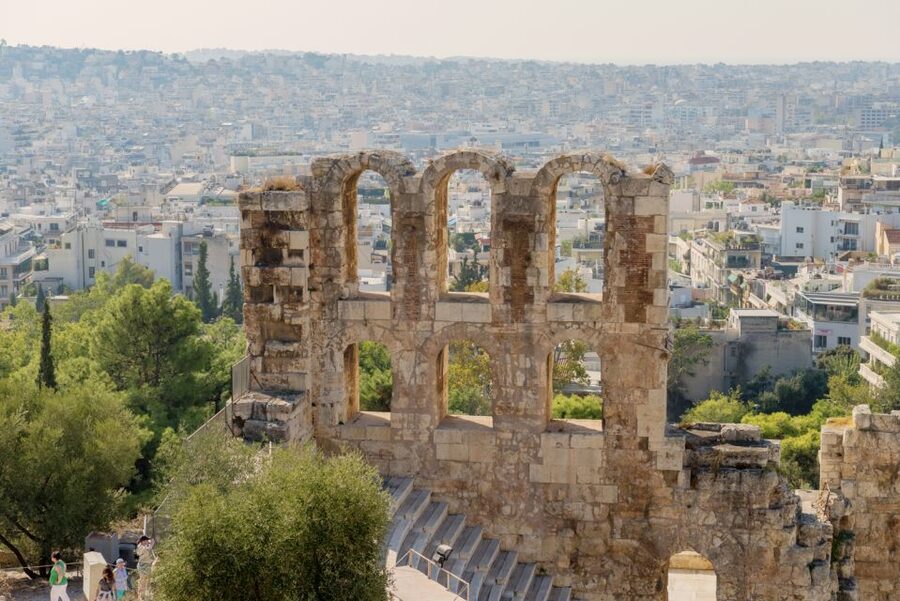
After the upper monuments, the route descends through the olive trees toward the Odeon of Herodes Atticus. The theater is still used for performances each summer, which gives you a direct connection between ancient architecture and modern Athens.
The structure feels different from the open-air Theater of Dionysus. Your guide explains its later date and purpose, then helps you picture how a theater can remain part of city life long after the society that built it has changed.
The descent is not difficult for most active walkers, but it is still part of an exposed archaeological site. Wear sturdy shoes and expect sun, stone, and uneven surfaces. In summer, an early start is valuable. One of the most useful guide skills praised in this experience is knowing when to pause in shade and how to keep the group moving without rushing.
Making sense of the Acropolis Museum
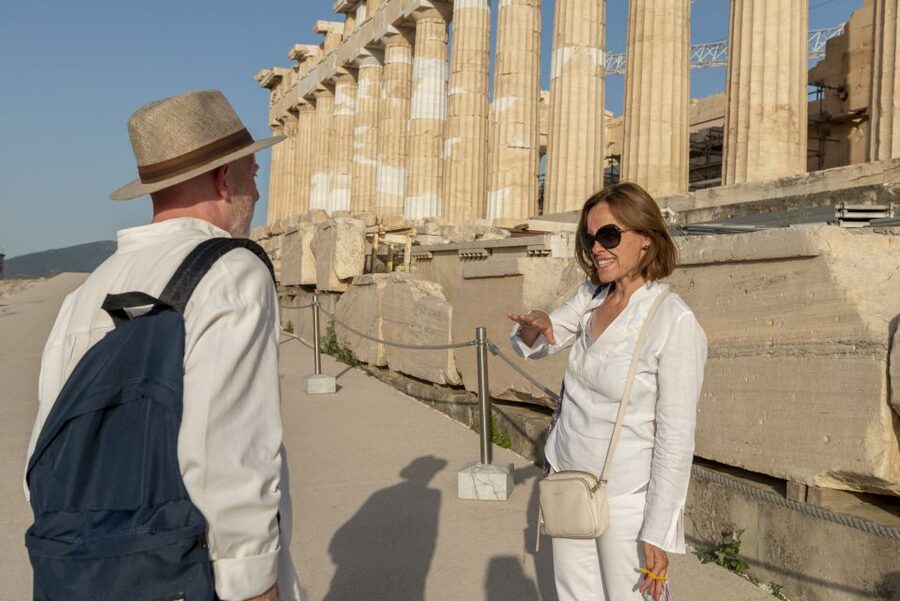
The Acropolis Museum is not a spare add-on. It is the part of the experience that helps explain what the hill once looked like and how its art was used.
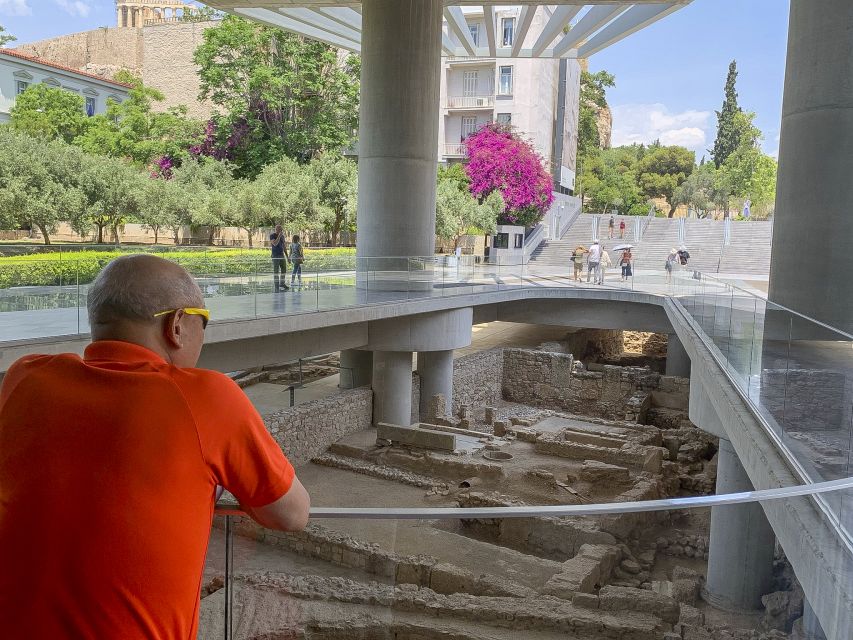
The modern museum holds important finds from the Acropolis and presents them with models, videos, and interactive displays. Your guide selects the essential rooms and objects, then connects them to the temples you have just seen, or are about to see if the museum comes first.
I particularly like this pairing because outdoor ruins can leave gaps in your understanding. A surviving statue, a fragment of a frieze, or a model of an earlier building can show details that weather and time have erased from the hill. The museum gives you faces, colors, decoration, and evidence of ancient craftsmanship.
A strong guide also explains ancient life beyond the famous names. You can ask about religion, civic identity, artistic technique, and how the museum protects objects that cannot remain outside. Several guides have been praised for answering questions in plain language and for keeping the museum from becoming a parade of labels.
Allow about 90 minutes for the guided museum portion when booking the full option. That is enough time for the major highlights, but not enough for every display. If you are an art specialist or a serious archaeology fan, you may want to stay after the guide finishes and explore independently.
How the timing works
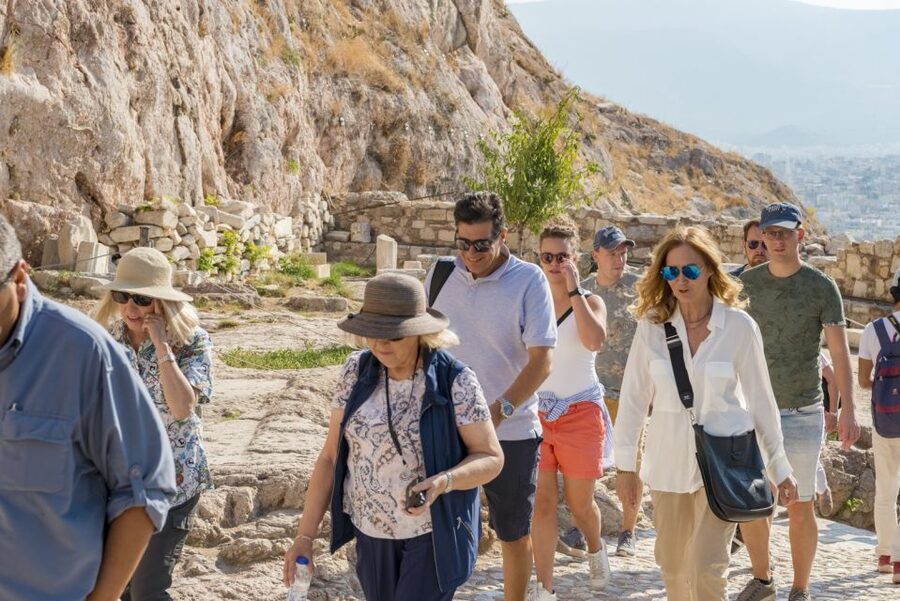
The full Acropolis and museum experience is advertised as lasting about three hours, while shorter options can run about 1.5 hours. The detailed route includes approximately 1.5 hours at the Acropolis, followed by short explanations at the main monuments, and about 1.5 hours in the museum.
The exact order and timing can change. A private tour gives the guide room to adjust the pace, but it cannot make a three-hour visit feel like a full day at both sites. If you want long museum reading time, extensive photography, or a leisurely climb, plan to remain after the official tour.
Some arrangements end inside the Acropolis so you can stay longer for views and photos. Other versions may finish toward the Ancient Agora, especially when you select an Acropolis and Agora combination instead of the museum option. Confirm the selected version before paying, since the title covers several related choices.
Is $163 per person a fair price?
The price is $163 per person, and admission tickets are extra. The operator contacts you after booking to ask if you need skip-the-line tickets purchased for the proper time slot. Check those messages and reply clearly. If you buy your own tickets, the guide assumes you have the right tickets and time slots, and delays caused by unsuitable admission arrangements are not covered.
For a solo visitor, $163 can feel steep. For two people, it is still a luxury purchase. For four to seven people, the cost becomes easier to justify because you are sharing one private guide rather than paying separate per-person prices for several small activities.
I see the value in three areas. First, you do not have to work out the meaning of every monument alone. Second, your guide can shape explanations around your interests, age group, and questions. Third, the museum and Acropolis work better as one lesson than as two disconnected ticketed sights.
The price is less convincing if you are satisfied with a short visit, already have strong background knowledge, or plan to return several times. In that case, an independent visit plus a good guidebook may be enough. You are paying here for interpretation, personal attention, and smoother navigation, not just entry to the ruins.
Who will get the most from this tour?
This is a strong match for first-time visitors who want the Acropolis to have meaning beyond its famous silhouette. It also suits families, since guides such as Lydia have been praised for keeping children involved, and larger family groups that would otherwise struggle to hear a guide.
It works well for older adults who want a controlled pace and for visitors who value help with shade, rest stops, photos, and site navigation. One group specifically appreciated a guide’s patience when a member had medical issues, though the tour remains unsuitable for wheelchair users.
History and art fans will appreciate the licensed archaeological background, while casual sightseers benefit from the storytelling. You do not need specialist knowledge. The best guides pitch the content so that serious questions and simple questions are both welcome.
Practical details that matter
Admission is not included. Skip-the-line tickets may be arranged after booking, but you need to respond to the operator’s message. Do not assume that the $163 price covers entry.
The tour is private and available in English, German, Italian, or Greek. Pets are not allowed. Cancellation is free up to 24 hours before the start, and a reserve-now, pay-later option helps if your Athens schedule is still shifting.
Wear shoes suited to stone paths and stairs, and bring water and sun protection. The supplied details do not promise a particular early start, but several strong experiences involved arriving before the site grew crowded. If you have flexibility, ask for an early time and confirm it in advance.
Should you book it?
Book this tour if you want the Acropolis and museum explained as one connected story, especially if you are traveling with family or a group that can share the private cost. The guide’s ability to answer questions, adjust the pace, find better photo positions, and connect art to architecture is the real benefit.
Skip it if your main goal is a quick photo of the Parthenon or if the added ticket cost pushes your Athens budget too far. For everyone else, this is a well-focused way to understand the city’s most important ancient site without having to assemble the pieces on your own.
FAQ
What does the private Acropolis tour include?
It includes a private tour with a licensed archaeological guide. The full option combines the Acropolis and Acropolis Museum, while related options may focus on the Acropolis alone or pair it with the Ancient Agora.
Are admission tickets included in the $163 price?
No. Admission tickets and entry fees are extra. Skip-the-line tickets can be purchased on request after booking.
How long does the experience last?
The available options last about 1.5 to 3 hours. The full Acropolis and museum route is generally around three hours.
Where do I meet the guide?
The standard meeting point is Makrigianni 7, Athens 117 42, near the Acropolis Museum. Your guide carries a sign with your name.
Can the guide meet me at my hotel?
Hotel meeting may be possible if your hotel is within an easy walk of the Acropolis. Hotel pickup and drop-off are not included.
Which languages are available?
The tour is available in English, German, Italian, and Greek.
Is the tour suitable for wheelchair users?
No. The experience is listed as unsuitable for wheelchair users because the Acropolis route includes uneven and steep surfaces.
Can I stay at the Acropolis after the tour?
Your guide may finish inside the Acropolis, allowing you more time for views and photos. Confirm the finishing arrangement with your guide, since the endpoint can vary by option.
Fresh on the Athens list
- Athens Airport Arrival Transfer to Hotels or Addresses in Athens★ 3.5 · 45 reviews
- Private Luxury Tour: Unveiling the Sacred Mysteries of Eleusis★ 5.0 · 45 reviews
- Luxury Catamaran Sunset Semi-Private & Greek Gastronomy in Athens★ 5.0 · 45 reviews
- From Athens: Aegina Island guided tour in a day★ 5.0 · 45 reviews
- Delphi, Thermopylae full day private tour from Athens★ 4.9 · 46 reviews
- From Athens: City & Corinth Guided Day Tour★ 4.8 · 46 reviews
- Acropolis Private Wine Tasting @ Finewine store★ 5.0 · 46 reviews
- Ancient Corinth Half-Day Private Tour from Athens★ 5.0 · 46 reviews
Acropolis & Acropolis Museum Tours, compared.

Acropolis & up to 5 Archaeological Sites Combo Pass
Read our review →

Acropolis, Parthenon & Acropolis Museum Guided Tour
Read our review →
Acropolis, Parthenon & Acropolis Museum Guided Tour
Read our review →

Acropolis monuments & Parthenon Walking Tour with Optional Acropolis Museum
Read our review →
Athens All Included: Acropolis and Museum Guided Tour with Ticket
Read our review →Browse the lists this tour appears in