
Reviewed · ACROPOLIS & ACROPOLIS MUSEUM TOURS
Athens: Acropolis, Parthenon & Acropolis Museum Guided Tour
The best part of this Athens tour is the way it turns a hilltop full of weathered marble into a story you can follow. You move from the Theatre of Dionysus and the Odeon of Herodes Atticus to the Parthenon, with Greek gods, politics, art, and daily life tied to each stop.
I like the licensed guide and the chance to add the Acropolis Museum, where the sculptures and architectural pieces make much more sense after seeing the monuments outdoors. The walking pace also gets good attention, with regular stops on the climb for explanations and rests.
The main catch is cost. The $70 tour price covers the guide, but Acropolis admission costs another €30 per person, and the museum costs €10 to €20. You must also handle the uphill walking, sun, crowds, and uneven surfaces.
Key points at a glance
- A story-led climb: Follow the route from the Theatre of Dionysus to the Parthenon instead of trying to decode the ruins alone.
- Two useful tour choices: Book the Acropolis-only option for a shorter visit, or add the Acropolis Museum for a fuller understanding of the sculptures.
- Guides who suit families: Anna, Mariza, Christina, and Maria are praised for keeping children and teenagers involved.
- Strong language choice: Tours are offered in English, Italian, German, French, and Spanish.
- Extra ticket costs: The advertised price does not include the Acropolis or museum entrance fees.
- Easy central meeting point: Check in at the Athens Walks office at Porinou 5, near the Acropolis area, 15 minutes before departure.
Starting at Porinou Street in central Athens
You meet the guide at the Athens Walks office at 5 Porinou Street, 11742. Look for the ground-floor office, and arrive at least 15 minutes before the start time. Only one person from your group needs to check in indoors, which keeps the beginning fairly simple.
At check-in, you are assigned to your group and given hearing devices. That small detail matters on the Acropolis, where wind, crowds, and open stone terraces can make a guide hard to hear. It also lets you look at the monuments instead of standing shoulder to shoulder around the guide.
There is no hotel pickup or drop-off. You need to make your own way to the office, so allow extra time if you are unfamiliar with central Athens. One family arrived a few minutes late after getting turned around in the streets, and the guide waited, but I would not count on that during a busy departure.
The tour is offered as a group experience, with a private group option available. The supplied details do not specify a fixed group size, so ask at booking if the size of your party matters to you. A private format can be worthwhile for families, older relatives, or anyone who wants to ask many questions.
More Museums in Athens
- Athens: Acropolis, Parthenon & Acropolis Museum Guided Tour
★ 4.8 · 9,316 reviews - Athens: Mythology of Delphi, Museum and Arachova Guided Tour
★ 4.6 · 4,008 reviews - Athens: Acropolis, Parthenon & Acropolis Museum Guided Tour
★ 4.8 · 3,579 reviews
Climbing past Athens’ oldest theater
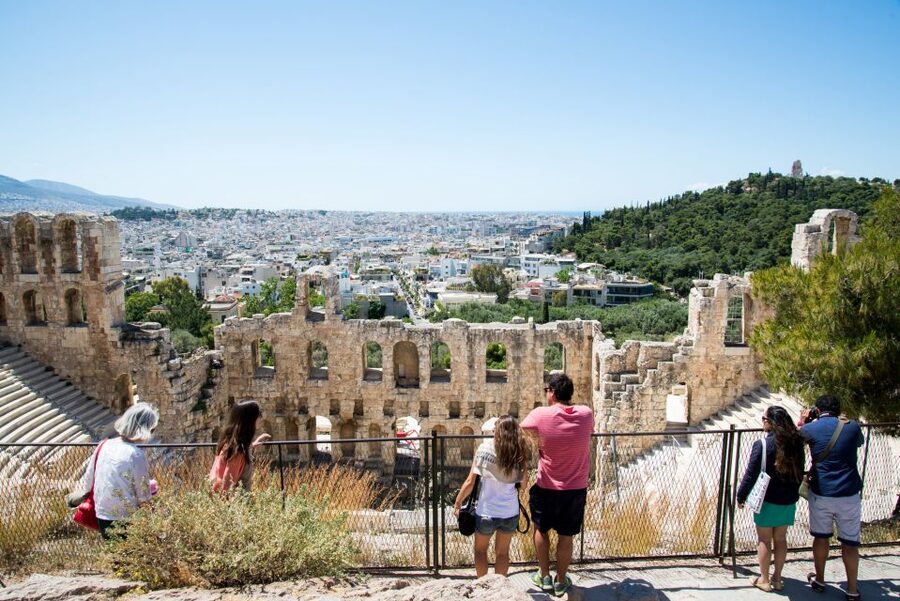
The route begins around the Acropolis monuments, with the Theatre of Dionysus among the first major sights. This is a useful opening because it places ancient Athens in a social setting. The Acropolis was not only a religious center and defensive hill. It was connected to drama, public life, healing, art, and civic identity.
The Theatre of Dionysus is described as the first great theater of humanity. Your guide can explain its role in ancient Athenian culture and connect the theater to the myths and civic traditions that shaped classical Athens. Guides praised in the supplied comments, including Hermes, Thanasis, and Ioanna, were especially valued for putting architecture into a wider philosophical and cultural setting.
You also pass the healing Temple of Asclepius and the Odeon of Herodes Atticus. These stops help break up the walk and give the route a natural rhythm. Instead of reaching the top and facing a wall of famous ruins all at once, you see how different buildings served different purposes.
The climb is real. Several people appreciated guides who paused often, both to explain the site and to give the group a break. Wear shoes with a firm sole, bring water, and plan for strong sun. The information specifically recommends sunglasses, a hat, and sunscreen. Large bags and luggage are not allowed, so pack lightly.
The Propylaea and Temple of Athena Nike
The Propylaea is the monumental gateway to the Acropolis. It is one of those places that can be easy to rush through while heading toward the Parthenon, but a guide gives you a reason to stop and consider how the entrance frames the sacred hilltop.
Near the gateway is the Temple of Athena Nike, also known as the Temple of Wingless Victory. Your guide can explain the role of Athena in Athens and why this small temple mattered despite its size. It is a good example of how the Acropolis is not one building with a few extra ruins around it. It is a collection of monuments with separate religious and civic purposes.
This part of the walk is also where the value of the hearing device becomes clear. The open approach, passing groups, and excitement around the main monuments can make a quiet explanation disappear. Listen closely, but keep your eyes up. The first views across Athens begin to open as you gain height.
The exact order of stops can change depending on conditions, group needs, and the guide. That flexibility has worked well for families. One guide, Maria, adjusted the pace for tired children and extreme heat, while other guides used questions and short stories to keep teenagers interested.
The Erechtheion and its famous Caryatids
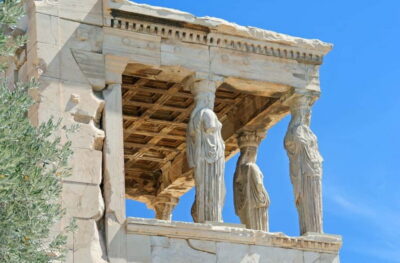
The Erechtheion is best known for the Porch of the Caryatids, where sculpted female figures appear to support the roof. The figures you see on the Acropolis are copies, while the original Caryatids are preserved and displayed in the Acropolis Museum, apart from the one held at the British Museum.
That makes the museum option especially useful. You can first see the porch in its setting on the hill, then examine the surviving originals indoors. A good guide helps you notice the difference between seeing a famous image in a photograph and understanding how it fits into the architecture and religious life of ancient Athens.
The Erechtheion also gives your guide room to discuss the competing traditions connected with the Acropolis. The site’s myths and sacred associations can be confusing when presented as a list of names. Guides such as Elizabeth, Alina, and Sophia received praise for explaining both mythology and historical context in a way that made the material easier to remember.
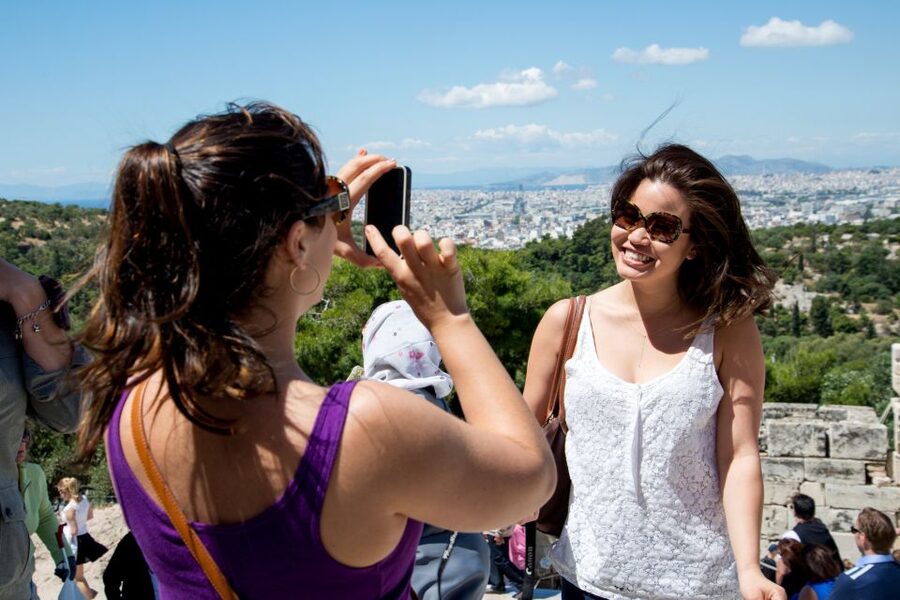
You should expect pauses for photographs here and at other points on the hill. The tour includes views over Athens, but it is still a walking tour rather than a dedicated photography outing. If you want long stretches to compose pictures, tell your guide. The advantage of a smaller or private group is that this kind of request is easier to accommodate.
A few other Athens mornings to price up
- Athens: Acropolis & up to 5 Archaeological Sites Combo Pass
★ 4.4 · 12,619 reviews - Athens: Acropolis Ticket with Optional Audio or Live Guide
★ 4.2 · 11,055 reviews - Athens: Acropolis and Parthenon Guided Walking Tour
★ 4.6 · 5,882 reviews - Athens: Acropolis Ticket with Audio Guide
★ 4.0 · 3,575 reviews
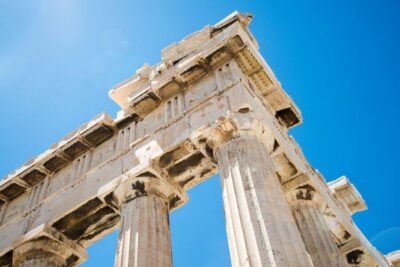
The Parthenon, Athens’ great centerpiece
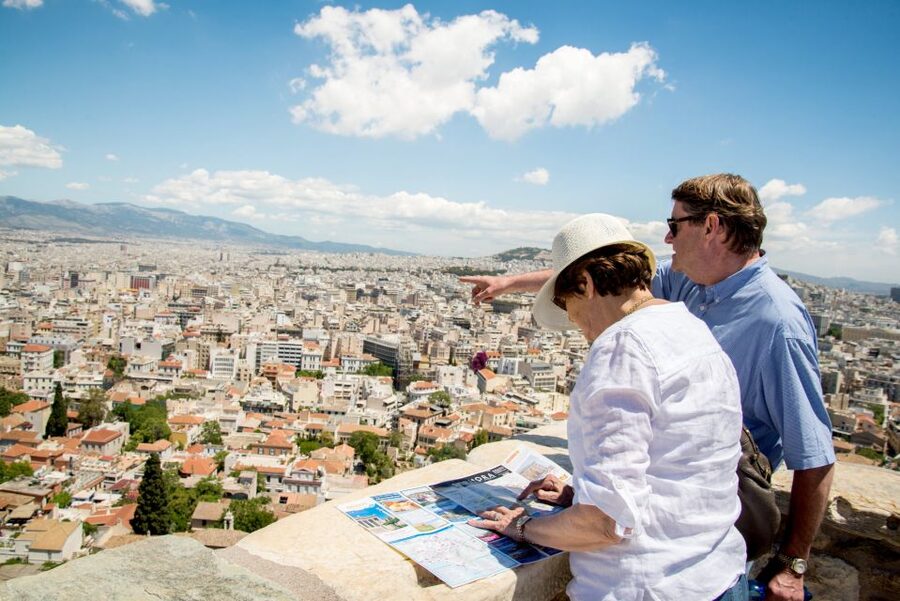
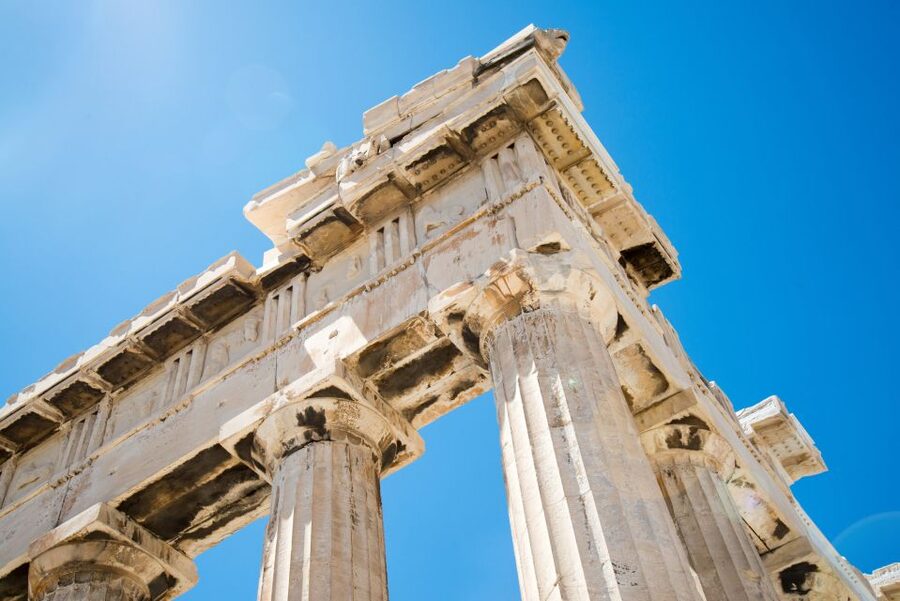
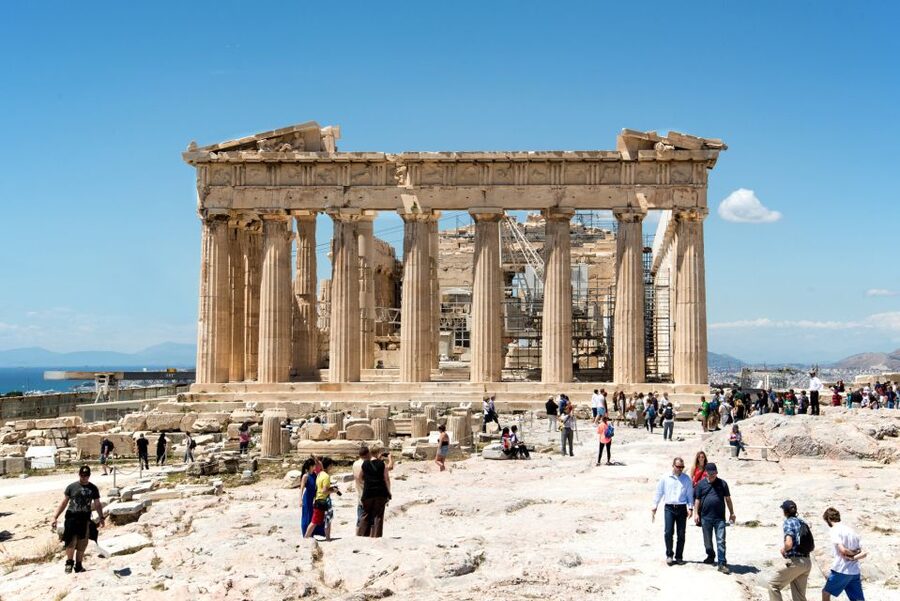
The Parthenon is the emotional high point of the Acropolis visit. Even with scaffolding or conservation work that may be present, the scale, position, and surviving columns are impressive. A guide adds the information that the bare stones cannot provide on their own.
You learn how the Parthenon fit into classical Athens, why it was dedicated to Athena, and how its sculptures expressed civic ambition and religious belief. The tour description places the monument within more than 2,500 years of history, so the discussion is not limited to the building’s original classical period.
The guide may also explain how the Acropolis changed over time and why the surviving site looks the way it does today. The supplied material does not promise a specific lecture or route at every stop, but the strongest guide experiences described here used architecture, mythology, art, and modern Greek life together.
This is where I think the tour earns its fee, provided you want interpretation rather than simple access. You can walk to the Parthenon independently, but you may miss why a smaller temple matters, how the buildings relate, or which details are worth seeking out. One guide was praised for answering questions at length, while another made the visit feel like a structured lesson without rushing the group.
The drawback is that the Parthenon area can be crowded and exposed. You may not get a quiet, solitary moment. The stone surfaces and uphill approach also make this a poor fit for anyone who cannot manage uneven walking. The activity is not suitable for wheelchair users.
Adding the Acropolis Museum
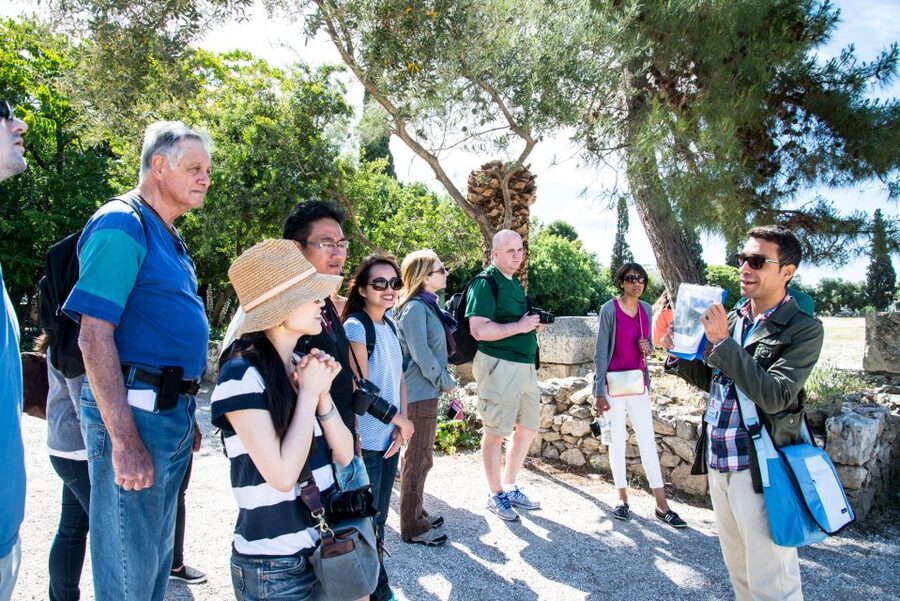
The museum option changes the tour from a powerful outdoor visit into a fuller study of ancient Athenian art. The Acropolis Museum has modern galleries and displays relics from Ancient Greece, including sculpture and architectural elements connected with the hilltop monuments.
I recommend adding it if this is your first or only major Athens visit. The outdoor ruins show you the setting, proportions, and city views. The museum lets you study the surviving works at close range, protected from the heat and weather.
The Caryatids are a key example. At the Erechtheion, you see the porch and its copies in place. In the museum, you can look more closely at the originals and understand their details. The two parts of the tour reinforce each other.
The order may vary. Some groups begin in the museum, then walk to the Acropolis, which can help you recognize what you are about to see. Others visit the hill first and use the museum afterward to make sense of the sculptures. Both approaches have merit.
The museum visit is not available in the same form on Mondays because the museum closes at 4:00 p.m. On Mondays, the tour instead visits the Acropolis monuments and the Ancient Agora. Check the day and timing before you book, especially if the museum is your main reason for choosing this experience.
Museum admission is separate and costs €10 to €20 per person. That fee is in addition to the €30 Acropolis ticket. People under 18 enter the Acropolis free, and EU passport holders under 25 may also receive free access. Anyone under 18 or any student should carry a passport to support eligibility for reduced admission.
How the guides shape the experience
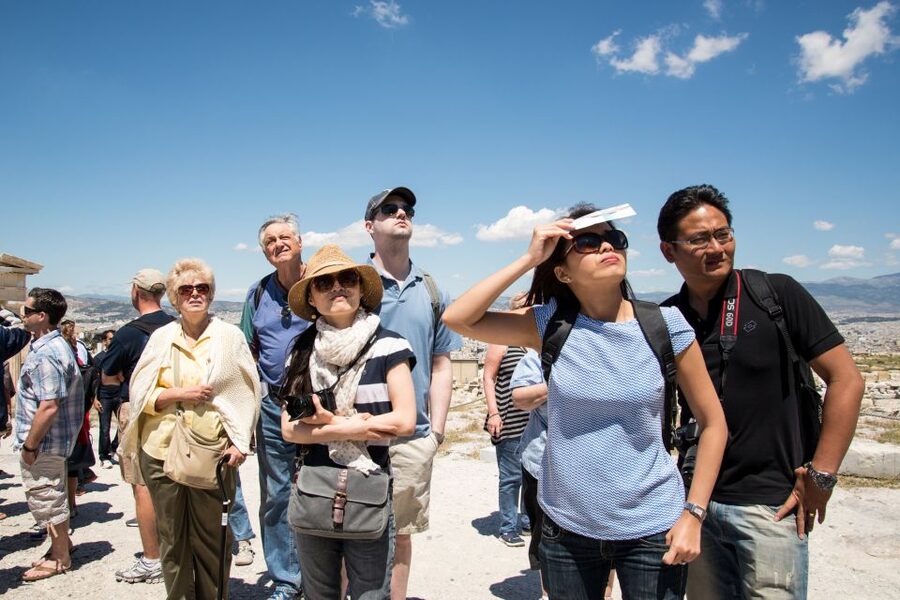
The strongest feature here is the guide, not a special access trick. The licensed guides are offered in five languages: English, Italian, German, French, and Spanish.
Names that appear repeatedly in the supplied comments include Rosa, Anna, Mariza, Maria, Alexandra, Efi, Christina, Dimitri, and Thanasis. The praise is consistent in a few useful ways. Guides explain clearly, welcome questions, use humor, and adjust the pace when children, heat, or mobility limits become an issue.
Several families found that their guides kept younger children and teenagers involved. Mariza used Greek mythology to teach a five-year-old, while Anna held the attention of two children and offered practical Athens suggestions at the end. Christina adjusted the route and explanations for younger children on a German-language tour.
The style can differ from guide to guide. Some visitors appreciated a scholarly approach from guides with backgrounds in history, archaeology, philosophy, or university teaching. Others preferred a lighter style with local observations and dry humor. You cannot select a particular guide with certainty from the information provided, but you can choose your language and request a private group.
A private tour can make sense if you have many questions or a mixed-age group. One private group received nearly five hours instead of the expected four, while another family appreciated not being pushed along with a large crowd. I would treat extra time as a pleasant possibility, not a promise.
Price, tickets, and the real value
The tour costs $70 per person. That price covers the licensed guide but not admission. With the Acropolis ticket at €30 and museum admission at €10 to €20, your final cost can be much higher than the headline price.
So is it worth it? For simple entry, no. You can visit the Acropolis without paying for a guide. For interpretation, time management, questions, and help linking the monuments together, the price is easier to justify.
The experience includes skip-the-ticket-line access, but the instructions also tell you to book entrance tickets online through the official Acropolis ticket site before the tour. This needs attention. Confirm exactly how your ticket is handled after booking, and do not assume the $70 includes admission.
Some older comments describe guides purchasing tickets in advance for the group. Current arrangements may differ, so use the official booking instructions and check the details you receive. The important point is to avoid arriving without the required entry ticket.
Free cancellation up to 24 hours before departure and reserve-now, pay-later booking make this easier to fit into a changing Athens schedule. The activity lasts two to four hours, depending on the option and starting time available.
Who should book this Acropolis walk
I would choose this tour if you want the Acropolis to make sense, not just appear in your camera roll. It suits first-time visitors, families, couples who enjoy asking questions, and anyone who wants the mythology and architecture explained in plain language.
The museum option is best for people interested in sculpture and ancient art. It is also helpful if you want relief from the sun after the climb. A private group may be worth the extra cost for children, older family members, or a group with a very specific pace.
You may prefer to go independently if you already have a strong background in Greek history, want complete control over your time, or are trying to keep admission costs as low as possible. The tour does not include transportation, hotel pickup, or luggage storage.
Bring your passport or ID, comfortable shoes, sunglasses, a hat, sunscreen, and water. Leave pets, smoking materials, large bags, and luggage behind. The Acropolis is exposed, steep in places, and not suitable for wheelchair users.
Should you book it?
Book this tour if a licensed guide, a clear route, and the option to connect the Parthenon with the Acropolis Museum are worth more to you than the lowest possible price. The best guide accounts describe patient teaching, strong storytelling, useful photo help, and thoughtful pacing for children and tired walkers.
Choose the museum option unless your schedule is tight or you are visiting on Monday. Before paying, confirm the separate entrance fees and ticket instructions. If you arrive prepared for the climb and the heat, this is a sensible way to give Athens’ most important ancient site context and meaning.
FAQ
How much does the tour cost?
The tour costs $70 per person. Acropolis admission and Acropolis Museum admission are extra.
How long does the experience last?
The tour lasts between two and four hours, depending on the selected option and available departure time.
What does the tour price include?
The price includes a licensed tour guide. It does not include monument tickets, museum tickets, or pickup and drop-off.
Where is the meeting point?
Meet at the Athens Walks office at 5 Porinou Street, 11742, in central Athens. Look for the ground-floor office.
How early should I arrive?
Arrive at least 15 minutes before the scheduled departure. Only one person from your group needs to check in inside the office.
Which languages are available?
Tours are offered in English, Italian, German, French, and Spanish.
Is the Acropolis Museum included?
The museum is available as an option, but its entrance ticket costs extra. On Mondays, the museum closes at 4:00 p.m., and the tour visits the Acropolis monuments and Ancient Agora instead.
How much are the entrance tickets?
The Acropolis ticket costs €30 per person. The Acropolis Museum ticket costs €10 to €20 per person.
Are children eligible for reduced admission?
People under 18 receive free access to the Acropolis. EU passport holders under 25 may also receive free access. People under 18 and students should bring a passport to confirm eligibility for reduced fees.
Is the tour suitable for wheelchair users?
No. The activity is listed as unsuitable for wheelchair users. Comfortable shoes, water, sunscreen, sunglasses, and a hat are recommended.
Fresh on the Athens list
- Athens Airport Arrival Transfer to Hotels or Addresses in Athens★ 3.5 · 45 reviews
- Private Luxury Tour: Unveiling the Sacred Mysteries of Eleusis★ 5.0 · 45 reviews
- Luxury Catamaran Sunset Semi-Private & Greek Gastronomy in Athens★ 5.0 · 45 reviews
- From Athens: Aegina Island guided tour in a day★ 5.0 · 45 reviews
- Delphi, Thermopylae full day private tour from Athens★ 4.9 · 46 reviews
- From Athens: City & Corinth Guided Day Tour★ 4.8 · 46 reviews
- Acropolis Private Wine Tasting @ Finewine store★ 5.0 · 46 reviews
- Ancient Corinth Half-Day Private Tour from Athens★ 5.0 · 46 reviews
Acropolis & Acropolis Museum Tours, compared.
Acropolis & up to 5 Archaeological Sites Combo Pass
Read our review →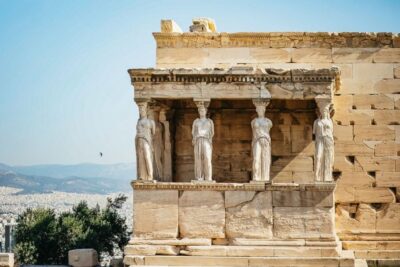
Acropolis, Parthenon & Acropolis Museum Guided Tour
Read our review →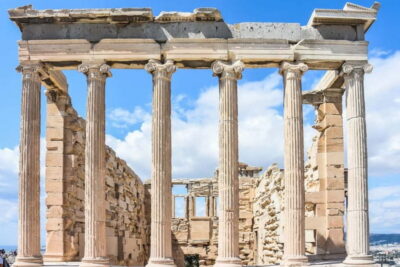
Acropolis, Parthenon & Acropolis Museum Guided Tour
Read our review →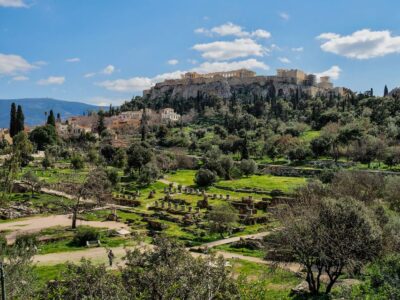

Acropolis monuments & Parthenon Walking Tour with Optional Acropolis Museum
Read our review →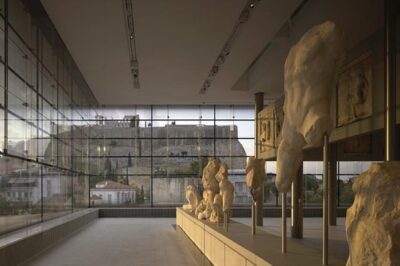
Athens All Included: Acropolis and Museum Guided Tour with Ticket
Read our review →Browse the lists this tour appears in