
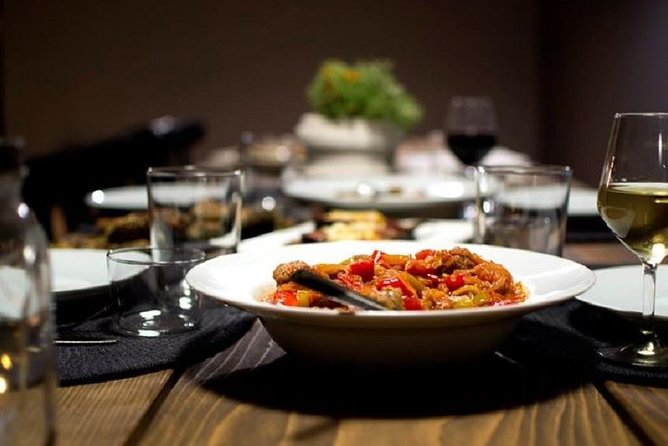
Reviewed · ACROPOLIS & ACROPOLIS MUSEUM TOURS
Traditional Greek cooking class and lunch or dinner with an Acropolis view
The best part of this Athens experience is that you do not just watch someone prepare Greek food. You make the dough, shape the pies, mix the sauces, and cook a full meal before sitting down to eat it with wine and Greek spirits. The handmade phyllo is the star lesson, and it is less intimidating than it sounds.
I like two things here. First, the menu gives you a proper Greek meal, not one token recipe: appetizers, pie, salad, a main course, and dessert. Second, Marilena and her team keep the class social and practical, with recipes sent to your email so you can try the dishes at home. The main caution is the setting. The studio can feel hot in summer, and the Acropolis view may be limited from the kitchen rather than guaranteed at every seat.
Key points to know before booking

- Six Greek dishes in about three hours: You cook a full menu, then eat what you have made.
- Phyllo from scratch: Making paper-thin dough is a central hands-on lesson and a useful skill to take home.
- Seasonal menus: Your dishes can change with the time of year, from moussaka and chicken to winter pork, soups, or seasonal desserts.
- A social meal with drinks: Greek wine and traditional spirits are included, with two glasses of alcoholic drinks per person.
- Small enough to participate: The maximum group size is 16, and key techniques are carried out by everyone.
- Plan ahead: The class is often booked about 54 days in advance, so popular dates may disappear early.
Cooking Greek food instead of simply eating it
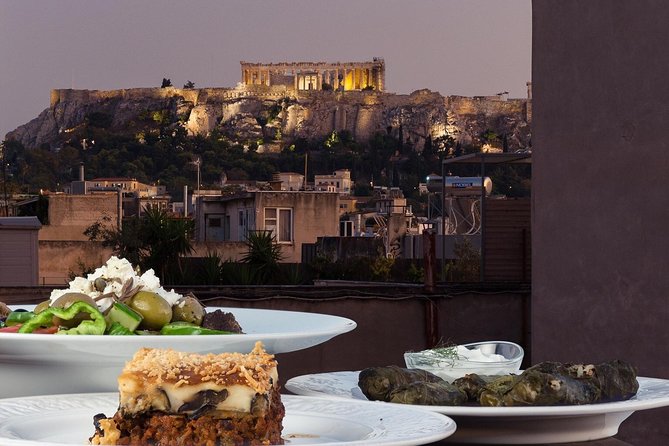
Athens is an easy city for eating well. You can order souvlaki, salad, pies, and sweets on nearly every street. This class earns its place in your schedule by showing you how those flavors come together in a home-style meal.
You work through a menu of at least six dishes. The usual structure includes two appetizers, a Greek pie, Greek salad, a main course, and dessert. The exact dishes shift with the season and available ingredients, so think of the class as a lesson in Greek cooking rather than a fixed restaurant menu.
The class begins on time, and you should arrive about 10 minutes early at CookinAthens, Evripidou 90. The location is in central Athens and near public transportation, but finding the studio can take a little patience. Look for the CookinAthens sign on the side of the building, and pay attention to the arrival directions sent after booking. The studio is on an upper floor, and the building may not have as much signage as you expect.
That small bit of preparation matters. Arriving late means missing the opening instructions, and the class moves through several recipes in a short period.
More Cooking Classes in Athens
- Athens: Classic Cooking Class with Market Visit and Wine
★ 5.0 · 1,101 reviews - Athens: Food Market Visit and Cooking Class with Wine
★ 4.9 · 1,087 reviews - Greek Cooking Class in Athens Including Rooftop Dinner with Acropolis View
★ 5.0 · 826 reviews
The opening dishes: tzatziki, dolmades, and Greek salad
The first part of the class usually brings together simple Greek staples that depend on good ingredients and careful seasoning.
Tzatziki is made with Greek yogurt, garlic, dill, and cucumber. It looks easy, but the class gives you a chance to see how texture and balance matter. Too much cucumber water can make it thin. Too much garlic can overwhelm everything else. It is the kind of recipe you can reproduce at home, especially if you pay attention to draining and seasoning.
You may also prepare peppers stuffed with cheese or dolmadakia, grape leaves filled with rice and herbs. These are useful dishes for learning how Greek cooking handles small portions and strong flavors. The grape leaves require patience and a light touch, while the stuffed peppers offer a simpler route to the same blend of herbs, cheese, and vegetables.
The Greek salad brings tomatoes, cucumbers, peppers, Kalamata olives, capers, and xinomizithra together. This is not a complicated recipe, but it shows why ingredient quality matters. The salad also gives the class a fresh counterpoint to the baked and sauced dishes that come later.
I like this early section because it gives you quick wins. You are chopping, mixing, filling, and tasting before the more demanding work begins. It also helps you recognize dishes on Greek menus during the rest of your trip.
Handmade phyllo is the class highlight
The pie lesson is where this becomes a real cooking class rather than a group meal with a demonstration.
Depending on the menu, you may prepare a cheese pie with kaseri and manouri cheeses, or a spinach pie filled with spinach, leeks, herbs, and manouri. The dough is made from scratch, and each participant gets to work on this important technique.
Phyllo has a reputation for being difficult. The class breaks it into manageable steps, and the useful lesson is not just the recipe. You learn how to handle the dough, stretch it thin, and build layers without treating it like a fragile museum object. One especially practical detail is that the dough can become paper thin with a bit of skill and patience, and the process is not as hard as many first-time cooks expect.
The result is also one of the most rewarding things to eat at the final table. A cheese pie or spinach pie made with your own hands tastes different from one pulled from a bakery case. You notice the layers, the filling, and the work involved.
The studio prepares ingredients in advance, so you are not spending the whole class measuring every gram or waiting for basic prep. That keeps the session moving, though it also means the lesson focuses on the important techniques rather than every single kitchen task from start to finish.
The main course changes with the season
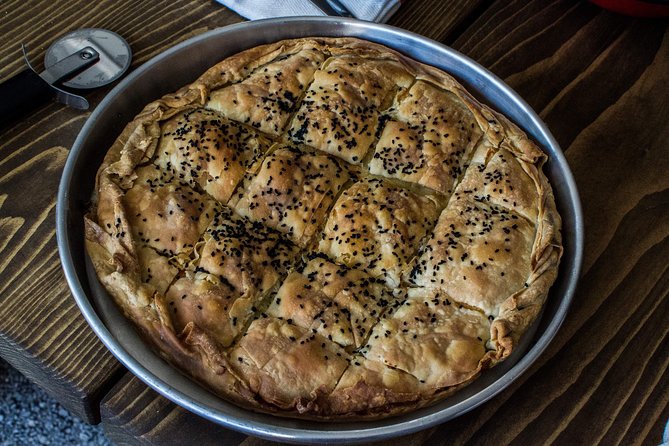
The main dish gives the class its most substantial cooking lesson. Possible choices include moussaka, pastitsio, soutzoukaki, gemista, or chicken prepared as lemonato or youvetsi. The included meal description also lists chicken in tomato sauce, so the exact selection should be confirmed if you have your heart set on one particular dish.
Moussaka offers a lesson in layering eggplant, tomato-based meat sauce, and béchamel. Pastitsio follows a similar comfort-food logic, with pasta, meat sauce, and a creamy topping. Soutzoukaki focuses on seasoned meatballs, while gemista brings stuffed vegetables into the center of the meal.
Chicken lemonato and chicken youvetsi show a different side of Greek home cooking. One leans on lemon and herbs, while the other pairs chicken with a baked grain or pasta preparation. None of these dishes is just a quick snack. You are building a centerpiece that can anchor a family dinner.
Winter classes can feature pork with leeks and celery, served with egg-lemon sauce. This is described as a traditional Greek Christmas meal. You may also find youvarlakia, a soup with meatballs, rice, herbs, and egg-lemon sauce, or egg-lemon chicken soup with rice.
The seasonal changes are a strength if you want food that fits the time of year. They are a limitation if you are booking specifically for moussaka, baklava, or another favorite. If one dish matters to you, send a request by email after booking, but understand that the menu depends on seasonality.
More cooking classes around Athens:
- Greek Small-Group Athens Cooking Class & Dinner
★ 5.0 · 574 reviews - Athens: Greek Cooking Class & Dinner on a Rooftop
★ 5.0 · 383 reviews - Athens: Greek Cuisine Cooking Class and 3-Course Dinner
★ 4.8 · 270 reviews - Athens Greek Cooking Class Pita Gyros from Scratch with a Local
★ 5.0 · 175 reviews
Dessert, wine, and the meal you helped create
Dessert completes the menu. Options include baklava rolls, Greek yogurt mousse, or loukoumades, with loukoumades listed as a winter-only choice.
Baklava rolls are a natural follow-up to the phyllo lesson. You get to see how the same dough technique moves from savory pie to sweet pastry. Greek yogurt mousse is a lighter finish, while loukoumades offer a more festive, dough-based ending.
Once the food is cooked, the class changes pace. You sit down together and eat the dishes you prepared. Greek wine and traditional spirits are included, with two glasses per person, along with other beverages. This is not a rushed tasting. The full cooking session and lunch or dinner last about three hours, leaving time to talk, laugh, and enjoy the food.
That shared table is a major part of the value. You are not only learning recipes. You are meeting the people in your class and comparing results over a meal. The setting has a friendly, home-style feel, which suits anyone who enjoys cooking as a social activity rather than a solitary chore.
You should arrive hungry. The menu is generous, and you will be eating several courses after working with them.
What the instruction is really like
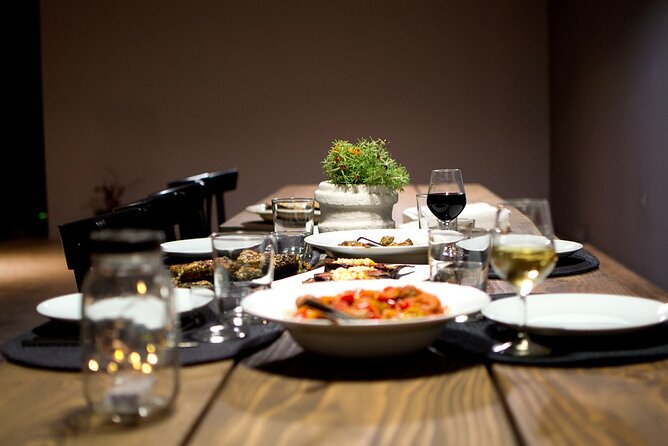
The teaching style is casual but organized. Marilena leads the class, with assistance from her team, and the format is designed to keep everyone involved. Instructions cover the how, why, and timing of each dish without turning the experience into a lecture.
The most important techniques are performed by all participants. That includes making dough from scratch, which is important because it prevents you from watching the hardest step while someone else does it for you.
The atmosphere is friendly and patient. You can expect humor, clear directions, and help when a recipe needs correcting. The staff also handles cleanup, allowing you to focus on cooking and the meal rather than ending the evening at a sink full of dishes.
The food gets the strongest praise. Tzatziki, pies, moussaka, grape leaves, salad, baklava rolls, and chicken dishes all appear in the possible menus and receive repeated approval from people who took the class. The recipes are intended to be made again at home, not admired once and forgotten.
Dietary needs should be stated when you book. The menu can be tailored, and accommodations have been made for allergies and dietary preferences, but you should not rely on a last-minute request. The class is offered in English and welcomes ages 12 and up.
The Acropolis view: attractive idea, modest expectation
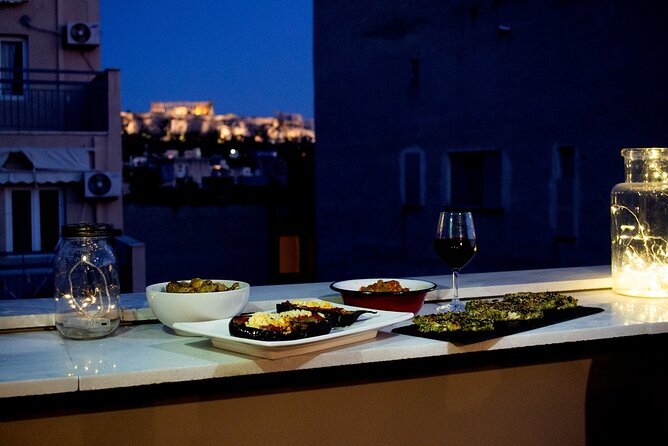
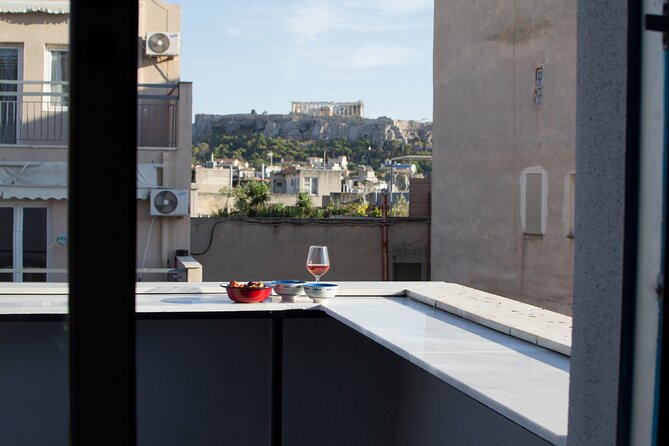
The class is promoted with an Acropolis view, and some seating or studio positions can provide that backdrop. It is a pleasant bonus, especially while sharing the finished meal.
Still, you should set your expectations carefully. The kitchen is a working space, and you may spend much of the cooking portion facing counters, ingredients, and other participants. The view is not likely to be the main event during every stage of the class.
One practical complaint concerned heat in the studio and limited visibility of the Acropolis from the kitchen. The provider says air conditioning is available and used, but Athens summers can still be warm. If you are sensitive to heat, a cooler-season class may be more comfortable.
For me, the food and the shared table matter more than the view. If you want a rooftop panorama first and a cooking lesson second, this may not match your priorities. If you want to learn Greek recipes in a central Athens studio and enjoy a possible Acropolis glimpse while eating, the view adds a nice extra.
Is $114.93 a fair price?
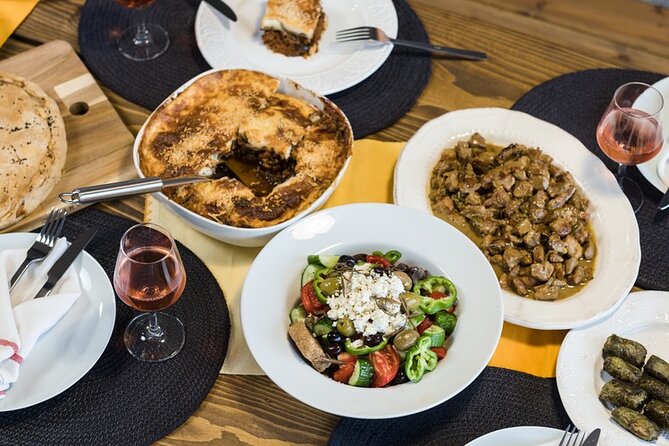
At $114.93 per person, this is not a cheap meal. You could eat Greek food for far less in Athens.
But the price includes roughly three hours of instruction, a six-dish menu, the ingredients, your lunch or dinner, Greek wine, traditional spirits, and recipes sent by email. You are paying for a cooking lesson and a full meal, not only for food at the table.
The value is strongest if you will actually use the recipes. Handmade phyllo, moussaka, stuffed grape leaves, tzatziki, and Greek desserts give you a useful collection of dishes rather than one narrow specialty. It is also a good choice if you enjoy meeting people and want an evening with more participation than a standard restaurant meal.
The value is weaker if you dislike group activities, do not want alcohol, or prefer a polished cooking demonstration where you simply watch. It also may not suit someone looking for a guaranteed panoramic Acropolis dining experience.
With a maximum of 16 people, the group is large enough to feel social but still small enough for hands-on work. The booking pattern suggests you should reserve early, especially if your Athens schedule is fixed.
Who should book this cooking class?
I would choose this for couples, families with teenagers, solo visitors who enjoy communal meals, and anyone who wants a practical memory from Athens. Ages 12 and up can participate, making it a useful family activity for older children who enjoy food and hands-on work.
It is also a smart early-trip activity. Learning the names and flavors of Greek dishes helps you order with more confidence for the rest of your stay. You may arrive at a taverna already knowing the difference between a stuffed grape leaf, a cheese pie, and a dish finished with egg-lemon sauce.
You should skip it if you want a quiet private dinner, dislike working in a shared kitchen, or need a fully fixed menu. The menu changes, the class starts promptly, and the view may be less prominent than the title suggests.
Book at least 24 hours ahead if you need to cancel, since changes or cancellations inside that window are not refunded. If the minimum number of participants is not met and the class is canceled, you are offered another date or experience, or a full refund.
Should you book CookinAthens?
Yes, if you want to cook a real Greek meal and take the recipes home. The handmade phyllo lesson, generous food, warm teaching, and relaxed meal make this a stronger choice than a short demonstration.
Go in for the cooking, not just the Acropolis view. Arrive 10 minutes early, bring your appetite, send dietary requests in advance, and ask about a favorite dish before the class if the seasonal menu matters to you.
At $114.93, it is a splurge. But for three hours of instruction, a multi-course dinner, wine, and recipes you can use again, I think it is a fair splurge for food-focused visitors.
FAQ
How long does the Greek cooking class last?
The cooking class and lunch or dinner last about three hours.
Where does the activity start and end?
It starts at CookinAthens, Evripidou 90, Athina 105 53, Greece, and ends back at the same meeting point.
What food will I prepare?
The menu includes two appetizers, a Greek pie, Greek salad, a main course, and dessert. Possible dishes include tzatziki, cheese or spinach pie, stuffed peppers, dolmadakia, moussaka, pastitsio, chicken dishes, seasonal winter soups, and Greek desserts.
Is wine included?
Yes. Greek wine and traditional spirits are included, with two glasses of alcoholic drinks per person.
Can dietary needs be accommodated?
Yes. The class can be tailored to special dietary needs, but you should provide that information when booking.
What is the cancellation policy?
You can cancel at least 24 hours before the start time for a full refund. Cancellations or changes made less than 24 hours before the activity are not refunded or accepted.
More Dining Experiences in Athens
- Enjoy Cape Sounio Private Majestic Sunset With Seaside Dinner
★ 5.0 · 613 reviews - Dinner in the Sky Athens
★ 5.0 · 427 reviews - Athens Night Sightseeing Tour with Greek Dinner Show
★ 3.5 · 268 reviews - Athens: Dinner in the Sky Experience
★ 4.9 · 232 reviews
More Acropolis & Acropolis Museum Tours in Athens
- Athens: Acropolis & up to 5 Archaeological Sites Combo Pass
★ 4.4 · 12,619 reviews - Athens: Acropolis Ticket with Optional Audio or Live Guide
★ 4.2 · 11,055 reviews - Athens: Acropolis, Parthenon & Acropolis Museum Guided Tour
★ 4.8 · 9,316 reviews - Athens: Acropolis and Parthenon Guided Walking Tour
★ 4.6 · 5,882 reviews
Fresh on the Athens list
- Athens Airport Arrival Transfer to Hotels or Addresses in Athens★ 3.5 · 45 reviews
- Private Luxury Tour: Unveiling the Sacred Mysteries of Eleusis★ 5.0 · 45 reviews
- Luxury Catamaran Sunset Semi-Private & Greek Gastronomy in Athens★ 5.0 · 45 reviews
- From Athens: Aegina Island guided tour in a day★ 5.0 · 45 reviews
- Delphi, Thermopylae full day private tour from Athens★ 4.9 · 46 reviews
- From Athens: City & Corinth Guided Day Tour★ 4.8 · 46 reviews
- Acropolis Private Wine Tasting @ Finewine store★ 5.0 · 46 reviews
- Ancient Corinth Half-Day Private Tour from Athens★ 5.0 · 46 reviews
Acropolis & Acropolis Museum Tours, compared.

Acropolis & up to 5 Archaeological Sites Combo Pass
Read our review →

Acropolis, Parthenon & Acropolis Museum Guided Tour
Read our review →
Acropolis, Parthenon & Acropolis Museum Guided Tour
Read our review →

Acropolis monuments & Parthenon Walking Tour with Optional Acropolis Museum
Read our review →
Athens All Included: Acropolis and Museum Guided Tour with Ticket
Read our review →Browse the lists this tour appears in