
Reviewed · ATHENS TOURS
3-Day Ancient Greek Archaeological Sites Tour from Athens
The most remarkable thing about this three-day trip is how much ancient Greece it fits into a short circuit. You go from the Corinth Canal and Epidaurus to Mycenae, Olympia, and Delphi, with the long drives linking the great sites of the Peloponnese and central Greece. I especially like the mythology brought to life by the guides, including stories of Agamemnon, Apollo, Gaia, and the Olympic gods.
I also like the practical design. Entrance fees, two hotel nights, breakfast, dinner, transfers, and a guide are included, so you can focus on the ruins instead of arranging every connection. The main tradeoff is distance: this is an efficient tour, not a slow country ramble, and the visits to Olympia and Delphi can feel demanding in hot weather.
Key points at a glance
- Five major ancient sites: See Epidaurus, Mycenae, Olympia, Delphi, and the Corinth Canal in one three-day route.
- A strong guide can make the difference: Guides such as Anna, Marianna Tsigaridou, Dimitris, and Evangelist have been praised for clear explanations, mythology, and well-organized site visits.
- Two useful overnight stops: Sleep in Olympia and Delphi rather than returning to Athens each night.
- Dinner and breakfast are included: Lunch, drinks, personal spending, and hotel tax are extra.
- Comfortable road transport: Transfers use a luxury, air-conditioned bus, with some departures operating in smaller vehicles with charging ports.
- Best for active history fans: The sites involve walking, steps, sun, and uneven ground. The tour is not suitable for wheelchair users.
Why this route works from Athens
Ancient Greek sites are scattered across the country. Mycenae and Epidaurus sit in the northeastern Peloponnese, Olympia is farther west, and Delphi is across the Gulf of Corinth on the slopes of Mount Parnassus. Seeing all of them independently in three days would require careful planning and a willingness to manage long bus or train connections.
This tour solves that problem with one continuous route. You leave Athens, cross the Corinth Canal, reach the Argolid, continue to Olympia, cross the new bridge at Rion and Antirion, follow the coast toward Delphi, then return to Athens through Phocis and the Parnassus hills.
You should expect plenty of road time. That is the price of reaching so many important sites, but the drives are not dead time. The guide may point out towns, farmland, olive trees, vineyards, mountain roads, and modern Greek life along the way. Several people who took the trip found the commentary between stops just as useful as the formal site visits.
The group size can vary. Some departures use a mid-sized passenger van, while others use a larger 20-seat minibus or coach. A smaller group can make it easier to get acquainted and can feel less cumbersome at roadside stops. Your exact vehicle depends on the departure.
A few other Athens mornings to price up
- 3-Day Classical Greece Tour: Epidaurus, Mycenae, Nafplion, Olympia, Delphi
★ 4.5 · 342 reviews - From Athens: 3 Days in Meteora & Delphi with Tours & Hotel
★ 4.6 · 97 reviews - Meteora & Delphi 3 Days Semi Private Tour
★ 4.5 · 80 reviews
Day one: Corinth Canal, Epidaurus, and Mycenae
Pickup from most centrally located Athens hotels is available on request, usually about an hour before departure. You can also meet at the supplier’s office 15 minutes before the stated departure time. Confirm the exact pickup place and time with Key Tours, since the city pickup is not identical for every hotel.
The first major stop is the Corinth Canal. Cut through the narrow Isthmus of Corinth in the nineteenth century, the canal is a striking piece of modern engineering. You will generally stop to admire it rather than take part in a long visit, so think of it as a useful opening pause and a clear reminder that this route crosses an important divide between mainland Greece and the Peloponnese.
Epidaurus is the day’s first major archaeological visit. Its ancient theater is famous for acoustics that let a speaker be heard across the seating area. The theater is beautifully proportioned, but the real value of a guided visit is learning how it fit into the wider Greek religious and cultural world.
You should have time to look around after the guide’s explanation, but do not expect unlimited wandering. The itinerary has to keep moving to reach Mycenae and Olympia. Wear shoes that can handle uneven surfaces, and bring water and sun protection.
The route then passes through Nafplia, the former capital of the First Hellenic Republic. The schedule describes a stop or drive through the town rather than a full city tour, so you should not book this trip mainly to explore Nafplia. It is a pleasant change of pace after the ruins, and the drive through the Argos plain helps connect the ancient sites to the agricultural region around them.
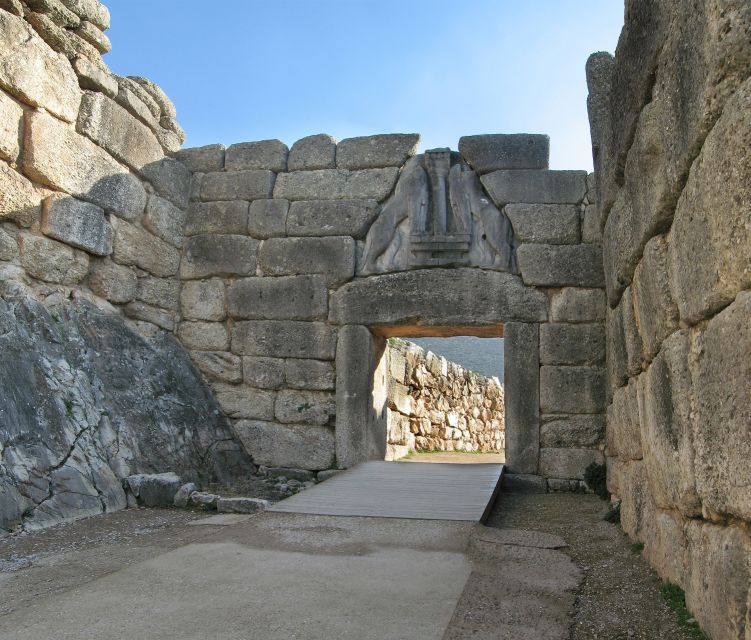
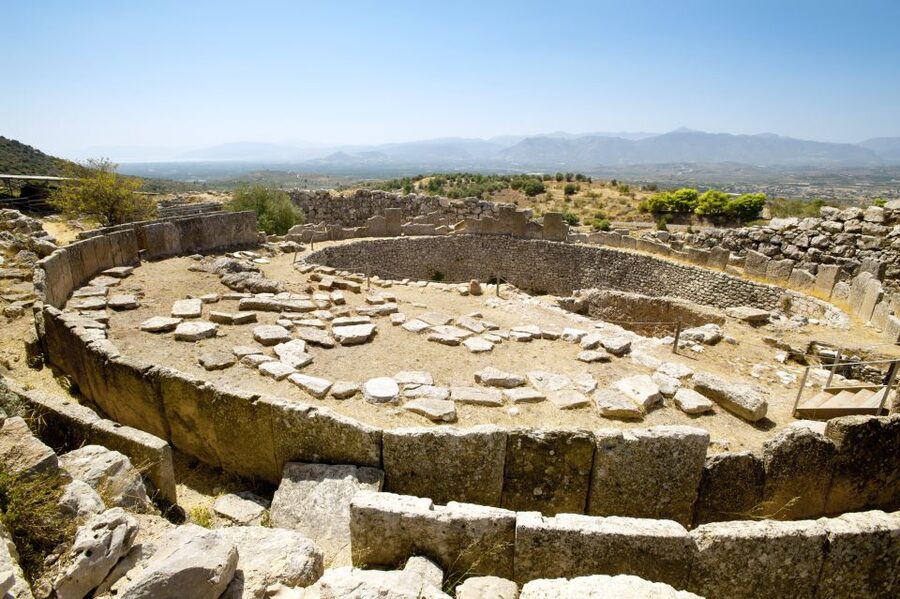
At Mycenae, you enter the ruins of the citadel associated with Agamemnon. The Lion Gate and the massive defensive walls give the site a strong sense of power even when much of the citadel survives only as stone foundations. You also visit the Tomb of Agamemnon, an impressive beehive-shaped burial structure set near the main ruins.
Mycenae works best when your guide explains what you are looking at and how the site relates to Greek myth. Guides such as Marianna Tsigaridou and Dimitris have been praised for tying archaeological remains to the stories of the Trojan War and the House of Atreus without turning the visit into a dry lecture.
After Mycenae, the bus continues toward Olympia, passing through Tripolis and Megalopolis. These are mainly short practical stops, useful for stretching your legs, buying a snack, or picking up a souvenir. The first night is in Olympia, which is a major advantage over a route that tries to rush back toward Athens.
Overnight in Olympia and what the hotels mean
Accommodation is offered in either a three-star or four-star hotel, depending on the option you select. Rooms are assigned as double or triple rooms. If you need a single room, the booking rules require a separate booking for one person.
Hotel quality can vary by property and availability. Some three-star accommodation has been described as quite comfortable, with good service and convenient locations. One Olympia hotel was especially well received, including rooftop dining and an easy walk into town. The Delphi hotel experience may be less consistent, so I would choose the four-star option if room condition and comfort matter more to you than the lowest price.
Breakfast and dinner are included, which gives the package real value. Lunch is not included, and you pay for drinks and personal expenses. The meals are generally intended to keep the itinerary moving rather than provide a long restaurant experience. Dietary needs can sometimes be accommodated, but you should tell the operator in advance. One gluten-free guest was accommodated at each meal.
There is also a hotel accommodation tax paid directly to the hotel. The stated rate is €5 per room per night at a three-star hotel and €10 per room per night at a four-star hotel. This is a small extra cost, but it is worth budgeting for.
Day two: Olympia and the road to Delphi
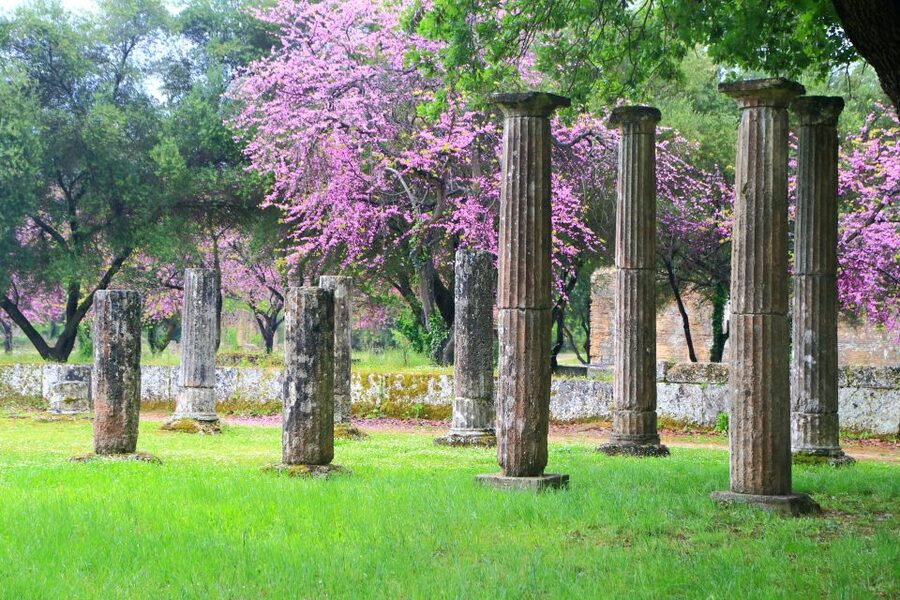
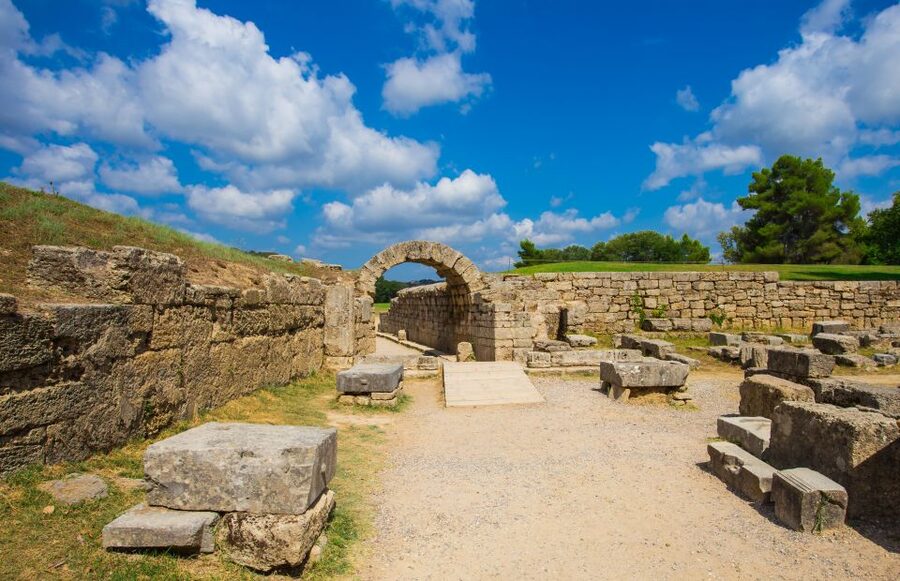
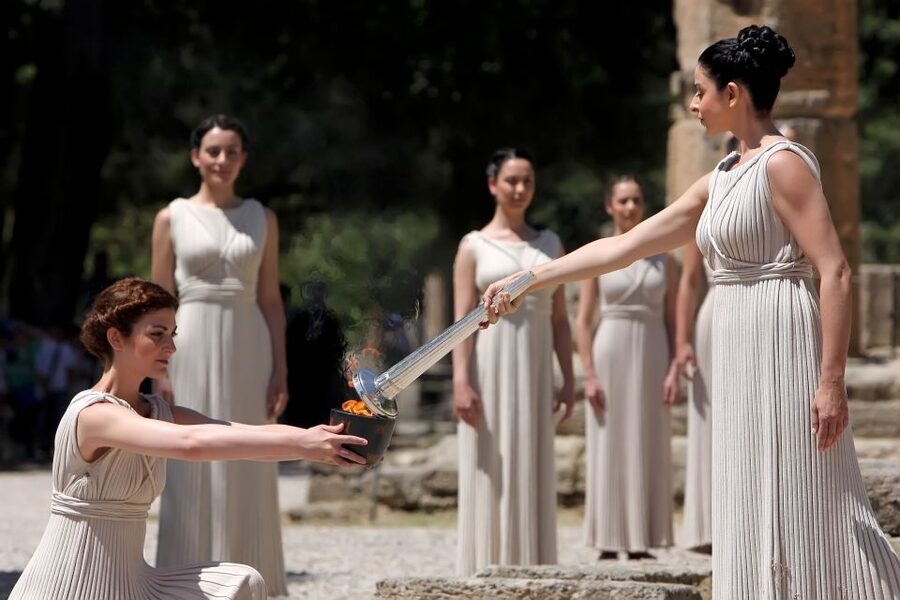
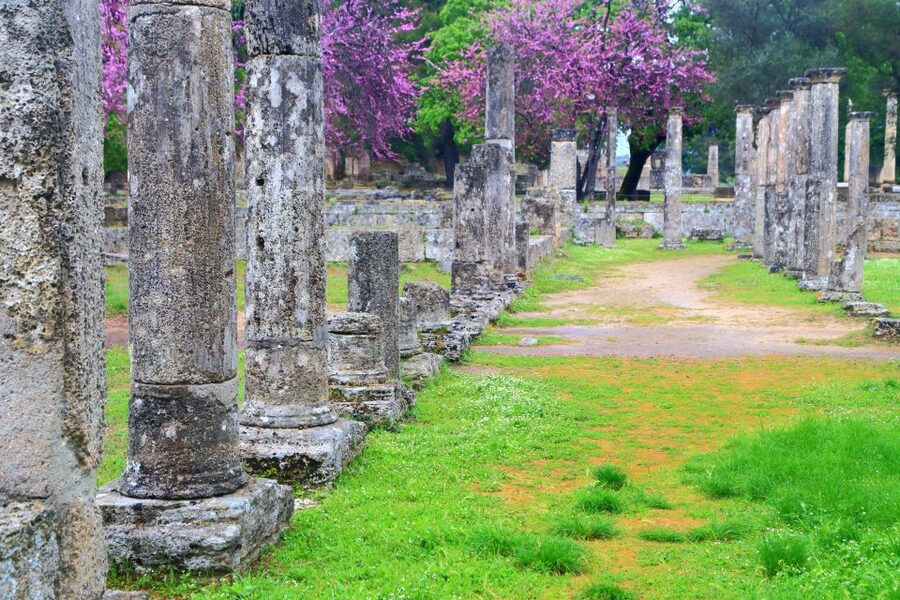
Olympia is more than a collection of old stones. It was a sacred center dedicated to Zeus and the birthplace of the Olympic Games. The ruins include the remains of the Temple of Zeus, the Temple of Hera, the ancient stadium, and the altar where the Olympic flame is lit in the modern ceremony.
The setting is broad and open, so you can picture the site’s original scale. The stadium itself is not a modern arena. It is a long earth track surrounded by sloping ground, but standing there gives you a direct connection to the contests held in classical times.
The Archaeological Museum of Olympia is directly opposite the ruins and is an essential part of the morning. It houses artifacts excavated from the site, including sculptures and architectural remains that help you understand what the temples looked like before earthquakes, weather, and time reduced them to fragments.
A good guide will help you avoid simply walking past columns and pedestals. Anna, for example, has been praised for guiding visitors through both the outdoor ruins and the museums, while other guides have used photographs and reconstruction images to show how damaged buildings may once have appeared.
The visit can last about three hours, and in summer the heat is serious. Olympia has exposed paths and limited shade in some areas. Bring a broad-brimmed hat, sunglasses, water, and an umbrella if you use one for sun protection. Spring and autumn should be more comfortable than the hottest part of summer, based on the conditions described by past participants.
After Olympia, the route heads toward Rion. You cross the Gulf of Corinth on the modern bridge to Antirion, a memorable contrast with the ancient sites and the nineteenth-century canal. The coastal road then leads past Nafpaktos, a small harbor city with a more relaxed modern feel.
This is one of the tour’s nicest transitions. After temples and stadiums, you see fishing boats, a harbor, and ordinary Greek towns. You will not have a full Nafpaktos sightseeing program, but the passing view adds variety to a day otherwise focused on archaeology.
The final stop is Arachova, a mountain village on the slopes of the Parnassus range. The visit is generally brief, giving you time to see the village and stretch your legs before continuing to Delphi for the second night.
Same island, an entirely different sort of day:
- Athens: Acropolis & up to 5 Archaeological Sites Combo Pass
★ 4.4 · 12,619 reviews - Athens: Acropolis Ticket with Optional Audio or Live Guide
★ 4.2 · 11,055 reviews - Athens: Acropolis, Parthenon & Acropolis Museum Guided Tour
★ 4.8 · 9,316 reviews - Athens: Cape Sounion & Poseidon Temple Sunset Half-Day Trip
★ 4.8 · 8,241 reviews
Day three: Delphi, the center of the ancient world
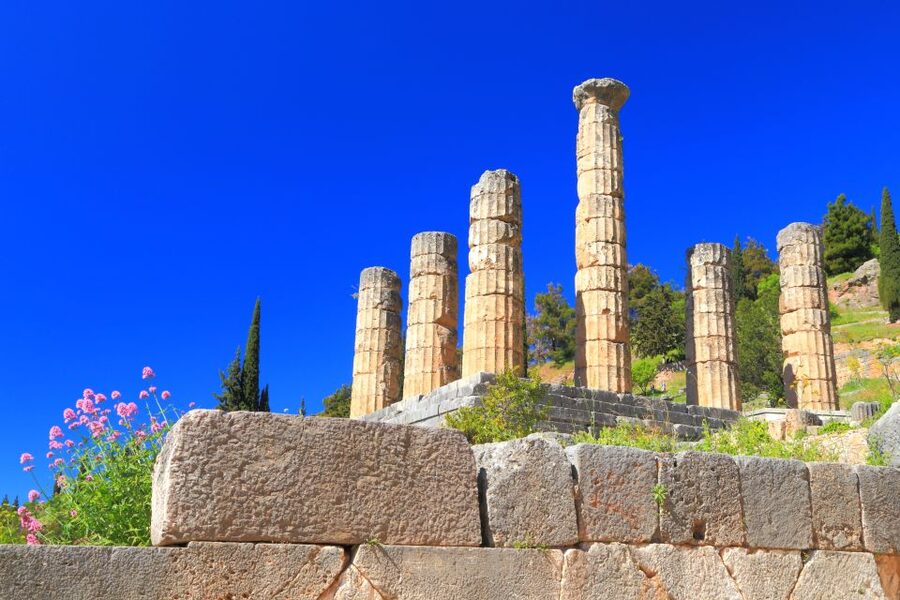
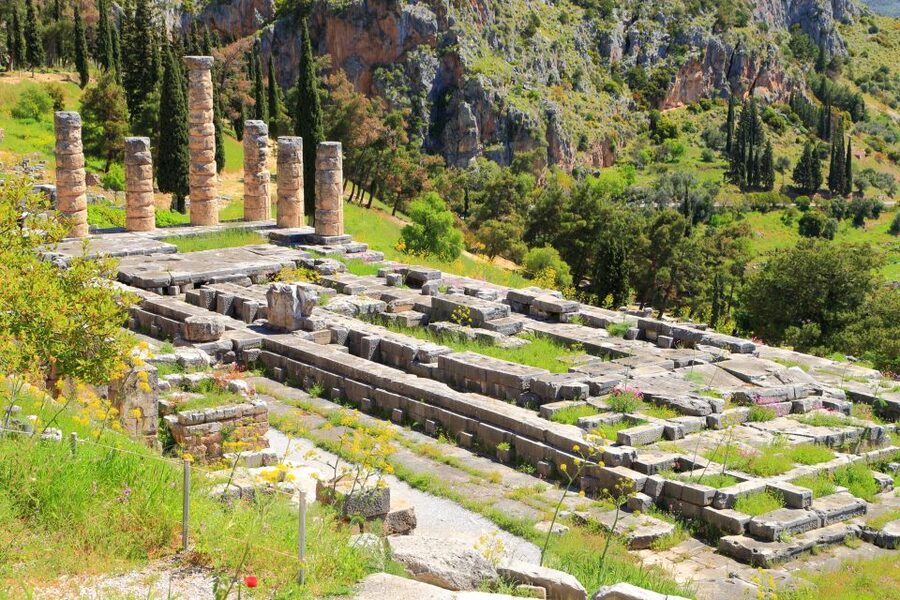
Delphi is often the emotional high point of the trip. Ancient Greeks regarded it as the center of the world, marked by the omphalos stone, and came here to consult Apollo’s Oracle. The site is tied to the older worship of Gaia, Mother Earth, and the myth of Apollo defeating the Python that guarded the area.
The ruins climb the mountainside, so this is not a flat, easy museum visit. You walk uphill past the Sanctuary of Apollo, the remains of temples and treasuries, and the theater. From higher points, you get wide views over the Parnassus mountains and the Valley of Phocis.
The Temple of Apollo is the central focus, even though only part of the structure remains. Your guide can explain how pilgrims approached the sanctuary, how the Oracle functioned, and why Delphi mattered to Greek city-states. The best guides use myth as an entry point, then add political, religious, and archaeological context.
The theater held up to 5,000 spectators for plays, poetry readings, and festivals. It is smaller and more intimate than the ancient theater at Epidaurus, but the mountain setting gives it a different character. You can compare the two theaters directly, one famous for sound and the other for its high position and views.
The Archaeological Museum of Delphi completes the visit. It contains artifacts and relics from the sanctuary, allowing you to see details that are easy to miss outdoors. Plan to listen carefully during the guided portion, then use your free time for photographs and a closer look at the objects that interest you most.
The schedule can feel tight. One useful habit is to take photographs as you go, since you may not have time to return to every corner. If your guide points out a section that you want to explore alone, make a note of it immediately.
After Delphi, you return to Athens through the hills of Parnassus and the Valley of Phocis. The route passes olive trees and vineyards before reaching the capital in the afternoon. The exact return time can depend on traffic, road conditions, and the pace of the group.
The guides and the value of expert explanation
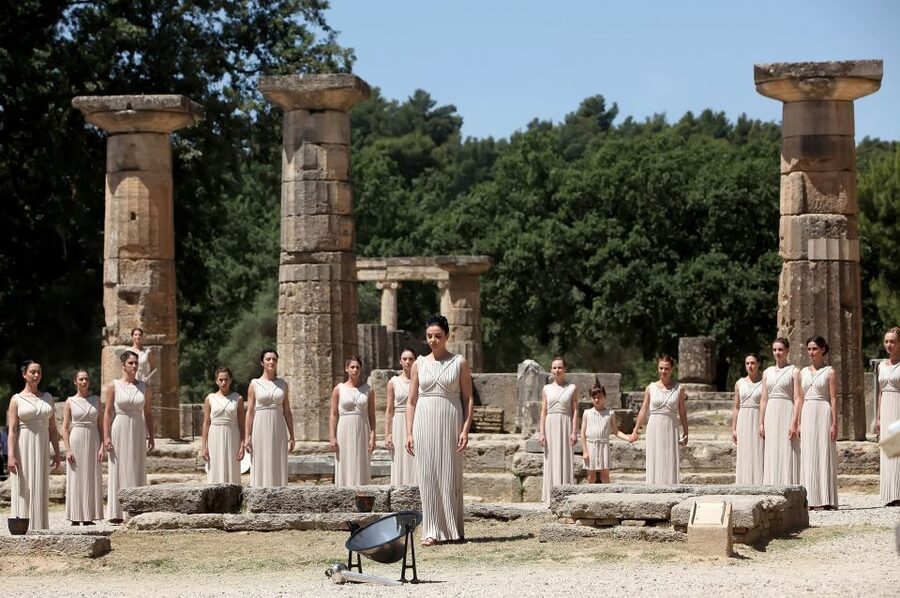
The strongest feature of this trip is the guide. Names and assignments vary, but guides praised on different departures include Anna, Marianna Tsigaridou, Dimitris, Evangelist, Christine, and Maria Anna. Their shared role is not simply to point at ruins. They explain how myths, religion, politics, architecture, and modern Greece connect.
A guide also helps with the practical side of a large archaeological site. You get clear meeting times, a route through the most important remains, advice on shade, and time to explore alone. One guide used books and images showing possible reconstructions, which made it easier to understand buildings that now survive as scattered blocks.
Group transfers can occasionally be confusing, especially when different tour groups overlap at Mycenae or Delphi. Listen closely for your guide’s name, bus location, and meeting time. The trip works best when you stay alert during transitions.
The drivers deserve credit too. The route includes narrow town streets and curving mountain roads. Drivers such as Spiros, Thomas, Georgios, and Giannis have been singled out for handling those roads well. You may spend many hours seated, so a vehicle with air conditioning and, on some smaller departures, charging ports, makes a real difference.
Is $506 a fair price?
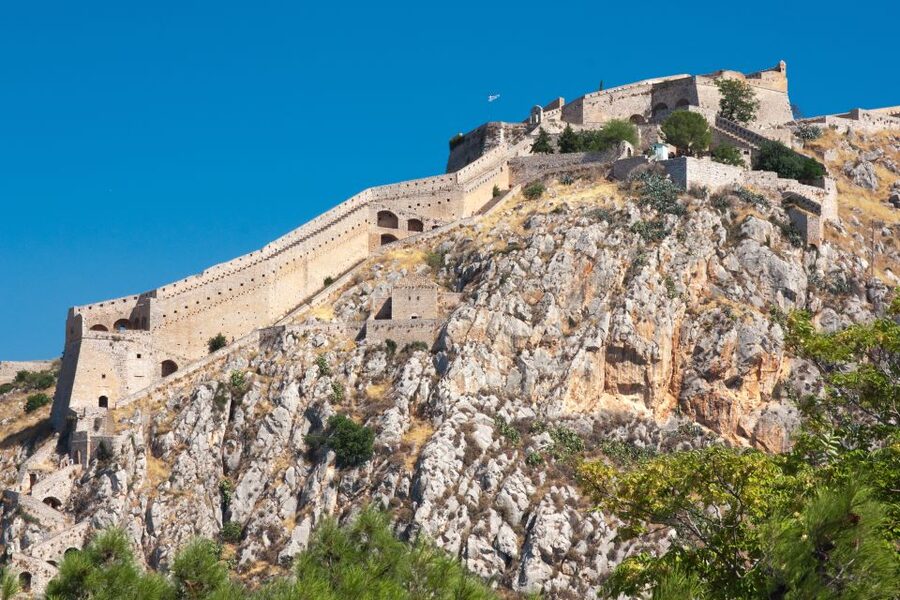
At $506 per person, the price is not cheap, but it covers a lot: three days of transport, two nights in hotels, breakfast, dinner, an English-speaking guide, and admission fees to the archaeological sites and museums included in the route.
The value is strongest if you want to see all four major destinations without arranging several hotel bookings and long-distance transfers. Mycenae, Olympia, and Delphi are far enough apart that independent planning would take time and could require an extra day.
The value is weaker if you prefer to linger at one site, choose your own restaurants, or stay in boutique hotels. The schedule is designed for coverage. Lunch remains your responsibility, drinks are extra, and the hotel tax is paid separately.
The carbon-neutral format is another positive for visitors who want to reduce the environmental cost of a road trip. It does not shorten the distances or make the bus rides disappear, but it is a sensible feature for a route that relies on road transport.
Who should book this three-day trip?
I would choose this tour if you have limited time in Athens and want a solid introduction to classical Greece. It suits first-time visitors, history fans, families with older children, and anyone who prefers having the major logistics handled.
It is also useful for people who value interpretation. The ruins at Olympia and Delphi can be difficult to read without context. A skilled guide turns foundations, columns, and fragments into places with purpose.
I would hesitate if you use a wheelchair, since the activity is not suitable for wheelchair users. I would also think twice if heat, uphill walking, or long bus journeys are difficult for you. The route is busy, especially on the two main archaeological days.
Book the four-star option if hotel condition is important. Choose the three-star option if you are comfortable with simpler accommodation and want to keep the overall cost down. Either way, bring comfortable walking shoes, water, sun protection, and a small bag for the day.
Free cancellation is available up to 24 hours before departure, and you can reserve now and pay later. Pickup from most centrally located Athens hotels is available on request, but confirm the exact details before departure.
Should you book it?
Book this tour if your goal is to see the major ancient sites efficiently and understand what you are seeing. The route is demanding, but it covers an impressive amount of ground, and the best guides add the myths, architecture, and historical links that make the ruins meaningful.
Skip it if you want a slow, independent trip with long lunches and flexible hours. For most visitors with only a few days, though, the combination of Mycenae, Olympia, Delphi, Epidaurus, and the Corinth Canal makes the $506 package a practical way to reach places that are awkward to connect on your own.
FAQ
How long does the tour last?
The tour lasts three days and includes two overnight hotel stays, one in Olympia and one in Delphi.
Which archaeological sites are included?
The route includes Epidaurus, Mycenae, Olympia, and Delphi. It also includes a stop at the Corinth Canal and visits or short stops in places such as Nafplia, Nafpaktos, Arachova, Tripolis, and Megalopolis.
Is transportation included?
Yes. Transfers are provided by a luxury, air-conditioned bus. Some departures may use a smaller passenger van.
Are entrance fees included?
Yes. Entrance fees are included for the archaeological sites and museums visited as part of the tour.
Are meals included?
Breakfast and dinner are included. Lunch, drinks, and personal expenses are not included.
What type of hotel accommodation is provided?
You can select a three-star or four-star hotel option, depending on availability and the booking choice. Rooms are assigned as double or triple rooms. A separate booking is required for a single room.
Is hotel tax included?
No. The hotel accommodation tax is paid directly to the hotel. The stated cost is €5 per room per night at three-star hotels and €10 per room per night at four-star hotels.
Is hotel pickup available in Athens?
Free pickup is available from most centrally located Athens hotels on request. Pickup usually takes place about one hour before departure, or you can meet at the tour supplier’s office 15 minutes before the tour. Confirm the exact location and time with Key Tours.
Fresh on the Athens list
- Athens Airport Arrival Transfer to Hotels or Addresses in Athens★ 3.5 · 45 reviews
- Private Luxury Tour: Unveiling the Sacred Mysteries of Eleusis★ 5.0 · 45 reviews
- Luxury Catamaran Sunset Semi-Private & Greek Gastronomy in Athens★ 5.0 · 45 reviews
- From Athens: Aegina Island guided tour in a day★ 5.0 · 45 reviews
- Delphi, Thermopylae full day private tour from Athens★ 4.9 · 46 reviews
- From Athens: City & Corinth Guided Day Tour★ 4.8 · 46 reviews
- Acropolis Private Wine Tasting @ Finewine store★ 5.0 · 46 reviews
- Ancient Corinth Half-Day Private Tour from Athens★ 5.0 · 46 reviews
Athens Tours, compared.

Acropolis & up to 5 Archaeological Sites Combo Pass
Read our review →

Acropolis, Parthenon & Acropolis Museum Guided Tour
Read our review →
Cape Sounion & Poseidon Temple Sunset Half-Day Trip
Read our review →


Cape Sounio & Poseidon Temple Trip with Audio Guide
Read our review →
Hydra, Poros, and Aegina Day Cruise with Lunch
Read our review →Browse the lists this tour appears in