
Reviewed · ACROPOLIS & ACROPOLIS MUSEUM TOURS
Athens: Acropolis and Parthenon Guided Walking Tour
The best part of this tour is the way it follows the natural climb through the Acropolis. You begin among theaters and healing temples, pass through the Propylaea, then reach the Parthenon and Erechtheion with the city spread below you. The route feels like a story, not a march from one famous ruin to the next.
I like the South Slopes entrance, which can be easier than approaching from the North Slope, and I like the guides’ habit of finding shade when the sun is fierce. Past guides such as Simon, Kostas, Iris, Alexia, Angel, and Christos have been praised for clear explanations, humor, and strong knowledge of architecture, mythology, and archaeology. The main catch is that the tour involves steep, uneven walking and cannot use the Acropolis elevator on group tours.
Key points to know before you book
- A two-hour route through the Acropolis: You see the Theater of Dionysus, Asklepieion, Odeon of Herodes Atticus, Temple of Athena Nike, Propylaea, Parthenon, and Erechtheion.
- South Slopes entry: The meeting point is Athenian Tours’ office at Mitsaion 2, near the Acropolis.
- English-speaking guide: The best guides bring Greek history, mythology, and architecture together with a friendly pace and occasional humor.
- Skip-the-line entry: Entrance tickets to the Acropolis are included with the ticketed option, helping you avoid the standard ticket queue.
- Serious sun and stairs: Wear sturdy shoes, carry water, and book an early time in summer if possible.
- Not designed for every visitor: The tour is not suitable for children under six, wheelchair users, people with mobility impairments, or people with heart problems.
Starting at the South Slopes entrance
Your meeting point is the Athenian Tours office at Mitsaion 2, postal code 11742. The group then walks toward the Acropolis, entering from the South Slopes. That choice matters because the approach can be less troublesome than the North Slope entrance, especially when crowds gather around the hill.
The tour ends back at the meeting point, so you are not left trying to find the office after the final explanation. There is no hotel pickup, and food and drinks are not included. Plan to arrive ready to walk, with your ticket arrangements settled and your hands free of large bags.
The advertised price is $35.57 per person. For a major Athens sight, that is a reasonable price if you want an English-speaking guide and entry handled for you. You are paying not only for access, but also for someone to connect the stones, temples, politics, myths, and daily life into a clear two-hour visit.
The value is less obvious if you already have strong knowledge of ancient Greek history or prefer to wander alone. Still, the Acropolis can be confusing on a first visit. A guide helps you notice why each building matters and keeps the walk moving through a busy site.
More Walking Tours in Athens
- Athens: Acropolis and Parthenon Guided Walking Tour
★ 4.6 · 5,882 reviews - Greek Food Walking Tour in Athens
★ 5.0 · 4,740 reviews - Acropolis: Acropolis and Parthenon Guided Walking Tour
★ 4.7 · 3,442 reviews
The Theater of Dionysus begins the story
The first major stop is the Theater of Dionysus, built into the southern slope of the Acropolis. This is where ancient Greek comedy and tragedy were performed, so it gives the tour a human beginning. Before you look up at temples, you see a place linked to performance, public life, and the stories that shaped Greek culture.
Your guide explains the role of the theater and points out what remains. Do not expect an intact performance space or a quiet theater visit. You are outdoors, among stone seats and other tour groups, but the setting makes the old plays easier to picture.
This is also where the uphill nature of the tour becomes clear. The route is not a flat city walk. You will be climbing over ancient surfaces and dealing with sun, so this is the time to make sure your footwear and water supply are doing their jobs.
Roman Athens at the Odeon of Herodes Atticus
The walk continues to the Odeon of Herodes Atticus, often called the Herodion. This Roman-era theater was built in memory of the wife of Herodes Atticus. It adds another layer to the Acropolis story, showing that the hill remained important long after the great Classical buildings were completed.
The theater is especially useful as a reminder that Athens was not frozen in the 5th century BC. Greek and Roman periods overlap here, and a good guide can help you keep those eras straight without turning the walk into a string of dates.
You may not enter every interior space on this route, and the tour is focused on the main monuments rather than a long archaeological lecture. The benefit is momentum. You keep moving upward and see how the theaters, temples, gateways, and summit fit together.
Asklepieion and the practical side of ancient religion
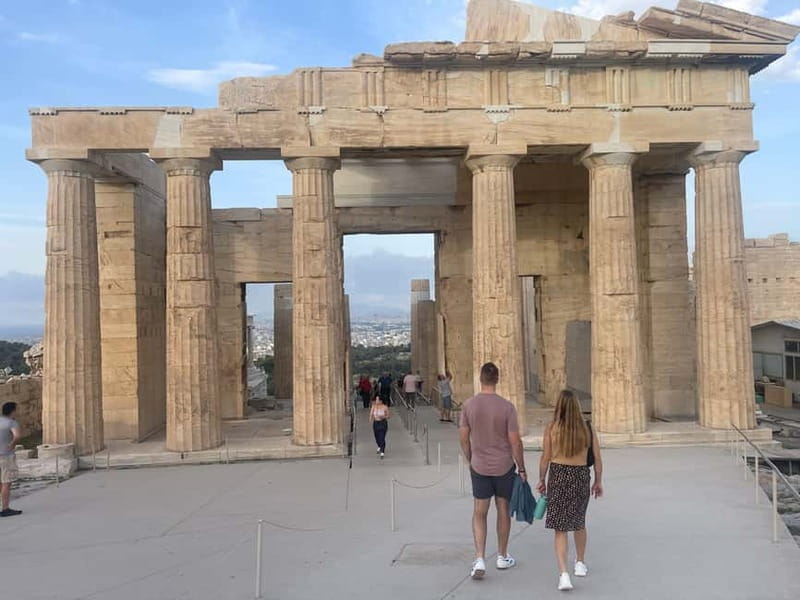
Near the southern side of the Acropolis are the remains of the Asklepieion of Athens, a healing temple dedicated to Asclepius and Hygeia. This stop adds a useful change of subject. The Acropolis was not only about grand temples and civic ceremony. People also came to seek help for illness.
The remains are more modest than the Parthenon, which is exactly why a guide helps here. Without context, you might pass the site as another patch of ancient stone. With an explanation, it becomes part of the everyday religious world of Athens.
I like this sequence because it moves from entertainment at the Theater of Dionysus to Roman memory at the Herodion and then to health and worship at the Asklepieion. You get a broader picture before reaching the hilltop monuments.
A few other Athens mornings to price up
- Athens: Acropolis & up to 5 Archaeological Sites Combo Pass
★ 4.4 · 12,619 reviews - Athens: Acropolis Ticket with Optional Audio or Live Guide
★ 4.2 · 11,055 reviews - Athens: Acropolis, Parthenon & Acropolis Museum Guided Tour
★ 4.8 · 9,316 reviews - Athens: Acropolis, Parthenon & Acropolis Museum Guided Tour
★ 4.8 · 3,579 reviews
Climbing through the Propylaea
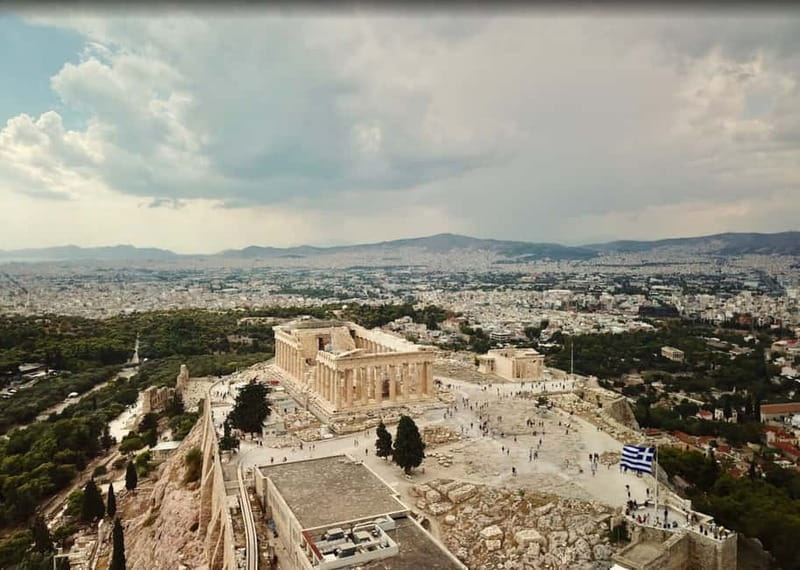
The Propylaea is the monumental gateway to the Acropolis. Passing through it is one of the tour’s strongest moments because the climb suddenly becomes a formal entrance. The gateway frames the summit and prepares you for the Parthenon, even though the view is not arranged like a modern museum display.
The route can be crowded, and other groups may be moving in the same direction. Disposable earphones are supplied for groups of more than five people, which helps you follow the guide when the path is noisy. Audio quality can still suffer when nearby groups are using their own equipment, so stay close and pay attention during key explanations.
The gateway also brings the physical demands into sharper focus. The ground can be uneven, and the hill requires steady uphill walking. The group cannot use the Acropolis elevator, so this visit is best for people who are comfortable with stairs and an exposed climb.
The Temple of Athena Nike and the first great views
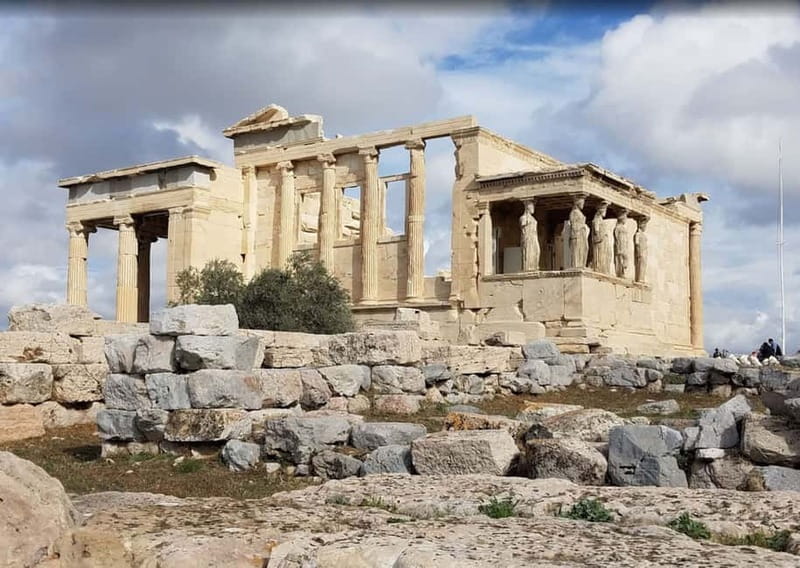
At the Propylaea, you get a view of the Temple of Athena Nike. The small temple honors Athena in her role as Nike, or victory. Its position near the entrance gives it an important visual role, greeting people before they reach the main summit.
This stop is brief compared with the Parthenon, but it is worth your attention. The Acropolis is full of buildings that can seem secondary beside the big temple. A guide helps you understand why a smaller structure could still carry political and religious meaning.
The views begin to open as you climb. You will see Athens from above, with the city extending far beyond the hill. On a clear day, the outlook is one of the major rewards of the visit. Bring a hat and sunscreen, because there is little protection from the sun on the exposed upper levels.
The Parthenon: the centerpiece of the two-hour walk
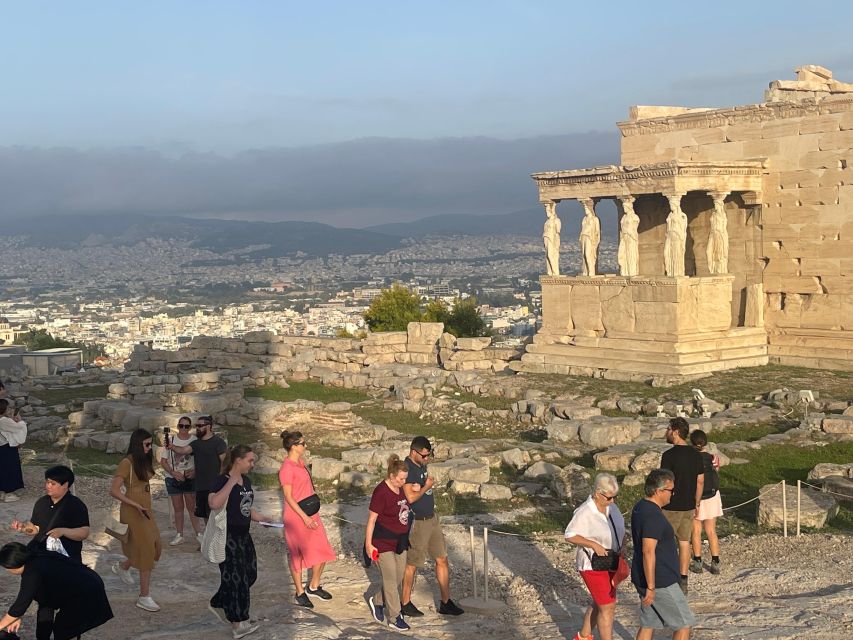
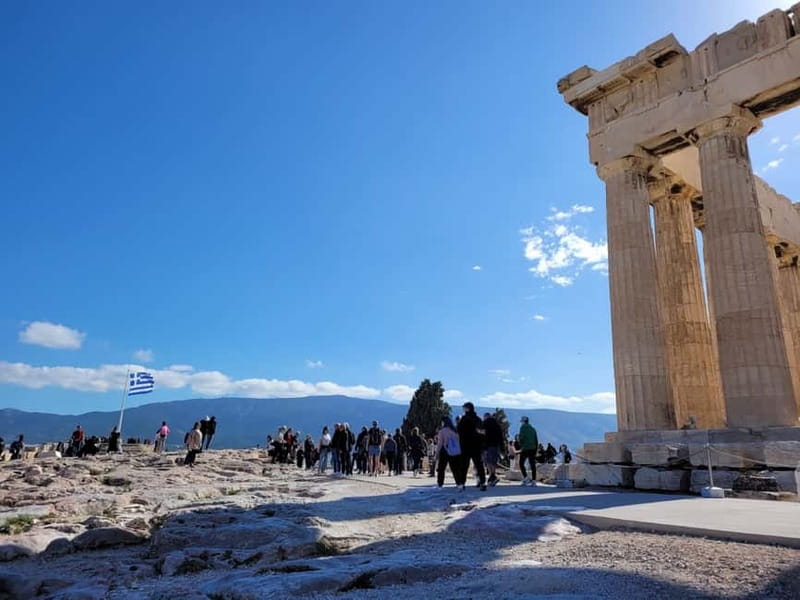
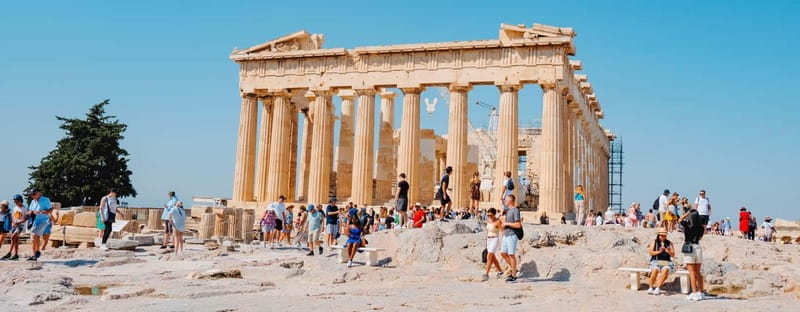
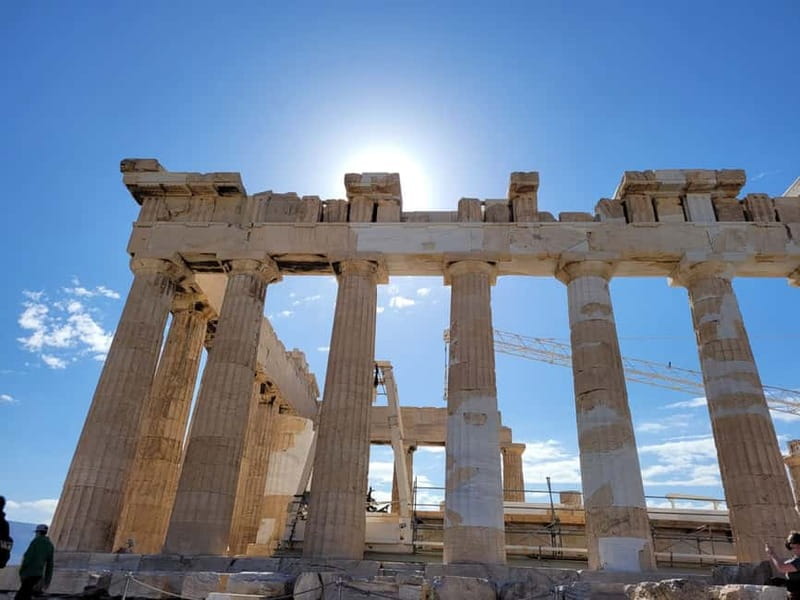
The Parthenon is the main reason most people book an Acropolis tour, and the visit gives you time to see it from several angles. Dedicated to Athena, the city’s patron goddess, it represents the height of 5th-century Doric architecture.
Your guide puts the building into context rather than leaving you with the usual quick description. You can hear how the temple related to Athens, Athena, and the city’s public identity. Architecture becomes easier to read when someone points out the Doric order and explains why the building has mattered so much to later ideas about democracy and Western civilization.
Keep your expectations realistic. The Parthenon is a ruin under continuing care, not a complete ancient temple with its original decoration in place. Scaffolding or conservation work may affect what you see at any given time, and you cannot simply roam anywhere you wish. The tour is still valuable because the scale, setting, and surviving structure are difficult to grasp from photographs.
The summit is also the busiest part of the route. Your guide may pause in a spot where the group can hear and find some shade, then bring you around for views and photographs. Guides such as Iris and Alexia have been especially praised for looking after the group in hot weather, suggesting photo angles, and keeping people safe near crowded edges.
The Erechtheion and its six sculpted figures
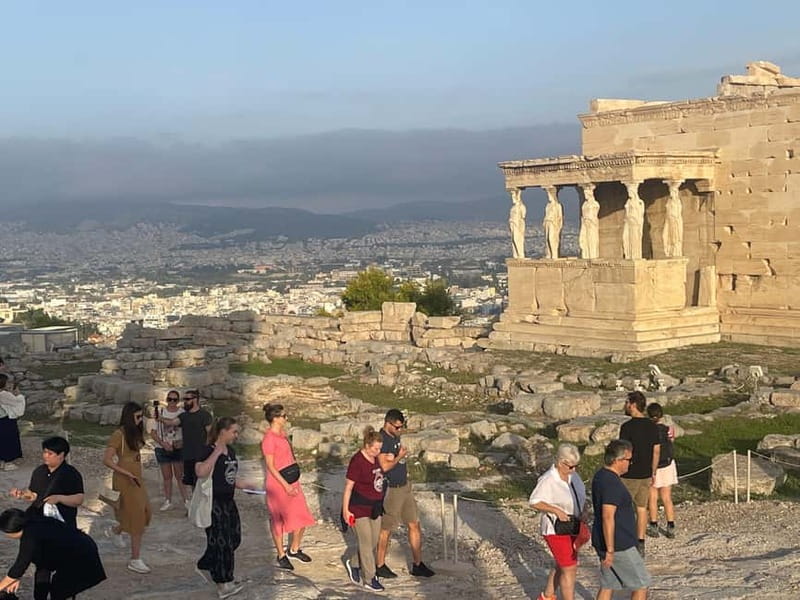
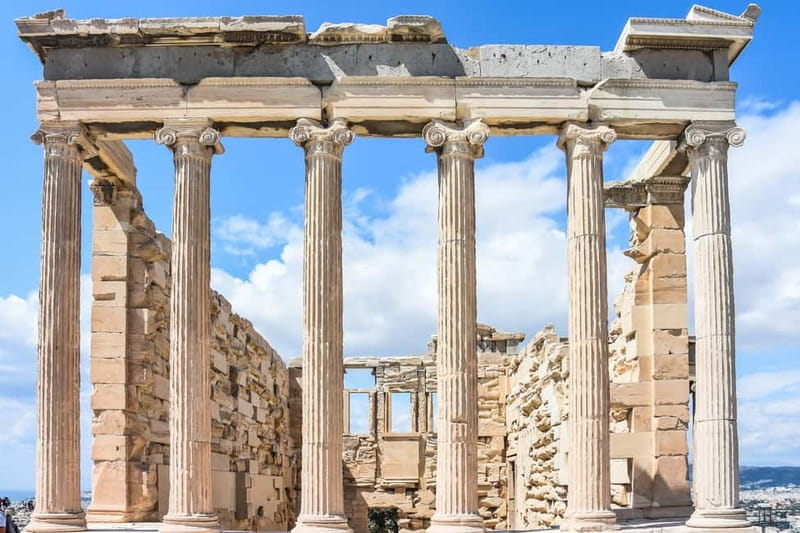
The final major stop is the Erechtheion, a temple with an unusual, asymmetrical design. Unlike the Parthenon’s regular shape, the Erechtheion responds to the uneven ground and the different sacred traditions connected with the site.
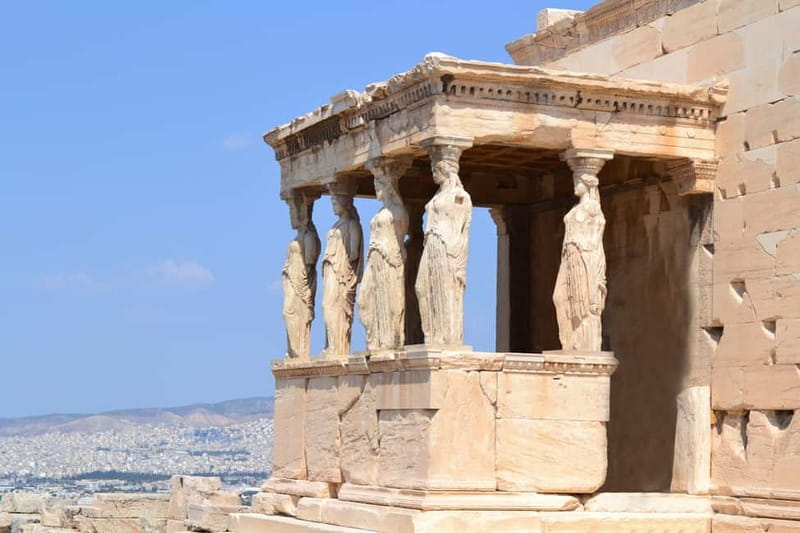
Its best-known feature is the porch supported by six sculpted female figures, commonly called Caryatids. Seeing these figures in place is one of the tour’s most memorable details. Your guide can explain how they function as architectural supports and why this temple feels so different from the Parthenon beside it.
The Erechtheion rewards a slower look. Notice the contrast between the orderly Doric monument and the more complex composition of the neighboring temple. If you are interested in architecture, this may be the point where the tour feels most useful, since the building’s unusual plan is not immediately clear from a distance.
The tour finishes after the Acropolis visit and returns to the meeting point. The Acropolis Museum is not part of this two-hour route, so plan a separate visit if you want to see the original sculptures and museum displays. The supplied information also refers to a ticket option connected with the Acropolis and Museum, so check exactly what your booking includes before paying.
What the guides add to the experience
Guide quality matters greatly on a site like this. The strongest guide reports describe clear storytelling, good pacing, humor, and the ability to connect architecture with Greek history and mythology.
Simon is noted for explaining architecture and Greek culture with real warmth. Christos is described as having studied archaeology and art history, with a talent for linking ancient ideas to modern customs and words. Kostas is praised for humor and for making the experience enjoyable even in August heat.
Alexia and Iris are especially useful names to keep in mind if you are considering how the tour handles difficult conditions. Their guiding style includes finding quieter places to speak, seeking shade, watching group safety, and helping with photographs. You cannot choose a particular guide from the information provided, but these examples show what a strong version of the tour can offer.
The best guides do not simply repeat dates. They help you understand what you are looking at before you reach it, then give you space to look. That balance is important because the Acropolis can become tiring if every stop turns into a long lecture.
Timing, heat, crowds, and what to carry
The tour lasts two hours, with starting times available when you check the date. I would choose a morning slot in July or August if your schedule allows. The hill is exposed, summer temperatures can be harsh, and the tour requires a climb with few comfortable places to escape the sun.
Wear shoes with a firm grip. Sandals that slide on stone will make the ascent less pleasant, and loose footwear is a poor match for uneven ancient paths. Carry water, sunscreen, and a sun hat. There is no reason to make the Acropolis harder than it needs to be.
Photography is allowed throughout the tour. You may not record the guide on video, so use your camera for the buildings and views rather than filming the entire explanation.
Pets, baby strollers, luggage, and large bags are not allowed. Pack lightly and keep valuables close. The tour is not suitable for children under six, wheelchair users, people with mobility impairments, or people with heart problems.
If you choose a no-ticket option, you must buy your Acropolis and Museum entry tickets at least a day before the tour and contact the operator to confirm the correct time slots. The guide can supply only adult, full-price tickets at the meeting point, payable in cash. On free-entry days, prices are adjusted so you are not charged for complimentary admission. Read the ticket wording carefully when booking.
Who will get the most from this Acropolis tour?
This tour suits a first-time Athens visitor who wants to see the essential monuments without spending half the morning working out the route. It is also a good match for anyone who enjoys history but prefers explanations in plain language, with mythology and architecture tied to the actual stones in front of you.
You will get the most from it if you can walk uphill at a steady pace and tolerate sun, crowds, and uneven ground. The two-hour length is long enough to cover the main sites but short enough to fit before lunch or another Athens activity.
Independent visitors may prefer buying entry and exploring at their own speed. You will have less control over how long you spend at the Parthenon or Erechtheion on a guided walk, and the guide’s explanations may not suit every interest. Still, the price is fair for included entry, an English-speaking guide, and a route that covers the major Acropolis highlights in a short visit.
Should you book it?
Book this tour if you want a well-organized first visit, skip-the-line access, and a guide who can make sense of the Acropolis as you climb. Choose an early departure in hot weather, bring water, and confirm whether your selected option includes the entrance ticket.
Skip it if you need elevator access, dislike group pacing, or want a long, quiet study of one monument. For most first-time visitors who have only two hours, this is a practical way to meet the Parthenon, but the real reward is the fuller route: theater, healing temple, gateway, victory shrine, temple, and the remarkable six-figure porch of the Erechtheion.
FAQ
How long does the Acropolis walking tour last?
The tour lasts two hours. The Acropolis portion of the visit is listed as about one and a half hours, with the remaining time covering the approach and stops along the route.
Where does the tour meet?
Meet the guide at Athenian Tours’ office at Mitsaion 2, 11742, in Athens. The activity ends back at the same meeting point.
Is the Acropolis entrance ticket included?
Entrance tickets and skip-the-line access are included with the ticketed option. If you select a without-tickets option, you must arrange your own Acropolis and Museum tickets in advance and confirm the correct time slots.
What language is the tour conducted in?
The tour is conducted in English with a live English-speaking guide.
Can I use the elevator to reach the Acropolis?
The elevator cannot be used on group tours. The route involves walking uphill and is not suitable for wheelchair users or people with mobility impairments.
What should I bring to the tour?
Bring your passport or ID card, comfortable shoes, a sun hat, sunscreen, and water. Pets, baby strollers, luggage, and large bags are not allowed.
Fresh on the Athens list
- Athens Airport Arrival Transfer to Hotels or Addresses in Athens★ 3.5 · 45 reviews
- Private Luxury Tour: Unveiling the Sacred Mysteries of Eleusis★ 5.0 · 45 reviews
- Luxury Catamaran Sunset Semi-Private & Greek Gastronomy in Athens★ 5.0 · 45 reviews
- From Athens: Aegina Island guided tour in a day★ 5.0 · 45 reviews
- Delphi, Thermopylae full day private tour from Athens★ 4.9 · 46 reviews
- From Athens: City & Corinth Guided Day Tour★ 4.8 · 46 reviews
- Acropolis Private Wine Tasting @ Finewine store★ 5.0 · 46 reviews
- Ancient Corinth Half-Day Private Tour from Athens★ 5.0 · 46 reviews
Acropolis & Acropolis Museum Tours, compared.

Acropolis & up to 5 Archaeological Sites Combo Pass
Read our review →

Acropolis, Parthenon & Acropolis Museum Guided Tour
Read our review →
Acropolis, Parthenon & Acropolis Museum Guided Tour
Read our review →

Acropolis monuments & Parthenon Walking Tour with Optional Acropolis Museum
Read our review →
Athens All Included: Acropolis and Museum Guided Tour with Ticket
Read our review →Browse the lists this tour appears in