
Reviewed · ANCIENT CORINTH & PELOPONNESE TOURS
Mycenae, Epidaurus, Nafplio, Corinth Canal Private Full Day Trip From Athens
The best thing about this trip is its sweep through Greek history. In one long day, you move from the Bronze Age fortress of Mycenae to the healing sanctuary and theater at Epidaurus, then on to Venetian Nafplio and the remarkable Corinth Canal. It is a lot of ground, but the route makes sense.
I like the comfort of a private car, especially when Athens is hot and the Peloponnese sites are spread far apart. I also like the human touch: drivers such as George, Giorgos, Melina, Anthony, Harry, and Dimitris have helped make the long road days easy with local stories, restaurant suggestions, Greek words, and tips for seeing each place efficiently.
The tradeoff is time. You get roughly 7 to 9 hours, and that means some stops are brisk. Mycenae and Epidaurus deserve more than a quick look, while Nafplio can easily fill half a day on its own. This is a strong first taste of the region, not a slow archaeological study.
Five things to know before you book
- The Corinth Canal is a quick but striking first stop, with free views from the bridge and steep limestone walls dropping toward the water.
- Mycenae combines ruins, a museum, and the Treasury of Atreus, but entrance fees are extra and the site involves uneven ground and some uphill walking.
- Epidaurus is the day’s great architectural surprise, especially the ancient theater, famous for its clear acoustics and balanced design.
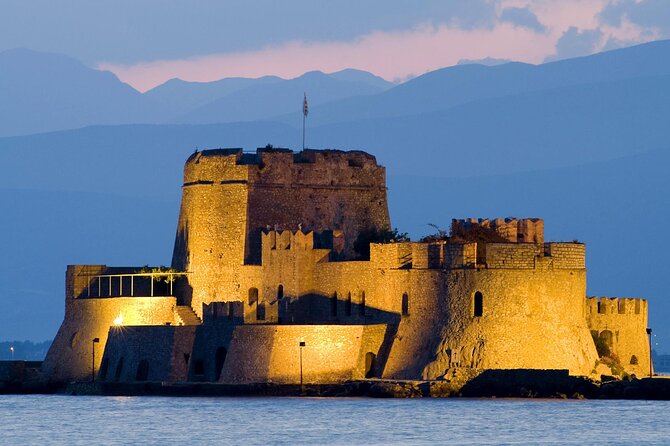
- Nafplio provides the needed change of pace, with seaside restaurants, cobbled lanes, Venetian buildings, Bourtzi Castle, and views toward Palamidi.
- Your driver handles the road and local orientation, but drivers are not licensed to guide inside the archaeological sites unless you pay extra for a certified guide.
- The private format is useful for families and small groups, since your party controls the pace and does not share the vehicle with strangers.
Why this Peloponnese day trip works
Athens is an excellent base, but some of Greece’s most important ancient places sit across the water in the Peloponnese. This tour removes the need to rent a car, study rural bus schedules, or work out how to link four very different sights in one day.
You are picked up at your Athens hotel or other accommodation in an air-conditioned vehicle. The drive is part of the experience, with countryside, coastal views, and conversation along the way. The drivers are English-speaking and can explain Greek life, mythology, and the broad story of the places you are visiting.
I would think of the driver as your road companion and local interpreter, not as a licensed archaeological guide. Several drivers, including George, Melina, Anthony, and Dimitris, have been praised for giving useful background and pointing out what to watch for. Inside the sites, though, you may be on your own unless you arrange a certified guide at extra cost.
That distinction matters. If you want a detailed lecture beside every column, budget for the optional guide. If you prefer to explore independently after receiving a clear orientation, the standard arrangement may suit you well.
A few other Athens mornings to price up
- From Athens: Mycenae, Epidaurus & Nafplio Full Day Trip
★ 4.8 · 2,438 reviews - From Athens: Mycenae, Epidaurus & Nafplio Full-Day Tour
★ 4.5 · 1,580 reviews - From Athens: Ancient Corinth Day Trip with Canal & VR Guide
★ 4.6 · 1,073 reviews
Corinth Canal: a ten-minute engineering stop
The Corinth Canal is usually the first sight after leaving Athens. It cuts through the narrow isthmus linking the Gulf of Corinth with the Saronic Gulf, connecting the Ionian and Aegean seas.
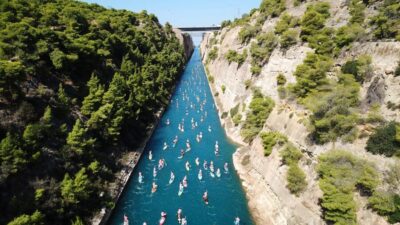
The canal is about 6.4 kilometers long and only about 21.4 meters wide at its base. Its steep limestone sides make it photogenic, and from the bridge you can watch vessels attempt the narrow passage. There are no locks because the canal was cut at sea level.
You have about ten minutes here, so treat it as a viewpoint rather than a full visit. The stop is free and easy to understand at a glance. It also gives you a useful sense of geography: this narrow strip of land is the gateway between central Greece and the Peloponnese.
The canal was proposed in classical times, and an attempt was made to cut it in the first century AD, but the project failed. The modern channel is now of limited economic use because many modern ships are too large for it. Its value on this tour is visual and historical, a quick reminder that people have been trying to solve this geographic problem for centuries.
Mycenae: entering the world of Agamemnon
Mycenae is the first major archaeological stop, and I would give it your full attention. The fortified city was the leading center of the Mycenaean civilization during the Late Bronze Age, roughly 1350 to 1200 BC for most of the visible remains.
Its position is easy to understand once you arrive. The acropolis sits between two hills above the Argive plain, with broad views over routes leading inland and toward the sea. This was not just a palace on a hill. It was a fortified center with political, religious, funerary, and domestic areas.
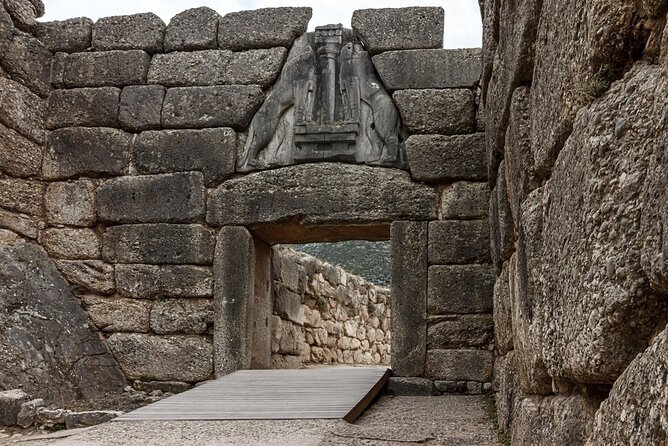
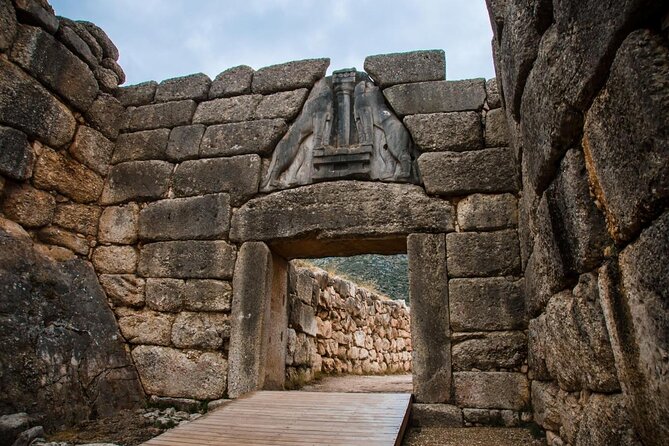
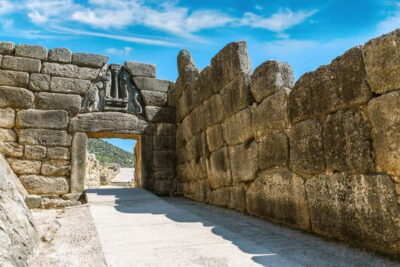
You enter through the famous Lion Gate, the monumental entrance crowned by two lions carved above a triangular relief. From there, the ruins include defensive walls, palace remains, graves, and the rough outlines of a society that shaped later Greek myths.
Mycenae is tied to the legendary Agamemnon, leader of the Greek forces in Homer’s story of the Trojan War. The site belongs to real Bronze Age history, while the stories attached to it belong partly to epic tradition. That mix is what makes the place so engaging. You can look at massive stonework while thinking about the myths that kept the memory of Mycenae alive.
The standard visit allows about 45 minutes at the archaeological site. That is enough to see the main entrance, climb through the citadel, and take in the view, but it is not enough for a slow reading of every ruin. Wear sensible shoes and expect uneven surfaces.
The entrance fee is not included. The listed cost is €20 per person for Mycenae. Check the current charge when booking or before departure, since site fees can change.
The Mycenae museum and the Treasury of Atreus

At the foot of the acropolis, the Archaeological Museum of Mycenae adds detail that bare stones cannot provide. Its nearly 2,500 objects range from the Middle Bronze Age to the Hellenistic period and come from Mycenae and the surrounding area.
You can expect pottery, sculpture, inscriptions, burial objects, and other finds connected with daily life and ritual. The museum helps you see Mycenae as a functioning society rather than just a dramatic hilltop ruin.
The planned museum visit is about 45 minutes, matching the time at the main site. That makes the day’s schedule fairly generous on paper, but the two visits also show why this tour can feel compressed. If you spend extra time photographing the Lion Gate or looking across the plain, you will have less time in the museum.
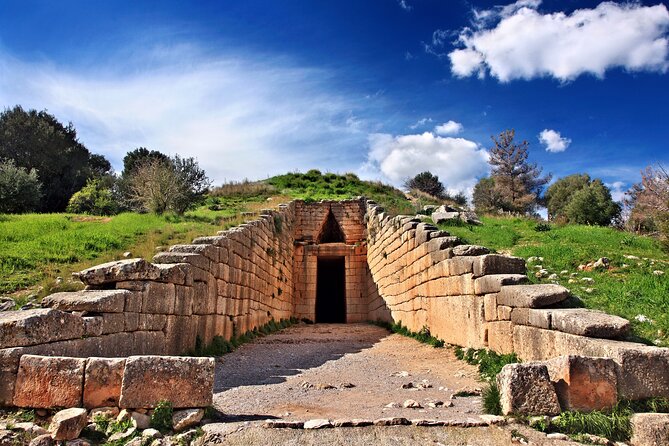
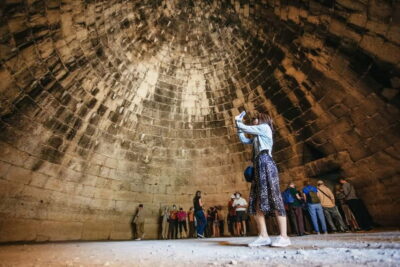
The Treasury of Atreus, also called the Tomb of Agamemnon, is a short additional stop. This is a tholos tomb built around 1250 BC, with a beehive-shaped interior made from carefully laid stone. The entrance is especially impressive: the lintel above the doorway weighs about 120 tons.
You get around 15 minutes here. That is enough to walk into the cool, shadowed chamber and appreciate its scale. The tomb is not a treasury in the usual sense, and its connection with Agamemnon is a later traditional name rather than a proven identification. Still, it is one of the most powerful surviving structures from the Mycenaean age.
Same island, an entirely different sort of day:
- Athens: Acropolis & up to 5 Archaeological Sites Combo Pass
★ 4.4 · 12,619 reviews - Athens: Acropolis Ticket with Optional Audio or Live Guide
★ 4.2 · 11,055 reviews - Athens: Acropolis, Parthenon & Acropolis Museum Guided Tour
★ 4.8 · 9,316 reviews - Athens: Cape Sounion & Poseidon Temple Sunset Half-Day Trip
★ 4.8 · 8,241 reviews
Epidaurus and the ancient science of healing
Epidaurus changes the mood of the day. Mycenae is a fortified center tied to kings and warfare. Epidaurus was a sanctuary devoted to Asclepius, the ancient Greek god of healing.
The Sanctuary of Asclepius once included temples, treatment spaces, monuments, and facilities for people seeking cures. The site lies in the Valley of Dreams in Argolis, and its setting helps explain why visitors came here for care, ritual, and rest.
At the archaeological museum, you can see architectural pieces from the temple and other buildings, inscriptions, pedestals, altars, bronze medical tools, sculptures, votive offerings, and tablets. The museum also includes material from the Tholos and representations of the fourth-century BC temple of Asclepius.
The museum was built between 1902 and 1909, with later additions made as excavation continued. You have about 45 minutes here. It is worth taking the time to connect the objects with the wider sanctuary, since the museum gives meaning to the scattered foundations outside.
The entrance fee for Epidaurus is not included and is listed as €20 per person. As at Mycenae, the cost can add up quickly for a family or group.
The theater at Epidaurus: the day’s highlight for many

The Ancient Theatre of Epidaurus is the most famous part of the sanctuary, and it deserves more than a quick photograph. Built on the side of Cynortion Mountain, it has a carefully balanced fan shape, pale stone seating, and a stage area set below the rising rows.
Its acoustics are the main attraction. From the upper seats, even a small sound made near the center may carry clearly. The theater’s design is often considered one of the finest examples of ancient Greek theater architecture in both appearance and sound.
You have about 45 minutes at the theater. Use that time to walk around the seating, look down toward the stage, and notice how the surrounding hills frame the structure. The site feels open and spacious, so this is one stop where a little quiet observation pays off.
The full sanctuary is larger than the theater alone. If you want to study the temple, baths, stadium, and other remains in detail, the standard schedule will feel short. One useful approach is to ask your driver for a clear route before entering, then focus on the theater and the main sanctuary remains instead of trying to inspect every stone.
Nafplio: lunch beside the Argolic Gulf
After several ancient sites, Nafplio supplies a welcome break. You have about an hour and a half for lunch, coffee, shopping, and a walk through town.
Nafplio was the first capital of the modern Greek state, from the beginning of the revolution in 1821 until 1834. Its history also includes Venetian and Ottoman rule, and the town’s buildings, fortifications, and street plan reflect those changing powers.
This is a place to slow down. You can eat beside the harbor, wander through cobbled streets, or browse small shops before meeting the driver again. The town has a polished feel, but it is still more relaxed than Athens, and the harbor gives you a good place to rest your feet.
Restaurant choice is left to you, although drivers have recommended places such as Kellari. Seafood is a natural choice in this port town, but you can also use the break for a simple coffee and pastry if you prefer to spend your time walking.
The main drawback is obvious: 90 minutes disappears quickly. Lunch alone can take much of that time, leaving little room for the back streets, harbor, and castle views. If Nafplio interests you as much as the ruins, consider returning for a separate overnight stay rather than expecting this short visit to cover the town.
Bourtzi, Akronafplia, and Palamidi

From the harbor, you can see Bourtzi, the small Venetian water castle sitting in the middle of Nafplio’s bay. The tour allows about ten minutes to gaze across the water and take photographs. The timing does not include a separate boat visit, so think of Bourtzi as a scenic feature of the harbor.
Akronafplia rises above the old town and is the oldest of Nafplio’s three fortifications. Its lower walls reach back to the Bronze Age, while later rulers expanded and changed the fortress. It is included as a point of interest rather than a long formal stop, so your time in Nafplio may determine how much you can see.
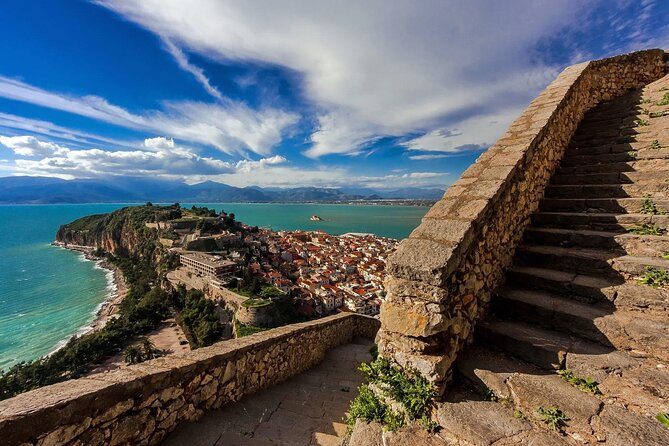
Palamidi Castle is the grandest of the three. Built by the Venetians during their second period of rule, it sits on a 216-meter-high hill above Nafplio and commands views across the Argolic Gulf and the surrounding countryside.
The tour allows about 30 minutes at Palamidi, and the entrance fee is listed as €20 per person. The famous stairway from town has 913 steps, although local counting traditions often round the number to 999, and reaching the highest parts involves more than 1,000 steps in total. The vehicle helps you avoid making the full climb from the harbor, but the fortress itself still requires walking on stone surfaces and slopes.
That half-hour is enough for a look at the walls and the views, but not a thorough examination of every bastion. If you are tired after Mycenae and Epidaurus, you may prefer to admire the castle from below and spend the time in town.
What the private vehicle adds
The private format is the central reason to choose this experience. Only your group participates, and pickup is available from Athens hotels and other accommodations. An airport or airport-area pickup and drop-off costs extra.
The air-conditioned vehicle matters during the warmer months, when the combination of road time, exposed ruins, and stone steps can wear you down. Bottled water is included, and one family particularly appreciated that Dimitris kept everyone supplied between stops.
A private car also makes the schedule less rigid. The exact order and pace can be adjusted to your group’s needs, subject to opening hours and the long driving distance. Ioannis, the tour coordinator, has been described as available and willing to adjust plans, while drivers have helped groups avoid the heaviest crowds by arriving early or choosing an efficient order.
The trip is also suitable for groups larger than a typical couple. One booking included eight friends, and group discounts are offered. At the published price of $231.70 per person, the value improves as you fill the vehicle, since you are paying for private transport and a full day of regional sightseeing rather than a single admission.
Still, calculate the extras. The listed admission fees are €20 each for Mycenae, Epidaurus, and Palamidi, adding €60 per person if all three are charged at the stated rate. Lunch, a certified guide inside the sites, and airport-area transportation are also outside the base price.
Who should book this day trip?
I would choose this tour if you have limited time in Athens and want to see the Peloponnese without driving yourself. It is especially useful for families, small groups, and anyone who values a private vehicle, hotel pickup, and a driver who can add local context along the road.
It also works well for first-time visitors who want to connect several periods of Greek history in a single day: Bronze Age Mycenae, classical Epidaurus, Venetian Nafplio, and the modern engineering story of the Corinth Canal.
I would hesitate if your main goal is careful archaeological study. The total route is ambitious, and one Spanish-speaking visitor found there was not enough time to enjoy Mycenae, Epidaurus, and Nafplio properly. That criticism is fair. Each place can fill a day, especially if you want museums, long walks, and unhurried meals.
Ask for a certified guide if history is your priority. Otherwise, the English-speaking driver can give you background and practical instructions, then let you explore at your own pace. Drivers such as George, Giorgos, Melina, Anthony, Harry, and Dimitris have been singled out for warmth, clear English, local advice, and easy conversation. The specific driver is not guaranteed, so treat those names as examples of the service style rather than a promise.
The tour requires good weather. Free cancellation is available up to 24 hours before the start time, with a full refund under the stated policy. If poor weather forces cancellation, you can receive a different date or a full refund.
Should you book it?
Book this private day trip if you want a comfortable, efficient introduction to the Peloponnese and accept that you will only sample each major stop. The Corinth Canal is quick, Mycenae and Epidaurus are history-heavy, and Nafplio gives you a pleasant break before the ride back to Athens.
Skip it if you have several spare days and would rather stay in Nafplio or spend an entire morning at one archaeological site. For a single free day from Athens, though, the route is unusually rewarding. You see important places, avoid the stress of driving, and get a practical local companion for the road.
FAQ
How long does the tour take?
The experience lasts approximately 7 to 9 hours, depending on the day’s route and conditions.
Where does pickup take place?
Pickup is available from all Athens hotels and other accommodations. Pickup or drop-off at the airport or airport area costs extra.
Are the archaeological site entrance fees included?
No. The stated fees are €20 per person for Mycenae, €20 for Epidaurus, and €20 for Palamidi Castle.
Is a licensed guide included inside the archaeological sites?
No. The included English-speaking drivers have local knowledge but are not licensed to accompany you inside the sites. A certified guide is available for an additional cost.
Is the tour private?
Yes. Only your group takes part in the activity, and private transportation is included.
What is the cancellation policy?
You can cancel at least 24 hours before the start time for a full refund. Changes or cancellations made less than 24 hours before the start time are not accepted for a refund. Poor-weather cancellations offer a different date or a full refund.
More 1-Day Tours in Athens
- Athens: Meteora Monasteries Day Trip with Caves and Lunch
★ 4.7 · 2,964 reviews - From Athens: Small-Group Delphi, Museum & Arachova Day Trip
★ 4.8 · 2,476 reviews - Delphi English Day Trip from Athens with Official Guide
★ 4.5 · 2,199 reviews - Athens: Peloponnese Highlights Day Trip and V.R. Audio Guide
★ 4.5 · 1,425 reviews
More Full-Day in Athens
- All Day Cruise -3 Islands to Agistri,Moni, Aegina with lunch and drinks included
★ 5.0 · 4,958 reviews - From Athens: Delphi Full Day V.R. Audio Guided Tour
★ 4.6 · 3,028 reviews - Athens Full Day Private Tour
★ 5.0 · 2,903 reviews - Athens Greece Full Day private tour
★ 5.0 · 785 reviews
Fresh on the Athens list
- Athens Airport Arrival Transfer to Hotels or Addresses in Athens★ 3.5 · 45 reviews
- Private Luxury Tour: Unveiling the Sacred Mysteries of Eleusis★ 5.0 · 45 reviews
- Luxury Catamaran Sunset Semi-Private & Greek Gastronomy in Athens★ 5.0 · 45 reviews
- From Athens: Aegina Island guided tour in a day★ 5.0 · 45 reviews
- Delphi, Thermopylae full day private tour from Athens★ 4.9 · 46 reviews
- From Athens: City & Corinth Guided Day Tour★ 4.8 · 46 reviews
- Acropolis Private Wine Tasting @ Finewine store★ 5.0 · 46 reviews
- Ancient Corinth Half-Day Private Tour from Athens★ 5.0 · 46 reviews
Ancient Corinth & Peloponnese Tours, compared.
Ancient Corinth Day Trip with Canal & VR Guide
Read our review →
Private Biblical Tour Ancient Corinth & Isthmus Canal from Athens
Read our review →
4-Day Classical Greece Tour: Epidaurus, Mycenae, Olympia, Delphi, Meteora
Read our review →
Ancient Corinth & Nafplio Full Day Trip with Swim
Read our review →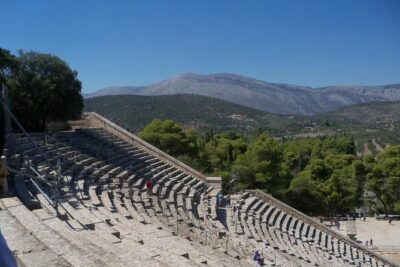
Mycenae and Nafplion Day Trip from Athens with Official guide
Read our review →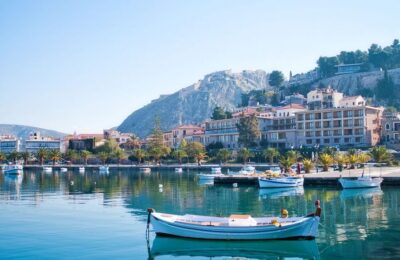
Browse the lists this tour appears in