
Reviewed · ANCIENT CORINTH & PELOPONNESE TOURS
Private Tour of Apostle Paul’s Footsteps in Ancient Corinth
Ancient Corinth brings Paul’s world into focus better than any page of scripture can. You can look across the Agora where he preached, see the Bema where he faced Roman authority, and trace the route from the port of Kenchreai to the city. The Corinth Canal adds a dramatic modern opening to the day.
I like two things in particular: the private format lets you set the pace, and the tour connects biblical stories with Greek, Roman, Byzantine, Frankish, Venetian, and Ottoman remains. Guides such as Giannis, Nick, Ruslan, George, and Fotis are praised for safe driving, clear explanations, and thoughtful help with older family members.
The main consideration is that this is a driver-led tour, not a licensed guide-led visit inside the archaeological sites. If you want a formal biblical study with extended teaching at every ruin, this may feel too light. If you want a well-organized half-day with strong historical context, it makes good sense.
Key points to know before booking
- Paul’s Corinth comes alive at the Bema and Agora: These are the tour’s most important biblical locations.
- The private car saves time: Hotel and port pickup are included, with a sedan used for groups of one to four.
- Acrocorinth is the visual high point: The fortress offers wide views and layers of Greek, Roman, Byzantine, Frankish, Venetian, and Ottoman history.
- The €15 site and museum fee is extra: The tour price does not cover archaeological entrance tickets.
- Guides shape the experience: Giannis, Nick, Ruslan, George, and Fotis are among the named drivers praised for patience, history, and care.
- The pace is active but manageable: Expect several short walks, uneven ground, stairs, and hot sun, especially at Acrocorinth.
Why Paul’s Corinth is worth the trip from Athens
Corinth is close enough to Athens for a half-day outing, yet it feels like a real change of scene. The route takes you west across the Isthmus of Corinth, the narrow strip of land joining mainland Greece to the Peloponnese. Ancient armies, merchants, sailors, and pilgrims all understood the value of this crossing.
Paul spent about 18 months in Corinth around 50 to 51 A.D. The city was a commercial center with busy ports, strong Roman administration, varied religious beliefs, and a population used to foreign ideas. That setting helps explain why Paul’s letters to the Corinthians wrestle with public behavior, pagan customs, social divisions, and the shape of a new Christian community.
I like that this tour does not treat Corinth as only a religious site. You see the city as Paul would have encountered it: a working port region, a commercial crossroads, a place filled with temples and civic buildings, and a Roman city where law and public status mattered.
The experience lasts about five to six hours, including driving time. That is long enough to cover the major sites without turning the day into an exhausting full-day expedition. Your driver provides historical background in English, bottled water, WiFi, and an air-conditioned vehicle. For one to four people, the vehicle is a sedan, while larger groups use a roomier vehicle.
A few other Athens mornings to price up
- From Athens: Mycenae, Epidaurus & Nafplio Full Day Trip
★ 4.8 · 2,438 reviews - From Athens: Mycenae, Epidaurus & Nafplio Full-Day Tour
★ 4.5 · 1,580 reviews - From Athens: Ancient Corinth Day Trip with Canal & VR Guide
★ 4.6 · 1,073 reviews
The Corinth Canal gives the day a striking start
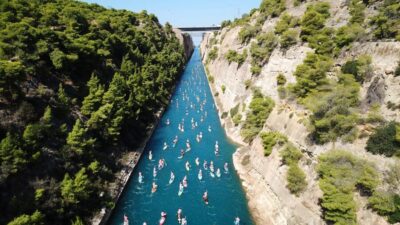
The first stop is the Corinth Canal, cut through the 6.3-kilometer-wide isthmus in 1893. Steep limestone walls drop toward the clear water, making this one of those quick stops that earns its place on the schedule.
You get about 20 minutes here, enough for photos and a look at the engineering problem that has shaped this region for centuries. The canal turned the Peloponnese into an island and shortened sea routes around the southern Greek peninsula.
This stop is not directly tied to Paul, but it gives you the geography you need. Corinth controlled movement between mainland Greece and the Peloponnese, and its ports linked the city to routes across the Aegean and Mediterranean. The canal also makes a useful contrast with the older solutions you see next.
The Diolkos shows how ancient engineers moved ships
Near the canal are the remains of the Diolkos, a stone-paved trackway used to haul ships over the isthmus. It predates the canal by more than two thousand years.
You spend only about 10 minutes here, so think of it as a short orientation stop rather than a major archaeological visit. The remains are modest, but the idea behind them is remarkable. Instead of sending ships around the dangerous Peloponnese, ancient crews could move them across land along this route.
This is one of the tour’s more unusual details. It helps you see Corinth not simply as a place of temples and ruins, but as a city built around trade, transport, and practical engineering. Comfortable shoes matter, even at the short stops.
Kenchreai connects Paul with the eastern sea route
At ancient Kenchreai, you reach Corinth’s eastern port. Paul is associated with this harbor during his first visit to Corinth around 51 A.D., and he later sailed from here toward Ephesus.
Only modest remains are visible, and the stop lasts about 20 minutes. Do not expect a large, intact port complex. Its value comes from the location and the story attached to it. This is where Corinth met the eastern sea, and where Paul’s movement through the region becomes easier to picture.
The site also connects with Phoebe, a prominent Christian woman from the local church. She is associated with Paul’s letter to the Romans, which he entrusted to her. That detail gives the stop a broader view of the early Christian community, including the important role of women in its work.
Your driver may explain the port from the roadside and nearby remains rather than lead a long archaeological walk. That is typical of this experience, so it suits you best if you enjoy learning through conversation and location rather than expecting a formal lecture at every stop.
Same island, an entirely different sort of day:
- Athens: Acropolis & up to 5 Archaeological Sites Combo Pass
★ 4.4 · 12,619 reviews - Athens: Acropolis Ticket with Optional Audio or Live Guide
★ 4.2 · 11,055 reviews - Athens: Acropolis, Parthenon & Acropolis Museum Guided Tour
★ 4.8 · 9,316 reviews - Athens: Cape Sounion & Poseidon Temple Sunset Half-Day Trip
★ 4.8 · 8,241 reviews
Ancient Corinth puts the Bible story on solid ground
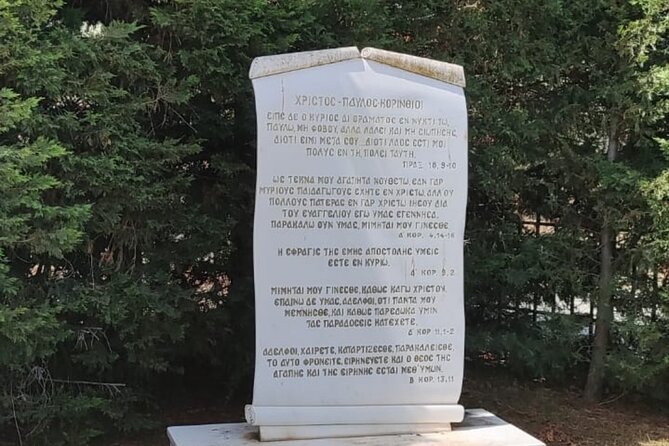
The main archaeological site at Ancient Corinth is the heart of the tour. Here you walk through the Agora, the city’s public marketplace, where Paul shared his message. The ruins let you connect familiar names from the New Testament with an actual civic setting.
The Bema is the key point. This raised platform in the center of the city is linked with Paul’s appearance before the Roman proconsul. Whether you come for religious reasons or simply want to understand Roman civic life, the Bema explains the authority structure Paul faced.
Nearby, you can see the remains of shops associated with the city’s commercial life. The tentmaking work of Paul, Aquila, and Priscilla fits naturally into this setting. You also encounter the street connected with Erastus, a civic official who became a co-worker of Paul.
The Temple of Apollo provides a powerful reminder that Christianity developed within an older pagan world. Corinth was not an empty stage waiting for Paul. It had established temples, public rituals, local gods, and social customs that often conflicted with Christian teaching.
The visit here is scheduled for about 40 minutes, which is enough for an overview but not enough for every corner of the site. The archaeological entrance fee is not included. The stated additional charge is €15 per person for the archaeological sites and museum, so add that to your budget.
One important detail: your driver is not a licensed guide accompanying you inside the archaeological site. Drivers such as Giannis, Nick, George, and Ruslan are described as offering extensive historical and biblical context, but the arrangement is different from hiring a licensed archaeologist. If you want specialist interpretation of every inscription and building, check this point before booking.
The museum fills in the details the ruins cannot show
The Archaeological Museum of Ancient Corinth is built beside the excavation site and gives you a closer look at the city’s long development. The galleries include prehistoric objects, artifacts from the Sanctuary of Asklepios, and items that illuminate daily, religious, and artistic life.
I find a museum visit especially useful after walking the Agora. Ruins give you scale and setting, but museum pieces show how people actually lived, worshiped, worked, and decorated their surroundings. The two stops work together.
You have about 45 minutes here. That is a reasonable amount of time for a focused visit, although you may want longer if ancient art and archaeology are central interests. The museum entrance is part of the extra €15 per person site and museum cost.
The museum also helps balance the Paul-centered theme. You are not shown only Christian locations. Instead, you see the wider culture Paul encountered, including the religious traditions and civic systems that shaped Corinth before and during the Roman period.
Acrocorinth delivers the biggest views and the hardest walking
Acrocorinth rises above the ancient city and served as its fortified acropolis. The walls, gates, towers, and bastions were built and rebuilt across Greek, Byzantine, Frankish, Venetian, and Ottoman periods. You can read the site as a timeline in stone.
The stop lasts about 40 minutes and is free according to the tour details, but it is also the most physically demanding part of the day. Expect uneven ground and some uphill walking. Bring sturdy shoes, water, a hat, and sunscreen. Anyone with limited mobility should ask the company how much of the fortress can be covered comfortably.
The views are the payoff. From this height, the ancient city and surrounding countryside make more sense, and you can see why control of Acrocorinth mattered. This was not merely a religious hill. It protected the city and the routes around it.
The site is also linked with the Temple of Aphrodite, whose reported religious community included up to 1,000 priestesses. The story adds another layer to the contrast between Corinth’s older pagan traditions and the Christian message Paul brought.
Some families turn the climb into a playful challenge, but you do not need to race up the hill to enjoy it. The private format is useful here because your driver can adjust the pace and give you time for photographs.
Saint Paul Church brings the ancient story into the present
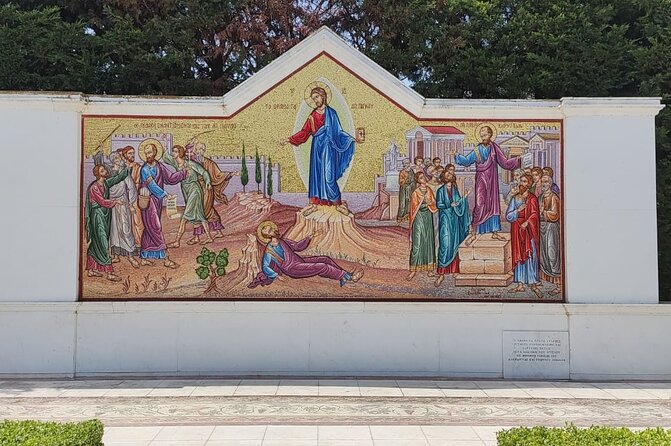
The final stop is the modern Apostolos Pavlos Church in the heart of Ancient Corinth. Inside, a mosaic by Pastorutti and Tsotsonis depicts Paul’s journey and mission in the city.
This is a short 20-minute visit, but it gives the day a calm ending. After the Agora, temples, fortress, and museum, the church shows how Corinth continues to remember Paul today. It is a modern place of worship, not an ancient ruin, so the experience shifts from archaeology to reflection.
The church is particularly useful if you want a clear closing point. You have followed the route through ports and civic spaces, then ended at a place devoted directly to Paul’s legacy.
Private transport makes the half-day format work
Pickup and drop-off are included from Athens hotels, apartments, and the port. At a hotel or apartment, the driver waits at the entrance. At the port, the driver waits at the gate with a sign showing your name.
Drivers such as Nick, Ruslan, Giannis, George, Fotis, and Dennis receive praise for arriving on time, driving safely, keeping the vehicle clean, and helping older passengers in and out. Cold water, restroom planning, and advice about lunch also come up as practical strengths. One group was collected at Piraeus and later taken to the airport, but airport pickup and drop-off are optional and cost an extra €50 per booking.
The private setup is valuable for families, couples, and small groups with different walking speeds. You are not tied to strangers or a rigid coach schedule. You can ask for more time at the Agora, move quickly through a short stop, or pause for photographs.
The tradeoff is price. At $169.03 per person, the tour is not the cheapest way to reach Corinth, especially once you add the €15 site and museum admission. But the price includes private transport, hotel or port service, an English-speaking driver, bottled water, and several hours of routing across sites that are spread out. For a small group, the cost can be reasonable when compared with arranging separate transport and local explanations.
What kind of guide experience should you expect?
The company provides professional English-speaking tour drivers with strong knowledge of Greek history. Names assigned to past tours include Giannis, Nick, Ruslan, George, Fotis, Dennis, Johnny, and Ziannis.
The strongest pattern is personal care. Drivers are described as patient with older relatives, helpful with luggage, attentive to comfort, and willing to allow extra time when needed. Safe driving matters on a route that includes narrow roads and the climb toward Acrocorinth.
The tour is not presented as a formal Bible class. Most drivers connect Acts of the Apostles and Paul’s letters with local history, but the amount of religious detail can vary by driver and by your questions. Tell your driver early how much biblical discussion you want.
If you have read about Aquila, Priscilla, Phoebe, Erastus, and Paul’s time in Corinth, the locations will carry more weight. If you arrive without that background, you will still get an overview of ancient Corinth, but the Paul connection may feel less detailed than you expect.
What to bring and how to judge the walking
Wear comfortable shoes. Ancient Corinth includes uneven surfaces, and Acrocorinth adds uphill walking and fortress paths.
A hat and sunscreen are sensible in Greece’s strong sun. Bottled water is supplied, and drivers may help with refills or restroom stops, but you should still bring your own water bottle if you prefer to drink often.
Child seats are available by request. Most people can take part, but the tour does involve walking through archaeological areas and exploring a hilltop fortress. Ask ahead if someone in your group has serious mobility limits.
The tour requires good weather. If poor conditions cause cancellation, you can choose another date or receive a full refund. Normal cancellation allows a full refund when you cancel at least 24 hours before the start time.
Who should book this Corinth tour?
I would choose it if you are staying in Athens and want a well-planned route into the Peloponnese without renting a car. It is especially suitable for Christian visitors who want to connect scripture with real places, families who value private transport, and cruise passengers looking for a port pickup.
It also works for people interested in ancient cities who are not Christian. The Diolkos, Corinth Canal, Agora, Temple of Apollo, museum, and Acrocorinth offer plenty beyond Paul’s story.
I would hesitate if your main goal is a long, academic archaeological tour or a strongly devotional program. The schedule covers seven stops in five to six hours, so the visit is broad rather than slow and highly specialized.
Should you book it?
Book this tour if you want Paul’s Corinth plus the major ancient sights in one efficient private outing from Athens. The best reasons are the flexible car service, the excellent attention given to older family members, the strong driver-hosts, and the chance to combine biblical places with the canal, museum, and Acrocorinth.
Before paying, budget for the €15 entrance fee, confirm airport arrangements if needed, and tell the company how much biblical teaching you want. With those expectations clear, this is a practical and meaningful way to reach Corinth without managing the route yourself.
FAQ
How long does the private Corinth tour last?
The experience lasts approximately five to six hours, and driving time is included.
What is the price of the tour?
The listed price is $169.03 per person. Archaeological site and museum entrance fees are not included.
How much are the entrance fees?
The additional entrance cost is listed as €15 per person for the archaeological sites and museum.
Is hotel pickup included?
Yes. Pickup and drop-off are included from hotels and apartments in Athens. The driver waits at the entrance.
Is port pickup available?
Yes. For port pickup, the driver waits at the gate with a sign showing your name.
Does airport pickup cost extra?
Yes. Airport pickup or drop-off is optional and costs an additional €50 per booking.
Is this a private tour?
Yes. Only your group participates in the activity.
Is a licensed guide included inside the archaeological sites?
No. The tour includes English-speaking professional drivers with historical knowledge, but a licensed guide to accompany you into the archaeological sites is not included.
What should I wear and bring?
Wear comfortable shoes for walking on archaeological ground, and bring a hat and sunscreen. Bottled water is provided, and child seats are available on request.
Fresh on the Athens list
- Athens Airport Arrival Transfer to Hotels or Addresses in Athens★ 3.5 · 45 reviews
- Private Luxury Tour: Unveiling the Sacred Mysteries of Eleusis★ 5.0 · 45 reviews
- Luxury Catamaran Sunset Semi-Private & Greek Gastronomy in Athens★ 5.0 · 45 reviews
- From Athens: Aegina Island guided tour in a day★ 5.0 · 45 reviews
- Delphi, Thermopylae full day private tour from Athens★ 4.9 · 46 reviews
- From Athens: City & Corinth Guided Day Tour★ 4.8 · 46 reviews
- Acropolis Private Wine Tasting @ Finewine store★ 5.0 · 46 reviews
- Ancient Corinth Half-Day Private Tour from Athens★ 5.0 · 46 reviews
Ancient Corinth & Peloponnese Tours, compared.
Ancient Corinth Day Trip with Canal & VR Guide
Read our review →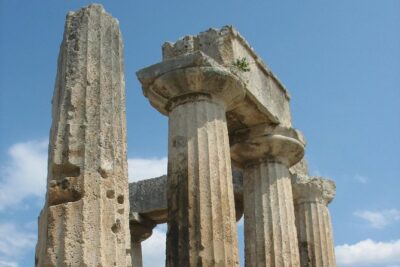
Private Biblical Tour Ancient Corinth & Isthmus Canal from Athens
Read our review →
4-Day Classical Greece Tour: Epidaurus, Mycenae, Olympia, Delphi, Meteora
Read our review →
Ancient Corinth & Nafplio Full Day Trip with Swim
Read our review →
Mycenae and Nafplion Day Trip from Athens with Official guide
Read our review →
Browse the lists this tour appears in