
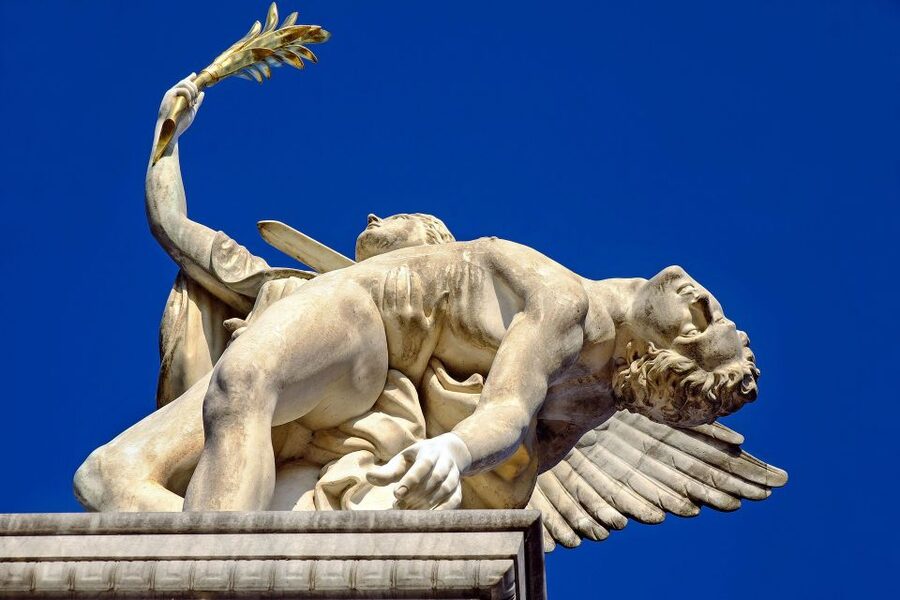
Reviewed · ATHENS TOURS
Athens: Guided Mythological Walking Tour
Greek mythology gets far more interesting when you leave the textbook behind. On this two-hour Athens walking tour, gods, lovers, satyrs, nymphs, and jealous mortals are tied to statues, buildings, streets, and city customs. The stories cover seduction, trickery, family feuds, and divine punishment, not just heroic battles.
I like the route’s mix of major landmarks and overlooked corners, and I like that the guide connects mythology to ordinary Greek life, philosophy, social customs, and architecture. Guides Penelope and Christina have earned especially warm praise for clear English, humor, patience, and keeping children involved. The main caution is the amount of information: this is not a light stroll with one myth at each stop.
Key points to know
- Myths meet modern Athens: Ancient stories are linked to statues, monuments, buildings, and streets you may otherwise pass without noticing.
- A full central-city route: Walk from Korai 4 through the Academy, Syntagma Square, Mitropoleos, Plaka, and Monastiraki.
- Strong guide-led experience: Penelope is frequently praised for her storytelling, while Christina has also led memorable tours.
- Good for curious families: Children and teens can follow the tales, though the content includes adult themes and many names.
- No site admissions: You see monuments from the city streets, but entry fees, food, and transport are not included.
- Plan for sun and pavement: Comfortable shoes, light clothing, water, and a hat are sensible, especially in summer.
A mythology tour that gives Athens a second layer

Most first-time visitors see Athens through its famous ruins. This walk gives you another way in. Instead of treating the city as a row of monuments, it asks you to notice the stories attached to gods, heroes, images, and civic buildings.
That approach matters because Greek mythology was not a sealed-off collection of old tales. It shaped art, political ideas, family customs, literature, and the way ancient Greeks explained the world. You will hear about Zeus and the other gods, but the guide also explains how humans interacted with them and how those beliefs fit into daily life.
The tone is lively, yet the material is serious enough for adults interested in history, literature, anthropology, or philosophy. Penelope, the guide most often named by guests, is described as funny, warm, and able to hold a group’s attention through long stretches of explanation. Christina has also been praised for combining stories with useful city advice.
You should expect an active talk rather than a quiet sightseeing walk. The guide may pause beside a building or statue and explain details that are easy to miss. Ask questions as you go. Small groups can become almost private in quieter seasons, and that makes the experience more conversational.
More Walking Tours in Athens
- Athens: Acropolis and Parthenon Guided Walking Tour
★ 4.6 · 5,882 reviews - Greek Food Walking Tour in Athens
★ 5.0 · 4,740 reviews - Acropolis: Acropolis and Parthenon Guided Walking Tour
★ 4.7 · 3,442 reviews
Starting at Korai 4 and the Academy of Athens
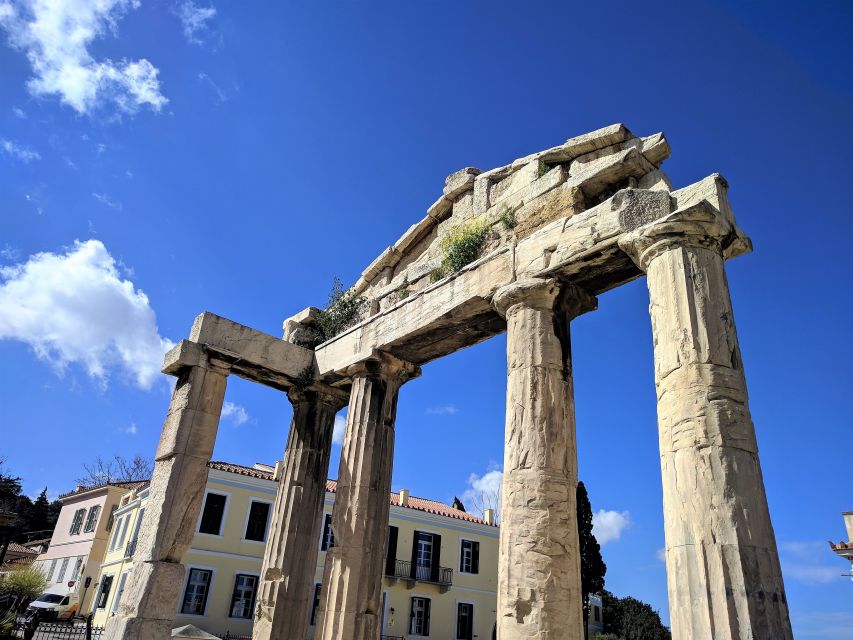
The meeting point is in front of the Starbucks cafe at Korai 4. From there, the route heads toward the Academy of Athens, with about a 20-minute walk listed for this part of the journey.
The Academy is a fitting early stop. Its formal facade and sculptural decoration provide an easy setting for a discussion of Greek gods, ideals, and the way classical imagery has been reused in modern Athens. The value here is not simply seeing a handsome building. You learn how ancient symbols continue to appear in the city around you.
This part of the walk also helps you get your bearings. Athens can feel confusing when you first arrive, with busy streets, broad avenues, and old neighborhoods appearing in quick succession. A guide who explains the city while moving through it gives you useful orientation for later sightseeing.
The first section may feel slow if you came hoping for nonstop legends. The route uses walking time to build a framework, and the guide may introduce several gods, names, and relationships before the tour reaches the older quarters. Take notes mentally, or ask for a quick recap when the family tree gets crowded.
The Numismatic Museum and the Akadimias route
The walk continues to the Numismatic Museum, followed by another section along Akadimias. The listed walking times are about 15 minutes to the museum and 20 minutes onward.
The Numismatic Museum adds a useful change of focus. Coins are small objects, but their images reveal how rulers and societies presented gods, heroes, symbols, and civic identity. Even without entering the museum, the stop gives the guide a chance to connect mythology with public life and visual culture.
No entrance to the Numismatic Museum or other archaeological sites is included, so you should think of this as an exterior walking experience. The guide points out what you can see along the way and explains the setting, but this is not a museum admission tour.
Akadimias keeps the experience tied to present-day Athens. You are not walking through an archaeological park cut off from modern life. Cars, offices, shops, and local streets are part of the scene. That contrast is useful: it shows how ancient stories remain part of the city’s public language even when the surroundings are thoroughly modern.
Syntagma Square and the city’s public face
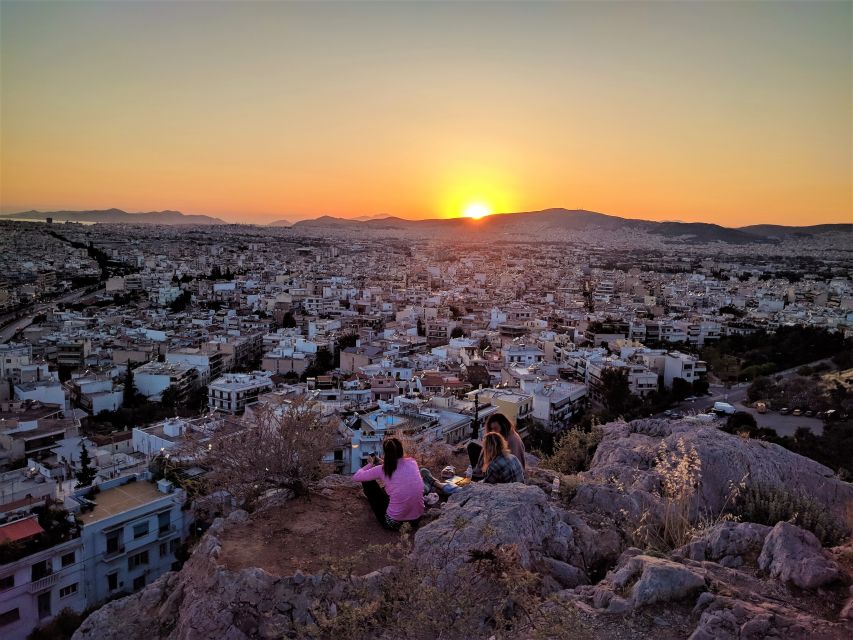
The route reaches Syntagma Square after another 20-minute walk. This is one of Athens’s key civic spaces, and it gives the guide room to discuss how public power, ceremony, monuments, and national identity relate to the ancient past.
Syntagma is not a quiet setting. You may find traffic, crowds, and city activity around you. That can make it harder to hear, especially if the group is large, so stay close to the guide and position yourself where you can see the speaker.
The stop is worthwhile because it broadens the tour beyond tales of romance and revenge. Greek myth is also about authority, order, conflict, and the relationship between gods and communities. The guide uses Athens itself to show how the old stories still influence the way the city presents its past.
This is also a good moment to judge the tour’s pace. The full route covers a lot of ground in two hours, and the schedule includes several walking sections. You will not spend long periods at every location. Instead, the tour keeps moving, with explanations delivered at carefully chosen points.
More walking tours around Athens:
- Acropolis monuments & Parthenon Walking Tour with Optional Acropolis Museum
★ 5.0 · 2,678 reviews - Athens Acropolis and Parthenon Walking Tour
★ 4.5 · 1,355 reviews - Athens Authentic Greek Food Walking Tour (Small Group)
★ 5.0 · 809 reviews - Early Morning Acropolis & Old Athens Guided Walking Tour
★ 4.4 · 748 reviews
Mitropoleos and the shift into older Athens
From Syntagma, the route moves toward Mitropoleos, with about 15 minutes of walking. Here, the city begins to feel more connected to the older central neighborhoods.
The guide uses monuments, churches, statues, and street details to show how different periods of Athens sit beside one another. Mythology does not appear only in ancient ruins. It can turn up in decorative details, public art, names, and the way later generations chose to remember classical Greece.
This is one of the tour’s strongest ideas. You may have already walked through central Athens and looked directly at some of these details without seeing their meaning. With a guide pointing them out, familiar streets become a set of clues.
The experience also covers the social customs and daily lives of Athenians. That makes the walk more useful than a string of entertaining myths. You gain a better sense of how people understood family, religion, gender, ritual, and the boundary between the human and divine worlds.
Plaka: the most atmospheric part of the walk

The route then enters Plaka, with roughly 30 minutes listed for this section. This is likely the most atmospheric stretch, with picturesque streets and a more intimate scale than the broad avenues earlier in the tour.
Plaka works well for storytelling. The setting encourages you to slow down and look around while the guide explains how gods, nymphs, heroes, and humans chased, loved, deceived, and punished one another. The stories have drama, but also plenty of uncomfortable behavior. Expect jealousy, affairs, transformation, and divine pride rather than a sanitized version of mythology.
Families should know what they are signing up for. Children aged around 8 to 13 have been successfully included, and guides have been praised for asking questions and keeping younger people involved. Still, the tales can include violence, seduction, and revenge. Parents may want to decide in advance how much mythological detail suits their children.
Plaka is also where the tour’s practical walking advice matters most. Wear shoes that can handle uneven pavement and bring water. Summer heat can be intense, but Penelope has been praised for choosing shade when possible, taking breaks, and adjusting the pace for the group.
Finishing in Monastiraki
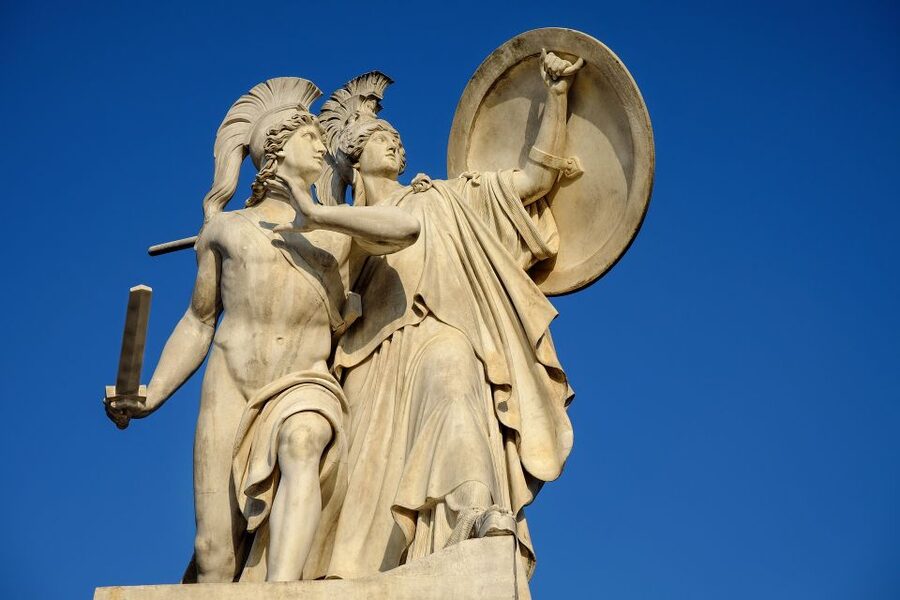
The walk ends at Monastiraki after the Plaka section. This is a convenient finish for continuing your day, since you can remain in the central area after the guide says goodbye.
The final stretch gives the tour a satisfying sense of movement. You begin near Korai 4, pass civic and academic Athens, enter the older quarters, and finish near one of the city’s best-known central meeting areas. You see a broad slice of Athens without needing a bus or taxi between stops.
Do not expect a grand finale inside a major ruin. The tour is built around interpretation from public streets, not admission to the Acropolis or another archaeological site. If you want extended time among excavated remains, pair this walk with a separate site visit.
The ending can also be useful for planning the rest of your stay. A previous guide has provided food, cafe, and bar suggestions after the walk, and some guests found the tour especially useful early in their Athens visit because it helped orient them to the city.
What the $47 price buys you
At $47 per person, this is not the cheapest way to walk around Athens. You are paying for a live English-language guide, a planned route, and two hours of interpretation that ties together mythology, history, art, architecture, and city life.
The value depends on your interests. If you already know Greek mythology and mainly want photographs of major ruins, you may get more from a standard landmark tour or a museum ticket. If you want context for what you are seeing, the price is easier to justify. A good guide can point out details that would otherwise remain invisible and explain connections you would not find on a casual walk.
There are also practical savings in the route. Hotel pickup, meals, and transport are not provided, but the tour stays on foot through central Athens. You do not pay for a vehicle, and you can continue sightseeing immediately at Monastiraki.
The rating is listed at 4.9 from 125 reviews, with repeated praise for guide presentation, depth of subject knowledge, family engagement, and attention to heat. The consistent message is clear: the guide makes the experience. Penelope receives the most frequent praise, while Christina has also led tours that families and couples found personal and useful.
Who will enjoy this Athens mythology walk
I would choose this tour for you if you enjoy stories with layers. It suits people who want to know why a statue looks the way it does, how a myth connects to philosophy, or how ancient religious ideas shaped ordinary behavior.
It is also a strong choice for families with older children and teenagers. The guide’s storytelling, humor, and questions can make a large collection of names easier to follow. The walk gives young people something more memorable than a list of dates, though parents should be comfortable with mature mythological themes.
You may also like it if you have already visited Athens’s major sights. Several parts of the route focus on details and corners that are easy to overlook, so the walk can reveal a different side of a city you think you know.
I would hesitate to recommend it if you want a short, breezy introduction with only the best-known stories. The tour can be information-heavy, especially for people unfamiliar with Greek gods and family relationships. Two hours is enough to cover a lot, but not enough to explain every name at leisure.
Practical advice before you go
Wear comfortable shoes and clothes suited to walking. Bring water, a hat, and sun protection, especially between late spring and early autumn. Shade is not guaranteed, although guides may try to use it and pause when the heat is strong.
Meet in front of the Starbucks cafe at Korai 4 and allow time to find the exact spot. The tour is conducted in English, and the price does not include meals, hotel pickup, drop-off, or admission to archaeological sites.
You can cancel up to 24 hours before the start for a full refund, and the reserve-now, pay-later option lets you hold a place without paying immediately. Check the available starting times before booking, since the duration is fixed at two hours but the departure time can vary.
Should you book this tour?
Book it if you want Athens to feel like more than a collection of ruins. The route gives you a useful city orientation, a steady stream of myths, and a closer look at statues, architecture, and streets that are easy to ignore.
The best reason to choose it is the guide-led storytelling, particularly if Penelope is leading your departure. Just bring water, expect plenty of information, and understand that site entrances are not part of the price. For mythology fans, curious families, and visitors who want a fresh way to read Athens, $47 is a fair price for two focused hours.
FAQ
How long is the Athens Guided Mythological Walking Tour?
The tour lasts two hours.
Where does the tour begin?
It begins at Korai 4, in front of the Starbucks cafe.
Where does the tour end?
The walk ends at Monastiraki in central Athens.
Which places are included on the walking route?
The route includes the Academy of Athens, the Numismatic Museum area, Akadimias, Syntagma Square, Mitropoleos, Plaka, and Monastiraki.
What language is the tour conducted in?
The live tour guide speaks English.
Are archaeological-site entrance fees included?
No. Entrance to archaeological sites is not included in the tour price.
What should I wear?
Wear comfortable clothes and walking shoes. Water, a hat, and sun protection are also sensible, particularly in hot weather.
Fresh on the Athens list
- Athens Airport Arrival Transfer to Hotels or Addresses in Athens★ 3.5 · 45 reviews
- Private Luxury Tour: Unveiling the Sacred Mysteries of Eleusis★ 5.0 · 45 reviews
- Luxury Catamaran Sunset Semi-Private & Greek Gastronomy in Athens★ 5.0 · 45 reviews
- From Athens: Aegina Island guided tour in a day★ 5.0 · 45 reviews
- Delphi, Thermopylae full day private tour from Athens★ 4.9 · 46 reviews
- From Athens: City & Corinth Guided Day Tour★ 4.8 · 46 reviews
- Acropolis Private Wine Tasting @ Finewine store★ 5.0 · 46 reviews
- Ancient Corinth Half-Day Private Tour from Athens★ 5.0 · 46 reviews
Athens Tours, compared.

Acropolis & up to 5 Archaeological Sites Combo Pass
Read our review →

Acropolis, Parthenon & Acropolis Museum Guided Tour
Read our review →
Cape Sounion & Poseidon Temple Sunset Half-Day Trip
Read our review →


Cape Sounio & Poseidon Temple Trip with Audio Guide
Read our review →
Hydra, Poros, and Aegina Day Cruise with Lunch
Read our review →Browse the lists this tour appears in