
Reviewed · ATHENS TOURS
Biblical Corinth: St. Paul and His Letters to the Corinthians
The most meaningful part of this day is its connection to St. Paul’s ministry. You begin at Areopagus Hill in Athens, where Paul addressed the Athenian council, then follow the road to Corinth, the city where he spent about 18 months building an early Christian community and writing to a church facing very human problems.
I like the private format, which lets you linger at a ruin, shorten a stop, or spend extra time climbing Acrocorinth. I also like the range of places covered, from the Corinth Canal and ancient Diolkos to Cenchreae, the port named in Acts. The main consideration is important: your driver does not enter the archaeological sites with you unless you arrange a licensed guide for an extra fee.
- Paul’s Athens connection: Pause at Areopagus Hill, the setting of his famous sermon to the city’s intellectual and religious leaders.
- A full Corinth circuit: See the canal, Diolkos, Isthmia, Ancient Corinth, Cenchreae, Apostolou Pavlou Church, and Acrocorinth.
- Private, adjustable touring: Your pickup time and stops can be adjusted for your group.
- A driver rather than an included site guide: Expect English commentary in the vehicle, then self-guided visits inside the ruins and museums.
- A substantial day out: Plan on 8 to 9 hours, with private air-conditioned transport, Wi-Fi, water, and an optional Greek lunch.
- A strong fit for cruise visitors: Port pickup and return are offered, with direct communication about your ship’s departure time.
A Paul-focused day beyond central Athens
This is not simply a side trip to see a canal and a few scattered ruins. It is built around the places that shaped Paul’s work in Greece, and that focus gives the route a useful thread.
Paul’s time in Corinth is recorded in Acts, while First and Second Corinthians preserve his letters to the Christian community he helped establish. The city was wealthy, strategic, and morally complicated. It sat on the narrow Isthmus of Corinth, where trade, religion, politics, sport, and seafaring all met.
That setting helps explain why Paul worked here. He was not preaching in an isolated village. He was speaking to merchants, sailors, athletes, officials, craftsmen, Jews, Greeks, Romans, and visitors from across the eastern Mediterranean.
The tour costs $218.43 per person. For a private vehicle and a full day of transportation from Athens, that can be fair value, especially for a couple, family, or small group that wants a flexible schedule. The value drops if you expect a traditional escorted tour with a licensed historian walking beside you at every site.
Ancient Corinth and the Archaeological Museum of Isthmia require an additional €15 entrance fee per person. A licensed guide may also be requested, subject to availability and an extra charge. I would settle those details before departure so the day matches your expectations.
Areopagus Hill connects Athens with Corinth
The first stop is Areopagus Hill, also called Mars Hill. Paul addressed the council of Athens here, speaking about the city’s altar to an unknown god and presenting Christianity to a society shaped by Greek philosophy and many forms of worship.
The visit lasts about 20 minutes and has no listed admission charge. It is a short stop, but it gives the whole day a clear beginning. You are not only heading to an archaeological site. You are following the route of a man who carried his message from Athens into the commercial center of Corinth.
The ground around the hill can be uneven, and the stop involves walking. Wear shoes with a firm grip. If your group has already spent time at Athens’ major ancient sites, this brief visit may be enough. If you have not visited the Acropolis area, ask in advance how this stop fits with your planned route.
A few other Athens mornings to price up
- Athens: Acropolis & up to 5 Archaeological Sites Combo Pass
★ 4.4 · 12,619 reviews - Athens: Acropolis Ticket with Optional Audio or Live Guide
★ 4.2 · 11,055 reviews - Athens: Acropolis, Parthenon & Acropolis Museum Guided Tour
★ 4.8 · 9,316 reviews
The Corinth Canal is a dramatic first view
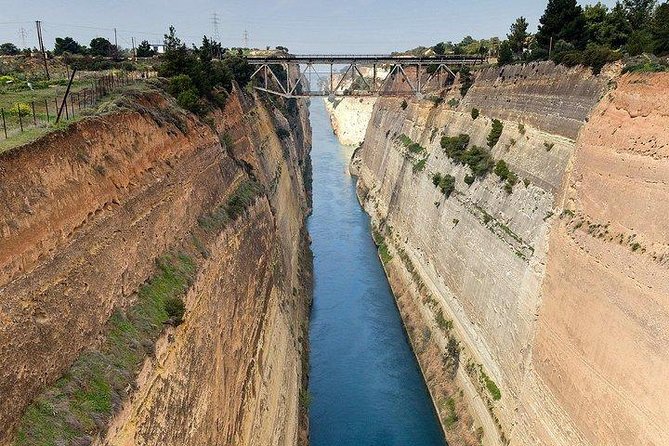
From Athens, the route reaches the Corinth Canal, where steep limestone walls drop toward a narrow strip of water. The canal links the Gulf of Corinth with the Saronic Gulf, joining the Ionian and Aegean seas.
The canal is 6.4 kilometers long and only 21.4 meters wide at its base. It has no locks, since it was cut at sea level. Modern ships can find it too narrow, but the scale of the cut remains impressive from above.
You have about 30 minutes here, with no listed admission fee. This is a scenic and explanatory stop rather than an ancient ruin. It shows why the isthmus mattered long before the modern canal was completed. Corinth’s position allowed people and goods to move between two seas without sailing around the southern Peloponnese.
Look down for boats if conditions permit, but give yourself time to look outward as well. The view makes the geography easy to understand, and geography is the key to Corinth’s power.
Diolkos reveals an older way to cross Greece
Near the canal, the remains of the Diolkos offer a more unusual connection to ancient Corinth. This paved route allowed ships and cargo to be moved overland across the isthmus before the modern canal existed.
You have about 20 minutes here. The surviving remains are not a grand monument, so your driver’s explanation matters. On your own, you might see only a stretch of old roadway. With context, it becomes evidence of an ambitious transport system serving merchants and sailors centuries before Paul arrived.
I especially like this stop because it connects Corinth’s physical setting with its working life. The city was not important only because of temples and public buildings. It was important because people, cargo, and ideas passed through.
Isthmia combines athletic contests and Christian outreach

Isthmia was home to the Isthmian Games, held in honor of Poseidon. These contests were among the most important athletic festivals in the Greek world, second only to the Olympic Games in prestige.
The sanctuary’s location made sense. People coming from the Peloponnese and mainland Greece passed through this narrow corridor, bringing trade and religious activity with them. Paul likely encountered the area’s visitors while working as a tentmaker, a trade that would have placed him near athletes, merchants, and pilgrims.
The tour allows about an hour at Isthmia, followed by time at the Archaeological Museum of Isthmia and the archaeological site. This is where Paul’s athletic language takes on extra meaning. His letters use images of running, training, competition, and discipline. You can see the public world that made those comparisons familiar.
The museum visit lasts about 30 minutes and has a separate entrance charge. Its displays include objects from the Sanctuary of Poseidon, statues, offerings, burial material, and glass panels from Kenchreai. Those glass pieces are especially useful because they connect Isthmia with the nearby port from which Paul later sailed.
Same island, an entirely different sort of day:
- Athens: Cape Sounion & Poseidon Temple Sunset Half-Day Trip
★ 4.8 · 8,241 reviews - Athens: Acropolis and Parthenon Guided Walking Tour
★ 4.6 · 5,882 reviews - All Day Cruise -3 Islands to Agistri,Moni, Aegina with lunch and drinks included
★ 5.0 · 4,958 reviews - Athens, Piraeus, and Coastline: Blue Hop-On Hop-Off Bus
★ 3.9 · 4,849 reviews
The Isthmia ruins show Paul’s pagan setting
At the archaeological site, you see remains linked with the Temple of Poseidon, the stadium, the Sanctuary of Palaimon, and the ancient theater. These ruins help you picture the religious world Paul entered rather than presenting Christianity in isolation.
The theater was first associated with musical contests and later reflected Roman tastes. Mosaics with sea creatures and Dionysian scenes point to a culture that celebrated gods, myth, performance, and public spectacle.
There is also a political side to Isthmia. Its location made it a meeting place for leaders and city-states, and important decisions were made in the area over time. Paul’s message therefore reached a place where religious ceremonies, athletic contests, commerce, and public power overlapped.
The stop at the site lasts about 40 minutes. That is enough for an overview, but not for a slow archaeological study of every structure. If Isthmia is a major priority, ask about adjusting the schedule. The private format gives you room to do that, within the limits of the full route.
Ancient Corinth brings the letters to life
Ancient Corinth is the heart of the experience. Paul spent more than 18 months in the city around AD 51 and 52, and the Christian community he helped form later received the letters known as First and Second Corinthians.
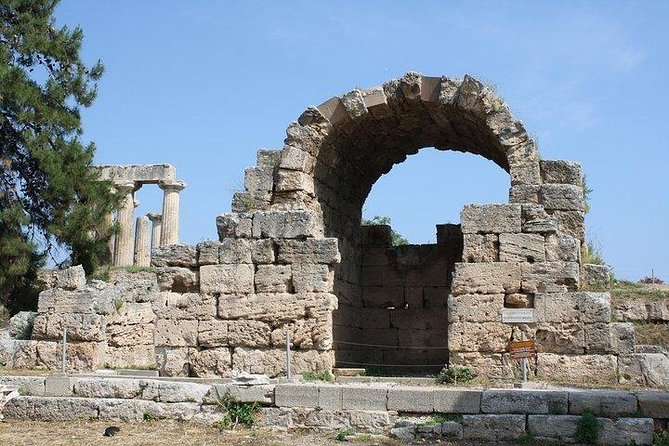
The ruins are larger and more varied than some first-time visitors expect. You move through the remains of a Roman city shaped by earlier Greek traditions, with public buildings, religious monuments, roads, and the remains of the forum.
The Bema, or judgment platform, is the key Paul site. According to Acts, Paul was brought before Gallio, the Roman proconsul, after accusations about his teaching. Gallio treated the dispute as an internal religious matter and refused to take it up as a Roman legal case.
The Bema’s importance is both historical and spiritual. Paul’s mission was not protected because Roman officials embraced it. In this instance, it continued because the official declined to intervene.
Ancient Corinth has an entrance fee, included in the €15 combined cost with the Isthmia museum according to the tour details. The driver explains what to look for before you enter, but does not accompany you inside unless you hire a licensed guide. Bring your own Bible or use a reliable site guide if you want to connect individual ruins with the relevant passages.
The Temple of Apollo gives Corinth its ancient skyline
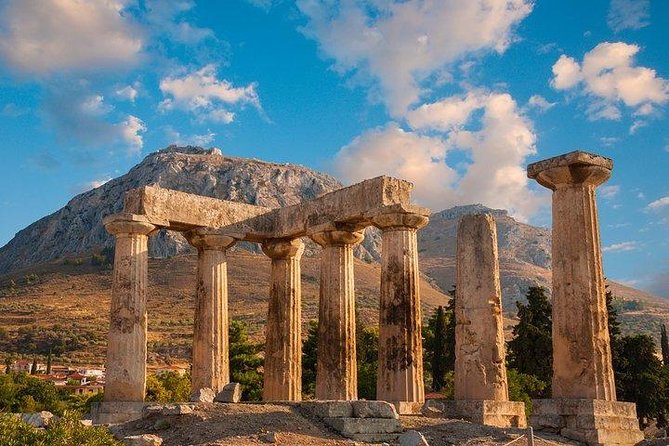
The Temple of Apollo is one of the most recognizable features at Ancient Corinth. Built around 560 BC, it is associated with early Doric architecture and its large monolithic columns.
When Paul arrived, a temple of this age would have helped define the city’s identity. Apollo was linked with prophecy and light, and worship at the site reflected the many-god religious system Paul confronted.
The stop is listed at about 30 minutes, though it forms part of the Ancient Corinth visit. The columns are the visual highlight, but do not stop there. Notice the temple’s position within the wider city and imagine how it would have affected the skyline and daily movement of residents.
A short driver briefing can help you read the site, but again, this is not the same as having a licensed guide beside you in the forum. That distinction is the single most important booking detail.
Cenchreae adds a personal moment to Paul’s story
Kechries is the modern name associated with ancient Cenchreae, Corinth’s eastern port. The stop lasts about 30 minutes and offers a quieter change after the main ruins.
Acts records Paul departing from Cenchreae for Syria with Priscilla and Aquila after cutting his hair to fulfill a vow. The site also connects with Phoebe, whom Paul commends in his letter to the Romans as a servant of the church at Cenchreae.
This stop adds a human dimension to the route. Paul is not only a speaker before crowds or a writer addressing church disputes. He is also a missionary making personal vows, traveling by sea, working with colleagues, and relying on local Christian communities.
The seaside setting is peaceful, but there may be less to see here than at Ancient Corinth. Its value comes from the biblical connection and from understanding how Paul’s work moved outward by ship.
Apostolou Pavlou Church honors Corinth’s Christian memory
The Apostolou Pavlou Church is a short 20-minute stop. It commemorates Paul’s time in Corinth and the Christian community associated with his preaching.
This is a living religious site rather than a classical ruin. You should dress and behave with the same respect expected at any active church. The visit works well after the ancient sites because it shows that Paul’s memory is not confined to museum labels and stones.
The church also gives the itinerary a useful closing note before lunch and the climb toward Acrocorinth. Ancient Corinth explains the setting of Paul’s work. Apostolou Pavlou shows how that work continues to shape local religious identity.
Greek lunch gives the long day a welcome pause
Lunch takes about an hour at a traditional seaside Greek taverna. If you choose the With Greek Traditional Food option, the meal is included in the price. If not, lunch is not included.
The food is one of the practical strengths of the day. Several itineraries described a very good meal, including a meat platter and a taverna with a wide view near the fortress. One driver helped with the menu, which can be useful if you want to try local dishes but are unsure what to order.
You can also choose to bring a packed lunch. That may make sense if your group wants to spend more time at a site, though the included meal option gives the day a more relaxed rhythm.
Acrocorinth demands effort but rewards you with views
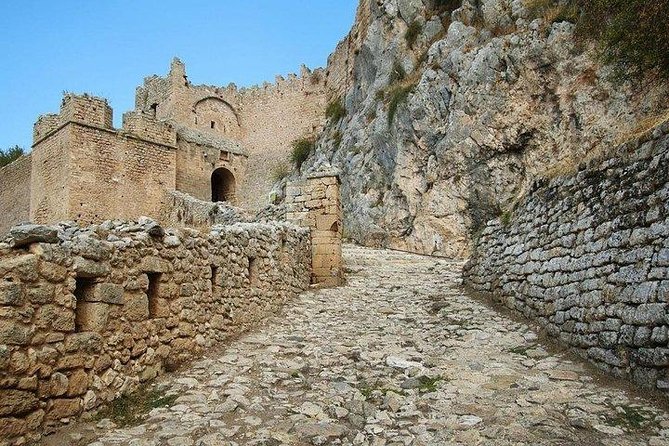
Acrocorinth is the fortress above Ancient Corinth, and it is the most physically demanding part of the route. The visit is listed at about an hour, but the time and effort required will depend on how far you climb.
The ascent includes ancient paths and walls. One account described the hike as harder than expected, while also saying the view near the summit and the area associated with Aphrodite’s temple made the effort worthwhile.
You will see broad views over Ancient Corinth and the surrounding area. The fortress helps explain why this site mattered across many periods: it controlled the approach to the city and offered a commanding position above the isthmus.
Do not treat Acrocorinth as a quick photo stop. Wear proper walking shoes, carry water, and tell the driver if your group needs a slower pace. Bottled water is provided, but the climb still requires care. If anyone in your party dislikes steep or uneven walking, you may prefer to shorten this stop.
The private vehicle is the real convenience
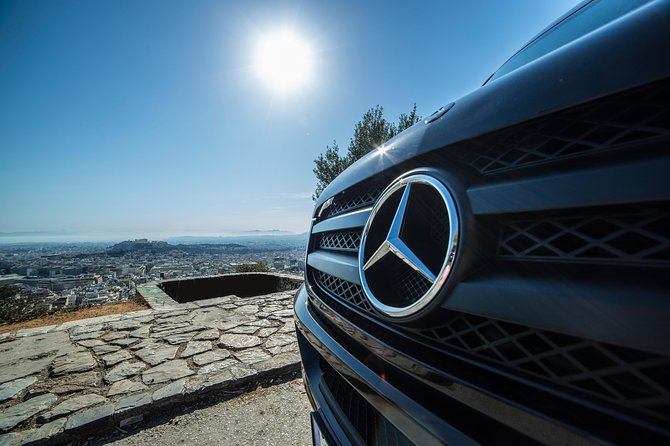
Pickup and drop-off are available at hotels, apartments, and the port. For a hotel, the driver waits in the lobby. For an apartment, the meeting point is the building entrance. At the port, the driver waits at the gate with a sign bearing your name.
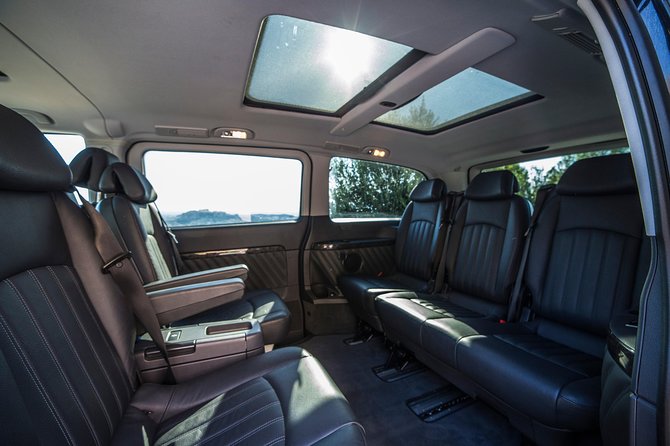
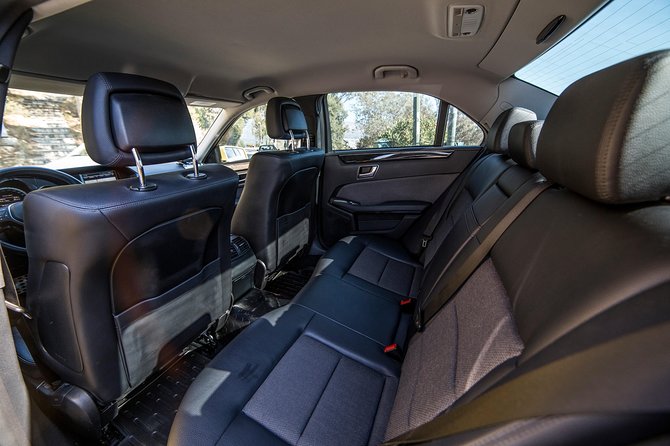
The vehicle is air-conditioned, and Wi-Fi is available onboard. Bottled water is included. These details matter on an 8 to 9 hour route with several stops and a fair amount of outdoor walking.
Your pickup time can be adjusted, and the tour is only for your group. That makes the experience useful for families, church groups, and cruise passengers who need to protect a firm return time.
Communication is another strong point. When one party had given the wrong return time to a ship, the driver helped track the vehicle and contacted the ship with the updated information. Do not rely on that as a substitute for planning, but it shows why you should provide your exact sailing cutoff before the day begins.
Drivers such as Alex, George, Spiros, Stefanos, Panos, Vasilis, and Kostas have been praised for clear English, safe driving, patience, and strong historical commentary. Names depend on assignment, so request a particular person only if the company confirms availability.
Who should book this Corinth experience
I would choose this tour if you want Paul’s story to guide the day but also want to see the wider ancient setting. It is especially suitable for:
- Christian visitors interested in Acts and the Corinthian letters
- Families or small groups wanting a private car
- Cruise passengers who need port pickup and a carefully timed return
- First-time visitors who want Acrocorinth, Ancient Corinth, and the canal in one day
- People who prefer their own pace over a fixed group schedule
I would think twice if your main goal is detailed archaeological instruction at every ruin. The driver provides commentary in fluent English, but the standard package is not an escorted site tour. Request a licensed guide in advance if you want someone to enter Ancient Corinth and Isthmia with you.
The experience is also less suitable for anyone who cannot manage uneven ground or the climb at Acrocorinth. Most people can participate, but the physical demands vary by stop.
Should you book it?
Book it if you value flexibility, private transport, and a clear biblical theme. The route covers far more than Ancient Corinth alone, and the combination of Paul’s sites, the canal, Isthmia, Cenchreae, lunch, and Acrocorinth makes a strong full-day outing from Athens.
Before paying, decide if self-guiding inside the ruins is acceptable. If the answer is yes, the $218.43 price can make sense for a private day with transport, Wi-Fi, water, and adjustable timing. If you want a formal archaeological tour, add the licensed guide or choose a different format.
Free cancellation is available up to 24 hours before the start time. I would also confirm the meeting point, lunch option, entrance fees, and ship return time before the day begins.
FAQ
How long does the tour last?
The experience lasts approximately 8 to 9 hours.
Where does pickup take place?
Pickup is available from a hotel, apartment, or port in Athens. At a hotel, the driver waits in the lobby. At an apartment, the meeting point is the building entrance. At the port, the driver waits at the gate with a sign showing your name.
Is this a private tour?
Yes. Only your group participates, and the pickup time can be adjusted upon request.
Is a licensed tour guide included?
No. The standard tour includes a professional driver with historical knowledge, but the driver is not licensed to accompany you inside the archaeological sites. A licensed guide can be requested for an additional cost, depending on availability.
Which entrance fees are extra?
Entrance to Ancient Corinth and the Archaeological Museum of Isthmia is not included. The listed cost is €15 per person and can be paid on-site.
Is lunch included?
Lunch is included only if you select the With Greek Traditional Food option. The tour also allows you to bring a packed lunch.
Is transportation air-conditioned?
Yes. Private transportation in an air-conditioned vehicle is included.
Is Wi-Fi available?
Yes. Wi-Fi is available onboard, and bottled water is provided.
Does the tour visit places connected with Paul’s letters?
Yes. The route includes Ancient Corinth, where Paul spent about 18 months and established an early Christian community. It also visits the Bema, Temple of Apollo, Cenchreae, and Apostolou Pavlou Church.
Can I cancel for a full refund?
You can cancel for a full refund if you do so at least 24 hours before the experience begins. Changes or cancellations made less than 24 hours in advance are not accepted for a refund.
Fresh on the Athens list
- Athens Airport Arrival Transfer to Hotels or Addresses in Athens★ 3.5 · 45 reviews
- Private Luxury Tour: Unveiling the Sacred Mysteries of Eleusis★ 5.0 · 45 reviews
- Luxury Catamaran Sunset Semi-Private & Greek Gastronomy in Athens★ 5.0 · 45 reviews
- From Athens: Aegina Island guided tour in a day★ 5.0 · 45 reviews
- Delphi, Thermopylae full day private tour from Athens★ 4.9 · 46 reviews
- From Athens: City & Corinth Guided Day Tour★ 4.8 · 46 reviews
- Acropolis Private Wine Tasting @ Finewine store★ 5.0 · 46 reviews
- Ancient Corinth Half-Day Private Tour from Athens★ 5.0 · 46 reviews
Athens Tours, compared.

Acropolis & up to 5 Archaeological Sites Combo Pass
Read our review →

Acropolis, Parthenon & Acropolis Museum Guided Tour
Read our review →
Cape Sounion & Poseidon Temple Sunset Half-Day Trip
Read our review →


Cape Sounio & Poseidon Temple Trip with Audio Guide
Read our review →