
Reviewed · ATHENS TOURS
Hop on Hop Off Classic tour of Athens, Piraeus & Beaches
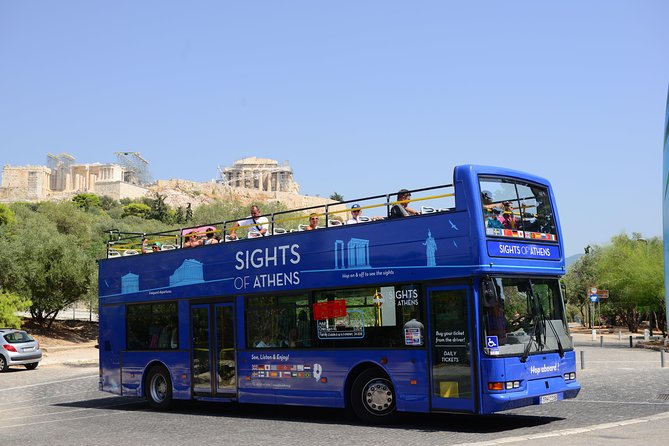
The clever part of this Athens bus tour is its reach. One 48-hour ticket connects the Acropolis and central Athens with Piraeus, the cruise terminals, and the beaches south of the city. I like that flexibility, especially when a taxi or several separate transit rides would eat into a short port visit.
I also like the low price of $14.40 and the choice of three routes. The recorded commentary, free Wi-Fi, and upper-deck views make the ride useful for getting your bearings. The catch is traffic. A short route can become a long sit, and service, air conditioning, headphones, and stop information are not equally dependable on every bus.
Key points before you board
- Three useful routes: Orange for central Athens, Blue for Piraeus and the cruise port, and the beach route for the Athens Riviera and Lake Vouliagmeni.
- A 48-hour ticket: You can spread sightseeing across two days instead of rushing through Athens in one circuit.
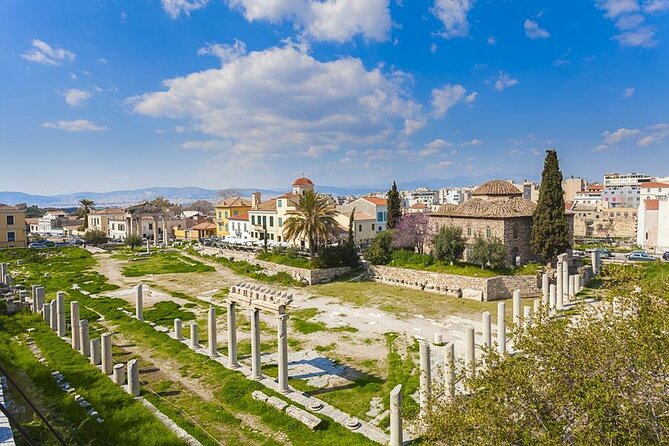
- Acropolis access: Stops serve the Acropolis Museum and the Acropolis and Parthenon area, but admission is not included.
- Cruise-port connection: The Blue line serves Piraeus terminals, including Terminal A at Gate E11 and Terminal B.
- Recorded commentary: Audio is offered in 16 languages, though headphones and audio sockets may not work on every bus.
- Traffic matters: The bus is convenient, but the ride back from the Acropolis to Piraeus can take about 35 minutes or longer.
What this Athens bus pass really offers
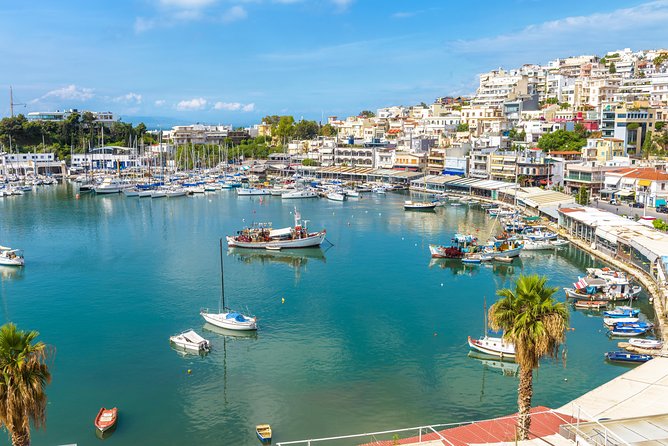
I see this as transportation with a sightseeing layer, not a guided tour in the usual sense. You board an open-top bus, choose a route, listen to recorded narration, and get off near the places you want to explore.
That distinction matters. Nobody is walking you through the Acropolis, explaining the Parthenon in person, or leading you into a museum. Attraction admission is separate, and the recorded commentary varies in usefulness depending on the equipment and how clearly you can hear it.
Still, the route map gives you a simple way to connect parts of Athens that are awkward to combine on foot. The Orange line covers the historic center, the Blue line reaches Piraeus, and the beach route heads south toward the Athens Riviera.
At $14.40, the ticket is inexpensive for a 48-hour pass. I think it offers especially good value if you use it for both sightseeing and transport. If you simply stay on board for one short loop, the value is weaker.
A few other Athens mornings to price up
- Athens: Acropolis & up to 5 Archaeological Sites Combo Pass
★ 4.4 · 12,619 reviews - Athens: Acropolis Ticket with Optional Audio or Live Guide
★ 4.2 · 11,055 reviews - Athens: Acropolis, Parthenon & Acropolis Museum Guided Tour
★ 4.8 · 9,316 reviews
Orange line: the best introduction to central Athens
The Orange route is the main sightseeing circuit. It links Syntagma Square, Plaka, the Acropolis, the Temple of Olympian Zeus, the National Garden, the Benaki Museum, the Panathenaic Stadium, the National Archaeological Museum, Omonia Square, Monastiraki, and Kotzia Square.
This is the line I would use first. Take one full circuit if you want an overview, then repeat the sections that interest you and hop off.
Syntagma Square and Old Parliament House
The National Historical Museum and Old Parliament House stop puts you near Syntagma Square, the practical heart of modern Athens. From here, you can reach the Greek Parliament and National Garden, both included on nearby stops.
I like starting here because it gives you a clear point of orientation. The square is also useful for connecting the formal government district with the older streets around Plaka. If you are short on time, this stop lets you see several central sights without committing to a long walk.
Melina Mercouri Monument and Plaka
The Melina Mercouri Monument stop serves the Plaka area, a good place to leave the bus and wander. Plaka is where the city feels most suited to slow exploration, with lanes, shops, cafés, and access to the Acropolis slopes.
The bus cannot replace walking here. I would use the stop as a launch point, not expect the bus to show you every worthwhile street. The uneven terrain is real, so comfortable shoes are important. Anyone who is unsteady on rough paving should allow extra time and take care on the slopes.
Same island, an entirely different sort of day:
- Athens: Cape Sounion & Poseidon Temple Sunset Half-Day Trip
★ 4.8 · 8,241 reviews - Athens: Acropolis and Parthenon Guided Walking Tour
★ 4.6 · 5,882 reviews - All Day Cruise -3 Islands to Agistri,Moni, Aegina with lunch and drinks included
★ 5.0 · 4,958 reviews - Athens, Piraeus, and Coastline: Blue Hop-On Hop-Off Bus
★ 3.9 · 4,849 reviews
Acropolis Museum
The stop at Chatzichristou 6A serves the Acropolis Museum. This is one of the most useful stops on the route because the museum and archaeological site work well as separate visits.
You can get off, tour the museum, and then walk toward the Acropolis area. Admission is not part of the bus ticket, so plan that cost separately. The audio guide can give you background from the road, but it is not a substitute for time inside the museum.
Acropolis and Parthenon
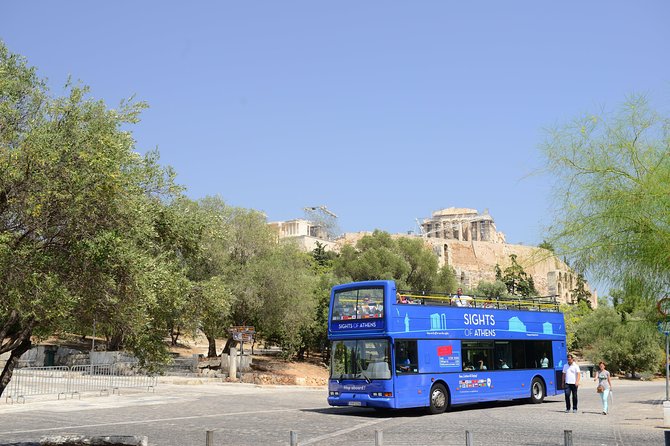
The Rovertou Galli 69 stop is the key stop for the Acropolis and Parthenon. It is also used as a transfer point between routes, which makes it important to pay attention before boarding again.
The stop is convenient, but the bus does not remove the main challenge of an Acropolis visit: crowds, uphill walking, uneven surfaces, and the need to watch the clock. If you are returning to a ship, I would leave the site at least three hours before your required ship time. The ride to Piraeus can take roughly 35 minutes, and traffic can add more.
Temple of Olympian Zeus
The Temple of Olympian Zeus stop is well placed for one of Athens’ major ancient sites. It also helps you connect the Acropolis area with Syntagma and the National Garden.
I like this stop for building a compact ancient-Athens day. You can combine the temple with the Acropolis, although doing both thoroughly will take more than the advertised two-hour circuit. The bus is a useful link between them, not a way to turn both into a quick photo stop.
Parliament, National Garden, and Benaki Museum
The Hellenic Parliament and National Garden stops serve the modern center and one of the city’s pleasant green spaces. The Benaki Museum stop on Leoforos Vasilissis Sofias brings you toward the museum district.
This section makes the bus useful beyond the Acropolis. You can mix major sights with a quieter garden walk or a museum visit, then rejoin the route without crossing the whole center on foot.
Panathenaic Stadium
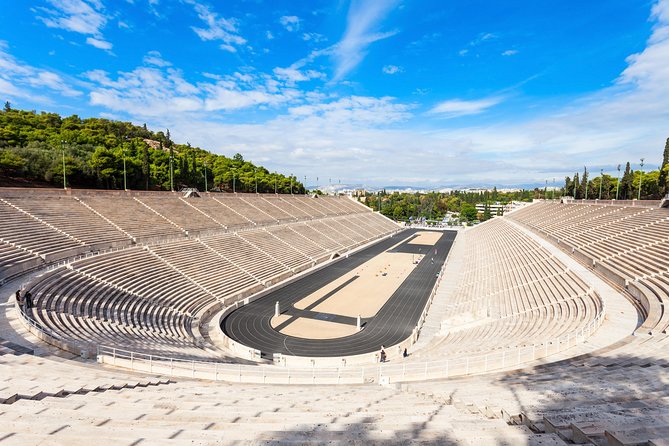
The Panathenaic Stadium stop is near the marble stadium built for the first modern Olympic Games. The stop listing also identifies it by a real estate office, so look for the location rather than relying only on the business name.
This is the sort of place where an open-top bus helps. You get a broad view as you approach, then can decide if you want to enter. Admission is separate, as it is at the other attractions.
National Archaeological Museum, Omonia, and Monastiraki
The Orange line continues to the National Archaeological Museum at 28is Oktovriou 51, then Omonia Square, Monastiraki Square, Kotzia Square, and Vallianeio Megaron.
These stops widen your view of Athens beyond the postcard center. The National Archaeological Museum deserves real time, while Monastiraki is handy for walking, food, and browsing. Omonia and Kotzia are useful urban landmarks, but I would not plan the entire day around the bus ride between them. Heavy city traffic can turn short distances into slow ones.
Blue line: linking Piraeus with the Acropolis
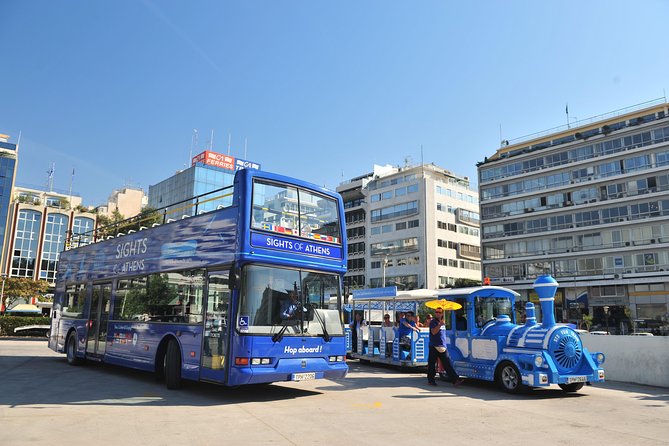
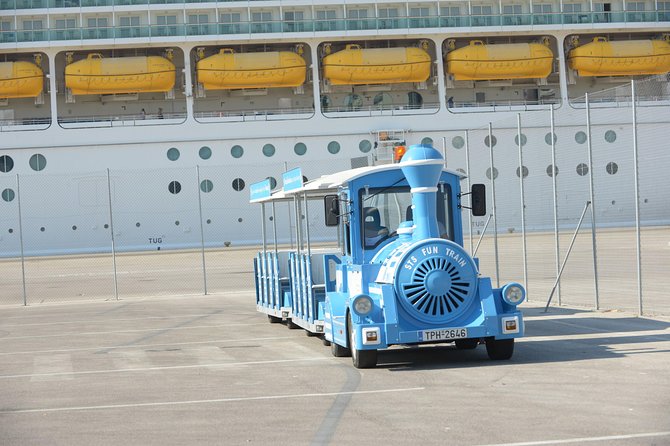
The Blue route is the most valuable part of the ticket for cruise passengers. It reaches the OLP Exhibition Center at Cruise Terminal Gate E11, Terminal A, and also serves Cruise Terminal B at Marias Chatzikiriakou 14 to 16.
The precise boarding point matters. Piraeus is large, and one of the common frustrations is finding the correct bus in the port. The stop may be in the port parking area, but markings and staff availability can vary. I would confirm the line and destination before boarding, and keep the route map with you.
The Blue route also serves the Lion of Piraeus, Pasalimani Yacht Harbor, Mikrolimano, the Planetarium area, the Acropolis Museum, and the Acropolis stop. That gives you more than a simple ship-to-city transfer.
Pasalimani and Mikrolimano provide a look at Piraeus beyond the cruise terminal. The harbor stops are useful if you want a waterfront break, though the route is still subject to port and city traffic.
The Planetarium stop is listed at Lisikratous 1 and again near Ōnaseio. It also connects with the Stavros Niarchos Foundation Cultural Center on the beach route. Check the map carefully because the three lines overlap in places, and the stop names can be less obvious than the major attractions.
I would use the Blue line in one of two ways:
- Ride from the ship into central Athens, then explore the Orange route.
- Use the Blue line as a sightseeing circuit around Piraeus when you have already seen the Acropolis.
The first option is usually more practical on a port day. The second is better when your schedule allows time beyond central Athens.
The beach route: Athens beyond the monuments

The third route runs from the Acropolis area toward the Stavros Niarchos Foundation Cultural Center, Marina Floisvos, Vouliagmeni Coast, Astir Beach, and Lake Vouliagmeni.
This is the route I would not skip automatically. One of the most useful surprises in the schedule is how far the ticket reaches beyond the ancient center. If you have two days, the beach route gives you a very different side of Athens.
The Stavros Niarchos Foundation Cultural Center and Planetarium stop is a good first choice if you want modern architecture and cultural spaces rather than another ancient monument. Marina Floisvos provides a waterfront stop, while Vouliagmeni Coast and Astir Beach take you toward the resort side of the city.
Lake Vouliagmeni is the furthest named stop and gives the route a clear purpose. The beach circuit is not the right choice for a tight cruise connection, since road conditions and distance can work against you. It makes more sense on the second day of a 48-hour ticket, when you can allow the route to unfold without watching the ship clock.
Recorded commentary, Wi-Fi, and the upper deck
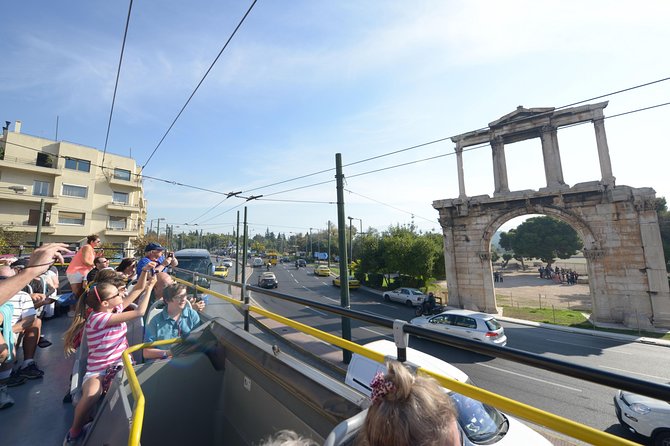
The audio guide is available in 16 languages, and English is offered. This is recorded narration, not a live guide, so the amount of useful detail depends on the recording and the condition of the headset.
I would test the audio as soon as you board. Some buses have damaged headphones or faulty sockets, and a few rides may offer little or no narration if equipment is missing. Bring your own basic wired earbuds only if they fit the bus socket, but do not count on that solving every equipment problem.
Free Wi-Fi is included. I would treat it as a helpful extra, not the reason to buy the ticket. The upper deck gives the best views of the city, particularly on the approach to the Acropolis, but weather changes the experience quickly.
Some buses have a covered roof or closed upper deck. That is useful in rain and strong sun, but it can also feel warm when ventilation is poor. Air conditioning is inconsistent according to the condition of individual buses, so the lower level may be more comfortable on a hot day.
Timing, traffic, and the meaning of a two-hour circuit
The advertised duration is about two hours, but that figure should not be treated as a firm timetable for every route. Athens traffic can stretch a ride, especially between the Acropolis and Piraeus.
Several route segments are much longer than a quick city-center loop. The Blue line and beach route cover real distance, and getting back to the port can involve waiting, queues, and slow roads.
The service is often described as arriving about every 15 to 20 minutes, but I would still allow a generous cushion. A delay matters far more when you are catching a ship than when you are simply heading to your next museum.
At Acropolis stops, queues may form for the return bus. I would not leave the site at the last possible moment. Keep your ticket, route map, and ship schedule together, and ask the staff at the stop which bus is going to your terminal.
Who gets the best value from this tour
I think this ticket suits you if:
- You have only one or two days in Athens.
- You are arriving by cruise ship at Piraeus.
- You want an easy overview before choosing which sites deserve your time.
- You prefer not to arrange several separate rides.
- You want to include the coast or Lake Vouliagmeni.
- Your group includes someone who benefits from minimizing long walks between districts.
It is less suitable if you want a detailed history lesson from a live guide. It is also a poor match if you dislike sitting in traffic or need exact, tightly controlled travel times.
The buses accept mobile tickets and printed versions. Confirmation is provided at booking, service animals are allowed, and the activity is near public transportation. Most people can participate, but the uneven streets around central Athens and the amount of walking at the Acropolis deserve honest planning.
How I would use the 48-hour ticket
On day one, I would ride from Piraeus into Athens on the Blue line, get off near the Acropolis, and spend the main part of the day on foot. I would then use the Orange line for the Temple of Olympian Zeus, Syntagma, Plaka, or Monastiraki.
On day two, I would choose between the beach route and a slower museum-focused day. The beach route works best when you are not trying to fit several major archaeological sites into the same afternoon.
The ticket can also provide a useful fallback. If rain arrives, you can stay on the bus for an overview. If the heat becomes too much, the ride gives your feet a break. One poor use is spending the full ticket period riding without getting off, since the best value comes from combining transport with actual visits.
Should you book it?
I would book this tour for a first visit, a cruise stop, or a two-day stay when you want broad coverage at a modest price. The strongest reasons are the Piraeus connection, the 48-hour validity, and the ability to reach both the historic center and southern beaches.
I would skip it if your schedule is so tight that one delayed bus could cause trouble. In that case, use a more direct transfer for the port and explore fewer sights on foot. For everyone else, treat this as a flexible city shuttle with commentary, not a polished private tour. Used that way, it can save money, reduce confusing transfers, and show you more of Athens than the Acropolis alone.
FAQ
How long is the Athens hop-on hop-off tour?
The sightseeing circuit is approximately two hours, but actual journey times can change because of traffic, route length, and waiting time.
How long is the ticket valid?
The ticket is valid for 48 hours.
What languages are available on the audio guide?
The multilingual recorded audio guide is available in 16 languages. English is one of the offered languages.
Does the ticket include entry to the Acropolis or museums?
No. Admission to the Acropolis, Parthenon, museums, temples, and other attractions is not included.
Does the tour travel from Piraeus cruise port to Athens?
Yes. The Blue line connects Piraeus with central Athens and serves cruise terminals including Terminal A at Gate E11 and Terminal B.
Does the tour go to the beach?
Yes. The beach route serves Vouliagmeni Coast, Astir Beach, Marina Floisvos, and Lake Vouliagmeni. It also stops at the Stavros Niarchos Foundation Cultural Center and Planetarium area.
Is Wi-Fi available on the buses?
Yes. Free Wi-Fi is included on board.
Can I use a mobile ticket?
Yes. Both mobile tickets and printed versions are accepted.
What is the cancellation policy?
You can cancel for a full refund at least 24 hours before the experience start time. Cancellations or changes made within 24 hours are not accepted for a refund.
Fresh on the Athens list
- Athens Airport Arrival Transfer to Hotels or Addresses in Athens★ 3.5 · 45 reviews
- Private Luxury Tour: Unveiling the Sacred Mysteries of Eleusis★ 5.0 · 45 reviews
- Luxury Catamaran Sunset Semi-Private & Greek Gastronomy in Athens★ 5.0 · 45 reviews
- From Athens: Aegina Island guided tour in a day★ 5.0 · 45 reviews
- Delphi, Thermopylae full day private tour from Athens★ 4.9 · 46 reviews
- From Athens: City & Corinth Guided Day Tour★ 4.8 · 46 reviews
- Acropolis Private Wine Tasting @ Finewine store★ 5.0 · 46 reviews
- Ancient Corinth Half-Day Private Tour from Athens★ 5.0 · 46 reviews
Athens Tours, compared.
Acropolis & up to 5 Archaeological Sites Combo Pass
Read our review →

Acropolis, Parthenon & Acropolis Museum Guided Tour
Read our review →
Cape Sounion & Poseidon Temple Sunset Half-Day Trip
Read our review →


Cape Sounio & Poseidon Temple Trip with Audio Guide
Read our review →