

Reviewed · ATHENS TOURS
Athens: Mythology Tour for Families
The best thing about this Acropolis tour is the way it gives children a reason to care about ancient stones. Zeus, Athena, Poseidon, Theseus, and the Minotaur become part of the walk, not just names from a schoolbook. I especially like the 15-person group limit and the family activity at the Pnyx, where children can use their imagination instead of simply listening.
I also like that the route covers the major Acropolis sights, including the Theater of Dionysus, Erechtheion, Temple of Athena Nike, and Parthenon. Guides such as Sophia, Demi, Maria, and Chrysa have been praised for keeping children involved while still giving adults solid historical context. The main concern is the three-hour length in summer heat, with few places to stop for water, so bring plenty and choose your timing carefully.
Key points at a glance
- Myths give the Acropolis a human story: Gods, heroes, rivalries, and monsters help children connect the buildings with ancient Greek culture.
- A small group keeps the pace flexible: Up to 15 people means better chances to ask questions and keep younger children involved.
- The Parthenon gets the most time: The guided visit here lasts about 70 minutes, so this is not a rushed photo stop.
- The Pnyx adds something different: You leave the Acropolis and visit the birthplace of democracy, then take part in a family activity.
- The tour suits ages 5 to 11 best: Older children can enjoy it too, particularly if they already like mythology or Classics.
- Summer demands planning: Comfortable shoes, a sun hat, sunglasses, and water are important, and strollers and backpacks are not allowed.
Why mythology works so well on the Acropolis

The Acropolis can be a hard sell to a child. It is a hill, a lot of pale marble, and several buildings that require patience before their importance becomes clear. This tour changes the order of things. Instead of starting with dates and architectural terms, your guide uses the gods and heroes to explain why Athens mattered.
That approach is not just entertainment. Greek myths are tied to the city itself. Athena and Poseidon competed for the city’s favor. The buildings on the Acropolis were linked to worship, civic pride, drama, and public life. As you walk, stories provide a thread connecting those ideas.
The guides are expected to work with children, and that matters more than a memorized script. Sophia, for example, has been praised for handling a group that included young children and grandparents. When children became tired or cranky, she used games and her energy to bring them back into the conversation. Demi and Maria were also singled out for balancing children’s needs with adult interest.
You should still expect real history, not a cartoon version of ancient Greece. Adults can ask deeper questions about philosophy, religion, art, and civic life, while younger children get stories they can follow. The best guides adjust the level as they go.
A few other Athens mornings to price up
- Athens: Acropolis & up to 5 Archaeological Sites Combo Pass
★ 4.4 · 12,619 reviews - Athens: Acropolis Ticket with Optional Audio or Live Guide
★ 4.2 · 11,055 reviews - Athens: Acropolis, Parthenon & Acropolis Museum Guided Tour
★ 4.8 · 9,316 reviews
Theater of Dionysus: where the stories became drama
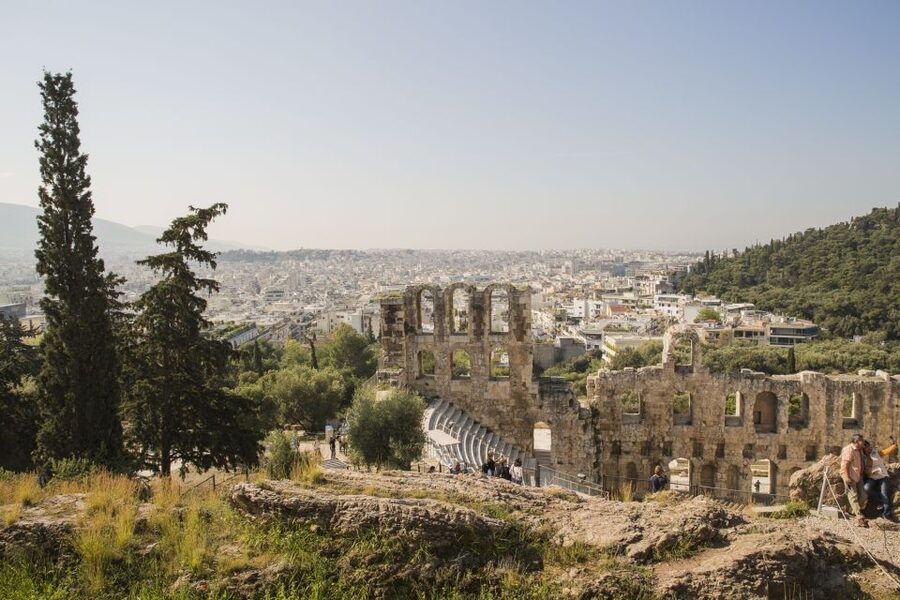
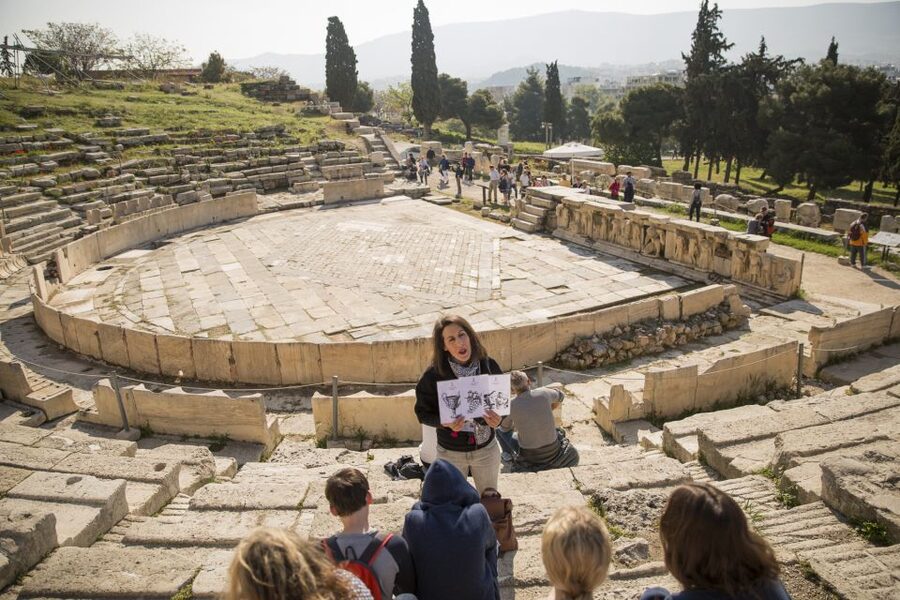
The first stop is the Theater of Dionysus, with about 15 minutes of guided explanation. This is an important choice for a mythology tour because Greek myths were not only told around fires or in temples. They were performed as drama, with audiences gathering to watch stories about gods, heroes, family conflict, pride, and fate.
The stop helps children see that mythology was part of public life. Dionysus, the god associated with wine and theater, gives the guide a natural way to explain the link between religion and performance.
Fifteen minutes is enough for a focused introduction, but not enough for every detail. That is a strength with children. You get a clear idea of why the theater matters without spending the first part of the walk in a long lecture.
Propylaea and the first climb into the Acropolis
The Propylaea is the grand entrance to the Acropolis. The guide spends roughly 10 minutes here, setting up the experience before the route reaches the most famous temples.
This is where you begin to understand the Acropolis as a planned sacred hill rather than a collection of separate ruins. The entrance frames what lies beyond it, and the climb itself adds effort to the visit. For children, the physical movement helps break up the talking.
The route is not suited to wheelchair users, and it is not a stroller-friendly outing. Strollers, backpacks, and large bags are not allowed at the Acropolis, so pack lightly and avoid arriving with equipment you cannot take inside. Comfortable shoes are essential.
Athena Nike and the Erechtheion
The Temple of Athena Nike receives about 15 minutes of guide time. Athena Nike represents victory, giving the guide another opening to discuss Athena as a protector of Athens and the goddess of wisdom. The connection between the city, its patron goddess, and its military identity makes this a useful stop for older children.
The Erechtheion follows, with about 10 minutes of explanation. Its unusual design and sacred associations make it one of the most interesting buildings for a story-based visit. The guide can connect the site to the contest between Athena and Poseidon and to the religious traditions that shaped the Acropolis.
These stops are brief, but that is sensible. The Acropolis has many details, and a family tour needs to keep moving. You will not get a specialist lecture on every carved figure or restoration question. You will get the main ideas, delivered in a form children can remember.
Same island, an entirely different sort of day:
- Athens: Cape Sounion & Poseidon Temple Sunset Half-Day Trip
★ 4.8 · 8,241 reviews - Athens: Acropolis and Parthenon Guided Walking Tour
★ 4.6 · 5,882 reviews - All Day Cruise -3 Islands to Agistri,Moni, Aegina with lunch and drinks included
★ 5.0 · 4,958 reviews - Athens, Piraeus, and Coastline: Blue Hop-On Hop-Off Bus
★ 3.9 · 4,849 reviews
The Parthenon gets 70 minutes
The Parthenon is the center of the tour, and the schedule gives it about 70 minutes. That is a generous amount of time for a family outing. You can hear how the temple relates to Athena, the city’s identity, and the ideals ancient Athenians wanted to project.
The building is famous before you arrive, but fame does not explain it. A good guide makes the columns, sculpture, and ruined interior easier to read. The mythology helps children notice that this was not simply an impressive building. It was a place tied to worship, civic pride, and stories that gave meaning to the city.
The long stop also leaves room for questions. This is especially useful with children ages 8 to 11, who may suddenly ask why the temple is damaged, what happened to the sculptures, or how people worshipped there. Guides such as Christina and Kelli have been praised for answering questions patiently and keeping children involved.
Do not expect to wander alone during this section. The value is having someone point out what matters, but the tradeoff is less freedom to set your own route. If your family prefers quiet observation and independent photography, a self-guided visit may suit you better.
The walk to Pnyx changes the subject
After the Acropolis, the group walks about 15 minutes to the Pnyx. This short transition is useful. It gives everyone a change of scene after the temples and allows the guide to move from mythology toward public life and democracy.
The Pnyx was a meeting place where Athenians gathered to discuss politics. That makes it a strong second half to the tour. The Acropolis shows religious and civic ideals in stone, while the Pnyx connects Athens to debate, participation, and the idea of citizens gathering to make decisions.
The walk itself may feel longer in the heat, particularly with younger children. Summer reviews describe the full three hours as tiring, and there are not many water stops. I would schedule this with the weather in mind, give children water before the tour, and bring a sun hat and sunglasses.
Theseus, the Minotaur, Hera, and Aphrodite at the Pnyx
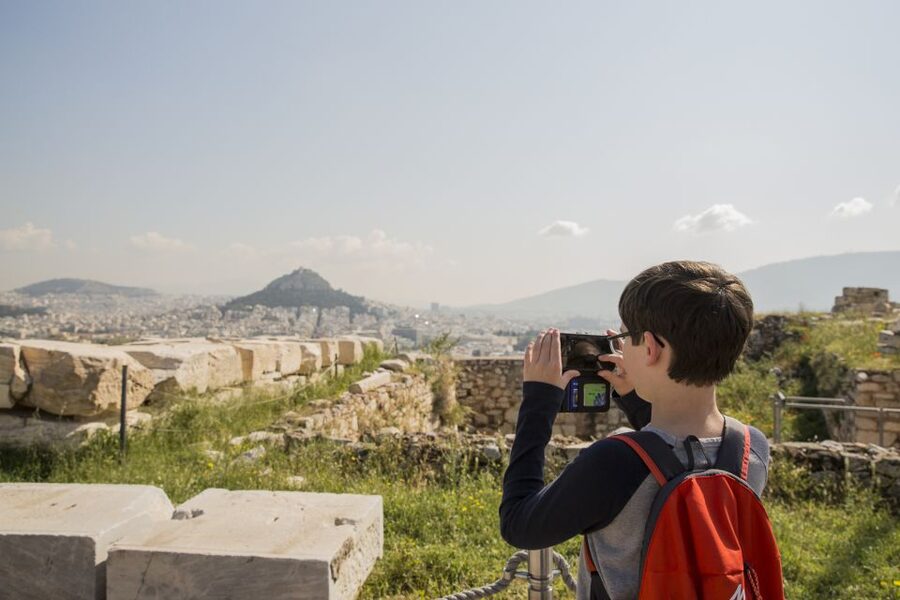
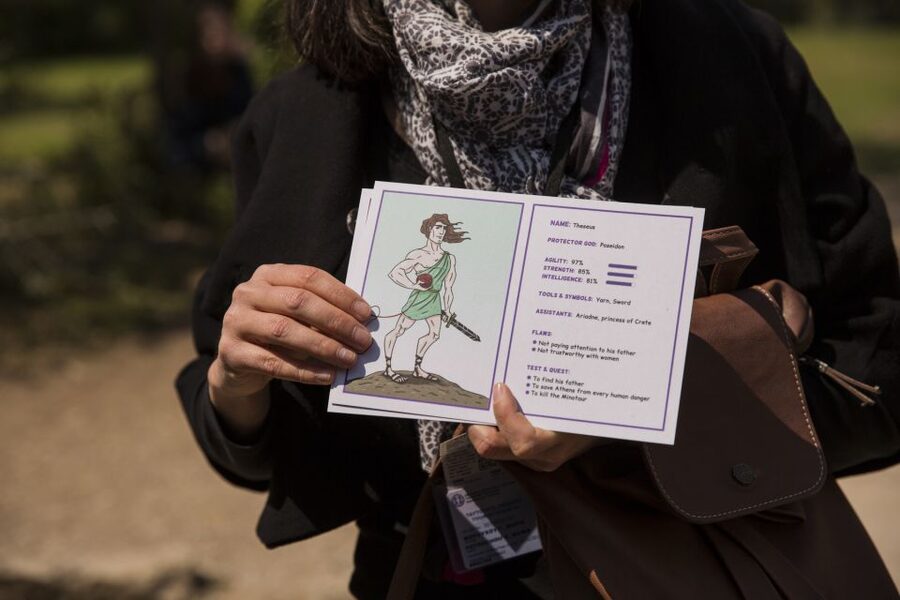
The Pnyx portion lasts about 45 minutes. Here, the guide continues with stories of Theseus and the Minotaur, Hera’s jealousy, and Aphrodite, the goddess of love and beauty.
These stories broaden the tour beyond Athena and Zeus. Theseus introduces the hero quest, the Minotaur brings suspense and a monster, and Hera and Aphrodite show the complicated rivalries among the gods. Greek mythology is full of flawed characters, and children often remember those conflicts more easily than a list of dates.
The setting helps. You are not sitting in a classroom hearing about democracy. You are on the ground where Athenians gathered to discuss public matters. The combination of place, story, and activity gives the final section a clear purpose.
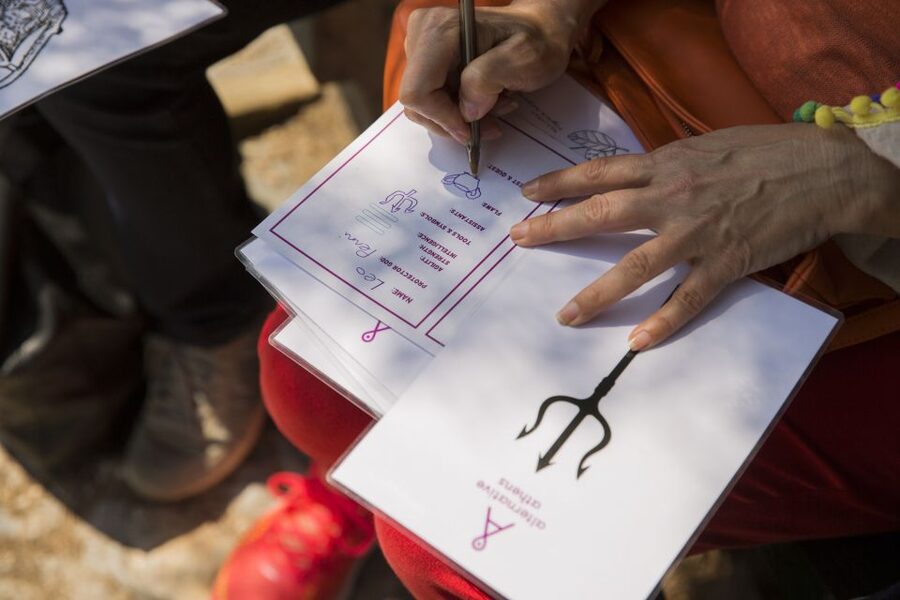
The family activity is based on the gods and heroes introduced during the walk. The supplied materials give children a chance to interact with the surroundings and create something together. It is not simply a quiz at the end. It lets your family use the stories in an imaginative way, which can be the part children recall most clearly later.
What the three-hour format feels like
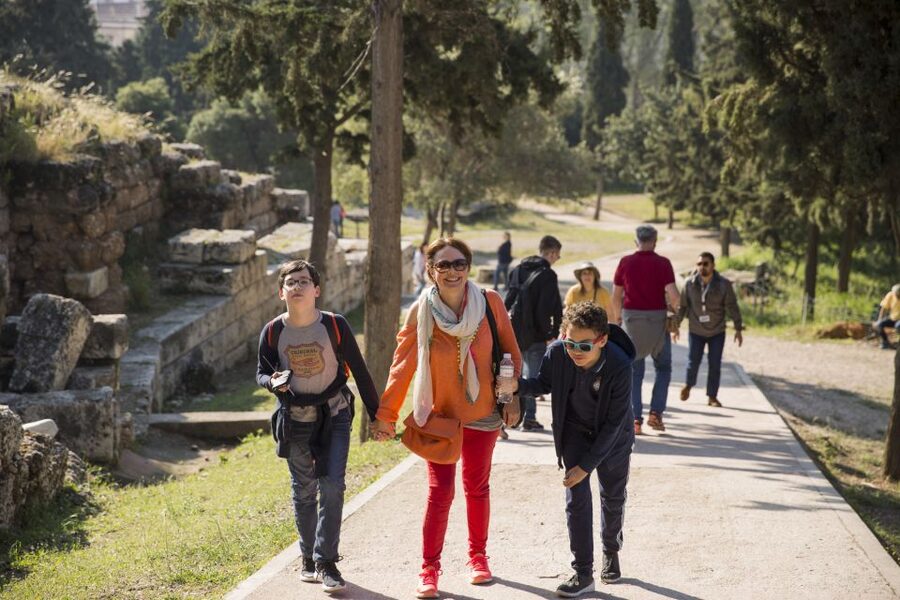
The route is carefully divided: short stops at the theater, Propylaea, Athena Nike, and Erechtheion, a longer Parthenon visit, a walk to Pnyx, and a final activity. That structure keeps the tour from becoming one long talk.
Still, three hours on an exposed archaeological hill is a real commitment. Children ages 5 to 11 are the main target, but a five-year-old may need more encouragement than an older child. One family with children ages 5 and 7 found the guide able to keep them involved, while another family felt the full length was too much in hot weather.
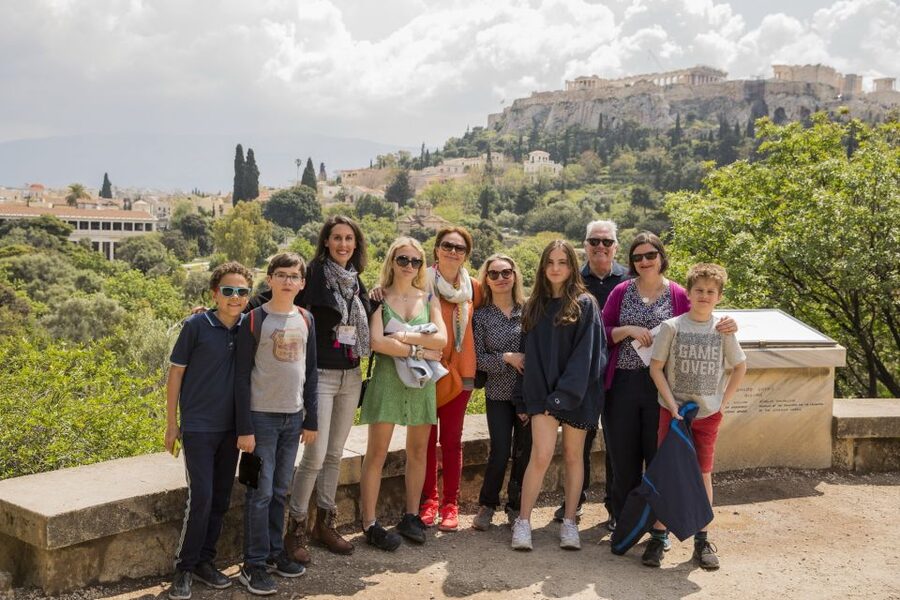
The small group helps. With no more than 15 people, the guide can pause for questions and notice when children are losing interest. Some departures may be smaller, and private groups are available if you want full control over pace and questions.
English and French tours are offered. Guides named in past departures include Christina, Kelli, Chrysa, Maria, Demi, Dani, Marika, Sophia, Viki, Angelica, and Amarylis. The exact guide is not guaranteed, but the repeated pattern is clear: the guide’s ability to tell stories and work with children is central to the experience.
Is $79 a fair price?

At $79 per person, the tour is priced above a basic walking tour, but you are paying for a focused family format, a live guide, three hours of interpretation, a small group, and a children’s activity. Acropolis entry may be included if you select that option, so check the booking choice carefully before comparing the price with buying tickets on your own.
The ticket question matters. Entry fees are not refundable or exchangeable, and the price may change depending on whether admission is included. The provider can pre-purchase tickets, which can be helpful during busy periods. One late-booking family was able to get a 9:30 a.m. entry time through the provider, an advantage if you want to avoid the worst midday heat.
European Union citizens under 25 can enter the Acropolis free with valid identification. From April 1, 2025, EU and non-EU visitors under 18 can also enter free with a valid ID or passport. If that applies to your children, ask how the ticket option affects the total cost before paying.
For a family that would otherwise struggle to explain the Acropolis, the price can make sense. For a family with older children who already know Greek mythology and prefer exploring alone, it may feel less necessary.
Practical details that can make or break the visit
Your meeting point depends on the option booked, and the starting information may refer to Acropoli, Acropolis, or the Acropolis area. Check the exact address carefully. One family lost time because the address in the app was wrong, then had confusion about which group to join. Contacting the provider helped, but arriving at the wrong place with three children is an avoidable hassle.
Bring:
- Comfortable walking shoes
- Water
- Sunglasses
- A sun hat
- Passport or ID card if reduced or free admission applies
Do not bring a stroller, backpack, or large bag. The Acropolis does not allow them, and this is not an outing where you can rely on a stroller for tired children. Food and drinks are not included.
The tour offers free cancellation up to 24 hours in advance and a reserve-now, pay-later option. Those policies are useful if your Athens plans are still shifting, but archaeological entry fees remain non-refundable and non-exchangeable.
Who should book this Acropolis tour?
I would choose it for families with children from about 5 to 11 who want more than a photo at the Parthenon. It is particularly well suited to children who enjoy stories, role-playing, monsters, gods, or questions about how people lived long ago.
It also works well for mixed-age groups. Several guides have handled parents, children, and grandparents together, giving adults enough context without leaving younger children behind. Older children around 10 to 12 can enjoy it too, especially if they are interested in Classics or already know a few Greek myths.
I would think twice if your children dislike walking, tire quickly in the sun, or have no interest in stories. The route is active, the hill can be demanding, and the tour is not accessible for wheelchair users.
Should you book it?
Book this tour if you want the Acropolis explained through memorable stories rather than a list of monuments. The strongest features are the family-focused guides, the small group size, the generous time at the Parthenon, and the Pnyx activity that gives children something to do.
Choose an early start when possible, confirm the meeting address, leave the stroller and backpack behind, and bring more water than you think you need. If your family wants a relaxed, independent visit or a shorter walk, buy admission separately and explore at your own pace. For most families seeking an engaging introduction to Greek mythology and Athens, this is a well-targeted use of three hours.
FAQ
How long does the mythology tour last?
The tour lasts three hours. It includes guided visits at the Acropolis, a 15-minute walk to the Pnyx, a guided Pnyx visit, and a family activity.
Which Acropolis sights are included?
The route includes the Theater of Dionysus, Propylaea, Temple of Athena Nike, Erechtheion, and Parthenon. The Parthenon portion lasts about 70 minutes.
Is Acropolis admission included in the $79 price?
Acropolis entry tickets are included only if you select the ticket-included option. Entrance fees are otherwise separate, and the provider can pre-purchase tickets if requested.
What age group is this tour best for?
The tour is most suitable for children ages 5 to 11. Older children can also enjoy it, particularly if they are interested in Greek mythology or Classics.
What languages are available?
Live guided tours are available in English and French. Private groups are also available.
Can I bring a stroller or backpack?
No. Strollers, backpacks, and large bags are not allowed at the Acropolis and should not be brought on the tour. Wheelchair users cannot take this tour.
Fresh on the Athens list
- Athens Airport Arrival Transfer to Hotels or Addresses in Athens★ 3.5 · 45 reviews
- Private Luxury Tour: Unveiling the Sacred Mysteries of Eleusis★ 5.0 · 45 reviews
- Luxury Catamaran Sunset Semi-Private & Greek Gastronomy in Athens★ 5.0 · 45 reviews
- From Athens: Aegina Island guided tour in a day★ 5.0 · 45 reviews
- Delphi, Thermopylae full day private tour from Athens★ 4.9 · 46 reviews
- From Athens: City & Corinth Guided Day Tour★ 4.8 · 46 reviews
- Acropolis Private Wine Tasting @ Finewine store★ 5.0 · 46 reviews
- Ancient Corinth Half-Day Private Tour from Athens★ 5.0 · 46 reviews
Athens Tours, compared.

Acropolis & up to 5 Archaeological Sites Combo Pass
Read our review →

Acropolis, Parthenon & Acropolis Museum Guided Tour
Read our review →
Cape Sounion & Poseidon Temple Sunset Half-Day Trip
Read our review →


Cape Sounio & Poseidon Temple Trip with Audio Guide
Read our review →