
Reviewed · ATHENS TOURS
Athens: National Archaeological Museum Private Guided Tour
The most remarkable object here may be the Antikythera mechanism, a battered ancient device often described as the world’s oldest analogue computer. A good guide turns that single object, along with thousands of others, into a clear story about how Greek art, science, religion, and daily life developed.
I like the private format, which lets you ask questions instead of following a fixed lecture. I also like the way Christos Theodoropoulos handles the museum’s huge scale, moving briskly to the major works and giving you a useful crash course in Greek history. The main drawback is time: two hours is enough for highlights, not the whole museum.
Key points to know before booking

- The Antikythera mechanism is a central highlight, linking ancient Greek craftsmanship with astronomy and early mechanical science.
- Christos Theodoropoulos receives especially strong praise for clear explanations, humor, flexibility, and a lively presentation.
- The museum covers more than 11,000 objects, so a guide helps you choose rather than wander without a plan.
- The tour costs $400 per private group of up to six, with the €10 museum entry ticket paid separately for each person.
- The tour moves at a quick pace, and you may want extra time afterward for galleries not included in the two-hour route.
- The meeting point is in front of the main entrance at 44 Patission Street, near the museum steps.
Why this museum deserves your Athens time
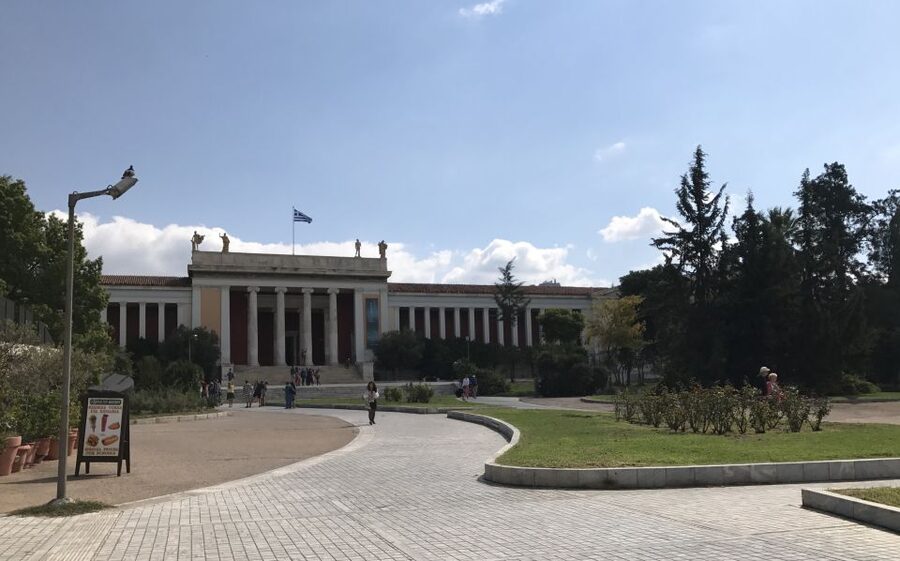
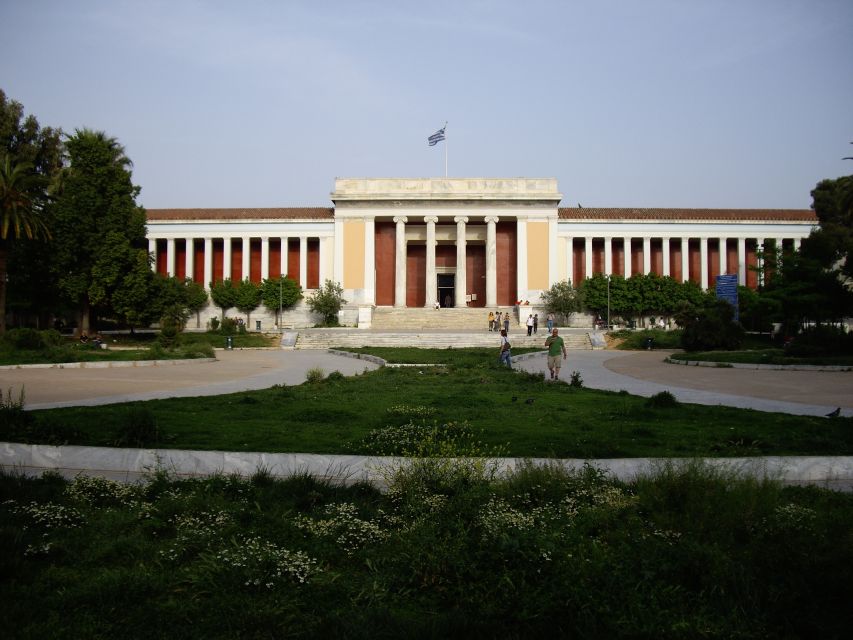
Athens is rightly famous for the Acropolis, but the National Archaeological Museum gives you the objects that make ancient Greece feel real. It is the country’s largest museum, housed in an imposing neoclassical building designed by L. Lange and later remodeled by Ernst Ziller.
Inside, the collection covers Greek civilization from prehistoric times through late antiquity. That is an enormous span. You are not looking at one narrow period or one archaeological site. You are following changes in art and society across thousands of years and across many parts of Greece.
The museum began as a place to gather finds from excavations in and around Athens during the 19th century. It later became the national collection, bringing in important objects from throughout Greece. The result can feel a little intimidating at first. There are large galleries on two floors and about 8,000 square meters of exhibition space.
That scale is exactly why a private tour helps. You do not need someone to point out every object. You need someone to select the pieces that explain the bigger picture, then connect them in a sensible order.
More Museums in Athens
- Athens: Acropolis, Parthenon & Acropolis Museum Guided Tour
★ 4.8 · 9,316 reviews - Athens: Mythology of Delphi, Museum and Arachova Guided Tour
★ 4.6 · 4,008 reviews - Athens: Acropolis, Parthenon & Acropolis Museum Guided Tour
★ 4.8 · 3,579 reviews
Meeting at 44 Patission Street
You meet your guide at the steps in front of the main entrance of the National Archaeological Museum, at 44 Patission Street, Athens 10682. The activity information also identifies 28is Oktovriou 42 as the starting location, so use the museum’s main entrance and the stated meeting instructions when planning your arrival.
There is no hotel transfer. You make your own way to the museum, and the price does not include admission. The museum ticket is listed at €10 per person, paid separately from the tour fee.
The guide meets you outside, helps with the entry process, and then takes you inside for the two-hour visit. One useful detail from the tour’s operating record is that Christos has helped visitors get their tickets before beginning the museum route. Still, allow enough time to arrive at the meeting point without rushing.
The available tour languages are English, Greek, German, and Turkish. Confirm your preferred language when booking, especially if language choice is important to your group.
A two-hour route through thousands of years
The official itinerary is simple: meet at the museum, then take a two-hour guided visit. The value lies in how the guide uses those two hours.
You should expect a highlights tour rather than a room-by-room survey. The collection is too large for that. A fast pace is part of the bargain, particularly if your guide wants to include several periods and major works.
Christos Theodoropoulos is the guide most often associated with this experience. He is praised for explaining Greek history in accessible language, answering questions, and keeping the visit engaging. One family found that he held the attention of children aged nine and seven, which tells you something useful about his approach: this is not designed only for archaeology specialists.
You will likely receive a broad introduction to the museum before moving among its most important collections. The exact order can vary, but the following areas explain what makes the visit worthwhile.
Prehistoric Greece, from Neolithic villages to Mycenae
The Collection of Prehistoric Antiquities covers the Aegean from the 6th millennium B.C. to about 1050 B.C. This includes Neolithic, Cycladic, and Mycenaean material, as well as finds from the prehistoric settlement at Thera.
For many visitors, this section provides the missing first chapter of Greek history. Before the familiar temples and marble statues, there were farming communities, seafaring cultures, palace societies, burial traditions, and skilled makers working in clay, stone, gold, and bronze.
A guide can help you separate these cultures instead of treating everything as one general category called ancient Greece. That context matters. Cycladic objects, Mycenaean finds, and material from Thera belong to different settings and periods, even if they are displayed within the same broad prehistoric story.
If you arrive expecting only classical sculpture, this part of the museum may surprise you. It shows that Aegean civilization had a long and varied development before the 5th century B.C. The drawback is that two hours will not allow much time for every prehistoric gallery, so tell your guide if this period matters most to you.
More museums around Athens:
- Acropolis monuments & Parthenon Walking Tour with Optional Acropolis Museum
★ 5.0 · 2,678 reviews - Athens All Included: Acropolis and Museum Guided Tour with Ticket
★ 4.5 · 2,673 reviews - Athens: Acropolis Museum Ticket with optional Audio Guide
★ 4.4 · 2,652 reviews - From Athens: Small-Group Delphi, Museum & Arachova Day Trip
★ 4.8 · 2,476 reviews
Greek sculpture from the 7th to 5th centuries B.C.
The Sculptures Collection follows the development of Greek sculpture from the 7th to the 5th centuries B.C. It includes major works that show how Greek artists changed their treatment of the human body, movement, clothing, and expression.
This is one of the easiest parts of the museum to appreciate quickly. Even if you know little about art history, you can see sculpture becoming less rigid and more attentive to the body. A guide gives you the vocabulary to notice those changes rather than simply walking past one marble figure after another.
The museum’s sculpture rooms also help you understand that ancient Greek art was not only about isolated masterpieces. Statues had religious, civic, funerary, and commemorative purposes. Their original meaning is often as important as their visual beauty.
I would pay close attention here if you are visiting the Acropolis Museum or archaeological sites elsewhere in Greece. The National Archaeological Museum gives you a wider frame, so later monuments make more sense.
Pottery and small objects that show everyday life
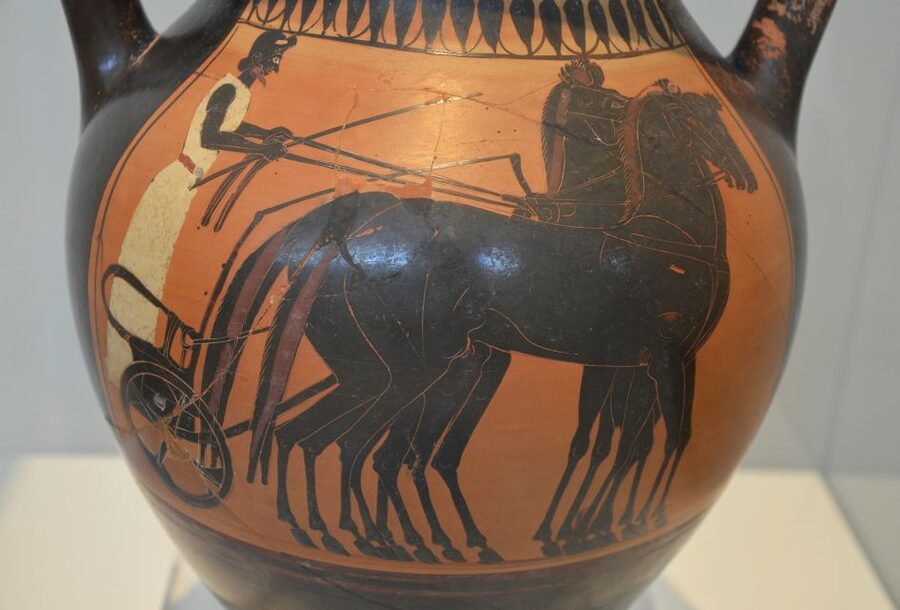
The Vase and Minor Objects Collection covers Greek pottery from the 11th century B.C. through the Roman period. It also includes the Stathatos Collection, with smaller objects from many periods.
Pottery can sound less exciting than monumental sculpture, but it often gives you more direct clues about daily life. Painted scenes can show ceremonies, athletics, mythology, warfare, music, and domestic activity. The shape and use of a vessel also tell part of the story.
This is an area where a guide’s selection is especially helpful. You do not need to inspect every vase. You need a few examples that explain the different painting styles and the subjects ancient artists chose to show.
Small objects can be just as revealing. Jewelry, tools, figurines, and other personal items bring the ancient world down to human scale. One visitor with a professional interest in ancient jewelry received access to a jewelry room that was usually locked at that time of year. That kind of special access cannot be promised, but it shows the benefit of telling your guide about a specific interest before the tour begins.
Bronze works and the Antikythera mechanism
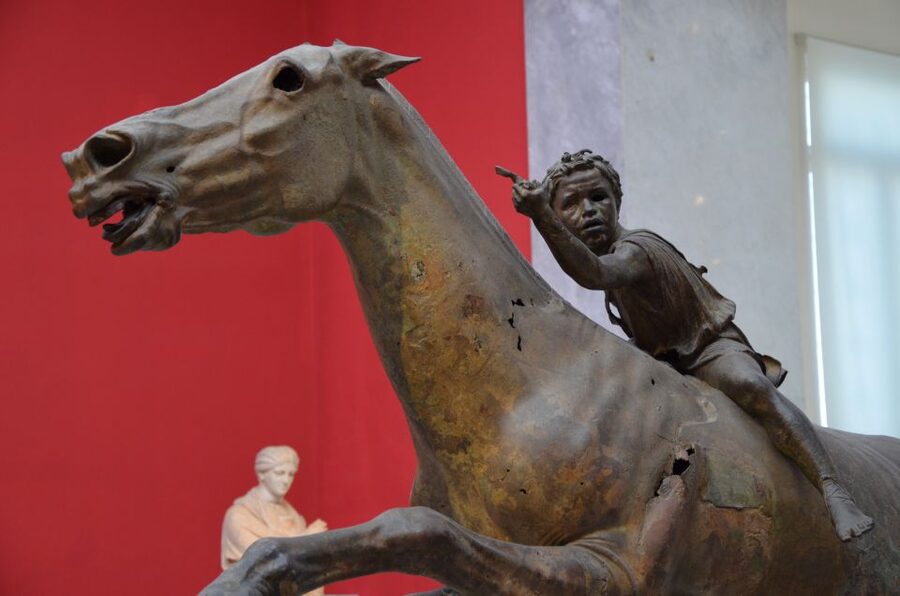
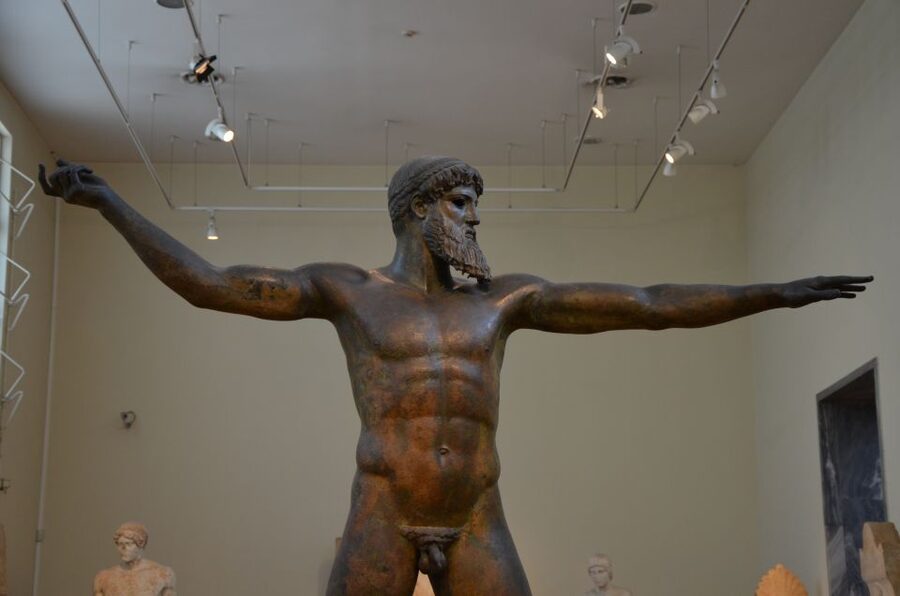
The Bronze Collection contains important statues, figurines, and smaller objects. Bronze allowed artists to create poses and forms that were difficult to achieve in stone, and the material has a different visual character from marble.
The Antikythera mechanism is the standout object for many people. Recovered from a shipwreck and made from interlocking bronze parts, it is linked to the tracking of astronomical cycles. Calling it the oldest analogue computer is not just a catchy label. The mechanism represents a level of mechanical design that can challenge the usual picture of ancient Greek technology.
This is a place where your guide earns the fee. The object is not large, and its surviving pieces can be hard to interpret on your own. A clear explanation helps you understand what the device did and why it matters.
The Bronze Collection also gives you a useful contrast with the marble sculpture galleries. You can see how material affected the artist’s choices, and how the surviving objects reflect different uses and technical skills.
Egyptian and Near Eastern antiquities
The museum has the only Egyptian and Near Eastern Antiquities Collection in Greece. Its objects range from the predynastic period, beginning around 5000 B.C., through the Roman conquest.
This section broadens the visit beyond a purely Greek story. It lets you compare Greek material with objects from neighboring cultures and earlier civilizations. The collection also reminds you that the ancient Mediterranean was connected by trade, travel, conflict, and cultural exchange.
If your main goal is classical Greece, this section may receive less attention during a short tour. If you have already visited the Acropolis and want a wider view of the ancient world, it can add useful context.
How the private guide changes the visit
The museum is labeled and arranged in a way that makes independent touring possible. You can visit without a guide, and one review specifically noted that the displays are clear enough for self-guided exploration.
So why pay for a private tour? I see three main reasons.
First, you save time. In two hours, a guide can take you directly to key objects instead of leaving you to decide which rooms deserve attention.
Second, you get interpretation. Labels provide dates and basic facts, but a guide can explain why an object matters, connect it to other works, and answer the question that occurs to you in the moment.
Third, the private setup gives your group control. You can ask about jewelry, mythology, sculpture, technology, or a particular time period. You are not trying to hear a guide over a large crowd.
The tradeoff is pace. Christos has been described as moving quickly because there is simply too much to see. That is sensible, but it may not suit you if you prefer to linger for ten minutes in front of one object.
Is $400 good value for up to six people?
The tour price is $400 per group of up to six, before the €10 museum entry fee per person. At the full group size, the guiding cost works out to about $66.67 per person, plus admission. For two people, the per-person cost is much higher.
That makes this a better value for a family or group of friends than for a solo visitor. Six people can share one private guide, ask questions freely, and move at their own pace within the planned route.
The price is harder to justify if you are content to read labels and explore independently. The museum itself is well organized, and you can spend more than two hours there on your own. You are paying for orientation, selection, context, and efficient use of time, not for admission or transportation.
I would consider it good value for first-time visitors who want a strong introduction to Greek art. It is also useful if you have limited time in Athens or if members of your group have different levels of interest. A guide can keep the visit moving without making it feel like a school lesson.
Plan extra time after the guided visit
Two hours gives you a solid introduction, but it will not cover all 11,000-plus exhibits. Several people extended their museum visit after the formal tour, and that is the smart way to use this experience.
Ask your guide to point out the areas you should return to. You might use the guided portion for the major works, then stay on your own for pottery, prehistoric material, Egyptian antiquities, or any subject that caught your attention.
The tour is therefore best treated as a strong first pass, not a complete museum visit. If your schedule allows, add independent time after the guide leaves. The exact amount depends on your interests, but the museum’s size makes extra time worthwhile.
Who will enjoy this private museum tour?
I would choose this tour for:
- Families who want children or teenagers to stay engaged
- First-time visitors to Athens seeking a clear introduction to ancient Greece
- Small groups that can share the $400 guiding fee
- People who prefer explanations and conversation over reading labels alone
- Visitors with a particular interest in sculpture, jewelry, pottery, bronze, or ancient technology
- Anyone who finds huge museums difficult to approach without a plan
You may want to skip it if you are already well versed in Greek archaeology, have plenty of time for independent study, or prefer to examine objects slowly and silently. The guide’s quick pace is useful for coverage, but not ideal for lingering.
The experience has a 4.5 rating from 47 reviews, with repeated praise for Christos’s explanations, humor, flexibility, and ability to make complex history understandable. One review rated the guide very good but offered no extra detail, a useful reminder that the experience depends partly on how much interaction and explanation you want.
Practical details worth knowing
The duration is two hours, and starting times depend on availability. The tour is private, with a maximum group size of six according to the activity details.
Admission is not included. Budget €10 per person for the museum ticket, in addition to the group tour price. Hotel pickup and transportation are also not included.
You can cancel up to 24 hours before the scheduled start for a full refund. The reserve-now, pay-later option lets you hold a place without paying immediately, which may help if your Athens plans are still shifting.
The guide languages are English, Greek, German, and Turkish. The stated meeting point is at the steps before the main entrance on Patission Street, so do not wait for a hotel pickup.
Should you book it?
Book this tour if you want the National Archaeological Museum to make sense quickly, especially if you are traveling with up to six people. The Antikythera mechanism, prehistoric collections, sculpture, pottery, bronze, and Egyptian material deserve more than a hurried glance, and Christos Theodoropoulos has a strong record of making the visit clear and lively.
I would not book it simply because the museum is large. You can explore it independently. Book it because you want a person to choose the best objects, explain their place in Greek culture, and help your group use two hours well.
For the best value, arrive ready with a few questions and plan to stay after the tour. That combination gives you the guide’s structure and the freedom to explore the museum at your own speed.
FAQ
Where does the tour meet?
Meet your guide at the steps in front of the main entrance of the National Archaeological Museum at 44 Patission Street, Athens 10682.
How long does the guided tour last?
The guided museum visit lasts two hours.
What is included in the price?
The price includes an experienced licensed archaeologist guide for a private group.
Is museum admission included?
No. The museum entry ticket is not included and is listed at €10 per person.
How much does the tour cost?
The price is $400 per private group of up to six people.
Is hotel transportation provided?
No. Hotel transfer is not included, so you make your own way to the museum meeting point.
Which languages are available?
The tour is available in Turkish, English, German, and Greek.
Is the tour private?
Yes. It is offered as a private group experience.
Can I cancel the booking?
You can cancel up to 24 hours in advance for a full refund. You can also reserve now and pay later.
Fresh on the Athens list
- Athens Airport Arrival Transfer to Hotels or Addresses in Athens★ 3.5 · 45 reviews
- Private Luxury Tour: Unveiling the Sacred Mysteries of Eleusis★ 5.0 · 45 reviews
- Luxury Catamaran Sunset Semi-Private & Greek Gastronomy in Athens★ 5.0 · 45 reviews
- From Athens: Aegina Island guided tour in a day★ 5.0 · 45 reviews
- Delphi, Thermopylae full day private tour from Athens★ 4.9 · 46 reviews
- From Athens: City & Corinth Guided Day Tour★ 4.8 · 46 reviews
- Acropolis Private Wine Tasting @ Finewine store★ 5.0 · 46 reviews
- Ancient Corinth Half-Day Private Tour from Athens★ 5.0 · 46 reviews
Athens Tours, compared.

Acropolis & up to 5 Archaeological Sites Combo Pass
Read our review →

Acropolis, Parthenon & Acropolis Museum Guided Tour
Read our review →
Cape Sounion & Poseidon Temple Sunset Half-Day Trip
Read our review →


Cape Sounio & Poseidon Temple Trip with Audio Guide
Read our review →
Hydra, Poros, and Aegina Day Cruise with Lunch
Read our review →Browse the lists this tour appears in