
Reviewed · ATHENS TOURS
Athens: the Great Greek Philosophers Guided Tour in Spanish
Athens becomes a different city when you follow the questions asked by Socrates, Plato, and Aristotle, rather than simply ticking off ancient monuments. This 150-minute walk links the Agora, Pnyx, Areopagus, Plato’s statue, and Socrates Prison with the birth of philosophy and the cost of speaking freely.
I like the way the tour gives famous sites a clear theme, and I like that the guide turns philosophy into a conversation rather than a lecture. Guides including Gregory and Sunny have been praised for warmth, humor, patience, and strong storytelling. The main drawback is simple: this is a walking tour with a lot of ideas packed into two and a half hours, so comfortable shoes, water, and an interest in discussion will make a real difference.
Key points to know before you book
- Meet at Plato’s statue: Arrive 10 minutes early at the statue, which serves as the starting point for the walk.
- Follow the places of ancient thought: The route connects the Agora, Pnyx, Areopagus, Socrates Prison, and other philosophy-related spots.
- Expect discussion, not just sightseeing: Guides ask questions and invite you to examine beliefs, morals, and different ways of thinking.
- Spanish is the stated tour language: A live Spanish-speaking guide leads the experience. Some guide feedback also refers to English and Spanish communication.
- Plan for 150 minutes on foot: Wear comfortable shoes and carry water. Food, drinks, and personal expenses are not included.
- Good value at $34: The price pays for a focused cultural walk with an official guide, rather than general city transport or entry to a major museum.
Why philosophy changes the way you see Athens
Many Athens tours begin with temples, battles, or ancient rulers. This one begins with a question: how did a society known for public debate create a new way of examining truth, justice, knowledge, and civic life?
That approach gives you a useful frame for the city. The stones are still important, but the guide asks you to consider what happened in these places. Who could speak? Who made decisions? What did it mean to challenge accepted ideas? How did a conversation in a public space become part of a much larger change in human thought?
You are not expected to arrive with a degree in philosophy. The experience is designed to work for beginners, and the guide can explain difficult ideas through ordinary examples and questions from daily life. If you already know your Plato from your Pythagoras, you still have room to ask more pointed questions and compare different schools of thought.
The best part is the human scale. Instead of treating ancient philosophers as marble figures with tidy quotations, the tour presents them as people who argued, taught, annoyed one another, shaped public life, and sometimes paid a high price for their views.
A few other Athens mornings to price up
- Athens: Acropolis Ticket with Optional Audio or Live Guide
★ 4.2 · 11,055 reviews - Athens: Acropolis, Parthenon & Acropolis Museum Guided Tour
★ 4.8 · 9,316 reviews - Athens: Acropolis and Parthenon Guided Walking Tour
★ 4.6 · 5,882 reviews
Starting beside Plato’s statue
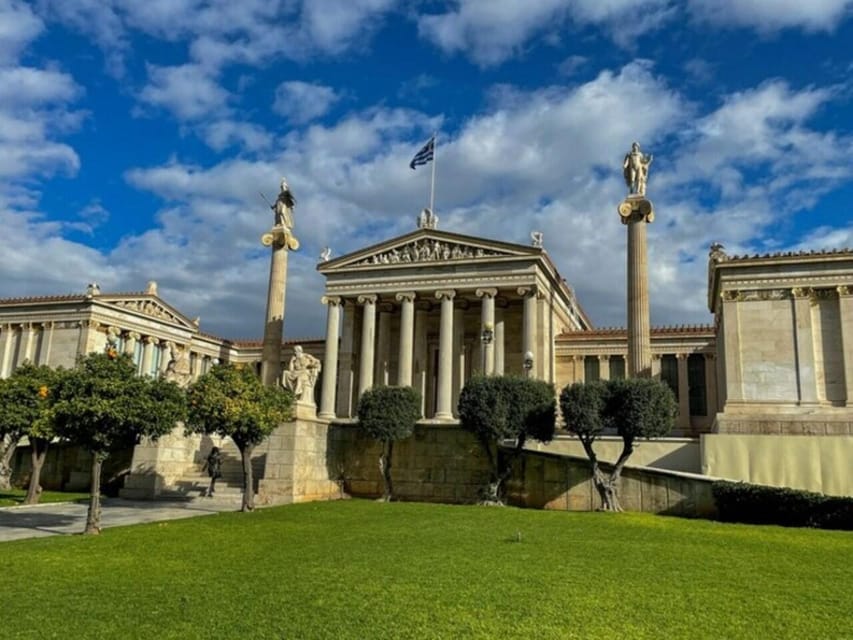
The meeting point is in front of the Statue of Plato, and you should arrive 10 minutes before the scheduled start. This is more than a practical landmark. It sets the tone immediately, placing you beside one of the central figures in the story before the walk has even begun.
Plato is important here not only because of his own ideas, but also because much of what you know about Socrates comes through Plato’s dialogues. The guide can use that connection to explain how philosophy was passed down, debated, and recorded.
This opening should help you understand the difference between a standard monument tour and this experience. You will still hear historical details, but the focus is on ideas and the people who developed them. Expect the group to begin with the birth of philosophy, then move into the lives and methods of the major thinkers.
The meeting point is easy to understand from the information provided, but city streets can be busy and plans can change. Give yourself enough time to locate the statue without rushing. Arriving early also gives you a chance to meet the guide and settle into the discussion.
The Agora and the public life of ideas
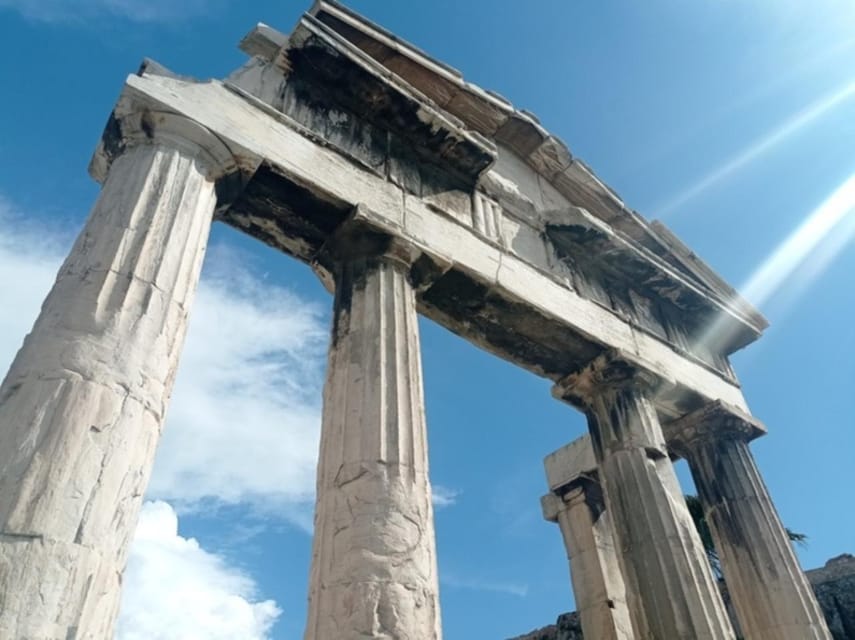
The Greek Agora is one of the most meaningful parts of the route because it connects philosophy with ordinary public life. This was not a quiet study retreat. It was a civic space where people met, argued, traded, made decisions, and took part in the life of Athens.
That setting matters. The major ideas associated with ancient Greek philosophy did not grow in isolation. They developed in a city where public debate and civic participation were part of daily life. The Agora helps you picture philosophy as something spoken aloud and tested in conversation.
The guide uses places like this to explain the social setting around Socrates and other thinkers. You may consider how a public question can unsettle a group, or why a person who keeps asking for definitions can become irritating to those who prefer simple answers.
This is also where the tour’s conversational style can work especially well. Guides such as Gregory have been praised for encouraging questions, adapting explanations to the group, and using nearby objects or everyday situations to make abstract points easier to grasp.
Do not expect the Agora portion to function as a full archaeological tour. The purpose is more focused. You are looking at the site through the lens of philosophy, not trying to cover every building, date, or excavation detail. That narrower approach is useful if you already have a separate plan for the Acropolis and ancient monuments.
The Pnyx and the meaning of public debate
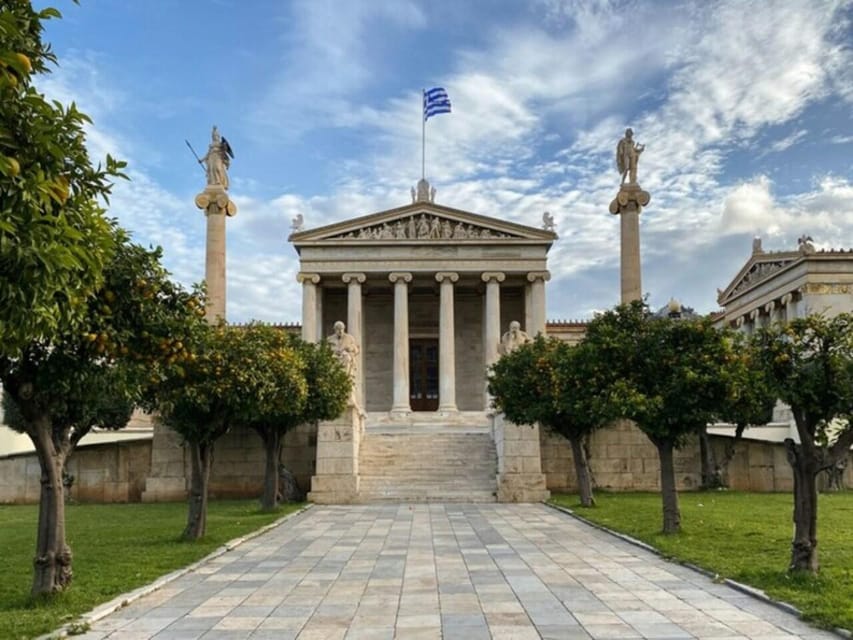
The route continues toward the Hill of Pnyx, a place tied to the public and political life of ancient Athens. Its presence on a philosophy walk adds an important layer: ideas do not remain private for long when a society allows people to speak, listen, challenge, and persuade.
The Pnyx helps connect philosophy with democracy and civic responsibility. The experience can prompt you to think about the relationship between individual judgment and group decisions. It also gives the guide a natural setting for discussing how political life shaped the questions philosophers asked.
This part may appeal to you even if philosophy is not your main interest. The themes reach into law, society, ethics, and public responsibility. One participant with a legal and social background received extra discussion tailored to those interests, which suggests that the guide is willing to adjust the conversation rather than follow a rigid script.
The Pnyx is also one reason to choose this tour instead of a general city walk. You are not simply passing an ancient site and hearing its name. You are being asked to consider why the place mattered and how its public role influenced the world around it.
Same island, an entirely different sort of day:
- Athens: Acropolis & up to 5 Archaeological Sites Combo Pass
★ 4.4 · 12,619 reviews - Athens: Cape Sounion & Poseidon Temple Sunset Half-Day Trip
★ 4.8 · 8,241 reviews - All Day Cruise -3 Islands to Agistri,Moni, Aegina with lunch and drinks included
★ 5.0 · 4,958 reviews - Athens, Piraeus, and Coastline: Blue Hop-On Hop-Off Bus
★ 3.9 · 4,849 reviews
The Areopagus and the cost of challenging accepted ideas
The Areopagus brings a more dramatic turn to the walk. This rocky hill is associated with law, judgment, and public authority, making it a fitting location for a discussion about justice and the dangers of questioning accepted beliefs.
Socrates is central to this part of the story. The guide explains how his style of questioning made him famous, influential, and controversial. His method was not to hand people a neat answer. He pushed them to examine what they thought they knew, often exposing weak assumptions along the way.
That habit can sound harmless in a modern classroom. In ancient Athens, it could be far more serious. The tour explores how wisdom, public reputation, and political tension could collide, and how a person’s commitment to questioning might come at a heavy personal cost.
I find this focus more useful than a simple hero story. Socrates is not presented only as a wise old figure. You get a sense of why people followed him, why others disliked him, and why the questions he raised still matter.
The Areopagus can involve uneven ground and outdoor walking. The supplied information specifically advises comfortable shoes and water, and you should take that advice seriously. Athens can be hot, and two and a half hours on foot feels longer when you are standing on stone while concentrating on a difficult argument.
Socrates Prison and the human side of the story
The stop at Socrates Prison gives the tour its most personal location. It shifts the subject from public debate to the fate of the individual who refuses to abandon his principles.
This is where the story of Socrates becomes less abstract. You can connect the philosophical discussion with a real place associated with his final days, his trial, and the decision to accept the sentence imposed on him. The guide uses this stop to explore the tension between personal conviction and obedience to the law.
The site itself is not presented as a grand monument. That is part of its power. You are visiting a place linked to a famous episode in the life of a thinker, but the setting remains relatively modest. The experience depends heavily on the guide’s explanation and storytelling rather than on elaborate displays.
Several guides have been praised for bringing the past to life through dramatic narration and for encouraging the group to think through moral questions rather than simply memorize facts. That style is especially valuable here. You are likely to get more from the stop if you are willing to discuss what you would do in a similar conflict between conscience and authority.
The prison is also one of the clearest reasons to book this tour for the historical setting. A book can explain Socrates’ trial, but standing in a place connected with the story gives the discussion a physical anchor.
A tour led by conversation and questions
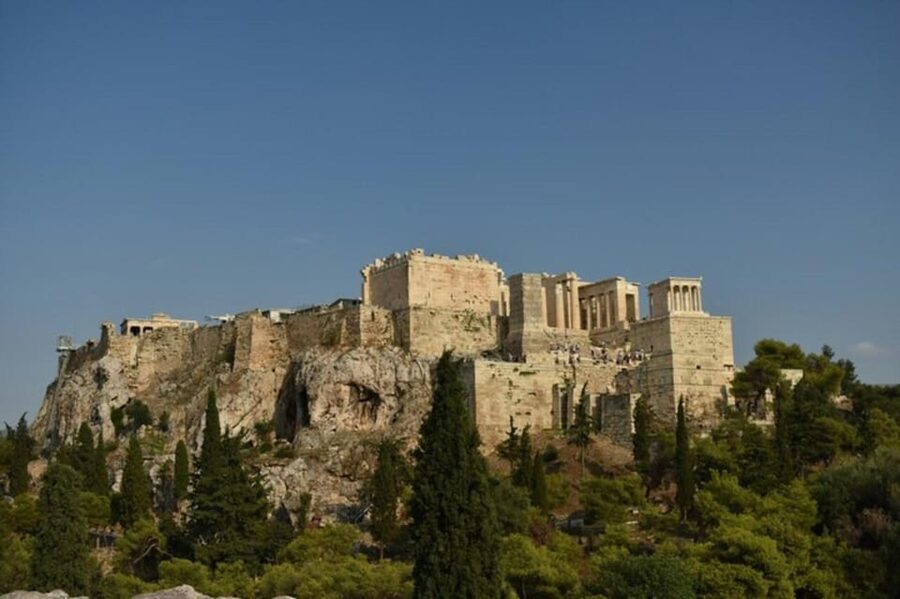
The guide makes or breaks an experience like this. Philosophy can become dry very quickly when it is reduced to names, dates, and difficult terms. The strongest reports about this tour point to guides who are friendly, funny, patient, and able to explain complex ideas without showing off.
Gregory is repeatedly singled out for his passion, storytelling, and willingness to answer questions. He has been described as someone who encourages the group to discuss larger questions about life, beliefs, and morals. He also gives advice about Athens beyond the philosophy route, including general recommendations for the city.
Sunny is also named as a friendly guide. Since guide assignments can vary, you should not assume that Gregory or Sunny will lead your particular departure. What you can reasonably expect is a live Spanish-speaking guide and a tour built around explanation, questions, and conversation.
This is not the right choice if you want a silent walk with only short facts at each stop. You may be asked to take part, compare views, or think through a small mental exercise. That is a strength for curious people, but it may feel like work if you want to save your energy for photographs and monuments.
The good news is that you do not need to be an expert. The route has worked for people who were new to philosophy as well as those already familiar with the subject. The guide can adjust the level, and questions are welcome.
What the $34 price really gives you
At $34 per person, the tour sits in a reasonable range for a 150-minute guided walk in central Athens. The value comes from the focus. You are paying for an official guide who connects several places into one story, not simply for access to a single monument.
Food and drinks are not included, and personal expenses are your responsibility. No meal or transport is built into the experience, so you should eat beforehand, carry water, and plan your route back afterward.
For me, the price makes sense if you want more than the usual Acropolis overview. The tour adds context to both well-known areas and less familiar spots, and it gives you a subject that can help organize the rest of your time in Athens.
It may be less useful if your schedule is already crowded with major archaeological sites and you have little interest in philosophy. In that case, two and a half hours could be better spent inside a museum or at another landmark. But if you want a personal, idea-driven walk, $34 is a fair fee for the guide’s time and preparation.
You can reserve now and pay later, which helps if your Athens schedule is still changing. Free cancellation is available up to 24 hours before the tour for a full refund.
Who will get the most from this walk
I would recommend this experience to you if you enjoy history with a human story attached. It suits first-time visitors who want a different way to understand Athens, as well as repeat visitors who have already seen the major sights and want a more focused theme.
It is especially good for:
- People who enjoy discussion, moral questions, and big ideas
- Students and teachers interested in ancient philosophy
- Couples looking for a thoughtful walk through central Athens
- Visitors who want a guide to connect famous places with lesser-known locations
- Beginners who want clear explanations without academic jargon
- Experienced philosophy readers who enjoy asking questions and comparing interpretations
Families with older children may also find it worthwhile, provided the children are comfortable walking and listening. The tour is not described as a child-focused activity, so very young children may not enjoy the length or the discussion-based format.
You should also consider the weather. The walk lasts 150 minutes, and the advice to wear comfortable shoes and bring water is practical rather than decorative. Outdoor sites and stone surfaces can be tiring, particularly in warm conditions.
My final call on the Athens philosophy tour
Book this tour if you want Athens to feel like a place where people argued about how to live, not just a collection of ancient stones. The Agora, Pnyx, Areopagus, and Socrates Prison gain meaning when a guide links them to public debate, justice, personal duty, and the birth of philosophy.
I especially like the mix of well-known figures and physical places. Plato’s statue gives you a clear start, the Agora and Pnyx explain the public setting, the Areopagus adds political and legal tension, and Socrates Prison brings the story down to one person facing the consequences of his beliefs.
Skip it if you prefer a fast-paced monument checklist or do not want to take part in discussion. Choose it if you want a Spanish guided walk that leaves you with questions to think about after you return to your hotel. At $34, that is a useful kind of souvenir.
FAQ
What language is the tour conducted in?
The stated language is Spanish, with a live Spanish-speaking guide.
How long does the tour last?
The tour lasts 150 minutes, or two and a half hours.
Where is the meeting point?
You meet in front of the Statue of Plato 10 minutes before the tour begins.
Which places are included in the route?
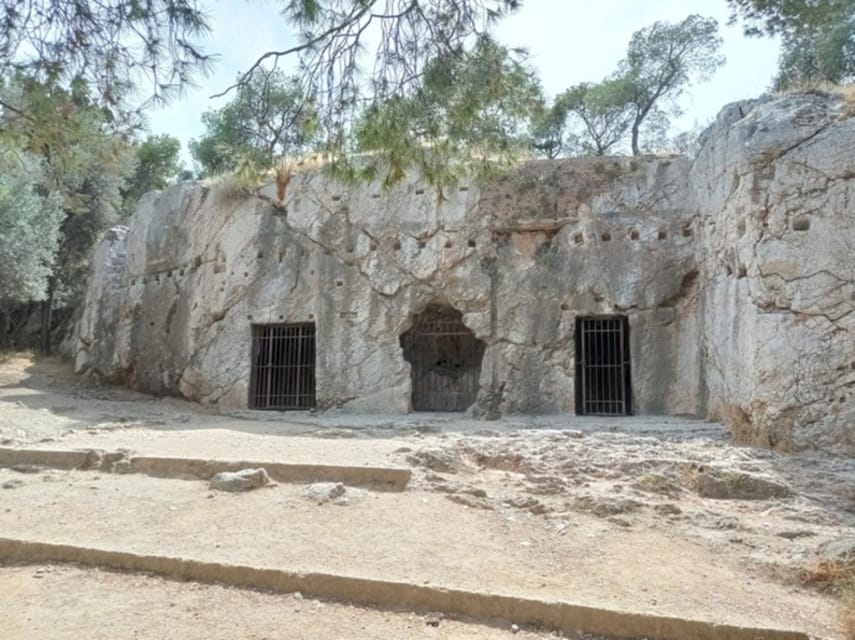
The route includes the Statue of Plato, the Agora, the Hill of Pnyx, the Areopagus, and Socrates Prison, along with other locations connected with ancient Greek philosophy.
What should I bring?
Wear comfortable shoes and bring water.
Are food and drinks included?
No. Food, drinks, and personal expenses are not included.
Can I cancel the booking?
Yes. You can cancel up to 24 hours in advance for a full refund. You can also reserve now and pay later.
Fresh on the Athens list
- Athens Airport Arrival Transfer to Hotels or Addresses in Athens★ 3.5 · 45 reviews
- Private Luxury Tour: Unveiling the Sacred Mysteries of Eleusis★ 5.0 · 45 reviews
- Luxury Catamaran Sunset Semi-Private & Greek Gastronomy in Athens★ 5.0 · 45 reviews
- From Athens: Aegina Island guided tour in a day★ 5.0 · 45 reviews
- Delphi, Thermopylae full day private tour from Athens★ 4.9 · 46 reviews
- From Athens: City & Corinth Guided Day Tour★ 4.8 · 46 reviews
- Acropolis Private Wine Tasting @ Finewine store★ 5.0 · 46 reviews
- Ancient Corinth Half-Day Private Tour from Athens★ 5.0 · 46 reviews
Athens Tours, compared.

Acropolis & up to 5 Archaeological Sites Combo Pass
Read our review →

Acropolis, Parthenon & Acropolis Museum Guided Tour
Read our review →
Cape Sounion & Poseidon Temple Sunset Half-Day Trip
Read our review →


Cape Sounio & Poseidon Temple Trip with Audio Guide
Read our review →