

Reviewed · ATHENS TOURS
Athens: Women in Ancient Greece Guided Walking Tour
Ancient Athens is usually told through philosophers, generals, and lawmakers. This walk asks a better question: Where were the women in that story? Starting at Monastiraki, you follow their daily lives, myths, work, limits, and rare victories through some of central Athens’ most famous sites.
I like the focus on people often left out of standard sightseeing, especially women such as Sappho, Aspasia, and Agnodice. I also like the conversational style, with guide Maelle regularly inviting questions and discussion rather than delivering a stiff speech. The main caution is practical: the two-hour route includes steps and uneven walking, with no archaeological-site admission included.
Key points for your Athens planning
- Women’s daily lives come first: Learn about rights, duties, family life, work, and social limits in ancient Athens.
- Famous sites get a new viewpoint: See Hadrian’s Library, the Ancient Agora, Pnyx, and the Acropolis in relation to women’s lives.
- Mythology meets social history: Athena, Penelope, Demeter, and Pandora help explain ideas about women and power.
- Rare historical voices take center stage: Hear about Sappho, Aspasia, and Agnodice, women who challenged expected roles.
- A lively, question-friendly guide matters: Maelle is especially praised for her humor, warmth, and ability to connect ancient issues with modern life.
- The route ends with a view: Filopappou Hill gives you a scenic finish after the historical stops.
Why this women-focused walk changes Athens
The best reason to book this experience is that it fills a gap in the usual Athens visit. You can spend days hearing about democracy, temples, military victories, and male thinkers, yet learn very little about the women who lived beside those institutions.
This tour does not simply add a few famous female names to a familiar story. It looks at how women lived within the social rules of ancient Greece, how those rules differed by class and circumstance, and how myth helped explain the place women were expected to occupy.
That makes the walk useful even if you already plan to visit the Acropolis and Ancient Agora. You are not just collecting more monuments. You are learning how to look at them differently.
The guide-led format is important here. Questions about women in ancient Greece can be complicated, and the evidence is often uneven. Maelle is praised for handling those subjects with depth, humor, and a willingness to consider different interpretations. She also answers broader questions about ancient Athens, so you do not need to arrive with a specialist’s background.
More Walking Tours in Athens
- Athens: Acropolis and Parthenon Guided Walking Tour
★ 4.6 · 5,882 reviews - Greek Food Walking Tour in Athens
★ 5.0 · 4,740 reviews - Acropolis: Acropolis and Parthenon Guided Walking Tour
★ 4.7 · 3,442 reviews
Starting at Monastiraki Square
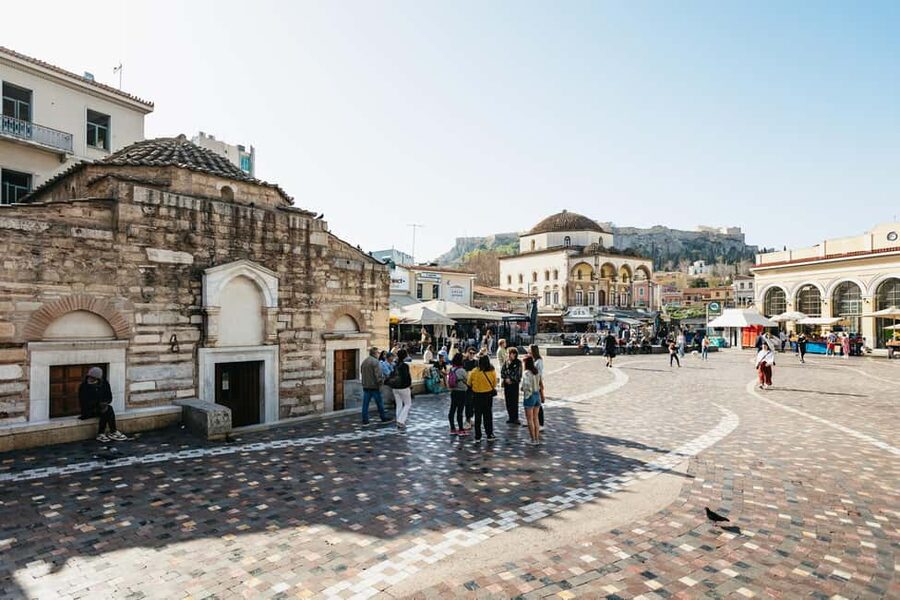
Meet your guide in front of the Holy Church of the Virgin Mary Pantanassa on Monastiraki Square. Look for the sign reading Women in Ancient Greece. This is a central and easy-to-recognize place to begin, but allow a few extra minutes to find the church in the busy square.
The opening section gives you your bearings in modern Athens before turning to the ancient city. That contrast works well. You are walking through streets filled with present-day shops and cafés while hearing about a society with very different ideas about citizenship, marriage, education, and public life.
The tour is scheduled for two hours. That is enough time for a focused theme without taking over your entire day. I would book it early in your Athens stay if possible, since the route helps put later visits to the Acropolis and Agora into a wider frame.
Monastiraki and Hadrian’s Library
The first short stop is Monastiraki, followed by Hadrian’s Library. These are brief viewing and storytelling points rather than long archaeological visits. You will see the sites from outside, hear their connection to ancient Athens, and keep moving.
Hadrian’s Library is a useful early stop because it helps you think about who had access to learning and public intellectual life. The tour’s central concern is not just famous women who left written records. It also asks you to consider the many women whose experiences were never recorded in their own words.
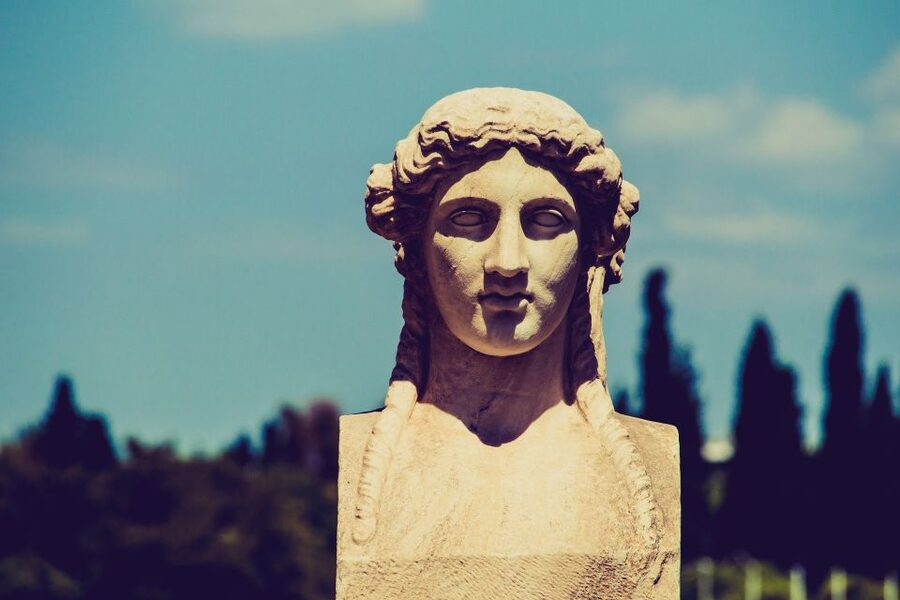
That is one of the walk’s strengths. Sappho may be remembered because her poetry survived, while countless ordinary women appear only indirectly in legal, literary, or religious sources. The guide helps you read those gaps as part of the story rather than treating them as proof that women had no role.
Plaka and the Gate of Athena Archegetis

The route continues through Plaka, where you get around ten minutes of guided discussion. This section connects the modern city with the ancient setting and gives the tour a more relaxed street-walking rhythm.
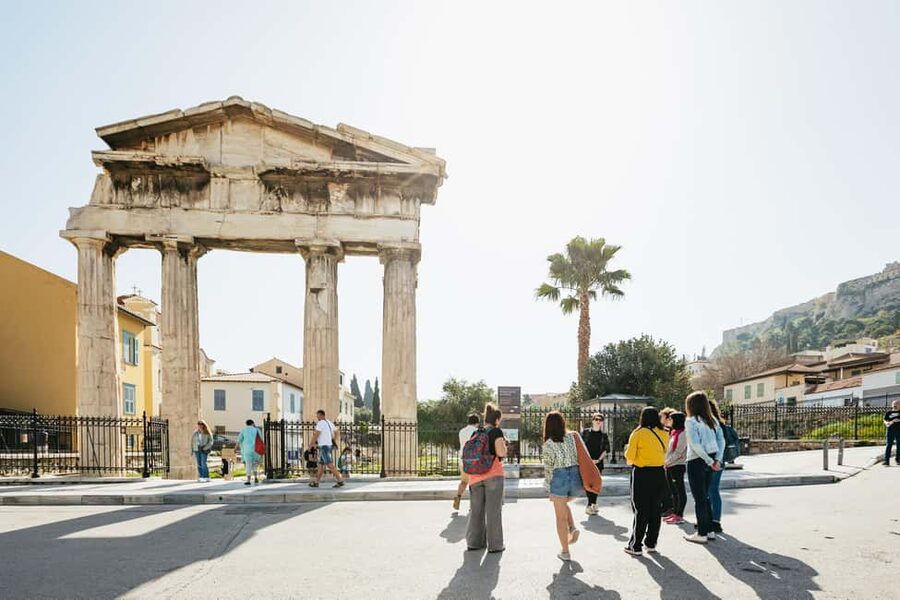
At the Gate of Athena Archegetis, mythology and public identity come together. Athena was associated with wisdom, strategy, and the protection of Athens, yet the real women of the city faced strict limits on public power. That contrast is central to the tour’s appeal: an admired goddess did not automatically mean freedom or equality for mortal women.
You also hear stories involving Penelope, Demeter, Pandora, and other figures from Greek myth. These tales are not treated as simple entertainment. They help show how ancient communities imagined ideal wives, dangerous curiosity, motherhood, loyalty, fertility, and female authority.
The walk is especially good at showing that myths can carry social messages. A story may praise one kind of woman while warning against another. Looking at those messages beside the actual laws and customs of Athens gives you a clearer picture of the period.
More walking tours around Athens:
- Acropolis monuments & Parthenon Walking Tour with Optional Acropolis Museum
★ 5.0 · 2,678 reviews - Athens Acropolis and Parthenon Walking Tour
★ 4.5 · 1,355 reviews - Athens Authentic Greek Food Walking Tour (Small Group)
★ 5.0 · 809 reviews - Early Morning Acropolis & Old Athens Guided Walking Tour
★ 4.4 · 748 reviews
The secret stop and the Ancient Agora
A short, undisclosed stop comes next. Because its details are not given in advance, you should expect a brief guide-led point of interest rather than a major monument visit. It adds some surprise to a route that otherwise follows recognizable parts of central Athens.
The Ancient Agora receives about ten minutes of attention. The Agora was a key public area, and the tour uses it to ask who was allowed to participate in public life and who was expected to remain at home.
This is where the difference between being present in a city and having civic power becomes clear. Women lived in Athens, worked within households and religious life, raised children, and took part in family and community customs. Yet citizenship and formal political participation were restricted.
The guide also brings in the stories of women who pushed against the usual boundaries. Aspasia is an important example because she is linked with intellectual and political circles despite the limits placed on women. Agnodice offers another striking story, connected with women and medicine. Sappho represents poetry and education in a way that broadens the picture beyond Athens itself.
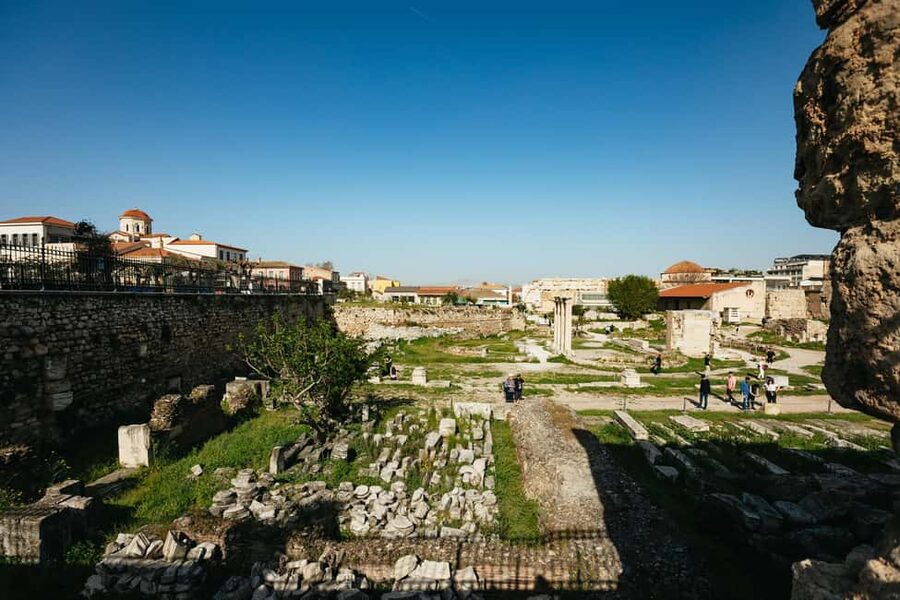
Do not expect the Agora portion to replace a full archaeological visit. Tickets are not included, and the tour provides exterior viewing only. If you want time among the ruins, statues, and reconstructed buildings, plan a separate Agora visit.
Pnyx and the limits of democracy
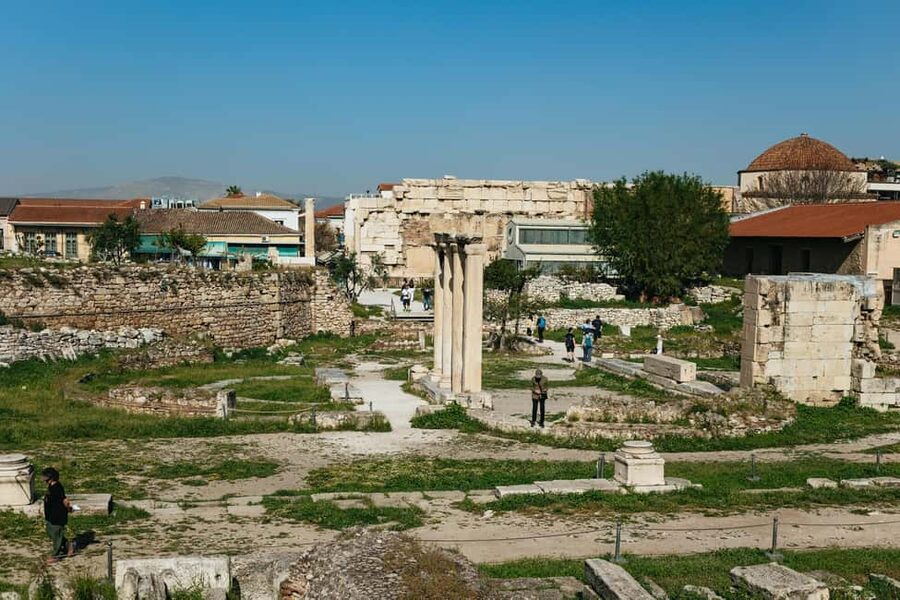
The stop at Pnyx lasts around fifteen minutes, making it one of the longer points on the route. This hillside is tied to the first democratic votes, so it is a natural place to discuss the strengths and limits of Athenian democracy.
The setting gives the subject extra force. From here, you can think about the ideal of citizens gathering to debate and vote, then ask who was excluded from that system. Women were not full participants in the political process, and the tour makes that omission part of the central discussion.
This is not a simple claim that ancient Athens was either wholly democratic or wholly oppressive. The value lies in seeing both facts at once. Athens developed political ideas that later societies admired, while many people living there had no equal voice in those decisions.
The Pnyx stop also lets the guide connect the ancient world to questions you may recognize today. Several people who took this tour found that it continued to prompt reflection after the walk ended. That is a sign of a good history tour: it gives you facts, but it also gives you questions worth carrying to the next site.
The Acropolis view and Filopappou Hill
After Pnyx, the route includes a viewpoint and then continues to Filopappou Hill. You will gaze up at the Acropolis along the way, rather than entering the Acropolis complex as part of this activity.
That distinction matters when you plan your day. The tour is about context and interpretation, not ticketed monument access. You should book a separate Acropolis time slot if you want to walk through the Parthenon and the other sites on the rock.
Filopappou Hill provides a scenic ending and a change of pace after the denser historical discussion. The hill includes steps, and the walk is not suitable for wheelchair users or people with mobility impairments. It is also listed as unsuitable for people with heart problems, so take those limits seriously rather than treating them as a minor footnote.
You will want water, sunscreen, and a sun hat. The route has outdoor stops, and one guide made a point of finding shade during a hot morning. That sort of care is useful, but it cannot remove the heat or the physical demands of the route.
The activity ends back at the meeting point, with a listed drop-off point at the kiosk on Rovertou Galli 69. Confirm the exact ending arrangement when you book, especially if you have a tight schedule afterward.
How the guiding style shapes the experience
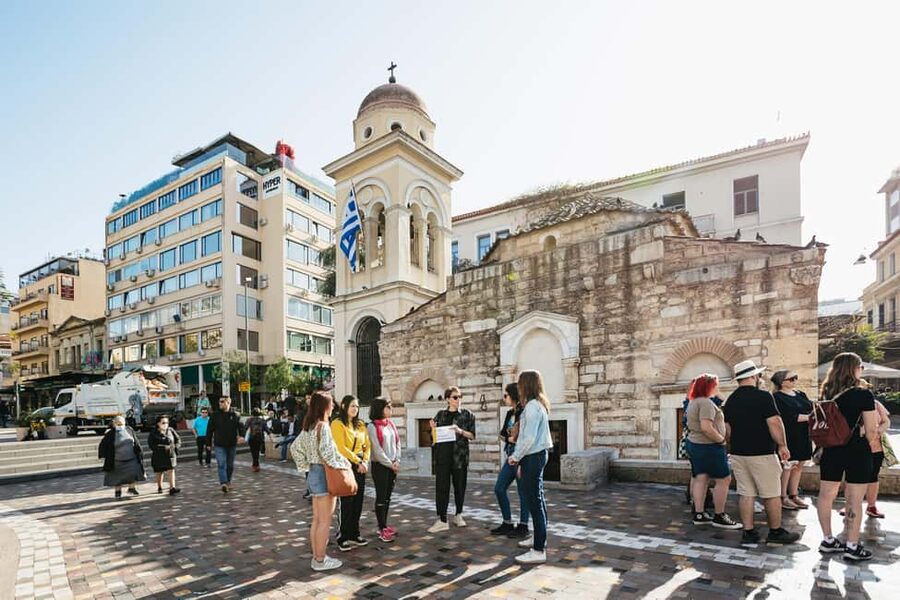
The guide can lead in English or French, and a private group option is available. The strongest praise is directed at Maelle, who is described as warm, funny, well prepared, and comfortable with questions.
That matters more than it might on a basic sightseeing loop. The subject includes mythology, social customs, historical evidence, and modern comparisons. A guide who can explain those links clearly will make the difference between a list of names and a worthwhile conversation.
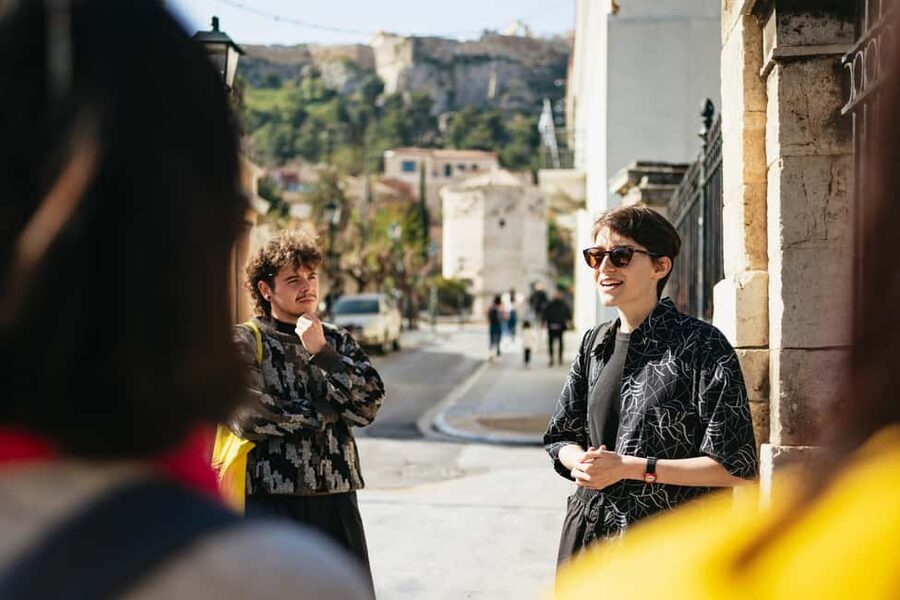
Maelle’s style is interactive. She asks questions, checks the group’s understanding, and encourages people to follow their curiosity. If you prefer a tour where you simply listen and take photographs, that approach may feel more involved than expected. If you enjoy discussion, it is a major advantage.
The small-group or private option can also suit friends traveling together. One quiet February departure resulted in a private experience because there was only one participant. Group size depends on the booking, so you should not assume that every departure will be private, but the option exists if you want a more personal pace.
What the $44.04 price includes
At $44.04 per person, this is a reasonable price for a focused two-hour guided walk, especially if you value interpretation more than entry tickets. You are paying for the guide, the route, the storytelling, and a small gift.
You are not paying for food, drinks, or admission to archaeological sites. Since the tour only views the monuments from outside, budget separately for the Acropolis and Ancient Agora if they are on your must-see list.
I see the best value here in the theme. Standard Athens tours often cover the major monuments quickly. This walk gives you a more specific lens and includes places you may pass without fully understanding, such as the Pnyx and the Gate of Athena Archegetis.
If you are visiting Athens on a tight budget and already plan to explore the streets independently, you could skip this and read about the subject yourself. But the guide’s ability to connect myth, public space, private life, and overlooked historical figures is difficult to reproduce with a quick internet search.
You can cancel up to 24 hours before the start for a full refund, and the reserve-now, pay-later option keeps your plans flexible. Starting times vary, so check availability before arranging other timed visits.
Who should book this Athens walk?
I would recommend it to anyone who wants more than the standard male-centered account of ancient Greece. It suits people interested in women’s history, mythology, democracy, literature, medicine, and the way social rules shape ordinary life.
It is also a strong choice for friends on a short Athens break. The route combines major sights with less familiar themes, and it gives you plenty to discuss afterward.
Families with older children or teenagers may find the questions about citizenship and equality useful, though the guide’s discussion style may suit curious participants better than very young children. The activity is not designed for wheelchair users, and the steps make it unsuitable for people with mobility or heart difficulties.
I would pair it with a separate Acropolis visit, not use it as a substitute. The two experiences answer different questions: one shows you the monuments, while this one helps you think about who lived within that world and who was left out of its public story.
Should you book Women in Ancient Greece?
Book it if you want a thoughtful change from the usual Athens tour and like history presented through people, stories, and questions. The focus on Sappho, Aspasia, Agnodice, and the mythological figures gives the walk a clear purpose, while the views from Pnyx and Filopappou Hill keep it tied to the city around you.
Skip it if you need full interior access to the archaeological sites, dislike interactive guiding, or cannot manage steps and outdoor walking. For most curious visitors who have two hours free, the price is fair, the route is distinctive, and the subject will likely change how you read the Acropolis and Agora afterward.
FAQ
How long does the Women in Ancient Greece tour last?
The walking tour lasts two hours. Starting times vary, so check availability when choosing your date.
Where does the tour begin?
Meet your guide at Monastiraki Square, in front of the Holy Church of the Virgin Mary Pantanassa. Your guide will hold a sign reading Women in Ancient Greece.
What languages are available?
The live tour guide is available in English or French.
Does the price include archaeological-site tickets?
No. The tour includes exterior views only, and tickets to archaeological sites are not included.
Is the tour suitable for wheelchair users?
No. The route includes steps and is listed as unsuitable for wheelchair users and people with mobility impairments.
What should I bring?
Bring water, sunscreen, and a sun hat. You will be outdoors for much of the walking route.
Fresh on the Athens list
- Athens Airport Arrival Transfer to Hotels or Addresses in Athens★ 3.5 · 45 reviews
- Private Luxury Tour: Unveiling the Sacred Mysteries of Eleusis★ 5.0 · 45 reviews
- Luxury Catamaran Sunset Semi-Private & Greek Gastronomy in Athens★ 5.0 · 45 reviews
- From Athens: Aegina Island guided tour in a day★ 5.0 · 45 reviews
- Delphi, Thermopylae full day private tour from Athens★ 4.9 · 46 reviews
- From Athens: City & Corinth Guided Day Tour★ 4.8 · 46 reviews
- Acropolis Private Wine Tasting @ Finewine store★ 5.0 · 46 reviews
- Ancient Corinth Half-Day Private Tour from Athens★ 5.0 · 46 reviews
Athens Tours, compared.

Acropolis & up to 5 Archaeological Sites Combo Pass
Read our review →

Acropolis, Parthenon & Acropolis Museum Guided Tour
Read our review →
Cape Sounion & Poseidon Temple Sunset Half-Day Trip
Read our review →


Cape Sounio & Poseidon Temple Trip with Audio Guide
Read our review →
Hydra, Poros, and Aegina Day Cruise with Lunch
Read our review →Browse the lists this tour appears in