
Reviewed · ANCIENT CORINTH & PELOPONNESE TOURS
From Athens: Half-Day Ancient Corinth Tour
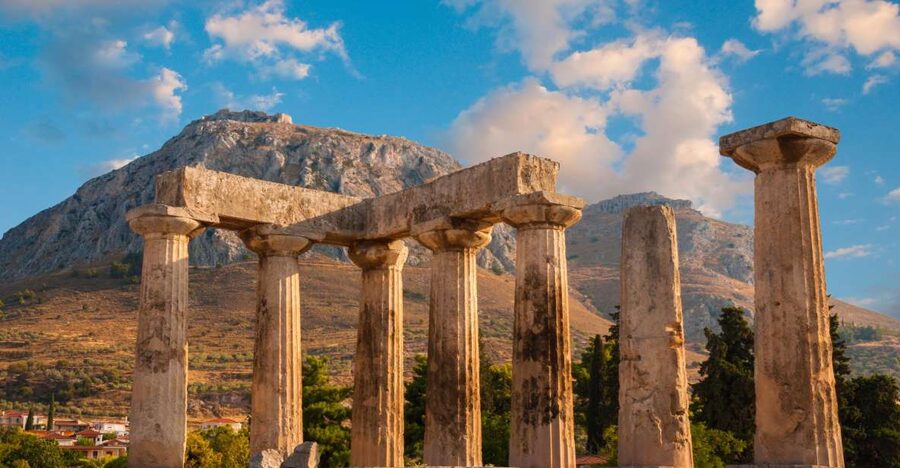
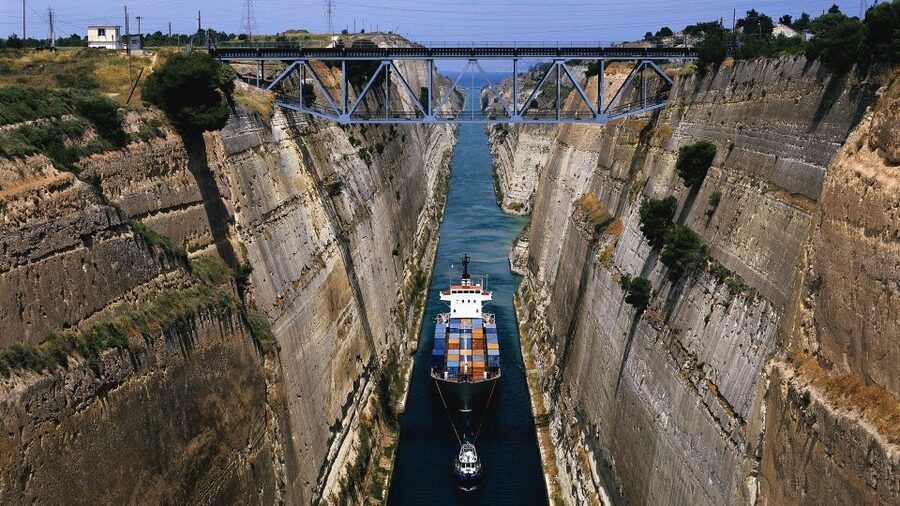
The most striking part of this half-day trip is how quickly Athens gives way to the Corinth Canal, a sharp blue cut through the land linking the Aegean and Ionian seas. Soon after, you reach ancient Corinth, where the remains of the agora and the sixth-century BC Temple of Apollo reveal a city that once carried serious money and influence.
I like the efficient route and the fact that entrance fees and transport are included in the $89 price. I also like the connection to St. Paul, who lived and preached in Corinth for two years before the tour finishes at the ancient Port of Cehrees, where he disembarked.
The trade-off is time. Five hours is enough for a useful introduction, but not a slow archaeological visit. Traffic can shorten your time at the sites, and the canal stop may last only about 20 minutes. If you want a fuller look at Corinth, consider a full-day outing instead.
Key points to know before you book
- The Corinth Canal is the first major stop: You get a short look at the engineering work that links two seas before continuing to the ruins.
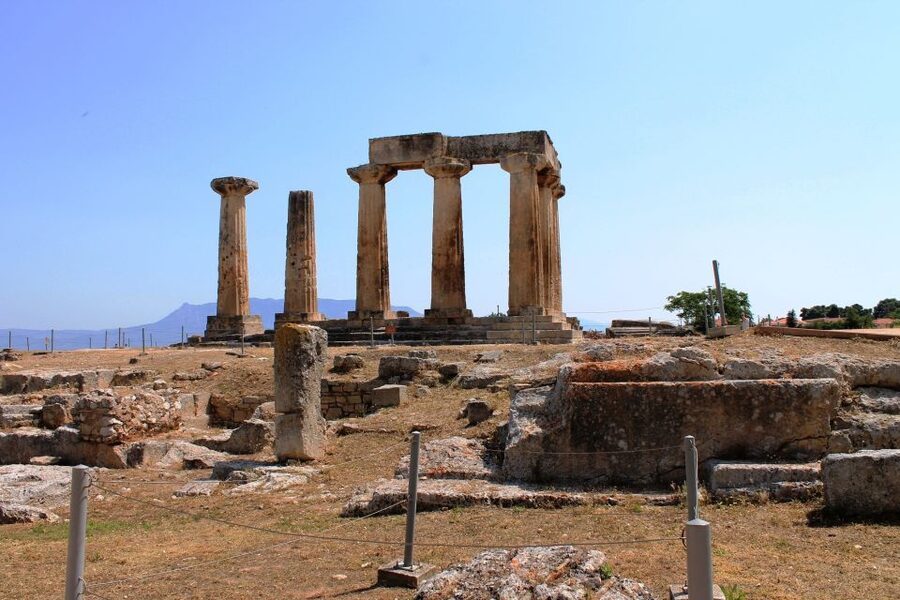
- Ancient Corinth gives you the main history lesson: The agora and Temple of Apollo make the city’s former wealth and importance easy to understand.
- St. Paul’s connection adds a personal thread: The route includes Cehrees, the port where he landed.
- The five-hour length suits a tight Athens schedule: You can see the key sites without giving up an entire day.
- A live English-speaking guide leads the visit: Strong guide commentary is one of the tour’s main strengths.
- Traffic is the main practical concern: A slow morning on the road can make the stops feel hurried.
Leaving Athens for the Corinth Canal
The tour leaves Athens and heads southwest toward the Peloponnese. Pick-up is available from most Athens hotels, although some departures use the meeting point at Leoforos Vasilis Amalias and Souri Street. Check your exact meeting instructions carefully. Clear directions matter here, since one visitor found the meeting information confusing and had a difficult start.
You travel in a luxury air-conditioned coach, a sensible choice for this route. The coach keeps the journey comfortable and removes the need to work out a rental car, parking, or directions through unfamiliar roads. It also lets you focus on the guide’s commentary as Athens fades behind you.
The five-hour duration includes the journey out and back, so the actual time at each stop is limited. I would treat this as a well-organized introduction rather than a relaxed day among the ruins. It works especially well if you are staying in Athens for a short time, have already seen the city’s central sights, or want one excursion without committing a full day.
A few other Athens mornings to price up
- From Athens: Mycenae, Epidaurus & Nafplio Full Day Trip
★ 4.8 · 2,438 reviews - From Athens: Mycenae, Epidaurus & Nafplio Full-Day Tour
★ 4.5 · 1,580 reviews - From Athens: Ancient Corinth Day Trip with Canal & VR Guide
★ 4.6 · 1,073 reviews
The Corinth Canal stop takes about 20 minutes
The first sight is the Corinth Canal, the narrow waterway that cuts through the Isthmus of Corinth. It connects the Aegean Sea with the Ionian Sea and gives the trip an immediate sense of place. You are not just visiting an archaeological site. You are seeing the strategic passage that helped make Corinth important in both ancient and modern times.
The stop is short. Plan on about 20 minutes, enough to look down into the canal, take photographs, and hear an explanation from the guide. You should not expect a long walk, a boat ride, or time for a detailed study of the engineering. This is a photo and orientation stop, not the main event.
I like this opening because it breaks up the coach journey and gives you a physical marker for the region. The canal is easy to grasp even if you are not deeply interested in engineering. You can see the scale of the cut and understand why this narrow strip of land mattered.
Still, the limited time can feel rushed. One piece of feedback specifically called the canal stop too brief at 20 minutes. If the canal is your main reason for booking, this outing may leave you wanting more. For most people, though, it works as a useful first stop before the ancient city.
Walking through ancient Corinth
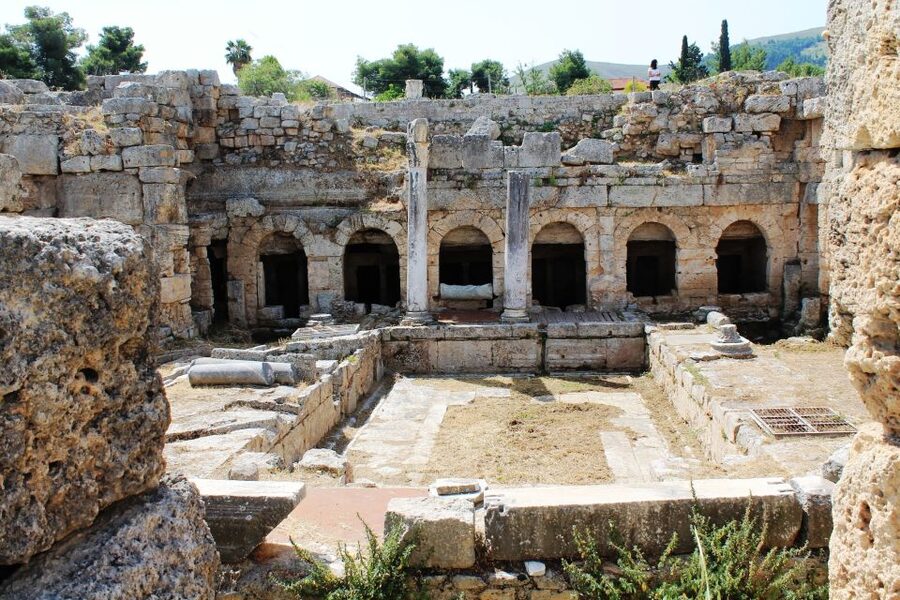
From the canal, the coach continues to ancient Corinth. This is the heart of the excursion. The remains give you a clear picture of a city that was wealthy, commercially important, and well placed between mainland Greece and the Peloponnese.
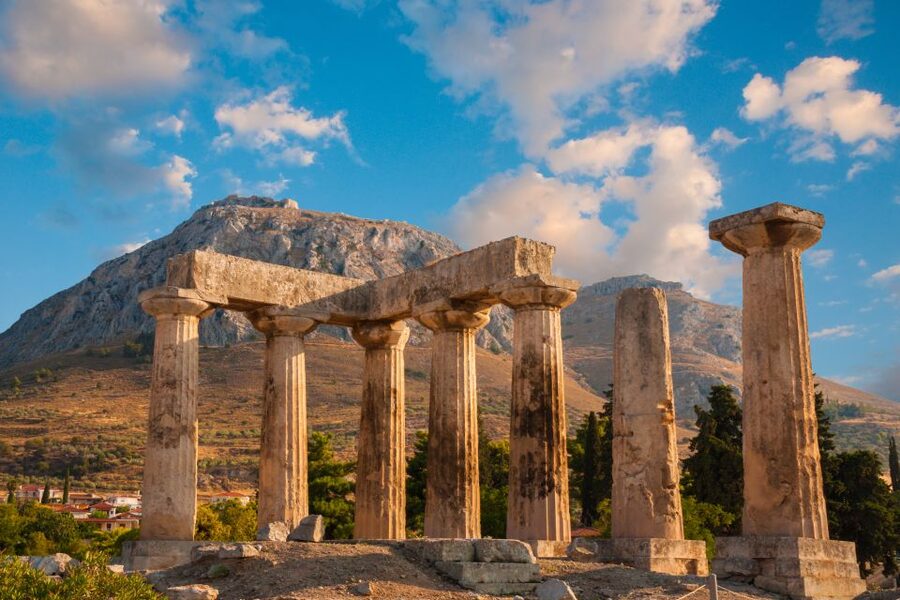
The ancient town includes the agora, or marketplace, and the Temple of Apollo. The temple dates to the sixth century BC, making it one of the oldest visible monuments in the visit. Its surviving columns are not a complete building, but they provide a strong sense of the age of the site. The setting also helps you see how public, religious, and commercial life once gathered around the same center.
The agora is particularly useful for understanding Corinth as a working city rather than a collection of isolated stones. This was a place of trade, public business, and social activity. Your guide’s explanation matters here because the remains can seem scattered if you do not know what you are looking at.
I would stay close to the guide during this part. The site’s value comes from connecting the visible foundations to the city they formed. A good explanation turns the agora from low stone outlines into a place where markets, public decisions, and daily life once took place.
The guide is the tour’s biggest asset. The strongest feedback praises the guide’s command of the subject, friendly manner, and ability to hold attention. Another visitor described the tour as highly informative, while a Finnish visitor praised the guide and driver for their professionalism and the amount of new historical information provided. The guide speaks English, and commentary is live rather than delivered through a recorded system.
Keep your expectations realistic about the pace. You will see the central remains and learn why Corinth mattered, but you may not have time to inspect every corner. Traffic in Athens can reduce the time available at Corinth. One February departure felt rushed because of heavy morning traffic, and the person who took it wished they had chosen a full-day trip.
The Temple of Apollo and Corinth’s ancient power
The Temple of Apollo deserves special attention because it anchors the historical story. Dating from the sixth century BC, it belongs to an early period of Greek architecture and helps place Corinth far beyond the classical-era images many people bring to Greece.
You can look at the surviving columns and then compare them with the open area of the agora. Together, these remains show how religion and public life operated side by side. The guide’s job is to explain what is known, what survives, and how the pieces fit together.
I like this combination because it gives the visit more substance than a quick photo stop. The Corinth Canal shows the region’s strategic importance in modern times, while the Temple of Apollo and agora show why the ancient city held power and wealth. In a few hours, you get both the broad setting and the human story.
You should wear practical shoes and be ready for outdoor walking, although the supplied information does not specify the exact walking route or ground conditions. Bring water and sun protection as sensible precautions for a Greek archaeological site, but do not assume the tour includes refreshments. The stated inclusions are the guide, entrance fees, and coach transport.
Same island, an entirely different sort of day:
- Athens: Acropolis & up to 5 Archaeological Sites Combo Pass
★ 4.4 · 12,619 reviews - Athens: Acropolis Ticket with Optional Audio or Live Guide
★ 4.2 · 11,055 reviews - Athens: Acropolis, Parthenon & Acropolis Museum Guided Tour
★ 4.8 · 9,316 reviews - Athens: Cape Sounion & Poseidon Temple Sunset Half-Day Trip
★ 4.8 · 8,241 reviews
Following St. Paul to the Port of Cehrees
The final visit is a short stop at the ancient Port of Cehrees. This is where St. Paul disembarked, adding a clear biblical connection to the archaeological route. St. Paul also lived and preached in Corinth for two years, so his link to the city is not a passing detail.
Cehrees changes the tone of the tour. At ancient Corinth, you focus on temples, markets, and civic life. At the port, you connect the city to movement across the sea and to the journeys of one of early Christianity’s best-known figures. The stop is brief, but it gives the day a satisfying final thread.
Do not expect a second large archaeological complex on the scale of ancient Corinth. The information describes it as a short stop at the site of the ancient port. I would view it as a meaningful point of connection rather than a long guided visit.
For anyone interested in Christian history, this detail may be the reason to choose this trip over a general Peloponnese drive. For others, Cehrees is still useful because it shows how Corinth related to the wider sea routes. You see the city not only as a place of monuments, but also as a place where people arrived, departed, preached, traded, and settled.
Returning to Athens by coach
After Cehrees, you return to Athens by the same route. The return journey makes the half-day format practical, but it also means the schedule has little spare room. A traffic delay on the outward journey cannot be recovered easily without reducing time at the sites.
If you are staying near the coast, the tour bus transfers you back to your hotel at around 15:00. The available information does not give a separate return time for every Athens hotel, so you should treat that time as specific to coastal hotel drop-offs rather than a universal promise.
The driver is an important part of the experience. Feedback highlights the drivers as superb, and a smooth coach ride matters on a day when much of the route is spent on the road. You avoid the stress of navigating and can listen to the guide or simply watch the Greek countryside pass by.
The transport also makes this a good choice for visitors who do not want to rent a car for one excursion. You get a professional guide, entrance fees, and air-conditioned transport in one booking. That package is easier to budget than arranging each part yourself.
Is $89 good value for five hours?
At $89 per person, the price is reasonable if you value convenience and guided context. You are paying for transport from Athens, a live English-speaking guide, entrance fees, and hotel pickup from most Athens hotels. Those inclusions remove several small costs and planning tasks.
The value depends on what you want from Corinth. If you mainly want to see the canal, take a few photographs, and visit the key ruins, the half-day schedule keeps the excursion focused. You return to Athens with much of the day still available, at least in principle.
If you want long periods at the archaeological site, detailed independent exploration, or extra Peloponnese stops, $89 may not feel like the best use of your time. The trip has a fixed route and short stops. A full-day tour would suit you better, especially if you dislike being hurried.
The guide adds the most value. Ancient Corinth can be difficult to read without context, since much of the city survives as foundations and partial structures. Clear commentary helps you understand what you are seeing instead of simply walking among stones.
The 4.4 out of 5 score from 59 ratings fits the experience described here: strong guiding and good historical content, balanced by occasional confusion over the meeting point and limited time at the canal. The tour is not flawless, but its main purpose, giving you an efficient introduction to Corinth, is handled well.
Who will enjoy this Corinth excursion?
I would recommend this tour to you if you want a straightforward half-day away from Athens and prefer a guide to explain the sites. It suits first-time visitors, history fans, people interested in St. Paul, and anyone who wants to see the Corinth Canal without driving.
It is also a good match for travelers with limited time in Athens. Five hours is long enough to reach the Peloponnese and see the main Corinth sites, but short enough to fit beside other Athens plans.
Families and mixed-interest groups may also find the format useful. The canal offers a quick visual stop, ancient Corinth provides the main historical visit, and Cehrees adds a religious and maritime connection. The day does not depend on one narrow interest.
I would hesitate to recommend it if you want a slow archaeological day. The tour does not promise extensive free time, and traffic can make the schedule tighter. If the Temple of Apollo and agora are major priorities, a full-day option may give you a more satisfying visit.
Should you book the Ancient Corinth tour?
Book this experience if you want the most important Corinth sights in one organized morning or afternoon, with transport and entrance fees handled for you. The guide’s clear historical explanations are the main reason to choose it, and the links to the canal and St. Paul give the route more range than a simple ruins visit.
Skip it in favor of a longer outing if you want to linger, explore at your own pace, or add more Peloponnese sites. Before booking, confirm the meeting point or hotel pickup details, and allow for traffic. For a compact introduction to Corinth at $89, this is a practical and worthwhile choice, as long as you accept its brisk pace.
FAQ
Where does the tour take place?
The tour travels from Athens to the Corinth Canal, ancient Corinth in the Peloponnese, and the ancient Port of Cehrees.
How long does the tour last?
The tour lasts five hours.
What language is the tour conducted in?
The tour has a live English-speaking guide.
Is hotel pickup available in Athens?
Yes. Free pickup is provided from most hotels in Athens. The stated meeting point is Leoforos Vasilis Amalias and Souri Street.
What transport is provided?
Transport is by luxury air-conditioned coach.
Are entrance fees included?
Yes. Entrance fees are included in the tour price.
What will I see at ancient Corinth?
You will see the ancient agora and the sixth-century BC Temple of Apollo, along with the remains of the ancient city.
Why is the Port of Cehrees included?
Cehrees is included because it was the ancient port where St. Paul disembarked. St. Paul also lived and preached in Corinth for two years.
Can I cancel the tour for a full refund?
Yes. You can cancel up to 24 hours in advance for a full refund. You can also reserve now and pay later.
Fresh on the Athens list
- Athens Airport Arrival Transfer to Hotels or Addresses in Athens★ 3.5 · 45 reviews
- Private Luxury Tour: Unveiling the Sacred Mysteries of Eleusis★ 5.0 · 45 reviews
- Luxury Catamaran Sunset Semi-Private & Greek Gastronomy in Athens★ 5.0 · 45 reviews
- From Athens: Aegina Island guided tour in a day★ 5.0 · 45 reviews
- Delphi, Thermopylae full day private tour from Athens★ 4.9 · 46 reviews
- From Athens: City & Corinth Guided Day Tour★ 4.8 · 46 reviews
- Acropolis Private Wine Tasting @ Finewine store★ 5.0 · 46 reviews
- Ancient Corinth Half-Day Private Tour from Athens★ 5.0 · 46 reviews
Ancient Corinth & Peloponnese Tours, compared.
Ancient Corinth Day Trip with Canal & VR Guide
Read our review →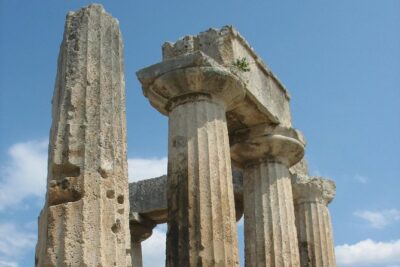
Private Biblical Tour Ancient Corinth & Isthmus Canal from Athens
Read our review →
4-Day Classical Greece Tour: Epidaurus, Mycenae, Olympia, Delphi, Meteora
Read our review →
Ancient Corinth & Nafplio Full Day Trip with Swim
Read our review →
Mycenae and Nafplion Day Trip from Athens with Official guide
Read our review →
Browse the lists this tour appears in