
Reviewed · ATHENS TOURS
Ancient Athens E-Bike Tour
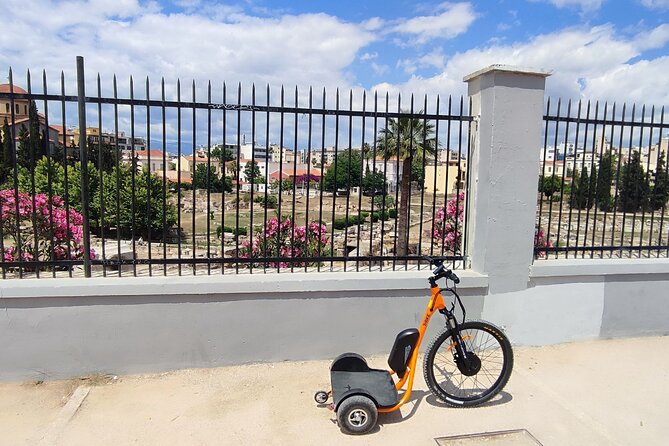
The clever part of this Athens tour is the standing electric trike. You glide between ancient sites without pedaling, saving your legs and covering ground that would take much longer on foot. In about two hours, you see the Acropolis, Pnyx, Ancient Agora, Keramikos, Monastiraki, Roman Agora, and Plaka.
I like the easy pace and the chance to reach viewpoints such as Pnyx without turning the outing into a workout. I also like the small-group limit of 12, since guides such as Dimitris can adjust the route when you have already seen a major sight. The main catch is that the tour gives you outside views and brief stops, not a full visit inside the Acropolis or every archaeological site.
Key points to know before you book
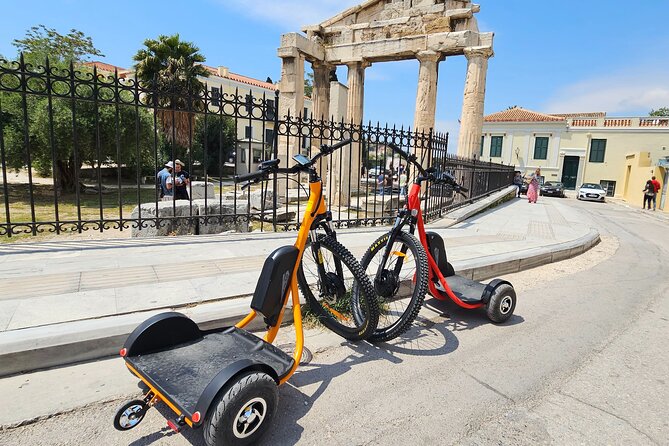
- A no-pedal way to cross Athens: The Trikke is a standing, motorized tricycle, useful in summer heat and on a route with several hills.
- Seven major areas in roughly two hours: You pass the Acropolis, Pnyx, Ancient Agora, Keramikos, Monastiraki, Roman Agora, and Plaka.
- Pnyx adds real historical weight: This hill is linked with the early practice of democracy and gives you a different angle on the Acropolis.
- Dimitris is a guide to hope for: He is praised for clear explanations, friendly conversation, and changing the route around sights you have already visited.
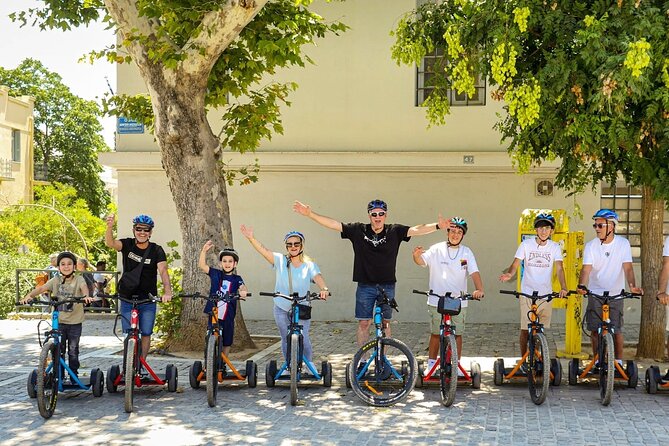
- Small groups keep the ride personal: The maximum is 12 people, with English service.
- Budget for site admissions: The $72.09 price covers the Trikke, helmet, and customer insurance, but archaeological tickets are generally extra.
Why an electric trike works well in Athens
Athens rewards walking, but the center can be hot, hilly, and spread across several separate archaeological areas. This tour solves that problem in a playful way. You stand on a Trikke, hold the controls, and let the motor do the work. No pedaling is required.
That matters most during the warmer months. You can move from the Acropolis area to Pnyx, the Ancient Agora, and Plaka without using up your best sightseeing energy before lunch. You still need to be comfortable standing and following the guide through city streets, but the physical demand is much lower than a walking tour.
The vehicle is also part of the fun. It is not a standard bicycle, and it does not feel like a rushed motor tour from a seat. The three-wheel design gives the ride a light, slightly unusual character, while the helmet and insurance add sensible practical support.
I would not choose this tour if you want long periods inside monuments. I would choose it to get your bearings, collect useful historical context, and mark the places you want to return to on foot.
More Bike Tours in Athens
- Athens Scenic Bike Tour with an Electric or a Regular Bike
★ 5.0 · 2,702 reviews - Athens Electric Bike Tour
★ 5.0 · 836 reviews - Athens: Old Town Highlights Guided E-Bike Tour
★ 4.9 · 834 reviews
A compact route through ancient Athens
The route is full of strong sights, but the short duration means you should treat each stop as an introduction. The guide explains the setting, gives you time to look around, and keeps the group moving.
Theatre of Dionysus and the birth of drama
The Theatre of Dionysus is described as the first theatre in the world and the place where theatre began. It sits on the southern slope of the Acropolis, making it an important early stop for understanding how public life and performance developed in ancient Athens.
The tour does not appear to include a full entry visit. The Acropolis Hill ticket includes the theatre, with the listed price at €20, but admission costs are not included in the tour price. If you plan to return to the Acropolis archaeological area, keep that ticket detail in mind.
Odeon of Herodes Atticus
The Odeon of Herodes Atticus is a Roman theatre built in the second century AD as a memorial gift after the death of Herodes Atticus’s wife. Unlike many ancient structures that survive only as ruins, this theatre is still used for performances.
You get about 10 minutes here. That is enough to appreciate the scale and setting, but not enough for a detailed visit or a show. The Acropolis Hill ticket includes the Odeon, with admission listed at €20, though the tour does not cover that cost.
More bike days around Athens:
- Athens Small Group Electric Bike Tour
★ 5.0 · 803 reviews - Historic Athens: Small Group Electric Bike Tour
★ 4.9 · 740 reviews - Acropolis & Parthenon Tour and Athens Highlights Bike tour
★ 5.0 · 605 reviews - Athens Acropolis Official E-Scooter Guided Tour Fat E-Bike
★ 5.0 · 504 reviews
Acropolis views without the long climb
The tour brings you close to the Acropolis rock and the Parthenon, but it is not an Acropolis summit tour. You can see the hill from a near viewpoint and hear why it remains Athens’s defining monument, then save the full climb and site visit for another time.
This is one of the tour’s biggest practical strengths. If you have limited time, you can see the Acropolis in context rather than spending the entire outing inside one major site. If the Parthenon is your main reason for coming to Athens, book a separate Acropolis visit as well.
Pnyx, where democracy took shape
Pnyx is the most meaningful stop for anyone interested in how Athenian democracy worked. The hill was connected with public meetings, and the archaeological area now functions partly as an open park.
The stop lasts about 15 minutes and is free. The value here is not just the view. Your guide can connect the physical setting to the idea of citizens gathering to debate and make decisions. One of the most useful details from the guide-led experience is the viewpoint where monthly meetings were discussed, giving the site a clear civic purpose rather than leaving it as another rocky hill.
Pnyx also helps explain Athens from a different angle. The Acropolis represents religion, power, and architecture. Pnyx brings the focus back to public discussion and participation.
National Observatory and the Hill of the Nymphs
The National Observatory of Athens is the city’s first observatory. It sits on the Hill of the Nymphs, another archaeological area with parkland and historical connections.
You spend about 15 minutes here, and admission is listed as included. This stop breaks up the ancient ruins with a scientific landmark and a different view across the city. It also shows how Athens continued to use its hills for public work long after the classical period.
Ancient Agora, the city’s public center
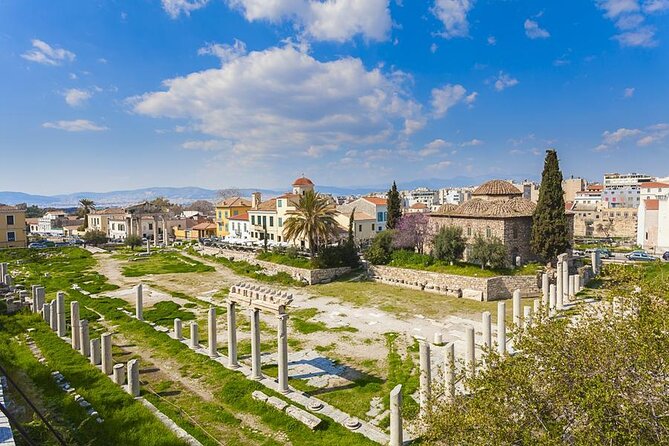
The Ancient Agora was the main market and public center of ancient Athens. This is one of the most important stops on the route because it helps you picture ordinary civic life, not only temples and theatres.
The scheduled visit is about 20 minutes. The listed ticket price is €4, but the tour information also says archaeological admissions are not included. I would confirm the current entry arrangement before booking if you want to go inside. Either way, the guide’s explanation gives the ruins more meaning than a quick look from the street.
The Agora is also a good place to note the difference between seeing Athens and understanding its layout. The Acropolis rises above the city, but the Agora shows where people met, traded, argued, and handled daily business.
Keramikos and an old working district
Keramikos is an archaeological area near the Ancient Agora. Its name comes from the production of ceramics in the neighborhood, linking the modern place name to an old trade.
The stop is about 10 minutes and free. This is a short look rather than a full archaeological visit, but it adds useful variety to the route. You move beyond the most famous monuments and see a district shaped by work and production.
Monastiraki, the modern heart of the route
Monastiraki is one of Athens’s busiest squares and a useful bridge between ancient remains and present-day city life. Bars, restaurants, and shops fill the surrounding area, so this is a good place to notice how close the old and new parts of Athens sit together.
You spend about 10 minutes here. The stop is brief, but it can help you decide where to return for food or an evening walk. Admission is listed as included, though there is no major ticketed visit described at the square itself.
Roman Agora and the Tower of the Winds
The Roman Agora was built in the second century AD as a Roman counterpart to the earlier Greek Agora. Inside, you can see the Tower of the Winds, one of the site’s most distinctive features.
The listed ticket price is €4, while the stop lasts around 10 minutes. The supplied admission details are not fully consistent from stop to stop, so do not assume every ticket is covered by the $72.09 tour fee. Ask the operator if you want to enter rather than view the area from outside.
Plaka, Athens with an island feel
Plaka is the traditional neighborhood beneath the Acropolis. Its narrow streets and traditional character can feel more like a Greek island than a capital city.
The stop lasts about 10 minutes and is free. This is a good final taste of central Athens because it shifts the mood from archaeology to cafés, small streets, and neighborhood life. You will not have time to explore every lane, so mark the area for a later walk.
What the guide adds to the ride
The Trikke gets you around, but the guide determines how much you take away. Dimitris is specifically praised for making people feel comfortable, explaining the importance of Pnyx, and showing key neighborhoods with useful detail. He also asks what you have already seen and adjusts the route when possible.
That flexibility is valuable on a two-hour outing. You do not want to spend half the tour repeating a sight you visited that morning. The route is planned, but it is not described as a rigid script.
The service is offered in English. A small group of no more than 12 makes it easier to hear the guide and ask questions than on a large coach tour. The tone appears friendly and informal, with history mixed with current local observations.
Guide availability can change, so I would not book on the assumption that Dimitris will personally lead every departure. He is a strong example of the style and level of guidance you can hope to receive.
Price, timing, and what you get
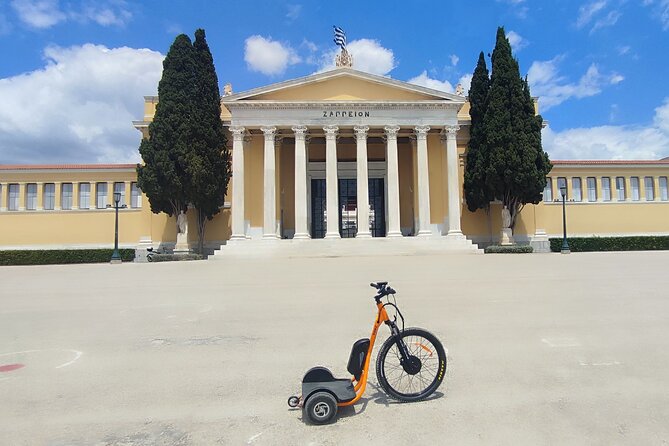
The price is $72.09 per person for roughly two hours. Included are the Trikke, helmet, and customer insurance. That is not a bargain if you compare it with a free self-guided walk, but the comparison is not quite fair.
You are paying for a vehicle, a guide, a planned route, and the ability to cover several hills and neighborhoods with little physical strain. For a first afternoon in Athens, the orientation value can be good. You can then return to the Acropolis, Agora, or Plaka with a clearer sense of where everything fits.
The important extra cost is admission. The Acropolis Hill is listed at €20, the Ancient Agora at €4, and the Roman Agora at €4. The Theatre of Dionysus and Odeon of Herodes Atticus are included with the Acropolis Hill ticket, according to the supplied details. Because the stop-by-stop notes vary on what is included, budget for archaeological tickets separately and confirm before departure.
Departures run Monday through Saturday from 10:00 a.m. to 4:00 p.m. The meeting point is Leof. Andrea Siggrou 22, Athens 117 42, near public transportation. The tour returns to that same point, which is useful if you want to continue sightseeing from a familiar location.
The experience is often booked well ahead, around 42 days in advance on average. I would reserve early if your schedule is fixed, especially for a preferred time.
Who will enjoy this most

I would recommend the tour for first-time visitors who want a fast overview, families who prefer not to walk every hill, and anyone visiting Athens in hot weather. Children aged 9, 12, 13, and 15 were reported to enjoy the vehicles, so it can work well for a family group when everyone is comfortable using the Trikke.
It also suits you if you like a guide who can explain the city while keeping things light. The unusual vehicle gives the outing a sense of play without turning the history into a joke.
You may want a different format if you need step-free access details, want to spend serious time at each ruin, or prefer to explore entirely at your own pace. The supplied information says most people can participate, but it does not provide detailed accessibility specifications. Ask the operator directly about physical requirements before booking.
The tour requires good weather. If poor weather cancels it, you can choose another date or receive a full refund. You can cancel for a full refund up to 24 hours before the start time, but late cancellations and changes are not accepted.
Should you book the Ancient Athens E-Bike Tour?
Book it if you want efficient sightseeing with a human guide, especially during a short stay or a hot part of the day. The route covers more than you could comfortably walk in two hours, and Pnyx, Keramikos, and the Hill of the Nymphs add depth beyond the standard Acropolis photo stop.
I would pair it with a separate Acropolis visit rather than treat it as a replacement. The tour gives you orientation, close views, and useful context. Your own later visit gives you the time to enter the monuments and linger.
At $72.09, it is best value for people who care about saving time and energy. If you want a quick, friendly introduction to ancient and modern Athens, the easy Trikke ride makes a strong case.
FAQ
How long does the Ancient Athens E-Bike Tour last?
The tour lasts approximately two hours.
What vehicle do I use?
You use a standing Trikke, a motorized three-wheel vehicle that does not require pedaling.
Is the tour offered in English?
Yes. The experience is offered in English.
How many people can join the tour?
The maximum group size is 12 people.
Are archaeological admission tickets included?
The tour includes use of the Trikke, a helmet, and customer insurance. Archaeological admissions are generally not included. The listed prices include €20 for the Acropolis Hill, €4 for the Ancient Agora, and €4 for the Roman Agora.
Where does the tour start and finish?
It starts at Leof. Andrea Siggrou 22, Athina 117 42, Greece, and finishes back at the same meeting point.
More E-bike Rides in Athens
- Athens: Discover the City Electric Bike Tour
★ 4.9 · 414 reviews - Electric Bike Tour of Athens by Night
★ 5.0 · 355 reviews - Athens Sunset Electric Bike Tour
★ 5.0 · 151 reviews - Athens Highlights by E-Bike: Small-Group Historic Tour
★ 5.0 · 131 reviews
Fresh on the Athens list
- Athens Airport Arrival Transfer to Hotels or Addresses in Athens★ 3.5 · 45 reviews
- Private Luxury Tour: Unveiling the Sacred Mysteries of Eleusis★ 5.0 · 45 reviews
- Luxury Catamaran Sunset Semi-Private & Greek Gastronomy in Athens★ 5.0 · 45 reviews
- From Athens: Aegina Island guided tour in a day★ 5.0 · 45 reviews
- Delphi, Thermopylae full day private tour from Athens★ 4.9 · 46 reviews
- From Athens: City & Corinth Guided Day Tour★ 4.8 · 46 reviews
- Acropolis Private Wine Tasting @ Finewine store★ 5.0 · 46 reviews
- Ancient Corinth Half-Day Private Tour from Athens★ 5.0 · 46 reviews
Athens Tours, compared.

Acropolis & up to 5 Archaeological Sites Combo Pass
Read our review →

Acropolis, Parthenon & Acropolis Museum Guided Tour
Read our review →
Cape Sounion & Poseidon Temple Sunset Half-Day Trip
Read our review →


Cape Sounio & Poseidon Temple Trip with Audio Guide
Read our review →
Hydra, Poros, and Aegina Day Cruise with Lunch
Read our review →Browse the lists this tour appears in