
Reviewed · ANCIENT CORINTH & PELOPONNESE TOURS
Ancient Corinth, Epidaurus, Nafplio full day private tour from Athens
Corinth’s ancient stones, Paul’s connection to the city, Epidaurus’s remarkable theatre, and Nafplio’s Venetian harbor all fit into one long day from Athens. The route gives you a fine look at the Peloponnese without the work of renting a car.
I like the private pickup and flexible schedule, especially for families or cruise passengers. I also like the mix of archaeology and town life: after temples and fortresses, you get time for lunch, coffee, and a walk in Nafplio.
The catch is simple: this is mainly a private chauffeur service, not a fully guided archaeological tour. Your driver can explain the sites in English, but drivers do not enter them with you unless you arrange an optional licensed guide.
Key points to know before booking
- Three major destinations in one day: Visit Corinth, Epidaurus, and Nafplio from Athens without changing hotels or arranging several transfers.
- Paul’s Corinth: Ancient Corinth offers a useful connection to the New Testament, along with Roman ruins, the Temple of Apollo, and a substantial archaeological museum.
- A flexible private vehicle: Pickup and return can be arranged at a hotel, apartment, airport, or port, with Wi-Fi, air conditioning, and bottled water.
- A real tradeoff on guiding: Drivers provide commentary and answer questions, but they do not accompany you inside the archaeological sites.
- Nafplio provides the breathing room: You have about 90 minutes for lunch, coffee, shopping, and harbor views after the ancient sites.
- Budget for entrance fees: Ancient Corinth and Epidaurus together cost €35 per person, separate from the tour price.
Why this route works from Athens
The Peloponnese begins just beyond the Corinth Canal, so this tour gets you out of the Attica traffic and into a part of Greece that feels markedly different from Athens. You spend much of the day on the road, but the route is logically arranged and the private format gives you some control over the pace.
The stated duration is about eight to nine hours. A typical day may begin around 9 a.m. and return near 6 p.m., though your pickup time can be adjusted. That makes this a full day, not a quick side trip.
I see the route as three experiences in one. Corinth brings archaeology and Christian history. Epidaurus provides the day’s most memorable ancient monument for many people. Nafplio gives you a pleasant modern town where you can sit down, eat, and enjoy the sea.
The private setup matters here. You are not waiting for a large coach group, and your driver can adjust lunch or stop timing when practical. Several drivers named in the feedback, including Alex, George, Nikos, Fotis, Petros, Takis, Anthony, and Panos, were praised for being friendly, flexible, and well informed. Your individual driver will vary, so treat those names as examples, not a guarantee.
A few other Athens mornings to price up
- From Athens: Mycenae, Epidaurus & Nafplio Full Day Trip
★ 4.8 · 2,438 reviews - From Athens: Mycenae, Epidaurus & Nafplio Full-Day Tour
★ 4.5 · 1,580 reviews - From Athens: Ancient Corinth Day Trip with Canal & VR Guide
★ 4.6 · 1,073 reviews
The Corinth Canal is a quick but worthwhile first stop
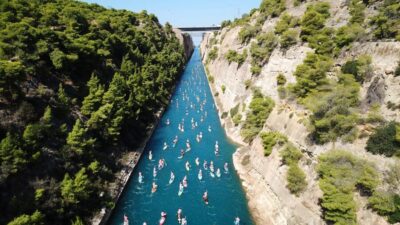
The canal is usually a short photo stop of about 15 minutes. That may sound brief, but it is enough to look down from the high crossing and grasp the engineering challenge.
The Corinth Canal cuts through the Isthmus of Corinth, linking the Gulf of Corinth with the Saronic Gulf. It is about 6.4 kilometers long and only about 21.4 meters wide at its base. Its steep limestone walls make the waterway look striking from above, especially when a vessel is moving through the narrow channel.
This stop is free, and you do not need much time here. I like it as an introduction because it shows why Corinth mattered in the first place. The isthmus was the natural bridge between mainland Greece and the Peloponnese, and control of this corridor gave Corinth great commercial and military importance.
Do not expect a long walk or a detailed site visit. The canal is a viewpoint stop, not a major part of the day. Still, it breaks up the drive and gives you one of the clearest photographs on the route.
Ancient Corinth connects Paul, Rome, and classical Greece
Ancient Corinth is the first substantial archaeological stop, with about an hour at the ruins before the museum and other nearby points. Corinth was one of Greece’s most important city-states, positioned roughly between Athens and Sparta and controlling the isthmus.
For many people, the strongest connection is Saint Paul. Paul spent time in Corinth, and the city is linked with the First and Second Corinthians and with the Acts of the Apostles. If that connection matters to you, tell your driver early. The drivers are not licensed site guides, but they can provide background before you enter and answer questions during the day.
The site also helps explain the city’s changing identity. Rome destroyed Corinth in 146 BC, then rebuilt it in 44 BC. Under Roman rule, it became the provincial capital of Greece. What you see is therefore not just a Greek ruin. It is a place shaped by Greek, Roman, and early Christian history.
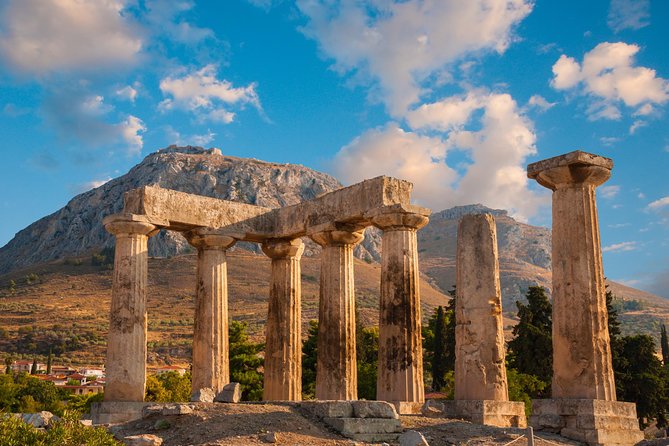
The remains include the Agora, the Lechaion Road, the Fountain of Peirene, a basilica, a theatre, a stoa, and several temples. The Temple of Apollo, built in about 550 BC, is the visual anchor. Its surviving columns are a reminder that Corinth was a major city long before the Roman rebuilding.
The entrance fee for Ancient Corinth and its museum is listed as €15 per person, paid separately on site. Build that into your budget. The one-hour visit is enough for an overview, but it may feel short if you want to read every inscription or study the ruins in detail.
The Corinth museum adds the pieces the ruins cannot show
The Archaeological Museum of Ancient Corinth sits inside the archaeological site, making it easy to combine with the ruins. The planned visit is about 30 minutes.
A museum stop is especially useful at Corinth because scattered foundations can be hard to interpret without context. Objects, inscriptions, architectural fragments, and reconstructions help you picture the city as a functioning urban center rather than a field of stones.
The museum was built in the early 1930s to display finds from excavations. Its location means you do not lose time traveling to a separate building, but your total time at Corinth remains fairly tightly scheduled. If museums are your priority, you may want to ask in advance if the driver can adjust the order or length of stops.
Same island, an entirely different sort of day:
- Athens: Acropolis & up to 5 Archaeological Sites Combo Pass
★ 4.4 · 12,619 reviews - Athens: Acropolis Ticket with Optional Audio or Live Guide
★ 4.2 · 11,055 reviews - Athens: Acropolis, Parthenon & Acropolis Museum Guided Tour
★ 4.8 · 9,316 reviews - Athens: Cape Sounion & Poseidon Temple Sunset Half-Day Trip
★ 4.8 · 8,241 reviews
Acrocorinth offers the day’s most demanding climb
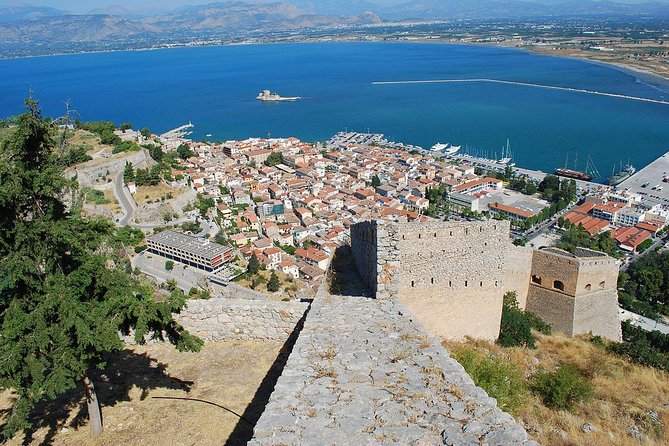
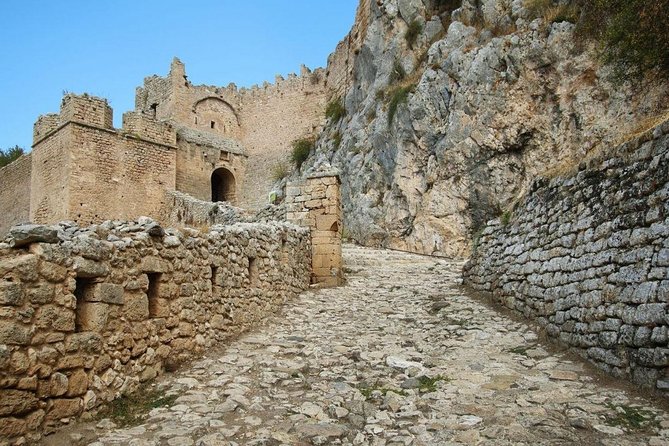
Acrocorinth, or Upper Corinth, is a huge fortified rock above the ancient city. It served as a defensive stronghold because it commanded the route into the Peloponnese and had its own secure water supply.
The tour allows about 30 minutes here. That is enough for a look and some views, but not enough for a slow exploration of every fortification. The climb can be strenuous, and one person specifically advised wearing good walking shoes and being in sound physical condition.
You should also understand the difference between seeing Acrocorinth and fully touring it. The schedule lists free admission, but the time is limited. If you want to hike farther into the fortress, ask your driver before the day begins. Otherwise, treat this as a scenic and historical stop rather than a full fortress visit.
Epidaurus shows why ancient theatre design still matters
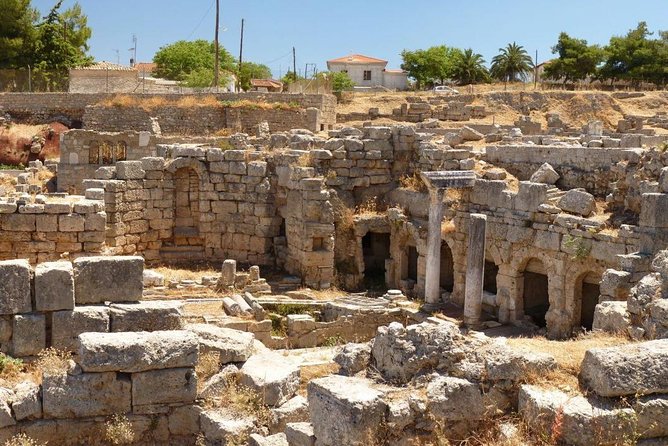
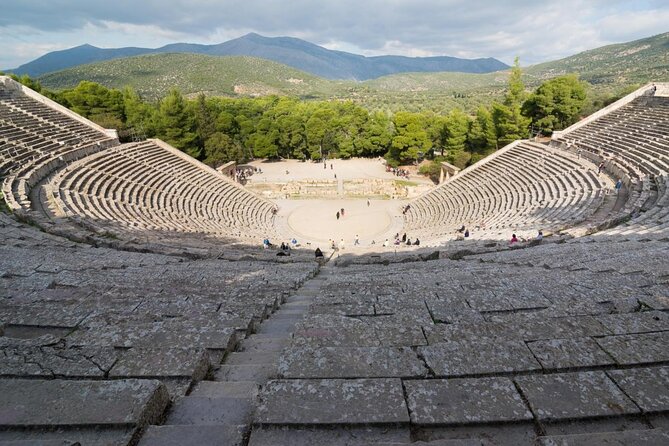
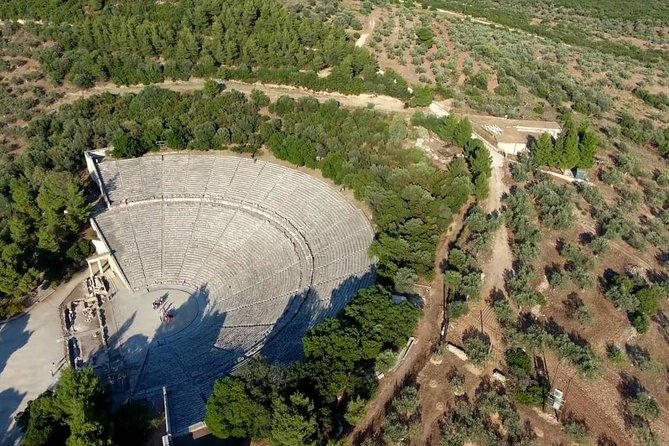
Epidaurus is the route’s great architectural highlight. The ancient theatre is famous for its acoustics and graceful proportions, and the visit lasts about 30 minutes.
The theatre retains the basic Hellenistic arrangement of seating, orchestra, and stage building. Unlike many Greek theatres, it was not substantially altered during the Roman period. From the seating area, you can appreciate the clean geometry and the way the theatre fits against the mountain.
Try the classic sound test if conditions allow: speak from the orchestra while someone else sits higher up. The site is known for carrying sound remarkably well, though the experience depends on where people are standing and how busy the theatre is.
The admission charge for Epidaurus and its archaeological museum is listed as €20 per person. That fee is not included in the tour price. Thirty minutes gives you time for the main theatre and photographs, but you should not expect a slow study of the entire sanctuary.
The Epidaurus museum explains the healing sanctuary
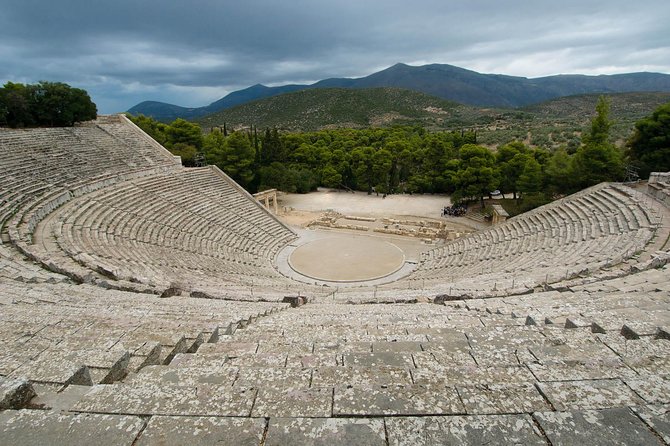
The Archaeological Museum of Epidaurus receives about 30 minutes. It was established to display objects found at the sanctuary and nearby excavations, including columns, inscriptions, and reconstructions connected with the ancient buildings.
Epidaurus was dedicated to Asclepius, the Greek god of medicine. The sanctuary was a major healing center and rivaled important religious sites at Olympia and Delphi. The museum gives you a better sense of how the sanctuary functioned, particularly when the surviving buildings alone do not tell the whole story.
The nearby Sanctuary of Asklepios is scheduled for about 15 minutes. Again, this is a short orientation stop. If you are especially interested in ancient medicine, sacred sites, or inscriptions, an optional licensed guide would make this part much more useful.
Nafplio gives the long day a pleasant change of pace
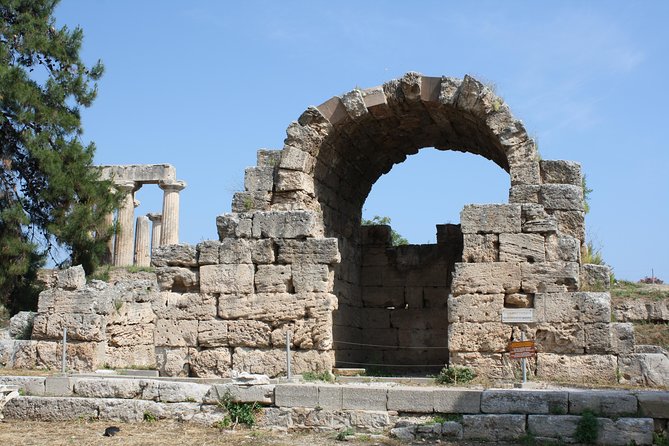
After Corinth and Epidaurus, Nafplio feels like a reward. You have about an hour and a half for lunch, coffee, shopping, or simply wandering beside the harbor.
Nafplio was the first capital of the modern Greek state, from the Greek Revolution in 1821 until 1834. Venetian and Ottoman rule left their mark, and the town’s cobbled squares, harbor, fortresses, and old streets give it a different character from Athens.
This is also where the private format pays off. Lunch timing can be shifted, and the driver can point you toward a restaurant or help you find the town center. The traditional Greek food option is described as an upgrade in the tour details, while the inclusions also refer to lunch with a Greek traditional food option. I would clarify exactly what is included, what is upgraded, and whether drinks are covered before departure.
Several people singled out the meal in Nafplio, including one especially positive mention of seafood. That does not guarantee a particular restaurant or menu, but it does show why the lunch stop is more than a rushed sandwich break. Ask for a late lunch if you prefer to finish Epidaurus first, or eat earlier if you want more time to explore the town.
Bourtzi and Acronauplia add strong harbor views
Bourtzi is the small Venetian water castle in the middle of Nafplio’s harbor. The scheduled stop is only about 10 minutes, usually from the harbor side, so expect photographs rather than a visit inside the fortress.
Acronauplia is the oldest part of Nafplio. It was once a separate town before becoming part of the city’s defensive system under Frankish and Venetian rule. Its high position gives you another angle on Nafplio and the Argolic Gulf.
The itinerary does not list a fixed duration for Acronauplia, so ask your driver how it fits into the day. This is one of the places where a private tour can be useful. A short viewpoint stop may be enough for you, while another person may prefer more time in the old streets.
Palamidi Castle rewards effort with a broad view
Palamidi Castle sits on a 216-meter hill above Nafplio. The Venetians built it during their second period of control, between 1686 and 1715. From the fortress, you can look over the town, the Argolic Gulf, and the surrounding country.
The listed visit is about 30 minutes. The famous stairway from town is commonly counted as 913 steps, with local tradition putting the number at 999 or more than 1,000 depending on where you begin and end. Do not assume the tour requires you to climb every step from the town center. Ask how the vehicle will approach and how much walking is expected.
If you do choose the long stair route, wear firm shoes and bring water. Bottled water is provided in the vehicle, but the combination of heat, stone steps, and a full day can make this the most tiring part of the trip.
What the driver can and cannot do
The driver is the key variable in this experience. Drivers are described as fluent English speakers with strong knowledge of Greek history and culture, and many people appreciated their explanations before each stop. Names such as George, Anthony, Takis, Petros, and Panos appear repeatedly in positive accounts, with flexibility and personal attention receiving particular praise.
But the service has a clear limit. Drivers do not enter the archaeological sites with you. They can set the context, answer questions, and help with timing, but you explore the ruins and museums independently.
That arrangement suits you if you like freedom and do not need a running lecture beside every column. It may disappoint you if you expect a licensed guide to lead you through each monument. You can request a licensed tour guide, depending on availability and for an additional cost. Make that request before the tour, not after you arrive at Corinth.
The mixed feedback on this point is useful. Some people felt they received excellent explanations and a personal experience. Others felt the day was closer to a chauffeur service than a tour. Both reactions make sense because the format depends heavily on your expectations.
Is $229.14 per person a fair price?
At $229.14 per person, the tour is not a budget bus outing. You are paying for a private vehicle, hotel, airport, or port pickup and return, an adjustable schedule, air conditioning, Wi-Fi, bottled water, and a full day of transport beyond Athens.
You must also add the stated €35 per person in entrance fees for Corinth and Epidaurus. Lunch arrangements need clarification, since the traditional Greek meal is presented as an option or upgrade. A licensed guide costs extra as well.
The value is strongest for a small group that wants to avoid driving and does not want to coordinate several separate excursions. It is also useful if you are staying in Athens before a cruise, since port pickup and drop-off are offered. For a solo visitor, the per-person cost is harder to justify. For a family or private group, the price may compare more favorably with several individual transfers and tickets.
The rating is listed as 4.9 from 206 reviews, with 98 percent recommending the experience. That points to a reliable overall format, but it does not erase the main warning: you need to know you are buying private transport with commentary, not a fully escorted archaeological tour.
Practical advice for making the day better
Wear walking shoes. Corinth, Acrocorinth, Epidaurus, and Palamidi all involve uneven stone or slopes, and Acrocorinth in particular can require a strenuous climb.
Tell the company your priorities before pickup. If Saint Paul is your main interest, ask for more context at Corinth. If Nafplio matters most, request enough free time there. If you want deeper explanations inside the sites, request the optional licensed guide.
Keep your expectations realistic about the clock. The route covers a lot of ground, and every extra stop reduces time somewhere else. The private vehicle gives you flexibility, not unlimited hours.
The company offers free cancellation up to 24 hours before the start time. Changes or cancellations inside that window are not accepted for a refund.
Who should book this private Peloponnese day trip?
I would book this if you have one day outside Athens and want a broad introduction to Corinth, Epidaurus, and Nafplio without driving. It is especially suited to families, couples, small groups, and cruise passengers who value door-to-door service.
I would also choose it if you prefer to explore ruins at your own pace after receiving a short briefing. The mix of Ancient Corinth, the theatre at Epidaurus, and Nafplio’s harbor is hard to match in one day by public transport.
I would hesitate if your main goal is detailed archaeological instruction. In that case, pay for the licensed guide or choose a tour that explicitly includes one. I would also avoid this route if you dislike long drives or strenuous walking.
For most people who understand the format, the day offers strong variety and practical convenience. Book it for the route, the private transport, and the chance to see beyond Athens. Just confirm the guide, lunch, and entrance-fee details before you pay.
FAQ
How long does the tour last?
The tour lasts approximately eight to nine hours. The pickup time can be adjusted upon request.
Where can pickup and drop-off take place?
Pickup and drop-off are available at a hotel, apartment, airport, or port. The return point can be the same location or another preferred point.
Is the tour private?
Yes. Only your group participates in the tour.
Is a licensed tour guide included?
No. The professional driver can provide English commentary and answer questions, but drivers are not licensed guides and do not enter archaeological sites with you. A licensed guide may be requested for an additional cost, subject to availability.
How much are the entrance fees?
Ancient Corinth and the Archaeological Museum of Corinth cost €15 per person. Epidaurus and the Epidaurus Archaeological Museum cost €20 per person. These fees are paid separately on site.
Is lunch included?
The tour includes a lunch option with Greek traditional food, and the details also describe an upgrade for an authentic Greek restaurant meal. Ask the provider to confirm the exact lunch arrangement and any extra cost.
Is transportation provided?
Yes. Private transportation is provided in an air-conditioned vehicle with Wi-Fi and bottled water.
Can the itinerary be adjusted?
The pickup time is adjustable, and the private format allows some flexibility with stops and lunch timing. Discuss major changes with the provider before the tour.
How much time is planned in Nafplio?
About 90 minutes are planned for lunch, coffee, shopping, and exploring the town. Bourtzi has a separate short viewing stop of about 10 minutes.
What is the cancellation policy?
You can cancel up to 24 hours before the experience starts for a full refund. Cancellations or changes made less than 24 hours before the start time are not accepted.
Fresh on the Athens list
- Athens Airport Arrival Transfer to Hotels or Addresses in Athens★ 3.5 · 45 reviews
- Private Luxury Tour: Unveiling the Sacred Mysteries of Eleusis★ 5.0 · 45 reviews
- Luxury Catamaran Sunset Semi-Private & Greek Gastronomy in Athens★ 5.0 · 45 reviews
- From Athens: Aegina Island guided tour in a day★ 5.0 · 45 reviews
- Delphi, Thermopylae full day private tour from Athens★ 4.9 · 46 reviews
- From Athens: City & Corinth Guided Day Tour★ 4.8 · 46 reviews
- Acropolis Private Wine Tasting @ Finewine store★ 5.0 · 46 reviews
- Ancient Corinth Half-Day Private Tour from Athens★ 5.0 · 46 reviews
Ancient Corinth & Peloponnese Tours, compared.
Ancient Corinth Day Trip with Canal & VR Guide
Read our review →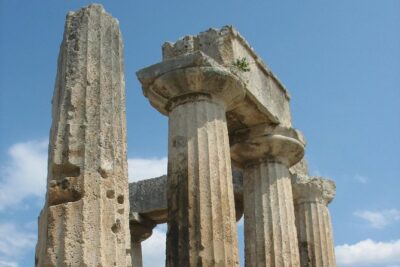
Private Biblical Tour Ancient Corinth & Isthmus Canal from Athens
Read our review →
4-Day Classical Greece Tour: Epidaurus, Mycenae, Olympia, Delphi, Meteora
Read our review →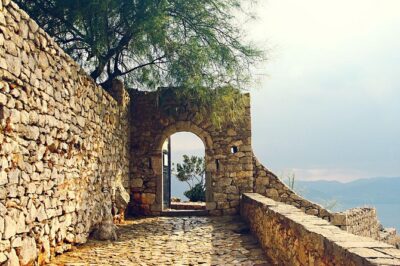
Ancient Corinth & Nafplio Full Day Trip with Swim
Read our review →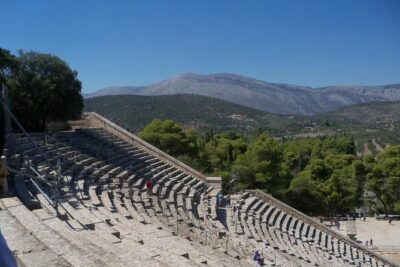
Mycenae and Nafplion Day Trip from Athens with Official guide
Read our review →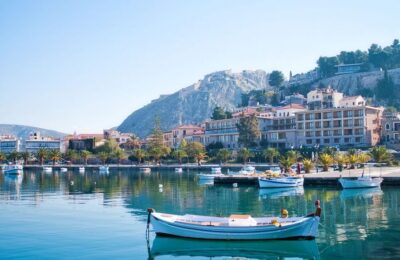
Browse the lists this tour appears in