
Reviewed · ATHENS TOURS
Athens: Agora and Hephaistos Temple Entrance Ticket
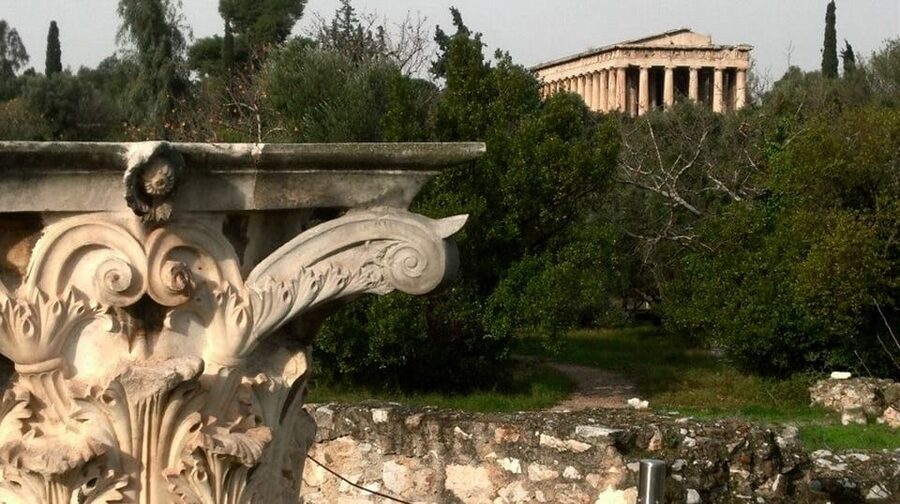
The Temple of Hephaistos is the star here: a nearly complete Doric temple rising above the ruins of Athens’ old civic center. The Agora also gives you something the Acropolis cannot, a look at the everyday, political, and religious life of ancient Athens.
I like the freedom to walk at your own pace, and I like that the ticket includes both Hephaistos Temple and the Church of the Holy Apostles. The optional audio guide adds useful stories, but the entrance directions have caused confusion, so check the current access point before you go.
Key points to know
- Hephaistos Temple is the main prize: It is described as the best-preserved ancient Greek temple in the world.
- The Agora explains daily Athenian life: This was a marketplace, meeting place, political center, and public stage.
- The Church of the Holy Apostles adds a later layer: It is connected with the tradition of St. Paul preaching here.
- Entry is tied to a time slot: You may enter only at the selected time or within 15 minutes before or after it.
- The audio guide is optional: It is offered in English, German, Spanish, Italian, and French.
- Allow time for walking: The site is broad, uphill in places, sunny, and worth exploring beyond a quick look at the temple.
Why the Ancient Agora deserves time after the Acropolis
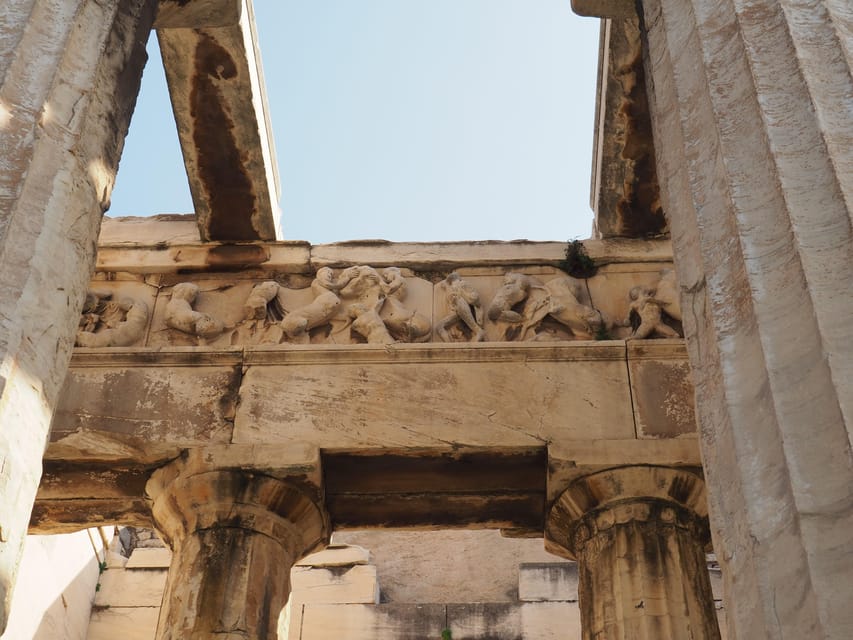
The Acropolis gives you the grand view of classical Athens. The Ancient Agora gives you the city at ground level. This was where people met, traded, argued, worshipped, and took part in public life.
I find that change in scale important. On the Acropolis, you focus on monuments built to impress. In the Agora, you walk among foundations and partial walls, trying to picture a working city. The remains are less instantly dramatic, but they explain how Athens functioned.
The site is close enough to the main Acropolis area to fit easily into the same day. It is also a good choice if you want more than the standard Athens highlights. A short walk brings you into a quieter archaeological setting with views back toward the Acropolis.
Do not expect every building to be complete. Much of the Agora is made up of ruins, foundations, and scattered remains. That is not a flaw, but you need some patience and imagination. The Temple of Hephaistos and the reconstructed Stoa give the visit its strongest visual anchors.
A few other Athens mornings to price up
- Athens: Acropolis Ticket with Optional Audio or Live Guide
★ 4.2 · 11,055 reviews - Athens: Acropolis Ticket with Audio Guide
★ 4.0 · 3,575 reviews - Athens All Included: Acropolis and Museum Guided Tour with Ticket
★ 4.5 · 2,673 reviews
Finding the entrance on Apostolou Pavlou
The most important practical point is the entrance. The access information has not always kept pace with changes on site, and the map or meeting-point pin may lead you toward a closed or unused gate.
The current instruction provided for this experience places entry and exit at Thissio Square, also called Jacqueline de Romilly Square, on the pedestrian street of Apostolou Pavlou. That arrangement is stated to remain in place until the end of 2025, so I would still confirm the latest access details for your travel date.
This matters because your ticket is time-sensitive. If you spend ten minutes walking to the wrong gate, then another ten minutes correcting your route, you may feel rushed or worry about missing your slot. Several people have found the first entrance closed or the coordinates inaccurate.
Use the description in your confirmation as a guide, but look for the actual open entrance rather than trusting the map alone. If you reach a locked gate or find yourself at the rear of the site, stop and ask for the entrance on Apostolou Pavlou. That simple check can save time and frustration.
Walking first to the Temple of Hephaistos
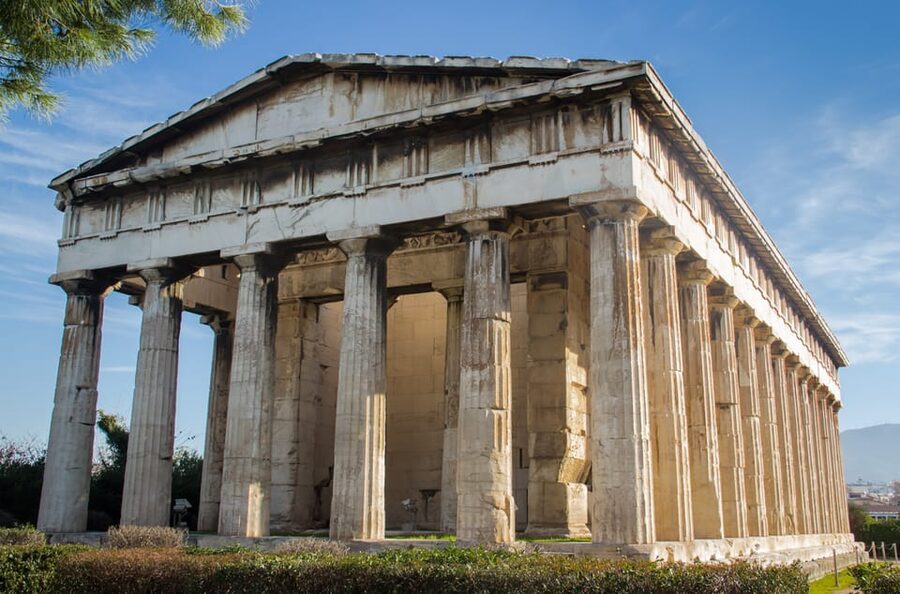
Once inside, make the temple your first clear target. The Temple of Hephaistos sits on a rise within the Agora and is the best-preserved monument in the complex.
Its preservation gives you a rare chance to read the basic form of an ancient Greek temple without having to reconstruct every column in your mind. The Doric design, strong proportions, and surviving structure make it easy to understand why this building receives so much attention.
The temple is dedicated to Hephaistos, the ancient god associated with metalworking and craft. The Agora was a practical place, so the temple feels connected to the working life of the city rather than isolated from it.
I like to take a little time here before moving on. Look at the temple from several angles, then turn back toward the Agora and the Acropolis. The setting helps you connect the religious building with the surrounding civic center.
The walk uphill is manageable, but you should wear firm, comfortable shoes. In hot weather, the exposed path can feel tiring. Bring water, sunscreen, and a hat, especially if you plan to see the whole site rather than only the temple.
Understanding the Agora as a working city
After the temple, slow down among the foundations and open spaces. The Agora is not one single monument. It is a collection of places that once supported public life.
Here you can think about the Agora as:
- A marketplace where goods changed hands
- A meeting place for ordinary social life
- A political center where public matters were discussed
- A setting for speeches, debate, and civic gatherings
- A religious area with temples and churches from different periods
This combination is what makes the site worthwhile. You are not only looking at old stones. You are walking through the place where the city’s public routines took place.
The partial remains require more interpretation than the temple. The audio guide can help by supplying stories and explaining what you are seeing. It uses professional narration from guides and history experts, with handpicked stories linked to the path through the site.
Still, audio tours work best when you use them selectively. One person found the route difficult to follow because the audio began at an old entrance rather than the current one. Another preferred the written signs and information around the site. I would start by locating yourself on the guide’s map, then listen to the sections that match your position.
Same island, an entirely different sort of day:
- Athens: Acropolis & up to 5 Archaeological Sites Combo Pass
★ 4.4 · 12,619 reviews - Athens: Acropolis, Parthenon & Acropolis Museum Guided Tour
★ 4.8 · 9,316 reviews - Athens: Cape Sounion & Poseidon Temple Sunset Half-Day Trip
★ 4.8 · 8,241 reviews - Athens: Acropolis and Parthenon Guided Walking Tour
★ 4.6 · 5,882 reviews
The Church of the Holy Apostles
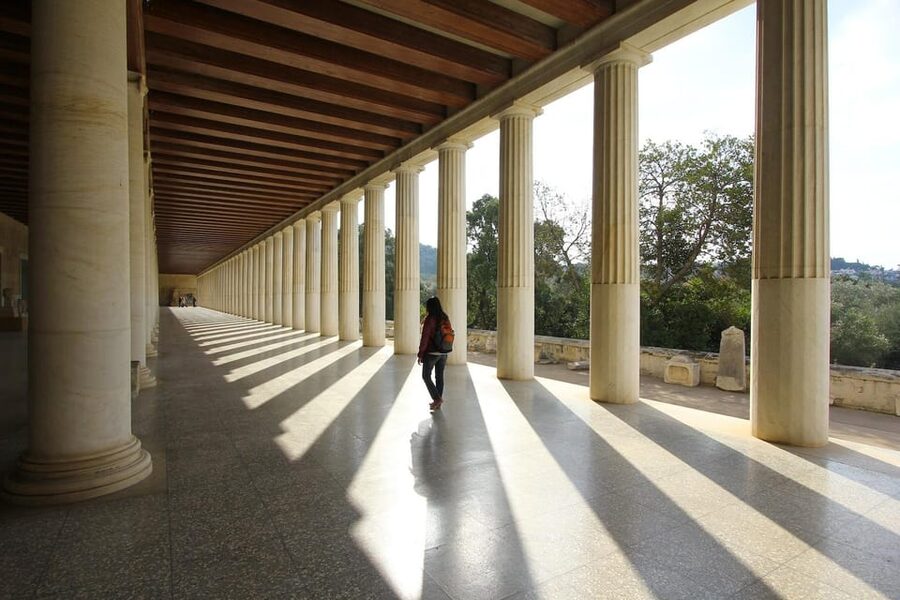
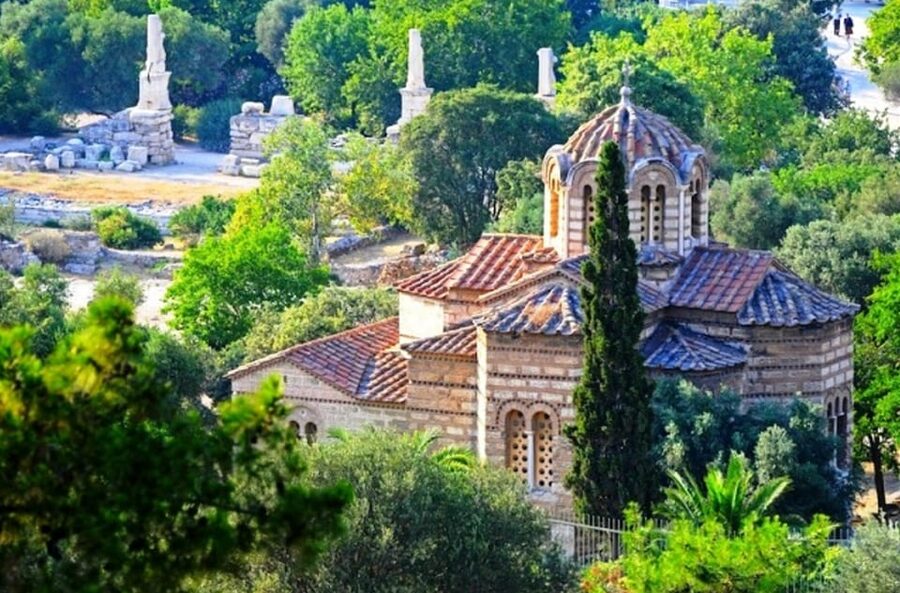
The Church of the Holy Apostles brings a very different mood to the Agora. It is a later Christian building set among the ancient remains, showing how the area continued to matter long after classical Athens.
The church is associated with St. Paul, who is traditionally connected with preaching in this part of Athens. That link gives the stop interest beyond its architecture. You are seeing one place used across different periods and for different religious purposes.
Do not rush past it simply because the temple receives most of the attention. The church helps you understand that the Agora was not frozen in the fifth century BC. Its role changed as the city changed.
The combination of ancient Greek ruins and the Christian church is one of the most useful parts of the visit. It adds a historical layer that you would miss if you came only for the Doric temple.
The Stoa and the museum
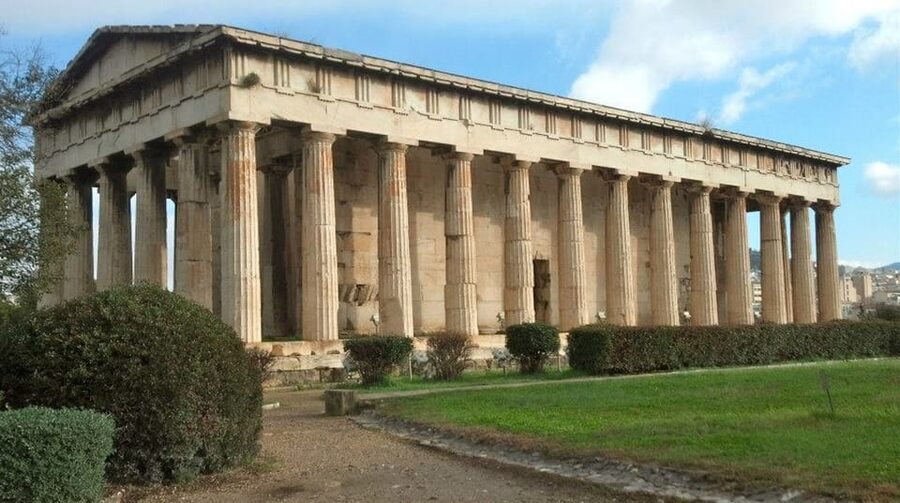
The Stoa is another major visual point within the Agora. Its long colonnade helps you picture how people used covered public spaces for business, conversation, and civic activity.
The reconstructed structure gives your eye a complete architectural form amid the foundations. That contrast is helpful. You can compare the intact-looking lines of the Stoa with the lower remains of buildings that have disappeared.
The on-site museum is also worth adding if it is open during your visit. A museum stop can make the scattered ruins easier to read, particularly if you want objects and displays to connect with the buildings outside.
A bronze shield identified as Spartan is one especially interesting object associated with the site. Small finds like this can sharpen your sense of rivalry, politics, and military culture in ancient Greece. I would not treat the museum as an optional extra if you have enough time. It gives context that the open-air ruins alone cannot always provide.
Choosing the audio guide
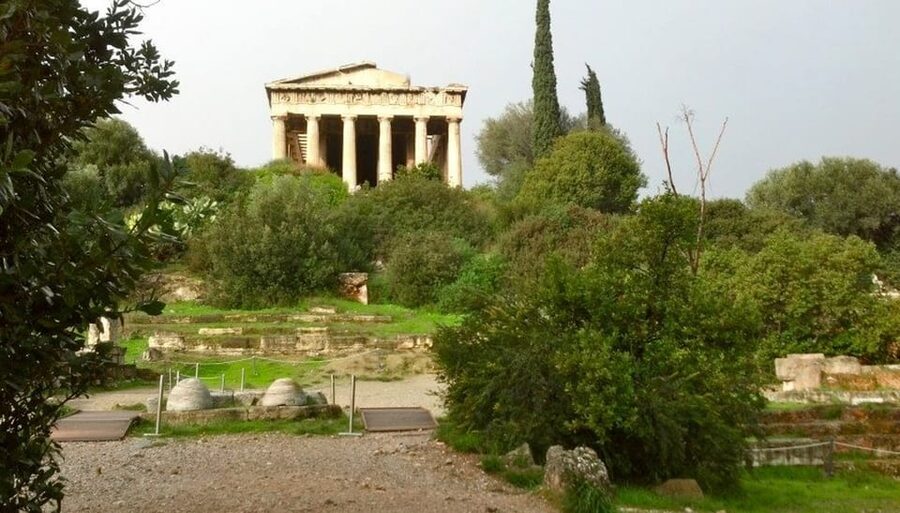
The audio guide is available as an add-on rather than a live guided tour. That distinction matters. You will not be joining a guide-led group, asking questions, or following a fixed commentary delivered in person.
Instead, you receive a self-guided audio tour and walk independently. You can pause, replay, or skip sections, which suits visitors who prefer control over the pace.
The available languages are English, German, Spanish, Italian, and French. The narration includes historical information and short stories, and one useful feature is the occasional aside that makes the commentary feel less like a list of dates.
I would choose the audio guide if you want help turning foundations into a picture of ancient Athens. It is especially useful for a first visit or for anyone who does not feel comfortable interpreting archaeological remains alone.
I might skip it if you prefer reading signs, walking quietly, or setting your own route without matching audio stops to a map. The guide can be informative but awkward to follow if its starting point does not match the current entrance.
Bring your own headphones if the instructions for your chosen option call for them. The supplied information specifically tells you to put on headphones, so do not assume you can rely on a phone speaker in a busy outdoor setting.
Timing, ticket value, and who benefits
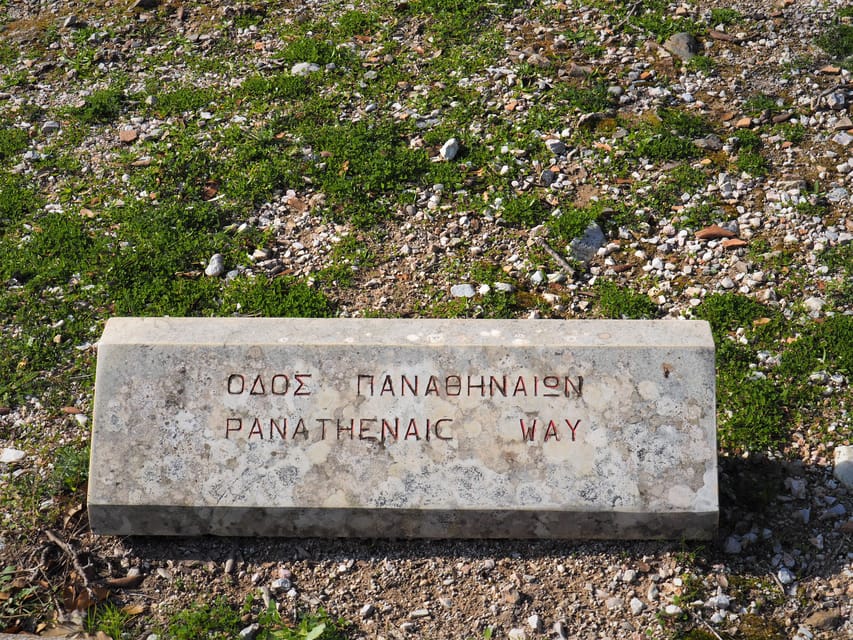
The ticket is valid for one day, but entry itself is restricted to the selected time slot, with a 15-minute allowance before or after. You cannot freely change the date or entry time, so select carefully when booking.
The listed cost is $30 for a group up to one person. Since this offer is for the regular adult-price ticket, the value depends on how much you want certainty at the gate. Pre-purchasing can help you avoid a ticket line and gives you a reserved time, but it may cost more than buying locally when the site is quiet.
That tradeoff was noticeable during less crowded visits. If the ticket office has open spaces, buying on the spot may be cheaper or simpler. But there is no promise that your preferred time will still be available, particularly when the site is busy.
I see this ticket as most useful for a carefully planned Athens day. If you have a firm schedule, want to avoid standing in line, or need the audio guide, advance purchase has a clear benefit. If you are flexible and passing the Agora on a quiet day, the extra cost may not feel necessary.
The offer covers only the regular adult admission. Children and younger visitors do not receive a reduced price through this option, so a family can find the pricing less attractive. From April 1, 2025, EU citizens under 25 and non-EU citizens under 18 can receive free admission by showing identification at the ticket booth. People with disabilities can also receive free admission with a Disability Certificate.
How long to stay and what to bring
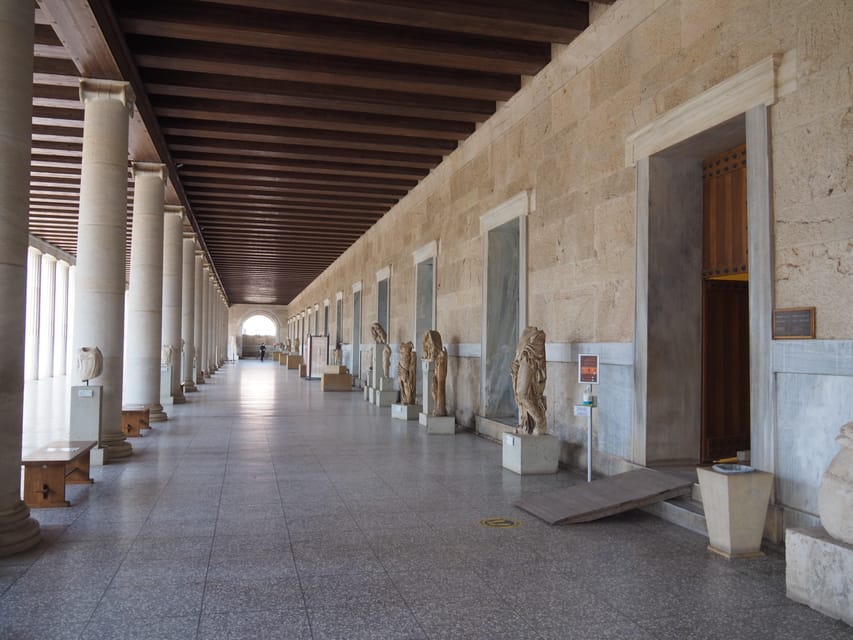
You can see the temple and major highlights quickly, but I would not plan this as a rushed 30-minute stop. The site has enough ground to cover, and one visitor spent four hours walking through everything.
A practical visit might include the temple, church, Stoa, museum, and a slower circuit through the ruins. Your actual time will depend on how closely you read signs, use the audio guide, and stop for views.
There is limited shade, and the open areas can become hot. Wear comfortable shoes, carry water, and bring a hat, sunscreen, and a camera. These are basic items, but they make a real difference when you are walking uphill under the Greek sun.
The site is wheelchair accessible, which is useful information for planning. I would still allow extra time for movement around the archaeological ground, since the area includes paths, uneven historic surfaces, and uphill sections.
My verdict: should you book it?
I would book this experience if you want to understand Athens beyond the Acropolis, especially for the Temple of Hephaistos, the Stoa, the church, and the chance to walk through the city’s old public center.
The site itself is the reason to go. The temple is remarkably intact, the Agora has a strong sense of place, and the museum adds useful detail. The audio guide is worth considering, but I would not buy it automatically if you prefer clear signs and independent wandering.
Book ahead when your schedule matters and you want a time slot. Skip advance purchase if you are flexible, comfortable checking same-day availability, and watching your budget. Either way, verify the entrance on Apostolou Pavlou before setting out. That is the one detail most likely to affect an otherwise rewarding visit.
FAQ
Where do I enter the Ancient Agora?
The provided information says visitors enter and exit at Thissio Square, also called Jacqueline de Romilly Square, on the pedestrian street of Apostolou Pavlou. Confirm the current entrance for your date because access arrangements and map points have changed.
How long is the ticket valid?
The ticket is valid for one day.
Can I enter at any time during the day?
No. You may enter only at the selected time slot or within 15 minutes before or after it.
Can I change my travel date or entry time?
No. The travel date and entry time slot cannot be amended.
What does the ticket include?
It includes entrance to the Temple of Hephaistos and the Church of the Holy Apostles. The self-guided audio tour is included only if you select that option.
Is there a live guide?
No. This is a self-guided experience. A live guided tour is not included.
Which languages are available for the audio guide?
The audio guide is available in English, German, Spanish, Italian, and French.
Is the Ancient Agora wheelchair accessible?
Yes, the activity information states that the site is wheelchair accessible.
Fresh on the Athens list
- Athens Airport Arrival Transfer to Hotels or Addresses in Athens★ 3.5 · 45 reviews
- Private Luxury Tour: Unveiling the Sacred Mysteries of Eleusis★ 5.0 · 45 reviews
- Luxury Catamaran Sunset Semi-Private & Greek Gastronomy in Athens★ 5.0 · 45 reviews
- From Athens: Aegina Island guided tour in a day★ 5.0 · 45 reviews
- Delphi, Thermopylae full day private tour from Athens★ 4.9 · 46 reviews
- From Athens: City & Corinth Guided Day Tour★ 4.8 · 46 reviews
- Acropolis Private Wine Tasting @ Finewine store★ 5.0 · 46 reviews
- Ancient Corinth Half-Day Private Tour from Athens★ 5.0 · 46 reviews
Athens Tours, compared.
Acropolis & up to 5 Archaeological Sites Combo Pass
Read our review →
Acropolis, Parthenon & Acropolis Museum Guided Tour
Read our review →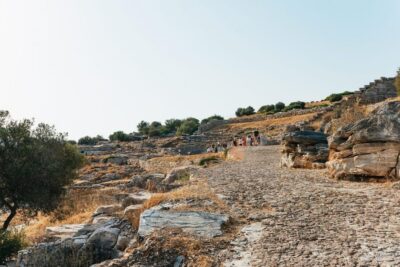
Cape Sounion & Poseidon Temple Sunset Half-Day Trip
Read our review →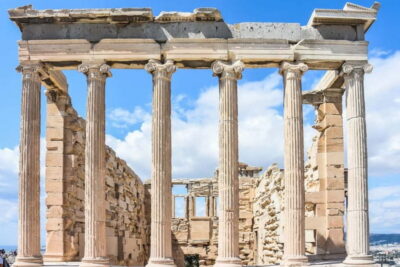


Cape Sounio & Poseidon Temple Trip with Audio Guide
Read our review →