
Reviewed · ATHENS TOURS
Athens East Coast: Discover Scuba Diving in Nea Makri
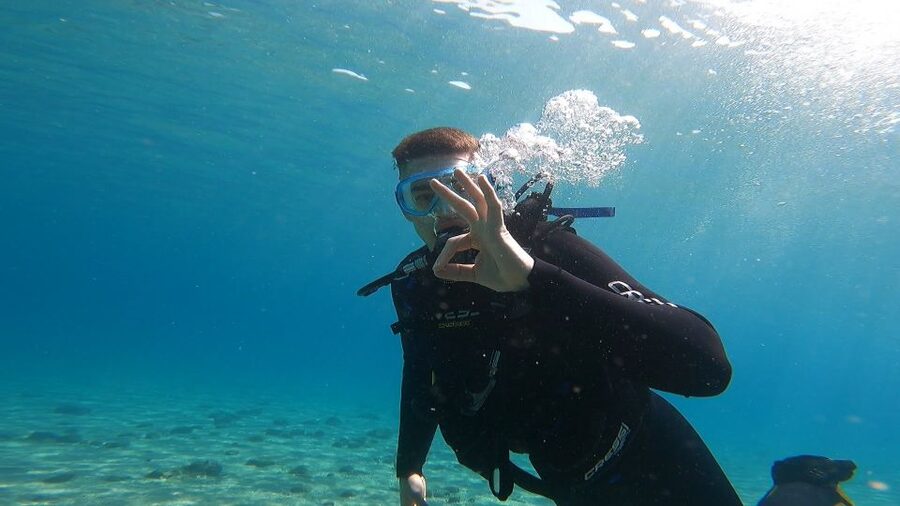
Schinias Bay gives you a chance to try scuba without leaving the Athens area. The water is warm and clear, the setting is calm enough for beginners, and the main underwater session reaches only 5 to 6 meters, a sensible depth for a first attempt.
I like the small groups of up to four, which means your instructor can watch your breathing, answer questions, and adjust the pace. I also like that the price includes equipment, DAN insurance, refreshments, and photos or video. The main drawback is transport: if you stay in central Athens, getting to Nea Makri by taxi may add a serious cost and complication.
Key points to know before booking
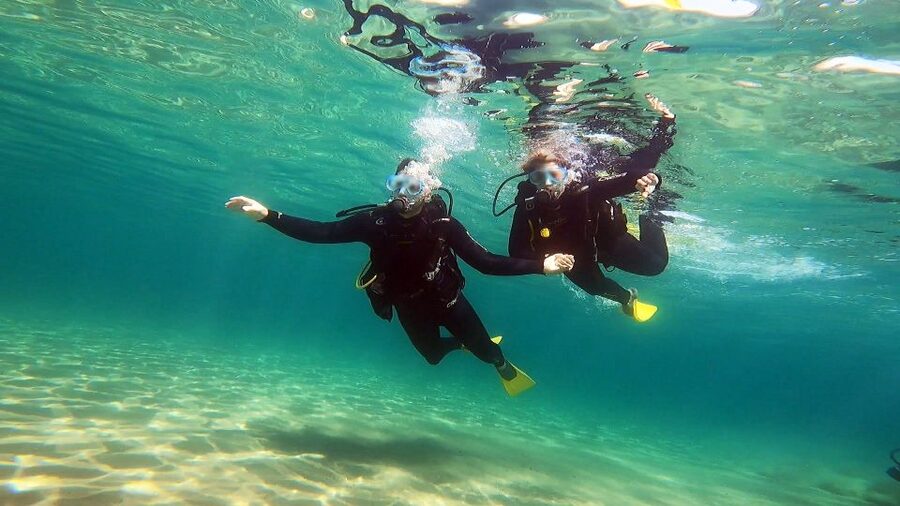
- A true beginner session: You learn the basics first, practice in shallow water, then spend 30 to 40 minutes exploring below the surface.
- A quiet, shallow setting: Schinias Bay reaches only 5 to 6 meters on this introductory outing, with warm, clear water and fish to look for.
- Personal attention: Groups are limited to four people, with instructors such as Dimitris, Denis, and Rafail praised for calm, patient guidance.
- Useful inclusions: Equipment, DAN insurance, bottled water, juice or tea, and photos or video are all covered in the $106 price.
- Plan your transport: Hotel pickup is available from hotels in Nea Makri by prior arrangement, but transport from Athens can be expensive by taxi.
- Bring the basics: You need swimwear and a towel, along with basic swimming ability.
Why Schinias Bay works for a first scuba experience
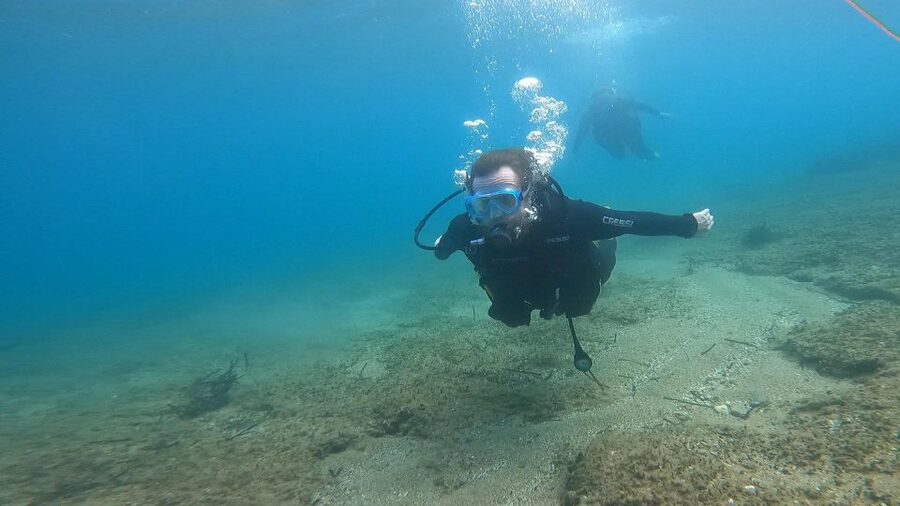
Many first-time scuba sessions ask you to cope with unfamiliar equipment, open water, and a busy group all at once. This one keeps the challenge modest. You begin at the Nea Makri center, learn how the gear works, and practice in shallow water before heading farther out.
That order matters. I like activities that let you solve the small problems first: how to breathe through the regulator, how the equipment feels, and how to stay calm when your first instinct is to lift your head. You get time to become familiar with the basics before the seabed becomes the focus.
Schinias Bay is also a practical choice because the session stays shallow. At 5 to 6 meters, you are not signing up for a serious technical undertaking. You are getting a taste of the sport, with an instructor nearby and a limited number of people sharing the water.
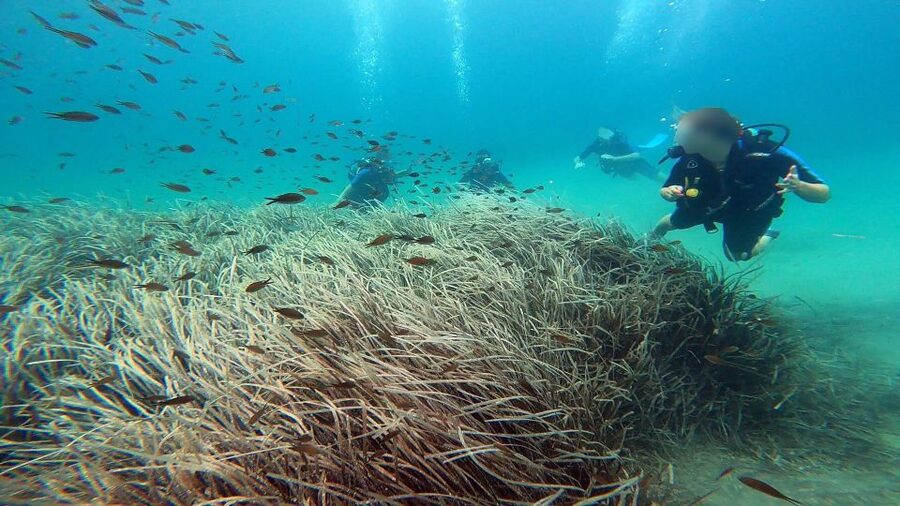
The bay is described as warm and clear, and the underwater surroundings include fish and other marine life. You should keep your expectations sensible. This is not a full certification course or a dramatic offshore expedition. It is an easy first look at the underwater world, and that is exactly its appeal.
More dive trips around Athens:
- Discover Small Group Scuba Diving Experience in Nea Makri, Athens
★ 5.0 · 81 reviews - Anavyssos Athens Riviera: Beginners’ Guided Try Scuba Diving
★ 5.0 · 72 reviews - Heraklion: Scuba Diving Experience for Beginners _Beach
★ 4.7 · 549 reviews
Starting at Frinis 20 in Nea Makri
The meeting point is the local partner’s dive center at Frinis 20 in Nea Makri. If you are staying in Nea Makri, free pickup from your hotel can be arranged, but you need to contact the operator in advance. Do not assume the driver will appear automatically.
From central Athens, the journey requires more thought. One booking experience involved a taxi ride from a hotel near Athens that took about 20 minutes, while another account warned that taxi costs from Athens could reach roughly $100 each way. Public bus service may cost less, but the route and return trip can be less dependable. The practical lesson is simple: check the transport price before you commit to the activity.
The meeting point makes more sense if you are already spending time on the east coast, staying in Nea Makri, or combining this with a beach day. After the session, you can look for lunch or more time by the sea, but lunch is not included, so plan separately.
The total experience lasts about three hours. That is long enough to include instruction, equipment preparation, shallow-water practice, and the main underwater outing without turning the day into an exhausting marathon.
The 30-minute safety lesson that sets the tone
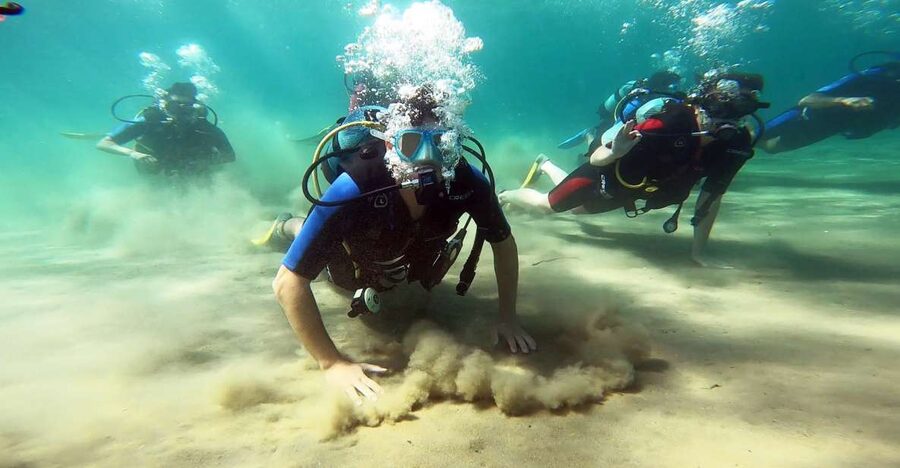
The first formal part lasts about 30 minutes and covers equipment, breathing, and basic safety. You learn what each piece of gear does and how to use it before entering deeper water.
This is the part where a good instructor earns your trust. The strongest feedback centers on Dimitris, Denis, and Rafail being patient, professional, and reassuring, particularly with people who had never tried scuba before. Several first-timers needed instructions repeated or extra reassurance, and the teaching style was described as calm rather than rushed.
That is valuable because the hardest part for many beginners is not the fish or the depth. It is the unfamiliar sensation of breathing underwater. A clear explanation, followed by a chance to practice, can make the difference between enjoying the session and spending it fighting your own nerves.
Instruction is offered in English and French. Children from age eight can take part, but they must be accompanied by an adult. Unaccompanied minors are not allowed, and basic swimming skills are required.
You also complete a health questionnaire before entering the water. Some medical conditions, including asthma, heart problems, and respiratory issues, may prevent participation. If you have any concern, consult your doctor before booking rather than waiting until the morning of the activity.
Shallow-water practice before the main session
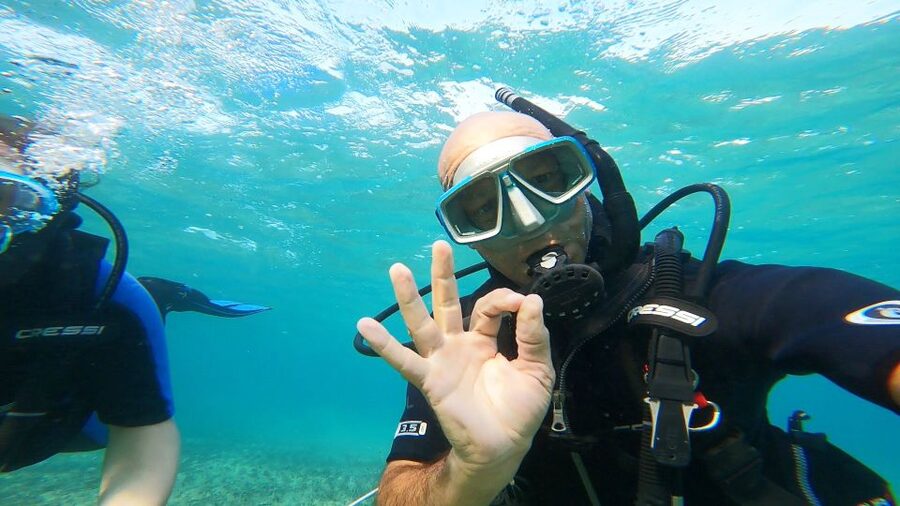
After the briefing, you practice in calm, shallow water. This step is not filler. It lets you get used to the mask, regulator, fins, and buoyancy while your feet are closer to the bottom and the instructor can correct small mistakes quickly.
You may find this is where you need the most patience with yourself. Clearing a mask, breathing steadily, or moving naturally with fins can feel awkward at first. The format gives you a chance to settle down before the main 30 to 40 minute session.
The small-group limit of four people is especially helpful here. An instructor dealing with four beginners has a better chance of spotting discomfort or confusion than someone managing a large crowd. If one person needs extra time, the group can usually move at a gentler pace.
This is also where you can decide how comfortable you really feel. You should not be pressured to continue if the equipment does not feel right or if you cannot relax in the water. The supplied information emphasizes comfort and safety, and the instructor feedback repeatedly points to patient guidance.
A few other Athens mornings to price up
- Athens: Acropolis & up to 5 Archaeological Sites Combo Pass
★ 4.4 · 12,619 reviews - Athens: Acropolis Ticket with Optional Audio or Live Guide
★ 4.2 · 11,055 reviews - Athens: Acropolis, Parthenon & Acropolis Museum Guided Tour
★ 4.8 · 9,316 reviews - Athens: Cape Sounion & Poseidon Temple Sunset Half-Day Trip
★ 4.8 · 8,241 reviews
The 30 to 40 minute underwater visit
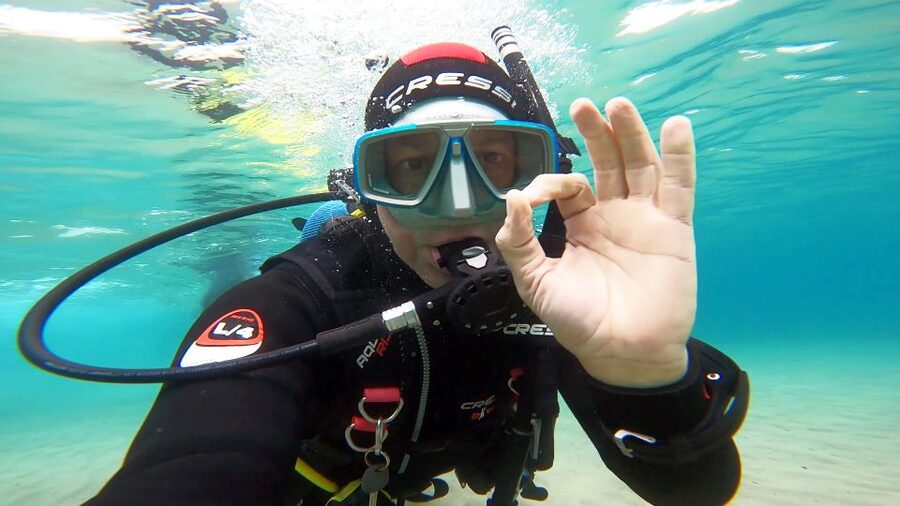
Once you are ready, the group heads out for the main underwater portion. You descend to about 5 to 6 meters and spend 30 to 40 minutes looking across the seabed and watching marine life.
The depth keeps this introduction approachable, but the time below the surface gives you more than a quick splash. You have a chance to settle into your breathing and begin noticing the details around you. Fish and other small sea life are part of the appeal, although the exact sightings will depend on weather and water conditions.
I like this balance. A short underwater stop can feel like a novelty, while a much longer session may be too tiring for someone using scuba equipment for the first time. Thirty to 40 minutes is enough time to get a real sense of the activity without asking you to perform like an experienced participant.
The setting is not designed as a certification lesson. You will not leave with a scuba qualification, and the experience does not replace formal training. Think of it as a supervised introduction that helps you decide if you want to pursue a full course later.
The underwater setting can also change with conditions. One account specifically noted that rain and strong waves can affect the outing. If the sea is unsettled, the experience may be less comfortable, and marine visibility may not match your hopes. That is normal for any sea-based activity, so keep some flexibility in your expectations.
The instructors and the small-group advantage
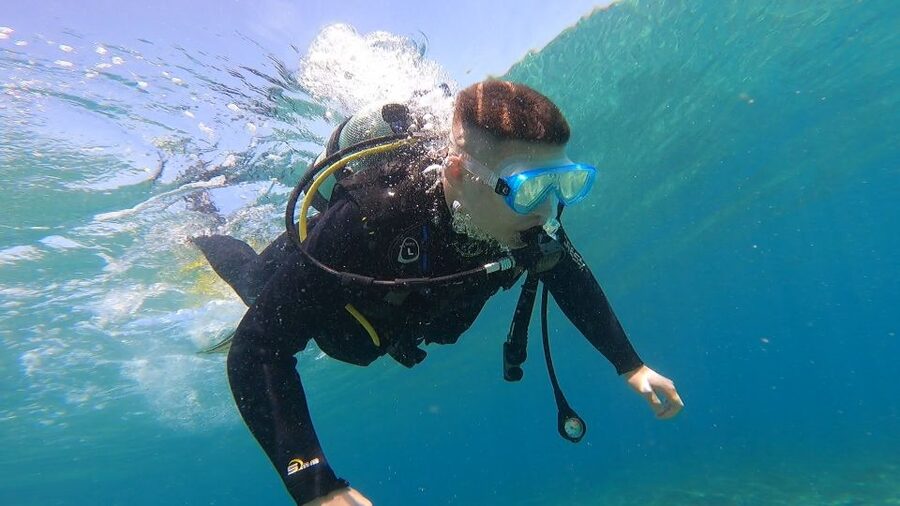
Dimitris is the instructor name most often associated with this experience. Direct feedback about him repeatedly emphasizes his calm manner, careful explanations, and ability to help nervous beginners feel safe. Denis and Rafail are also named as professional and patient instructors.
That personal approach is the heart of the experience. Equipment can be modern and the water can be beautiful, but a first scuba session depends heavily on the person beside you. You want someone who notices when you need a pause, explains a step without making you feel foolish, and keeps an eye on the whole group.
The four-person maximum supports that kind of teaching. It is not private instruction, but it is small enough to feel personal. Families and couples can share the outing while still receiving individual help.
The age policy makes this a possible family activity for children eight and older. Your child still needs basic swimming skills, and an adult must accompany them. I would choose it for an older child who is comfortable in water and can listen carefully, not simply because the minimum age is eight.
What the $106 price really covers
At $106 per person, this is not the cheapest way to spend three hours near Athens. The price looks more reasonable once you count what is included: professional instruction, all scuba equipment, DAN insurance, bottled water, juice or tea, photos or video, taxes, fees, and handling charges.
The photos or video are useful value for a first-time activity. You get a record of the experience without needing to manage a camera while learning to breathe and move underwater. The insurance is another practical inclusion, although it does not remove the need to answer the health questions honestly or follow the instructor’s safety directions.
Transport is the big variable. Hotel pickup is free from hotels in Nea Makri when arranged in advance. If you are coming from Athens, a taxi may make the overall cost much higher. In that case, compare the full transport cost with other east-coast activities, or consider staying in Nea Makri for a night if this is a major part of your plans.
The reserve-now, pay-later option and free cancellation up to 24 hours before the activity make planning less risky. Still, those policies do not solve weather problems or medical eligibility, so read the current booking terms and keep your schedule flexible.
What to bring and what to leave behind
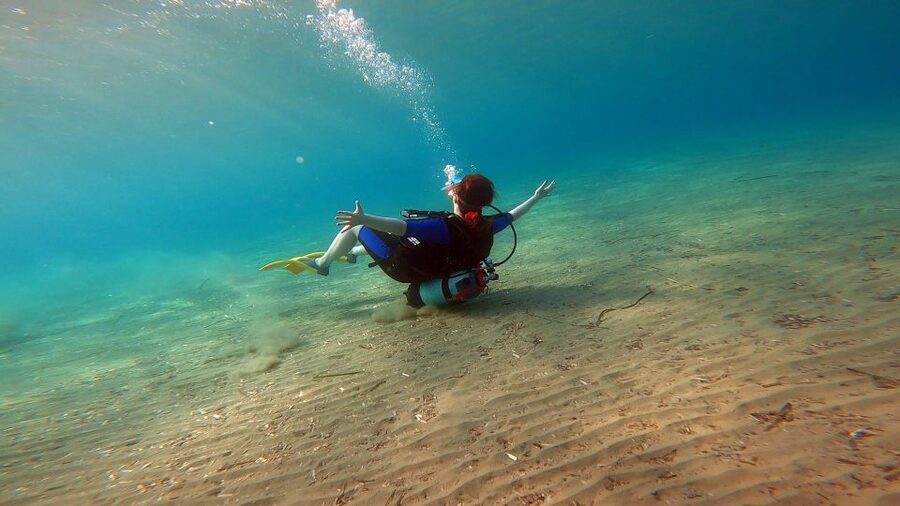
Pack swimwear and a towel. The operator supplies the scuba equipment, so you do not need to bring your own mask, fins, tank, or regulator.
Underwater shoes are worth considering. One participant found many sea urchins at the site and strongly recommended protection for your feet. They are not listed as required equipment, but they could make getting in and out of the water more comfortable.
Plan your flying schedule carefully. Scuba within 12 hours of a flight is not recommended, so do not book this for the last few hours before you board a plane. The health questionnaire is required before participation, and heart or respiratory conditions can make the activity unsuitable.
You should also have basic swimming skills. You do not need previous scuba experience, but you do need to be comfortable enough in water to follow instructions and manage the shallow-water practice.
Who will enjoy this most
I would choose this for a first-time participant who wants a controlled introduction rather than a full course. It suits couples, families with an adult child age eight or older, and small groups of friends who want something more unusual than another afternoon on the beach.
It is also a good fit if you are curious but nervous. The teaching approach is built around a briefing, practice, and gradual progress, and the small group gives you room to ask questions.
You may want a different activity if you are looking for advanced sites, a longer underwater route, or formal certification. This session stays shallow and introductory by design. It is about comfort, basic skills, and seeing what the sport feels like.
It is not suitable for children under eight, unaccompanied minors, people with heart problems, or people with respiratory issues. Basic swimming ability is required, and you should consult a doctor if your health situation is unclear.
Should you book the Nea Makri experience?
Book it if you are staying in Nea Makri, can arrange sensible transport from Athens, and want a patient first step into scuba. The warm water, shallow depth, four-person limit, and careful instruction create a friendly setup for beginners.
The best reasons to choose it are the calm teaching style associated with Dimitris, Denis, and Rafail, the included photos or video, and the fact that you do not need to own or rent extra equipment. The main reason to hesitate is the journey from central Athens, especially if taxi fares push the day well beyond the advertised $106.
For an east-coast stay, I consider this a strong value and an easy activity to add to a beach day. For a short Athens visit, price the transport first. If the numbers work and you meet the health and swimming requirements, this is a thoughtful, low-pressure way to find out if scuba belongs in your future plans.
FAQ
Where does the Nea Makri scuba experience begin?
You meet at the local partner’s dive center at Frinis 20 in Nea Makri. Free pickup is available from hotels in Nea Makri when requested in advance.
How long does the activity last?
The complete experience lasts three hours. It includes the safety briefing, equipment preparation, shallow-water practice, and the main underwater session.
How deep will I go?
The introductory underwater session reaches about 5 to 6 meters.
How long will I stay underwater?
The main underwater portion lasts approximately 30 to 40 minutes.
Do I need previous scuba experience?
No. The activity is designed for beginners and includes theory instruction and practice in shallow water before the main session.
What languages do the instructors speak?
Instruction is available in English and French.
What is included in the price?
The $106 price includes bottled water, juice or tea, professional instruction, scuba equipment, DAN insurance, photos or video, and all taxes, fees, and handling charges.
Fresh on the Athens list
- Athens Airport Arrival Transfer to Hotels or Addresses in Athens★ 3.5 · 45 reviews
- Private Luxury Tour: Unveiling the Sacred Mysteries of Eleusis★ 5.0 · 45 reviews
- Luxury Catamaran Sunset Semi-Private & Greek Gastronomy in Athens★ 5.0 · 45 reviews
- From Athens: Aegina Island guided tour in a day★ 5.0 · 45 reviews
- Delphi, Thermopylae full day private tour from Athens★ 4.9 · 46 reviews
- From Athens: City & Corinth Guided Day Tour★ 4.8 · 46 reviews
- Acropolis Private Wine Tasting @ Finewine store★ 5.0 · 46 reviews
- Ancient Corinth Half-Day Private Tour from Athens★ 5.0 · 46 reviews
Athens Tours, compared.

Acropolis & up to 5 Archaeological Sites Combo Pass
Read our review →

Acropolis, Parthenon & Acropolis Museum Guided Tour
Read our review →
Cape Sounion & Poseidon Temple Sunset Half-Day Trip
Read our review →


Cape Sounio & Poseidon Temple Trip with Audio Guide
Read our review →
Hydra, Poros, and Aegina Day Cruise with Lunch
Read our review →Browse the lists this tour appears in