
Reviewed · ATHENS TOURS
Athens: History of Rebellion Walking Tour
Athens is more than temples and marble ruins. This 2.5-hour walk follows the city’s history of resistance, from the final years of Ottoman rule to today’s protests, political movements, and neighborhood struggles. You move from Monastiraki through Syntagma and Kolonaki before finishing in Exarchia, where activism, art, and community life meet.
I like the tour’s focus on modern Greek history, which gives useful context to a city often presented only through antiquity. I also like the small-group format and Maelle’s conversational style. She explains complex events clearly, asks questions, and offers practical suggestions for food and sightseeing after the walk.
The main consideration is political: this tour takes resistance movements and social justice seriously. That makes it rewarding for curious visitors, but less suitable if you want a neutral sightseeing circuit or a tour centered on ancient Athens. You will also walk and stand for two to three hours, often in the sun.
Key points to know before booking
- Follow Athens from Monastiraki to Exarchia: The route links major squares and institutions with less obvious stories of protest and political change.
- Hear about the last 200 years: Ottoman rule, the Greek Revolution, fascism, violence, oppression, and modern social movements all enter the conversation.
- Spend real time in Exarchia: Learn why the neighborhood matters to anarchists, refugees, LGBT+ people, artists, and residents resisting police repression and gentrification.
- Expect an involved guide: Maelle encourages questions and discussion rather than simply reciting dates.
- Get useful Athens advice: The guide can suggest restaurants, shopping, sights, and places to visit elsewhere in Greece.
- Plan for a physical walk: Comfortable shoes, water, sunscreen, and a sun hat are sensible. The activity is not suitable for people with mobility impairments.
Why this Athens walking tour feels different
Many first visits to Athens revolve around the Acropolis, the Ancient Agora, and the National Archaeological Museum. Those places matter, but they do not fully explain the city you see today. Athens is also a capital shaped by occupation, revolt, dictatorship, economic strain, political conflict, and neighborhood activism.
This tour gives you that missing layer. It uses streets, squares, churches, government buildings, memorials, graffiti, and local districts as prompts for a wider conversation. You are not just looking at a monument. You are asking who controlled it, who challenged that power, and how those struggles still affect daily life.
That approach is especially useful early in your stay. One visitor wished they had taken the walk on their first day because it made the rest of Athens easier to understand. I agree with that logic. A tour like this can help you read later encounters with Syntagma, Exarchia, street art, and modern Greek politics with sharper eyes.
Maelle appears to be the main guide, leading tours in English and French. Her style is personal, warm, and discussion-based. She connects historical events with present-day life, and she has been praised for explaining political subjects with clarity, humor, and empathy. The tour can be private or arranged for a small group, which matters here because the subject works best when you can ask questions.
More Historical Tours in Athens
- Historical Delphi One Day Tour with Arachova Stop & Expert Guide
★ 4.5 · 1,247 reviews - Historic Athens: Small Group Electric Bike Tour
★ 4.9 · 740 reviews - The History of Athens: Greek Mythology Private Tour
★ 5.0 · 138 reviews
Starting in Monastiraki and Ottoman-era Athens
Meet in Monastiraki Square, in front of Pantanassa Church. Look for a guide holding a sign that says Athens City of Rebellion. The exact address given for the starting point is Pl. Monastirakiou 2.
Monastiraki is a useful place to begin because it is one of Athens’ busiest public spaces and a natural meeting point between old and new Athens. The opening section takes you back to the period when the city was under Ottoman rule and introduces the resistance that helped lead to the Greek Revolution roughly 200 years ago.
You should not expect a long archaeological lecture here. The emphasis is on people, power, and rebellion. The point is to understand how ideas of freedom developed and how individual acts became part of larger movements.
The first stop at Monastiraki is brief, listed at about five minutes, but the surrounding discussion sets the tone. From the beginning, the guide asks you to think about Athens as a living city rather than an open-air museum.
From the Metropolitan Cathedral to Syntagma Square
The route passes the Metropolitan Church of Athens before continuing toward Syntagma Square. Some stops are short, while others allow more time for explanation, so the walk is not a simple march between landmarks.
Along the way, you hear about figures who became symbols of resistance and about popular movements that challenged oppression. The themes include the struggle for freedom, fascism, violence, and the role ordinary Athenians played in moments of crisis.
A brief stop at a less obvious site adds variety. The exact details of the smaller stops are intentionally not laid out in full, but they are part of the tour’s effort to show you places that standard sightseeing routes can pass by. You might find these pauses more memorable than another grand facade because the guide uses them to connect physical space with human stories.
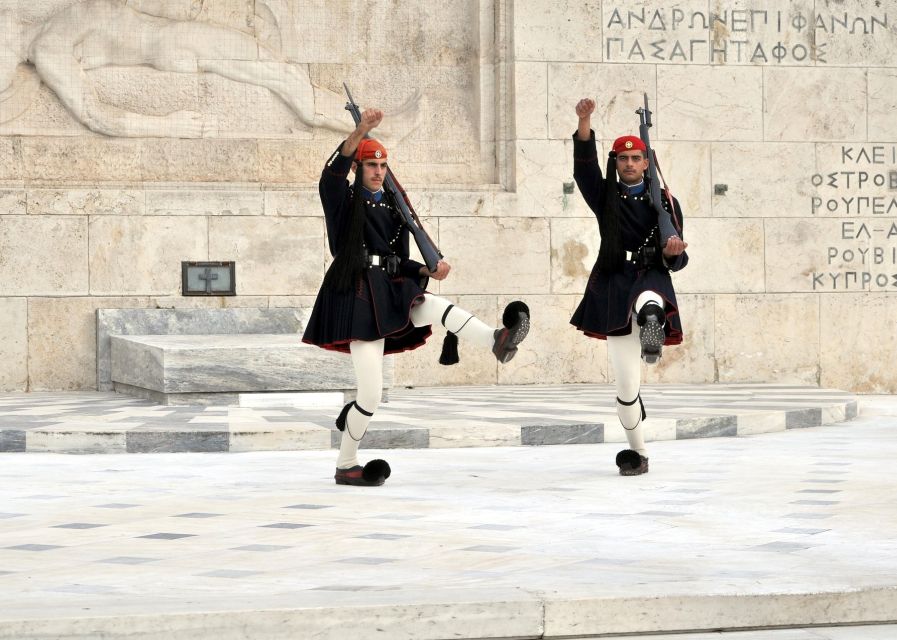
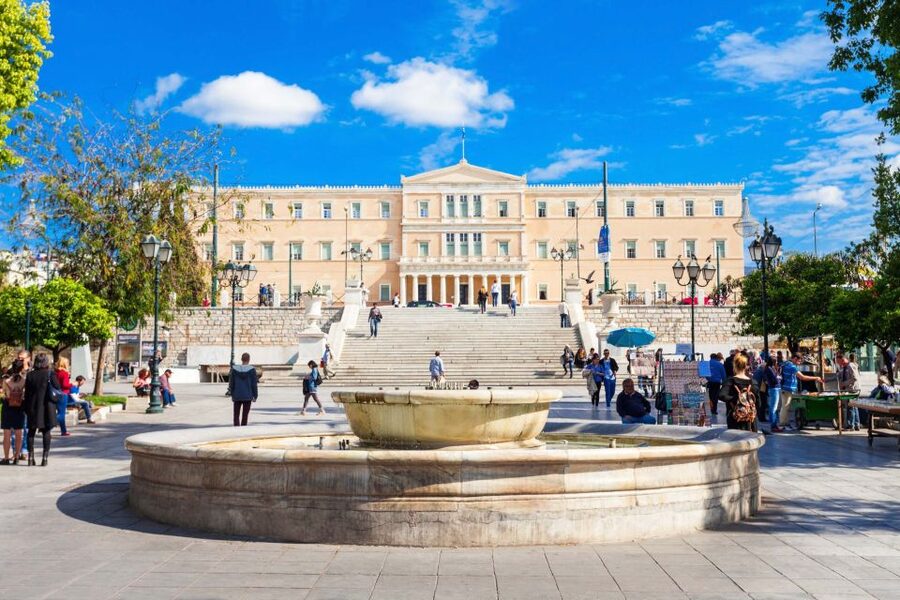
Syntagma Square is the major political stage of the route. It is the heart of modern Greek public protest, and the guide explains why demonstrations here matter. You then visit the Hellenic Parliament and the Tomb of the Unknown Soldier, with time for sightseeing and discussion.
The parliament stop lasts about ten minutes, followed by roughly five minutes at the tomb. These are not long interior visits. The value is in understanding the buildings as symbols of national power, public memory, and political action.
If you have already seen Syntagma on your own, this section still earns its place. A guide can help you notice the difference between a ceremonial square and a space claimed by crowds during moments of national anger or hope.
Kolonaki and the Academy of Athens
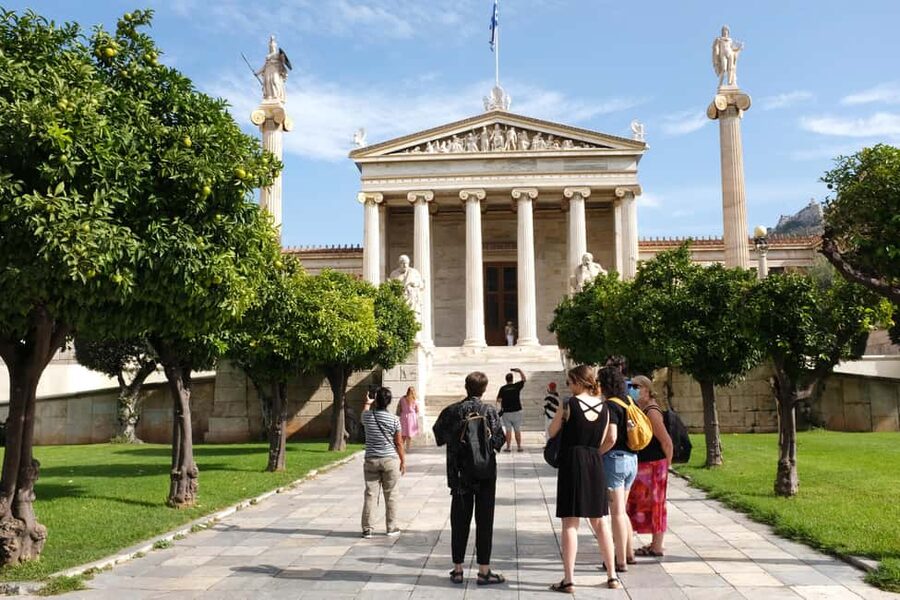
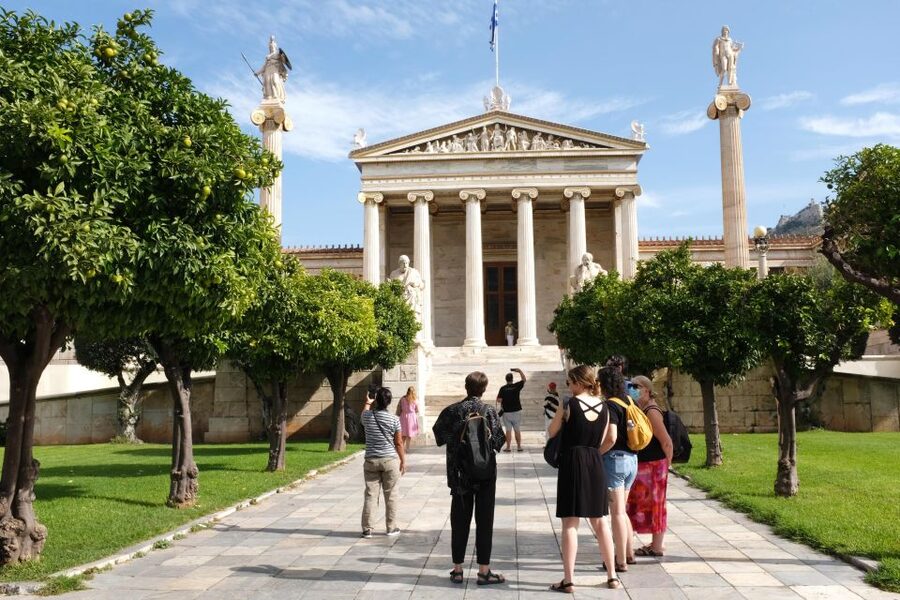
After Syntagma, the route passes through Kolonaki before reaching the Academy of Athens. Kolonaki offers a change in mood from the protest symbolism of Syntagma and the rougher character associated with Exarchia later in the walk.
The Academy receives about ten minutes of guided sightseeing. Its architecture and civic importance provide a reminder that Athens has not been shaped by rebellion alone. The city also built institutions meant to represent education, national identity, and public order.
This contrast is one of the tour’s strengths. You are not shown only one version of Athens. The route moves between official spaces and contested ones, allowing you to consider how a capital presents itself and how residents challenge that presentation.
The timing is also sensible. By this point, you have spent enough time with the earlier history to see modern Athens as a sequence of competing ideas about freedom, authority, citizenship, and belonging.
More Walking Tours in Athens
- Athens: Acropolis and Parthenon Guided Walking Tour
★ 4.6 · 5,882 reviews - Greek Food Walking Tour in Athens
★ 5.0 · 4,740 reviews - Acropolis: Acropolis and Parthenon Guided Walking Tour
★ 4.7 · 3,442 reviews - Acropolis monuments & Parthenon Walking Tour with Optional Acropolis Museum
★ 5.0 · 2,678 reviews
Entering Exarchia, Athens’ center of activism
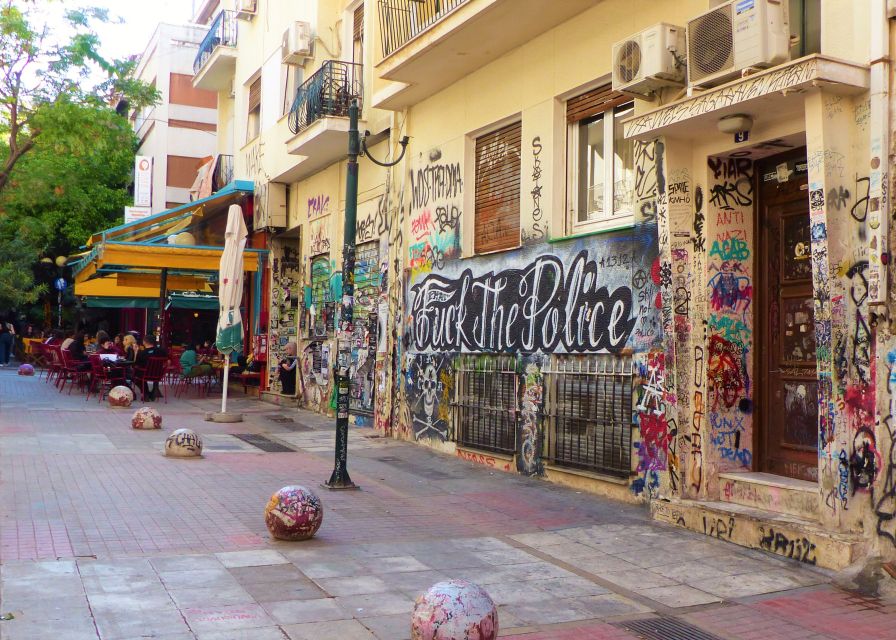
The final part of the walk takes you into Exarchia, the tour’s main destination and likely its most distinctive section. The neighborhood is presented as a center of resistance and activism, with links to anarchists, refugees, LGBT+ people, artists, and community groups.
You learn about Exarchia’s struggles with police repression and gentrification, as well as efforts to preserve its anarchist and collectivist character. These are ongoing issues, not neatly finished historical episodes, so the discussion can feel more immediate and less comfortable than the earlier material.
The tour includes Exarchia, a secret stop, another less obvious site, and Exarchion Square. The listed time in Exarchia is about ten minutes, with further ten-minute and five-minute stops before around ten minutes at Exarchion Square. In practice, the area forms the final chapter of the walk rather than a single quick photo stop.
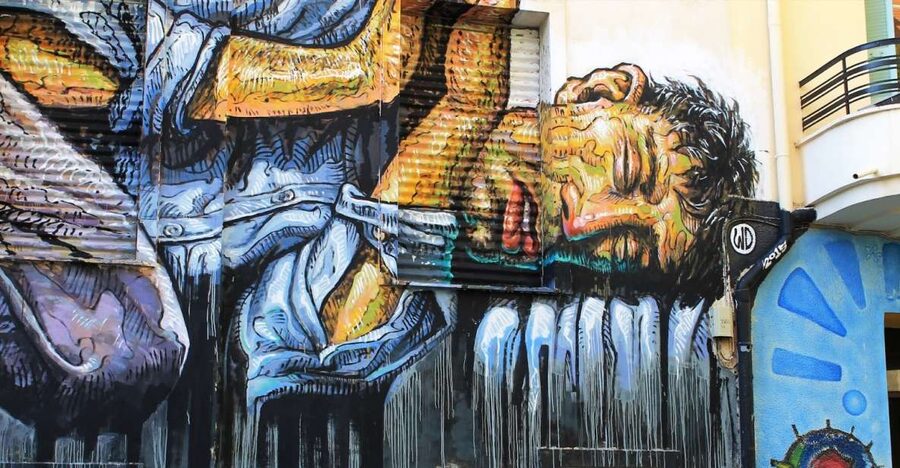
Street art is part of the reading of the neighborhood. The guide may discuss artists such as WD and use graffiti to raise questions about politics, identity, public space, and who gets to speak in a city. You are encouraged to think about the artwork rather than treat it as decoration.
That is also where the tour’s care for local residents matters. You are not being led through a neighborhood as if it were a stage set. The guide explains community life and social conflict while keeping attention on the people who live there. That makes the visit more respectful than a quick search for dramatic photographs.
How Maelle shapes the experience
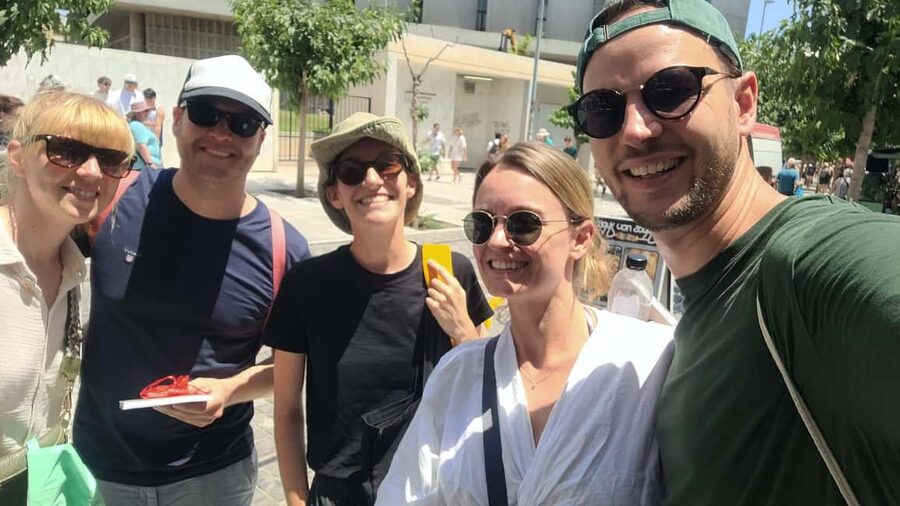
The guide makes a major difference here. Maelle is described as passionate, friendly, patient, and well prepared, but the most useful point is how she teaches. She puts events in a clear order, explains difficult political subjects without turning the walk into a lecture, and invites you to discuss what you are seeing.
She also brings personal insight to the conversation. That does not mean every point is presented as settled fact. Instead, you get a sense of why certain places and movements matter to people who live in Athens now.
The best part of this style is that it leaves you with questions. You may find yourself looking up people, events, or movements later. If you prefer a guide who simply lists dates and names, the discussion may feel less structured than you want. If you like making connections, it is a real advantage.
Maelle’s restaurant, shopping, and sightseeing suggestions are another practical bonus. Several people found the recommendations useful for the rest of their time in Athens and for later visits to Greek islands. These suggestions are not the main product, but they can help you turn a good history walk into a better overall stay.
Price, pace, and practical value
The price is $44.04 per person for 2.5 hours. That is not the cheapest way to see central Athens, especially since the tour does not include museum admission or transport. Still, the value is reasonable if you want interpretation rather than a list of landmarks.
You are paying for a guide who connects Ottoman rule, the Greek Revolution, fascism, modern protest, social justice, and neighborhood politics. You also get a route that includes places you might otherwise see without understanding their significance.
The private or small-group option can improve the value. A small group gives you more room to ask questions and discuss sensitive subjects. It can also make the walk feel less like a performance and more like a conversation.
The pace is moderate but physically demanding in a simple city-walking way. You will spend two and a half hours walking and standing. Bring water, wear comfortable shoes, and use sunscreen and a hat during hot weather. Check the available start times before booking.
The activity offers free cancellation up to 24 hours in advance, and you can reserve now and pay later. English and French tours are available. The meeting details are clear: start at Pantanassa Church in Monastiraki Square, with the guide carrying the tour sign. The listed finish is Plateia Exarcheion.
Who should book this experience
I would choose this tour if you want to understand Athens beyond its ancient monuments. It suits visitors interested in modern history, political movements, social justice, street art, contemporary Greek society, and the relationship between official power and local activism.
It also works well for people who enjoy asking questions. The small-group format and Maelle’s conversational approach give you more than a standard audio-guide experience.
Families with older teenagers may find the themes useful, provided everyone is comfortable discussing protest, police repression, fascism, and social conflict. The supplied information does not give a recommended minimum age, so you should judge that based on your group.
I would be more cautious if you have limited mobility. The activity is specifically not suitable for people with mobility impairments, and the route requires extended walking and standing. I would also skip it if you want ancient monuments, museum interiors, or a politically detached overview.
Should you book the History of Rebellion Walking Tour?
Book it if you want Athens to make more sense as a modern capital, not just as the home of classical ruins. The route from Monastiraki to Syntagma and Exarchia gives you a strong framework for understanding the city’s political memory and current tensions.
The best reason to go is the combination of place and explanation. You see major public sites, lesser-known corners, street art, and Exarchia while learning how resistance shaped each setting. The main tradeoff is that the tour has a clear sympathy for resistance movements and social justice causes.
For a first or second day in Athens, I find that a strength rather than a weakness. Take it early, wear good shoes, and leave room for a conversation afterward. At $44.04, this is a worthwhile choice for curious visitors who want the city’s less polished, more complicated story.
FAQ
Where does the Athens History of Rebellion Walking Tour start?
The tour starts in Monastiraki Square, in front of Pantanassa Church. The listed address is Pl. Monastirakiou 2. Your guide will hold a sign saying Athens City of Rebellion.
Where does the tour finish?
The itinerary lists Plateia Exarcheion as the finish point.
How long does the walking tour last?
The tour lasts 2.5 hours. You should expect to walk and stand for much of that time.
What languages are available?
The tour is available in English and French.
Is this a private tour or a group tour?
Private and small-group options are available.
What historical periods does the tour cover?
The tour covers resistance during Ottoman rule, the Greek Revolution about 200 years ago, later struggles against fascism, and modern political and social movements in Athens.
Is the tour suitable for people with mobility impairments?
No. The activity is listed as unsuitable for people with mobility impairments.
What should I bring?
Bring comfortable shoes, water, sunscreen, and a sun hat.
More Historic Sites in Athens
- Athens Highlights by E-Bike: Small-Group Historic Tour
★ 5.0 · 131 reviews - Athens: Small-Group E-Bike Tour of Historic Highlights
★ 4.9 · 119 reviews - Half Day Historical Athens City Private Taxi Service Tour
★ 5.0 · 79 reviews - Athens:Half day tour to Acropolis and the must-see historical sites and downtown
★ 5.0 · 69 reviews
Fresh on the Athens list
- Athens Airport Arrival Transfer to Hotels or Addresses in Athens★ 3.5 · 45 reviews
- Private Luxury Tour: Unveiling the Sacred Mysteries of Eleusis★ 5.0 · 45 reviews
- Luxury Catamaran Sunset Semi-Private & Greek Gastronomy in Athens★ 5.0 · 45 reviews
- From Athens: Aegina Island guided tour in a day★ 5.0 · 45 reviews
- Delphi, Thermopylae full day private tour from Athens★ 4.9 · 46 reviews
- From Athens: City & Corinth Guided Day Tour★ 4.8 · 46 reviews
- Acropolis Private Wine Tasting @ Finewine store★ 5.0 · 46 reviews
- Ancient Corinth Half-Day Private Tour from Athens★ 5.0 · 46 reviews
Athens Tours, compared.

Acropolis & up to 5 Archaeological Sites Combo Pass
Read our review →

Acropolis, Parthenon & Acropolis Museum Guided Tour
Read our review →
Cape Sounion & Poseidon Temple Sunset Half-Day Trip
Read our review →


Cape Sounio & Poseidon Temple Trip with Audio Guide
Read our review →
Hydra, Poros, and Aegina Day Cruise with Lunch
Read our review →Browse the lists this tour appears in