
Reviewed · METEORA MONASTERIES TOURS
Athens: Meteora Monasteries, Caves & Coastal Stopovers with Lunch
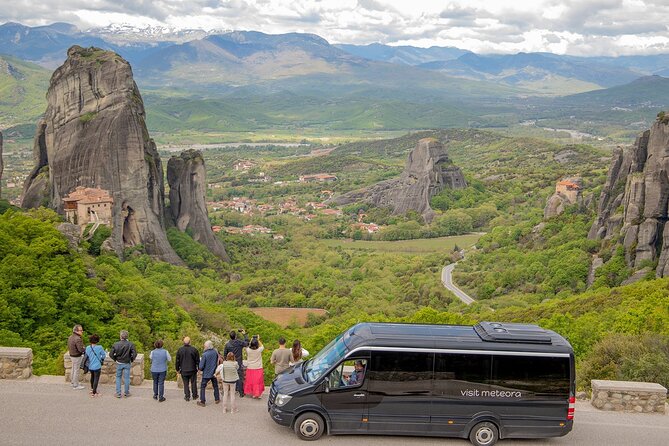
Meteora is the sort of place that makes a 4-hour bus ride feel like a fair trade. Monasteries perch on tall gray rock pillars, and old hermit caves cling to cliffs above the town of Kalambaka. I like the three monastery interiors and the chance to see all six from the road, rather than spending the whole day inside one site. I also like the seaside breaks at Kamena Vourla, a welcome change from the coach.
The catch is simple: this is a very long day. The advertised duration is about 14 hours, with roughly four hours each way between Athens and Meteora. Road closures, strikes, or heavy traffic can stretch it further. If you want a relaxed visit, stay overnight. If your time is tight, this tour gives you a practical and fairly priced way to reach one of Greece’s great sights.
Key points to know before booking
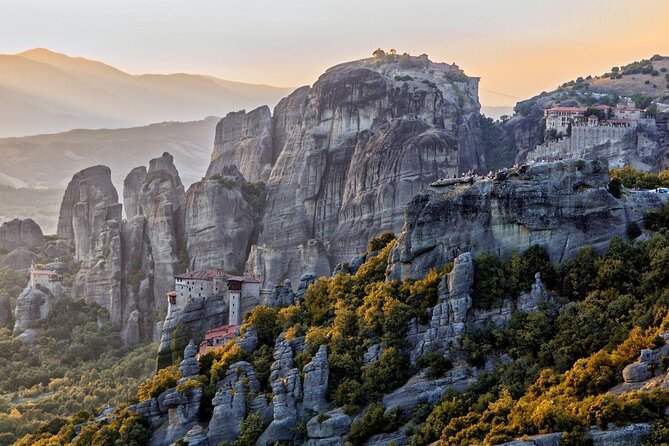
- Meteora in one day: Visit three active monasteries and see the remaining three from outside.
- A scenic seaside pause: Kamena Vourla breaks up the long drive with an optional beachfront brunch and a possible sunset dinner.
- A real mountain visit: Expect steps, steep paths, heights, and modest clothing rules at the monasteries.
- Lunch is flexible: Choose the day trip with lunch, pay at the Kastraki restaurant, or skip the set meal.
- Small enough to feel manageable: The coach group is capped at 35 people.
- Good transport value: The $88.28 starting price includes air-conditioned transport, Wi-Fi, USB charging, and an English-speaking tour leader, but not monastery entry fees.
Why Meteora is worth the long ride from Athens
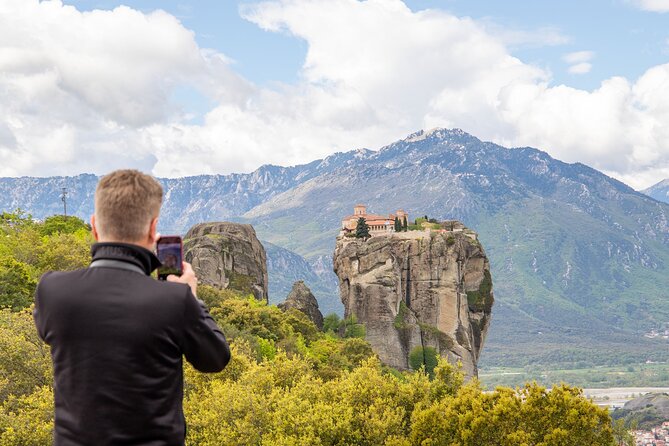
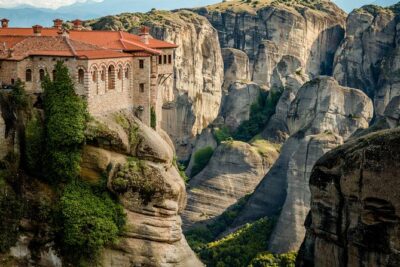
Meteora combines natural drama with a human story that is easy to grasp once you are there. Greek Orthodox monks built monasteries on high rock columns, choosing places that were difficult to reach and well suited to a life of prayer and seclusion. The result is one of Greece’s most unusual sights: cliffs that look almost sculpted, with stone buildings balanced above them.
This day trip works because it shows you both sides of Meteora. You go inside three monasteries, where you can see chapels, religious art, old buildings, and the setting of monastic life. You also pause at viewpoints for the wider picture, including the other three monasteries and the town of Kalambaka below.
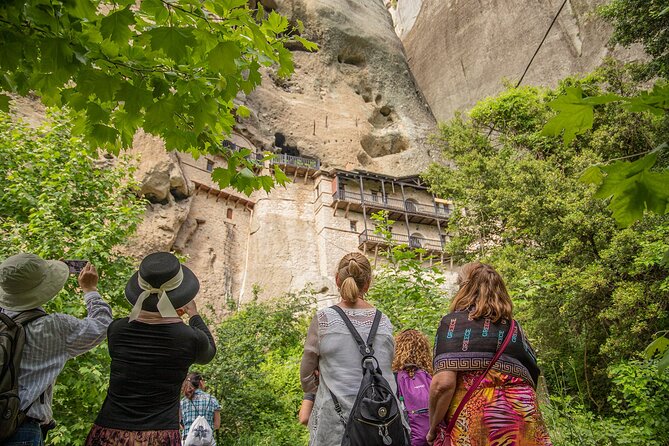
I especially like the inclusion of the Badovas hermit caves. They are not as polished or formal as the monasteries, but they help explain why people came here in the first place. The small caves and traces of former dwellings give the cliffs a more personal story.
The experience is led in English. Extra languages are available through a free smart audio guide in Spanish, French, German, Italian, Portuguese, Russian, Polish, Korean, Chinese, and Japanese. Guide quality matters here, and named guides such as Maria, Dimitri, Apostolis, Jim, and Tillos have been praised for clear explanations, humor, and enthusiasm. The tour leader may join the group around Meteora rather than staying on the coach all the way from Athens, so the outward ride can be quieter than some people expect.
A few other Athens mornings to price up
- Athens: Meteora Monasteries Day Trip with Caves and Lunch
★ 4.7 · 2,964 reviews - Athens: Meteora Monasteries Day Tour with Lunch
★ 4.8 · 2,196 reviews - Athens: Meteora Tour with Local Guide and Greek Lunch
★ 4.8 · 1,561 reviews
Leaving Athens from Larissis Railway Station
The meeting point is Larissis Railway Station, with departure at 8:00 in the morning. Arrive at least 15 minutes early. This is not the place to cut things close, since the operator is not responsible if you miss the coach.
The vehicle is an air-conditioned coach with free Wi-Fi and USB chargers. That sounds like a small detail, but it matters on a day with many hours on the road. Bring headphones, a phone charger of your own, and something to read or watch offline in case the Wi-Fi is slow.
The first stretch takes you through central Greece. It is not a quick transfer, but the route gives you a look beyond Athens and its urban edges. The scheduled stops help, though some people may prefer shorter breaks in order to reach Meteora sooner.
Kamena Vourla: a better-than-average roadside break
After part of the morning drive, the coach stops in Kamena Vourla for about 30 minutes. This small coastal town sits where mountains meet the sea, so you can stretch your legs beside the water instead of stopping at a standard motorway service area.
Brunch is optional and costs extra. Meals and drinks may be pre-ordered through the onboard app, or you can pay on site. You can also simply walk, breathe in the sea air, and use the break to reset before the mountain portion of the trip.
The same town appears again on the return journey, this time for an optional sunset dinner lasting about 45 minutes. It is a pleasant idea, but it also adds time to an already long day. If getting back to Athens as early as possible matters to you, ask how the return schedule is running before committing to dinner.
Lunch in Kastraki and the practical value of a planned meal
On arrival near Kalambaka, the group stops in Kastraki for about 40 minutes. The village sits below Meteora’s cliffs and is a natural place to eat before the monastery visits.
The lunch upgrade includes a Greek meal with vegetarian choices. The listed options cover familiar dishes such as moussaka, pastitsio, chicken with potatoes, meatballs in tomato sauce, Greek salad, spinach and feta pie, cheese pie, briam, giant beans, and stuffed tomatoes and peppers with rice. Bread and water are included with the set meal.
You can also choose food directly at the restaurant and pay yourself. That flexibility is useful if you want a lighter meal, have dietary needs, or prefer to decide after seeing the menu. Food quality can vary, so I would treat the included lunch as convenient rather than a major reason to book the tour.
Use this stop for the restroom as well. Once the monastery circuit begins, the schedule becomes tighter and the paths are not designed for leisurely café stops.
Same island, an entirely different sort of day:
- Athens: Acropolis & up to 5 Archaeological Sites Combo Pass
★ 4.4 · 12,619 reviews - Athens: Acropolis Ticket with Optional Audio or Live Guide
★ 4.2 · 11,055 reviews - Athens: Acropolis, Parthenon & Acropolis Museum Guided Tour
★ 4.8 · 9,316 reviews - Athens: Cape Sounion & Poseidon Temple Sunset Half-Day Trip
★ 4.8 · 8,241 reviews
Varlaam and Great Meteoron: the main monastery visit
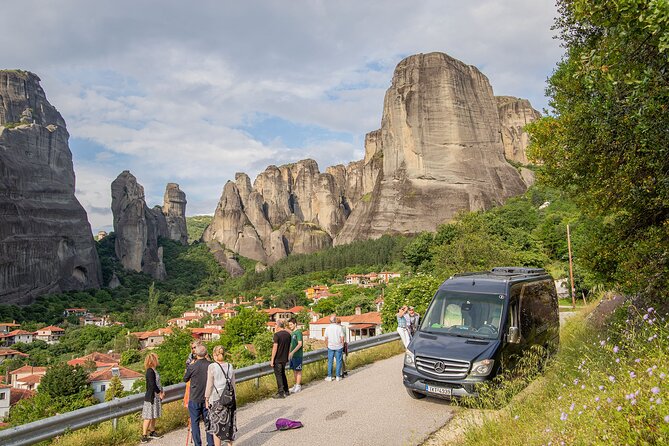
Varlaam Monastery is usually one of the major interior visits. It is the second-largest monastery at Meteora and sits opposite Great Meteoron. The site was founded in the 14th century by the hermit Varlaam, then rebuilt and expanded by two monks from Ioannina in the 16th century.
Plan on about 45 minutes inside. That is enough to see the main areas and listen to the guide, but not enough for a slow, unhurried examination of every detail. Wear shoes with a firm grip. The approach includes steps and uneven ground, and the setting can feel exposed if you dislike heights.
Great Meteoron is the largest and oldest monastery in the group. Its name refers to being suspended in the air, a fitting description when you look up at the rock and then down toward the valley. Saint Athanasios the Meteorite founded it and organized the monastery as a community.
The itinerary specifically describes Great Meteoron, Varlaam, and Agios Stefanos as major stops, while the entrance-fee information also notes that the exact third monastery can be Roussanou, Agios Nikolaos, or Great Meteoron depending on conditions. In practice, weather, opening times, road access, and the day’s timing can affect the exact sequence. Ask your tour leader which three interiors are planned once you arrive.
The tour leader provides context outside and around the sites, but there is no state-licensed guide included inside the monasteries. The English explanations are still useful, and the audio guide gives non-English speakers another way to follow the visit.
Badovas caves and the quieter side of Meteora
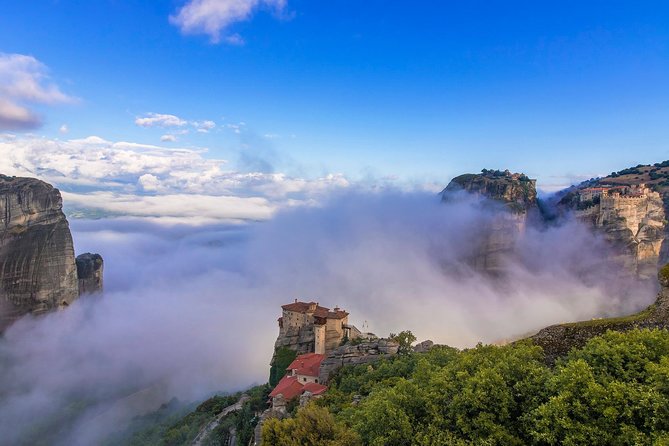
The Badovas hermit caves receive about 25 minutes. These cliffside retreats show a different form of religious life from the large monasteries. Hermits lived in small, hard-to-reach spaces, seeking solitude rather than a large communal setting.
This stop is mainly about stories and views. You will see the remains of dwellings and learn how monks used the rock. It is also a good photo opportunity, but do not expect a long hike or a full archaeological visit.
I consider this one of the most useful parts of the day because it gives meaning to the cliffs. Without it, Meteora can become a rapid sequence of monasteries and viewpoints. The caves help you picture the people who once made these rocks their home.
Agios Stefanos, the easiest monastery to reach
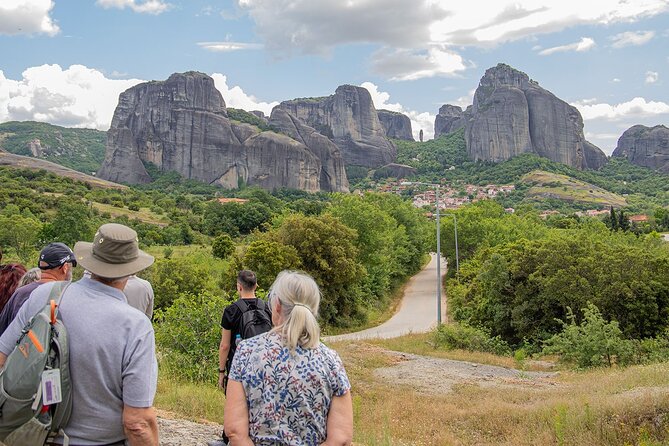
Agios Stefanos is the most accessible monastery in the group. Instead of a long staircase up the rock, you cross a small bridge to reach the entrance. That makes it the best choice for anyone who cannot manage many steps but still wants to enter a genuine Meteora monastery.
The site has roots reaching back to the early 12th century. It includes an older 16th-century chapel, damaged during World War II and the Greek Civil War, and a later main church dedicated to Saint Charalambos. His relics are kept there.
Accessibility is relative, not absolute. You still need to walk through the site, and conditions can be uneven. The tour is not fully wheelchair-focused, so discuss your needs before booking if stairs, distances, or balance are concerns.
The three monasteries seen from outside
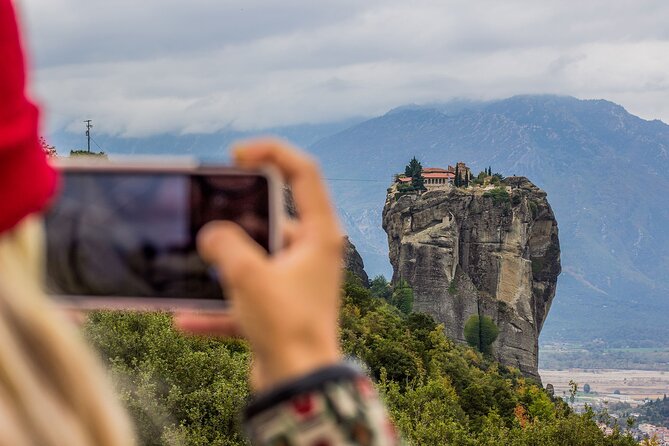
The day also includes short photo stops at the other monasteries. These may be brief, often around 10 minutes, but they give you the chance to photograph the full group from different angles.
Agios Nikolaos Anapafsas is the first monastery reached on the traditional approach to Meteora. Its compact position on the rock makes it especially striking from below.
Roussanou sits on a lower rock and is more accessible than some of its neighbors. Founded in the late 16th century and later turned into a convent, it suffered damage during World War II. From the outside, its position between the cliffs makes a strong photograph.
Holy Trinity is perched on a steep rock and is among the hardest monasteries to reach. The path includes roughly 140 steps after the initial approach to the foot of the rock. You may not enter it on this tour, but the view from outside helps you understand just how demanding monastic access once was.
The schedule can feel rushed here. Ten minutes is enough for a quick look and a few photographs, not a careful visit. Still, seeing all six monasteries gives the day a useful sense of the whole Meteora complex.
The view over Kalambaka
A short stop in Kalambaka provides a panoramic view of the town below the rocks. This is a small part of the program, but it helps orient you. Meteora is not an isolated monument. The monasteries rise above a living town, roads, villages, and the broad Greek countryside.
Bring a phone or camera with plenty of storage. The rock formations change quickly as the coach moves, and the best view may last only a few minutes. A light jacket is also sensible. The weather can shift at altitude, and the tour operates in rain or sun.
What the $88.28 price really covers
At $88.28 per person, the tour is priced as a transport-heavy day trip. You are paying for the coach, fuel, driver, tour leader, the long route from Athens, Wi-Fi, USB charging, and the organized monastery circuit.
The base price does not include entrance fees. Set aside €5 for each of the three monasteries, or €15 total per person if all three charge the stated fee. Bring cash. There is no ATM in the monastery area.
Lunch is included only with the Day Trip plus Lunch rate. Brunch and the coastal sunset dinner are optional extras. If you add all the meals, the final cost will be higher than the headline price, but you gain convenience and do not need to hunt for food during a tightly timed day.
For a one-day visit, the price is reasonable because independent transport to Meteora from Athens takes planning and still leaves you responsible for reaching the monasteries. The tradeoff is comfort and time. A private tour or overnight option costs more but gives you greater control and less pressure.
Clothing, stairs, and the realities of the visit
Monasteries enforce a modest dress code. Women need skirts below the knee or longer, and pants, shorts, and sleeveless tops are not allowed. Men cannot wear sleeveless clothing or shorts above the knee.
Bring a scarf or light wrap if your clothing may not meet the rules. Do not assume the coach will solve this for you. Dress for walking, weather, and steps from the start.
There are no elevators. Varlaam, Great Meteoron, and Holy Trinity can involve serious stair climbing, while Agios Stefanos is much easier. If you have trouble with heights, take your time at exposed sections and let the guide know. The tour can suit older visitors, but each person needs to judge their own walking ability. One practical advantage is that you can still enjoy the views and outside stops even if you cannot enter every monastery.
A long return through coastal Greece
After Meteora, the coach returns toward Athens. The optional Kamena Vourla dinner gives you one last chance to sit by the sea and eat Greek food before the final drive.
The return usually reaches Athens late in the evening. The advertised duration is about 14 hours, but unusual road conditions have caused much longer days, including arrivals after midnight. EU driver-rest rules also require breaks, so the coach cannot simply skip every stop to make up time.
That is not a reason to reject the tour, but it is a reason to plan carefully. Do not schedule a late show, dinner reservation, or flight after the trip. Keep the following morning light if you can.
Who should book this Meteora day trip?
I would choose this tour if you have only a few days in Athens and Meteora is high on your list. It is also a good fit if you want someone else to handle the roads, monastery order, parking, and timing.
It suits people who value the big picture: three interiors, all six monasteries from outside, caves, village food, and coastal scenery in one demanding day. Families can enjoy it, and the accessible route at Agios Stefanos helps, but young children may find the coach time tiring.
I would not choose it if you dislike long bus rides or want time for quiet photography. An overnight stay lets you see Meteora at a gentler pace and reduces the risk that traffic or road closures will cut into the monastery visits.
Should you book it?
Book it if you want the most practical Athens-to-Meteora option and accept that the journey is part of the price. The monasteries, cliffs, caves, and views are strong enough to justify the effort, and the coastal stops make the road time less monotonous.
Skip it in favor of an overnight plan if you can spare another day. For the day trip, arrive early, carry €15 for monastery fees, dress modestly, bring water and a charger, and leave your evening schedule open. With those expectations, this is a demanding but memorable way to see one of Greece’s most remarkable places.
FAQ
Where does the tour start and finish?
The tour starts and ends at Larissis Railway Station in Athens. Departure is scheduled for 8:00 am, and you should arrive at least 15 minutes early.
How long does the experience last?
The advertised duration is approximately 14 hours. You return to Athens in the late evening, although traffic, strikes, road closures, and required driver breaks can make the day longer.
How many monasteries do I visit inside?
You visit the interiors of three active monasteries. The other three are viewed from outside during the Meteora circuit.
Are monastery entrance fees included?
No. Entrance fees are not included. The stated cost is €5 per monastery, and you should bring cash because there is no ATM in the area.
Is lunch included?
Lunch is included only with the Day Trip plus Lunch rate. Otherwise, you can pay for a meal at the Kastraki restaurant yourself. Vegetarian and vegan dishes are available.
Is the tour offered in languages other than English?
The tour leader guides in English. A free smart audio guide is available in Spanish, French, German, Italian, Portuguese, Russian, Polish, Korean, Chinese, and Japanese.
What clothing is required at the monasteries?
Women need skirts below the knee or longer and cannot wear pants, shorts, or sleeveless shirts. Men cannot wear sleeveless clothing or shorts above the knee.
Is the tour suitable for people with limited mobility?
Agios Stefanos is the easiest monastery to reach because you cross a small bridge instead of climbing a long staircase. Other monasteries require steps, and there are no elevators, so you should consider your walking ability before booking.
Fresh on the Athens list
- Athens Airport Arrival Transfer to Hotels or Addresses in Athens★ 3.5 · 45 reviews
- Private Luxury Tour: Unveiling the Sacred Mysteries of Eleusis★ 5.0 · 45 reviews
- Luxury Catamaran Sunset Semi-Private & Greek Gastronomy in Athens★ 5.0 · 45 reviews
- From Athens: Aegina Island guided tour in a day★ 5.0 · 45 reviews
- Delphi, Thermopylae full day private tour from Athens★ 4.9 · 46 reviews
- From Athens: City & Corinth Guided Day Tour★ 4.8 · 46 reviews
- Acropolis Private Wine Tasting @ Finewine store★ 5.0 · 46 reviews
- Ancient Corinth Half-Day Private Tour from Athens★ 5.0 · 46 reviews
Meteora Monasteries Tours, compared.
Meteora Monasteries Day Trip with Caves and Lunch
Read our review →
Meteora Tour with Local Guide and Greek Lunch
Read our review →
Meteora Monasteries & Caves DayTrip from Athens with Greek Lunch
Read our review →
4-Day Classical Greece Tour: Epidaurus, Mycenae, Olympia, Delphi, Meteora
Read our review →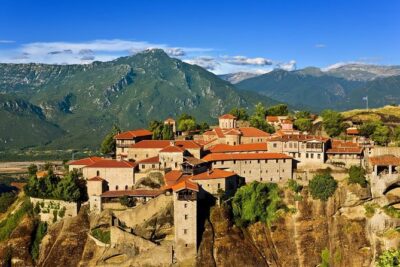
Meteora Monasteries, Hermit Caves Tour with Pickup
Read our review →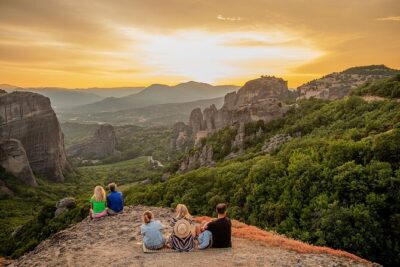
Meteora Sunset with Monastery & Hermit Caves Tour in Small Group
Read our review →Browse the lists this tour appears in