

Reviewed · ATHENS TOURS
Athens: National Archaeological Museum Ticket & Audio Guide
The Mask of Agamemnon may draw you through the doors, but the museum’s real strength is its sweep: Mycenaean gold, bronze statues, marble gods, pottery, tools, jewelry, and Roman-era sculpture all appear under one roof. The phone audio guide helps turn a large collection into a clear route rather than a parade of labels.
I like the quick electronic entry, especially when the ticket queue is long, and I like having the freedom to pause or wander after the narrated highlights finish. The main caution is that the audio guide does not cover every room, and its directions can feel unclear in parts of this large, maze-like museum.
Key points to know before you go
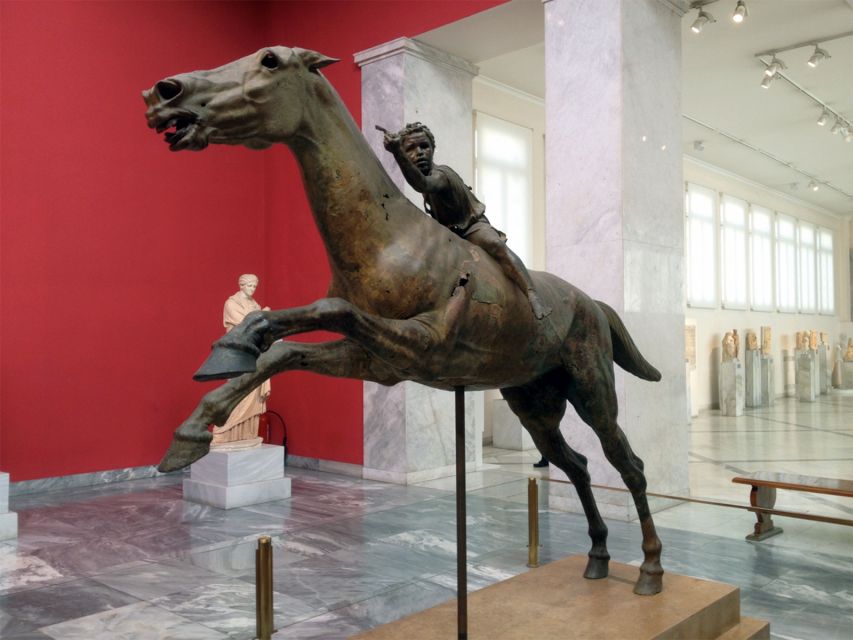
- See the Mask of Agamemnon and Mycenaean gold: The early galleries give you a close look at some of Greece’s most famous Bronze Age objects.
- Follow major bronze masterpieces: The statue identified as Zeus or Poseidon and the horse rider are among the museum’s essential stops.
- Use your own phone and headphones: You need a charged Android or iOS device, plus headphones, and the content can be downloaded for offline use.
- Plan for more than the audio route: The highlighted tour can take about 1.5 hours, but two to four hours gives you time to explore properly.
- Expect a regular ticket only: The $31 price includes standard admission and the audio tour, but not reduced or free entry.
- Leave time for the courtyard cafe: It offers a useful break inside the museum, with greenery and art around you.
Why this museum matters in Athens

Athens is packed with ancient sites, but the National Archaeological Museum gives you something the Acropolis cannot: objects small enough to study closely and a long chronological story that reaches across Greece. Here, you can examine a gold burial mask, a bronze weapon, a painted vase, or the details of a marble face.
The collection also helps explain how Greek art changed. Early Bronze Age objects look different from Classical sculpture, which in turn differs from later Hellenistic and Roman work. You can watch artists move from stylized figures toward more natural poses, expressive faces, and careful studies of the human body.
That progression is useful even if you are not an archaeology specialist. The museum can otherwise feel like a lot of beautiful objects without a clear thread. The audio narration gives you a route through the main periods and connects individual pieces to Greek society, religion, warfare, burial customs, and daily life.
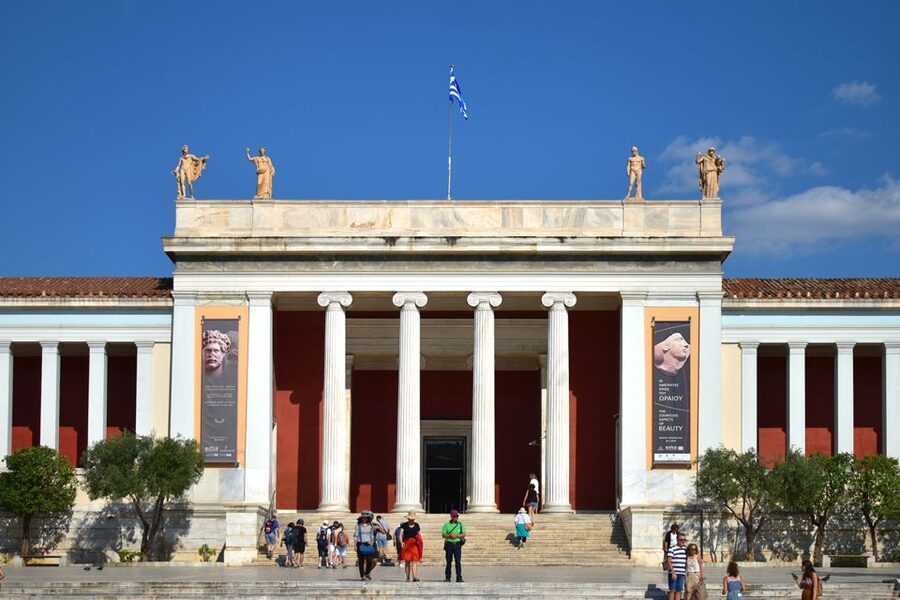
The building itself adds to the visit. It is spacious, light, and airy, with galleries arranged around a courtyard. Some rooms feel calm and uncluttered, while others hold so many important objects that you may need to slow down and choose what deserves your attention.
More Museums in Athens
- Athens: Acropolis, Parthenon & Acropolis Museum Guided Tour
★ 4.8 · 9,316 reviews - Athens: Mythology of Delphi, Museum and Arachova Guided Tour
★ 4.6 · 4,008 reviews - Athens: Acropolis, Parthenon & Acropolis Museum Guided Tour
★ 4.8 · 3,579 reviews
Getting inside with a prepaid ticket
The experience begins before you reach the museum. Your ticket and instructions arrive by email, and you download the entry document and audio content to your phone. Do this before arriving, rather than standing outside trying to solve a password or mobile-data problem.
A prepaid ticket is most useful when the ticket booth has a long line. You still need to pass through the museum’s security check, so do not expect to walk straight from the pavement into the galleries. The security queue can look worse than it is, and once you are through, a properly prepared electronic ticket should make entry simple.
The product includes a regular ticket for all ages. If you qualify for free or reduced admission, this is not the best option for you. Go directly to the museum ticket booth and ask about the applicable fare, since the $31 booking is not designed to provide those discounts.
The meeting point can vary by the option you choose, so read the arrival instructions carefully. You are not being met by a live guide, and no transport is provided. This is a direct museum visit with digital support.
Downloading the audio guide before arrival

Think of this as a museum ticket plus a guided route, not a traditional tour. There is no group leader, no fixed walking pace, and no live person waiting to answer questions. You use the narration when you want it and stop whenever an object catches your eye.
The audio content includes text, narration, and maps, and it can be used offline. That is valuable inside a thick-walled museum, where mobile reception or data access may not be dependable. Download everything before you arrive, then check that the audio plays.
Bring:
- A charged smartphone
- Headphones
- Comfortable clothes
- Your ticket on the device or in the required digital format
The guide works with Android and iOS devices, but not with Windows phones, iPhone 5 or 5C and older models, older iPod Touch devices, iPad 4 and older models, or the first-generation iPad Mini. If you are using an older device, check compatibility before paying.
Headphones matter. Without them, you may need to hold your phone up for each recording, which quickly becomes tiring and makes the visit less pleasant for people nearby.
The Mask of Agamemnon and the Mycenaean rooms
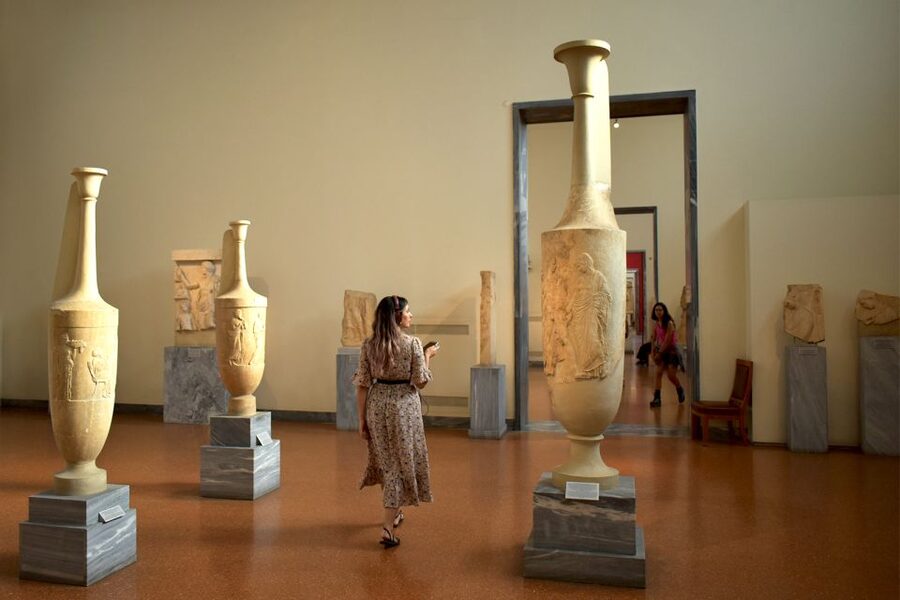
The Mycenaean galleries are a natural place to begin. This early Greek material has the drama of a royal treasure room: gold objects, weapons, jewelry, and finely worked pieces linked to the Bronze Age world.
The Mask of Agamemnon is the headline object, but do not rush past the surrounding cases. The Mycenaean collection gives you a broader picture of power and burial customs. Gold was not just decoration. It signaled wealth, status, and the importance of the person placed in the tomb.
The Mycenaean Bull is another memorable stop highlighted by the audio guide. Listening to the story behind an object like this helps you see more than its surface. You begin to notice material, workmanship, symbolism, and the way ancient people used animals in art and ritual.
Some exhibits date to periods long before the birth of Christ, and the early galleries can be especially rewarding if you have studied Greek archaeology. For everyone else, the amount of information can feel heavy at first. Let the audio guide provide the basic frame, then choose a few objects to examine closely rather than trying to remember every date.
More museums around Athens:
- Acropolis monuments & Parthenon Walking Tour with Optional Acropolis Museum
★ 5.0 · 2,678 reviews - Athens All Included: Acropolis and Museum Guided Tour with Ticket
★ 4.5 · 2,673 reviews - Athens: Acropolis Museum Ticket with optional Audio Guide
★ 4.4 · 2,652 reviews - From Athens: Small-Group Delphi, Museum & Arachova Day Trip
★ 4.8 · 2,476 reviews
Bronze statues that seem ready to move
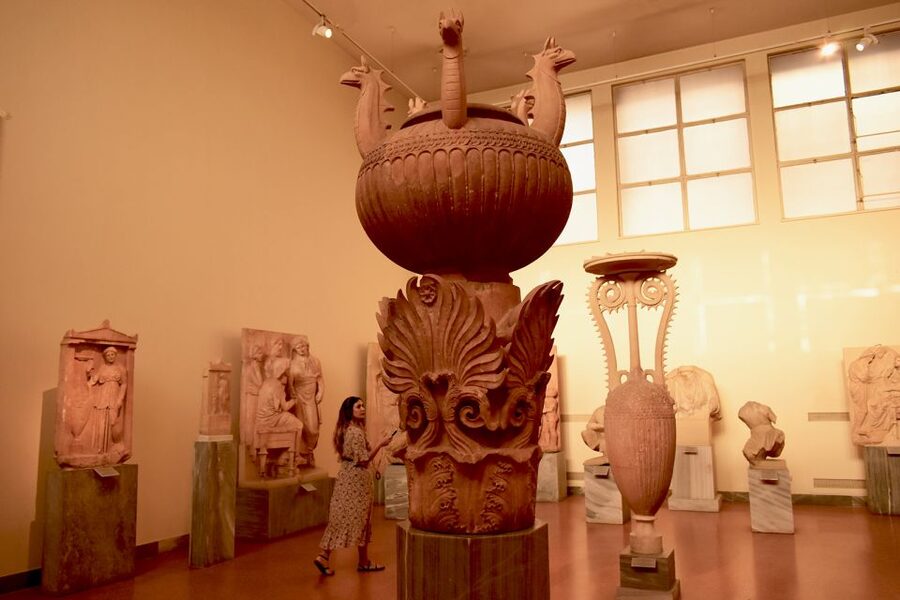
The museum’s bronze collection is one of its strongest sections. Bronze survives less often than marble because it was frequently melted down and reused, so every large ancient bronze figure feels like a lucky survival.
The audio route draws attention to the statue identified as Zeus or Poseidon. The raised arm and missing attribute leave room for debate, which is part of the fun. Instead of simply presenting the figure as a perfect god, the museum lets you consider how scholars identify an object and what remains uncertain.
The horse rider is another key work. It brings movement into a museum filled with standing figures. The rider and horse are not just a study in metalwork. They suggest status, competition, military skill, and the public image of a successful young person.
Spend extra time in the bronze rooms if sculpture interests you. The strongest pleasure here is not only the subject matter but the physical quality of the objects: the balance of the figures, the tension in a pose, and the surprising survival of fine detail.
Marble sculpture, pottery, tools, and ordinary life
The museum is not limited to grand statues. Its pottery, tools, jewelry, and smaller objects help fill in the lives of people who never appeared in heroic poems.
Marble sculptures show how Greek artists handled anatomy, clothing, hair, and movement. Some figures are damaged, but that damage can make the original skill easier to appreciate. You may need a little imagination to picture missing arms, painted surfaces, or figures as they once appeared.
The museum sometimes provides images showing how objects may have looked in their original form. Use those reconstructions as suggestions, not as exact photographs of the past. They are helpful reminders that ancient sculpture was not always the bare white stone we see today.
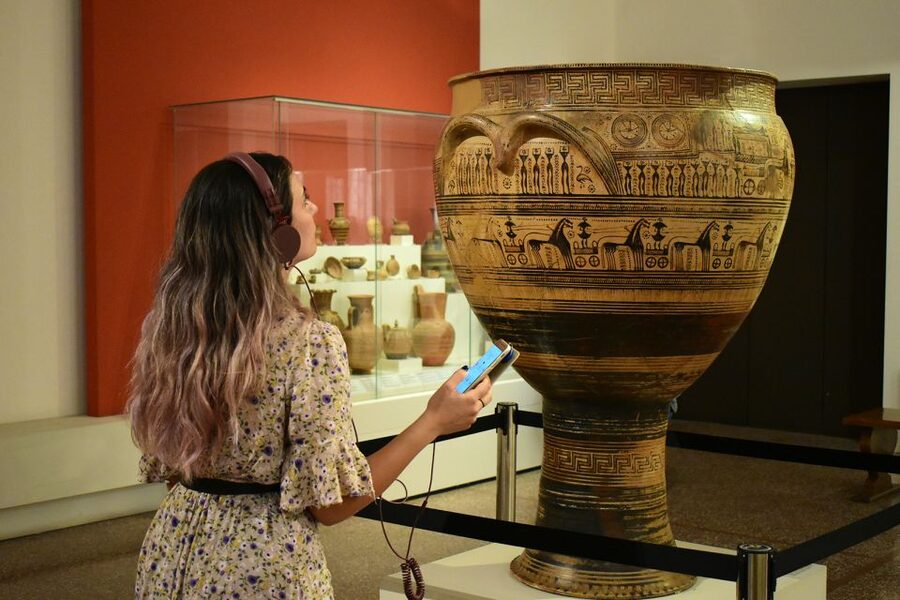
Pottery and household objects add another layer. They can show work, trade, religious practice, meals, storage, and storytelling. If the monumental sculpture begins to blur together, switch to the smaller cases. A modest tool or piece of jewelry can make ancient life feel more immediate than another idealized god.
Roman sculpture and Hadrian’s Greek taste
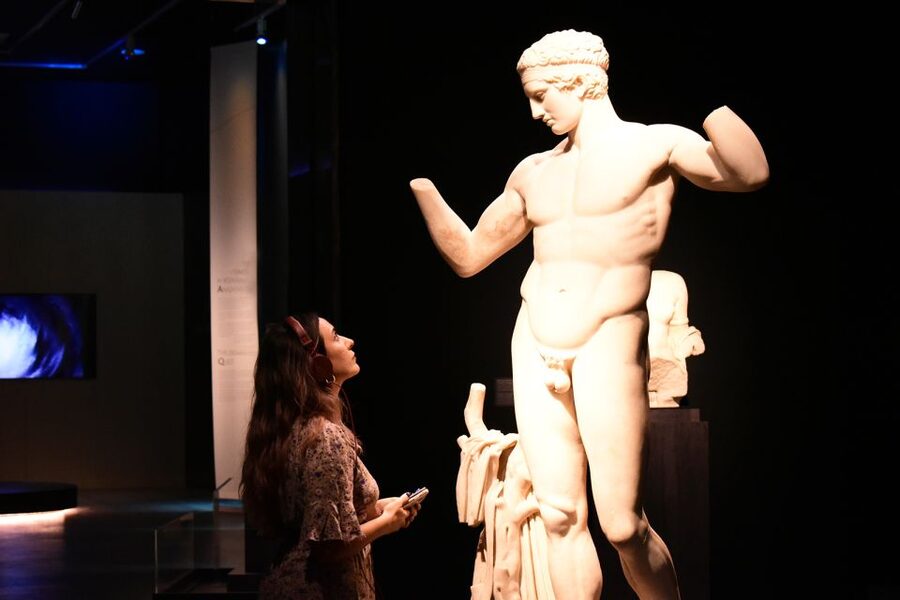
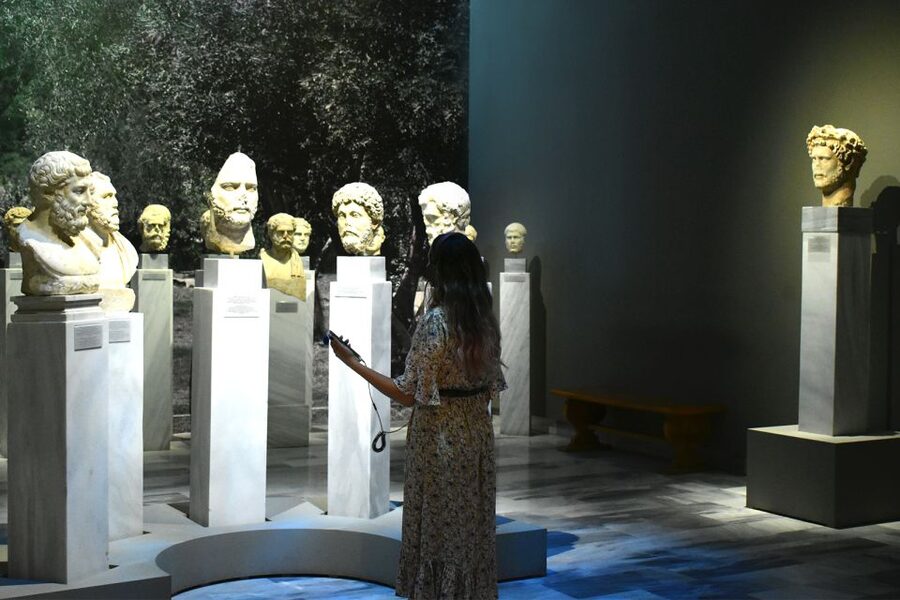
The collection reaches beyond Greek antiquity into the Roman period, and this is where you can see how Rome borrowed from and preserved Greek artistic traditions. Sculptures connected with Hadrian are especially interesting because his admiration for Greek culture shaped the way he presented himself and his world.
A temporary Hadrian exhibition may be available during your visit, but temporary displays change, so do not make your booking depend on seeing it. The permanent Roman material is still worthwhile, especially if you want to understand how Greek artistic models continued to influence later rulers and sculptors.
This section also prevents the museum’s story from becoming too tidy. Greek art did not simply end when Rome gained power. Styles, subjects, and artistic ideas continued to circulate, change, and find new audiences.
How long should you allow?
The advertised duration ranges from 45 minutes to four hours, but that broad range reflects the way you use the audio guide rather than a fixed schedule. A quick highlights visit may take around 1 to 1.5 hours. That is enough for the main stops, especially if your time in Athens is tight.
I would allow at least two hours for a first visit. That gives you time to listen, look closely, find your way between galleries, and pause when something unexpected catches your attention.
Three or four hours suits anyone with a serious interest in archaeology, sculpture, mythology, or ancient society. The museum is large enough that even a repeat visit can reveal objects you missed before. You do not have to finish every gallery in one heroic march. A break at the courtyard cafe can make a long visit far more comfortable.
The audio guide itself may end before you are ready to leave. That is not a reason to exit. The admission gives you free time to continue exploring, and you can return to rooms skipped by the suggested route.
Is the audio route easy to follow?
The narration is generally clear, paced for independent sightseeing, and focused on the museum’s main works. It offers stories and historical details rather than forcing you to read every wall label. That is a good choice when you want context without carrying a printed guidebook.
The route is not perfect. Some rooms may be skipped, and the directions can be confusing in sections. The museum has signs pointing toward important pieces, but the galleries can still feel maze-like, particularly when you leave the suggested path.
My advice is simple: download the map, keep an eye on gallery numbers or signs, and do not worry if you lose the route. The audio is a tool, not a test. You can pause it, backtrack, or ignore it for ten minutes while you explore on your own.
The narration is available in English, French, German, Greek, Italian, and Spanish. A live guide is not included, so the audio option is best for you if you like independent visits and do not need immediate answers to questions.
What the $31 price really buys you
At $31 per person, this is not the cheapest way to enter if you qualify for a concession or if you only want a brief look at the building. It becomes more reasonable when the ticket queue is long and you value having the admission arranged before arrival.
The audio guide adds value for first-time visitors who want a clear introduction to the collection. It is especially useful when you know little about Bronze Age Greece or Classical sculpture and would otherwise spend much of your visit reading labels.
There is one point worth checking before booking. One museum visitor reported that audio guides may also be available directly at the museum desk at no extra charge, with picture identification held as collateral. That arrangement may depend on current museum policy, so ask at the desk if saving money matters more to you than pre-arranged convenience.
The non-refundable policy also matters. Confirm your date, device compatibility, and schedule before buying. If your Athens plans are uncertain, paying in advance carries more risk than buying directly when you know you can go.
Practical tips for a better museum visit
Arrive with the ticket already downloaded. A screenshot or accessible email can be useful if the connection is poor, but follow the booking instructions for the exact ticket format.
Go early if you want quieter galleries. The museum can become crowded, and the security line may look intimidating even when it moves smoothly. An early start also leaves you more time for the rooms the audio route does not cover.
Do not assume the audio guide is a complete museum inventory. It focuses on highlights. Use it as a backbone, then explore beyond the featured objects.
Check bags at the entrance if required. One visitor specifically noted bag checks and the ability to take photographs, but follow the museum’s current rules on the day.
Wear comfortable clothes and shoes. Even a short route involves standing and walking, while a proper two or three-hour visit asks more of your feet.
Finally, do not skip the cafe if you need a reset. The ground-floor courtyard, greenery, and art make it a pleasant place to pause without leaving the museum completely.
Who should book this experience?
This suits a first-time Athens visitor who wants the major objects explained without joining a group. It also works well for couples or families who prefer to move at different speeds, since each person can listen and pause independently.
History and archaeology students will find plenty to study beyond the audio stops. Photography fans and sculpture lovers may also want the full four-hour window, while cruise passengers with limited time may appreciate the prepaid entry and focused route.
You may want another option if you qualify for free or reduced admission, dislike using your phone in museums, or need a live expert to answer questions. The audio guide is helpful, but it cannot respond to your interests or untangle every confusing turn.
Should you book the ticket and audio guide?
Book it if you want a ready-to-use museum visit with the main masterpieces placed into a story. The prepaid entry is most useful during busy periods, and the audio guide gives welcome structure to a collection that can otherwise overwhelm you.
Skip it if you are eligible for discounted admission, already have a trusted museum guide, or are happy to explore without narration. Either way, give the National Archaeological Museum at least two hours if you can. The Mask of Agamemnon may get you inside, but the bronze statues, Mycenaean objects, Roman sculpture, and everyday artifacts are what make the visit worth your time.
FAQ
What is included in the National Archaeological Museum ticket?
The booking includes a regular entry ticket, a self-guided audio tour for Android or iOS, offline text, audio narration, maps, and free time to explore the museum.
Is a live guide included?
No. This is a self-guided experience using audio content on your smartphone.
Which languages are available for the audio guide?
The audio guide is available in English, French, German, Greek, Italian, and Spanish.
How long does the visit take?
The stated duration is 45 minutes to four hours. A short highlights visit may take about 1.5 hours, while allowing two to four hours gives you time to explore more of the collection.
What do I need to bring?
Bring comfortable clothes, headphones, and a charged smartphone. You will need to download the ticket and audio tour using the instructions sent after booking.
Can I use the audio guide offline?
Yes. Offline content includes the text, audio narration, and maps.
Can I book this if I qualify for free or reduced admission?
The product includes only a regular ticket for all ages. If you qualify for free or reduced-price entry, go directly to the museum ticket booth instead.
More Audio Tours in Athens
- Athens: Acropolis Ticket & Optional Self-Guided Audio Tours
★ 4.1 · 2,542 reviews - Parthenon & Acropolis Museum with Audio or Live Tour Option
★ 4.1 · 2,446 reviews - Athens: Peloponnese Highlights Day Trip and V.R. Audio Guide
★ 4.5 · 1,425 reviews - Athens: Acropolis Ticket with Multilingual Audio Guide
★ 3.9 · 926 reviews
More Self-Guided Tours in Athens
- Athens: Acropolis Ticket with Optional Audio or Live Guide
★ 4.2 · 11,055 reviews - Athens: Cape Sounio & Poseidon Temple Trip with Audio Guide
★ 4.4 · 4,521 reviews - Athens: Acropolis Ticket with Audio Guide
★ 4.0 · 3,575 reviews - From Athens: Delphi Full Day V.R. Audio Guided Tour
★ 4.6 · 3,028 reviews
Fresh on the Athens list
- Athens Airport Arrival Transfer to Hotels or Addresses in Athens★ 3.5 · 45 reviews
- Private Luxury Tour: Unveiling the Sacred Mysteries of Eleusis★ 5.0 · 45 reviews
- Luxury Catamaran Sunset Semi-Private & Greek Gastronomy in Athens★ 5.0 · 45 reviews
- From Athens: Aegina Island guided tour in a day★ 5.0 · 45 reviews
- Delphi, Thermopylae full day private tour from Athens★ 4.9 · 46 reviews
- From Athens: City & Corinth Guided Day Tour★ 4.8 · 46 reviews
- Acropolis Private Wine Tasting @ Finewine store★ 5.0 · 46 reviews
- Ancient Corinth Half-Day Private Tour from Athens★ 5.0 · 46 reviews
Athens Tours, compared.
Acropolis & up to 5 Archaeological Sites Combo Pass
Read our review →

Acropolis, Parthenon & Acropolis Museum Guided Tour
Read our review →
Cape Sounion & Poseidon Temple Sunset Half-Day Trip
Read our review →


Cape Sounio & Poseidon Temple Trip with Audio Guide
Read our review →
Hydra, Poros, and Aegina Day Cruise with Lunch
Read our review →Browse the lists this tour appears in