Reviewed · ATHENS TOURS
Biblical Tour Letters ToThe Corinthians St Paul’s Footsteps 6Hour
Paul’s journey comes alive when you move from the rock where he addressed Athenians to the Roman forum where he faced judgment. This six-hour trip links Areopagus Hill, Corinth, Isthmia, and Cenchreae, giving you a clear sense of place behind the New Testament accounts.
I like the private minivan and the easy pickup from an Athens hotel, apartment, or cruise port. I also like the personal touch reported by several people, including bottled water, Wi-Fi, chocolates, umbrellas, and drivers such as Chris, Yiannis, Panos, Alex, and Christos who explain the story with humor and patience.
The main consideration is pace. There are many stops packed into about six hours, and the driver cannot accompany you inside archaeological sites under Greek law unless you arrange a licensed guide for an additional €160 per booking. Some sites also charge entrance fees.
Key points before you book
- Paul’s speech on Areopagus Hill: Visit the setting described in Acts, where Paul spoke about the Unknown God.
- A private ride beyond Athens: Your group travels in an air-conditioned vehicle with Wi-Fi and bottled water.
- A full Corinth circuit: See the canal, Ancient Corinth, Isthmia, Cenchreae, the Temple of Apollo, and St. Paul’s Church.
- Small-group feel: The advertised format is for your own party, generally two to four people, with vehicles able to carry up to eight.
- Strong driver-host experience: Chris, Yiannis, Panos, Alex, Christos, and John are among the named drivers praised for storytelling and friendly service.
- Extra site costs: Ancient Corinth is listed at €15 per person and the Archaeological Site of Isthmia at €5 per person.
Why this Paul tour works so well
This is not simply a ride to a set of ruins. It is a geography lesson tied to the Acts of the Apostles and Paul’s letters to the Corinthians. You begin in Athens, where Paul spoke to a skeptical audience, then head west across the narrow isthmus that made Corinth a major crossroads of the ancient Greek world.
The drive matters. Corinth is about an hour from Athens, and the driver uses that time to discuss Paul’s life, Greek history, and the places ahead. A good driver can turn what might feel like a long transfer into a useful introduction. Chris, in particular, is praised for filling the ride with background and for welcoming questions.
You will not be handed a large bus headset or moved through a rigid group schedule. The tour is designed for a small private party, with pickup at your hotel lobby, apartment entrance, or cruise-port gate. At the end, you return to the same place or another agreed point.
The service details are practical rather than flashy. The vehicle has air conditioning, Wi-Fi, and bottled water. Past arrangements have also included chocolates, umbrellas, and help during rainy weather. These touches matter on a long day with repeated stops and time spent outdoors.
A few other Athens mornings to price up
- Athens: Acropolis & up to 5 Archaeological Sites Combo Pass
★ 4.4 · 12,619 reviews - Athens: Acropolis Ticket with Optional Audio or Live Guide
★ 4.2 · 11,055 reviews - Athens: Acropolis, Parthenon & Acropolis Museum Guided Tour
★ 4.8 · 9,316 reviews
Areopagus Hill and Paul’s Athenian speech
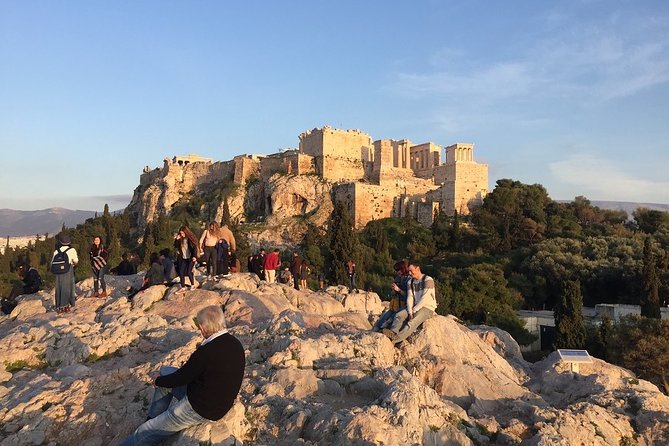
The first major stop is Areopagus Hill, often called Mars Hill, beside the Acropolis. Here Paul delivered his speech to the Athenians, referring to an altar dedicated to an Unknown God and using it as a bridge to explain Christian belief.
You have about 15 minutes at this stop. That is enough to see the rock, take in the view, and consider the setting, but it is not a long Acropolis visit. The experience is focused on Paul’s speech rather than on a full tour of the Acropolis monuments.
Wear shoes with a firm grip. The rock and surrounding paths can be uneven, and the stop is short enough that you will want to move directly to the viewpoint. If this is your only time near the Acropolis, do not confuse this excursion with an Acropolis ticket or guided visit.
Daphni Monastery and the Christian setting
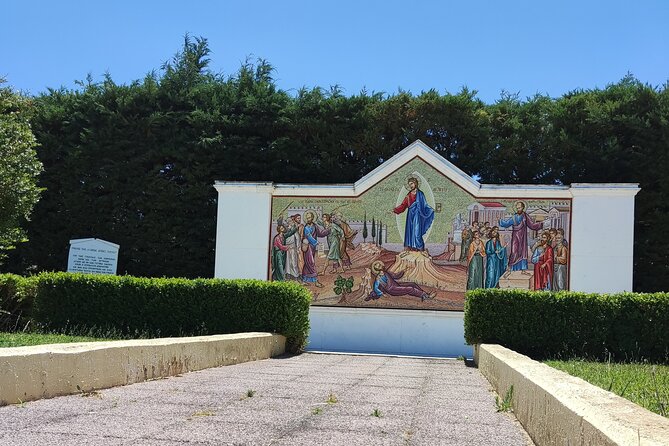
The short visit to Daphni Monastery adds a different layer to the day. Located on the slopes of Mount Aigaleo, this fortified Byzantine monastery occupies the site of an ancient sanctuary associated with Apollo.
The monastery has strong walls, towers, and eastern and western entrances. Its history reflects the changes that shaped Greece: it was used by Cistercian monks during the Frankish period and later returned to Orthodox control after the Ottoman conquest.
The interior mosaics are the main reason to stop. Earthquakes caused serious damage, but restoration work continues to protect the site’s artistic and religious importance. You have about 20 minutes here, so think of this as a concise introduction, not a leisurely monastery visit.
This stop also helps connect the ancient and Christian worlds. Paul’s story is rooted in the first century, while Daphni belongs mainly to the Byzantine tradition. If your interest is limited strictly to biblical sites, you may find the stop less essential. If you want to see how Greek religious history continued after antiquity, it earns its place.
The Corinth Canal and the old ship route
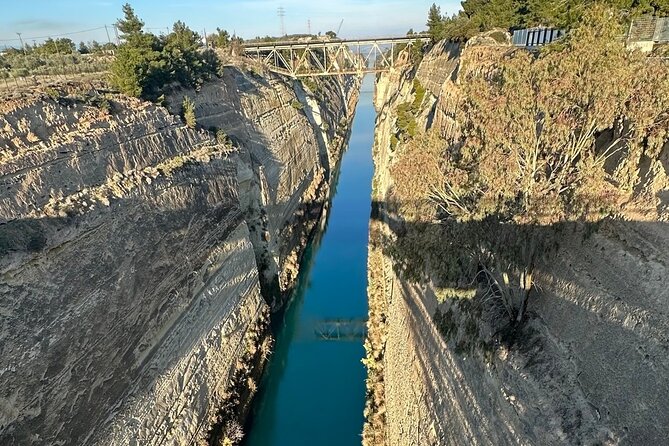
At the Corinth Canal, the scale changes. The waterway cuts through the Isthmus of Corinth, linking the Gulf of Corinth with the Saronic Gulf and separating mainland Greece from the Peloponnese.
The canal was completed in the late 19th century, but the idea is much older. Ancient ships that wanted to avoid sailing around the Peloponnese faced an extra journey of about 185 nautical miles. Periander, the ruler of Corinth in the sixth century BC, is said to have considered cutting a canal, but the technology was not available.
Instead, the ancient Greeks built the diolkos, a stone track that allowed ships to be moved overland on wheeled platforms. It was an ingenious answer to a difficult problem. You get about 20 minutes at the canal, enough to look down into the cut, photograph the bridge and waterway, and hear why this narrow strip of land mattered so much.
The canal stop is scenic, but it is not directly tied to a specific event in Paul’s life. Its value is geographical. Once you see the isthmus, Corinth’s role as a trade center becomes much easier to understand.
Same island, an entirely different sort of day:
- Athens: Cape Sounion & Poseidon Temple Sunset Half-Day Trip
★ 4.8 · 8,241 reviews - Athens: Acropolis and Parthenon Guided Walking Tour
★ 4.6 · 5,882 reviews - All Day Cruise -3 Islands to Agistri,Moni, Aegina with lunch and drinks included
★ 5.0 · 4,958 reviews - Athens, Piraeus, and Coastline: Blue Hop-On Hop-Off Bus
★ 3.9 · 4,849 reviews
Isthmia, the games, and the Archaeological Museum
Near the canal lies Isthmia, the ancient site of the Isthmian Games. These contests ranked just below the Olympic Games in importance and attracted athletes and visitors from across the ancient Greek world.
The connection to Paul is especially interesting. The tour explains that Paul worked as a tent maker in the Isthmian area, serving athletes and visitors while proclaiming Christ. The New Testament does not provide a detailed account of Paul attending the games, so you should treat this as historical context and local tradition rather than a scene described in detail in Scripture.
The Archaeological Museum of Isthmia takes about 20 minutes and charges an additional €5 per person. Its displays include an Archaic marble pediment from the Temple of Poseidon, colorful glass pieces from Kechries, a second-century imperial statue in the type of Zeus, animal figurines, commercial amphorae, and offerings connected with worship and warfare.
You may also see objects from Mycenaean and Roman cemeteries. The glass fragments are particularly unusual. They include harbor views, strange animals, plants, ships, geometric patterns, and full-length figures such as Homer and Plato.
The museum is modest in scale, but it gives useful context before the outdoor ruins. If you want every site explained inside, remember that the driver must remain outside unless you book a licensed guide.
Ancient Corinth and the Bema of Gallio
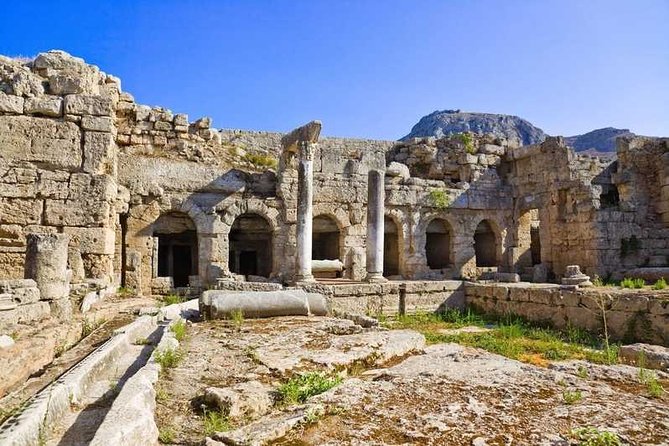
Ancient Corinth is the heart of the excursion. The city occupied the narrow land bridge between central Greece and the Peloponnese, a position that brought trade, wealth, travelers, soldiers, and competing religious ideas.
The city was destroyed by Rome in 146 BC and rebuilt in 44 BC. Under Roman rule, Corinth became the provincial capital of Greece. By the fourth century BC, it had a population estimated at about 90,000, making it one of the largest Greek cities of its time.
For Christians, the site has special force because Paul spent about a year and a half in Corinth around AD 51 and 52. The two letters to the Corinthians address a community dealing with questions of worship, behavior, leadership, marriage, spiritual gifts, and unity. Walking through the Roman forum gives those letters a physical setting.
The Bema is the key biblical landmark. This raised platform in the forum is traditionally identified as the place where Paul was brought before the Roman proconsul Gallio. Gallio declined to treat the accusation as a criminal case, considering it an internal religious dispute among Jews.
The Bema was later turned into a Christian church during the Byzantine period, likely because of its connection with Paul. You can see how the monument became a link between the Roman city and later Christian memory.
Ancient Corinth is listed at €15 per person, separate from the tour price. Allow about an hour for the site. The ground is open and exposed, so sun protection, water, and sensible shoes are useful. The driver can explain the setting from outside, but cannot legally function as a site guide inside without the optional licensed guide.
Isthmia’s Temple of Poseidon and stadium
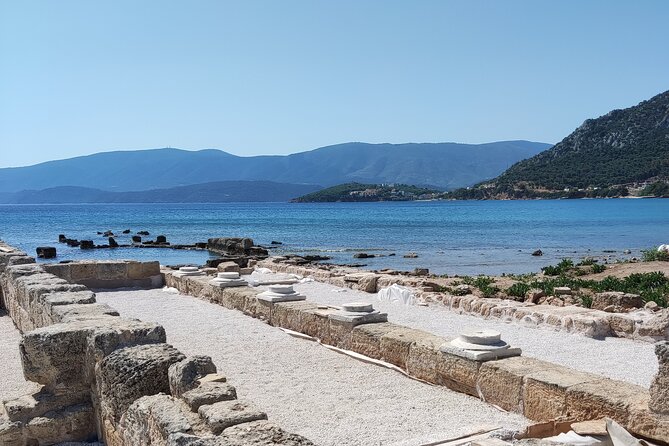
The Archaeological Site of Isthmia requires another 30 minutes and a €5 entrance fee per person. It includes the Sanctuary of Poseidon and Amphitrite, the stadium, the Sanctuary of Palaimon, a theater, and Roman baths with mosaics.
The Temple of Poseidon was first built between 690 and 650 BC. Fires and wars led to repeated rebuilding, including larger Doric versions. Roman damage was followed by later repairs and decoration, but the sanctuary eventually ceased operating after the Visigoth invasion associated with Alaric.
The stadium is a strong reminder that ancient religious life and athletic competition were closely connected. A starting mechanism called the ysplex survives here, described as a rare triangular release system.
The Sanctuary of Palaimon honored Melikertes, also known as Palaimon, who was associated with sailors. In Roman times, nighttime ceremonies and bull sacrifices were held in his honor.
The theater was built around 400 BC for musical competitions. Nearby Roman baths preserve mosaics from the second century AD, including sea creatures and a scene of Nereis riding Triton. You have little time here, so do not expect to study every structure closely. The stop works best when you focus on the main sacred, athletic, and theatrical remains.
Cenchreae, the port mentioned in Acts
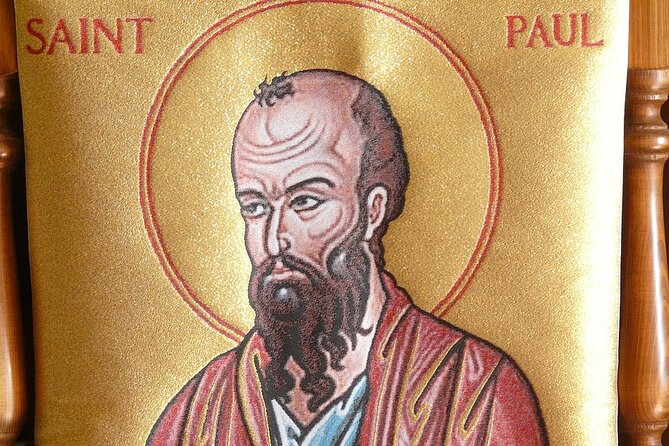
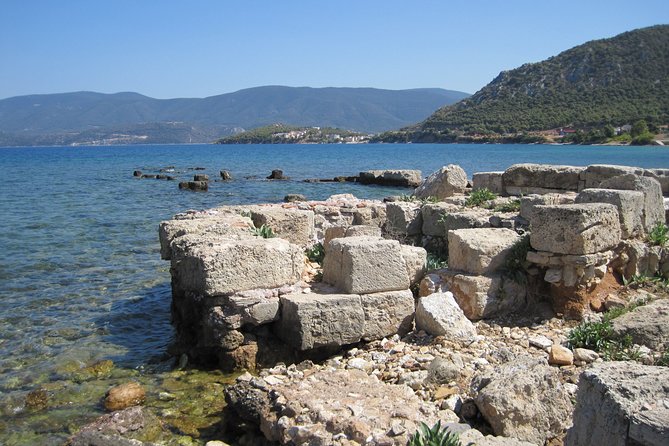
Cenchreae, now called Kechries, was Corinth’s eastern port on the Saronic Gulf. Its biblical importance comes from Acts 18, which places Paul here during his second missionary journey. The text says Paul had his hair cut because of a vow before sailing for Syria with Priscilla and Aquila.
Paul also mentions Phoebe, a woman connected with the Christian assembly at Cenchreae, in his letter to the Romans. That brief reference gives the port a valuable connection to the wider early Christian network.
You have about 30 minutes at this stop. It is an outdoor visit, and the appeal is mainly the setting and the biblical association rather than a large intact monument. The site helps you understand how Paul moved through the region by sea and road.
Because parking and traffic can affect the order of the day, an individual stop may occasionally need to be shortened or skipped. That is worth keeping in mind if one particular location matters most to you. Tell the driver early, so the schedule can be adjusted where possible.
The Temple of Apollo and St. Paul’s Church
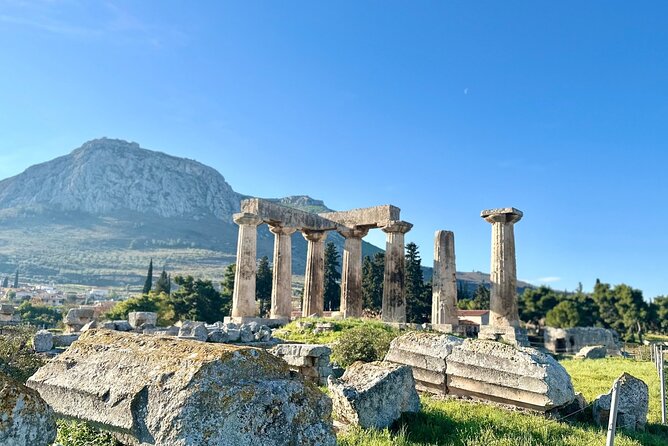
The Temple of Apollo at Ancient Corinth is one of the oldest Doric temples in the Peloponnese and on the Greek mainland. Built around 550 BC, it is noted for its large monolithic columns.
You get about 10 minutes at this stop. That is brief, but the columns are among the most recognizable remains in Corinth and make a good anchor for understanding the age of the city.
The day ends at Apostolos Pavlos Church in modern Corinth. The church honors Paul’s long stay in the city and its importance in Acts and the two letters to the Corinthians. You have about 20 minutes here, enough for a quiet visit and a final connection between the ancient city and the Christian tradition that followed it.
Transport, timing, and group size
The listed duration is about six hours and 15 minutes. In practice, you should expect a full half-day with roughly an hour each way between Athens and Corinth, plus several short visits. The schedule is efficient, not slow.
The private format is the main comfort advantage. Only your party participates, and pickup time can be adjusted by request. The vehicle is described as a luxury minivan, with small groups commonly listed as two to four people and capacity up to eight.
This makes the tour a useful choice for cruise passengers. Pickup and return at the port reduce the risk of getting lost or arranging separate transport. The operator specifically plans the day around a timely return to the ship, though you should still confirm your ship’s departure time and pickup details before booking.
Luggage storage may be possible in the vehicle, depending on how many bags you carry. Ask before relying on this, especially if you are leaving for a cruise or airport.
What the $170.50 price really buys
At $170.50 per person, this is not the cheapest way to see Corinth. You are paying for private transport, door-to-door pickup, a small party, flexible timing, air conditioning, and a driver-host who can connect the sites to Paul’s life.
The price makes more sense when shared by several people. A private vehicle for two to four people gives you far more control than a large coach, and the service is especially useful from the port or for anyone who does not want to handle Greek roads and parking.
Budget separately for the €15 Ancient Corinth admission and €5 Isthmia admission. Meals are also extra, and lunch stops are scheduled but not included. A licensed guide costs an additional €160 per booking, subject to availability. Airport pickup adds €60 per booking.
The driver provides historical and biblical commentary, but the legal limit matters. If you want detailed explanations beside each monument, arrange the licensed guide ahead of time. If you are comfortable exploring the site interiors with an introduction from the vehicle or entrance, the standard format may be enough.
Who should book this Corinth excursion
I would choose this tour if you want Paul’s story tied to real places, especially Athens, Corinth, and Cenchreae. It is a strong fit for Bible study groups, church groups, first-time visitors to Greece, and people who want ancient history without planning several transport connections.
It also suits cruise passengers who need a private schedule and a dependable return to the port. Families and older visitors may appreciate the vehicle, bottled water, and reduced need to navigate between scattered sites.
You may prefer a slower, archaeology-first tour if you want long visits at each ruin or time to read every museum label. The itinerary covers a lot, and six hours leaves little room for lingering. Add the licensed guide if interpretation inside the sites is important to you.
The most frequently praised qualities are the drivers’ warmth, clear communication, and storytelling. Chris is described as punctual and generous with explanations. Yiannis and Yannis are praised for patience and care. Panos, Alex, Christos, and John are also singled out for making the day personal, lively, and easy to follow. Your assigned driver can vary, so treat those names as examples rather than a guarantee.
Final call: is it worth booking?
Book it if you want an efficient, private route through the biblical and ancient sites around Corinth. The strongest reason to go is not one single ruin. It is the way Areopagus Hill, the Corinthian forum, the Isthmian Games, Cenchreae, and Paul’s church form one connected story.
Skip it if you want a relaxed archaeological study day or a full guided visit inside every monument. The route is ambitious, entrance fees are extra, and the standard driver cannot guide inside the sites.
For most first-time visitors with limited time, especially cruise passengers, the private transport and personal commentary make the $170.50 price reasonable. Just budget for admissions, decide if you need the licensed guide, and tell the operator which biblical stop matters most to you.
FAQ
How long does the tour last?
The tour lasts approximately six hours and 15 minutes.
Where can pickup and drop-off take place?
Pickup and drop-off are offered from an Athens hotel, Airbnb apartment, or cruise port. Airport pickup is available for an additional €60 per booking.
How many people can join the private tour?
The tour is designed for an intimate private group, commonly two to four people. The luxury minivan can carry up to eight passengers.
Is transportation included?
Yes. Transportation is provided in a modern private vehicle with air conditioning, Wi-Fi, and bottled water.
Are entrance fees included?
Ancient Corinth and the Archaeological Site of Isthmia require separate admission fees. Ancient Corinth is listed at €15 per person, and Isthmia at €5 per person. The Archaeological Museum of Isthmia is also listed as not included.
Can the driver guide me inside the archaeological sites?
Greek law permits only officially licensed guides to accompany visitors inside archaeological sites. A licensed guide can be arranged upon request for an additional €160 per booking, subject to availability.
Can I cancel for a full refund?
You can cancel at least 24 hours before the local start time for a full refund. Cancellations or changes made less than 24 hours before the start time are not refunded or accepted. If poor weather causes the tour to be canceled, you will be offered another date or a full refund.
Fresh on the Athens list
- Athens Airport Arrival Transfer to Hotels or Addresses in Athens★ 3.5 · 45 reviews
- Private Luxury Tour: Unveiling the Sacred Mysteries of Eleusis★ 5.0 · 45 reviews
- Luxury Catamaran Sunset Semi-Private & Greek Gastronomy in Athens★ 5.0 · 45 reviews
- From Athens: Aegina Island guided tour in a day★ 5.0 · 45 reviews
- Delphi, Thermopylae full day private tour from Athens★ 4.9 · 46 reviews
- From Athens: City & Corinth Guided Day Tour★ 4.8 · 46 reviews
- Acropolis Private Wine Tasting @ Finewine store★ 5.0 · 46 reviews
- Ancient Corinth Half-Day Private Tour from Athens★ 5.0 · 46 reviews
Athens Tours, compared.
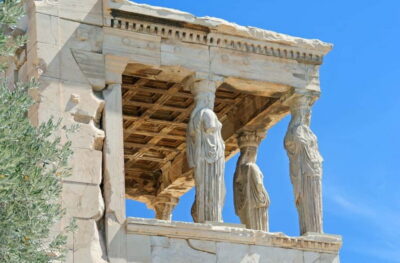
Acropolis & up to 5 Archaeological Sites Combo Pass
Read our review →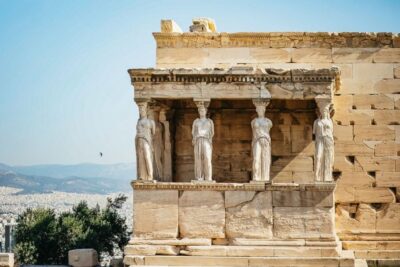
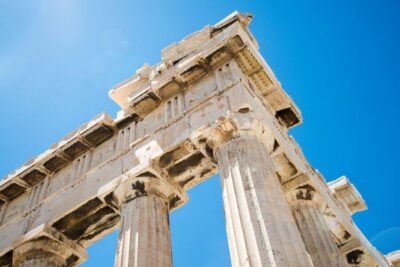
Acropolis, Parthenon & Acropolis Museum Guided Tour
Read our review →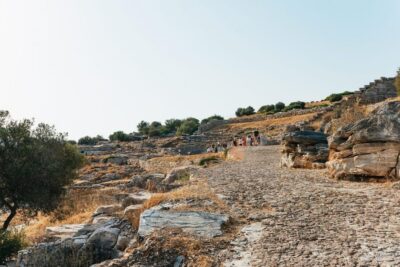
Cape Sounion & Poseidon Temple Sunset Half-Day Trip
Read our review →

Cape Sounio & Poseidon Temple Trip with Audio Guide
Read our review →