
Reviewed · METEORA MONASTERIES TOURS
Meteora Monasteries Half-Day Small Group Tour with Transport
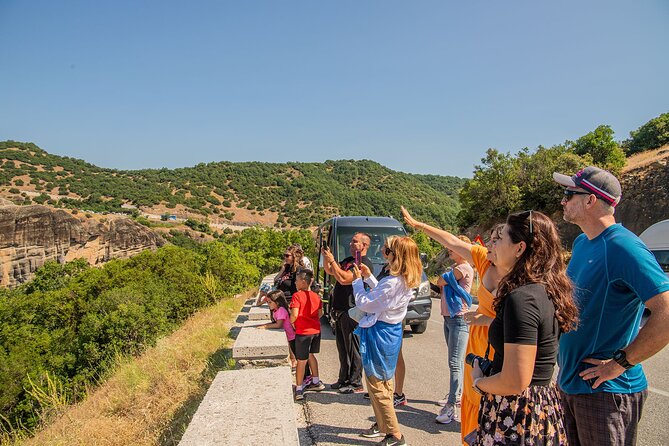
Meteora is one of Greece’s great visual shocks: huge stone pillars rise from the plain, with Orthodox monasteries perched high above you. This four-hour small-group tour gives you a practical way to reach the cliffs, visit three monasteries inside, and stop at viewpoints that are hard to manage without transport.
I like the local guides, especially names such as Apostolis, Vasilis, Vaggelis, and Lidia, who have been praised for clear English, humor, and strong knowledge of the area. I also like the efficient mix of monastery visits and photo stops. The main catch is that the guide does not enter the monasteries with you, so this is not the best choice if you want a detailed spoken tour of the interior art.
Key points at a glance
- Three monastery interiors: The tour includes visits inside Great Meteoron, Roussanou, and Varlaam, with the other monasteries viewed from outside.
- Excellent cliff viewpoints: The route includes several stops for wide views and photographs of the rock towers and monasteries.
- Local English-speaking guide: Guides such as Apostolis and Vasilis add context about Meteora, its villages, and Orthodox monastic life.
- Convenient door-to-door transport: Pickup and return are offered at hotels and AirBNBs in Kalambaka and Kastraki.
- Modest base price: The $36.30 cost includes transport, water, WiFi, and the guide, but monastery admission costs extra.
- Plan for stairs and proper clothing: Some monasteries require hundreds of steps, and the dress code is enforced.
Why this four-hour Meteora tour works
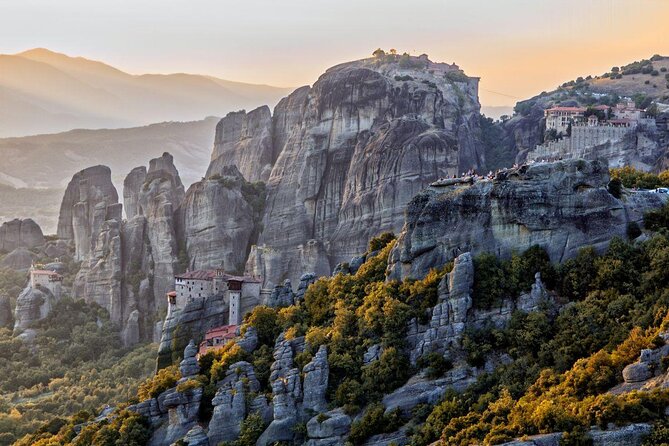
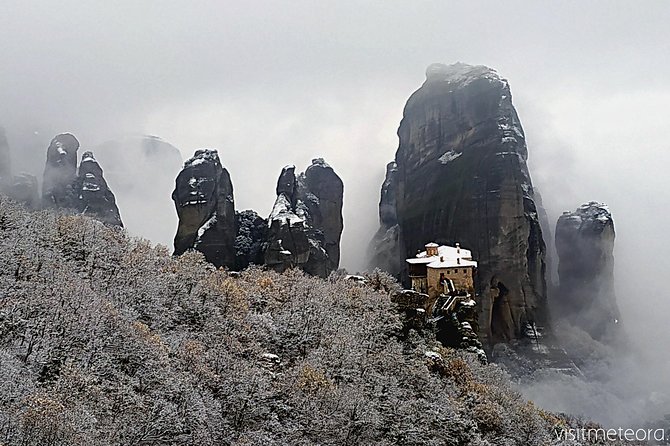
Meteora once had 24 monasteries scattered across the rock summits. Six remain active or open for visitors today, and their position explains much of the region’s character. These were not built for easy sightseeing. They were religious communities placed high above the plain, first reached by ladders, ropes, and hoists.
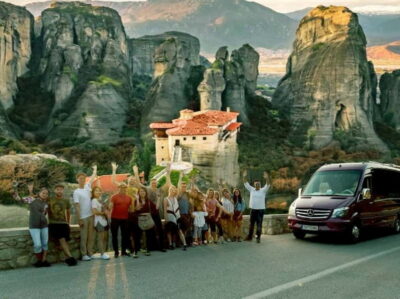
That setting is the reason transport matters. A tour vehicle can take you up the winding roads between the monasteries, leaving your energy for the walks and stairs. The group is capped at 18 people, so this should feel more manageable than a large coach outing, though the van can still be full.
The standard experience begins at 9:00 am and finishes around 1:00 pm. That timing is useful if you have only one day in Meteora, need to catch a train later, or want the afternoon free for Kalambaka and Kastraki. Several people have also suggested staying overnight and taking a morning tour, a sensible plan because the early start helps you avoid some of the heavier crowds.
Your guide leads the commentary in English. If you prefer Spanish, French, Italian, German, Portuguese, Polish, Russian, Chinese, Japanese, or Korean, a free audio guide is available. That is useful, but it is not the same as having a live guide beside you to answer questions.
A few other Meteora mornings to price up
- Meteora Sunset with Monastery & Hermit Caves Tour in Small Group
★ 5.0 · 706 reviews - Meteora Small Group Hiking tour with Transfer and Monastery Visit
★ 5.0 · 484 reviews - Meteora: Morning Half Day Sightseeing and Monasteries Tour
★ 4.7 · 478 reviews
From Kalambaka to the first cliff monasteries
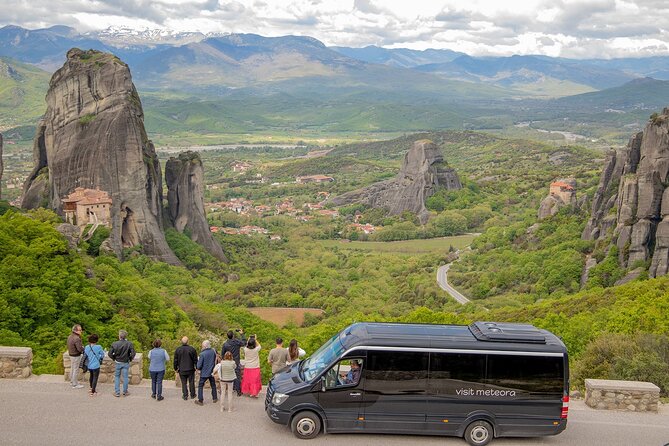
Pickup is offered from hotels and AirBNBs in Kalambaka and Kastraki. These are the two most practical bases for visiting Meteora, and door-to-door transport saves you from arranging a taxi or trying to work out the roads yourself.
The vehicle includes bottled water and free WiFi. Those are small extras, but they matter on a half-day outing with several stops. The roads are steep and winding in places, and the driver’s skill makes a difference. Several guides and drivers have been praised for being punctual, careful, friendly, and helpful with photographs.
As you climb, your guide explains the monasteries, the Orthodox tradition, and the natural setting around you. The Meteora-Antichassia region is also protected as a Natura 2000 ecological zone because of rare birds and flowers. The area is not only a collection of old buildings. It is also a protected natural setting of unusual rock formations, plants, and wildlife.
Saint Nicholas of Anapafsas and the first glimpse upward
Saint Nicholas of Anapafsas is the first monastery encountered on the road into Holy Meteora. It was founded near the end of the 14th century, and its name is often explained in two ways. It may refer to a benefactor, or it may describe the monastery’s role as a resting point for pilgrims before they continued higher.
The tour may show this monastery from outside rather than include an interior visit. That is still worthwhile because its compact position helps you understand how the monasteries were fitted onto the rocks. The small scale can be deceptive from the road. Meteora’s buildings often seem to grow directly from the stone.
If you are hoping to enter every monastery you see, adjust your expectations. The tour promises three interiors, while the remaining monasteries are seen from outside and explained by the guide.
Roussanou Monastery, the accessible stop
Roussanou is one of the more approachable monasteries because its rock is lower than many of the others. The main church was founded at the end of the 16th century and decorated about 30 years later. The monastery suffered serious damage during World War II and became a convent in 1988.
You have about 45 minutes here, enough for a proper look rather than a hurried photo stop. Admission is not included and costs €5 per booking according to the tour information. Bring cash because some monasteries do not accept cards.
Roussanou can be a good first interior visit because it gives you a taste of the monastic setting without the toughest climb. That said, accessible does not mean step-free. You should still wear shoes with a firm sole and expect uneven paths.
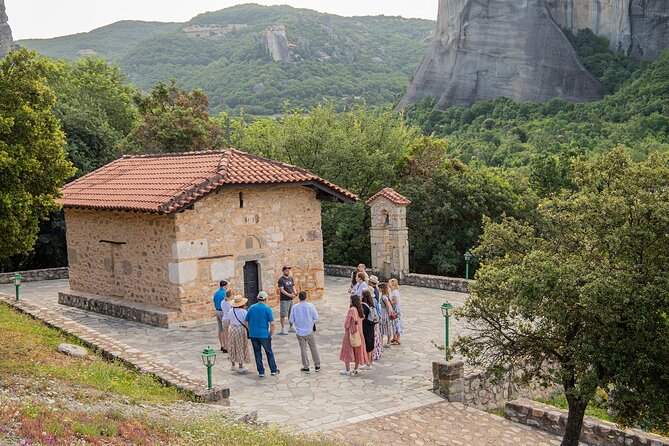
Inside, you will see the kind of religious art and architecture that make Meteora important, but the tour guide does not act as a state-licensed guide inside the monasteries. Your guide provides background before you enter and can point out things to notice, then you explore the interior on your own.
Same island, an entirely different sort of day:
- Meteora: Guided Sunset Tour with Monasteries & Caves Visit
★ 4.7 · 409 reviews - Meteora: Majestic Sunset Tour & Monasteries with Local Guide
★ 4.7 · 359 reviews - Meteora: Panoramic Morning Small Group Tour with Local Guide
★ 4.7 · 334 reviews - Meteora Panoramic Morning Small Group Tour with Local Guide
★ 5.0 · 311 reviews
Varlaam Monastery and its remarkable church
Varlaam is the second-largest monastery and sits opposite Great Meteoron. It was founded in the mid-14th century by the ascetic Varlaam, though the present complex is strongly connected with the brothers Theophanes and Nectarios Apsarades, who built the main church in 1541 and 1542.
The church was decorated in 1548. Its wall paintings are attributed, based on style, to Frago Catelano of Thebes. You do not need to be an art expert to appreciate the setting. The climb, the stone walls, the church, and the views combine to show how much work went into creating a religious center on a rock summit.
The scheduled visit lasts about 45 minutes. The entrance fee is listed as €5 per booking, separate from the tour price. The word booking is worth noting because the fee structure can be confusing, so check the current amount when you reserve and carry enough cash for the whole group.
Varlaam is one of the stops where the physical effort becomes part of the experience. You are not simply walking into a museum. You are following a route shaped by centuries of monastic life.
Great Meteoron, the largest and oldest monastery
Great Meteoron is the centerpiece of the route. It is the largest and oldest of the Meteora monasteries, founded by Saint Athanasios the Meteorite. Its name refers to the idea of being suspended in the air, a fitting description when you look up from the valley.
The monastery is linked with the organized communal form of monastic life at Meteora. It also holds religious art, manuscripts, and museum displays that help explain the role these communities played during the Byzantine era and afterward.
You have about an hour here, the longest scheduled stop. That extra time is welcome because Great Meteoron has more to see and usually requires a substantial climb. The entrance fee is €5 per person and is not included.
Do not treat the hour as a guarantee that you can inspect every corner at leisure. Stairs, photographs, interior rooms, and the walk back to the vehicle all use time. Listen carefully to the guide’s introduction before entering, then use the visit to focus on the rooms and exhibits that interest you most.
Holy Trinity and Saint Stephen from the road
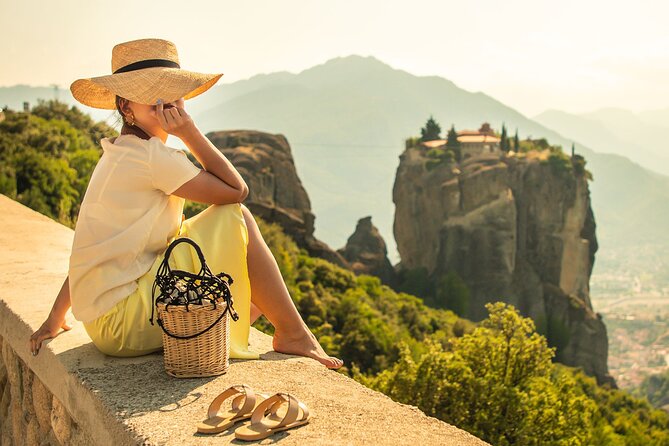
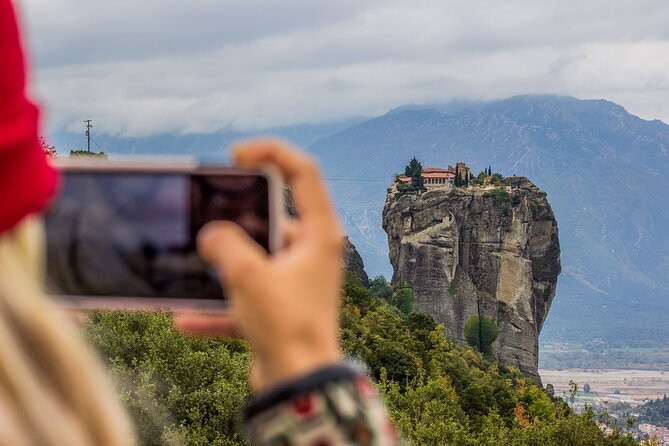
Holy Trinity, or Agia Triada, is the most difficult monastery to reach. Its path leads first to the foot of the rock, followed by roughly 140 steps to the top. The reward is a wide view over the surrounding area, but the climb is a serious consideration if your knees, balance, or stamina are limited.
The monastery was already organized by 1362, according to a document connected with Symeon Uressis Palaeologos. From outside, its position gives you one of Meteora’s clearest examples of a building placed on a steep, isolated rock.
Saint Stephen is the easiest monastery to reach. Instead of a long stairway, you cross a small bridge to the entrance. Its monastic life reaches back to the early 12th century, and the present church was rebuilt in 1545 by Hosios Philotheos.
For anyone who cannot manage many steps, Saint Stephen is the key site to know about. The tour company has also helped arrange visits for people with mobility concerns, but you should explain your needs before booking. The vehicle can improve access to the area, yet the monasteries themselves have different paths and surfaces.
The exact combination of exterior stops can depend on the day’s route and opening arrangements. The dependable promise is three monastery interiors, with Holy Trinity, Saint Stephen, Saint Nicholas, and the remaining sites viewed from outside when not included inside the visit.
What the guide adds, and what the guide does not do
The strongest part of this experience is the live explanation between stops. Guides such as Apostolis have been praised for knowing the area personally, answering questions patiently, and speaking with warmth about the place where they grew up. Vasilis has also been singled out for humor and useful local detail.
That personal connection matters at Meteora. Without context, you may see only dramatic rocks and old buildings. With a good guide, you learn why the monasteries were placed so high, how the communities developed, and what to look for before you enter.
The guide also helps with practical matters. The driver may drop you near the best access point, wait in the right place, and take photographs for solo visitors or couples. That kind of help can save time and make the morning feel less stressful.
Keep the limits in mind. The English-speaking guide does not enter the monasteries as a state-licensed interior guide. Commentary inside can therefore be brief or self-guided. If you want a room-by-room explanation of frescoes, icons, manuscripts, and religious objects, a private tour with an official guide would suit you better.
Stairs, clothing, and the small costs to plan for
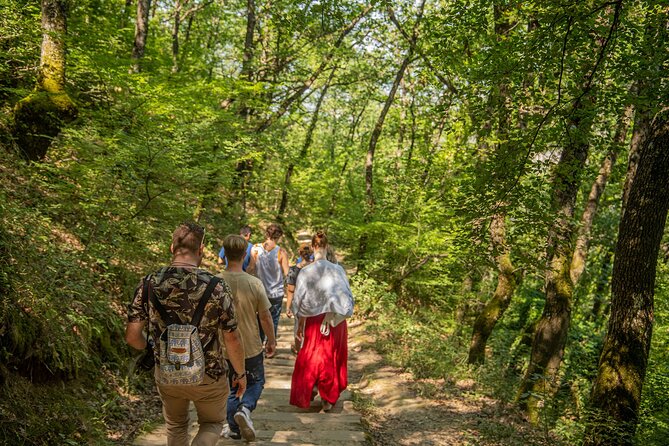
Meteora is not a flat sightseeing stop. Roussanou is easier than the others, Saint Stephen is the most accessible, and Holy Trinity is the toughest. Great Meteoron and Varlaam also involve stairs and walking.
Wear comfortable shoes with good grip. Do not arrive in flip-flops if you can avoid it. The tour information warns about the steps, and one practical advantage of the vehicle is that you can see several monasteries without walking the entire network of roads between them.
The dress code is strict:
- Men must wear trousers and long sleeves.
- Women must wear a long skirt.
- If you arrive in unsuitable clothing, trousers and skirts may be provided at the monasteries.
This is not a minor suggestion. Dress appropriately before pickup so you do not lose time borrowing cover-ups and so you show respect for active religious communities.
The base price is $36.30 per person. For a four-hour outing with transport, a local English-speaking guide, water, WiFi, photo stops, and three monastery interiors, that is a strong value. The extra admission charges are the main cost to remember: €5 for Great Meteoron, €5 for Roussanou, and €5 for Varlaam as listed.
Food and drinks beyond the supplied water are not included. Have breakfast first, or carry a snack if you need one. The morning is built around sightseeing rather than a meal stop.
Who should book this Meteora outing
I would choose this tour if you have limited time, are staying in Kalambaka or Kastraki, and want to see the essential monasteries without handling transport yourself. It is also a good fit if you value a local guide’s broad explanation and want several strong photo viewpoints in one morning.
It suits solo visitors particularly well because the guide and driver may help with photographs. It also works for couples and families who want a simple plan rather than a day spent coordinating taxis, opening times, and cliff roads.
I would hesitate if you need a fully guided interior visit, dislike stairs, or want a slow, contemplative day at one or two monasteries. A half-day tour has to keep moving. The 18-person maximum keeps the group fairly small, but it cannot offer the same flexibility as a private vehicle.
The free cancellation policy allows a full refund if you cancel at least 24 hours before the start time. Changes or cancellations inside that window are not accepted, so keep the local cutoff time in mind.
My verdict on the $36.30 price
The price works because the tour concentrates on the hard parts: getting up the mountain, choosing useful viewpoints, and fitting three monastery interiors into a short morning. You are paying for transport and access to a well-organized route, not just a ride to the rocks.
The separate admission fees may surprise you, especially since the tour price is low. Still, keeping them outside the base cost allows you to pay only for the monasteries included in the route. Carry cash and treat roughly €15 in total admission as part of your planning if all three listed fees apply.
The best value comes when your alternative is arranging several separate rides. If you already have a car and want to set your own pace, the savings may feel smaller. If you are in Kalambaka without transport, the convenience is substantial.
Should you book it?
Book this Meteora tour if you want a well-priced introduction with local commentary, three monastery interiors, dependable transport, and multiple viewpoints in four hours. It is especially sensible for a first visit or a short stay.
Choose another format if your main goal is detailed interior art history, long stretches of quiet exploration, or avoiding stairs. For most people who want to see the famous monasteries efficiently, this is a practical and memorable choice. Just dress correctly, bring cash, wear proper shoes, and understand that the guide’s strongest commentary comes before and between the monastery visits.
FAQ
Where does the tour pick up?
Pickup and drop-off are offered from hotels and AirBNBs in Kalambaka and Kastraki village.
What time does the tour start?
The stated start time is 9:00 am, and the experience lasts about four hours.
How many monasteries can I enter?
The tour includes visits inside three monasteries. The other Meteora monasteries are seen from outside.
Are monastery entrance fees included?
No. The listed fees are €5 for Great Meteoron, €5 for Roussanou, and €5 for Varlaam. Bring cash because some monasteries may not accept credit cards.
What clothing do I need?
Men need trousers and long sleeves. Women need a long skirt. Trousers and skirts may be provided if your clothing does not meet the dress code.
Is the tour available in languages other than English?
The live tour is guided in English. Free audio guides are available in Spanish, French, Italian, German, Portuguese, Polish, Russian, Chinese, Japanese, and Korean.
Fresh on the Meteora list
- Sunset Meteora Tour on E-Bike★ 5.0 · 46 reviews
- Private Tour: Meteora Tour with Transport from Kalambaka★ 5.0 · 50 reviews
- Meteora Motorized or Footlaunch Flight Experience★ 5.0 · 54 reviews
- Meteora Sunset Tour on E-bikes★ 5.0 · 54 reviews
- Meteora: Guided Sunset Tour with Monasteries and Caves Visit★ 5.0 · 58 reviews
- Meteora: Monasteries Tour with Lunch and Athens Transfer Option★ 5.0 · 64 reviews
- From Athens:Meteora Caves & Monasteries History Day Trip by Train★ 4.5 · 70 reviews
- Kalabaka: Meteora Monasteries Minibus Tour with Photo Stops★ 5.0 · 74 reviews
Meteora Monasteries Tours, compared.
Meteora Monasteries Day Trip with Caves and Lunch
Read our review →
Meteora Tour with Local Guide and Greek Lunch
Read our review →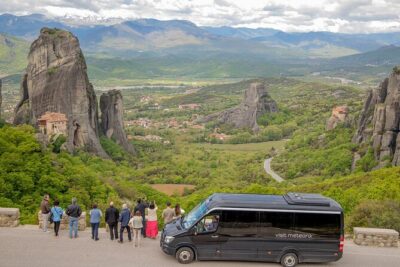
Meteora Monasteries, Caves & Coastal Stopovers with Lunch
Read our review →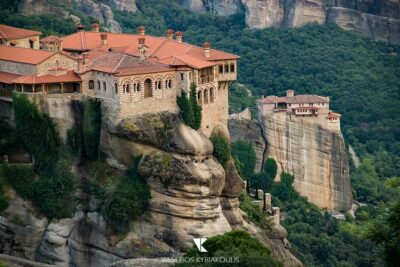
Meteora Monasteries & Caves DayTrip from Athens with Greek Lunch
Read our review →
4-Day Classical Greece Tour: Epidaurus, Mycenae, Olympia, Delphi, Meteora
Read our review →
Meteora Monasteries, Hermit Caves Tour with Pickup
Read our review →Browse the lists this tour appears in