
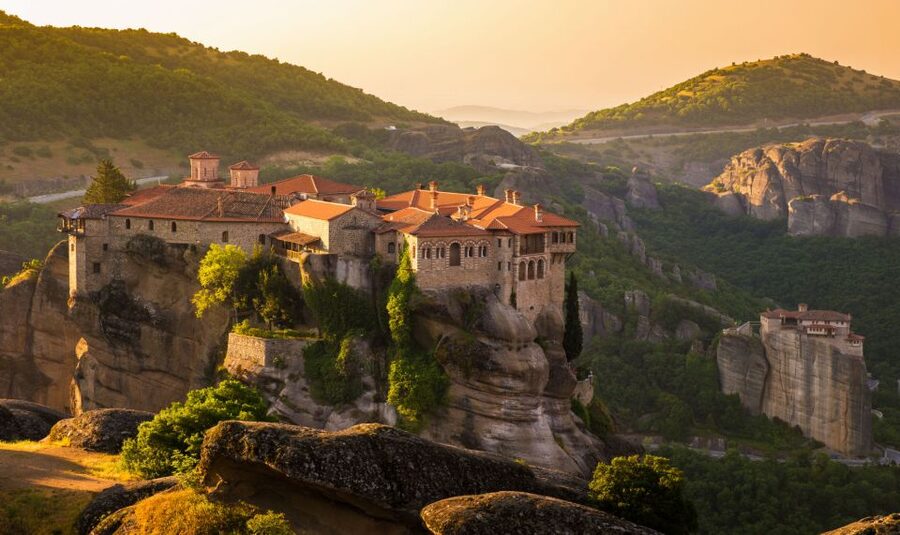
Reviewed · METEORA MONASTERIES TOURS
Meteora: Monasteries Tour, Lunch, and Athens Transfer Option
Meteora is at its best when you see both sides of it: the famous monasteries perched on towering rock pillars and the quieter caves where hermits lived centuries ago. This tour covers both, with a local Greek lunch first and four hours among the cliffs afterward. The chance to enter three monasteries and view all of them from the road gives you a solid first look at the region.
I like the practical setup at Kalambaka station, especially the free parking, air-conditioned minibus, WiFi, and USB chargers. I also like the balance between major sights and lesser-known stops such as the Hermit Caves, Doupiani Chapel, and St. George Mandilas Cave. The main caution is time: an Athens day trip involves a long ride, and even the local tour can feel brisk if you want to linger at every viewpoint.
Key points to know before booking
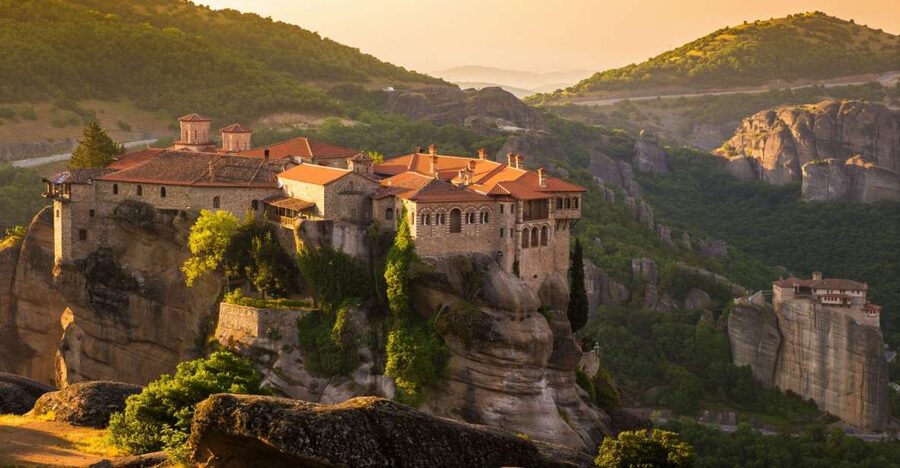
- Three monastery interiors: You can enter three monasteries, with each entrance costing €5 in cash.
- All of Meteora in one circuit: The route includes views of every monastery, plus several panoramic photo stops.
- A proper Greek lunch: Salad, bread, water, and a choice of main dishes are served at a local restaurant in Kalambaka.
- The quieter side of Meteora: Hermit caves, Doupiani Chapel, and St. George Mandilas Cave add context beyond the standard viewpoints.
- Athens access has changed: Roundtrip bus transportation is available, since the direct train service is currently suspended.
- Language support: The live guide speaks English, and free audio guides are available in seven other languages.
Why Meteora is worth the effort

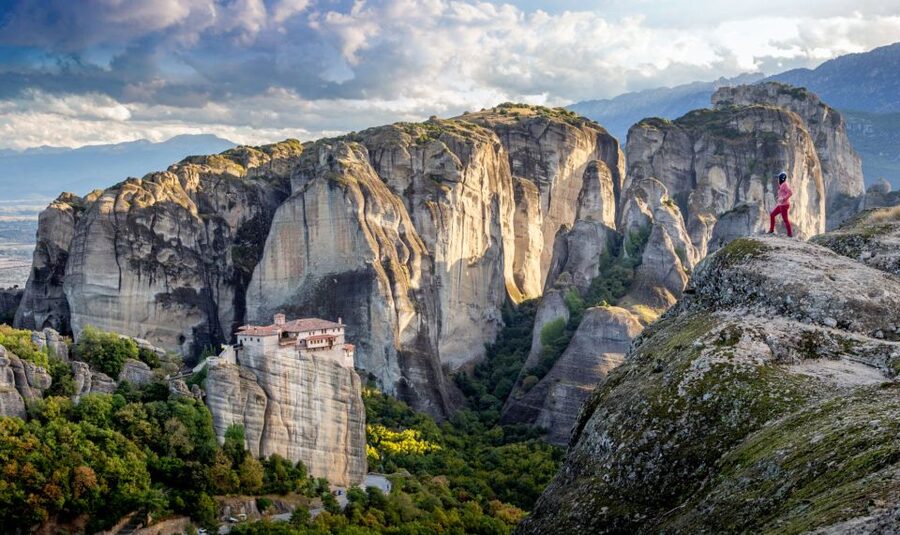
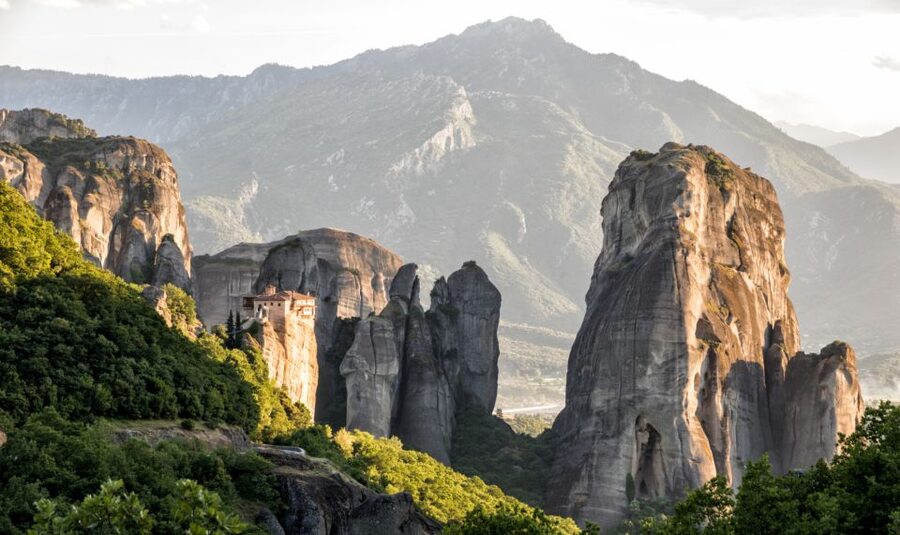
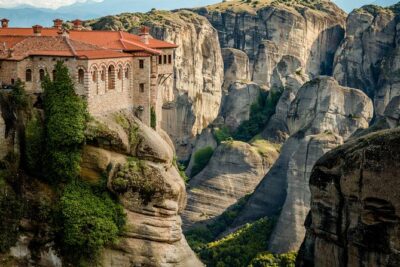
Meteora means suspended in the air, an apt name for monasteries built high above the Thessalian plain. The rock pillars rise dramatically from the ground, and the monasteries seem to cling to their tops. You do not need to be a serious religious-history enthusiast to appreciate the setting. The combination of cliffs, stone buildings, narrow roads, and wide views is the real draw.
The monasteries were founded by monks who sought solitude in places that were hard to reach. Long before modern roads and steps, access depended on ladders, ropes, and baskets. Your guide explains how this difficult setting shaped monastic life and why hermits first chose the caves below the cliffs.
I find that context important. Without it, Meteora can become a quick sequence of viewpoints and postcard photographs. With it, the caves and chapels make sense, and the monasteries feel less like isolated monuments and more like part of a long religious settlement.
A few other Kalabaka mornings to price up
- Meteora: Morning Half Day Sightseeing and Monasteries Tour
★ 4.7 · 478 reviews - Meteora: Majestic Sunset Tour & Monasteries with Local Guide
★ 4.7 · 359 reviews - Meteora: Panoramic Morning Small Group Tour with Local Guide
★ 4.7 · 334 reviews
Meeting at Kalambaka station at 12:30
The local tour begins at Kalambaka train station at 12:30. Look for the guide holding a sign with your name. If you drive, the station has a free parking lot, which removes one of the annoyances of visiting Meteora independently.
The meeting point is convenient for people arriving by train from elsewhere in Greece, though you should check current rail conditions before planning around that option. The direct Athens train is temporarily unavailable because of maintenance work. If you are coming from Athens, select the roundtrip bus option when booking instead.
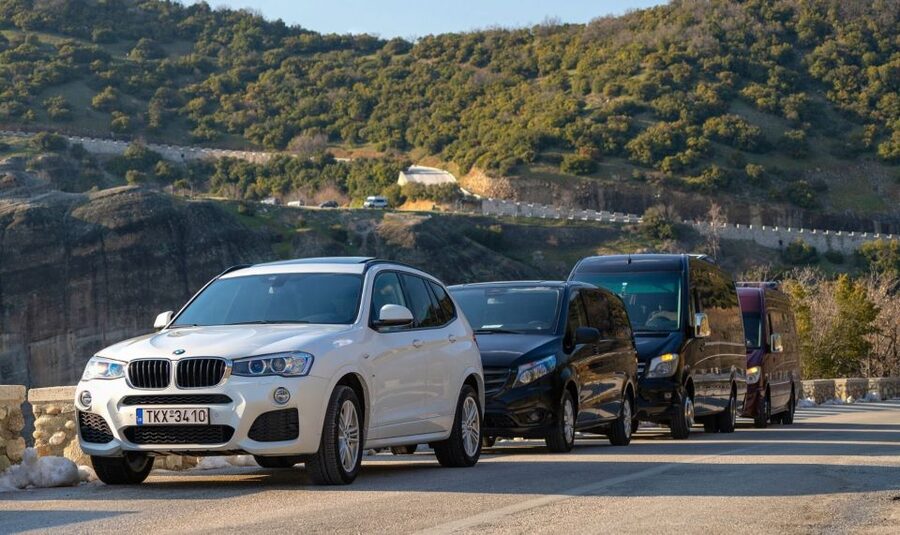
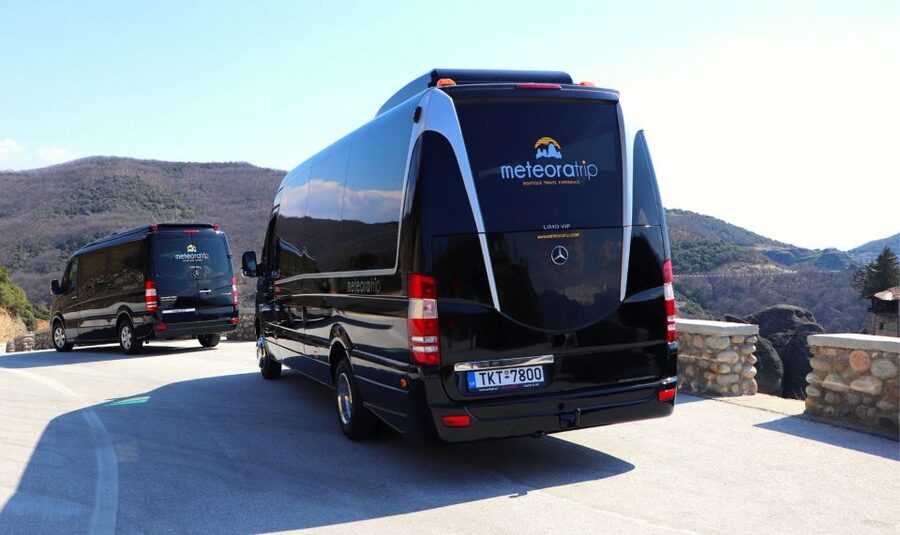
The bus is private, air-conditioned, and fitted with WiFi and USB chargers. Bottled water is included. Past departures have included small groups of about 12 people, though group size can vary. A smaller vehicle matters here because it is easier to gather everyone quickly at viewpoints and monastery entrances than it is with a large coach.
Kalambaka lunch before the cliffs

The first stop is lunch at a traditional local restaurant in Kalambaka. This is not a rushed sandwich break at a roadside stop. You receive a fresh salad, bread, water, and a choice of main dishes, with vegetarian and vegan choices available.
The timing is sensible. You eat before the four-hour Meteora circuit, rather than trying to find food between monasteries. It also gives you a chance to settle in and meet the guide before the sightseeing begins.
Portions have been described as good, though a very hungry diner may want an extra snack. Bring something small from Kalambaka if you normally eat a large lunch. The tour includes water, but carrying cash is still important because monastery entry fees are cash only.
Seeing every monastery from the road
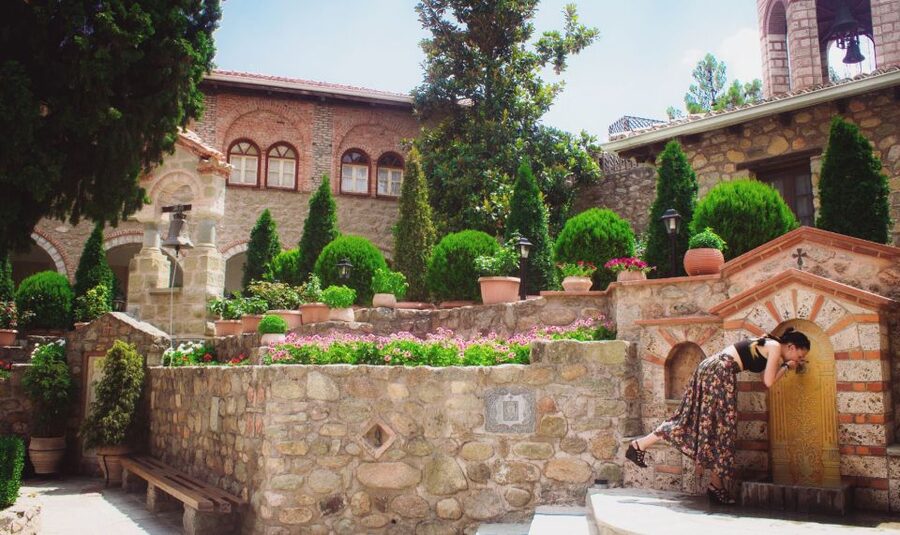
The tour is designed to show you all the monasteries of Meteora, even though you enter only three. That distinction matters. You get a broad understanding of how the buildings occupy different rock pillars, while the interior visits let you see the churches, museums, courtyards, and monastic spaces up close.
The exact three monasteries are not specified in the booking information, so I would not choose this tour based on one particular monastery alone. The selection can vary. One especially admired stop on past departures has been Varlaam, whose museum presents the area’s religious story particularly well, but you should confirm the day’s route with your guide.
Entering three monasteries is a strong compromise for a half-day program. Visiting every site inside would take much longer and would leave little time for the caves and viewpoints. You still need to pay €5 per monastery, or €15 if you enter all three. These fees are not included in the tour price.
Same island, an entirely different sort of day:
- Athens: Guided Tour to Meteora Monasteries & Hermit Caves
★ 4.7 · 211 reviews - Kalabaka: Meteora Small-Group Hiking Tour w/ Monastery Visit
★ 4.9 · 205 reviews - From Kalabaka/Kastraki: Meteora Monasteries Morning Tour
★ 4.8 · 178 reviews - Meteora: Sunset Small Size Tour with Monastery & Caves visit
★ 4.9 · 171 reviews
What monastery visits are really like
The monasteries are active religious sites, not just museums. You should dress accordingly before boarding the bus. Men need long trousers. Women need a long skirt below the knee and covered shoulders. A long scarf wrapped around the waist is accepted, and skirts are available to buy or rent at the entrances.
Bring cash for the €5 fee at each monastery. Cards are not accepted for these entrance charges. If you forget suitable clothing, the visit can become inconvenient, so treat the dress code as part of your packing list, not a minor detail.
The guided portion takes place mainly outside. The English-speaking guide explains the setting, stories, and background as you move between sites, but does not provide a guided tour inside the monasteries. Once inside, you explore independently. That arrangement gives you freedom, but anyone seeking detailed explanations of every fresco, relic, or architectural feature may want a more specialized religious tour.
Hermit Caves and St. George Mandilas Cave
The less expected part of this outing is the attention given to Meteora’s caves. You see the Hermit Caves, the Chapel of Doupiani, and St. George Mandilas Cave, a place associated with a striking local tradition involving scarves and offerings.
These stops help you picture the earliest residents of Meteora. The monks did not begin by building large monasteries on the summits. They first lived in small, difficult-to-reach caves, choosing isolation and height as protection from the world below.
I value this part of the route because it changes the pace. After the formal monasteries and their organized courtyards, the caves feel raw and personal. The guide also explains why hermits settled here and how later monks managed to build substantial religious centers on the rock towers.
The tour does not promise extensive walking into every cave, so expect viewing points and explanations rather than a technical caving trip. People with mobility limitations should take note. The activity is specifically not suitable for people with mobility impairments.
Four hours of views and photographs
Meteora is a place where the view changes every few minutes. The road winds around the rock pillars, opening onto the plain, monastery roofs, distant cliffs, and clusters of stone. Panoramic photo stops are included, and both guides and drivers may help with photographs if you ask before heading into a monastery.
Do not assume every photo stop will be a long break. The schedule is built to keep the group moving, and everyone needs to return to the bus on time. One useful habit is to ask the guide which viewpoint is best for a particular monastery before you leave the bus. That prevents you from rushing back later because you missed the angle you wanted.
The timing is generally efficient, especially compared with large coach groups. Still, efficiency has a cost. If you want quiet time at each overlook, a private tour or overnight stay in Kalambaka would give you more control.
Guide quality and language options
The strongest part of this experience is the live guiding. Guides such as Maria have been praised for clear explanations, warmth, humor, and a strong command of Meteora’s stories. Other guides, including Nicholas, have also been singled out for making visitors feel welcome from the start.
Your guide speaks English. If English is not your first language, free audio guides are available in Spanish, French, German, Italian, Japanese, Chinese, and Korean. Bring your smartphone and earphones to use them. The audio guides are a useful addition, though they do not replace the chance to ask the local guide questions in real time.
The tour leans toward accessible storytelling rather than specialist scholarship. You will hear history, legends, and explanations of monastic life, but the guide does not lead you through the interiors. I would choose it for a clear overview and a well-managed day, not for a detailed study of Byzantine art or Orthodox theology.
Is the $41 price good value?
At $41 per person, the local Kalambaka option offers a lot in a compact package. You receive transportation, a live English-speaking guide, lunch, water, monastery access to three sites from the outside and inside, photo stops, and visits to the caves. You also avoid the challenge of parking at several separate monasteries and navigating the mountain roads yourself.
Remember to add up to €15 per person for three monastery entrance fees. That makes the realistic local cost higher than the advertised tour price, though it remains reasonable for a four-hour guided circuit with lunch and transport.
The Athens option is a different calculation. The day can last between five and 14 hours depending on the selected departure and transport arrangement. The journey from Athens is long, but the bus option lets you see Meteora in one day while the direct train is out of service. Stops for food, drinks, and restrooms are made during the long ride, though I would still pack snacks.
For a short Greek itinerary, the Athens transfer can be worthwhile because it removes the need to arrange separate transport. If you already have time to stay overnight in Kalambaka, the local version is more comfortable and gives you a less demanding day.
Who should book this tour?
I would recommend this tour if you want to see the essential Meteora sites without driving, organizing monastery entrances, or building your own route. It suits first-time visitors, couples, families with a reasonable level of mobility, and anyone arriving at Kalambaka station around midday.
It also works well for drivers who want local interpretation and a simple parking solution. You can leave your car at the station and let the bus handle the steep roads and viewpoints.
I would think twice if you need a slow pace, have difficulty with steps or uneven ground, or want long visits inside every monastery. The program is carefully packed. It gives you a broad look, but it cannot provide the leisure of an overnight stay.
Book the Athens option only if you accept the long travel day. The payoff is a remarkable place that is difficult to fit into a short Greek trip by public transport right now. If you can stay in Kalambaka, do so, but this tour remains a practical answer when your schedule is tight.
FAQ
Where does the tour begin?
The local tour begins at Kalambaka train station, listed as Kalambaka, St. Larisis. The guide meets you there with a sign bearing your name.
What time does the Kalambaka tour start?
The tour departs daily at 12:30 from Kalambaka train station.
Where does the tour finish?
The tour returns to Kalambaka train station. Drop-off details can vary depending on the option booked.
Is transportation from Athens available?
Yes. Roundtrip bus transportation from Athens is available as a selectable booking option. The direct train route is currently suspended because of maintenance work.
How many monasteries can I enter?
You can enter three monasteries during the guided tour and see all the Meteora monasteries from the outside and from panoramic viewpoints.
How much are the monastery entrance fees?
Entry costs €5 per person for each monastery. The fees are not included and must be paid in cash. Visiting the interiors is optional.
Is lunch included?
Yes. Lunch includes salad, a main dish, freshly baked bread, and water at a local restaurant in Kalambaka. Vegetarian and vegan options are available.
What languages are offered?
The live guide speaks English. Free audio guides are available in Spanish, French, German, Italian, Japanese, Chinese, and Korean.
What should I bring for the audio guide?
Bring a smartphone and earphones. They are needed to use the free audio guides.
What clothing is required at the monasteries?
Men must wear long trousers. Women must wear a long skirt below the knee and cover their shoulders. A long scarf around the waist is accepted, and skirts can be bought or rented at monastery entrances.
Can I cancel the tour?
You can cancel up to 24 hours before the activity for a full refund. A reserve-now, pay-later option is also available.
Is the tour suitable for people with mobility impairments?
No. The activity is not suitable for people with mobility impairments.
Should you book it?
Book this Meteora tour if you want a well-organized overview with three monastery interiors, local lunch, caves, and reliable transport in one day. The English guiding, multilingual audio options, and small-vehicle format add real value.
Skip it if you want to set your own pace or study one monastery in depth. For most first visits, though, the mix of famous views, monastic sites, hermit caves, and practical transport makes the $41 starting price a sensible way to meet Meteora.
More Private Drivers in Kalabaka
- Athens Airport Private Arrival Transfer with Meet & Greet
★ 4.5 · 1,495 reviews - Santorini Sunset Luxury Sailing Catamaran Cruise with BBQ, drinks, transfer
★ 5.0 · 1,170 reviews - From Rhodes: Lindos Round-Trip Bus Transfer with Free Time
★ 4.7 · 1,125 reviews - Kos Town: Kalymnos & Pserimos Day Cruise & Optional Transfer
★ 4.5 · 1,122 reviews
Fresh on the Kalabaka list
- Meteora Sunset Tour on E-bikes★ 5.0 · 54 reviews
- Kalabaka: Meteora Monasteries Minibus Tour with Photo Stops★ 5.0 · 74 reviews
- Athens to Meteora: Monasteries & Hidden Caves Bus Tour★ 4.7 · 141 reviews
- Meteora: Sunset Small Size Tour with Monastery & Caves visit★ 4.9 · 171 reviews
- From Kalabaka/Kastraki: Meteora Monasteries Morning Tour★ 4.8 · 178 reviews
- Athens: Guided Tour to Meteora Monasteries & Hermit Caves★ 4.7 · 211 reviews
- Meteora: Panoramic Morning Small Group Tour with Local Guide★ 4.7 · 334 reviews
- Meteora Electric Bike Tour★ 5.0 · 61 reviews
Meteora Monasteries Tours, compared.
Meteora Monasteries Day Trip with Caves and Lunch
Read our review →
Meteora Tour with Local Guide and Greek Lunch
Read our review →
Meteora Monasteries, Caves & Coastal Stopovers with Lunch
Read our review →
Meteora Monasteries & Caves DayTrip from Athens with Greek Lunch
Read our review →
4-Day Classical Greece Tour: Epidaurus, Mycenae, Olympia, Delphi, Meteora
Read our review →
Meteora Monasteries, Hermit Caves Tour with Pickup
Read our review →Browse the lists this tour appears in