
Reviewed · ANCIENT CORINTH & PELOPONNESE TOURS
Paul”s Footsteps Ancient Corinth Biblical Tour
Paul’s story comes alive in Corinth, where the road, harbor, marketplace, and church sites connect the Biblical account to a real place. This private tour takes you from the Corinth Canal and ancient Diolkos to Kenchreai, Ancient Corinth, and the high fortress of Acrocorinth. The ride from Athens lets you cover a lot without changing buses or watching the clock.
I like the private Mercedes van-style transport, especially for a six-and-a-half-hour trip with several scattered sites. I also like the personal focus: guides such as Kostas, Nick, George, and Constantine have been praised for clear English, good pacing, and warm service. The catch is important: the driver-guide is included, but a licensed guide inside the archaeological sites is not, and entrance fees cost extra.
Key points at a glance
- Paul’s Corinth in one day: Follow the route from the canal and ancient shipway to Kenchreai, Ancient Corinth, and the church linked with Paul.
- Private ride for up to two: You get hotel, cruise, Airbnb, or other Athens pickup, plus a private air-conditioned vehicle and return service.
- Acrocorinth brings the big view: The hilltop castle sits about 530 meters high and offers wide views toward Corinth and the canal.
- A practical research bonus: Wi-Fi is available in the vehicle, useful if you want to read Acts, Romans, or site background as you go.
- Budget for extras: Archaeological entrance fees are listed at €15 per person. Lunch, tips, and a licensed site guide are separate.
- Best for a focused visit: This suits couples, families, and small groups who want Biblical context rather than a standard sightseeing bus.
Why Corinth matters to a visitor interested in Paul
Corinth was not just a stop on a religious map. It was a major ancient center linking mainland Greece with the Peloponnese, and its position near the isthmus made it a natural meeting point for trade, travel, and ideas. Paul spent time here in the first century, and this tour uses that setting as its main thread.
You begin with the practical geography. The canal, the ancient port, and the old road system help you see why Corinth mattered. Later, the remains of Ancient Corinth and the steep climb to Acrocorinth show the contrast between the busy lowland city and the defensive stronghold above it.
The Biblical focus is the reason to book this experience instead of a basic Corinth excursion. You will hear about Paul’s connection with Priscilla and Aquila, his time in Corinth, and his departure from the port of Kenchreai toward Ephesus. The exact depth of the religious discussion depends on your driver-guide, so tell the company at booking that Paul’s story is your priority.
A few other Athens mornings to price up
- From Athens: Mycenae, Epidaurus & Nafplio Full Day Trip
★ 4.8 · 2,438 reviews - From Athens: Mycenae, Epidaurus & Nafplio Full-Day Tour
★ 4.5 · 1,580 reviews - From Athens: Ancient Corinth Day Trip with Canal & VR Guide
★ 4.6 · 1,073 reviews
A private Athens departure with room to think
The tour lasts about six hours and 30 minutes. Pickup is offered throughout Athens, including hotels, cruise locations, Airbnb addresses, and other agreed locations. The driver arrives with a sign showing your name, which is useful in a busy hotel entrance or port setting.
You ride in a private air-conditioned vehicle with bottled water and Wi-Fi. That matters here because the sites are spread out. Instead of waiting for public transport or sharing a coach with a large group, you can move directly from the canal to the ancient city, then up to Acrocorinth and out to Kenchreai.
For two people, the listed cost of $350.68 per group works out to about $175 per person before entrance fees, lunch, and gratuities. That is not a bargain tour, but it becomes more reasonable when you value door-to-door pickup, a private vehicle, and a full half-day outside Athens. A solo visitor pays the same group price, so this is best value for a pair or a small private party.
The tour is often reserved well ahead of time, with an average booking point of about 55 days before departure. That does not guarantee every date will sell out, but it is a useful signal for anyone visiting Athens during a busy season.
The Corinth Canal: a modern cut through an ancient route
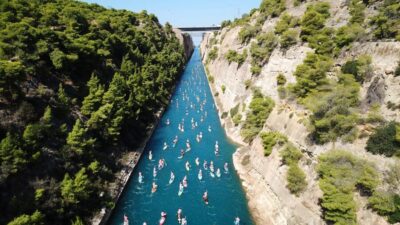
The first stop is the Corinth Canal, about four miles long, 27 meters wide, and cut through walls said to rise roughly 80 meters. You have about 20 minutes here, enough for photographs and a quick look at the waterway.
The canal was excavated in the late nineteenth century, with work beginning under King George in 1886 and final completion given as 1896. Its modern construction is only part of the story. Ancient people had already recognized the value of crossing this narrow strip of land, and the Diolkos provided an earlier way to move boats overland.
This is a good opening stop because it gives you a clear sense of Corinth’s geography. You are not looking at an isolated monument. You are seeing the shortcut that made this region important for centuries.
If you hope to watch a vessel pass through, keep expectations modest. A boat crossing can happen, but it is not guaranteed during a short visit. One well-timed tour had a boat crossing while the bridge lowered to let several boats through, but treat that as luck rather than part of the schedule.
Diolkos and the ancient problem of moving ships
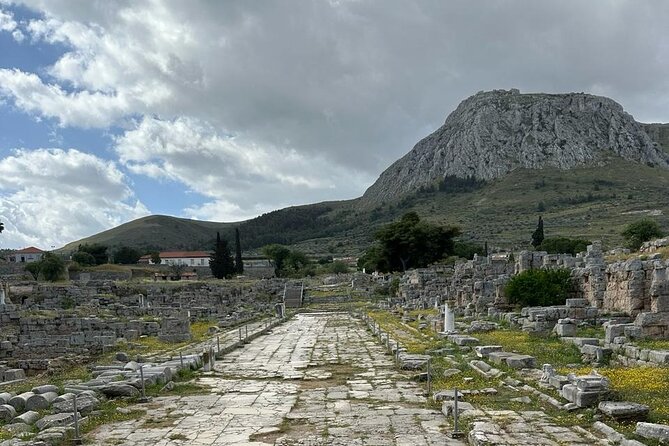
The Diolkos stop lasts about 15 minutes. This ancient rolling route is dated in the tour information to about 2700 BC, and it explains how people once moved boats across the isthmus before the canal was built.
Your time here is brief, so do not expect a long archaeological visit. The value is the idea: Corinth’s importance came from solving a hard transport problem. The old route connects directly with the canal next door, giving you two versions of the same ambition, one ancient and one modern.
Ask the driver to explain how the Diolkos fits Paul’s world. That question can turn a quick roadside stop into a more useful part of the day.
Same island, an entirely different sort of day:
- Athens: Acropolis & up to 5 Archaeological Sites Combo Pass
★ 4.4 · 12,619 reviews - Athens: Acropolis Ticket with Optional Audio or Live Guide
★ 4.2 · 11,055 reviews - Athens: Acropolis, Parthenon & Acropolis Museum Guided Tour
★ 4.8 · 9,316 reviews - Athens: Cape Sounion & Poseidon Temple Sunset Half-Day Trip
★ 4.8 · 8,241 reviews
Ancient Corinth and the Temple of Apollo
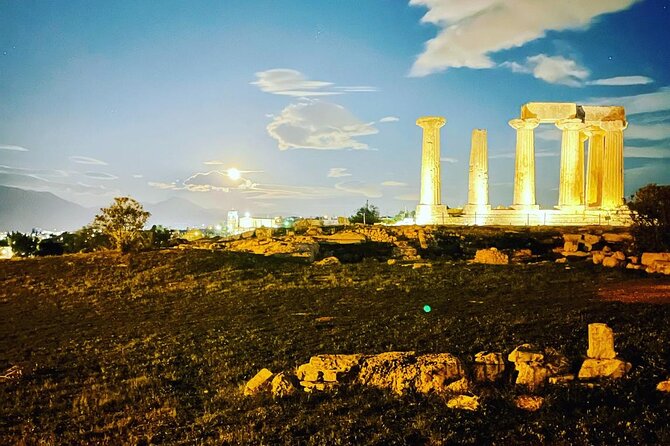
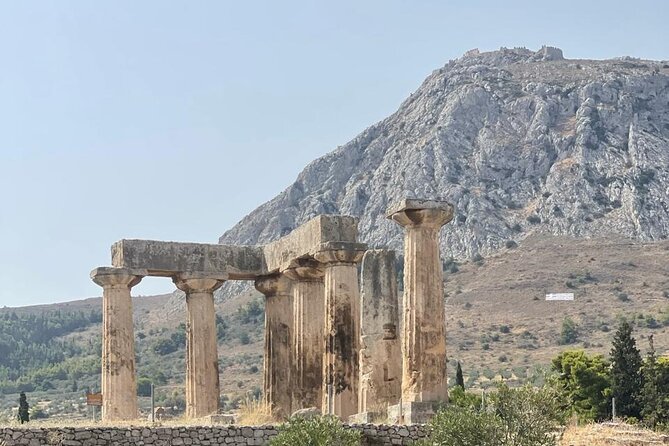
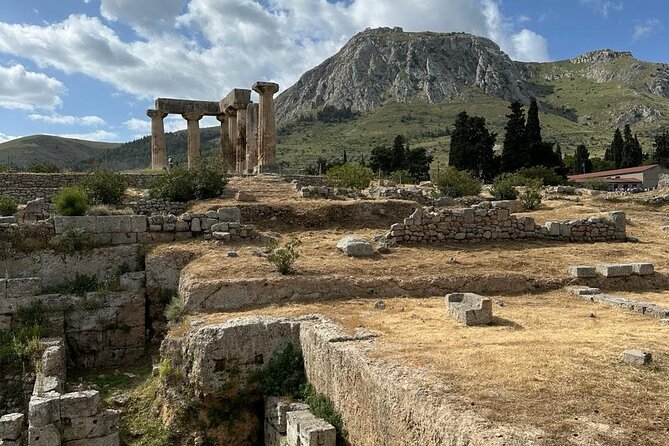
The Temple of Apollo is allotted about 30 minutes. It was dedicated to Apollo, associated here with light and music, and it is one of the key surviving monuments in Ancient Corinth.
You will see the temple as part of a larger archaeological setting, not as a complete standalone building. Its columns and position help you picture the old city, but the Biblical meaning comes from the surrounding civic center. Paul would have dealt with a complex urban society shaped by commerce, Roman rule, local religion, and different ethnic communities.
The tour description also points to the Temple of Apollo as one of the major Apollo temples connected with Corinth, alongside Delphi. The important practical point is that the temple is within the archaeological area, so the entrance fee applies. The listed site and museum fees total €15 per person, though you should confirm the current arrangement when booking.
The Archaeological Museum: a useful hour indoors
The Archaeological Museum of Corinth receives about an hour. This is one of the most helpful stops if you want to understand what daily life and public life looked like beyond the Biblical references.
Displays include statues, Roman imperial material, and amphoras. The tour information highlights 265 amphoras in different styles, reflecting Corinth’s pottery trade and commercial reach. These objects can make the ancient city easier to grasp than ruins alone. A broken wall tells you where something was; a vessel can suggest what people made, sold, stored, and carried.
The museum is also a sensible pause from the sun, especially during a warm Greek afternoon. Your entry fee is not included, and the driver-guide may explain the collection before you enter, but the service does not include a licensed guide inside the museum. If detailed interpretation matters to you, ask in advance about adding one.
Acrocorinth: the high point of the day
Acrocorinth rises about 530 meters above the surrounding area and is reached by vehicle. The fortress is one of the tour’s strongest visual stops, with views toward the Corinth Canal and the plain below.
The hilltop site brings several periods together. The tour connects it with the fifth century BC, Roman-era use, a palace associated with Caesar, and the Temple of Aphrodite. Some descriptions call it the largest castle in Europe. You should treat that wording as promotional rather than a precise comparison, but there is no need to exaggerate the setting. The height and scale are impressive on their own.
This is also where the tour’s Biblical theme mixes with broader ancient religion and power. The Temple of Aphrodite is part of the traditional account of Corinth, while the fortress shows why the site mattered to rulers who needed control of the isthmus.
Allow for uneven ground and a hilltop setting. The itinerary gives you about an hour, which is enough for views and a visit to the accessible parts included in the schedule, but not an exhaustive exploration of every wall and structure.
Kenchreai: Paul’s port and the quieter stop
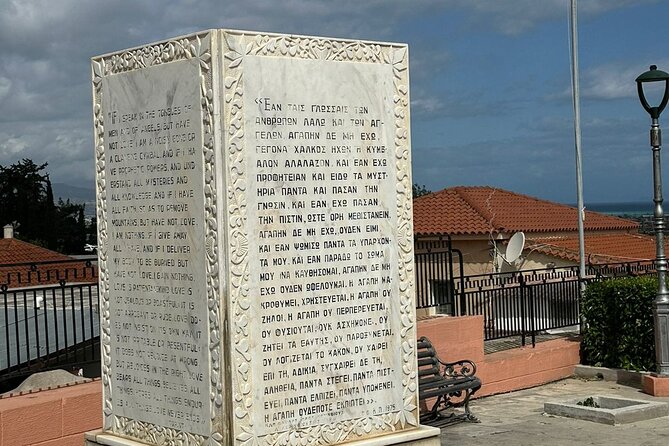
The ancient port of Kenchreai is scheduled for about 45 minutes. This is the stop most directly tied to Paul’s departure from Corinth. The tour places Priscilla and Aquila here, describing their work as tentmakers and their connection with Paul during his time in the region.
You will see the remains of the port and a very early Christian church site. Kenchreai is less imposing than Acrocorinth, but that is part of its appeal. It helps you picture Paul’s movements as travel between working harbors, homes, and roads rather than as a series of grand monuments.
The connection with Ephesus gives this stop a strong narrative finish. Paul’s Corinthian period was not only about preaching in the city. It also involved friendships, work, lodging, and departure by sea.
Ancient Corinth: the main archaeological visit
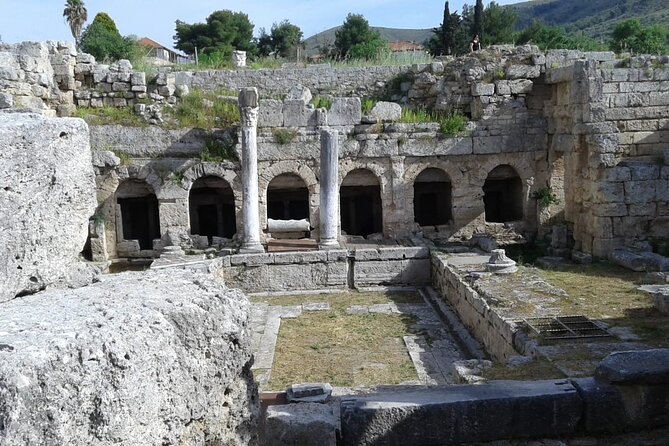
The longest site visit is Ancient Corinth, with about two hours. This is where you get the broadest look at the old city, including the Temple of Apollo, the Agora, the Temple of Octavia, the Oracle of Corinth, the museum area, and the church associated with Paul.
The town and ruins are linked closely here, so you can move between the archaeological remains and the modern village setting. The Agora is especially useful for imagining public life. Paul’s Corinth was a place of arguments, commerce, worship, law, and social pressure, not a quiet Biblical backdrop.
The site is also where the tour’s timing matters most. Two hours gives you enough room to listen, take photographs, and pause at the church, but the area contains more than you can absorb at a rushed pace. If you want to read every sign or spend a long time in the museum, you may need to choose between detail and seeing every listed stop.
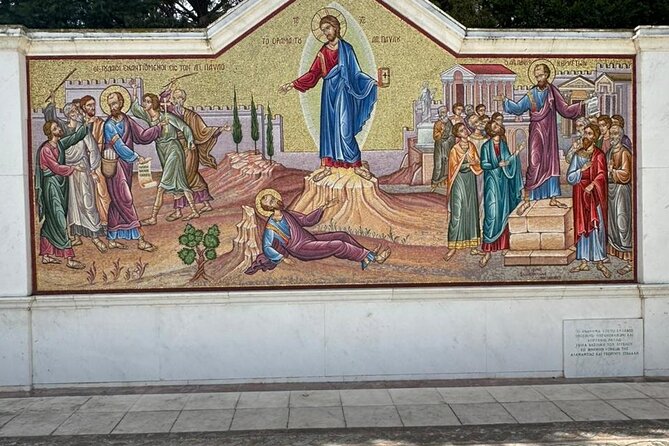
The Apostolos Pavlos Church is scheduled for a separate 20-minute visit. It is identified with the ancient church of Paul from AD 51, and it gives the religious focus a physical place at the end of the Ancient Corinth portion. The church may not always be open for interior viewing, but one well-timed visit found the Orthodox church open. Treat access as variable rather than guaranteed.
What the driver-guide adds, and where the limits are
The included service is an English-speaking driver-guide for Biblical tours. Guides named Kostas, Nick, George, and Constantine have received especially warm praise for clear English, considerate service, strong local explanations, and good pacing.
Kostas has been noted for arriving early, keeping the day moving, and using a clean, cool, comfortable Mercedes van. George has been credited with timing the canal visit well and making the day feel easy. Nick has been praised for combining kindness with explanations of Paul’s route. Constantine has been described as attentive and willing to go beyond basic transport.
Still, you should understand the distinction between a driver-guide and a licensed archaeological guide. The licensed guide is not included. One visitor felt the tour offered too little social and historical detail about Corinth and too little focused discussion of Paul for the price. That is a fair caution, especially if you expect a formal lecture at each ruin.
You can improve the experience by reading the relevant passages before leaving Athens and preparing questions. Ask about Paul’s work with Priscilla and Aquila, the port route to Ephesus, the role of the Agora, and how Roman Corinth differed from the earlier Greek city.
Lunch, timing, and the real cost
Lunch is not included. The schedule is full, so ask the driver when you will stop and how much time you have. One guide took the group to a restaurant near Ancient Corinth with a view over the valley, where the portions were described as generous and the food as delicious. That kind of local stop can add pleasure to the day, but it is not part of the published price or guaranteed menu.
The listed entrance cost is €15 per person. Airport pickup costs an additional $50 per booking. Tips are also separate. Put these extras into your budget before deciding if the private format suits you.
Free cancellation is available if you cancel at least 24 hours before the start time. Changes or cancellations inside that window are not accepted for a refund.
Who should book this Corinth tour?
I would choose this tour if you want Paul’s Corinth tied together in one efficient private outing. It suits couples, families, cruise visitors, and anyone who values pickup, air conditioning, and a flexible conversation with an English-speaking driver-guide.
It is also a good fit if your priority is seeing the main sites rather than spending an entire day at one excavation. The private format lets you move at your own group’s pace, and child seats are available on request.
I would hesitate if you want a fully academic tour with a licensed guide leading you through every archaeological room and ruin. The driver-guide can provide strong explanations, but the depth may vary. Ask about adding a licensed guide before you pay if that detail is central to your visit.
Should you book Paul’s Footsteps Ancient Corinth Biblical Tour?
Book it if you want a personal, well-organized route through the places linked with Paul and you are happy to pay extra for admission, lunch, and possibly a licensed guide. The combination of Kenchreai, Ancient Corinth, the canal, and Acrocorinth gives you both the Biblical story and the wider setting.
For the best value, share the private booking with one other person, request a guide who will focus closely on Paul, and prepare a few questions before pickup. If you do that, the $350.68 group price buys a convenient and memorable half-day outside Athens. If detailed scholarly interpretation matters more than comfort and coverage, arrange the licensed guide in advance or choose a tour built around formal site guiding.
FAQ
How long does the tour last?
The tour lasts approximately six hours and 30 minutes.
Where does pickup take place?
Pickup is offered from hotels, cruise locations, Airbnb addresses, or another agreed location in Athens. The driver uses a sign with the names of the people being collected.
Is the tour private?
Yes. Only your own group participates, with a maximum of two people at the listed group price.
What language is the tour offered in?
The tour is offered in English and includes an English-speaking driver-guide.
What transportation is included?
Private transportation is provided in an air-conditioned luxury vehicle. Hotel or cruise pickup and drop-off, bottled water, and Wi-Fi on board are included.
Are entrance fees included?
No. Entrance fees for archaeological sites and museums are not included. The listed cost is €15 per person.
Is lunch included?
No. Lunch is separate from the tour price.
What is the cancellation policy?
You can cancel at least 24 hours before the experience begins for a full refund. Cancellations or changes made less than 24 hours before the start time are not accepted for a refund.
Fresh on the Athens list
- Athens Airport Arrival Transfer to Hotels or Addresses in Athens★ 3.5 · 45 reviews
- Private Luxury Tour: Unveiling the Sacred Mysteries of Eleusis★ 5.0 · 45 reviews
- Luxury Catamaran Sunset Semi-Private & Greek Gastronomy in Athens★ 5.0 · 45 reviews
- From Athens: Aegina Island guided tour in a day★ 5.0 · 45 reviews
- Delphi, Thermopylae full day private tour from Athens★ 4.9 · 46 reviews
- From Athens: City & Corinth Guided Day Tour★ 4.8 · 46 reviews
- Acropolis Private Wine Tasting @ Finewine store★ 5.0 · 46 reviews
- Ancient Corinth Half-Day Private Tour from Athens★ 5.0 · 46 reviews
Ancient Corinth & Peloponnese Tours, compared.
Ancient Corinth Day Trip with Canal & VR Guide
Read our review →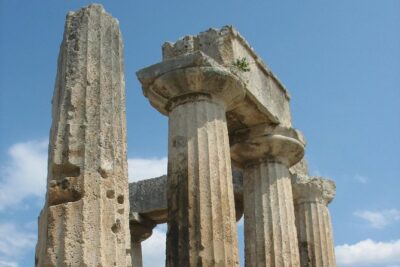
Private Biblical Tour Ancient Corinth & Isthmus Canal from Athens
Read our review →
4-Day Classical Greece Tour: Epidaurus, Mycenae, Olympia, Delphi, Meteora
Read our review →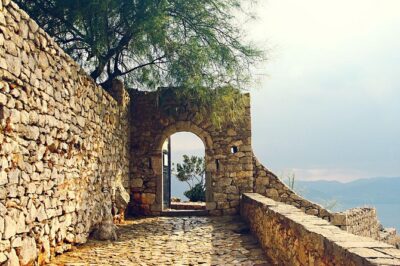
Ancient Corinth & Nafplio Full Day Trip with Swim
Read our review →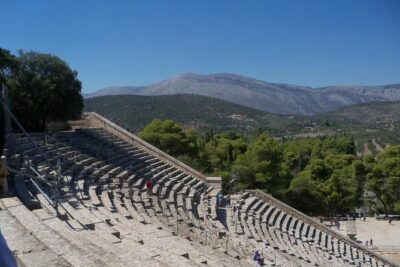
Mycenae and Nafplion Day Trip from Athens with Official guide
Read our review →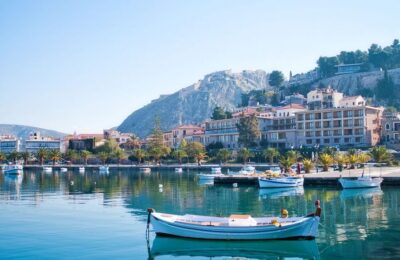
Browse the lists this tour appears in