
Reviewed · ATHENS TOURS
Philosophy and Democracy tour of Athens
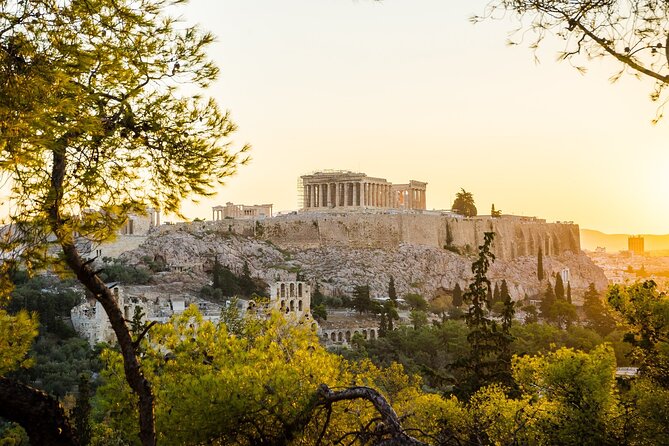
Ancient Athens becomes far easier to understand when you follow the ideas that shaped it. This 3.5-hour walking tour links cemeteries, marketplaces, meeting places, and hilltop views to the birth of democracy and the questions raised by Socrates, Plato, and their fellow thinkers.
I like two things here: the route takes you beyond the Acropolis, and guide Panos brings difficult ideas down to earth with humor, clear explanations, and time for questions. You also get useful advice on places to eat, drink, and explore. The main drawback is simple: this is a walking tour with several outdoor stops, so bring water and expect sun, uneven ground, and some uphill walking.
Key points at a glance
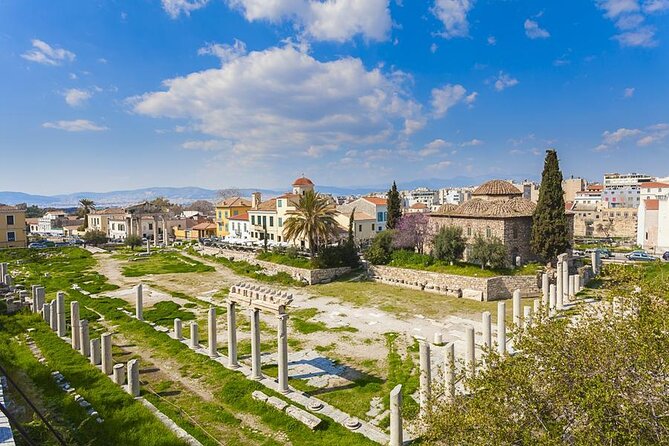
- Democracy in its original setting: Visit the Pnyx, where citizens gathered to make decisions about Athens.
- A thoughtful route beyond the Parthenon: See Kerameikos, the Ancient Agora, Hadrian’s Library, the Roman Agora, and more.
- Panos leads the discussion: His approach combines political history, philosophy, humor, and open questions.
- Small-group format: The group is limited to 15 people, giving you a better chance to hear and participate.
- Good value for curious visitors: At $50.81 per person, the tour includes several landmarks and a substantial guided explanation.
- Prepare for the walk: The tour lasts about three and a half hours, and water is strongly advised.
Why this Athens walk is different
Many first visits to Athens focus on the Acropolis, the Parthenon, and the standard ancient monuments. Those are essential, but they can leave you with a pile of impressive stones and little sense of how Athenian society worked.
This tour takes another route through the city. It asks where people lived, argued, voted, worshipped, traded, and buried their dead. The result is less a parade of monuments and more a guided conversation about how Athens became a place where public debate mattered.
You will hear about democracy as an ancient system, not as a modern slogan. You will also compare Athenian ideas with modern democratic life. That comparison gives the walk a useful present-day edge without turning it into a classroom lecture.
Panos is central to the experience. His style is described as warm, funny, patient, and clear, with a strong command of both Athenian history and Western political thought. He uses stories and visuals to explain complex ideas, and he leaves room for questions. If you like to ask why rather than simply take pictures, this is the sort of guide you want.
The group can include adults as well as older children. One family found the material engaging for children aged 11 and 15, though the subject is aimed more at curious minds than at very young children.
A few other Athens mornings to price up
- Athens: Acropolis & up to 5 Archaeological Sites Combo Pass
★ 4.4 · 12,619 reviews - Athens: Acropolis Ticket with Optional Audio or Live Guide
★ 4.2 · 11,055 reviews - Athens: Acropolis, Parthenon & Acropolis Museum Guided Tour
★ 4.8 · 9,316 reviews
Kerameikos: Athens begins with the dead
The walk starts at the Statue of Theseus and soon reaches Kerameikos, one of the most important ancient areas in Athens and one that many visitors miss.
The name comes from kerame, meaning ceramic. Pottery workshops once occupied this part of the city, and Kerameikos later served as Athens’ cemetery for centuries. The site offers a useful reminder that ancient Athens was not only temples and philosophers. It was also a working city with craftsmen, families, roads, walls, and funeral traditions.
This is also where the tour connects public life with political ideals. Pericles gave his famous funeral speech here for the first Athenian casualties of the Peloponnesian War. The speech praised the values and habits of Athenian democracy, making the setting especially apt for this tour.
The scheduled stop is about 15 minutes, and admission is not included. That short visit works best as an introduction rather than a full archaeological examination. You will get the historical meaning of the place, then move on before the walk becomes too site-heavy.
From the flea market to Roman Athens
The group then takes an easy-paced walk through the Athens flea market. This is a brief stop, about 15 minutes, with free admission.
The market helps shift the mood from ancient civic life to modern street life. You are not there for a long shopping session, but the route gives you a look at a familiar part of central Athens and a chance to see how old and new parts of the city sit close together.
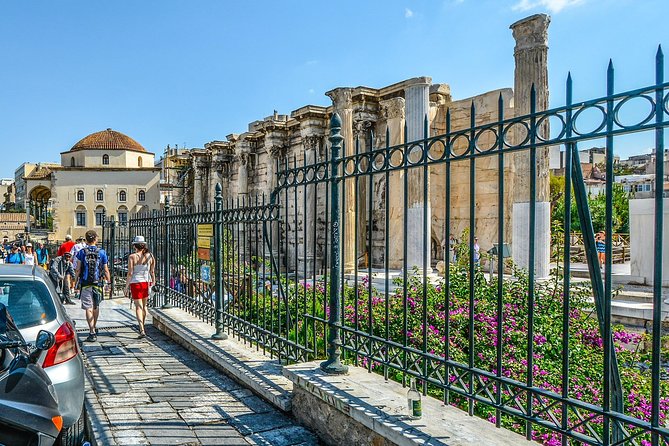
Next comes Hadrian’s Library, created by the Roman Emperor Hadrian in AD 132 on the north side of the Acropolis. Its presence points to the long change from classical Athens to Roman Athens. The city remained important, but power, culture, and building styles changed under Roman rule.
The Roman Agora continues that story. Located north of the Acropolis and east of the Ancient Agora, it was built during the Roman period as a public commercial and civic space. You will spend about 15 minutes at each of these sites, and admission is not included.
The brief stops are useful if your goal is context. They are less satisfying if you want long, quiet time inside each monument. For a fuller archaeological visit, you may want to return on your own.
The Tower of the Winds, Athens’ early weather station

The Tower of the Winds is one of the most memorable smaller monuments on the route.
Built in the first century BC by the astronomer Andronicus of Kyrristos, this octagonal structure worked as a wind indicator and a clock. Its solar clock marked the hours in clear weather. A hydraulic mechanism helped keep time when clouds blocked the sun, even producing a sound each hour.
That makes the tower more than a pretty ancient building. It shows the practical side of Greek science and the effort to measure time and weather in public life. The tour gives it about five minutes, so expect a sharp explanation rather than a long stop.
This is a good example of the tour’s method. Instead of only pointing out the largest monument, Panos uses a smaller site to open a larger discussion about science, observation, and the intellectual habits of ancient Athens.
The route also passes through Plaka, the scenic neighborhood below the Acropolis. Its narrow streets and small houses offer a change from the archaeological sites. The information does not specify a separate duration here, so treat Plaka as part of the walking route rather than a dedicated neighborhood tour.
Same island, an entirely different sort of day:
- Athens: Cape Sounion & Poseidon Temple Sunset Half-Day Trip
★ 4.8 · 8,241 reviews - Athens: Acropolis and Parthenon Guided Walking Tour
★ 4.6 · 5,882 reviews - All Day Cruise -3 Islands to Agistri,Moni, Aegina with lunch and drinks included
★ 5.0 · 4,958 reviews - Athens, Piraeus, and Coastline: Blue Hop-On Hop-Off Bus
★ 3.9 · 4,849 reviews
The Ancient Agora: where Athens argued in public
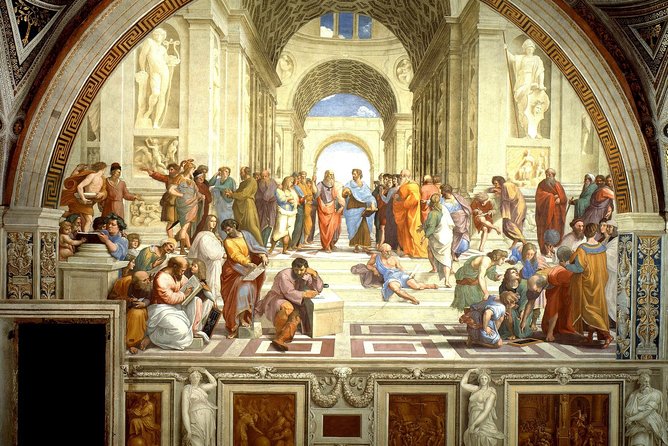
The Ancient Agora is the heart of the experience.
This was the center of Athenian public life, where citizens met, talked, traded, and debated. Socrates and Plato belonged to the intellectual world connected with this setting. Politicians and writers such as Solon, Themistocles, Pericles, Thucydides, Sophocles, and Aristophanes also form part of the wider story of Athens’ political and cultural life.
The important point is not simply that famous names passed through the Agora. It is that ordinary citizens also used this space. Democracy depended on public discussion, persuasion, disagreement, and decisions made in front of other people.
You will spend about 20 minutes here, and admission is not included. That is enough time for a clear explanation and a sense of place, but not enough for a full visit to every part of the archaeological site. If the Agora interests you, plan a separate return visit with more time.
I like this stop because it helps correct a common misunderstanding. Ancient democracy was not identical to modern democracy. The systems differed greatly in who could participate and how decisions were made. Still, the basic idea of citizens taking part in public decisions began here in a form that continues to shape political thought.
The conversation also reaches beyond politics. Philosophy in this setting was not only abstract theory. It dealt with justice, virtue, citizenship, leadership, and how a person should live.
The Prison of Socrates and the human side of philosophy
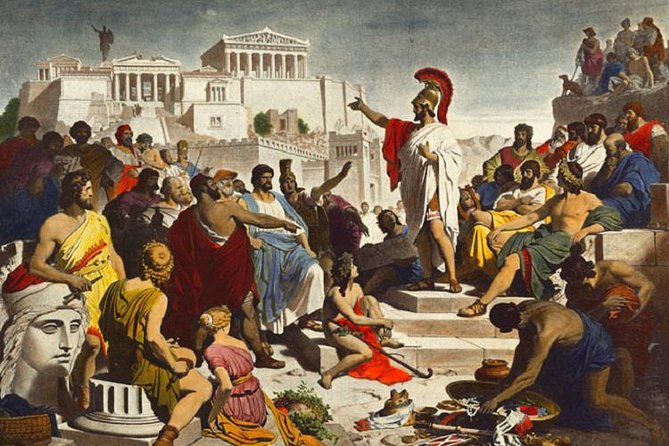
The route pauses at the Prison of Socrates, where the group pays tribute to one of Athens’ best-known philosophers.
The stop lasts about 10 minutes and admission is free. The value is less in the physical remains than in the story attached to the place. Socrates is remembered for questioning accepted ideas and challenging people to examine their own beliefs.
This pause gives the tour a more personal tone. Democracy can sound like an institution, while philosophy can sound like a list of names and theories. Socrates brings both subjects back to one person asking uncomfortable questions in a real city.
Do not expect a large, polished museum display here. The setting is modest, and the guide’s explanation does much of the work. That is typical of the experience: the meaning comes from connecting places rather than from spending a long time at each site.
Pnyx Hill: the strongest finish
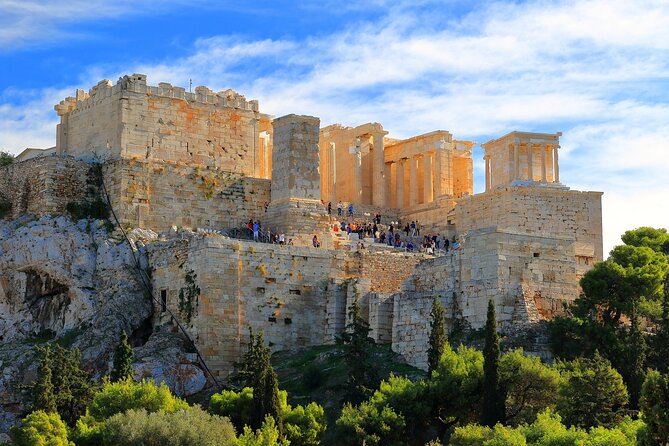
The final major stop is Pnyx Hill, known as the cradle of democracy.
This was the first place where people gathered to make decisions about their future through public participation. The hill gives you a direct connection between physical space and political practice. Citizens did not merely discuss democracy in theory. They met in a particular place, heard arguments, and took part in civic decisions.
The group spends about 30 minutes here, longer than at most earlier stops. That makes sense. The Pnyx is the point where the tour’s two themes come together: the development of democratic government and the habit of questioning how society should be run.
The views are another reward. From Pnyx Hill, you get a strong look toward the Acropolis and across Athens. It is an excellent place to pause, take photographs, and consider how much of the modern city has grown around these ancient ideas.
The Pnyx is also a good place for questions. You may want to ask how participation worked, who was excluded, or how ancient civic life compares with your own country. The tour is at its best when you use the guide’s knowledge as a starting point for discussion.
The pace, group size, and physical effort
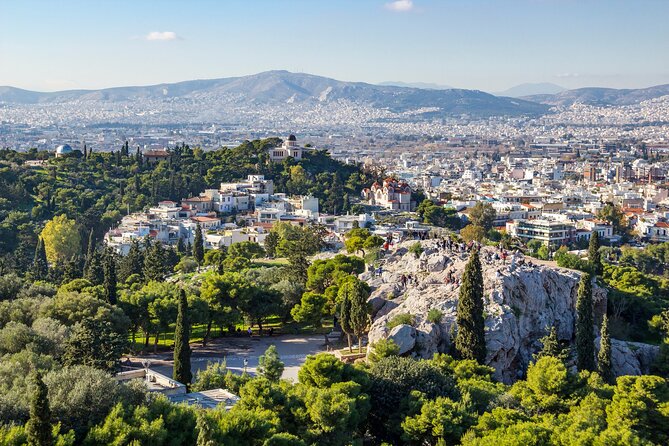
The full experience lasts about three hours and 30 minutes. Stops are usually short, with the Pnyx receiving the longest scheduled visit. The walk is designed to connect sites across central Athens, so you should be ready to stay on your feet for most of the morning or afternoon.
One person described the pace as especially good, and that matters. A walking tour about philosophy can become tiring if every stop turns into a long lecture. Here, the movement between places helps keep the day varied.
You should still bring a bottle of water. Athens can be hot, and much of the experience takes place outdoors. A mid-tour break at a kiosk with toilet facilities has been part of the experience, but you should not depend on that as a formal meal stop.
Wear comfortable shoes. The tour data does not give detailed information about the surface at every site, so expect ordinary central Athens walking and possible uneven ground around archaeological areas. Service animals are allowed, public transportation is nearby, and most people can take part.
The maximum group size is 15. That is small enough for a more personal exchange than a large coach tour, while still large enough to create a group discussion. Panos is noted for speaking clearly and loudly, so special audio equipment is not required according to one detailed account.
What you get for $50.81
At $50.81 per person, the value depends on what you want from Athens.
You are not paying only for entry to monuments. Admission tickets to Kerameikos, Hadrian’s Library, the Roman Agora, the Tower of the Winds, and the Ancient Agora are not included. Instead, the price pays for a guided route that ties several sites together and explains why they matter.
For a visitor who would otherwise walk past these places without context, that can be good value. The tour also provides practical tips on where to eat, drink, and explore, which may help you make better use of the rest of your time in Athens.
If you want long, independent visits inside each archaeological site, the cost of this tour will not replace separate admission. Think of it as a city walk with serious interpretation, not as a ticket package.
The strongest value comes from the guide. Panos is repeatedly praised for presenting complicated philosophy in a clear and entertaining way, answering questions, and linking seemingly separate locations. That connection is hard to create with a guidebook alone.
Who should book this tour
I would choose this tour early in an Athens visit if I wanted the city to make sense before visiting more ruins. One detailed account specifically found that later sightseeing became easier after the historical context was in place.
This walk suits you if you:
- Like ancient history, political ideas, or philosophy
- Want to see important sites beyond the Acropolis
- Prefer a guide-led discussion to a simple monument checklist
- Enjoy asking questions and comparing past and present
- Want a small group rather than a large organized outing
- Can walk outdoors for several hours
It may not suit you if you want a relaxed sightseeing bus, extensive time inside every archaeological site, or a tour focused mainly on photographs. The discussion is a major part of the experience, so visitors who dislike abstract subjects may find parts of it demanding.
The material can work for families with older children, especially those who enjoy stories and big questions. For younger children, the length and subject matter may be harder to sustain.
Booking and cancellation details
The tour is offered in English, uses a mobile ticket, and is often booked about 36 days ahead. That advance pattern suggests you should reserve early if your Athens dates are fixed, especially since the group is capped at 15 people.
Free cancellation is available if you cancel at least 24 hours before the start time. Changes or cancellations made inside that window are not accepted for a refund. If poor weather cancels the walk, you are offered another date or a full refund. The same applies if the minimum number of participants is not reached.
The meeting point is at the Statue of Theseus in Athens, and the walk ends on Theorias Street. The route’s finish near the Acropolis area makes it easy to continue sightseeing afterward, though the tour does not include a visit inside the Acropolis or Parthenon.
Should you book it?
Book this tour if you want Athens explained through ideas as well as monuments. The Pnyx, Ancient Agora, Kerameikos, and Prison of Socrates become far more meaningful when you understand the arguments, choices, and public life connected with them.
At $50.81, it is a sensible purchase for a first or second day in the city, provided you understand that entrance fees are separate and that the walk requires stamina. I would especially recommend it to history lovers, curious families with older children, and anyone who wants a guide with the personality and range to make philosophy feel usable rather than dusty.
If you prefer to explore at your own pace, skip formal discussion, or spend an hour at each monument, choose individual site visits instead. For everyone else, this is a focused way to see Athens beyond the postcard view of the Acropolis.
FAQ
How long does the Philosophy and Democracy tour of Athens last?
The tour lasts approximately three hours and 30 minutes.
What language is the tour offered in?
The tour is offered in English.
What is the price per person?
The listed price is $50.81 per person.
What is the maximum group size?
The tour allows a maximum of 15 participants.
Are entrance tickets included?
No. Admission tickets for Kerameikos, Hadrian’s Library, the Roman Agora, the Tower of the Winds, and the Ancient Agora are not included. The Prison of Socrates and Pnyx stops are listed with free admission.
Where does the tour start and finish?
The meeting point is the Statue of Theseus in Athens. The tour ends on Theorias Street in Athens.
Is the tour suitable for most people?
Most people can participate, and service animals are allowed. You should be prepared for several hours of walking and outdoor sightseeing.
What happens if I need to cancel?
You can cancel for a full refund up to 24 hours before the start time. Cancellations or changes made less than 24 hours before the experience are not accepted for a refund. Weather or minimum-participant cancellations may result in another date or a full refund.
Fresh on the Athens list
- Athens Airport Arrival Transfer to Hotels or Addresses in Athens★ 3.5 · 45 reviews
- Private Luxury Tour: Unveiling the Sacred Mysteries of Eleusis★ 5.0 · 45 reviews
- Luxury Catamaran Sunset Semi-Private & Greek Gastronomy in Athens★ 5.0 · 45 reviews
- From Athens: Aegina Island guided tour in a day★ 5.0 · 45 reviews
- Delphi, Thermopylae full day private tour from Athens★ 4.9 · 46 reviews
- From Athens: City & Corinth Guided Day Tour★ 4.8 · 46 reviews
- Acropolis Private Wine Tasting @ Finewine store★ 5.0 · 46 reviews
- Ancient Corinth Half-Day Private Tour from Athens★ 5.0 · 46 reviews
Athens Tours, compared.

Acropolis & up to 5 Archaeological Sites Combo Pass
Read our review →

Acropolis, Parthenon & Acropolis Museum Guided Tour
Read our review →
Cape Sounion & Poseidon Temple Sunset Half-Day Trip
Read our review →


Cape Sounio & Poseidon Temple Trip with Audio Guide
Read our review →