
Reviewed · ATHENS TOURS
Private Luxury Biblical Tour: Apostle Paul in Athens & Corinth
Paul’s Athenian speech about the Unknown God gives this private tour its strongest thread. You move from the Ancient Agora and Areopagus to Corinth, where Paul faced Roman authority at the Bema. It is a long day, but the route connects Scripture with real ruins, roads, harbors, and hilltop views.
I like the private hotel or port pickup, which saves you from navigating Athens traffic first thing in the morning. I also like the cool, clean car between sites, especially during Greece’s hot summer months. The main caution is important: your driver can explain the story, but a licensed archaeological guide is not included.
Key points to know before booking
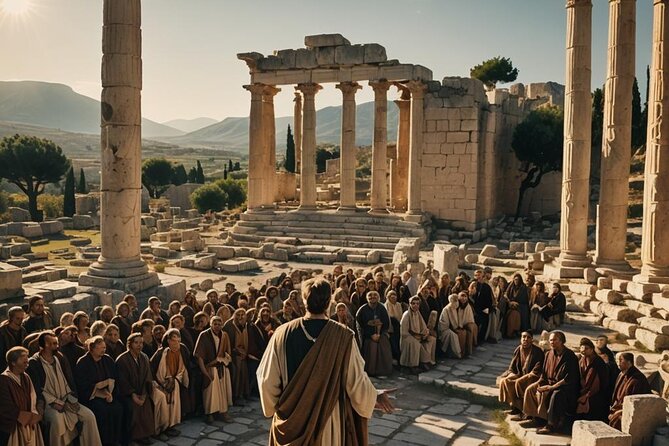
- Paul’s speech takes center stage: Visit the Agora and Areopagus, linked to Paul’s address to the Athenians.
- Corinth brings the Bible story into focus: See Kenchreai, the Bema, Paul’s Column, the Temple of Apollo, and the Roman forum.
- Private transport keeps the day flexible: Groups of one to four use a luxury sedan, while groups of five to seven travel by minivan.
- The day covers a lot of ground: Expect 8 to 9 hours, including the drive between Athens and Corinth.
- A licensed guide costs extra: The English-speaking driver offers historical and biblical commentary, but site-by-site guiding is not included.
- Budget beyond the tour price: Archaeological and museum admission costs €36 per person, and lunch and tips are extra.
Why this Athens and Corinth route works
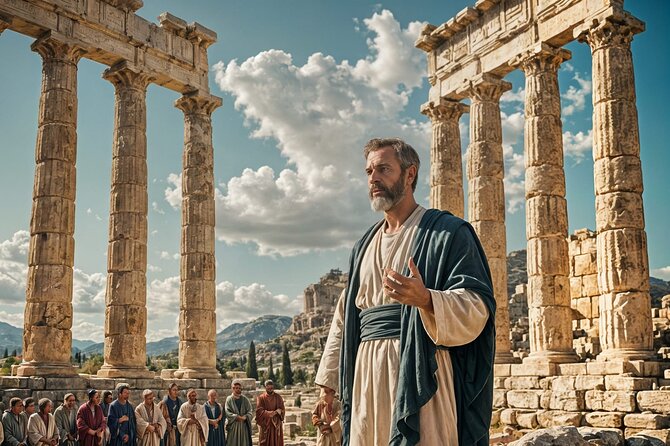
This is not a simple city sightseeing ride. It is a full-day pilgrimage through places tied to Paul’s time in Greece, mixed with major ancient sites that explain the world he entered.
You begin in Athens, where philosophy, politics, and religion met in public spaces. Then you travel west to Corinth, an important Roman city with a port, forum, temples, court platform, and fortified hill. The route helps you see Paul not as a figure floating outside history, but as a preacher working in busy, competitive cities shaped by Greek customs and Roman rule.
The tour costs $250.90 per person. That is a serious price, yet private transport, hotel or port pickup, bottled water, onboard WiFi, and a full day on the road are included. For a small group splitting the cost, the value improves, especially if you are arriving by cruise ship and want transport arranged from the port.
The tradeoff is the guide format. Drivers such as Periklis, Nick, Giorgos Kalantzis, Dimitrios, Manos, and Makis have received especially warm praise for clear explanations, friendly conversation, flexibility, and safe driving. Still, this is not the same as having a licensed guide walk every ruin with you.
A few other Athens mornings to price up
- Best of Athens Half Day Private Tour
★ 5.0 · 3,714 reviews - Athens Full Day Private Tour
★ 5.0 · 2,903 reviews - Athens Airport Private Arrival Transfer with Meet & Greet
★ 4.5 · 1,495 reviews
The Ancient Agora, where Athens frames Paul’s mission
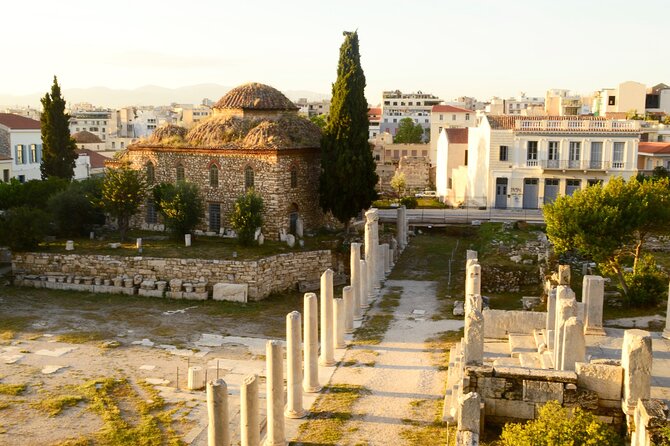
The Ancient Agora gets about 40 minutes. This was the public heart of Athens, with temples, statues, and civic buildings helping you picture the city Paul encountered.
The tour presents the Agora as part of the setting for Paul’s address to the Athenians. The more precise biblical focus comes at the Areopagus, but visiting both places is useful. The Agora shows the public life around Paul, while the rocky Areopagus gives the speech its traditional setting.
Admission is not included. Give yourself time to look beyond a single famous ruin. The value here is the setting: Paul’s message met people in a place shaped by public debate, old religious practices, and civic pride.
Areopagus Hill and the Unknown God
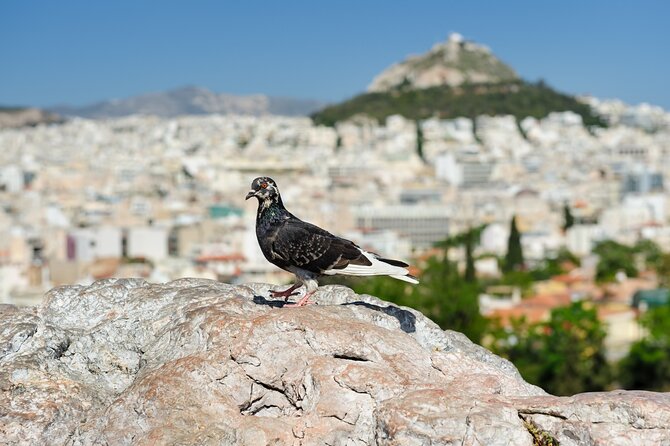
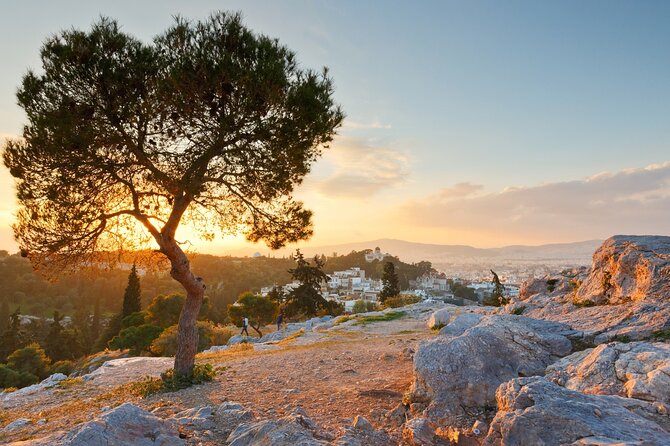
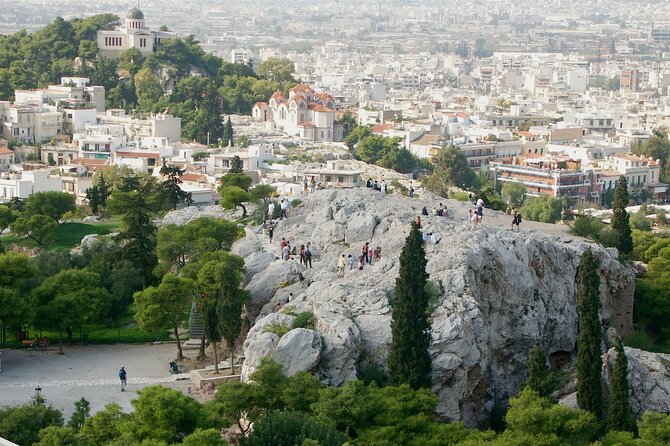
The short visit to Areopagus Hill lasts about 30 minutes and is free. You climb or walk over uneven rock, so sturdy shoes matter.
From this spot, you get broad views toward Athens and the Acropolis. The city below helps explain why Paul’s speech mattered. He was addressing a center of Greek intellectual life, not a quiet religious outpost.
This stop is brief, but it may be the emotional center of the Athens portion. You can pause, read Acts 17, and connect the text with the physical setting. Your driver may offer background, but you should not expect a long formal lesson on the hill.
St. Dionysius and the first Athenian convert
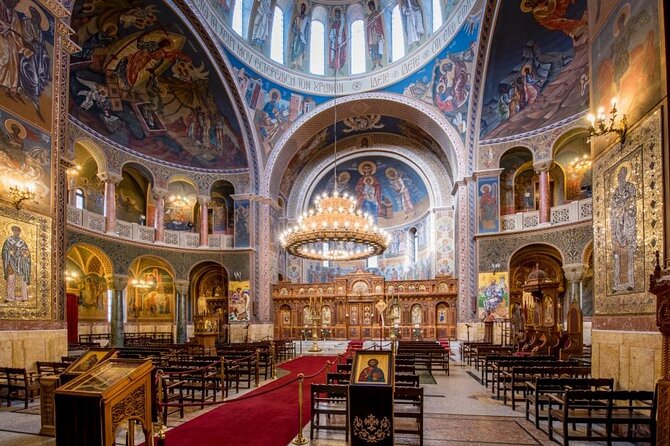
The Church of St. Dionysius the Areopagite receives about 20 minutes. It honors Dionysius, described in the tour as a judge of the Areopagus who accepted Paul’s teaching and became one of the first Athenian Christians.
This stop shifts from ancient civic Athens to the later Christian memory of Paul’s work. The church offers a quiet pause after the exposed rock and city views of Areopagus Hill.
It is also a reminder that the tour moves across time. Not every stop is a site Paul personally used in its present form. Some locations preserve the Christian tradition connected with his mission.
Same island, an entirely different sort of day:
- Athens: Acropolis & up to 5 Archaeological Sites Combo Pass
★ 4.4 · 12,619 reviews - Athens: Acropolis Ticket with Optional Audio or Live Guide
★ 4.2 · 11,055 reviews - Athens: Acropolis, Parthenon & Acropolis Museum Guided Tour
★ 4.8 · 9,316 reviews - Athens: Cape Sounion & Poseidon Temple Sunset Half-Day Trip
★ 4.8 · 8,241 reviews
Crossing the Corinth Canal at the Isthmus
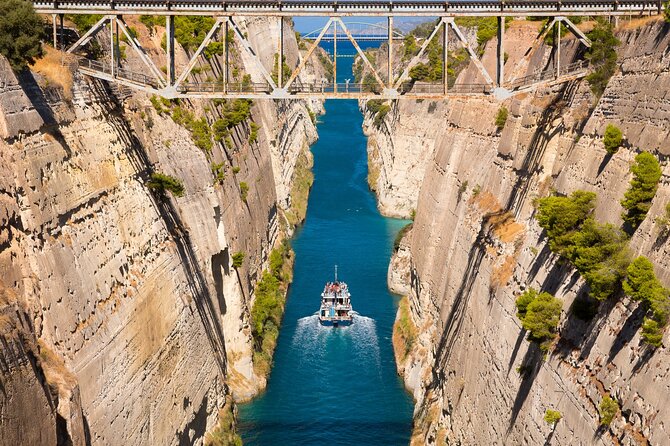
The drive to Corinth takes you across the Isthmus of Corinth, where mainland Greece meets the Peloponnese. You get about 20 minutes here, with free admission.
The Corinth Canal is a 19th-century engineering project cut through the rock. It is not an ancient Pauline site, but it provides a useful geographic break and a striking view.
This is one reason the private car helps. You can travel in comfort, carry water, and step out for a quick look without managing a larger group. The total day includes driving time, so do not treat the 8 to 9 hours as 8 to 9 hours of continuous site visits.
Kenchreai, the port where Paul arrived
At Ancient Kenchreai, you spend about 20 minutes. This eastern port served Roman Corinth and is associated with Paul’s arrival in 53 AD.
You see remnants connected with harbor facilities, temples, and early Christian structures. The site is more fragmentary than the main Corinth ruins, so your imagination does some of the work.
That is also its appeal. Paul did not enter Corinth through an abstract map reference. He arrived by sea at a working port tied to trade and movement across the eastern Mediterranean. The brief stop gives the journey a human starting point.
Ancient Corinth and the Temple of Apollo
The main Ancient Corinth visit lasts about an hour, with another listed 20-minute stop at the Temple of Apollo. The two descriptions overlap, so expect the Temple of Apollo to be part of your time in or around the main archaeological area rather than assume two entirely separate experiences.
The Temple of Apollo is one of the oldest Doric temples in the Peloponnese. Its surviving columns help you picture Corinth before Paul arrived, when old Greek religious traditions still shaped the city.
You also see the Glauke Fountain, cut into the hillside and tied to the story of Glauke, the daughter of King Creon. This mythological detail adds another layer to the visit. Corinth is not only a biblical stop. It is also a place where Greek myth, Roman power, local worship, and Christian memory overlap.
Admission to Ancient Corinth is not included. The stated archaeological and museum fees total €36 per person, so add that amount to your budget.
Paul’s Bema and the Roman forum
The Bema is one of the most direct links to Paul’s time in Corinth. This raised platform in the Roman forum served for public addresses and legal decisions.
According to the biblical account in Acts 18:12-17, Paul was brought before Gallio, the Roman proconsul, around 51 AD. Gallio dismissed the case, allowing Paul to continue his work. Standing near the platform gives that passage a clear physical setting.
The tour allows about 10 minutes for the Bema itself, while the larger Ancient Corinth visit includes Paul’s Column and the forum area. Modern mosaics related to Paul’s trial and mission add a Christian layer to the archaeological site.
Do not expect the ruins to recreate the event in a literal way. The value is in seeing the civic space where legal power operated. Paul’s work took place inside Roman public life, not apart from it.
The Corinth Museum and its statues
The Archaeological Museum of Corinth gets about an hour, with admission extra. This is valuable after the open-air ruins because it gives you objects to study up close.
The collection covers periods from prehistoric Greece through Roman Corinth. You can see statues, pottery, and objects linked with the Sanctuary of Asklepios.
I would keep this hour if ancient culture interests you. If your main goal is prayer and Pauline sites, you may prefer more time outside. The museum helps explain the city’s art, worship, and daily life, but it is less directly tied to Paul than the Bema and Kenchreai.
Acrocorinth and lunch with a view
Acrocorinth gets about 1 hour and 10 minutes, including time for lunch at a nearby traditional taverna. Admission is listed as free.
The fortified hilltop brings a different scale to the day. You see remains from classical Greek, Byzantine, Frankish, and Ottoman periods, all layered across the same stronghold. The views help explain why this height mattered for controlling Corinth.
Wear proper shoes and be ready for sun. The tour recommends a hat and sunscreen, and that advice is practical here. If you have limited mobility, ask before booking because the route includes archaeological ground, rock, and a fortified hill.
Lunch is not included in the price. The meal stop is a welcome change from ruins and car travel, but budget separately for food and drinks. Several accounts of the day point to fresh Greek food, cold drinks, and a scenic setting, though your exact restaurant is not specified in the tour details.
The Apostolos Pavlos Church
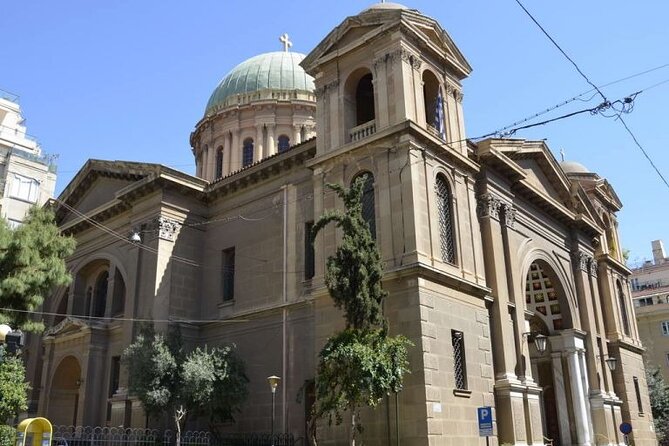
The final stop is the Church of Apostle Paul in Ancient Corinth, visited for about 20 minutes. Built in 1936, this three-aisled basilica occupies the site of an earlier church associated with Paul.
It closes the day on a more explicitly Christian note. After the Agora, temples, Roman forum, museum, and fortress, the church shows how Corinth has continued to remember Paul through worship and local tradition.
The sequence works well. You first see the world Paul entered, then the civic setting of his trial, and finally the later church memory attached to his mission.
What the private car adds to the experience
Transportation is a major part of this tour’s value. Pickup is available from an Athens hotel, apartment, or selected cruise port. At the port, the driver meets you in the arrival area with a sign showing your name. Airport pickup is possible for an added charge.
Groups of one to four use a luxury sedan. Groups of five to seven use a minivan. The vehicles are air-conditioned, and bottled water and WiFi are included.
Athens traffic and the long Corinth run make comfort matter. You can return to a cool car after walking over sunbaked ruins, and a private group can avoid waiting for strangers. Drivers have also been praised for clean cars, calm driving through narrow Athens streets, photography help, and flexibility with the pace.
The driver role needs clear expectations. You get an English-speaking driver with historical knowledge, not a licensed guide accompanying you inside the sites. If detailed biblical interpretation or formal archaeological explanation is your priority, arrange a licensed guide at an added cost before the trip.
How to plan the long day
The advertised duration is 8 to 9 hours, and that includes travel between Athens and Corinth. The schedule contains many short stops, so the day is active even though the car provides rest between them.
Book comfortable footwear. Bring a hat, sunscreen, and water, even though bottled water is supplied. Greece can be hot and bright, and several stops are exposed.
The tour is often reserved about 60 days ahead. That is useful to know if your Athens visit is tied to a cruise date or a tight holiday schedule.
Free cancellation is available up to 24 hours before the start time. Changes made inside that period are not accepted, and poor weather can lead to a new date or full refund.
Who will get the most from this tour?
I would recommend it most to Christian visitors who want to connect Paul’s letters and Acts with real places. It also suits history-minded people who want Athens, Corinth, Roman ruins, a museum, and Acrocorinth in one private day.
It works well for families or small groups that value their own car and pickup service. The route is also practical for cruise passengers, provided your port timing allows a full 8 to 9 hours.
You may want another option if you dislike long road days, prefer slow museum visits, or need a fully guided archaeological tour. The price does not include site admission, lunch, tips, or a licensed guide, so the final cost can rise.
Should you book it?
Book this tour if Paul’s time in Athens and Corinth is central to your trip and you want a private vehicle linking the sites. The strongest features are the route, the cool transportation, and drivers such as Periklis, Nick, Giorgos, Dimitrios, and Manos, who are known for friendly service, strong biblical background, and flexibility.
Before paying, decide if driver commentary is enough for you. If you want detailed explanations at every ruin, add a licensed guide. With the €36 entrance cost, lunch, and gratuity included in your budget, this becomes a comfortable and focused way to follow Paul from Athens to Corinth.
FAQ
How long does the Apostle Paul tour last?
The tour lasts approximately 8 to 9 hours, including travel time between Athens and the Corinth area.
Where can pickup take place?
Pickup is available from designated Athens hotels, apartments, and selected cruise port locations. Airport pickup is available for an additional cost.
Is transportation private?
Yes. Only your group participates. Groups of one to four use a luxury sedan, while groups of five to seven use a minivan.
Is the driver an English speaker?
Yes. The tour includes an English-speaking driver with historical knowledge of Athens, Corinth, and Apostle Paul’s journeys.
Is a licensed archaeological guide included?
No. A licensed guide to accompany you inside archaeological sites is not included, but one can be arranged for an additional cost.
Are entrance fees included?
No. Archaeological site and museum entrance fees are not included. The stated cost is €36 per person.
Is lunch included?
No. A lunch stop is scheduled near Ancient Corinth, but the cost of the meal is not included.
What should I bring?
Wear comfortable footwear and bring a hat and sunscreen. Greece can be warm and sunny, and several stops require walking over exposed or uneven ground.
Does the tour include the Corinth Canal?
Yes. The itinerary includes about 20 minutes at the Isthmus of Corinth and the Corinth Canal. Admission is free.
What is the cancellation policy?
You can cancel at least 24 hours before the start time for a full refund. Cancellations or changes made less than 24 hours before the start time are not accepted, and poor weather may lead to a different date or full refund.
Fresh on the Athens list
- Athens Airport Arrival Transfer to Hotels or Addresses in Athens★ 3.5 · 45 reviews
- Private Luxury Tour: Unveiling the Sacred Mysteries of Eleusis★ 5.0 · 45 reviews
- Luxury Catamaran Sunset Semi-Private & Greek Gastronomy in Athens★ 5.0 · 45 reviews
- From Athens: Aegina Island guided tour in a day★ 5.0 · 45 reviews
- Delphi, Thermopylae full day private tour from Athens★ 4.9 · 46 reviews
- From Athens: City & Corinth Guided Day Tour★ 4.8 · 46 reviews
- Acropolis Private Wine Tasting @ Finewine store★ 5.0 · 46 reviews
- Ancient Corinth Half-Day Private Tour from Athens★ 5.0 · 46 reviews
Athens Tours, compared.

Acropolis & up to 5 Archaeological Sites Combo Pass
Read our review →

Acropolis, Parthenon & Acropolis Museum Guided Tour
Read our review →
Cape Sounion & Poseidon Temple Sunset Half-Day Trip
Read our review →


Cape Sounio & Poseidon Temple Trip with Audio Guide
Read our review →