
Reviewed · METEORA MONASTERIES TOURS
Meteora: Sunset Small Size Tour with Monastery & Caves visit
Meteora is at its most atmospheric late in the day, when the sightseeing buses have gone and the rocks catch the last light. This 4.5-hour sunset tour combines one monastery visit with the old church in Kalabaka, the Bandovas hermit caves, and several fine viewpoints.
I especially like the local guides and storytelling, often praised when guides such as Jim, Tolis, Apostolis, and Eva lead the outing. I also like the easy hotel pickup and the number of photo stops, which save you from trying to navigate narrow mountain roads yourself.
The main catch is simple: because monasteries close in the late afternoon, you should expect to enter only one active monastery. The rest are viewed from outside, so this tour is best for seeing Meteora as a whole, not for touring several monastery interiors.
Key points to know before you book
- One monastery interior: You go inside one active monastery and have about 40 minutes to look around independently.
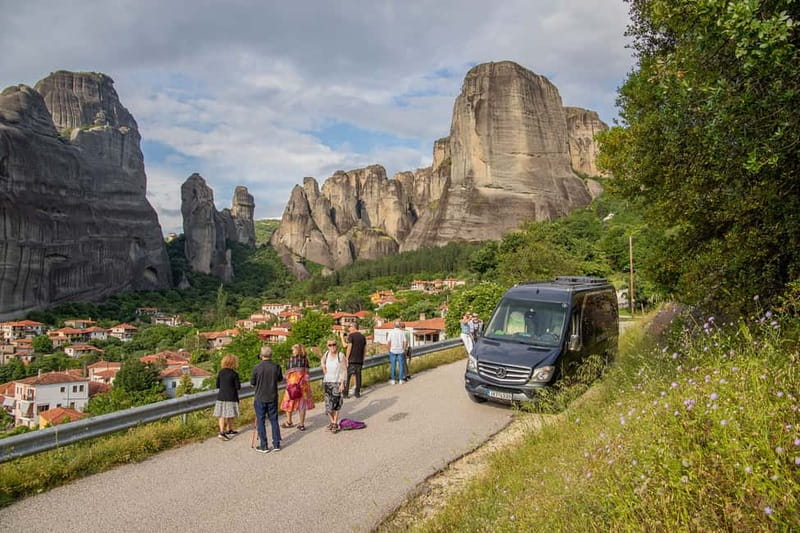
- Six monasteries from the road: The minibus passes all six, with stops for wide views and photographs.
- Older-than-it-looks church: The Byzantine Church of the Virgin Mary in Kalabaka includes an unusual connection to an ancient temple of Apollo.
- Bandovas hermit caves: A short visit shows where hermit monks lived in caves high on the rocks roughly two centuries ago.
- Sunset finale: The final viewpoint is chosen for broad views across the Meteora rock formations.
- Good value at $27.67: Hotel transfers, a minibus, a live English-speaking guide, water, and a multilingual audio guide are included, while entry fees cost extra.
Why an evening tour changes Meteora
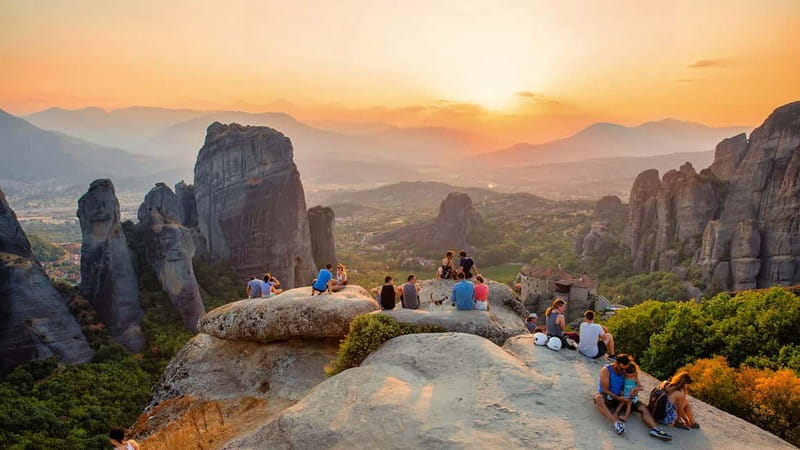
Meteora is famous for its monasteries perched on tall stone pillars, but the setting is just as important as the buildings. In the afternoon, the rocks can feel busy with coaches and visitors. By sunset, the roads and viewpoints are calmer, and the changing light gives the cliffs a softer, more dramatic look.
I like this timing because the tour does not rush straight from one monastery to another. It gives you a sense of the whole area: the rocks, the old town, the hermit tradition, the surviving monasteries, and the religious life that still continues here.
The tradeoff is that late afternoon limits interior access. Monastery opening hours control the schedule, not the tour company. In practice, you should plan on entering one monastery and seeing the others from viewpoints or the minibus. If you want to study several interiors, add a morning visit on another day.
The tour runs for about four and a half hours. Pickup is offered from hotels, villas, guesthouses, Airbnbs, and camping sites in Kalabaka and Kastraki. Trikala is also listed among the possible pickup and drop-off locations, so confirm the exact meeting point when you book.
A few other Kalabaka mornings to price up
- Meteora: Morning Half Day Sightseeing and Monasteries Tour
★ 4.7 · 478 reviews - Meteora: Majestic Sunset Tour & Monasteries with Local Guide
★ 4.7 · 359 reviews - Meteora: Panoramic Morning Small Group Tour with Local Guide
★ 4.7 · 334 reviews
A comfortable ride through the six monasteries
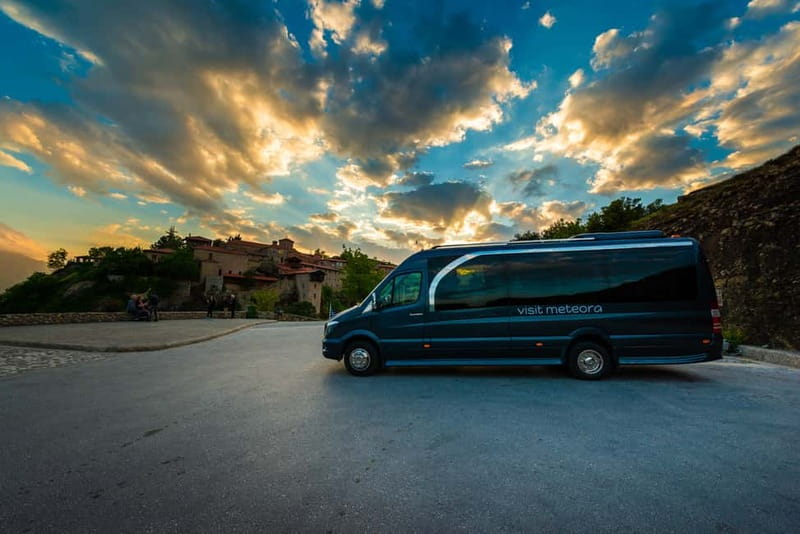
Transportation is by air-conditioned minibus. The vehicle used on some departures seats around 20 people, though the exact group size can vary because private and small-group options are available.
That matters at Meteora. You get the height and reach of a vehicle without committing to a large coach group. Short drives connect the stops, and you step out often for views, photographs, and brief walks. The ride also lets you cover far more ground than you could comfortably manage on foot in an evening.
The guide gives explanations during the drive and at the viewpoints. Strong guides make a real difference here because the rocks can look similar from a distance, while the stories of monks, local families, and the building of the monasteries give each place a clear identity.
Guides named in past departures include Jim, also called Dimitris, along with Tolis, Apostolis, Vassily, and Eva. The guide on your departure may be different, but the best reports consistently praise clear English, good pacing, friendly help with photographs, and a strong connection to local life.
One practical point: the guide does not enter the monastery with you. This is a semi-independent visit. You receive the explanation outside, then use your free time inside. The included audio guide can help fill in details and covers the monasteries plus 19 points of interest.
The first viewpoints and the road up
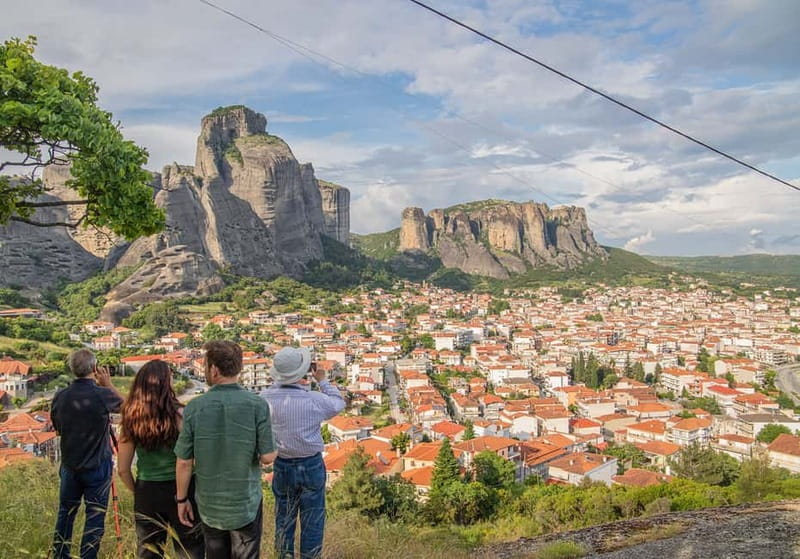
After pickup, the minibus takes roughly 10 minutes to reach the first viewpoint. This is a short photo stop, but it helps you understand the scale of Meteora before you begin the site visits.
The guide explains the rock formations, the monasteries, and the early hermit settlements. You will have time to take photographs, but do not expect a long walk or a full talk at every stop. The rhythm is quick: get out, listen, photograph, and return to the minibus.
A second viewpoint follows after another short drive. These pauses are valuable because no single lookout shows every monastery at its best. Some views frame the rocks and buildings together, while others give you a better sense of the cliffs and valleys around them.
Bring a camera, but also leave room on your phone for several stops. Guides commonly help take group photographs, a small service that is useful when you are traveling as a pair or family and want everyone in the picture.
Entering one active monastery
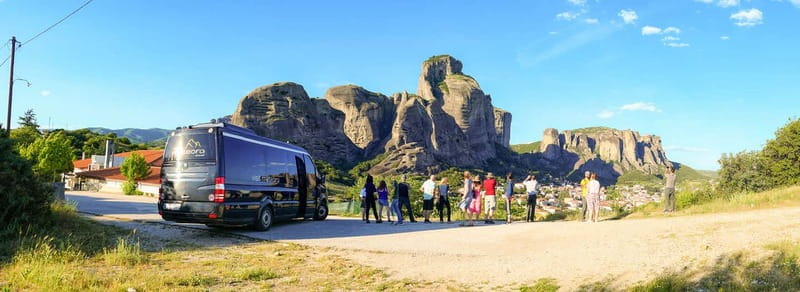
The centerpiece is the visit inside one active monastery, with about 40 minutes for the stop. The particular monastery depends on opening hours and the day’s schedule, so do not book this tour expecting a named interior in advance unless the operator confirms it.
You will walk from the minibus to the entrance and then explore without the guide. Inside, look for the quiet details: the arrangement of the church, painted religious scenes, chapels, and the signs of a living monastic community. The visit is not only about old stone. Monks still live and worship here, and the guide’s outside explanation helps you understand how the site functions.
The entry fee is €5 per person and is not included. Carry cash. You should also wear suitable clothing from the start. Men can be refused entry in shorts or sleeveless shirts. Women can borrow or buy skirts and shawls at the entrance, but it is easier to bring a scarf and wear clothing that covers your shoulders and knees.
Comfortable shoes are important. The tour includes short walks rather than a major hike, but monastery access can involve uneven ground and steps. Wheelchair users are not considered suitable for this activity, and the tour is not intended for babies under one year old, people over 150 kilograms, or people over 95.
Same island, an entirely different sort of day:
- Athens: Guided Tour to Meteora Monasteries & Hermit Caves
★ 4.7 · 211 reviews - Kalabaka: Meteora Small-Group Hiking Tour w/ Monastery Visit
★ 4.9 · 205 reviews - From Kalabaka/Kastraki: Meteora Monasteries Morning Tour
★ 4.8 · 178 reviews - Athens to Meteora: Monasteries & Hidden Caves Bus Tour
★ 4.7 · 141 reviews
Kalabaka’s old church and its Apollo connection
The tour then returns to Kalabaka for a visit to the Byzantine Church of the Virgin Mary. This stop lasts about 15 minutes, with a further €2 entry fee per person.
The church is especially interesting because the building was once an ancient temple dedicated to Apollo. That gives the stop an unusual historical layer. You are not simply looking at an isolated Byzantine monument. You are seeing how a site can take on new religious meaning over many centuries.
Inside, the guide explains the layout, paintings, and symbols. This is one place where a short guided explanation adds real value. Without context, frescoes can blur into a series of solemn faces and colors. With the guide’s help, you can read the arrangement and understand what you are seeing.
The church also balances the mountain portion of the tour. After the wide views and high cliffs, you spend time in the old town and see how Meteora connects with ordinary local life below the rocks.
The Bandovas hermit caves
The visit to the Bandovas hermitages is one of the more distinctive parts of the outing. These caves sit high among the rocks and show where hermit monks lived roughly two centuries ago.
You do not get the polished presentation of a major monastery here. That is exactly the point. The caves offer a more direct look at the severe conditions of early religious life in Meteora. A short walk through the area gives you a sense of why hermits chose isolated places and how different their lives were from the organized communities in the monasteries.
The stop lasts around 35 minutes, including a guided visit and photographs. Wear shoes with a good grip and stay with the guide, especially if the ground is damp or visibility is fading.
The guide’s storytelling is particularly useful here. Local guides can explain not only where the hermits lived, but also how nearby people interacted with monks over the years. That connection between the isolated caves and the communities below makes the visit feel less like a collection of ruins and more like part of a continuing local story.
Seeing the monasteries from below and above
During the drive, you pass the remaining monasteries and stop at additional viewpoints. The route allows you to see all six Meteora monasteries, although only one is entered.
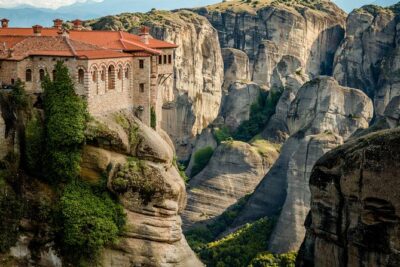
Some monastery stops are brief, around 10 or 15 minutes, and function mainly as exterior photo opportunities. That may sound modest, but the buildings are often best understood from a distance. From the road or a lookout, you can see how small the monastery structures appear against the cliffs and how carefully they were placed on the rock shelves.
The guide explains why the monks built so high and how access shaped monastic life. You also hear about the way the monasteries were built and maintained in difficult positions. These details help you notice the practical side of Meteora, not just its dramatic appearance.
The tour does not promise long walks to every monastery. If your ideal day includes climbing many steps and spending an hour inside each complex, this is not the right format. If you want a broad survey with minimal walking and plenty of scenery, it works well.
The sunset viewpoint
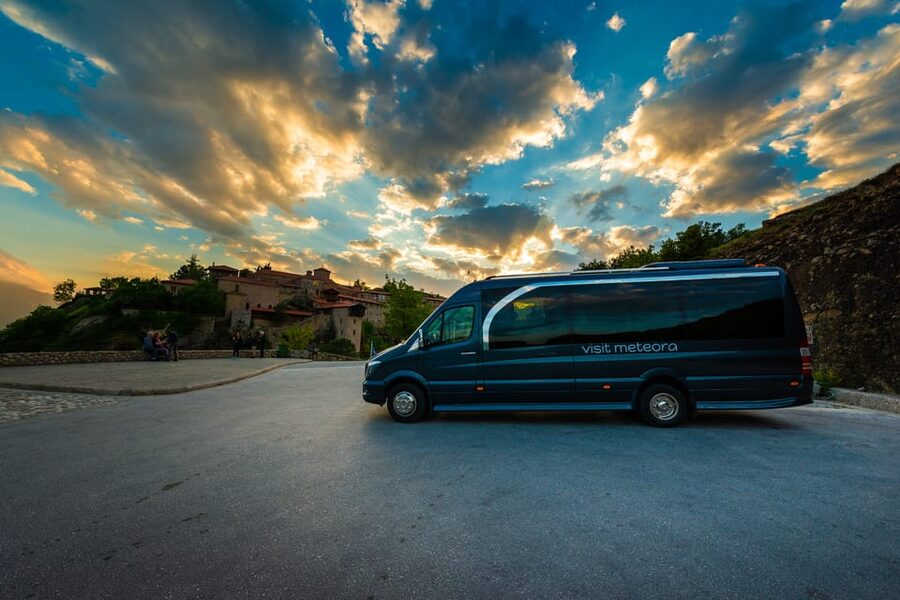
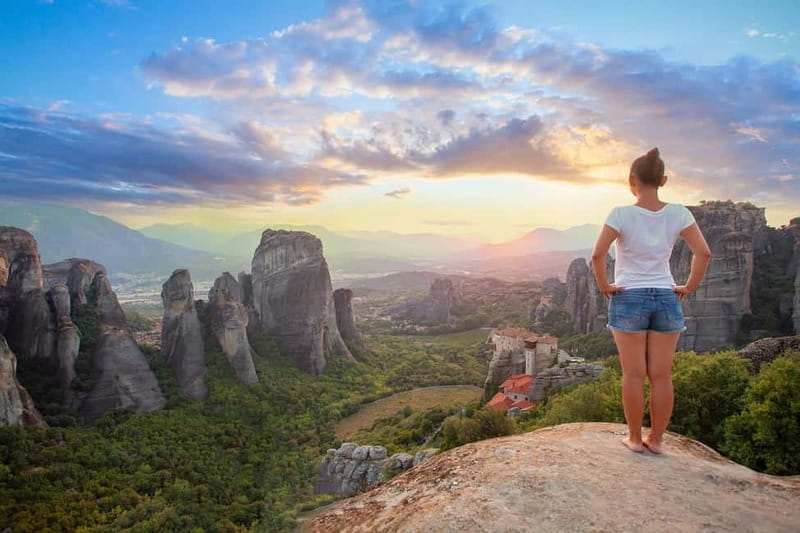
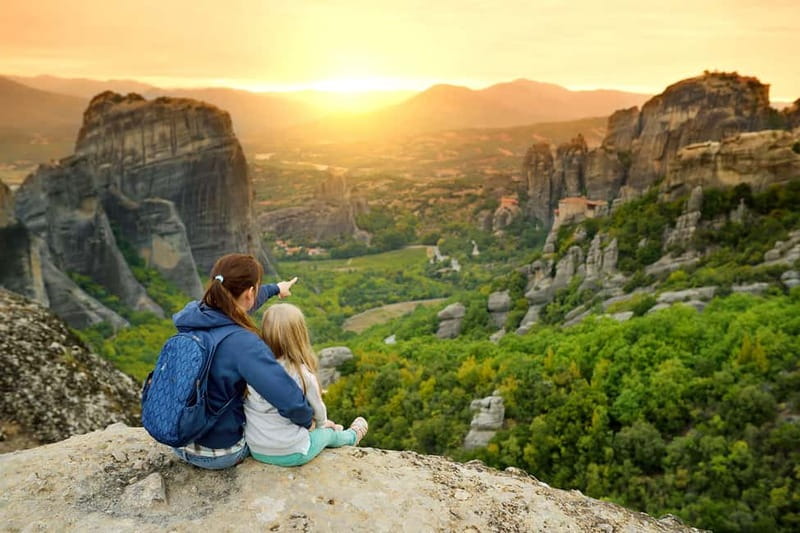
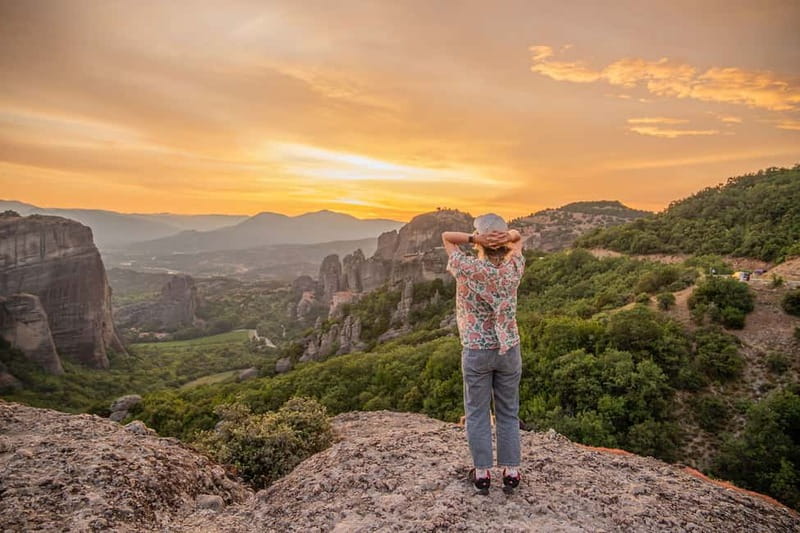
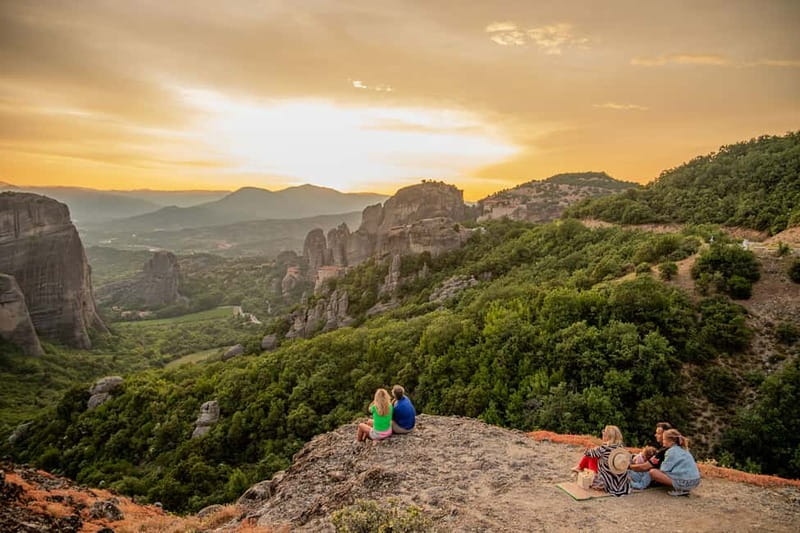
The final major stop is a chosen sunset viewpoint in Meteora, with about 20 minutes of free time. Here, the rocky formations stretch across the view, and the monasteries become part of a wider scene rather than the sole focus.
Sunset is the tour’s most weather-dependent feature. Clouds or winter fog can hide the sun, and no guide can change that. Even on a cloudy evening, the cliffs can remain impressive, but you should not treat a visible sunset as guaranteed.
The timing also deserves realistic expectations. Once the sun drops, the group generally begins the return journey. If you want the best after-sunset color, you may find the departure a little quick. The final minutes after sunset can produce lovely blue and pink tones, but the schedule may not allow a long wait.
Still, ending at a high viewpoint is a smart choice. The light gives the rocks a changing shape, and it becomes easier to understand why religious communities chose these hard-to-reach places. The sunset is not only a pretty finale. It brings together the geology, the monasteries, and the sense of separation that defines Meteora.
Language, audio help, and the guiding style
The live tour is guided in English, with Greek also listed among the activity languages. A free smart audio guide is available in Spanish, French, German, Italian, Portuguese, Polish, Russian, Chinese, Korean, and Japanese, as well as English.
That distinction matters. If you need a live guide in one of those additional languages, this tour may not meet your needs. If you are comfortable reading or listening independently, the audio guide gives you extra information inside the monasteries and at 19 points of interest.
The strongest guiding style is conversational rather than purely academic. Jim, for example, was praised for combining information about the monasteries with stories about local people. Other guides have been noted for explaining frescoes, geology, and monastic life in clear terms.
A noisy group can make it harder to hear during the ride, especially when the guide speaks continuously from the front of the minibus. Sit where you can hear clearly and ask the guide to repeat anything you miss. The tour is informative, but it is not a private lecture.
Is $27.67 a fair price?
At $27.67 per person, this is a strong-value introduction to Meteora. The price includes pickup and drop-off, air-conditioned transport, an English-speaking guide, bottled water, the sunset stop, and the audio guide.
You still pay €5 for the monastery and €2 for the Byzantine church, plus any food or drink you buy. Even with those entry fees, the total remains reasonable for a four-and-a-half-hour outing with a driver and several scenic stops.
I see the main value in the coverage. Hiring a vehicle or arranging taxis for the monastery roads would cost more and require you to plan the viewpoints yourself. This tour also saves you from deciding which monastery is open late in the day.
The price is less attractive if you already have a car, plenty of time, and plans to visit all the monastery interiors separately. For a first evening in Meteora, though, it gives you a useful overview and leaves the next morning free for a slower visit.
Free cancellation up to 24 hours before departure and the reserve-now, pay-later option make it easier to fit into a changing Greece itinerary. Check the exact starting time when booking, since sunset shifts through the year.
Who should book this Meteora sunset tour?
I would choose this tour if you have one evening in Meteora and want more than a single viewpoint. It suits first-time visitors, couples, families with older children, and anyone who prefers short walks over a demanding hike.
It is also a good choice if you value stories and local explanation. The guides add meaning to the caves, church, monasteries, and rocks, while the minibus lets you see a wide area without arranging several separate trips.
You should choose another plan if entering several monasteries is your main goal. A morning or daytime visit will give you a better chance of seeing more interiors. You should also reconsider if you need a live guide in a language other than English or Greek.
My verdict: book it for the full picture
Book this tour if you want an efficient, affordable introduction to Meteora with a strong evening atmosphere. The best parts are the mix of places: one active monastery, an ancient church, the Bandovas caves, broad views of all six monasteries, and sunset from the rocks.
Go in knowing that one monastery interior is the realistic limit and that clouds may defeat the sunset. With those expectations, the tour offers excellent coverage, comfortable transport, and guides who can turn a striking view into a memorable place.
FAQ
How long does the Meteora sunset tour last?
The tour lasts about 4.5 hours, including transport, site visits, short walks, viewpoints, and the sunset stop.
Where does pickup take place?
Pickup is offered from hotels, villas, guesthouses, Airbnbs, and camping sites in Kalabaka and Kastraki. Trikala is also listed as a possible pickup and drop-off location, so confirm the exact arrangement when booking.
How many monasteries can I enter?
You visit the interior of one active monastery. The tour passes all six Meteora monasteries and includes exterior views and photo stops at the others.
Is the monastery entry fee included?
No. The monastery entry fee is €5 per person and should be paid separately.
How much does the Byzantine Church of the Virgin Mary cost?
Entry to the Byzantine Church of the Virgin Mary costs €2 per person and is not included.
Is the tour guided in English?
Yes. The live guide speaks English. Greek is also listed among the activity languages.
Is an audio guide available in other languages?
Yes. A free audio guide is available in Spanish, French, German, Italian, Portuguese, Polish, Russian, Chinese, Korean, Japanese, and English.
What should I wear to the monasteries?
Wear comfortable shoes and bring a scarf. Men cannot enter in shorts or sleeveless shirts. Women can borrow or buy skirts and shawls at the monastery entrance if needed.
Is food included?
No. Food and drinks are not included, although a bottle of water is provided.
Can I cancel the booking?
You can cancel up to 24 hours in advance for a full refund. The reserve-now, pay-later option is also available.
Fresh on the Kalabaka list
- Meteora Sunset Tour on E-bikes★ 5.0 · 54 reviews
- Kalabaka: Meteora Monasteries Minibus Tour with Photo Stops★ 5.0 · 74 reviews
- Meteora: Monasteries Tour, Lunch, and Athens Transfer Option★ 4.8 · 102 reviews
- Athens to Meteora: Monasteries & Hidden Caves Bus Tour★ 4.7 · 141 reviews
- From Kalabaka/Kastraki: Meteora Monasteries Morning Tour★ 4.8 · 178 reviews
- Athens: Guided Tour to Meteora Monasteries & Hermit Caves★ 4.7 · 211 reviews
- Meteora: Panoramic Morning Small Group Tour with Local Guide★ 4.7 · 334 reviews
- Meteora Electric Bike Tour★ 5.0 · 61 reviews
Meteora Monasteries Tours, compared.
Meteora Monasteries Day Trip with Caves and Lunch
Read our review →
Meteora Tour with Local Guide and Greek Lunch
Read our review →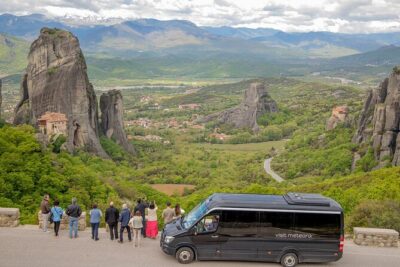
Meteora Monasteries, Caves & Coastal Stopovers with Lunch
Read our review →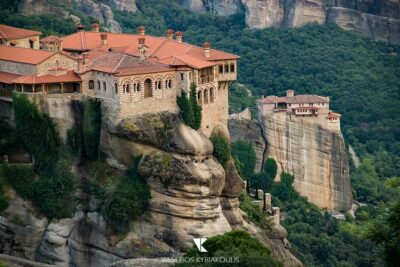
Meteora Monasteries & Caves DayTrip from Athens with Greek Lunch
Read our review →
4-Day Classical Greece Tour: Epidaurus, Mycenae, Olympia, Delphi, Meteora
Read our review →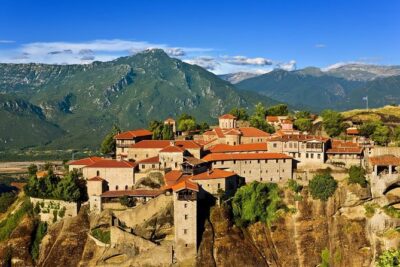
Meteora Monasteries, Hermit Caves Tour with Pickup
Read our review →Browse the lists this tour appears in